To be sure, Operational Camouflage Pattern is the way ahead for the US Army. That fact is not at question and I’m very happy to see our Soldiers getting something effective. It is definitely an improvement over the Universal Camouflage Pattern that it is replacing.
But exactly what OCP is, and who actually owns it, are a bit more perplexing. With two distinct patterns sharing the same name, there’s sure to be some confusion. Turns out, ownership can be established based in records and a few pointed questions. But then there’s this whole printing issue that’s recently, and inexplicably come up. How that ties in, will all make sense, by the time you get to the end of the story.
As you know, the US Army selected the Crye Precision Multicam Pattern in 2010 and decided to call it Operation Enduring Freedom Camouflage Pattern, as it was intended specifically for use in operations in Afghanistan. Then, the Army began a Multi-year Camouflage Improvement Effort (aka Phase IV) that cost tens of Millions of Dollars and ultimately resulted in no new capability. During the Army’s rather protracted, ill-fated search, for a family of camouflage patterns for use in the world’s various operational environments, Congress decided to act, fearing waste. With the passing of the 2014 National Defense Authorization Act, the Defense Department had to stick with what whatever camouflage they already had. The Army reacted by renaming OCP to a simple “Operational Camouflage Pattern” to give it a more universal feel and started negotiations with Crye Precision to adopt the pattern service-wide. Unfortunately, the Army abruptly stopped talking to Crye Precision with the Army reportedly unhappy with the pricing provided by Crye.
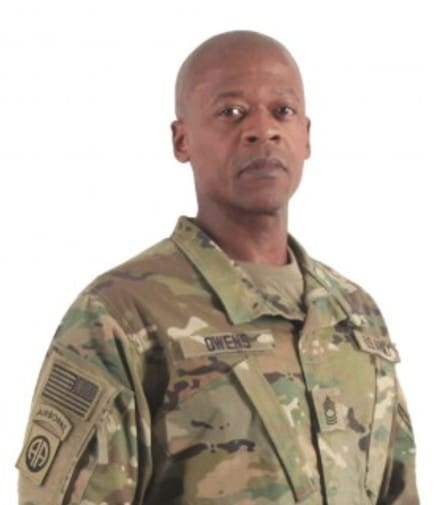
Then, in May of 2014, the Army’s leadership chose a course of action that would adopt a new flavor of OCP called Scorpion W2. It was a camouflage pattern created by modifying Scorpion, a developmental pattern designed in the early 2000s as part of the Objective Force Warrior Program and tested during the 2002-2003 camo studies. This new OCP variant also looked suspiciously similar to the existing Crye Precision MultiCam version of OCP. Interestingly, the Scorpion W2 pattern was tested for mere weeks before being certified fit for service, while the Phase IV testing went on for well over a year of actual testing and analysis with no final solution selected.
No sooner than the Army unveiled this variant did people start to question who “owned” the pattern. This was fueled partly by assertions by COL Robert Mortlock, Program Manager for Soldier Clothing and Individual Equipment that it would be less expensive than using MultiCam leading many to believe that the Army owns it. In fact, Scorpion W2 is a 2010 government modification of Crye’s patented Scorpion pattern and exhibits quite a bit of similarity to the MultiCam it is intended to displace as OCP.
To find the answer to the ownership question, I went to PEO Soldier, who’s Public Affairs Team directed me to the US Army’s Office of the Chief of Public Affairs. I asked some very specific questions about ownership of the Scorpion camouflage pattern and its use as a option under the NDAA. While they did reply in a timely manner, unfortunately, it wasn’t very forthcoming.
The Army possesses appropriate rights to use the Operational Camouflage Pattern (OCP) on its uniforms and equipment. Congress is aware of the Army’s intent and Army has been informed that it complies with the NDAA.
William J Layer
DAC, OCPA
From the response, we know this; the Army doesn’t own Scorpion W2. We asked specifically if they do. Rather than a simple, “We own it,” they instead claimed, “appropriate rights to use” the pattern.
The question then comes back to, who owns Scorpion? For that, we have to look at the Scorpion patent (USD487848), issued on March 30, 2004. This patent for a “Camouflage Pattern Applied To Substrate” was granted to Caleb Crye and assigned to LineWeight LLC, Crye Precision’s IP holding company. Later, after the patent was granted by the US Patent and Trademark Office, the Army asserted its “appropriate rights to use” Scorpion based on a correction letter amendment in June of that year:
After claim, insert the following:
–Statement as to rights to inventions made under federally sponsored research and development.
The U.S. Government has a paid-up license in this invention and the right in limited circumstances to require the patent owner to license others on reasonable terms (emphasis added) as provided for by the terms of contract No. DAAD16-01-C-0061 awarded by the US Army Robert Morris Acquisition Natick Contracting Division of the United States Department of Defense.–
The Army has never challenged the validity of the patent or who holds it. Not in 10 years. Instead, as is often the case with Federally Funded Research and Development, the Army had the USPTO amend the patent with that statement above. It is also important to note that this same amendment was applied to patents for all of the various technologies that spawned from the Scorpion effort, not just the camouflage pattern. Like I said, it’s pretty much boiler plate. Finally, it goes without saying that the Army does not enjoy this same position regarding the later MultiCam patent (USD572909).
The issue at hand is whether the Army has lived up to its end of the deal they applied to the patent. It reads, “paid-up license in this invention and the right in limited circumstances to require the patent owner to license others on reasonable terms.” As you can see, it’s not just enough to have established who owns what. We now have to take a look at whether the Army should be paying for the “rights to use” Scorpion. It seems that based on this language, they can use it as they see fit. I can see where they feel that this assertion would give the Army the right to have modified the base pattern to the W2 variant. But that only covers their use. The issue arises when they pay others to print it and that is what brings this last “reasonable terms” bit into question. Even in cases of “eminent domain” where private property is seized by the Government for use, they must always pay a reasonable fee for the value of the property. The Army isn’t printing the pattern. Instead they are purchasing material provided by vendors that incorporate the invention. This is where things get sticky because these private companies have existing agreements in place.
According to industry and government sources, the companies that are currently printing the Scorpion W2 fabric unto fabric are paying Crye Precision a royalty fee. Yes, for Scorpion. It has been an open secret in industry for some time. I’ve even alluded to it once or twice. The fee isn’t being paid because the Army is living up to the verbiage it had inserted into the patent, but rather due to commercial, contractual obligations between the printers and Crye Precision.
Those same sources who’ve indicated that the royalties are being paid have also said that there are those in the Army’s acquisition community who are incensed at the notion. And how much is this outrageous royalty? As I understand it, the Army is paying less than $1 per uniform. Ironically, this is a similar price to what Caleb Crye asserted the Army would pay for the use of MultiCam in a statement released earlier this year (less than 1% price difference between MultiCam and UCP).
How did this royalty come about? The answer is quite sublime. When the US Army selected Crye Precision’s MultiCam for use in 2010, they insisted that Crye license about 11 new printers to use the MultiCam pattern. Eventually, over time, these limited use licenses were converted to also cover commercial printing. The contents of the agreements, which remain confidential, I am told contain stipulations that the printer agrees to not print patterns with similar shapes or colors to MultiCam in order to discourage knockoffs. Seems reasonable to me that Crye Precision and a commercial printer would enter into a legally binding royalty agreement but this situation apparently has some in government hot under the collar.
Circumstances being what they are, the question of whether the royalty should be paid looks to have been answered. Contracts exist. The question has transformed to why the US Government is taking action that could be construed as to impede those contracts.
At least three times over the past month, DLA Troop Support and PEO Soldier have held private, by-invitation-only meetings with representatives from various parts of the supply chain to discuss the Army’s transition to the OCP Scorpion W2 variant. One important conversation point has been the royalty fee and if there is a mechanism to avoid paying it. Printers have been queried as to whether they would be willing to stop paying Crye Precision the royalty. Another suggestion has been that perhaps a printer could be purchased by a vendor or even a new one stood up that was unencumbered by any contractual obligations with Crye Precision. I am told that as these conversations were being guided by PEO Soldier, members of industry glanced nervously at one another wondering, “What’s to say they won’t turn on my company next?”
You could easily dismiss this information as hearsay, if it weren’t for a Sources Sought Notice released on 8 September, 2014 by the Defense Logistics Agency Troop Support entitled, “Operational Camouflage Pattern Fabric MIL-DTL 44436B Class 14“. In this FBO posting by the Defense Logistics Agency – Troop Support, they are looking “for printing capability and capacity of Operational Camouflage Pattern (OCP) on wind resistant poplin nylon/cotton cloth.” All-in-all, DLA needs about 6-9 Million Yards per year of OCP NYCO in order to manufacture enough Army Combat Uniforms. As if they didn’t already know, based on years and years of interaction with the supply chain, not to mention those numerous secretive meetings, they are trying to figure out who can print cotton here in the US. I’m not buying it.
A few very interesting things stick out in the Sources Sought. First, there’s these disclosures that potential offerors must comply with:
52.227-6 Royalty Information APR 1984
52.227-9 Refund of Royalties APR 1984
Those would be so they can identify who actually has a royalty agreement with Crye Precision although, as I understand it, the exact contents of those agreements are confidential, and could not be disclosed to the Government.
Another very curious statement caught my eye and made me realize that there was actually something to those clues I had been picking up.
This notice is intended to identify firms that either have the equipment or are willing to make capital investments to obtain the equipment necessary to support the aforementioned requirements. Warstopper funding may be available to firms needing to make some capital investments. (emphasis added)
The domestic printing industrial base has stayed fairly constant over the past 10 years and exists almost solely to support DoD’s Berry requirements. It’s more than held its own supporting military printing (of which the Army’s is the single largest user). If anything, that printing capacity has taken a beating over the past 18 months or so, as the Army has half-stepped toward a camouflage way ahead and they curtailed purchase of UCP ACUs. Now that the Army has decided what they are going to do, the existing printing industry should be more than ready to go to work. So why offer up taxpayer money to set up a new printer? What are they up to?
I looked into this “warstopper” funding program to see if there was a good reason. Here’s what I found:
The Warstopper Program was created to preserve and/or expand the industrial base for critical go-to-war items that had insufficient peacetime demands to keep the known industrial base producers in operation.
Since NYCO fabric is used for ACUs and the Army fights in FR uniforms, I have to question this notion of OCP printed NYCO being something that we need to stockpile as a nation. Then, there’s that whole existing supply chain infrastructure that seems to be able to hold its own.
So I dug more and found they’ve established criteria for commodities purchased with the program. Maybe those will hold the answer:
1. Mission Essential or Critical
2. Low peacetime demand but high wartime demand
3. Limited shelf-life
4. Long production leadtime
5. Cost effective alternative to War Reserve Inventory
No. In fact, peacetime or wartime, demand for NYCO remains constant and that fabric has a long shelf-life. None of those seem to apply.
Consequently, several questions come to mind. Why does DLA Troop Support want information on printers’ commercial royalty agreements? And, why do they want to establish new printers? Perhaps the current crop of printers aren’t suitable? If not, why? Wouldn’t it be less expansive and faster to help them come into compliance?
Doing the right thing is critical to the acquisition community. But it’s not just enough to follow the Federal Acquisition Regulations to the letter or to field great equipment. The end does not justify the means. Professionals must also avoid the appearance of impropriety. Unfortunately, as this story unfolded over the past couple of months, I’ve seen a lot of things happening that I’m concerned with; shake and bake testing, negotiations with IP owners breaking down, lack of transparency.
You should be concerned too and we deserve answers. We deserve to know why the Army and DLA are willing to invest taxpayer money in new printers that will compete with companies already struggling due to decreased government demand for their wares. We deserve to know why the Army and now DLA aren’t standing by the government’s own language by seeming to be interfere with private businesses negotiating “reasonable terms” with Crye Precision for the use of their Intellectual Property. Once again, I’ll echo a concern that has been voiced to me by members of industry, “If the Army can do this to Crye, what makes us think they might not do something to us later?”
I urge the Army and DLA to become more transparent in this process and explain why they have taken steps that appear to be made to avoid paying a company for the use of its intellectual property and why they are so interested in using taxpayer funds to establish new businesses in an already crowded space.