GORE-TEX Professional

Archive for 2014

Crye Precision’s 2001 Scorpion Development Contract Calls Into Question Army Claims Of “Appropriate Rights To Use” New OCP Variant

Monday, September 22nd, 2014

Many have questioned the US Army’s right to use a recently announced camouflage pattern, so a few weeks ago we decided to put it to bed and asked the Army about it. They offered us a rather curt, but confident, answer. But then DLA began a quest to fund a new printer that didn’t pay commercial printing royalties to Crye Precision for Scorpion. So last week, we ran a story regarding the US Army’s statement that they had “Appropriate rights to use the Operational Camouflage Pattern” and, in the process, exposed a major controversy that had arisen over printing royalties for OCP.
IMG_7084.JPG

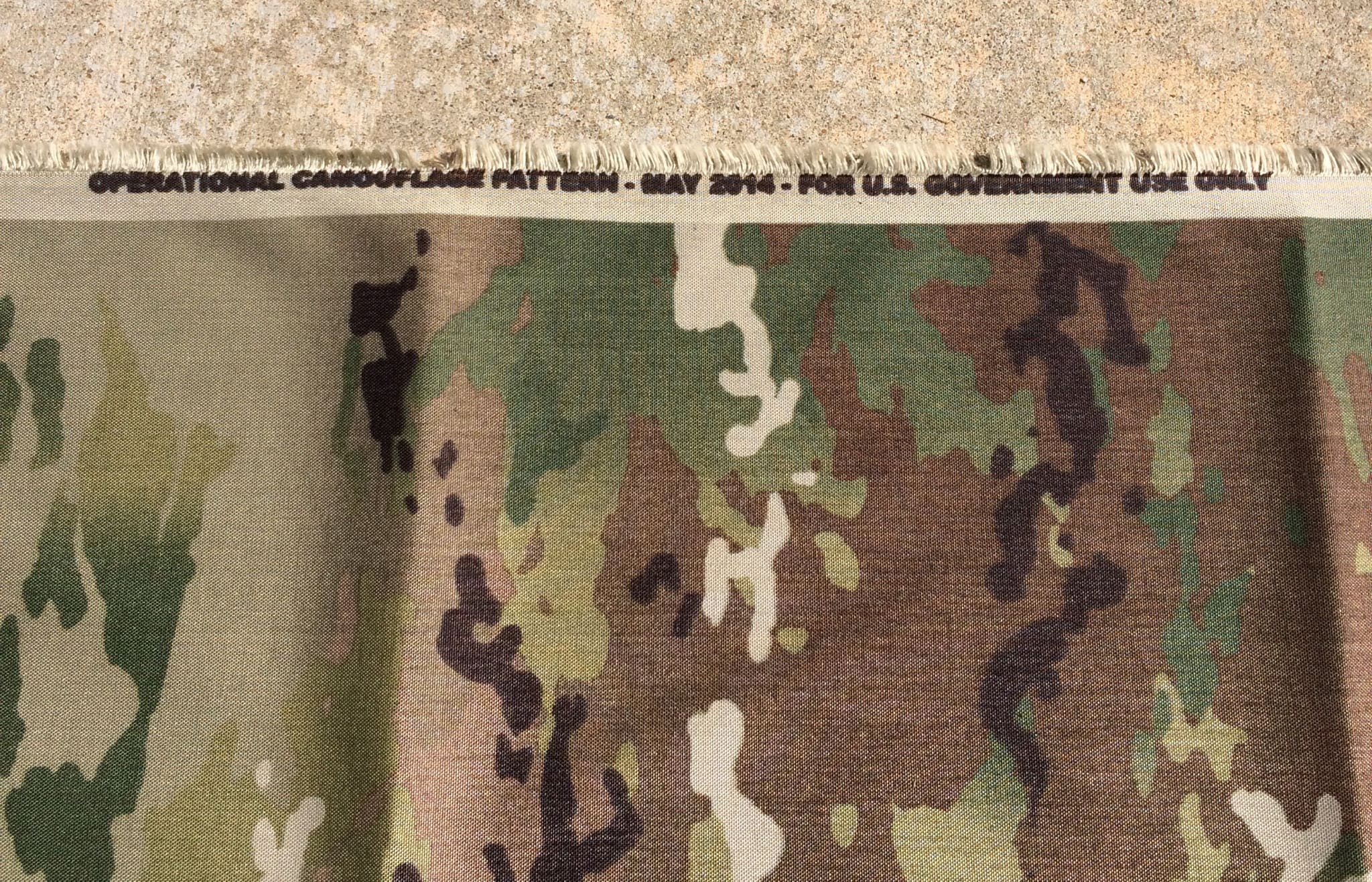
The US Army uses the name Operational Camouflage Pattern to refer to the Scorpion W2 camouflage pattern which is a 2010 modification of the so-called Scorpion pattern originally introduced by Crye Precision in 2001 and patented in 2004. What is at question, is whether or not the Army can use the pattern, royalty-free.

We know that Crye filed for, and was granted, a patent for this camouflage by the US Patent and Trademark Office, Camouflage Pattern Applied to Substrate US D487,848 S, March 30, 2004. We also know that not long after the patent was granted, the Army asked the PTO to insert the following addendum into the patent:

After claim, insert the following:
–Statement as to rights to inventions made under federally sponsored research and development.
The U.S. Government has a paid-up license in this invention and the right in limited circumstances to require the patent owner to license others on reasonable terms as provided for by the terms of contract No. DAAD16-01-C-0061 awarded by the US Army Robert Morris Acquisition Natick Contracting Division of the United States Department of Defense.–

From this, we surmised that the US Army’s assertion of appropriate rights is based on the funding of the Scorpion project via contract (DAAD16-01-C-0061) in September of 2001. This 13 year-old contract has remained the missing piece to this puzzle. Does this contract, in fact, prefer rights to the camouflage to the US Army?
(more…)
Sneak Peek – National Molding Unveils New Technology at Modern Day Marine

Monday, September 22nd, 2014

RPC 9 19 14

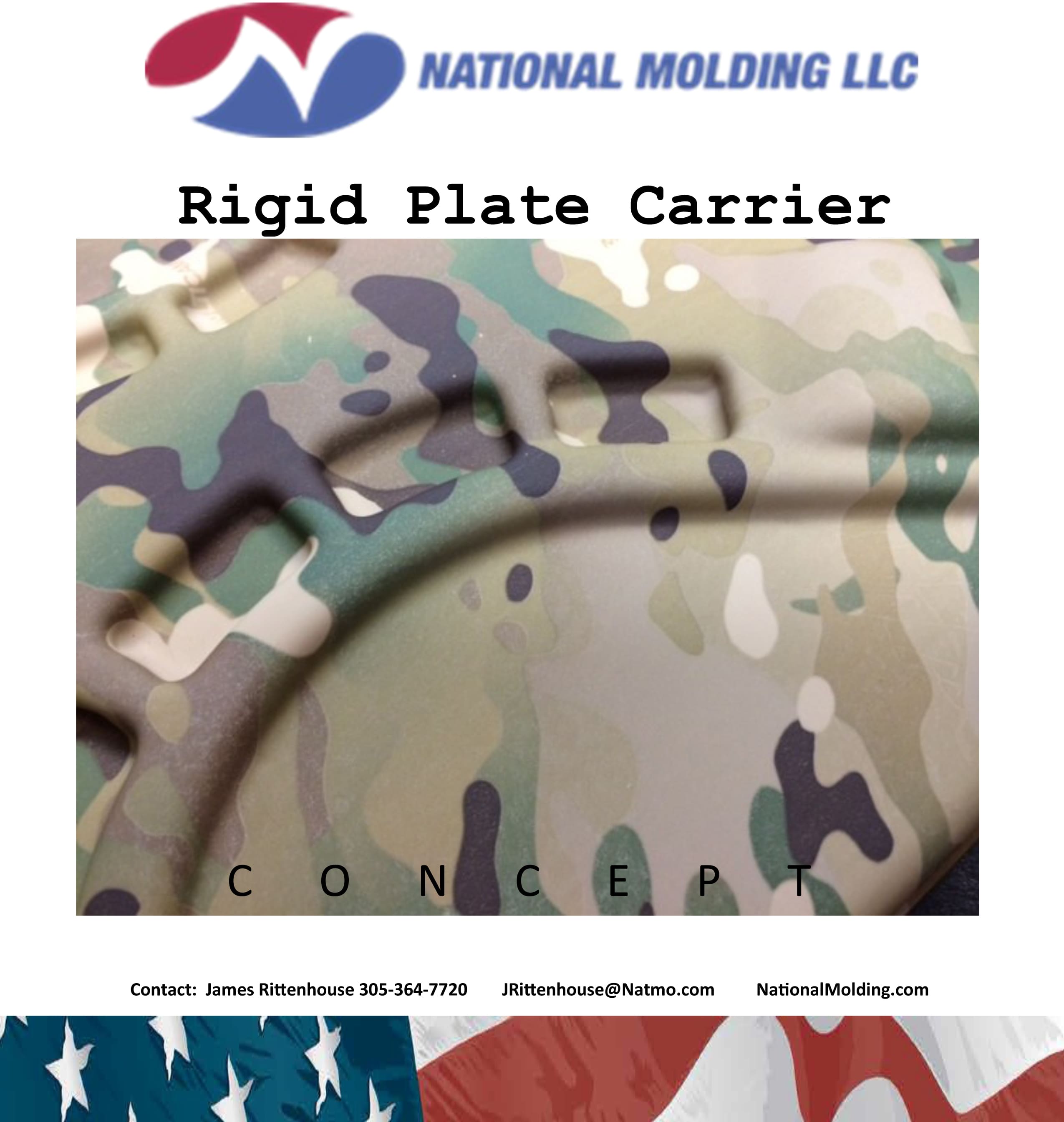
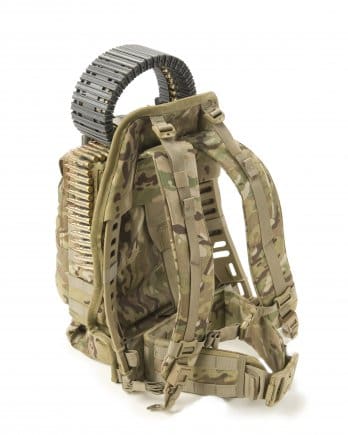
At this week’s Modern Day Marine expo at Quantico, Virginia, National Molding will be revealing what they are calling “a new direction in armor.” Stop by Booth #3142 to check it out.

www.nationalmolding.com

US Army Developed Ironman Ammo Pack Costs More Than Commercial Version It Emulates

Sunday, September 21st, 2014

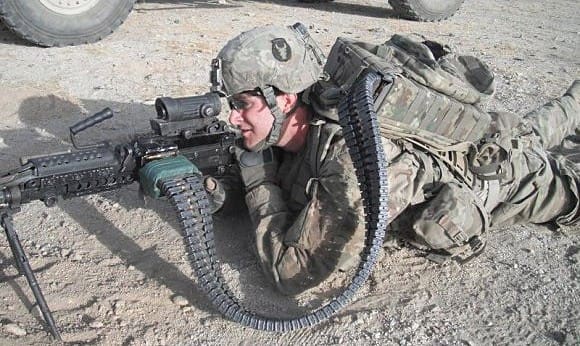
A little over three years ago the US Army told us about this great new high capacity ammunition carriage system that they had developed for the M240 Machine Gun. It was so awesome they even gave it a cool name. The ‘IronMan’ was created by Natick’s Quick Reaction Cell and the Rapid Equipping Force after a Soldier identified the need for a means to carry and feed up to 500 rounds of linked 7.62. We literally thought this was a one off kind of a thing to support the 34th ID and that would be the end of it.

Interestingly, the Army spent a lot of time (initial prototypes in 45 days with an operational assessment almost two years later) and money to develop these things before they finally purchased a bunch of them. When we first wrote about it in July of 2011, we noted the conceptual similarity to the existing TYR Tactical MICO. The MICO Machine Gunners Assault Pack was created first, on TYR’s dime, and chances are really good that some enterprising GI saw the MICO and wanted one. Instead, he got the IronMan.

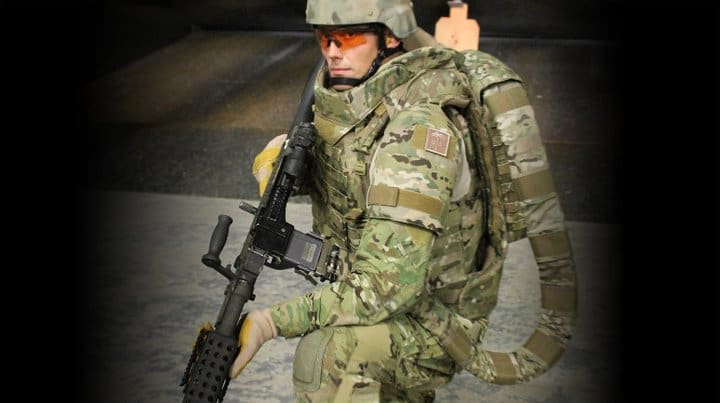
Above is the Army’s IronMan and below the TYR Tactical MICO. They are definitely different executions of the same concept.

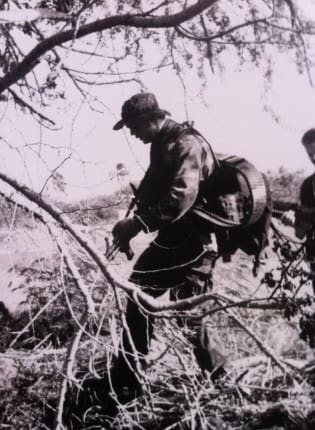
Yeah, yeah, yeah, it’s been done before. There’s no question, the concept isn’t new. Below you can see a ‘China Lake’ pack system built for the SEALs and used with the M60.

IMG_7497.JPG

The difference here is that the government designed something that was already commercially available and incurred greater costs than the commercial model’s. Even worse, we hear reports that the issue models have trouble feeding and that units have been buying the MICO from TYR Tactical as replacements. That’s paying twice for the same capability.

In the time it took the Army to finalize and test their design, TYR Tactical has continued to develop the MICO, not only ensuring it will work with both the M240 and Mk48 but also introducing adapters for the M249 and Mk46 5.56mm weapons. They’ve also developed a tripod carrier accessory for the pack.

If any SSD readers have experience with the IronMan (or the MICO for that matter), please share it in the comments section. We are hearing that most are out of service for various issues.

From here on out, we’ll just refer to it as ‘IronyMan”. When all is said and done, the Army takes years to field a system that already exists commercially and pays more to do it. Sound familiar?

I Approve This Message

Sunday, September 21st, 2014

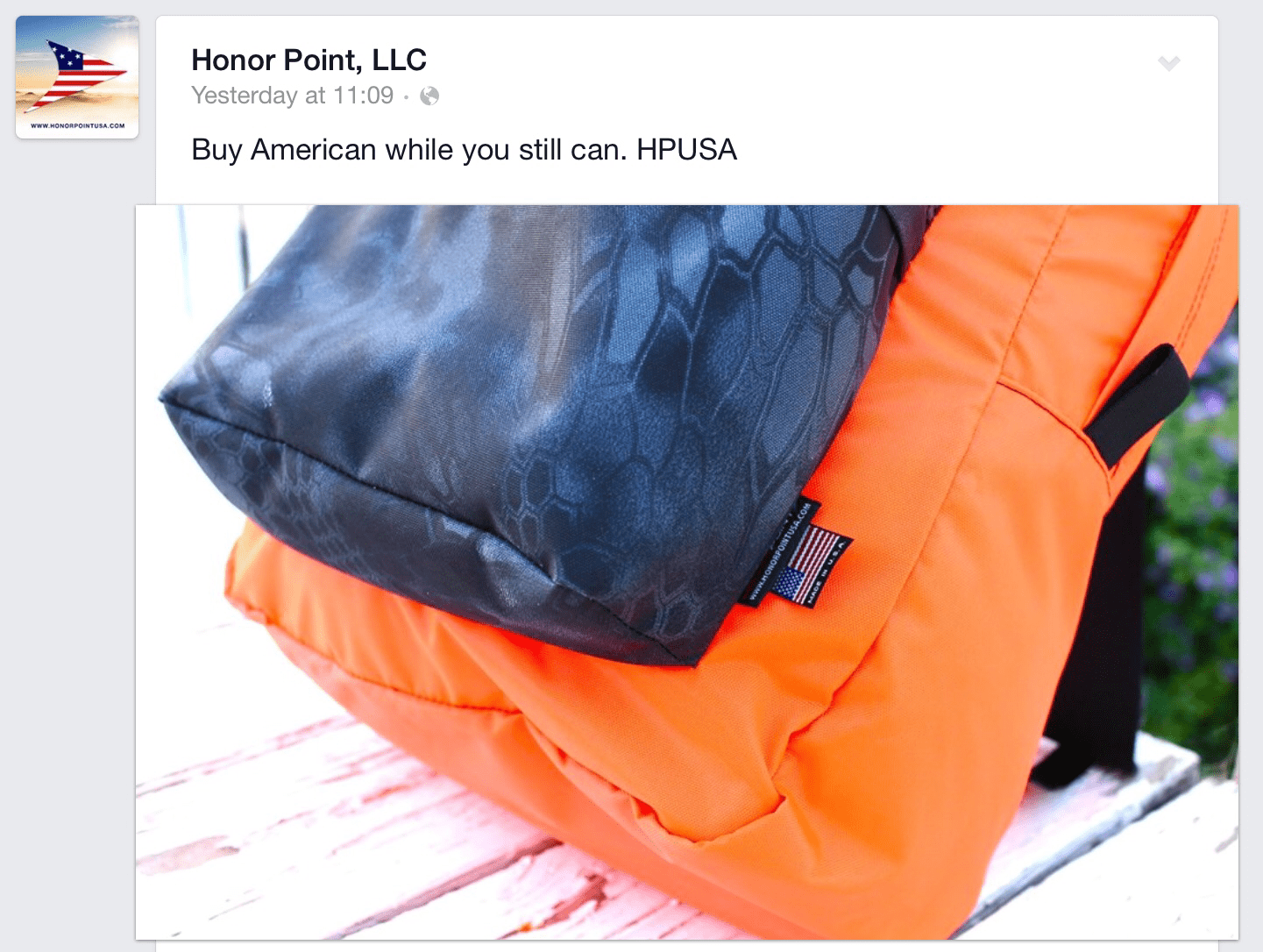
I ran across this on Facebook and thought, “yeah, how true.”

IMG_7496.PNG

www.honorpointusa.com

5BORONYC – Desert Camo Hats

Sunday, September 21st, 2014

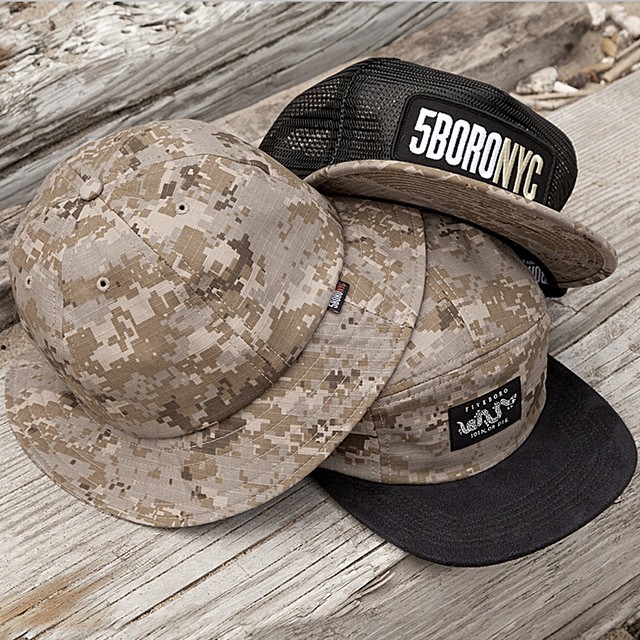
5BORONYC Hats

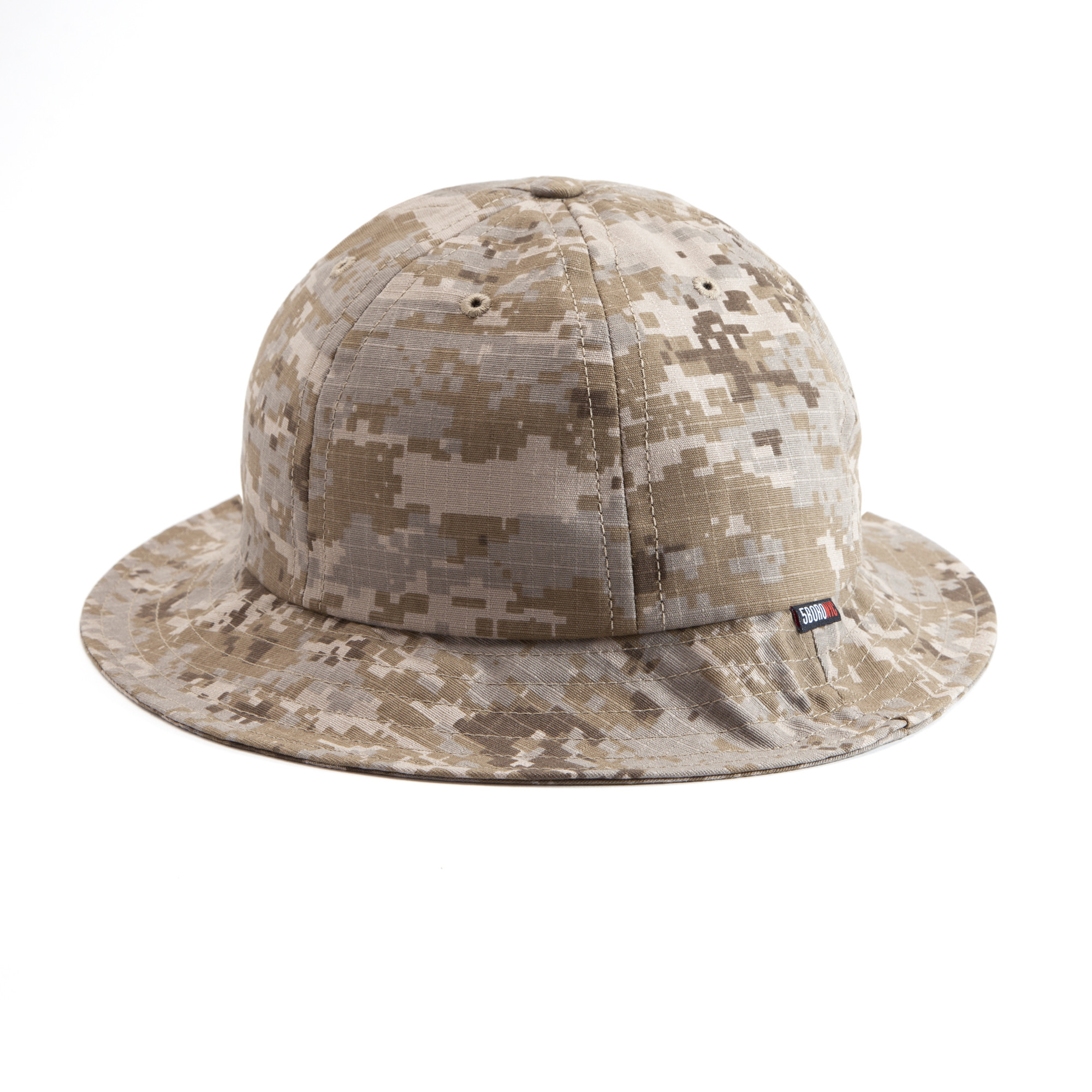
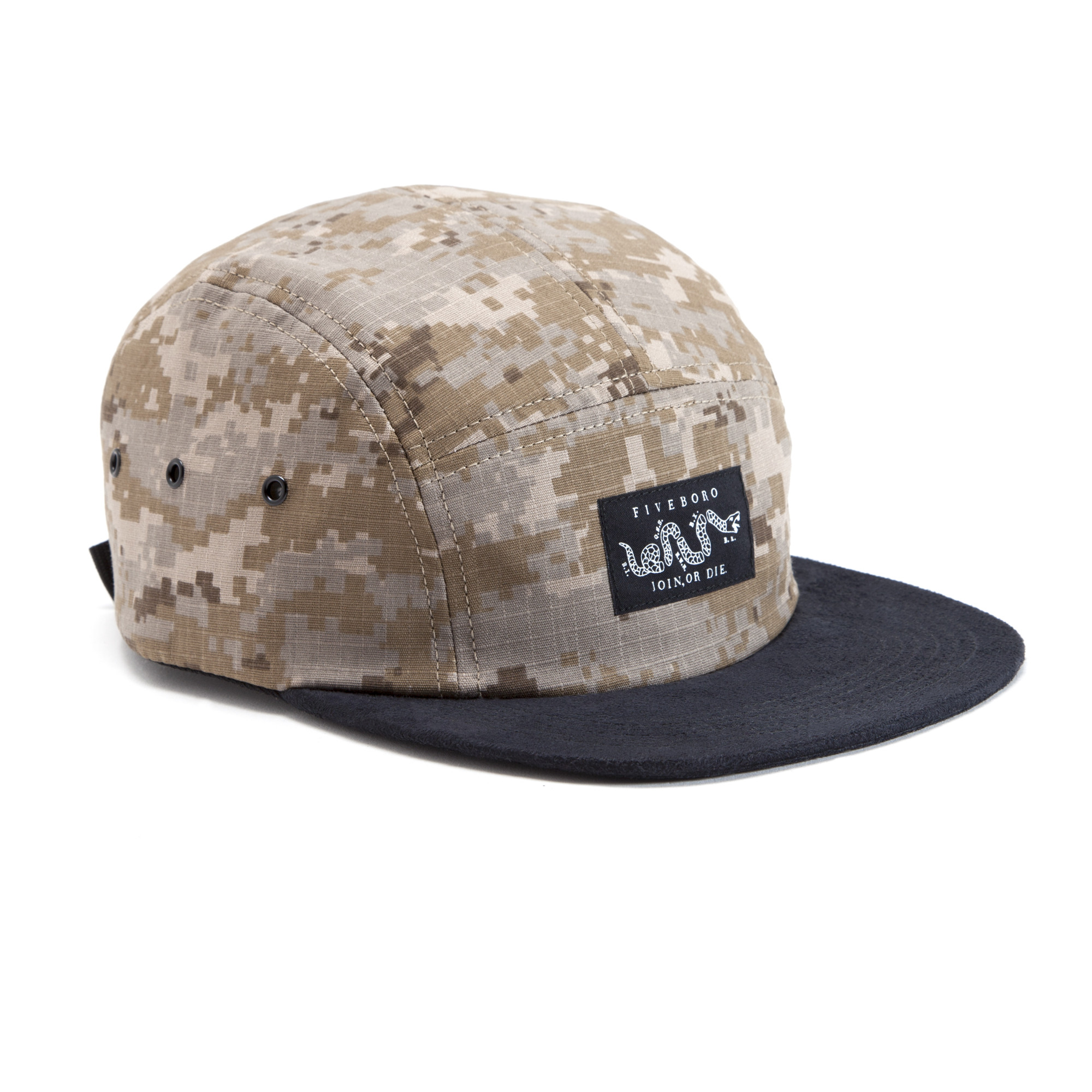
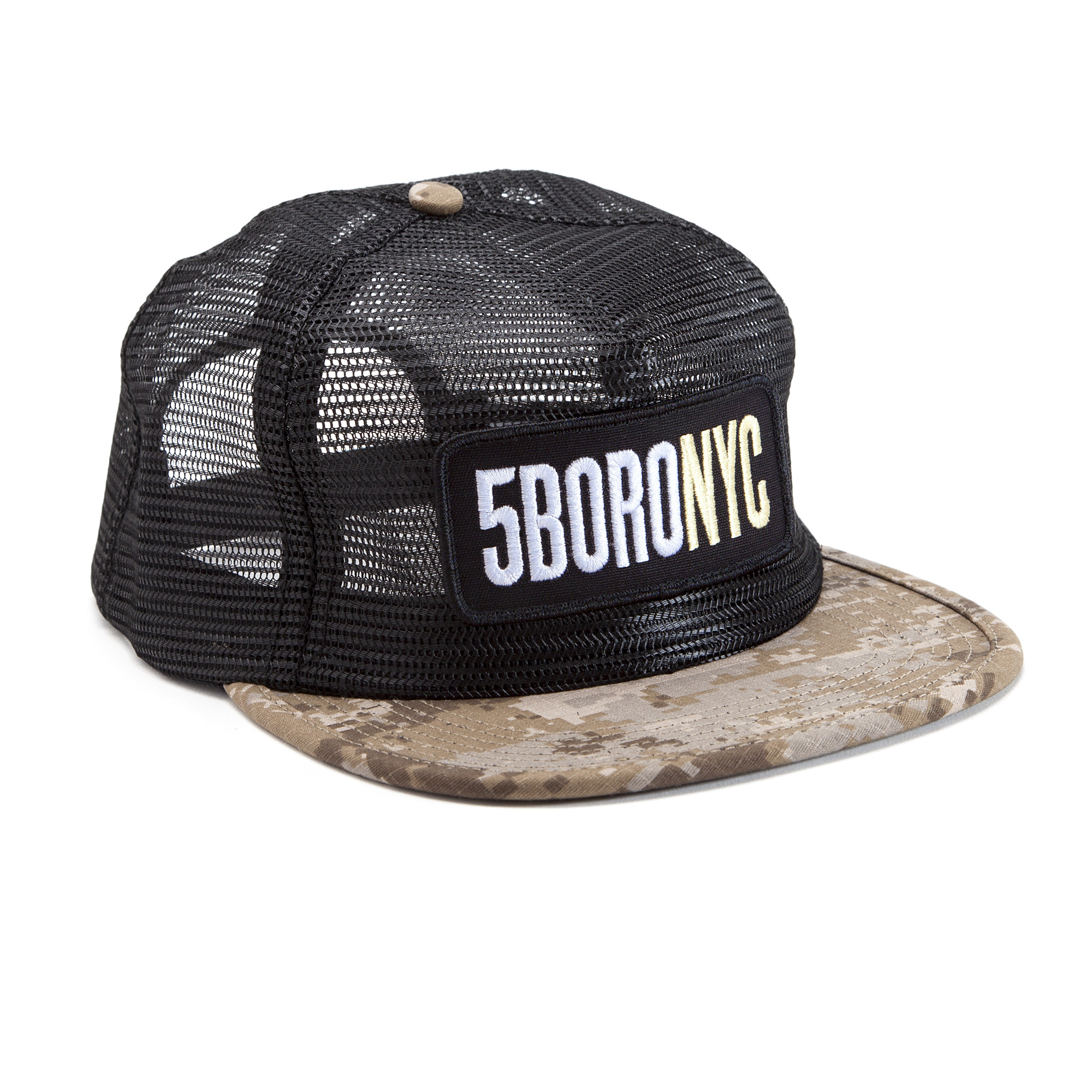
5BORONYC has produced three hats in a desert camo that’s very reminiscent of AOR1.

5BORONYC_Six_Panel_Bucket_Desert
Six Panel Bucket Desert Camo

5boronyc.myshopify.com/collections/5b-hats/products/six-panel-bucket-desert-camo

5BORONYC_Join_or_Die_Camper_Desert_SuedeJoin Or Die Five Panel Camper Desert

5boronyc.myshopify.com/collections/5b-hats/products/join-or-die-five-panel-camper-desert

5BORONYC_Logo_Mesh_Snapback_DesertLogo Mesh Snapback Desert

5boronyc.myshopify.com/collections/5b-hats/products/logo-mesh-snapback-desert

Available either online or at select retailers.

5boronyc.myshopify.com/collections/5b-hats

Crimson Trace Employees Complete NSSF Program

Sunday, September 21st, 2014

Crimson Trace Employees Complete NSSF Program

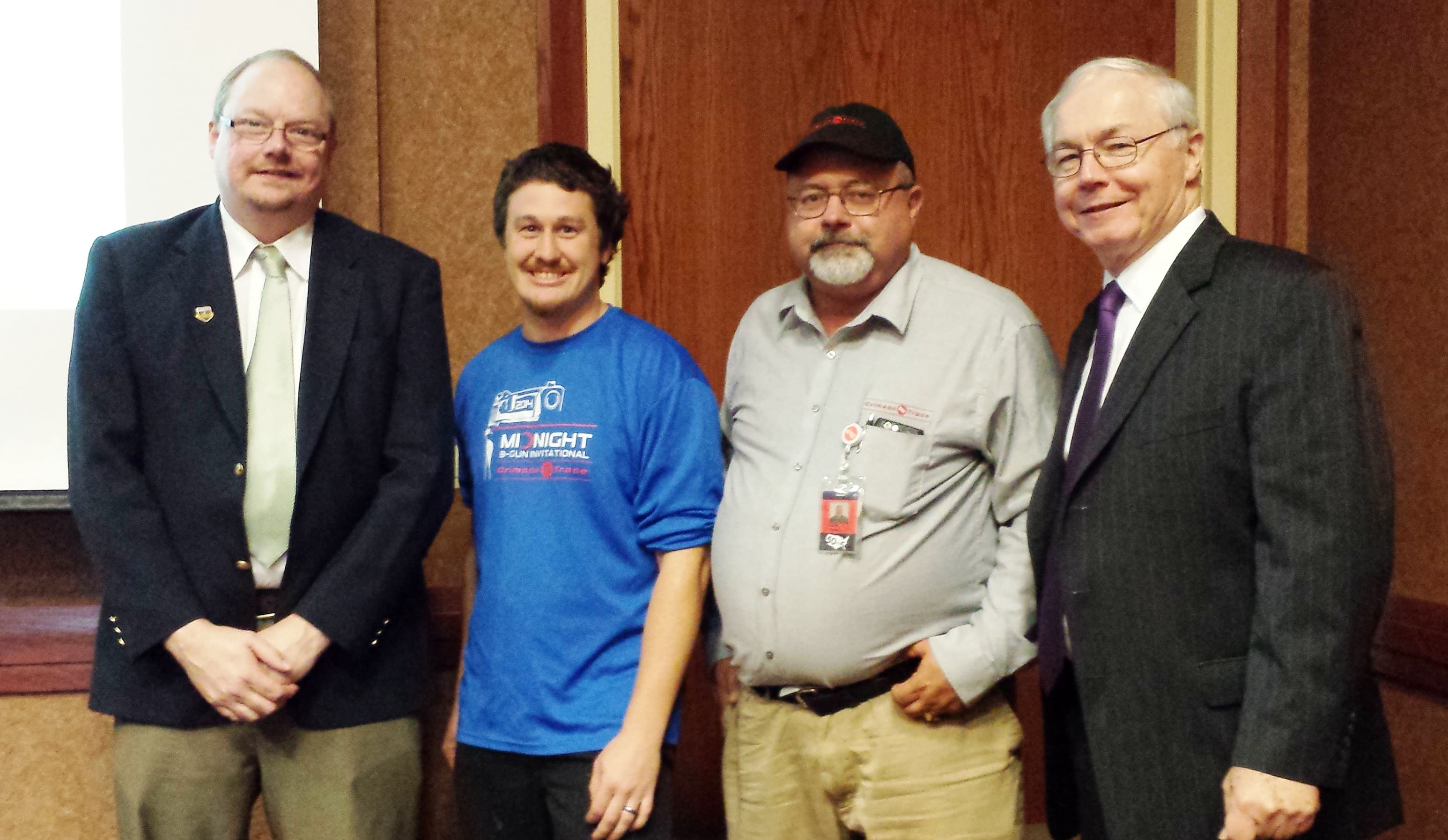
(Wilsonville, OR) – Crimson Trace, the shooting industry’s recognized leader in laser sighting systems and tactical lights for firearms, had several employees recently complete a special Retail Education Seminar held by the National Shooting Sports Foundation. The employees—Charlie Sunderlin, Luke Fery and Kris Richard—are key members of the Crimson Trace firearms support team, and are responsible for firearms acquisition, tracking and distribution. The company regularly uses firearms for product grip fit tests, R&D and performance evaluations.

“At Crimson Trace, we place a high priority on ATF compliance, and this training definitely will help us keep accurate records,” says Charlie Sunderlin, Crimson Trace’s Armorer. “The valuable security training provided at this seminar will help retailers thwart thieves and straw purchasers, too. It was well worth the time.”

The 5-hour seminar was held in the Portland area and covered such topics as: error proofing federal firearms forms, becoming more aware of straw purchases, properly selling firearms at gun shows, and how to take a thorough firearms inventory. The NICS background check process and more topics were covered during the educational seminar.

Crimson Trace is well known as the nation’s top manufacturer and seller of more than 160 accessories for firearms, including lights, fore grips, laser sights and light-and-laser combination units, such as the company’s new Rail Master Pro. The company offers more than two dozen laser sight systems for the popular 1911 pistols.

Crimson Trace has undertaken a new promotional campaign that encourages everyone to ask themselves, “have you done everything in your power to defend yourself and what’s yours?” The rallying words are: “In Condition Crimson™, We Stand.”

For more details, visit www.conditioncrimson.com or call 800-442-2406. All Crimson Trace products are proudly Made in the USA. This year the company is celebrating 20 years of award winning product innovation.

New GeoSure Global App Provides Up-To-The-Minute Travel Safety Information

Saturday, September 20th, 2014

Monitor threat temperatures anywhere in the world: know when to walk or take a cab. when to leave at dusk or linger for a glass of wine. Today’s travelers can be empowered with GeoSure.

New York City, September 18, 2014 – It’s a beautiful world. It’s a treacherous world. Both facts are equally true. So how can travel – for business, for pleasure, for study – focus on the good, and steer clear of the bad? Today’s state-of-the-art answer is GeoSure Global, a new application designed under the leadership of Michael Becker, investor, entrepreneur and adventurer, and big data scientist, Dr. Donald Pardew, a thought leader in statistical risk modeling.

GeoSure Global balances the need or desire to travel with a personalized, analytically modeled assessment of safety and security in all the world’s travel zones. Its precision helps assure that travel adventures are the adventures one wants.

Today’s premier travel-risk assessment tool, the GeoSure app is unique in its ability to provide ultra-accurate and ultra-timely safety related advisories to travelers and travel-planners worldwide. Using sophisticated predictive analytics, GeoSure derives its exclusive “Threat Temperature” risk scores to quantify travel vulnerability anywhere in the world. It’s an instant, powerful, and highly personalized tool that is further enhanced by crowd-sourced updates from GeoSure’s community of global travelers and users.

Utilizing up-to-the-minute data drawn from hundreds of sources, including narrative data sources and shared intelligence from its own global community, GeoSure delivers vital travel information based on data and predictive analytic methodologies not available to most travelers. Sources include CDC, WHO, United Nations, State Department, Interpol, and data from many national and local authorities and updated global threat statistics. Virtually real-time reporting can include:

• Cultural, economic or geopolitical conditions that predict overall threats
• Political rallies that signal trouble or the absence of trouble
• Human rights violations
• Environmental contamination and cyber threats
• Conditions unfavorable to women (existing and emerging)
• Incidence of thefts and physical threats
• Local conditions that are attractive to visitors
• User reported “all-clears” in any travel zone

You can read the full release via .pdf here: soldiersystems.net/wp-content/uploads/2014/09/GEO_PR_09-18-14p.pdf

For more information, visit www.geosureglobal.com.

Gunfighter Moment – Frank Proctor

Saturday, September 20th, 2014

GOOD WEAPONS HANDLING SKILLS IN REGARDS TO BOLT LOCK RELOADS WITH THE AR-15

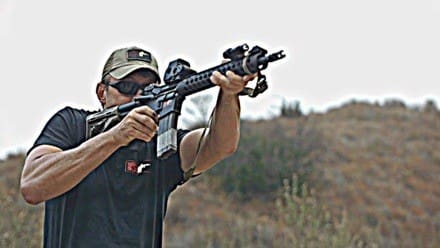
I live by 2 very easy to follow gun handling rules: #1 keep the pointy end of the death machine in a safe direction. #2 if you’re eyes are not connected to the sights then the trigger finger is connected to the frame of the gun. For the AR-15 I add rule 2a if the eyes are not connected to the sights the rifle is on safe and some positive pressure up on the selector lever. These rules have served me very well in every situation.

When this segment on reloads went on Trigger Time TVs youtube channel It got a lot of push back in regards to putting the rifle on safe during a bolt lock reload, as well as when I posted it to my company Facebook page.

Here is my detailed response to why I believe in doing it:

I’m more than happy to explain everything I do. Everything I do and believe in has a reason behind it. I’m also very open minded to new ideas and thoughts on how to do things better. I was a Green Beret for 8 years before I changed to my current rifle reload procedure. I was taught that it was OK to keep the rifle on fire during a bolt lock reload and when I was the Primary Instructor for the Special Forces Advanced Urban Combat Course I also taught it that way. It never felt right to me when one of my guys would ask me “do we keep the rifle on fire during the reload?” and I would say yes. I justified it in my mind by saying it’s OK because at that point we are still in the engagement. Through my entire Army career since I was 18 years old it has been programed into me to keep the rifle on safe when not shooting.

When I was going through the Special Forces Qualification course I developed another habit with the M-4. I put my thumb under the selector lever and push up against the selector lever as an extra measure of safe gun handling. I think it was some sort of subconscious thing that happened to prevent my gear or all the brush I was walking through from effecting the selector lever and firing the gun. I also press my trigger finger into the frame of the rifle when my eyes are not connected to the gun. These extra safety measures have never cost me even a tenth of a second getting the gun into operation and getting an accurate hit.

So I was watching some YouTube one day in 2012 and saw Pat McNamara talking about how he does rifle reloads. Pat puts the rifle on safe during the bolt lock reloads. Pat retired from the 1st Special Forces Operational Detachment (D) and was the marksmanship instructor for his unit for awhile. After hearing pretty legit dude like Pat talk about it I decided to try it. It took me about 20 deliberate reps to program getting the gun on safe into my bolt lock reload. Since that day in October 2012 I haven’t lost even a tenth of a second on a bolt lock reload due to putting the rifle on safe during the reload. In my courses I will start the reload session with a competition. I have the guys set up for a bolt lock, 1 round in the gun and an empty mag. I compete against the whole class 1 shooter at a time. I let the other guy start, he shoots first and starts his reload to another shot. After his first shot I shoot, get bolt lock put the gun on safe and work my reload to another shot. I’m around 98% on getting 1 shot reload 1 shot on target before the other who had about a 1 second head start and they aren’t putting their gun on safe. I’m not saying that I’m magic, I’m a fan of proven reliable mechanics and very efficient mechanics at that. I do it this way to make a point that what I’m saying works and that getting the gun on safe won’t cost anything.

Pat’s term is “Always an enabler, never a disabler” in regards to the selector lever, and I completely agree and dig it the most. I’m not a fan of scenarios and “what ifs”. I am a fan of solid fundamentals and programing them to a point where you instantly apply those fundamentals to any situation you find in order to solve problems without overthinking. There are however some what ifs that can make it make sense when I say that the world could change in the amount of time it takes to reload a rifle. Let’s look at one of many scenarios that support putting the rifle on safe when the eyes are not connected to the sights. If I were deployed with my team and during a bolt lock reload I didn’t put the rifle on safe, I get the mag in then the bolt forward then get shot in the head and fall down and a rock or something fires the gun and my rifle shoots our only 18D in the head. That’s a pretty sad face day right there for a whole ODA that could have been avoided by a very easy mechanical function. As I said you can what if stuff to death but at then end of the day, it’s too easy to put the gun on safe during a reload and I’m gonna keep on doing it because I believe in it and based on my experience it works.

-Frank Proctor

20130823-210852.jpg

Frank Proctor has served over 18 years in the military, the last 11 of those in US Army Special Forces. During his multiple combat tours in Afghanistan & Iraq he had the privilege to serve with and learn from many seasoned veteran Special Forces Operators so their combined years of knowledge and experience has helped him to become a better operator & instructor. While serving as an instructor at the Special Forces Advanced Urban Combat Course he was drawn to competitive shooting. He has since earned the USPSA Grand Master ranking in the Limited Division and Master ranking in the IDPA Stock Service Pistol division. He learned a great deal from shooting in competition and this has helped him to become to become a better tactical shooter. Frank is one of the few individuals able to bring the experiences of U.S. Army Special Forces, Competitive Shooting, and veteran Instructor to every class.

All this experience combines to make Frank Proctor a well-rounded shooter and instructor capable of helping you to achieve your goal of becoming a better shooter.

Gunfighter Moment is a weekly feature brought to you by Alias Training & Security Services. Each week Alias brings us a different Trainer and in turn they offer some words of wisdom.