FirstSpear TV

Archive for June, 2025

The Military Health System – A Medical System Ready for Any Challenge

Monday, June 9th, 2025

FALLS CHURCH, Virginia – One of George Washington’s many wise aphorisms, “To be prepared for war is one of the most effective means of preserving peace,” is timeless. Teddy Roosevelt updated the maxim for audiences of his time, advising the country to, “Speak softly and carry a big stick.” Today we press for Peace through Strength.

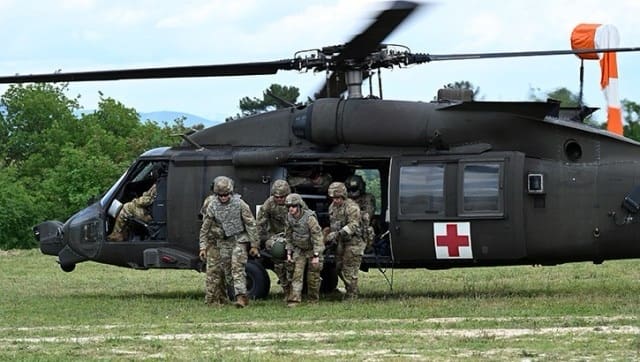
The Military Health System (MHS) is a key element in executing this strategy. With a global network of 700+ hospitals and clinics and more than 130,000 military and civilian healthcare professionals standing the watch, the MHS ensures America possesses a medically ready force that is fit to fight at a moment’s notice. The MHS sees optimizing the human factor as our strategic edge in combat. But the MHS is unlike any health care system in the United States – we go to war.

From keeping service members healthy here at home to mitigating disease overseas, we keep guns in the fight. By bringing operating rooms and ICUs to the front lines, aboard ships, and in the sky, we empower warfighters to take heroic risks, confident that the world’s best doctors, nurses, and medics have their back at each step and upon every acre on earth. There is nothing the MHS won’t do: no research too ambitious, no device too expensive, no distance too far to preserve or restore the health of our warfighters.

As Acting Assistant Secretary of Defense for Health Affairs, I’m proud to be charged with guaranteeing our medical forces provide world-class medical care and deploy rapidly to support any and all American military missions. The responsibility doesn’t end there. The MHS also ensures those who protect hearth and home -family members – also receive world-class medical care. This empowers deployed Service members to remain mission-focused without having to worry about the health of their spouse or child.

We also fulfill the solemn compact to provide health care to those retirees who devoted their life’s work and innumerable sacrifices in the service of this Nation. As a retired Navy physician and a military spouse, I understand the sacrifices Service members and their families make, both what it’s like to deploy and what it’s like to be left behind. This mission is both intensely personal and intensely rewarding.

That’s why the current underperformance of the new TRICARE contract is especially frustrating to me. The TRICARE health plan is a key pillar of the military’s healthcare delivery system. Millions of family members and retirees rely on TRICARE’s network of providers and hospitals for both medical care and mental health services, like autism care that families count on each and every day. The Defense Health Agency

and I are working tirelessly to hold the contractors accountable, to grant waivers to ensure access to specialty care, and to help families navigate this transition. We’re making progress, but not quickly enough. I will continue to work on behalf of military families until this system is fixed, and to ensure this doesn’t happen again.

The garrison mission of the MHS is carried out in military medical treatment facilities across the globe. The mission is best distilled to its essence: readiness. Medical readiness is combat readiness, and while we’re grateful to have the current moment of relative peace, we must remain vigilant. When the enemy strikes, we need our Service members physically fit, mentally aware, and healthy to defend our nation.

Throughout history, interwar periods have had a pernicious effect on medical readiness, so much so that these periods bear the eponym: The Walker Dip. In 2018, Surgeon General of the British Armed Forces Vice Admiral Alasdair Walker described a recurring and troubling pattern dating back to the 19th century. From the Napoleonic War (1803-1815) to Iraq and Afghanistan, hard-earned lessons and experience gained in combat, such as the importance of specialized trauma care and transfusion medicine, are forgotten and must be relearned. Sadly, these skills “dips” diminish survival rates, resulting in greater injury and loss of life. Forewarned is forearmed. It’s my personal mission to ensure that the skills and expertise leading to the historically high battlefield survival rates that we achieved in Iraq and Afghanistan are never forgotten.

In a world of profound geopolitical risk and competing economic priorities, how can military medicine avoid the Walker Dip? How can it successfully compete for resources with modernization and replenishment of our weapons stock? Simply put, we can’t afford not to.

Fortunately, military medicine isn’t in competition with warfighting priorities such as weapons systems. Rather, it potentiates the ultimate weapons system: the American Soldier, Sailor, Airman, Marine, and Guardian. Medically ready forces keep guns in the fight and ready medical forces honor the pact that America makes to its sons and daughters to provide world-class medical care anytime, anywhere, under any conditions.

The strategy to maintain peak readiness, to cheat the Walker Dip, is three pronged: Support, Sustain, and Strengthen.

  • We Support our warfighters in battle. This is our raison d’etre.
  • We Sustain our skills by doing high volume, high complexity medical care.
  • We Strengthen our chain by fortifying our force generation platforms.

These goals are mutually reinforcing, fostering a virtuous cycle of success. These priorities require resources, leadership, and commitment. I have infinite confidence in the commitment, skill, and dedication of our people. The MHS is one of the best healthcare systems in America and the very best military medical system in the world. We are blessed with outstanding and supportive leaders in the Department who I will continue to work with to ensure the MHS has what it needs. I will continue to tell our story to our elected representatives on Capitol Hill and advocate for our warfighters to ensure they have the medical support they deserve.

Military medicine is a no-fail mission. I’m confident that our success will continue to reinforce the strength that sustains the peace. But should the peace be broken… our preparation will ensure we break the Walker Dip streak.

By Dr. Stephen Ferrara, Acting Assistant Secretary of Defense for Health Affairs

Bongo Gear Introduces SLAM Pack

Sunday, June 8th, 2025

New from Bongo is the SLAM Pack. Named after the MACV SOG SLAM (Search, Locate, Annihilate, Monitor) mission. It was designed as a supplement to the legendary Becker Patrol Pack at ~30 liters.

Coming Fall 2025…

bongogear.com/products/slam-pack

Hy-Conn – Hose Shark

Sunday, June 8th, 2025

During a recent visit to Arkansas I met a small business named Hy-Conn. Founded by a Firefighter, Hy-Conn manufactures quick fittings for fire hoses which allows firefighters to connect to fire hydrants, no matter the type of fitting, in a matter of seconds.

Using similar technology, they created the Hose Shark for use with garden hoses. This one-piece device connects to your hose and snaps right on to your spigot with a simple push of the collar into place. No more trying to line up threads or twisted hoses.

I know it can be enough a chore, fighting with threads at spigots located around the perimeter of our home for me. I thought about my mother-in-laws who had just moved in and immediately got one. It works as advertised and has made it a snap to move a hose from one faucet to the next.

Available on stainless steel or aluminum. I have an aluminum Hose Shark. It’s a great gadget for around the yard. Get yours at hoseshark.com.

VZ Grips Launches Affiliate Program Through AvantLink Affiliate Network

Sunday, June 8th, 2025

Tallahassee, FL – [5/21/2025] – VZ Grips, a leading manufacturer of premium handgun grips and firearm accessories, is excited to announce the launch of its new affiliate program in partnership with the AvantLink affiliate network.

This strategic initiative provides content creators, marketers, and firearm industry partners the opportunity to earn commissions by promoting VZ Grips’ high-quality products. By joining the AvantLink network, affiliates gain access to a comprehensive suite of marketing tools, real-time tracking, and generous commission structures to help them succeed.

“Our customers are passionate about precision, performance, and quality—and so are we,” said John VanZyck, Founder and CEO of VZ Grips. “We’re thrilled to partner with AvantLink to extend our reach and reward affiliates who share our commitment to excellence.”

VZ Grips is known for its wide array of G10 and other custom grip materials, designed to enhance firearm performance and aesthetics. With a reputation built on innovation and durability, the company’s products are trusted by shooters, law enforcement, and military personnel worldwide.

The affiliate program is open to all qualified publishers and offers competitive commissions, frequent promotions, and dedicated support to ensure affiliate success.

For more information or to apply, visit www.VZGrips.com/affiliates or find VZ Grips on AvantLink’s merchant directory.

What a Horrible Way To Save a Buck…Army to Close Museums

Sunday, June 8th, 2025

NEWS FLASH *** ARMY MUSEUMS SET TO CONSOLIDATE AND CLOSE FACILITIES ***

In support of Army transformation and a focus on directing resources toward readiness and lethality, the Center of Military History has begun a consolidation and reduction of Army museums, a process that will continue through Fiscal Year 2029.

The Army Museum Enterprise (AME) will reduce from 41 museum activities at 29 locations to 12 field museums and four training support facilities at 12 locations.

In the current AME, a substantial maintenance backlog and insufficient staffing prevent our museums from reaching their fullest potential as educational and historical resources. These challenges also pose significant risk to our ability to care for the Army’s priceless artifact collection, which is one of the world’s largest.

The future Army Museum Enterprise is designed to best support Soldier training and public education within our available budget and professional staff. The consolidation plan ensures the widest possible access to the highest quality museums within available Army resources.

Specific closure dates and procedures have not been determined. CMH is committed to maintaining communications with affected local communities and commands, and to addressing stakeholder concerns.

As soon as a timeline of closures and consolidations of specific museums is set, the Army will provide the information.

Editor’s Note: Sounds like it’s time to privatize those Division and Separate Unit Museums before the Army destroys our heritage.

Via @armyhistory

Army Leaders Propose Bolstering Lethality Through Transformation

Sunday, June 8th, 2025

WASHINGTON — During a hearing with Congress members, the Army’s top leaders shared details on the Army Transformation Initiative, which calls for cutting spending on stagnant programs, upgrading equipment and restructuring forces.

In April, Defense Secretary Pete Hegseth called on Army leaders to prioritize building lethality and to eliminate unnecessary cost.

Following the success of Ukraine’s effective, low cost unmanned aerial systems attacks on Russia’s bomber fleet, Secretary of the Army Daniel P. Driscoll stated before lawmakers that the Army needs cheaper solutions to bolster U.S. Soldier lethality. Using more than 300 drones in a single swarm attack last week, Ukrainian forces dealt a catastrophic blow to the Russian military.

“At a cost of a mere tens of thousands of dollars, Ukraine inflicted billions in damage, potentially setting back Russia’s bomber capabilities for years,” Driscoll said Wednesday. “The world saw in near real time how readily available technology can disrupt established power dynamics. And drones are but one example of a broader shift. The Army needs to keep pace.”

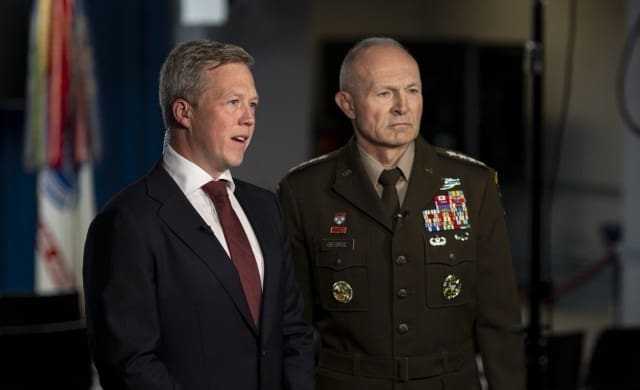
As the service prepares to posture its Fiscal Year 2026 budget, Driscoll and Gen. Randy A. George, Army chief of staff, asked Congress for more “agile” or flexible funding to support unmanned aerial systems and counter-UAS initiatives that bolsters the force. The Army’s top officer said that the service cannot afford to be locked into a program of record but rather must purchase new technology when available.

“Technology is changing too rapidly,” George said. “We’ve got to be able to buy capabilities, not specific programs.”

To restructure the Army into a more efficient, combat ready force, George said that the service would cancel obsolete unnecessary programs that do not contribute to enhancing the lethality of Soldiers, including eliminating a budget request for more Humvees to be added to the service’s fleet of vehicles.

In May, the Army stopped funding to the M-10 Booker Tank, citing design flaws and concerns over its deployability. Instead of spending on programs like the M-10, Hegseth said the service will focus on drones and counter drones, “off the shelf” technology, and strengthening sensors and the Army’s network.

The service will also cut funding to the AH-64D Apache Attack Helicopters, removing Apache battalions from the active component. George said four Apache battalions will remain in the National Guard, which will eventually receive the AH-64 E model. He added that UH-60M Blackhawk, a medical evacuation aircraft, will replace the UH-60L and V models.

Driscoll also proposed giving the service more autonomy on repairing certain equipment immediately instead of waiting on defense manufacturers. Driscoll cited one example, where at one installation Soldiers could not use a piece of advanced technology for up to a year due to a missing piece. However, the Soldiers learned they could 3-D print the required part at a fraction of the manufacturer cost.

Army also plans to cut 1,000 positions from the Department of the Army staff and will move many Soldiers to more combat-related jobs, George said.

Upgrading Soldier training

For the first time, the Army Reserve partnered with active-duty Army units in the largest mass exercise of its scale, Mojave Falcon. Beginning May 28, over 9,000 reservists and active-duty Soldiers participated in the mass logistics training moving equipment and supplies across vast distances in northern and southern California.

“When not deployed, our units are conducting tough, realistic training at their home stations and at our combat training centers,” George said. “Our Army is a professional team that remains focused on its warfighting mission, and young Americans want to be a part of it. And this is evidenced by our strong recruiting numbers this year.”

The service announced it had met its recruiting goals early, welcoming more than 61,000 new Soldiers to its ranks, despite raising its recruiting goal by 10 percent from 2024.

The service recently began phase two of Transformation in Contact, or TiC, the service’s initiative where Soldiers rapidly train, equip and field new technology. The 2nd Cavalry Regiment from Rose Barracks, Vilseck, Germany and 1st Armored Brigade Combat Team, 3rd Infantry Division, from Fort Stewart, Georgia will take part in TiC 2.0, which, expands the scale to two divisions and two Stryker brigade combat teams. The Soldiers will incorporate UAS and counter UAS.

In January, the 3rd Brigade Combat Team, 10th Mountain Division from Fort Johnson, Louisiana, successfully completed a TiC training rotation as part of Combined Resolve, an annual exercise hosted by U.S. Army Europe and U.S. Army Africa.

One TiC brigade that trained in Europe improved to 300 percent more effective in lethal targeting, George said.

“This was a great proof of concept,” George said. “It confirmed that our formations are capable of rapidly improving their lethality.”

“Transformation in contact taught us some valuable lessons about what our Army should be buying and how we should be buying it, and we’re just getting started,” George added.

By Joe Lacdan, Army News Service

Armageddon Gear – Waterfowler’s Hat

Saturday, June 7th, 2025

Blending rugged waxed canvas with timeless grit, the Waterfowler’s Hat is built for long days, rough weather, and a touch of tradition.

armageddongear.com/product/waterfowlers-hat

NEW Army Training Requirements Regulation – Doc Is Cut In Half!

Saturday, June 7th, 2025

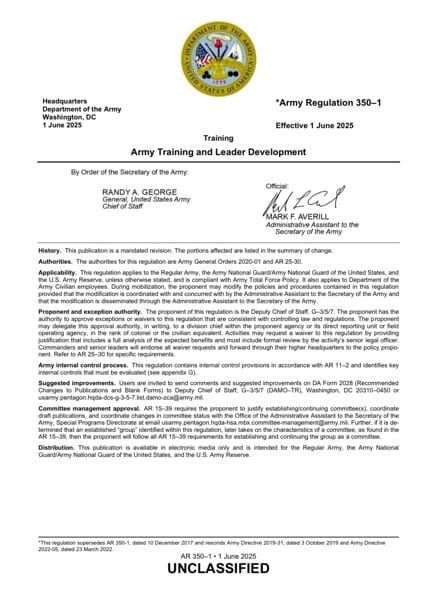
The Army has just published a “major revision” to the draft version of AR 350-1 Army Training and Leader Development, which has been floating around in draft format for the past few months.

The new directive is half of the size it used to be!

This major revision, dated 1 June 2025—

• Removes “resilience” (common mandatory training) (table C–1).

• Incorporates guidance from Executive Order 14183 (throughout).

• Incorporates guidance from Army Directive 2018-02, Global Cultural Knowledge Network, 4 April 2018 (throughout).

• Incorporates guidance from Army Directive 2018-07-4, Prioritizing Efforts-Readiness and Lethality (Update 4), dated 26 April 2018 (throughout).

• Incorporates guidance from Army Directive 2018-07-05, Prioritizing Efforts-Readiness and Lethality (Update 5), dated 9 May 2018 (throughout).

• Incorporates guidance from Army Directive 2018-07-11, Prioritizing Efforts-Readiness and Lethality (Update 11), dated 26 June 2018 (throughout).

• Incorporates guidance from Army Directive 2018-07-17, Prioritizing Efforts-Readiness and Lethality (Update 17), dated 28 November 2018 (throughout).

• Incorporates guidance from Army Directive 2018-07-18, Prioritizing Efforts-Readiness and Lethality (Update 18), dated 4 January 2019 (throughout).

• Incorporates guidance from Army Directive 2018-22, Retention Policy for Non-deployable Soldiers, dated 8 November 2022 (throughout).

• Incorporates and rescinds guidance from Army Directive 2019-31, Integration or Refresher Training for Prior Service Personnel, dated 3 October 2019 (throughout).

• Incorporates guidance from Army Directive 2021-08, Implementation and Sustainment of Army Medical Department Individual Critical Task Lists, dated 19 March 2021 (throughout).

• Incorporates guidance from Army Directive 2021-17, Lateral Appointment to Corporal and Eligibility for Basic Leaders Course, dated 21 May 2021 (throughout).

• Incorporates and rescinds guidance from Army Directive 2022-05, Army Combat Fitness Test, dated 23 March 2022 (throughout).

• Incorporates guidance from Army Directive 2023-11, Army Body Fat Assessment for the Army Body Composition, dated 9 June 2023 (throughout).

• Incorporates guidance from Army Directive 2025-02, Parenthood, Pregnancy, and Postpartum, dated 24 February 2025 (throughout).

• Incorporates guidance from Army Directive 2025-04, Initial Entry Training for Reserve Component Soldiers, dated 25 March 2025 (throughout).

• Incorporates guidance from Army Directive 2025-06, Army Fitness Test, dated 17 April 2025 (throughout).

• Changes Army Combat Fitness Test to Army Fitness Test (throughout).

• Removes requirements for Home Station Master Plan, Army Training Strategy, and Army Leader Development Strategy (throughout).

• Deletes previous chapters on Culture and Language and Distributed Learning Program (throughout).

• Reduces Training Support System content in this regulation; rather referring to specific regulations (throughout).

I realize it won’t make everyone happy but it eliminates some extraneous mandatory training requirements and allows commanders flexibility to concentrate on more mission focused training.

Get your copy here.