Aquaterro

Archive for October, 2025

On a Mission to Measure What Matters, Team Wendy Shares New DREW Data

Wednesday, October 29th, 2025

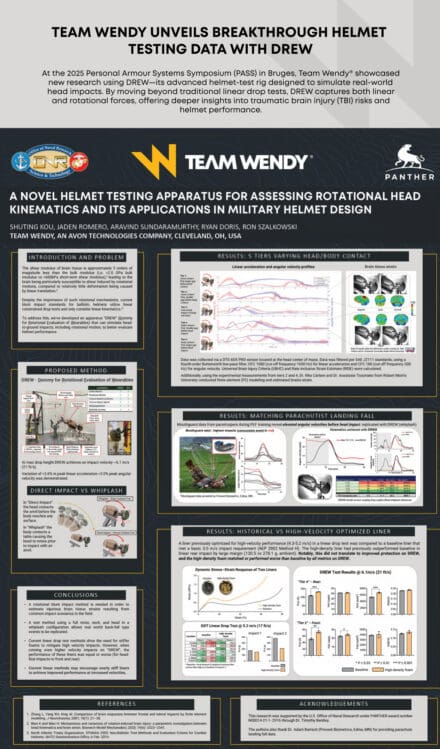
CLEVELAND, Ohio – Oct. 29, 2025Team Wendy®, a leading provider of innovative head protection systems, presented at the recent Personal Armour Systems Symposium (PASS) held in Bruges, Belgium, where company researchers shared new findings on DREW (Dummy for Rotational Evaluation of Wearables), including a paper published in the proceedings. Aiming to advance helmet testing from traditional linear drops to encompass rotational events, Team Wendy is on a mission to change the way the industry measures head impacts.

Who’s DREW?

Developed by Team Wendy, DREW is a biofidelic (behaves like the human body) helmet-test rig built to simulate real head-to-ground falls and capture both linear and rotational head motion (something legacy linear-drop tests miss). It uses a 50th-percentile Hybrid-III head, neck and torso on a pivoting assembly to recreate front, rear and side impacts, as well as to study both head-direct and whiplash-induced events.

“We want to measure how the brain responds to complex impacts, in ways that we still don’t understand well enough, so we can inform better products and standards going forward,” said Ron Szalkowski, head of R&D at Team Wendy and co-author of the PASS paper. “DREW helps move that conversation beyond linear drops to the rotational forces associated with concussion and other forms of traumatic brain injury (TBI).”

What Team Wendy Discovered

The PASS paper compared Team Wendy’s standard EXFIL® Ballistic helmet liner to a high-density foam ballistic liner tuned for DOT/monorail drops (where the helmeted head form is guided straight down onto an anvil at relatively high impact speeds). Using DREW in a rear, whiplash-induced configuration, as well as a front, direct impact configuration, the foam ballistic liner produced higher head loads (peak linear and angular acceleration) with no meaningful gain reduction in peak angular velocity.

“The foam liner was associated with more jolting to the head, both straight-on and in a twisting motion,” Szalkowski said. “Think of it like tuning a car’s performance on a treadmill, only to learn that it struggles with bumps and turns in the road. The danger is that a helmet design can look good on paper, but increased rigidity, for instance, does not necessarily help you in a real fall.”

The PASS poster also showed how DREW can mimic a real parachute landing. Researchers used sensor data from mouthguards worn by paratroopers to study the rotational dynamics linked to concussion-inducing, head-to-ground impacts. Then they tuned the rig (adjusting the drop angle and whiplash distance) until DREW matched the data within 4%.

“This gives our engineers a realistic target to design helmets against, and it could go so far as to inform future revisions to test procedures and performance criteria,” Szalkowski added.

Headstrong for Safety

Team Wendy’s initiatives at PASS showcase a profound commitment to comprehensive, peer-reviewed research that raises the benchmarks for head protection. Based on these insights, the company is advancing with DREW evaluations across different helmet categories and is supplying data to aid standards development efforts in partnership with academic and governmental entities. To request the PASS paper and poster, please reach out to Sara Jonas, global director of marketing, atsjonas@teamwendy.com. The paper is also available via PASS proceedings.

This material is founded on research funded by the U.S. Office of Naval Research through PANTHER award number N00014-21-1-2916. Team Wendy expresses gratitude to the partners at Robert Morris University for their contributions to FEA modeling and for the RISE3D injury metric utilized in DREW studies.

Wiley X Opens First-Ever Pro Shop at Frisco, Texas Headquarters

Wednesday, October 29th, 2025

FRISCO, Texas (October 28, 2025) – Wiley X, a global leader in premium protective eyewear, is proud to announce the opening of its first brick-and-mortar retail location. The new Wiley X Pro Shop is located at the company’s global headquarters in Frisco, Texas.

The Wiley X Pro Shop gives customers a hands-on opportunity to explore the brand’s full line of performance eyewear and learn about the advanced technologies behind each product. Guests can experience the clarity and color-enhancing benefits of CAPTIVATE™ polarized lenses, see firsthand the rigorous safety standards that every Wiley X frame meets, and get a closer look at the brand’s heritage of innovation and protection.

“Frisco has been an incredible home for Wiley X, and opening the Pro Shop here is an exciting next step in our journey,” said Dan Freeman, CEO of WileyX. “This space allows us to connect directly with our community and showcase the craftsmanship, technology, and purpose that go into every pair of glasses we make. Whether you’re a first responder, an outdoor enthusiast, or just someone looking for everyday eyewear, we want people to experience the Wiley X difference for themselves.”

Located at 15755 Preston Rd., Frisco, TX 75033, the Wiley X Pro Shop is open Tuesday through Thursday from 10 a.m. to 4 p.m. 

For more information about Wiley X and its full collection of protective eyewear, visit www.wileyx.com.

Cadre Holdings to Acquire TYR Tactical

Wednesday, October 29th, 2025

Leading Provider of Plate Carriers, Vests, Hard Armor, and Shields to Tactical Teams

Expected to be Immediately Accretive and Advances Strategic Focus on Mission-Critical Products with High Margins, Strong Cash Flows

Provides Significant Entry into New Markets, Particularly in European Military and Defense

JACKSONVILLE, Fla. — Cadre Holdings, Inc. (NYSE: CDRE) (“Cadre” or “the Company”), a global leader in the manufacturing and distribution of safety equipment and other related products for the law enforcement, first responder, military and nuclear markets, announced today it has entered into a definitive agreement to acquire TYR Tactical, LLC, a leading global manufacturer of tactical gear and equipment for military, law enforcement, and government agencies worldwide. The addition of TYR Tactical, which produced approximately $92.6 million of revenue in the year ended December 31, 2024, is expected to be immediately accretive to earnings and adjusted EBITDA margins.

The total consideration is $175.0 million, including $150.0 million of cash at closing and $25.0 million of Cadre common stock1, of which $1.0 million will be in the form of restricted stock unit awards to be granted to certain employees of TYR Tactical. In addition, the seller will be eligible to receive up to $25.0 million in additional contingent earn-out consideration, payable in cash, unregistered shares of common stock, or a combination thereof, at the Company’s discretion, based on the achievement of specified net revenue targets for the calendar years 2026, 2027, and 2028. As part of the transaction, the Company will acquire certain real property owned by an affiliate of TYR Tactical.

A family-owned business founded by Jason and Jane Beck in 2010, TYR Tactical is a leading manufacturer of mission-critical personal protective equipment and tactical gear for military and law enforcement globally. Designed to meet the exacting needs of tactical operators in high-risk environments, its suite of products includes plate carriers, vests, hard armor, shields, and accessories. Headquartered in Peoria, Arizona, TYR Tactical serves a worldwide customer base, including top-tier special operations units and government agencies in the U.S. and international militaries.

Warren B. Kanders, Chairman and CEO of Cadre, said, “We are excited to partner with Jason and Jane and welcome them as significant shareholders in Cadre. They have done an outstanding job building TYR Tactical into an industry leader with gear that always exceeds mission demands. TYR Tactical brings world-class engineering capabilities and a global reach, which importantly includes relationships with key military customers in northern Europe, that we believe will help Cadre unlock new growth opportunities in high-value end markets.”

Mr. Kanders continued, “Along with our recent acquisitions in the nuclear and robotics markets, this transaction reflects our ongoing commitment to expanding our portfolio and enhancing the Company’s market leadership across categories through disciplined M&A. In the last 24 months, including this transaction, we will have deployed over $400 million in pursuit of this strategy, and we continue to see robust M&A pipelines in both the public safety and nuclear markets.”

TYR Tactical has a reputation for innovation, ergonomic design and field-tested durability. Through a substantial investment in cutting-edge pressing and autoclave systems, the company offers a unique ability to manufacture plates and shields engineered with next-generation advanced materials. TYR Tactical is also known for its patented female body armor that addresses the distinct ergonomic needs of female operators without compromising comfort or adding bulk or weight.

Jason Beck, CEO of TYR Tactical, commented, “We share with Cadre a long-standing commitment to innovation, quality, and a life-saving mission. We are excited to partner with the Cadre team and look forward to working together to enhance our ability to serve those who protect us every day. We are extremely proud of our company’s legacy and cannot think of a better way for TYR Tactical to enter its next chapter.”

The transaction is anticipated to close in the first half of 2026, subject to the satisfaction of customary closing conditions. The transaction is expected to be financed with cash available on Cadre’s balance sheet and borrowings under its senior credit facility.

Headborne Systems – State of the Industry

Wednesday, October 29th, 2025

Anduril’s launch of Eagle Eye during the recent AUSA Annual Meeting created quite a bit of discussion among those in the helmet industry as well as those who wear them. In response, we received this “State of the Industry” report from an inside who we will keep anonymous. The perspective is their’s and will hopefully serve to educate our readers.
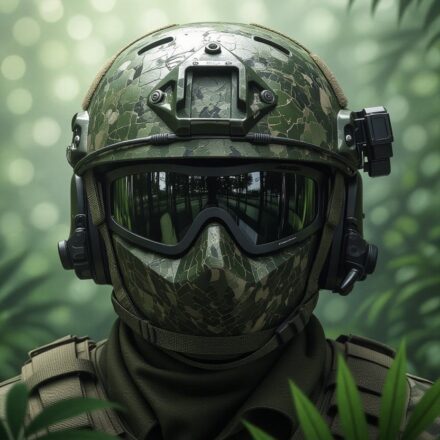
The recent reveal of Anduril’s Eagle Eye helmet system at AUSA 2025 sparked a lot discussion regarding helmets and where the industry is with regards to what the user wants.  Anduril did not present any performance specifications for the helmet.  All we know now is that they are in collaboration with Gentex to optimize the helmet.  At first glance, the helmet looks very close to the head with a relatively thin shell.  Comments have been made that is essentially comparable to an exotic car prototype being revealed at a car show to spark interest in that manufacturer.  But what is the rest of the helmet industry doing?  Are they in step with what users are expecting?  Have they made any progress in terms of protection over the last ten years or is it more of the same.  This article discusses those topics by branch of service and manufacturer.

United States Army
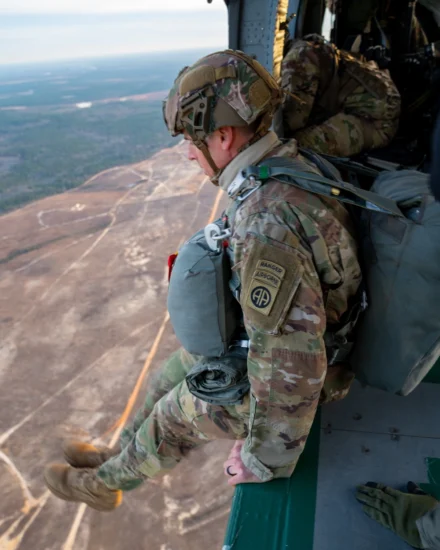
The United States Army Next Generation Integrated Head Protection System is probably one of the most criticized helmet programs in the industry.  This program dates way back to 2012 when it was originally called the Soldier Protection System.  At that point in time, the helmet consisted of a shell and a fairly large ballistic applique to stop the small arms threat that was relevant to the Army.  This was a very big and very bulky helmet that was competed between Gentex and Ceradyne.  Note that Ceradyne was ultimately purchased by Avon so this became an Avon program.  Ceradyne won the SPS program with a unique shell and rail design.  The rail was a custom Ceradyne design that did not have any accessories ready to connect to it, unlike the Gentex/Ops-Core rail which is now industry standard. Around 2018, the two key domestic polyethylene providers had a break through in performance which provided protection from the small arms threat WITHOUT the need for the ballistic applique.  To the Army’s credit, they scrapped the SPS program and released the IHPS program which drove down the areal density shell requirements to give the soldier a lighter more comfortable helmet.  This was followed up by the NG-IHPS program which is now the formal program of record for the Army with both Avon and Gentex producing helmets likely through 2027 and a plan to onboard LTC in the near future as a third supplier.

With regards to performance, the NG-IHPS helmet is actually very impressive and offers more ballistic protection then the ECH at a lower areal density.  It is a huge leap forward in terms of the weight to protection ratio and this achievement consistently get lost under other criticisms. What draws criticism from the user community is the rail, which nothing other than an enormous mandible attaches to, the visor, which has to connect to the NVG bracket, and the comfort and lack of stability of the liner and the chinstraps which need two hands to adjust.  The liner is considered to be outdated, featuring Team Wendy Zap pads, which have been around for over a decade and a D30 crown pad. The liner pad design is driven by a 14fps requirement, which is double the impact energy of the SOCOM 10fps requirement.  This requires a thicker stiffer pad which is partially the reason the liner is so uncomfortable. Furthermore, there is growing sentiment that the Army needs a high cut version of this helmet system.

These concerns have not fallen on deaf ears. The Army has asked industry to provide new liners to increase comfort and is considering the 10fps requirement instead of 14fps. In addition, the Army has requested custom pads from industry for hot and cold weather pads. Furthermore, the Army has requested updated rail designs from both Avon and Gentex to allow for better integration of accessories such as flashlights, cameras etc.

At AUSA, Gentex pulled out all the stops and show cased what the NG-IHPS helmet could be with a new rail, new liner, new chinstrap, new visor, integrated communication headset through rail arms and even a version of the helmet featuring the Gentex RaiLink Power and Data System.   Unfortunately, it was only shown to key customers like program managers.

Marine Corps

The Marine Corps recently competed the Integrated Helmet System between Galvion and Gentex with Galvion being down selected as the awardee. This of course has led to a protest from Gentex which is typical of the Galvion / Gentex rivalry, more on that later.  The IHS helmet also features small arms threat protection but to a lesser degree than the NG-IHPS helmet.  It also features a power and data system, which in this case may be the Galvion Cortex system after this winds its way through the protest process, which can take months and even years.

SOCOM

The Program Management for SOCOM has driven innovation in the head protection space, more than any other government organization, period. They were the first Government organization to full adopt a high cut polyethylene helmet with rails and continue to drive down weight and drive up performance using a five year cycle of competition for the Family of Tactical Headborne Systems.  Gentex is the incumbent provider of this helmet, having beat out Galvion in 2019, which of course was followed by a Galvion protest.  Gentex and Galvion have competed directly against each other on helmet programs and in court more than any other pair of companies in the industry.  They have competed against each other for every major helmet program in North America and Europe.  They recently went to court for violations of intellectual property with Gentex winning a decision that Galvion had indeed violated Gentex IP with their version of the helmet rail.  Currently the two companies have both submitted helmet systems for the current FTHS competition which should be downselected to a winner in the first quarter of 2026.  Both helmets systems are elite in terms of the weigh to performance ratio, offering 9mm protection at an areal density of roughly 1 pound per square foot.

Ironically, Team Wendy did not compete for FTHS in 2019 and has declined to compete for FTHS in 2025.  Team Wendy is a division of AVON, and the AVON mantra of “simpler is stronger” may have cost them this opportunity as they were not willing to tool up the required four sizes of shells. Team Wendy only has two sizes of shells while Galvion has 5 and Gentex has 4.  

SOCOM continues to pace the industry not only with the best helmet systems available but also technology upgrades such as Gentex’s RaiLink Power and Data rail system which has been purchased by the Army Special Missions Unit.  

Overseas

The largest overseas program was competed in 2024 and awarded in 2025 by the NATO Support and Procurement Agency.  Again, Galvion and Gentex were the two main competitors for this program and each company was awarded different tranches of the tender.  Galvion has an inside edge on the rapidly growing European Helmet Market now that they are producing helmets in Poland while Gentex continues to produce helmets for Ground applications solely in the United States.

Anduril

This brings us back to the Eagle Eye Helmet System.  Anduril took a “first principles” approach towards their new helmet design, rejecting industry knowledge to bring something lighter and higher performing to the market. This might make sense in a software context where the rules of physics are not constraints.  Every branch of service has improved their ballistic protection to weight ration substantially over last ten years and in some cases reduced their weight burden by 50% while still offering the same levels of protection.  Industry has provided these customers what they asked for and then some.  

With regards to Visual Augmentation Systems, if you are lucky enough to use the L3 F-PANO or Elbit ENVG-B, you will experience the very best of what the VAS industry has to offer and it is incredible.  The thermal outline mode is just one of the features that these production tubes offer now that will impress even the most jaded user and it is a real thing that L3 is selling now.  This is one of the key difference between Eagle Eye and the current systems that it says it outperforms. L3 and Elbit just don’t feel the need to go on the Joe Rogan Experience to discuss their technical breakthroughs.

So then, who is the customer for Eagle Eye?  It is not a program of record. Neither Army, USMC or SOCOM have asked for it and none of them are funding it. However, they are buying NG-IHPS, FTHS, F-Pano and ENVG-B because those programs have delivered on what the user community has asked for.  And where the programs have fallen short (IHPS Liner for example) the program offices have reacted to improve their systems.  The customer for Eagle Eye is the general public, and what’s for sale is shares in Anduril when and if they become publicly traded.  Anduril is not creating a system to benefit the user, they are creating a system to draw interest in their company.  Joe Rogan has never purchased or influenced a Government Program Acquisition.  This is not intended to answer the mail for the user community but rather spark the interest of the general public.


Now That’s a Hat!

Wednesday, October 29th, 2025

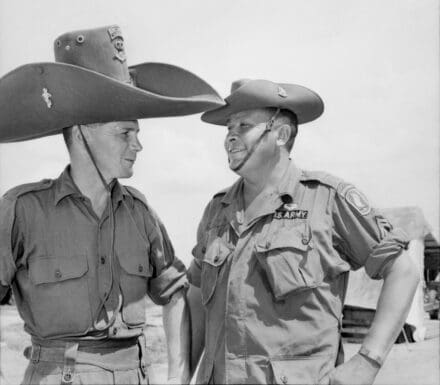
Sergeant Alwyn John Blades (left), Royal Australian Electrical and Mechanical Engineers (RAEME), of Montague Bay, Tasmania and Corporal Frank Crazy Thunder (right) of the 173rd United States Airborne Support Battalion and member of the Oglala Lakota tribe, swap hats at Bien Hoa United States Air Base, Vietnam.

Taken September 1965. Corporal Crazy Thunder wears the iconic slouch hat of the Australian Army and Sergeant Blades wears a larger than normal “Ten Gallon” hat Corporal Crazy Thunder had custom made.

RAEME engineers with the 1st Australian Logistics Company in support of the 1st Battalion, Royal Australian Regiment (1RAR) were stationed at Bien Hoa from June of 1965 until June of 1966 when they were moved to Vung Tau.

Courtesy of the Australian War Memorial

Accession Number: DNE/65/0371/VN

Photographer: Sergeant Brian Rupert Dunne

SD Government, a Gogo Company, Receives Federal Contract to Supply Airborne Communications for US Agency

Tuesday, October 28th, 2025

Mil/Gov win to optimize Gogo multi-orbit 5G ATG, LEO, and GEO connectivity networks

Broomfield, CO./ 27 October 2025 – SD Government (SDG), the division of Gogo (NASDAQ: GOGO) providing satellite communications to global governments, has received a five-yearfederal contract to deliver multi-band, multi-orbit airborne global satellite communications to a US government agency. The new agreement, initially valued at USD$3 million, is a follow-on from Small Business Innovation Research (SBIR) Phase III activityoriginally undertaken by SDG, prior to the merger with Gogo.

Awarded as a sole-source contract, the agreement will see the agency consolidate all aero communications across its fleet to this single contract over the next five years. With the consolidation of multiple contracts into a single contract, procurement time and complexity are dramatically reduced. In addition, the agreement allows users to focus resources on the mission rather than managing diverse contracts and vendors.

This is the first SDG government contract to optimize the company’s integrated multi-orbit, multi-band, multi-network capabilities. The deal also includes provision for the government to add new technology and services as they become available over the life of the contract.

The agency’s missions demand consistent, reliable high-bandwidth satellite connections in every theatre of operations globally, as well as the highest encryption levels for secure communication and data transfer. SDG’s deep experience in the government and defense markets, combined with its ability to deliver 24/7/365 expert customer support, will ensure the customer retains consistent critical mission connectivity.

As the contract’s full scope is realized, it will employ Gogo’s air-to-ground networks, low-Earth orbit (LEO), medium-Earth orbit (MEO), high-Earth orbit (HEO) and geostationary orbit (GEO)constellations for Ku- and Ka-band connectivity as required.

“We are proud that the US government has chosen SDG to deliver this mission-critical connectivity. The customer agency will benefit from our extensive expertise, support, and cybersecurity expertise, along with our agnostic ability to provide the best-performing connections and terminals across multiple orbits on its diverse fleet of aircraft,” says Hayden Olson, Head of SDG. “We are providing a simple, seamless solution for the agency to procure resilient airborne communications. The streamlined access to all types of connectivity will enable seamless procurement and support, which is extremely valuable to a busy government agency.”

SDS Arms Expands Tisas PX-9 Comp Family

Tuesday, October 28th, 2025

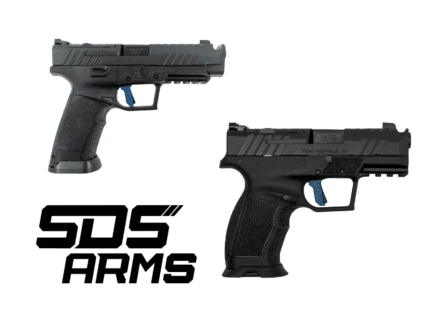
KNOXVILLE, Tenn. – October 27, 2025 – SDS Arms is excited to expand the Tisas PX-9 Comp family with the addition of the Tisas compact PX-9 Carry Comp and the Tisas full-size PX-9 Tactical Comp. Both models complement the PX-9 Duty Comp, sharing its premium upgrades and feature set.

While the Tisas PX-9 Carry Comp and Tisas PX-9 Tactical Comp serve distinct functions, they share the defining features of the PX-9 series. Both models feature a match-grade barrel with a single-port design for quicker follow-up shots, as well as a new aluminum, flat-faced trigger with integrated safety for consistent trigger breaks. With refined controls, updated slide machining and interchangeable grip panels that allow up to 27 grip configurations, these models provide improved ergonomics for a tailored fit and feel. The Tenifer QPQ finish and nickel-coated internal components protect against corrosion and wear, reinforcing its rugged durability.

“We’re thrilled to add to our Tisas PX-9 family and round out the collection with these new additions,” said SDS Arms Vice President of Sales and Marketing Neil Sanders “Whether you are looking for an everyday carry or competition pistol, the Tisas PX-9 Carry Comp and Tactical Comp boast advanced upgrades that make them exceptionally accurate and reliable. We believe these pistols will quickly become favorites for serious shooters who demand precision.”

Designed for everyday carry and self-defense, the PX-9 Carry Comp delivers competition-grade features and performance in a compact offering. With ergonomic controls and various configuration options, it adapts comfortably to any hand size and shooting style. The 9mm offers consistency and reliability with a polymer flared magazine well for quick reloads. Including 15- and 17-round 228-pattern magazines, the PX-9 Carry Comp balances concealability and control.

Built for professional use, competition and advanced shooters, the PX-9 Tactical Comp utilizes the PX-9 series frame with a slightly longer 5.1-inch barrel for enhanced accuracy and muzzle control. This model maintains the popular features of the PX-9 Duty Comp, providing full-size capacity for highly skilled shooters. The PX-9 Tactical Comp boasts an extended aluminum magazine well, take-down lever and magazine catch, and it includes 18- and 20-round 226-pattern magazines.

Product No./ Description/ MSRP

15000306/ Tisas USA PX-9 Carry Comp/ $562.20

10100569/ Tisas USA PX-9 Tactical Comp/ $539.21

To learn more and see all the firearm brands and products available from SDS Arms, please visit the SDS Arms website or find SDS Arms on Instagram or Facebook.

Highland Engineering – Joint Airlift Micro SCIF (JAMS)

Tuesday, October 28th, 2025

HEI’s Joint Airlift Micro SCIF (JAMS) is a complete paradigm shift away from what users think about a SCIF.

HEI has built a fully accreditable TS/SCI SAP facility in an In an ATTLA certified ISU-90 offering a fly away capability.

It is ATTLA certified for internal air transport. Interfaces with aircraft palletized cargo handling rails and locks – no additional restraint required. JAMS setup in under 10 minutes with 2 personnel. Third party tested and exceeds 100db RF shielding requirement and STC 50 performance (on all 6 sides of cube). With a weight of under 4,400lbs, this is a force multiplier.

Furthermore, there are no expanding sides nor fabric walls like you will find in other “TSCIFS.” The shielded insert is seamless which is why this container exceeds the 100db RF shielding minimum and STC 50 sound rating. This system would not require any ICD-705 waiver.

www.high-eng.com