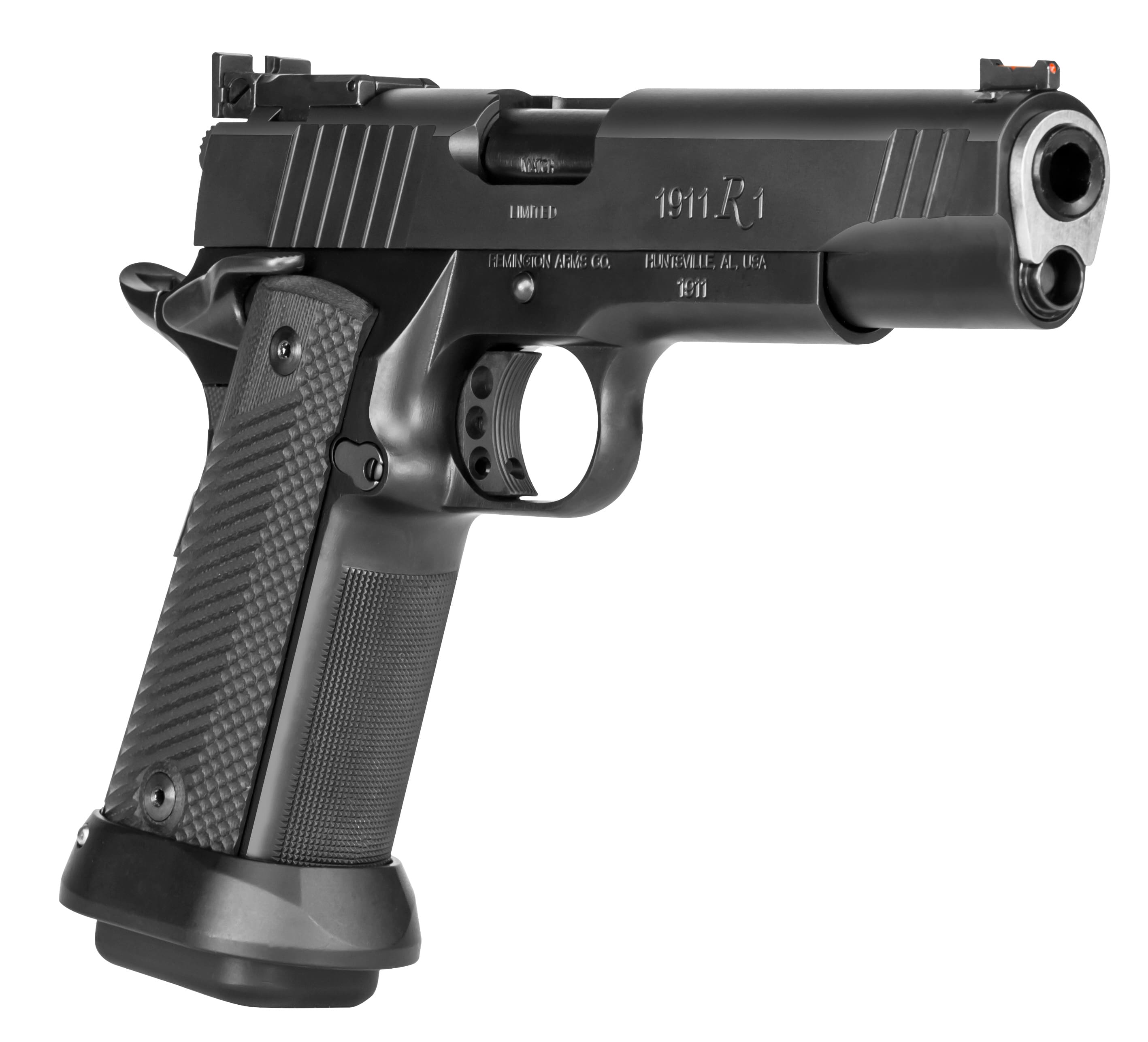
Huntsville, AL – Born of the same competitive spirit that set the Model 1911 apart from all others more than a century ago, the Model 1911 R1 Limited is built for performance, match after match.
The new Model 1911 R1 Limited Series has been engineered end-to-end for championship performance. With its PVD coating, the 5-inch match-grade stainless steel barrel, slide and frame deliver silky smooth operation in heavy use. The ambidextrous extended thumb safety makes for easy operation in either hand. An adjustable match grade skeletonized trigger for a clean crisp break. Its fiber optic front sight and fully adjustable LPA target rear sight are built for rapid target acquisition and shaving split seconds off your score.
1911 R1 Limited Double Stack Features and Benefits:
Full-length, 1-piece guide rods
Wide Rear and Front Cocking Serrations – For positive grip regardless of field conditions
Extended Beavertail Grip Safety – For positive grip in the field
Tough PVD Finish – For durability in all conditions
VZ G10 Grips – For solid hold while firing
Stainless Steel Frame and Slide
1911 R1 Limited Single Stack Features and Benefits:
Tough PVD Finish – For durability in all conditions
VZ G10 Grips – For solid hold while firing
Now available at retail.
About Remington Arms Company, LLC
Remington Arms Company, LLC, (“Remington”) headquartered in Madison, N.C., designs, produces and sells sporting goods for the hunting and shooting sports markets, as well as solutions to the military, government and law enforcement markets. Founded in 1816 in upstate New York, the Company is the nation’s oldest continuously operating manufacturer and continues to manufacture in its original plant located in Ilion, NY. Remington is a privately-held manufacturer of firearms, silencers, and ammunition products and one of the largest domestic producers of ammunition, shotguns, and rifles. The Remington family of companies has 8 locations across 8 states employing over 2,500 people and distributes its products throughout the U.S. and in over 55 foreign countries.
More information about the Company can be found at www.remington.com.
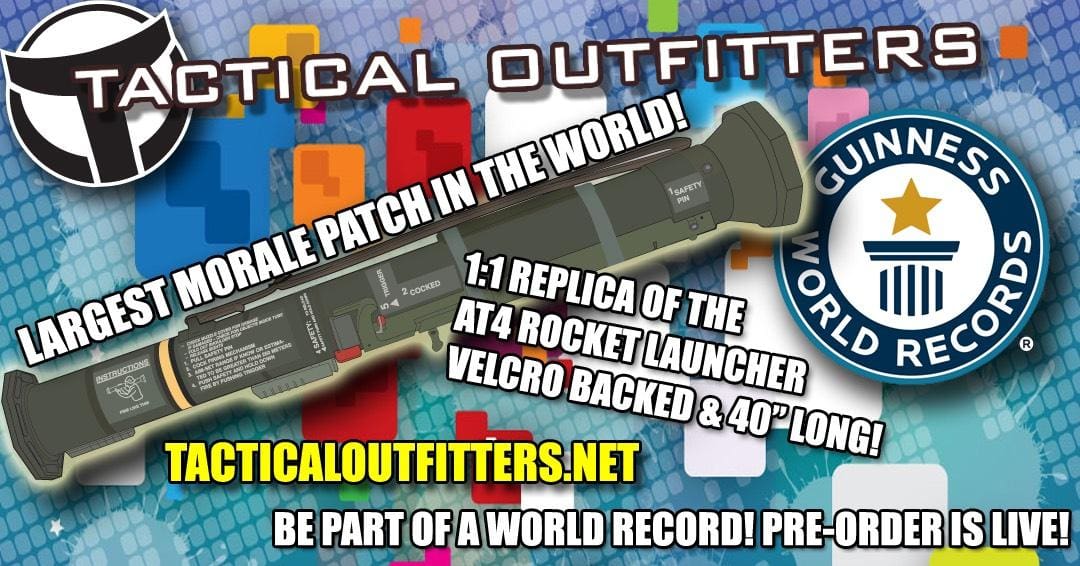
Tactical Outfitters has began accepting pre-orders for what they claim will be the world’s largest morale patch, supported by an application to Guiness World records. A 1:1 sized replica of the Swedish AT4 anti-tank launcher, this patch will be 40″ long by 6.22″ wide, and fully Velcro backed. This will be a limited-time offer, and purchasers will also receive a numbered art card with every pre-order customer’s name on it. Additionally, a portion of the proceeds from the sale of the AT4 Morale Patch will be donated to Wishes For Warriors.
Curtis Blue Line, Distributor of Police Duty Wear and Tactical Gear, Names Fechheimer Supplier of the Year
Cincinnati, Ohio – Fechheimer Brothers Company, a global leader in the design and manufacture of uniform and lifestyle apparel and gear, has been named the 2017 Supplier of the Year by Curtis Blue Line. Supplying Curtis Blue Line with products from both of their premier brands, Flying Cross and Vertx®, Fechheimer partners with one of the nation’s largest distributors of police wear and tactical gear. This recognition marks the second consecutive year Curtis Blue Line has named Fechheimer Brothers Company as their Supplier of the Year.
“We are honored to again be recognized as Curtis Blue Line Supplier of the Year. We love working with the Curtis Blue Line team who is fully focused on serving public safety professionals in its communities,” said Bob Getto, President and CEO at Fechheimer Brothers Company. “Providing these professionals with great service and quality products is what it’s all about, and teamwork between our two companies is a key.”
Curtis Blue Line is a dedicated resource for law enforcement equipment, uniforms and tactical gear. Through online distribution and six operational brick and mortar centers, Curtis Blue Line provides excellent services to law enforcement agencies and fire departments across the nation. This organization supports public safety agencies by delivering products and services that exemplifies their core values of Quality, Service, Integrity and Caring.
“It is with great pleasure that we announce Fechheimer has been selected as the Supplier of the Year award winner for 2017,” said Jeffrey R. Curtis, Chief Operating Officer for Curtis Blue Line. “The entire Fechheimer organization has been involved in providing the high quality product and high quality performance that is required to receive this award. All of us at Curtis Blue Line are extremely grateful for the strong and growing relationship between our firms.”
Together, Fechheimer and Curtis Blue Line serve the public safety market, offering high quality products and impeccable distribution. For more information regarding Fechheimer Brothers Company, visit the company website at www.fechheimer.com.
Ivan of Kit Badger saw the commercial offerings for firearm targets, and felt he could do better. So, he came up with the Kit Badger Anatomy Targets, or KBATs. KBATs are designed to be flexible in application, with appropriate anatomical dimensions, and a design that reads well within 50 yards. The target set consists of both a head sheet and thoracic cavity sheet, which can either be used stand-alone or in tandem to spruce up a standard target silhouette, especially useful during ‘failure drills’, when transitioning the proper vertical distance between the head and chest is paramount.
Kit Badger Anatomy Targets can either be downloaded as a .pdf at the link below, or ordered on Kit Badger’s webstore, or through Amazon.
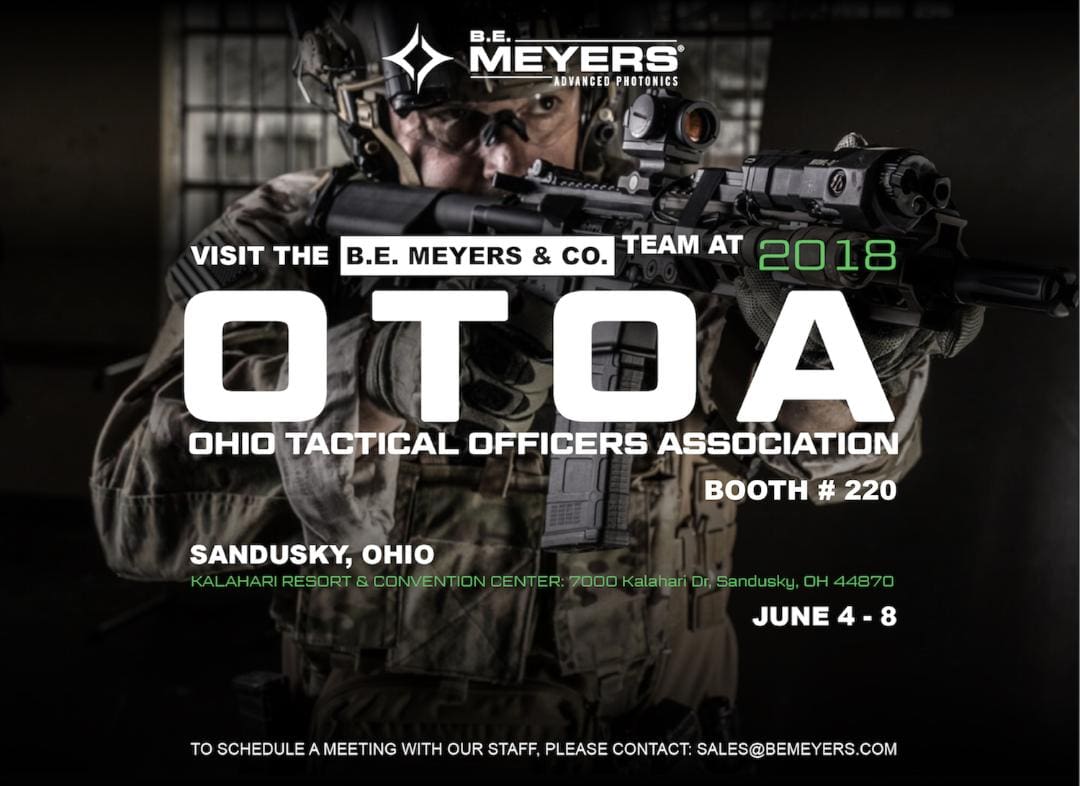
June 1, 2018 (Redmond, WA) – B.E. Meyers & Co., Inc. will be attending the Ohio Tactical Officers Association Conference on June 4 – 8, 2018 at the Kalahari Resort & Convention Center in Sandusky, Ohio. This event includes a vendor show, as well as five days of training sessions for Law Enforcement Professionals coordinated by the OTOA Director of Training and B.E. Meyers & Co. Brand Ambassador John Chapman “Chappy” of Forge Tactical.
Guests are invited to visit B.E. Meyers & Co. at booth #220, where they will be showcasing their Modular Advanced Weapon Laser (MAWL®) series of weapon mounted IR/VIS laser pointers and illuminators; the IZLID® series of IR and SWIR pointers and Illuminators; and the GLARE® series green Hail and Warning/Ocular Interruption laser devices. B.E. Meyers & Co. Business Development Manager Chuck Vlasek will be available to answer questions and provide more information on the company’s products.
To schedule a meeting with Mr. Vlasek, please contact sales@bemeyers.com.
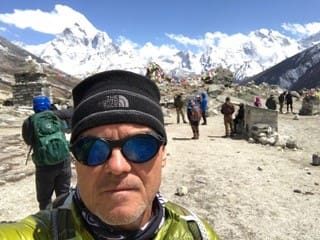
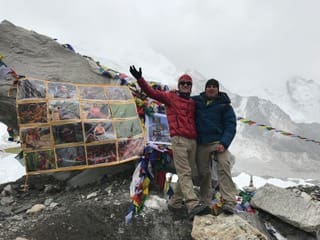
Sorry I’m a little late this month guys. I just returned from the better part of this past month in Nepal, during which my youngest son and I made the trek to and from the Mount Everest Base Camp. It was a great experience, the views were beyond belief and to be honest, it was a little harder than I thought would be. The actual up and down climbing of about 25,000 total vertical feet, over about 80 miles wasn’t the difficult part. We had trained hard in the months leading up to our trip and actually had little issue with the actual hiking aspect of the trip. Our packs were less than 20 lbs and we only hiked 6-10 miles a day. The real issue was the altitude. We had never hiked over 10,000 ft before and during this trek we went to 18,000 ft. No, not the summit of Everest (I don’t have the money for that one, not yet anyhow) but pretty high. For reference the highest point in the lower 48 is the summit of Mt Whitney, which is 14,505ft, or about 3500ft lower than our high point of this trip. Like I said, pretty high.
The basic plan for the trek was to climb about 1500 ft a day for two days, then have a rest day to help adjust to the altitude. On the rest day we would make a “training hike” of about a 1000ft or so, then return back down for the night. This is the well known altitude acclimatization method called “Climb High and Sleep Low.” It seemed to be working well for us, as we didn’t have any symptoms of altitude sickness. We powered through 8K, 9K, 10K, 11K, 12K and 13,000ft, without really any issue, other than being a little out of breath when climbing up the very steep spots, but that was to be expected. However, around a week into the trek, there was the day when we went from 14,000 to about 15,600ft during a long day of climbing up and down a steep ridgeline through a beautiful snow covered trail, which also took us above the tree line for the first time.
This new high altitude felt like the infamous “wall” (mile 20) of a marathon. But as an added bonus, you felt like someone was holding a pillow over your face. It was noticeably harder to breath without gasping and it took a lot more time to catch your breath when climbing up steep areas. Just bending over to tie your boots and then straightening up too quickly, made you light headed. You got tried very easily and our pace slowed considerably. As we moved up above 16,000 and 17,000ft, I completely lost my appetite and really didn’t sleep, for the three days we spent at those altitudes. During this time we met a young doctor from NC who was prepping herself for a Everest summit attempt (which she successfully did a week later). She had been in country for almost six weeks and during that time had been almost continuously moving up and down between 15,000 and 22,000 ft. She told me that physically you had to be at this altitude range for at least 14 days to change your bodies makeup and actually “adjust” to high altitude. She then flatly stated that as we were only going to be “up” for a few days, we would have to just “gut it out”. Which we did, but it was a real eye opener. Our small team made it to the Base Camp after 10 days without any serious physical issues, other than being tried from a lack of sleep and eating. However, we witnessed many sick people being brought down on horseback and more serious ones by helicopter.
Now, that was the foreign trekkers and climbers. The native Shepra porters, guides and other locals was a completely different story. I was constantly amazed by the heavy loads we saw them carrying up and down these steep mountain trails. The vast majority of these guys (while sporting some very muscular legs) were overall very small in statue. Almost all were shorter than myself (at 5’8”) and much lighter, I would guess their average weight was less than 140lbs. Yet they routinely shouldered loads weighing over 100lbs and we saw many times over 150lbs. More often than not they had just sandals, crocs or worn out running shoes on their feet and they also went very fast. “Sherpa Speed” was a real thing as we constantly had to move over so a tiny guy humping a huge weight could almost fly past us, going up, or down. They were paid by the kg and the job, so the more they carried and the faster they got to where they were going, the better the pay. For over two weeks I watched this never ending train of human pack mules, as there are no roads, no cars, trucks, or motorcycles there. I never even saw a pedal bike? Everything was carried by people, or animals. Which according to our guide, using the animals were very expensive (and slow). In fact many times we saw a guy carrying a bigger load than the mules, yaks and horses that were also every where on the trail.
Now having humped a heavy (well, what I thought was heavy) pack 100’s of times during my time in the Marine Corps, I found the load carrying ability of these people astounding. Especially considering their simple diet of mostly just rice and local vegetables and their poor foot ware. I was also expecting to witness at least one incident of these porters stumbling under their heavy loads. Especially coming down so fast on these very steep and rocky paths. However, I never witnessed it, not even once?
As we had a local Sherpa as one of our guides on this trip (you really need a local guide to work through all the required permits, language and other logistical BS of a trek there), I spoke at length with him and others about how these little people were able to do this ridiculous level of physical work? Especially at these high altitudes? His answer was simple, “It was their job.” The bottom line is it’s how they can make some decent money in this harsh land, that has few other opportunities. He told us that as far as altitude goes, it was more attitude than anything else. They grew up there and from a very young age had to carry things up and down these mountains 24/7, just to go to school, the market, etc. He did tell us that when Sherpa People left the mountains, they quickly got out of shape and often took ill. He related the story of a local girl, who after she had been at school in the much lower city of Katmandu for a few months, couldn’t even walk the couple of miles up the hill to her home. Her mother had to send a horse down to bring her up. So even genetics will only go so far.
I think in the end this is another example of what people can do, is a matter of what they think they can do. If you tasked the average, healthy, well built and physically fit, trained infantry Marine or Solider to hump a 150lb load up a steep mountain at an altitude of over 17,000 ft, (the porters carried many of these huge loads all the way to the base camp at 17,600ft) while wearing just sandals? He would balk at the mere suggestion of it and my guess is that many (if not most) would injure themselves in the process, if they attempted it. Physically we are bigger, better fed, better equipped and medically healthier than these poor mountain people. Yet, in something as simple and straightforward a physical task there is; Carrying a very heavy load up a steep hill, they are better at it than we are. How is that possible? BTW, I saw all adult ages doing this, from early teens to old men in their 60’s. Though our guide said most try to retire from this work after 20-25 years of doing it? 20 – 25 years??? My simple point of all this is that we are capable of doing much more than we think we can. To get into and maintain excellent physical condition isn’t really that hard, IF you get your mind around it first. To help you with this, I have attached a short video of a Shepra humping a massive load up a mountain. This is just one of many incredible feats I saw like this during my time there. This video was shot at over 13,000ft and our guide told us the guy (who he knew) was over 50 years old and this load was over 75kg. He was paid to bring these steel beams up to the top of a mountain where they were building a new lodge. Think about this guy when you start thinking you’re too tired to do an hour on the stair master. That should help you get motivated, it works for me.
Till next month: “Be safe always, be good when you can.”
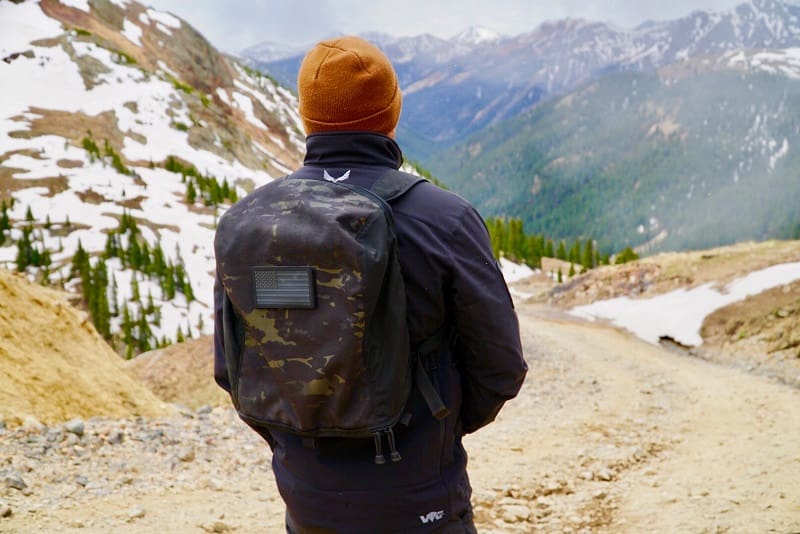
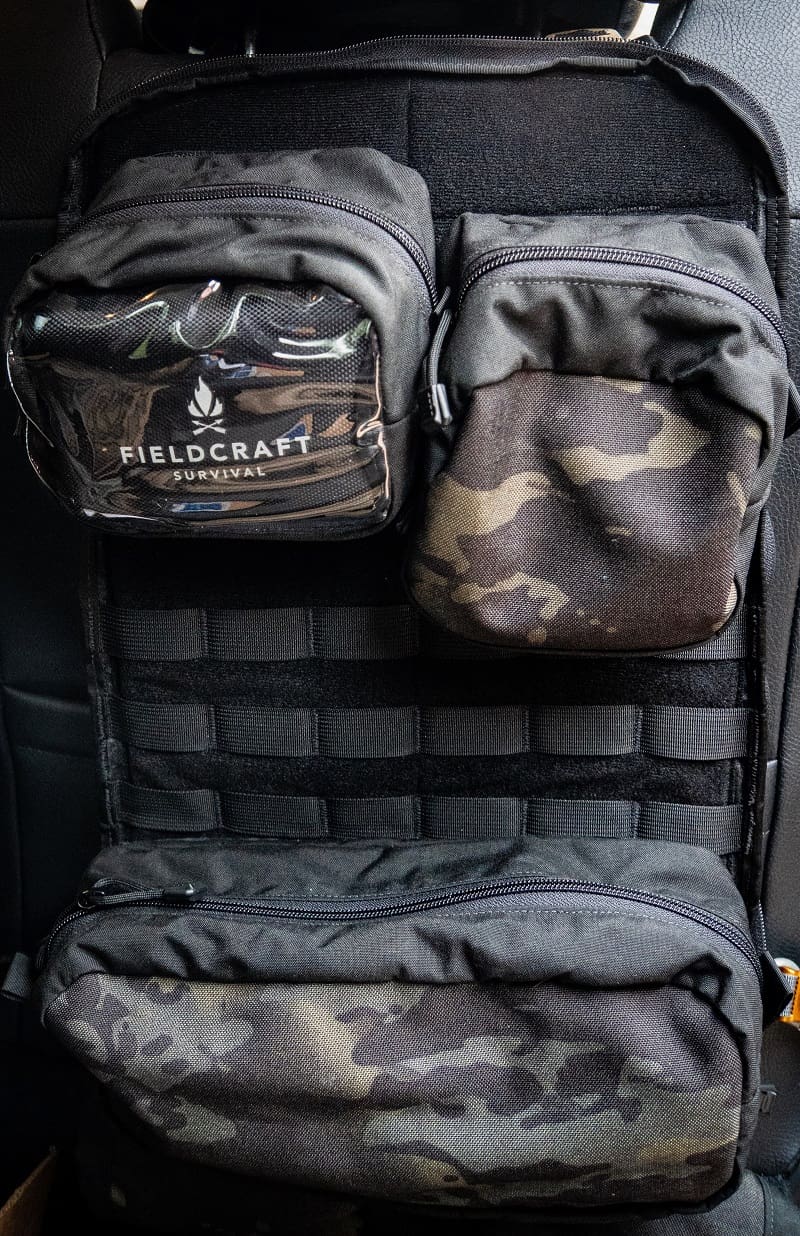
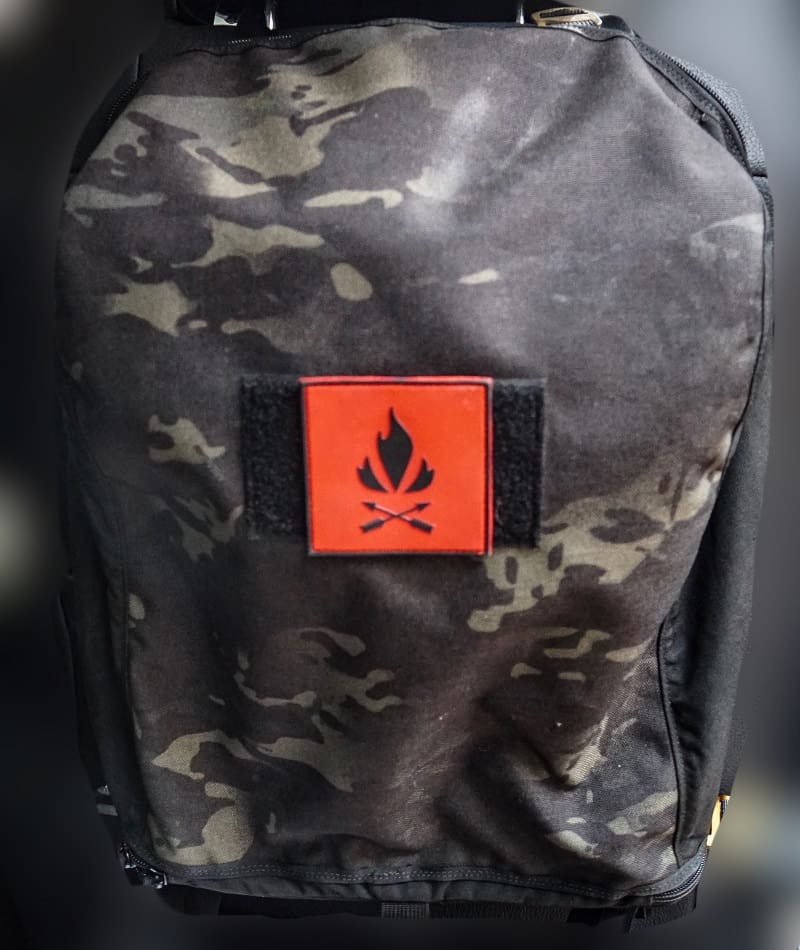
FieldCraft Survival has released a new, patent pending go bag that allows you quick access to your equipment on the back of your vehicle seat, and the ability to quickly convert it into a go-bag. Manufactured in the U.S.A., FieldCraft using low visibility operations experience in austere environments have created a panel pack, that allows you to quickly remove Velcro adhered pouches. The problem with existing panels is most are molle attached to the back of seats and don’t allow for expedient removal. With existing panels if you needed medical equipment in an emergency you would have to unzip and remove contents from pouch.
In addition, FCS built the panel to easily detach from seat and be converted into a go-bag. A neatly stowed rollup at the bottom of the panel folds over the pouches, and the shoulder straps covertly stow behind the panel against the seat. If you are driving in austere or dusty environments where concealment or protecting the contents of your go bag is a priority, you can also zip the cover of bag onto the panel. This go-bag is mil-spec and has a lifetime warranty. In addition, $10 of every sale will benefit Gold Star Teen Adventures a non-profit supporting the children of our Special Operations service members killed in the line of duty. Click link below to purchase your pre-order of the EDM Go-Lite and save 15%.
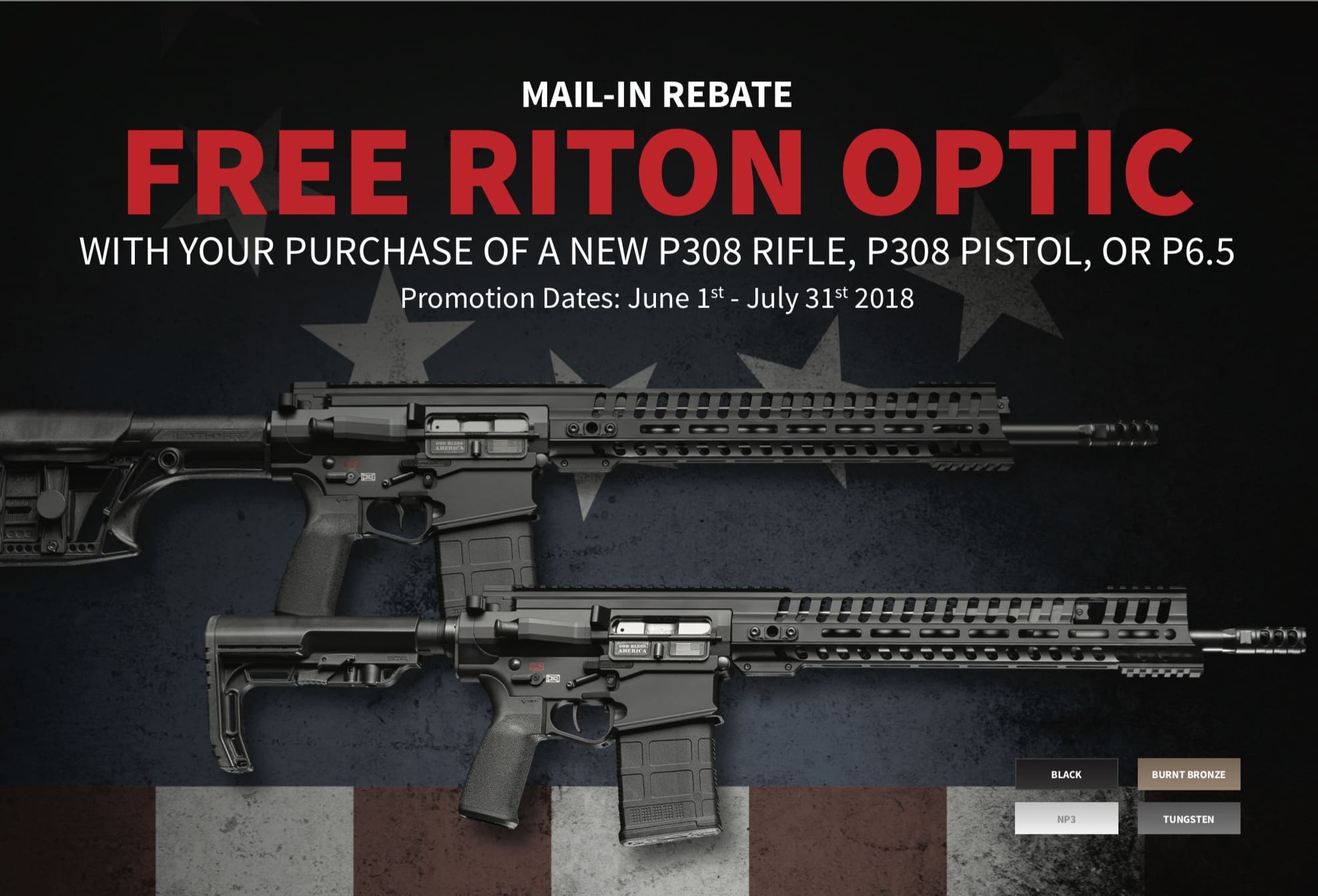
(05/29/18) Phoenix, Arizona – Patriot Ordnance Factory (POF-USA) and Riton Optics team up to provide free optics to qualifying customers. The consumer mail-in rebate program is available to anyone that purchases a new P308 rifle, P308 pistol, or P6.5 rifle from a dealer between June 1st and July 31st 2018.
Qualifying customers can choose from three different optics, including the RT-R Mod 3 RMD ($285.99 value), RT-S Mod 3 1-4×24 ($279.99 value), or RT-S Mod 3 6-24×50 ($369.99 value). They can also receive a special offer for discounted rings or mounts. Rebates must be post marked no later than 8/15/18.