Danner Reckoning GTX

Archive for the ‘Advertiser’ Category

SureFire Field Notes Ep 73 – How to Setup a Low Power Variable Optic with Michael Baccellieri

Wednesday, September 7th, 2022

In this episode, Michael Baccellieri discusses how to properly setup a LPVO.

Michael “Buck” Baccellieri grew up in the Pacific Northwest where he started his military career at age 17. He joined the Army National Guard while still in high school, attending basic and AIT, and spent three years as an infantry rifleman. Upon completing a deployment to the Middle East, he cross-decked to the Marine Corps, where he spent four years as an infantryman, assault climber, CWSS swimmer, and Scout in an STA platoon. Baccellieri later returned to the Army National Guard, taking up a slot in a sniper section and, after completing sniper school, moving on to the role of sniper team leader. He finished his career as an instructor at the Fort Chaffee sniper schoolhouse in Fort Smith, Arkansas.


Baccellieri now works for Leupold & Stevens, Inc., as the lead optics and firearms instructor for all military/LE training. He fills his time between classes by performing military business development for the Oregon-based company.

www.leupold.com

www.surefire.com

American Rheinmetall Vehicles and Anduril Industries Team to Deliver Data Fusion and Battlefield Awareness for U.S. Army’s Optionally-Manned Fighting Vehicle

Tuesday, September 6th, 2022

American Rheinmetall Vehicles and Anduril Industries Team to Deliver Data Fusion and Battlefield Awareness for U.S. Army’s Optionally-Manned Fighting Vehicle
American Rheinmetall Vehicles (Sterling Heights, MI), a leading developer of tactical wheeled and tracked combat vehicles and systems has formed a strategic partnership with Anduril Industries, a defense technology company, in pursuit of the U.S. Army’s Optionally-Manned Fighting Vehicle (OMFV) program.

American Rheinmetall Vehicles has built an elite U.S. industry team that consists of numerous leading U.S. defense companies including, Textron Systems, Raytheon Technologies, L3Harris Technologies and Allison Transmission, who are collectively known as “Team Lynx.” Anduril, the newest member of the team, brings its deep experience in software development, mission autonomy, systems integration, and command and control; developed and deployed in support of National Defense priorities. American Rheinmetall Vehicles leads Team Lynx in offering the Army a next-generation infantry fighting vehicle (IFV) solution for the OMFV program that features a mature, game-changing platform with a purposeful, future-proof modular design that ensures not just overmatch today, but overmatch for decades to come.

“The partnership with Anduril brings with it exceptional innovations in software development, command and control, sensor integration, and counter UAS systems for inclusion in our OMFV offering. These additional technologies coupled with our existing Teammates respective strengths provide Soldiers capabilities not available anywhere else in the world. Further, Anduril’s innovative technologies and focus on customer requirements make it a superb partner to join Team Lynx in support of our work to deliver an unmatched, transformational IFV to the Army for the OMFV program,” said Matt Warnick, Managing Director at American Rheinmetall Vehicles.

“Software is at the core of the weapons and military systems of the future,” said Zach Mears, Head of Strategy, Anduril. “Anduril specializes in delivering advanced mission autonomy, enabling commanders and battle managers to command and control more lethal capability at the tactical edge. We are thrilled to join Team Lynx and will leverage our deep experience in artificial intelligence, mission autonomy, and sensor integration to significantly reduce the cognitive burden of the OMFV’s two soldier crew and provide them with next-generation tactical awareness, C2, and decisive lethality to dominate future battlefields.”

Anduril will support Team Lynx with customized command and control software for Lynx OMFV formations that enables collaborative formation maneuver, and collaborative detection, targeting, and engagement of threats for future armored combat formations. Anduril’s software, in alignment with Army IDEE software development process will have an agile based development and improvement plan, integration, and delivery cycles, enabling persistent modernization for IFVs to rapidly adapt to and defeat emerging time-sensitive threats. The Team’s solution, the Lynx OMFV, redefines the modern battlefield and enables the Army to satisfy its number two modernization priority, a next-generation combat vehicle with leading protection, mobility, growth, and lethality capabilities that will sustain overmatch for decades. The Modular Open Systems Approach (MOSA), along with substantial growth potential in power, weight, and volume make the Lynx OMFV exceptionally well prepared to confront the challenges of the future battlefield like no other.

www.rheinmetall.com/arv

See Ocean State Innovations at Future Forces Forum in Prague

Tuesday, September 6th, 2022

OSI will be attending the Future Forces Forum from October 19-21, 2022, in Prague, Czech Republic. We will be showing Multicam®, CURV® Tactical and CORDURA® Brands during this event! To set up a meeting or for more information please contact Peter Raneri at peter@osinnovate.com. Visit us at osinnovate.com

Arbor Arms – Stowable Nalgene Pouch – 16 oz

Tuesday, September 6th, 2022

The Stowable Nalgene Pouch – 16oz is a simple, lightweight pouch that carries a 16oz Nalgene (or similar water bottle) on your belt kit or any other MOLLE/PALS platform.

The pouch has a bottom gromet to allow drainage and a shock cord retention strap that you can fold away when not in use.

It will also accept other items like magazines and radios.

Additionally, they’ve got a branded 16oz Nalgene Bottle to go with it. Yep, 16 oz. They went with the smaller size so that it’s small enough that it’s not as much weight on your belt kit or on the waist strap of one of their Nut Rucks.

Loads of color options.

arborarmsusa.com/shop/arbor-arms-hydration/stowable-nalgene-pouch-16oz

Mechanix Wear Vision Wear –

Tuesday, September 6th, 2022

Around the 4th of July I started noticing Mechanix Wear had introduced safety eyewear to their line.

They even wrapped some of their trucks. To be sure, Mechanix Wear and NASCAR go together like two peas in a pod, but this image certainly caught my eye.

Sure, he’s a hunter, but that’s closer to tactical use than the gloves were when they were brought over to tactical from garage wear due to their comfort, dexterity and value.

But then somebody sent me this photo from the 29 Palms ServMart. It appears that units are already buying the safety glasses for use in the shop.

It took awhile after individuals and units were buying gloves before they created specific tactical models. Hopefully, we’ll some dedicated MIL-SPEC styles from Mechanix Wear soon.

www.mechanix.com/us-en/safety-eyewear

SCUBAPRO Sunday – Combined Operations Assault Pilotage Parties

Sunday, September 4th, 2022

As I am sure you can tell, I love history. I find it amazing that even today, you can read something about WW2 that you never knew about. There were so many specialty units that sometimes it was hard to say, “Oh, this group gets its roots from…” Combined Operations is one of those groups, and they had so many smaller Units / Parties (I think I might have liked being part of “Parties” more than a Team. So, it would be “I am a party guy” and not “I am a Team guy”) that we are just now finding out about that they might not have been the father of some groups today. Still, they might have been the mother or the ugly step-sister.

While serving in the Second World War, Nigel Clogstoun-Willmott established the Combined Operations Assault Pilotage Parties (COPP), which were responsible for covert beach reconnaissance. This proved to be critical in the success of the Allied seaborne invasion campaign. Amphibious force attacks on land and sea are among the most dangerous of all military operations. Apart from the fact that they necessitate the precise coordination of armed forces on the ground, air, and sea, they might also be subjected to various issues associated with landing on foreign enemy beaches.

Among these are tidal roughness, inadequate sand and shingle texture, steep beach gradients, and restricted beach exits, for example. Various enemy defenses, including mines, beach obstructions, pill boxes, and gun emplacements, can make natural disasters more dangerous and challenging to overcome. Nigel Clogstoun-Willmott, an accomplished navigator in the Royal Navy, was one of the few who truly understood the gravity of the risks involved. He recognized that amphibious troops must be carefully directed into coastal waters by men who had been deployed to the coast ahead of the fleet.

Furthermore, he recognized that the only way to resolve these issues truly was to conduct a thorough reconnaissance of the proposed beach landing sites, work that would require men skilled in navigation, hydrography (marine surveying), and engineering to land covertly on the beaches at night.

Of all special forces operations, beach reconnaissance was one of the most clandestine and risky. The men engaged were forced to conduct their operations right under the noses of the enemy, knowing that if they were arrested and interrogated, their intelligence might jeopardize the entire operation and their lives.

In 1910, Clogstoun-Willmott was born in the Indian city of Shimla. A senior engineer, his father worked on significant infrastructure projects throughout northern India, including the construction of roads and bridges.

He was transported to England for his education, attending Lambroke School and Marlborough College until he was eight. He joined the Royal Navy when he was 17 years old, specializing in navigation and quickly earning a reputation as a creative problem solver and unique thinker.

The fact that he was aware of the dangers of landing on enemy shores came to him early in life. Gallipoli was the first sizeable amphibious operation of modern times, and his uncle ‘Cloggy’ had been severely wounded during the battle in 1915.

As a Beach Master for the landings at Narvik in the far north of the country, Clogstoun-Willmott received first-hand knowledge of these perils during the unsuccessful Norwegian campaign of 1940.

He was charming, courteous, and good-natured, but he was also a military professional who took his duties seriously. He spent a long time reflecting on the lessons learned from this campaign and how amphibious operations should be conducted going forward. In 1941, Clogstoun-Willmott was stationed in the Mediterranean with ‘Layforce,’ a commando group that had been dispatched to the Middle East. With the challenge of attacking the Italian-controlled island of Rhodes, Layforce got his first chance to put his theories into action.

As a result of his collaboration with Captain Roger Courtney, a canoeist who had recently created the Special Boat Section, which was primarily intended for marine reconnaissance operations, he could complete this task. Courtney and Clogstoun-Willmott worked together to conduct the world’s first in-depth military beach reconnaissance mission.

A wide variety of equipment was available, from flimsy cold-water suits made of heavily greased long johns and jumpers to the newest infrared signaling technology and the humble chinagraph pencil for taking notes in dripping wet conditions.

The mission was a resounding triumph. Both soldiers were honored, with Clogstoun-Willmott getting the Distinguished Service Order and Clogstoun receiving the Distinguished Service Medal. However, the valuable information gathered as a result of this work was never put to good use.

As a result of the British being lured into a futile attempt to resist the German invasion of Greece, the mission was called off entirely. Clougstoun-Wilmott was again called upon to serve as a Beach Master, coordinating British forces’ evacuation. His narrow escape from capture came after he commandeered a Greek caique and sailed it to Egypt, where he was one of the last to leave. Not until August 1942, following the failure of a massive raid on the French port of Dieppe, was it realized how essential Clogstoun-theories like Willmott’s were.

Admiral Louis Mountbatten, Director of Combined Operations, approached him and requested him to assemble a team – dubbed ‘Party Inhuman’ – to assist with Operation Torch, the invasion of French North Africa. He agreed and formed the team. When this endeavor proved successful, it resulted in the formation of the COPP in early 1943. The first order of business for the COPP was to conduct reconnaissance in preparation for the upcoming invasion of Sicily. However, due to insufficient training and equipment, achievement came at a high price this time. Only four of the sixteen guys who were assigned to the mission returned.

Later, Clougtoun-Wilmot, who is by nature a martinet and a training fanatic, collaborated with Mountbatten to guarantee that the COPP had access to the resources it needed to prepare for the invasion. The COPP teams were re-energized and contributed significantly to the Allied landings in Italy after re-energizing. During the D-Day landings, the COPP faced its most difficult challenge. COPP troops were now armed with tiny submarines known as X-craft, as well as specialty landing boats and diving gear, in preparation for the invasion of France.

They carried out a thorough study of the potential beaches and returned samples for analysis to establish that big trucks would be able to pass through them without being damaged. On D-Day itself, COPP personnel were dispatched ahead of the massive invasion fleet to ensure that it arrived safely. This scientific approach to warfare played an essential role in preparing for what was considered the most complex military operation in history.

While D-Day was the apex of the COPP’s operations, the unit also saw significant action in the Far East and the Mediterranean during its tenure. In 1945, it made it easier for people to cross the Rhine into the heart of Germany. Following World War II, the mission of the COPP was absorbed into what is now known as the contemporary Special Boat Service (SBS). They were beneficial during the amphibious operations during the Falklands War in 1982 due to their knowledge and expertise.

Later in life, Clogstoun-Willmott worked for the Navy in several positions and the intelligence agency MI5. At age 81, he passed away in Cyprus in 1992, after continuing to live an active life as a sailor until a few years before his death.

The COPP’s work was so closely guarded that it was not made public until after the Second World War had concluded. In the eyes of the public, Clogstoun-Willmott and his troops of the COPP continue to be unsung heroes of the Special Forces.

Milspec Retail Labor Day Sale 10% Off Sitewide

Friday, September 2nd, 2022

milspecretail.com

NATO Customer Norway Officially Commissions New High-Performance Rheinmetall MAN Logistic Vehicles

Friday, September 2nd, 2022

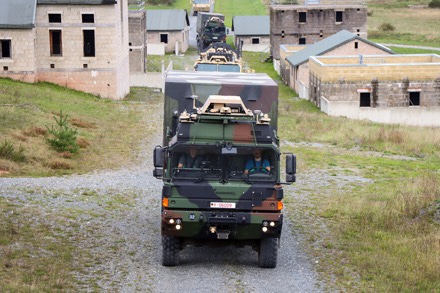
On 23 August 2022, in the presence of company officials from Rheinmetall MAN Military Vehicles, the Norwegian military procurement agency, NDMA, formally transferred over a hundred new HX and TGS-mil military trucks to the Norwegian Army, the end customer. The ceremony took place at Sessvollmoen military base near Oslo. Major General Øyvind Johan Kvalvik, Deputy Director of the NDMA, symbolically handed over the keys to the Norwegian Army’s second in command, Brigadier General Frode Ommundsen.

“We are proud to be able to transfer these state-of-the-art truck systems today to the most important people in the Norwegian armed forces – the troops!”, declared Michael Wittlinger, chairman of the board of management of Rheinmetall MAN Military Vehicles (RMMV) in a speech marking the occasion. “We are certain that these vehicles will satisfy Norway’s soldiers, providing them with the best-possible protection and support.” 

The roots of the project go back to 2008, when a committee of Norwegian military officials drew up a list of specifications for new military logistic vehicles. Norway gave Rheinmetall MAN Military Vehicles (RMMV) the nod in 2013. Then, on

31 March 2014, NDMA and its Swedish opposite number, the FMV procurement agency in Stockholm, entered a framework agreement with RMMV to supply of military logistic vehicles, which runs through to 2025. Linked to this is an additional agreement encompassing long-term service support from RMMV. Rheinmetall MAN Military Vehicles is a joint venture owned by Rheinmetall AG, which holds a 51% stake in the company, and MAN Truck & Bus SE, which holds the remaining 49% share. 

The first shipments of trucks earmarked for Norway include 109 vehicles of various types: twenty-four 24 HX 8×8 trucks with hook lift systems; fifty-six TGS 6×6 heavy-duty tractor trailers; and twenty-nine TGS 4×4 and 6×6 vehicles.

Michael Wittlinger went on to note in his speech that “this is RMMV’s most complex project to date. Our contract is not just with Norway but with Sweden, too. Owing to the special challenges of the Scandinavian operating environment, the technical specifications are very complex. Moreover, the order encompasses 38 different truck configurations and trailer variants, making this a very multifaceted programme.”  Furthermore, each individual variant is subject to an extremely rigid and ambitious timetable for reaching milestones, with highly detailed lifecycle support documentation required at every stage. All of this goes way beyond the expectations of our other customers.”

The new vehicles are intended first and foremost to improve the transport capacity of the Norwegian military’s logistics corps, while simultaneously expanding the operational capabilities of its armed forces. This new high-tech family of vehicles fully meets the comprehensive requirements of its military users. Some of these trucks feature an integrated armoured vehicle cab for protecting the crew from ballistic threats and shrapnel. Furthermore, they can also be equipped with state-of-the-art communication and command-and-control systems as well as remote-control weapon stations.