SIG SAUER - Never Settle

Archive for the ‘Advertiser’ Category

Magpul PMAG 20 LR/SR GEN M3 Now Available In Medium Coyote Tan

Thursday, February 20th, 2020

This is fantastic news! Magpul’s PMAG 20 LR/SR GEN M3 magazine, designed to fit rifles with SR25/M110 style magwells, is now offered in the color that meets all US small arms program requirements; Medium Coyote Tan.

magpul.com/firearm-accessories/pmags/pmag20lr-srgenm3-7-62×51

Warrior Countdown – Warrior WEST 2020: Readiness in the Age of Innovation

Wednesday, February 19th, 2020

ADS Inc’s Warrior West is right around the corner, April 1st and 2nd in San Diego. This year’s theme is “Readiness in the Age of Innovation” and it looks like it’s going to be pretty good.

You’ll have access to hundreds of leading industry suppliers along with 3,000 other vetted attendees. This event offers networking, training and product demonstrations.

Schedule:

Wednesday, April 1

0900 – 1630: Warrior Expo Open to Attendees

0900 – 1000: Keynote Speaker | Announcement coming soon!

San Diego Convention Center, Second Floor Sails Pavilion

1930 – 2300: Warrior Bash | Customer Reception

Hard Rock Hotel: 207 Fifth Ave, San Diego, CA 92101

Thursday, April 2

0900 – 1530: Warrior Expo Open to Attendees

San Diego Convention Center, Second Floor Sails Pavilion

Training Never Stops

Whether you’re a Program Manager, Procurement Specialist, or end user, the key to success is staying ahead of the curve through training and continuing education.

The training courses cut out irrelevant details and are delivered by experts who have firsthand experience.

• Receive course credits
• Learn from subject matter experts
• Walk away with hands-on, scenario-based training

Here are a few examples:

Stop the Bleed: Stop the Bleed is a course designed to educate the public on how to effectively reduce blood loss in an injured patient. Phokus Research Group will cover: identifying different types of bleeding, methods to control bleeds, and how to treat the patient post bleeding control. Any and all skill levels are welcome.

FMT Tactical Athlete Medic Certification: This course introduces the concept of movement therapy and performance enhancement to create simple and effective non-opioid musculoskeletal treatment and selfcare programs for the tactical athlete. Musculoskeletal injuries are one of the leading causes of non-combat related injuries within the Department of Defense. This course is a new paradigm for decreasing Return-to-Duty timelines and increasing force readiness with each athlete and command.

Procurement Strategies: Recent crises all have one thing in common: equipment was needed and FAST! (Equipment that the DoD, military and federal agencies wouldn’t otherwise have.) From Government-Wide Acquisition Contracts (GWAC) and service-specific contracts to tailored solutions, learn how ADS leverages agile and flexible procurement solutions to meet your needs in a time of crisis.

Make sure you get signed up here.

Warrior WEST is open exclusively to active duty military*, federal, state and local government agencies, law enforcement, and first responders. Military and government attendees must present official government-issued identification.

*Registration is not open to retired military or the general public.

US Elite Battle Rattle Raffle

Wednesday, February 19th, 2020

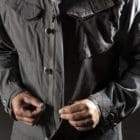
Text the code GEAR to 29071 to enter for a chance to win the legendary Arc’teryx LEAF Alpha Jacket and a pair of boots from LOWA Task Force or Salomon FORCES. Battle Rattle Kit is valued at over $1000 MSRP.

Or you can go directly to: www.us-elitegear.com/pages/battle-rattle-raffle

US Elite is accepting entries until 11:59 pm ET on Monday, February 24th and the lucky winner will be announced during a live Facebook event on Tuesday, February 25th.

Blast From The Past – 215 Gear Visor

Tuesday, February 18th, 2020

Although we first mentioned the 215 Gear Visors ever a decade ago, they’re still available. Summer is still a few months off but it’s never too soon to get ready.

Offered in multiple colors and patterns.

www.215gearstore.com/hats

High Speed Gear Products Receive NTOA Recommendations

Monday, February 17th, 2020

SWANSBORO, N.C., Feb. 18, 2020 – High Speed Gear®, maker of Battle-Proven Tactical Gear™, recently received nine product recommendations in the National Tactical Officers Association’s “Member Tested and Recommended” program.

Select law enforcement officers thoroughly tested the Kydex® Tourniquet TACO® (4.74), Kydex Handcuff TACO (4.45), Operator Belt (4.55), Bleeder/Blowout Pouch (4.51), Double Decker® TACO – Covered (4.03), Mag-Net Dump Pouch V2 (4.46), Gas Mask Pouch V2 (4.41), Duty Flash Bang TACO (4.25), and the Ambidextrous Multipurpose Pouch (4.46) and rated them in the MTR’s two highest tiers. Each product was evaluated by four officers and graded on a variety of categories, including design, performance, quality, durability and versatility, with each group of officers’ scores averaged into the ratings listed above.

The MTR program ranks products as “standard” (rating from 3.00 to 3.99), “silver” (from 4.00 to 4.49) and “gold” (from 4.50 to 5.00). NTOA members can view the full reviews and scores in the Member Tested and Recommended database.

“I use this belt by running the Velcro® belt through my belt loops and then attaching the Operator Belt on top of it,” said an officer who rated the Operator Belt an overall 4.94. “It rides snugly and is very comfortable. The COBRA D-ring buckle is very sturdy and is overkill (in a good way). For those who like a low-profile belt, this is really good and is the best such belt I have tried. I intend to use it for general day-to-day investigative work and will keep my padded belt for tactical situations.

“The Bleeder/Blowout Pouch is another item that I have added to my kit,” stated one officer, who gave the Bleeder a perfect 5.00 rating. “I use the blowout pouch in conjunction with an IFAK and the Kydex Tourniquet Pouch. I really like being able to have my shears secured and easily accessible and having a place designed to hold them. You can mount this on a belt system or on your MOLLE gear, making it a must have in my opinion for anyone needing to carry medical supplies. I can always find a use for this pouch no matter what the task is.”

Every HSGI® product submitted to the MTR for review not only passed for recommendation but also ranked highly. Additionally, Comp-Tac®, a division of HSGI, also received product recommendations from the MTR program, which will be announced shortly.

“We are incredibly honored to have so many products rated so highly by our law enforcement officers,” said Allison Mitchum, HSGI director of sales and marketing. “We strive to create the best gear possible for our customers and are privileged to serve so many who serve.”

ADS Hurlburt Field Warfighter Expo

Monday, February 17th, 2020

The ADS will be held on March 3, 2020 from 9:00 AM-4:00 PM at the The Soundside Club located at 107 Thursday Drive, Hurlburt Field, FL 32544. They’ll have over 60 vendors on hand with the latest in equipping solutions.

To register, visit events.adsinc.com.

Hurlburt Field Warfighter Expo is not open to the general public.

Qualified attendees include active duty military, federal, state and local government agencies, law enforcement, and first responders. Military and government attendees must present official government-issued identification.

SCUBAPRO SUNDAY – Buoyancy  

Sunday, February 16th, 2020

Buoyancy is key to a lot of things when diving. It helps make the dive easier in a lot of ways. When using a closed-circuit rig (CCR) it keeps you from rocketing to the surface, it prevents you from dropping to the bottom when you stop to fix your gear or “Dräger” talk/ yelling at your dive buddy.  


The two keys to buoyancy: balance and breathing 

The two significant factors in achieving neutral buoyancy.

• 1st Wear the right amount of weight for the dive. This will differ depending on the thickness of your wetsuit/ dry suit and gear you are wearing, also water type fresh or salt.

• 2nd Breathing slowly and evenly, so you do not have too much air in your breathing bag. If diving a CCR

Steps to help maintain buoyancy

Pre-dive preparation

Buoyancy control begins, with the pre-dive preparation. As you pick what to wear for a dive. Double-check to make sure nothing has changed that could affect buoyancy. A new wetsuit is more buoyant than an older one and will need more weight. A new suit has more inherent buoyancy at first because diving, especially deep diving simply bursts its bubbles. Make sure you look at any new gear compared to the old version. Gear is always being updated with new buckles or martial so when you switch from old to new make sure you know what the buoyancy is with the new stuff. Check the weights on a scale; often there is variation between claimed and actual weight. If diving open circuit, remember cylinders are negatively buoyant when full and less negative when empty.

Do a buoyancy check

Here is the best way to do a proper buoyancy check. With your lungs half-full, you should float at eye level with no air in your BC. If you are diving open circuit, remember the average cylinder loses about 5 pounds as it empties. So, you might have to add about 5 pounds to your weight if you have done your buoyancy check with a full tank. 

Keep a log

Keeping a log of what gear, you have worn, what the temperature was and the type of water (salt/fresh /brackish). What equipment you used, how much lead you carried, your body weighs and whether you seemed too heavy or light. Knowing the weight of the gear that you used on the dive will help. Make sure you understand that if you are going to remove something during the dive you need to account for that on the return trip home. If you plan ahead by recording in training what you used it will help when you have to do it the next time.  

Saltwater VS Freshwater

If most of your diving is done in the ocean, then ballast calculations should be done in the ocean. Jumping in the pool to check your ballast will get you close, but it won’t be 100% correct. If you switch back and forth, you’ll need to adjust your ballast. Be prepared to add weight if needed sometimes it’s nice to have a weight belt with extra pouches just in case or maybe just an empty pouch on a gear belt will help. But still try and keep the weight evenly distributed. 

Buoyancy, Trim, Position, and Breathing

The secret to buoyancy control, begins with fine-tuning your weighting. How much lead you put into your pouches or have on your weight belt. If you are carrying just the right amount of weight, you will only have to put a little air in your BC. That means less drag and more efficient finning. Less BC inflation also means less buoyancy shift with depth, so you’ll have to make fewer adjustments. There are many tricks, but buoyancy control is the fundamental skill. Precise control of your buoyancy is what enables you to hover motionless and fin through the water, at any depth. You should not have to use your hands at all or stirring up mud or silt from the bottom by always moving your feet. In addition to using the right amount of weight, make sure you are correctly balanced to optimize your position under water.


Keeping a more horizontal position makes you more hydrodynamic. Distribute the weight as uniformly as possible from side to side; you should never notice that you put on more weight on one side while diving. You must also consider the weight of your dive gear and any other additional gear you might be wearing. I.E gun belt or special gear. Make sure it is balanced on your body and it doesn’t shift when you are diving. The lower you wear your dive rig can cause a tendency to push the diver forward (upside down) in the water, so the placement of weight towards the back can help reverse this position, especially on the surface. Make sure any dive weight you put on can be easily removed in an emergency.

The factors that affect your buoyancy besides ballast weight are BC inflation, your trim, exposure suit, depth and breathing control. Your ballast weight and your trim are the only two factors that, once you’ve selected them, stay put. Ballast is the amount of weight it takes to keep you neutral in the water. Trim is about the position of your body weight relative to the position of your weight. Sometime when diving a rebreather you can tape lead washers on it to help with your trip.  

There is one more thing to understand that will help with your buoyancy. It is controlling your breathing. Make sure you maintain proper breathing. Take relaxed breaths this will allow you to maintain control over your buoyancy.

To determine the amount of weight you need, you can take your body weight, the diving suit you are going to use, the weight of your equipment and the environment you are diving in salt or fresh water. If you use about 10 percent of your body weight, that is a good starting point for a full 5 mm or more and for a 3 mm suit, use 5 percent of your body weight.  

Dry suits and thick neoprene suits require more ballast to counteract the increased buoyancy of those suits in comparison with the thinnest. Body composition (the muscular density, for example) will also influence the necessary weight. Remember fat floats, muscle sinks.

Remember to calculate for everything you are going to do and wear on your dive. If you are doing a long dive and plan to leave or remove something half way thru your dive. Say doing a ship attack, and you are taking limpets off. Plan for the whole dive. To check your buoyancy get into water deep enough to stay in an upright position, without treading and releasing all air from the vest. Inhale, in a normally, the surface of the water must be at the level of your eyes. When you exhale, you should sink until water covers your head and inhale again, you should emerge once again until the level of the eyes. Adjust your weight in small increments about 1 pound at a time. You can use a weight with snap link on it or just a weight with some 550 cord on it. Make sure you don’t just put all the weight you are adding to one side. Try and use this time to even yourself out and set your trim also. I have also seen people tap lead washers to the front of their Dräger to help even them out.


Once you get your ballast weight and trim dialed in, you will be ahead of about 75% of all divers toward perfect buoyancy control. Now you can fine-tune your BC inflation to compensate for the very predictable changes due to breathing down your tank and changing depth. 

Lastly, there are advanced classes that you can take that focus on advanced skills like this. This may seem like a lot of work, but it will help make diving a lot better and make you more efficient at it.

How To Connect Single and Dual Downlead Cables to Your Ops-Core AMP Communication Headset

Sunday, February 16th, 2020

gentexcorp.com/ops-core