Sidewinder Compact III

Archive for the ‘AFSW’ Category

AFSOC’s SOF DT Undergoes Transformation

Saturday, December 5th, 2020

HURLBURT FIELD, Fla. —

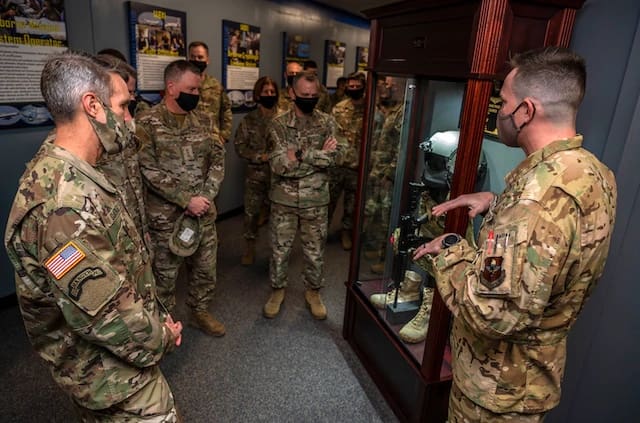
As Air Force Special Operations Command drives towards transformation to the “AFSOC of Tomorrow” by developing its human capital, the Special Operations Forces Developmental Team instituted a more rigorous evaluation and scoring process to give SOF officers more specific feedback and purposeful career development. This enhanced process kicked off this year with the Apr. 20-24, 2020 SOF DT.

 “Over the last five to seven years, development team scoring hasn’t changed,” said Maj. Brandon Webster, Chief, Command Force Development. “There was no clear path on how we wanted to develop an individual, and we wanted to give officers more options and transparency on the future of their career.”

Historically, the DT only scored records for officers who were being considered for promotion to Lieutenant Colonel. The new process now incorporates scoring to begin with Captains, allowing for feedback and mentorship at a much earlier point in an officer’s career.

“Looking at an officer earlier on allows us to be intentional,” said Webster. “We now have the ability to look at a Captain’s records and tell him or her where they stand against their peers, and what their career pathway could look like five to ten years down the road based on where they’re at right now.”

DT record scoring provides objective data for more informative assignment placement, hiring for special duty positions, flying assignments outside of an officer’s normal aircraft, and the addition of sub-developmental pathways.

 “Overall, we’ve revamped the entire DT process. We’re focusing a lot more time on the individual to provide substantial feedback and mentor our officers at all levels, beginning at the rank of Captain,” said Webster. “It is the DT’s responsibility to ensure the right officer is placed in the right job at the right time, with the right training, education, and experiences.”

The fall DT, held Oct. 19-23, consisted of group scoring for Captains, Majors, and graduated squadron commanders. Each officer’s developmental vector will follow a percentile format, giving members direct feedback on where they fall among their peers.

“Synchronizing our efforts provides senior leadership the ability to manage officers and strengthen our future force,” said Webster. “The transformation of the SOF DT is one-step closer to building the SOF officers we need for tomorrow.”

Story by Capt Savannah Stephens, AFSOC Public Affairs

Photo by SSgt Rose Gudex

Special Operations Terminal Attack Controller Course

Monday, November 30th, 2020

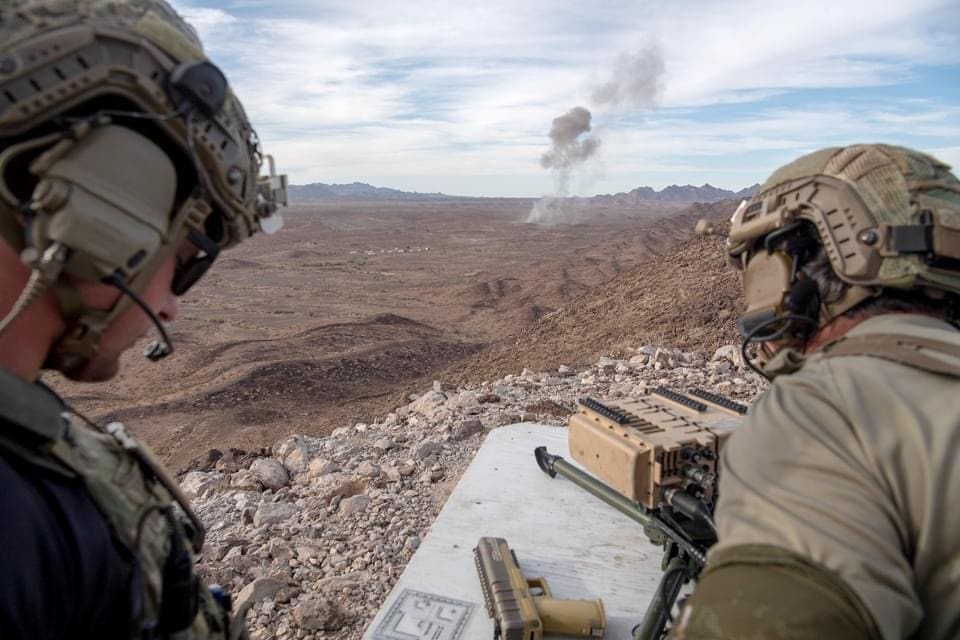
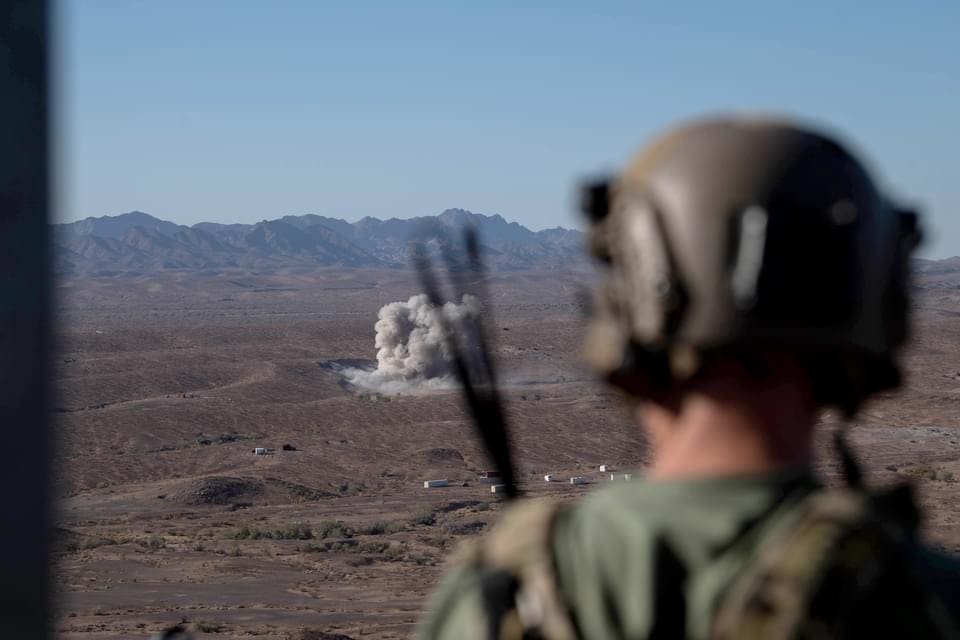
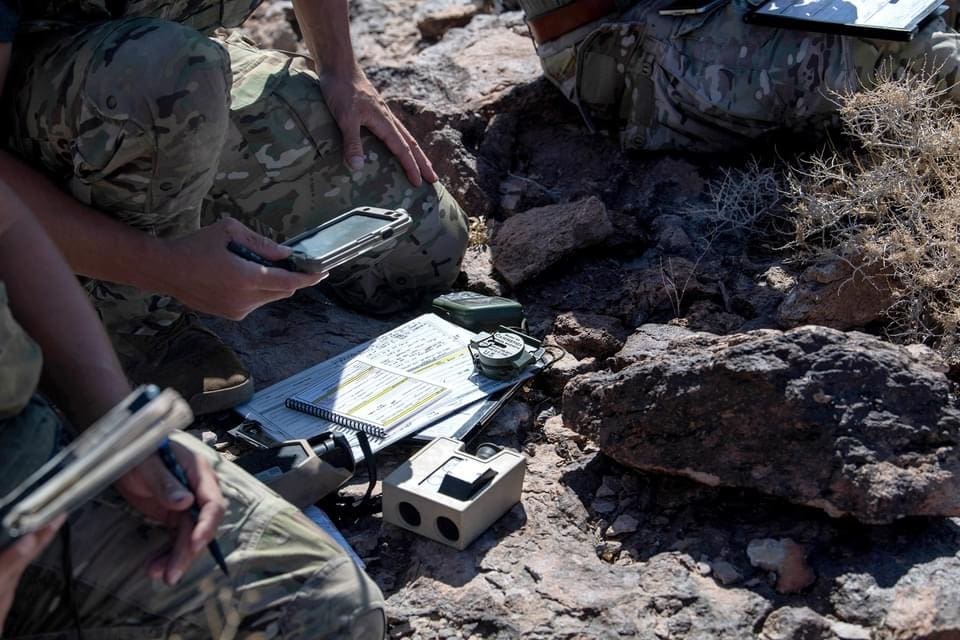
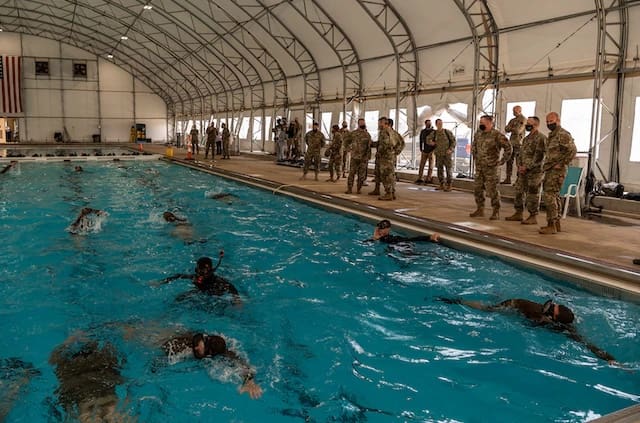
The Special Operations Terminal Attack Controller Course (SOTACC) is hosted by the 24th Special Operations Wing, which allows trains SOF from all branches and partner nations to receive their Joint Terminal Attack Controller certification. Students conduct special operations focused close air support missions from several types of aircraft.

(U.S. Air Force photos by Tech. Sgt. Rose Gudex, ST Combat Camera)

Special Warfare Preparatory Course Changes the Way Airmen Train

Sunday, November 29th, 2020

JOINT BASE SAN ANTONIO-CHAPMAN TRAINING ANNEX, Texas – The Air Force’s Special Warfare Training Wing has refined its training program for Airmen attempting to enter the Tactical Air Control Party, Special Tactics or Guardian Angel weapons systems, in an effort to create more well-rounded future operators.

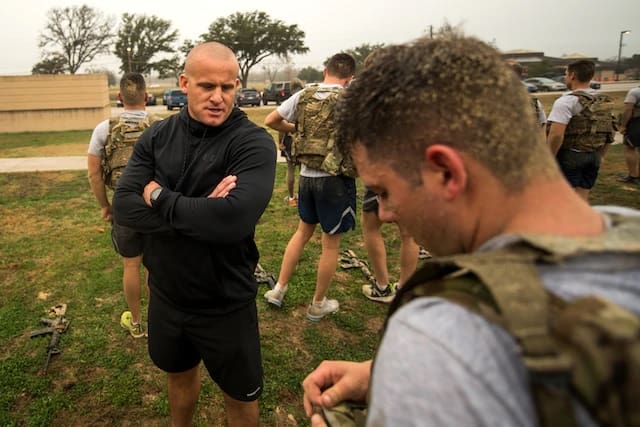
Following graduation from Basic Military Training, new enlisted Airmen interested in becoming a candidate for a career in special warfare must complete the eight week Special Warfare Preparatory Course (SWPC). In this course, training coaches, dieticians, counselors and other staff members expose Airmen to the tools needed to become successful within the various special warfare training pipelines. Upon completion of SWPC, Airmen enter into the course of initial entry for their particular career field.

“Our course is meant to better develop operators,” said Master Sgt. Michael Blout, Special Warfare Preparatory Course superintendent. “We are providing better, more well-rounded training, which provides the Air Force with more capable operators straight out of the training pipeline.”

This deliberate approach to training takes a more holistic edge involving multiple disciplines and modalities consisting of strength & conditioning, mental toughness, nutrition, sleep hygiene and active recovery. Additionally, the SWPC staff incorporates Human Performance monitoring to track conditioning throughout the 8 week course. This Human Performance capability informs the staff on the level of effectiveness for each of the SW candidates.

“In the past, candidates arrived unprepared both mentally and physically for the rigors of the special warfare pipeline, which drove historical levels of high attrition,” said Chief Master Sgt. Todd Popovic, Special Warfare Training Wing command chief. “However, this course provides a firm foundation to educate and prepare each Airmen for what’s ahead and has proven to decrease attrition in the follow-on courses.”

For more information on special warfare career fields visit www.airforce.com/careers/indemand-careers/special-warfare.

By 1st Lt Jeremy Huggins, Special Warfare Training Wing

27 SOCS Tests New Equipment, Supports Special Tactics Training

Saturday, November 21st, 2020

CANNON AIR FORCE BASE, N.M. —

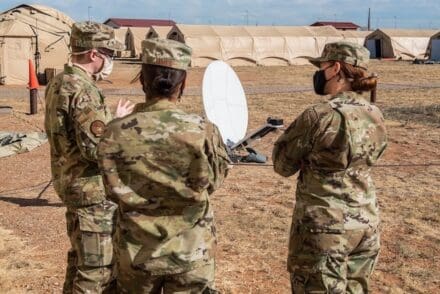
The 27th Special Operations Communications Squadron utilized new equipment to provide over 60 special tactics Airmen assigned to the 22nd Special Tactics Squadron, Joint Base Lewis-McChord, Washington, with network access to ensure that the teams could have full access to the necessary resources to ensure proper training while at Cannon.

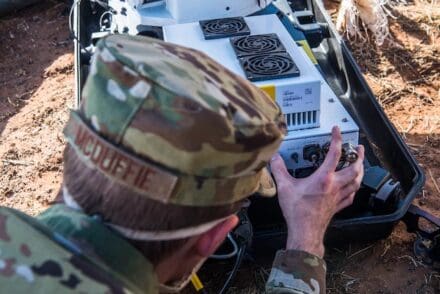
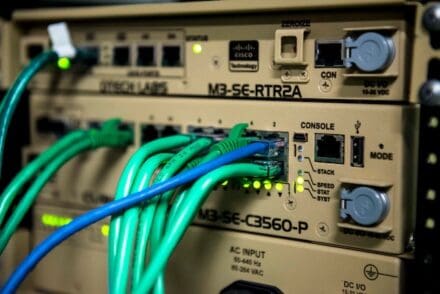
The tactical local access network is a piece of mobile tactical equipment that provides the ability for more online services in an isolated area. It is utilized by pairing with a satellite dish network, which normally provides support for five to ten computers, and moves the workload off of the SDN to the TACLAN, which provides access for 75 computers.

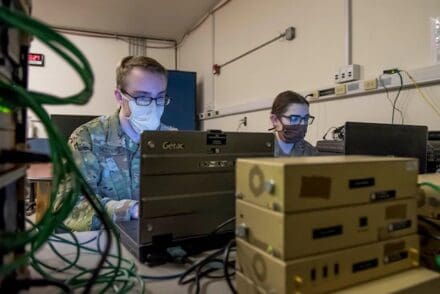
“The TACLAN gives us the same capabilities as the base’s network system,” said Staff Sgt. Thomas Jara, 27 SOCS non-commissioned officer in charge of the TACLAN team. “Printers, shared drives, we can control everything the base would on the TACLAN. As of right now, Cannon is the only base in the Air Force Special Operations Command and United States Special Operations Command utilizing this model.”

This is the first time that the current TACLAN model has been mobilized to provide mission support. While the team was able to properly operate the system for the 22 STS’s training operations, the TACLAN team is currently planning to receive more training on how to better utilize the equipment.

“We are deployable with this capability, but I want to be better,” Jara said. “While we are able to fix any issues that arise while working the system, I want more people to learn the system so it becomes commonplace.”

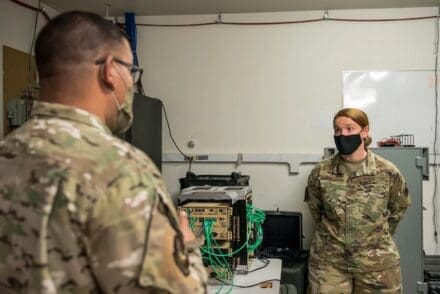
While the team maintained the system so it was fully operational, Maj. Emily Short 27 SOCS commander, came by to receive a brief overview on what they were working on.

“The TACLAN team is phenomenal,” Short said. “This training gives them an opportunity to learn more, allow younger Airmen to grow alongside them, and this operation has given us the opportunity to link up with other organizations for cross-utilization which can only lead to further growth for our efforts.”

While the satellite currently used with the TACLAN system allows up to 75 users, the 27 SOCS has access to equipment that would allow over 300 users on the system.

“I think the system absolutely bolsters our capabilities,” Short said. “It helps our users, people like mission planners and members of the 22 STS during this training operation. Speeding up their network gives them better planning control and speeds up the planning process. It all leads to increased lethality in the end.”

By Senior Airman Vernon R. Walter III, 27th Special Operations Wing Public Affairs

ZOLL Partners With US Air Force Research Laboratory to Improve How Combat Medics Treat Their Patients

Wednesday, November 18th, 2020

November 17, 2020 — CHELMSFORD, MASS. — ZOLL® Medical Corporation, an Asahi Kasei company that manufactures medical devices and related software solutions, and the U.S. Air Force Research Laboratory announced today the signing of a patent license agreement to make it easier for the deployed medic to document vitals, help administer critical care, integrate patient data and identify exact location of casualties in austere combat environments.

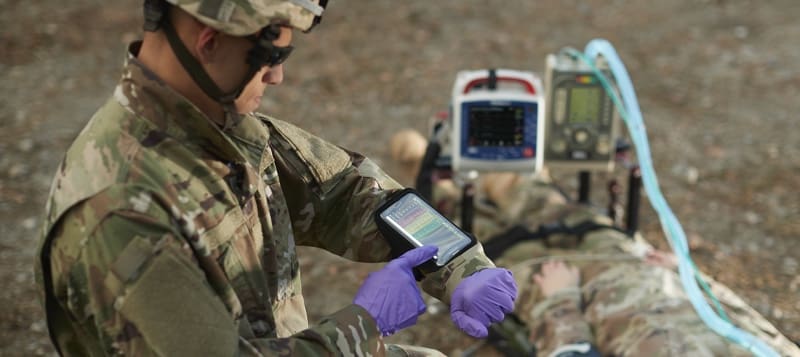
The agreement reinforces the integration of ZOLL’s Propaq patient monitors and monitor/defibrillators into the Battlefield Assisted Trauma Distributed Observation Kit, or BATDOK, point-of-injury software tool. BATDOK is a trademark of the United States Air Force.

According to Dr. Gregory Burnett, airman-machine integration product line lead at the AFRL 711th Human Performance Wing, Wright-Patterson Air Force Base, “The ability to monitor and document care for multiple patients from point of injury all the way through to a definitive care facility can improve quality and continuity of treatment for an injured service member.”

The integration of the Propaq monitors and monitor/defibrillators with the BATDOK software tool enables combat medics to wirelessly and automatically monitor multiple patients’ vitals simultaneously at the point of injury through medical evacuation, and follow-on transfer to the next level of care.

“This facilitates maximum awareness and documentation of in-field patient care while providing state-of-the-art patient monitoring and best-in-class diagnostic and resuscitation capabilities to the wounded service member,” said Jonathan A. Rennert, CEO of ZOLL.

The Propaq M and Propaq MD are ultra-lightweight, airworthy and telemedicine-capable monitors or monitor/defibrillators that provide advanced patient-monitoring capabilities. They are designed specifically for the rigors of military and aeromedical operations. Next to ZOLL´s portable ventilators, the EMV+ and the 330 Multifunction Aspirator, the Propaq M and MD are part of the standard patient movement item equipment for the different branches of the U.S. military and are essential critical care devices for many military medical corps worldwide.

For more than 25 years, ZOLL has been a trusted partner delivering acute critical care technologies to the military, Rennert explained. “ZOLL products are extensively utilized throughout the entire military healthcare system in support of the warfighter and casualty care treatment within all roles of operational En-Route Care System, disaster and humanitarian response.”

“ZOLL’s leading resuscitation and critical care technologies are field-proven in all roles of operational medical care on the battlefield, in aeromedical evacuation and transport, in field hospitals and in garrison for definitive care,” he added.

Air Force’s Special Warfare Training Builds Physical, Intellectual Leaders Ready To Handle Threats Worldwide

Wednesday, October 28th, 2020

JOINT BASE SAN ANTONIO-LACKLAND, Texas (AFNS) —

Army Gen. Richard D. Clarke, commander of U.S. Special Operations Command, saw firsthand how Air Education and Training Command officials ensure joint forces are well equipped with ready and lethal special operations Airmen during a visit to Joint Base San Antonio-Lackland Oct. 16.

“This visit shined a spotlight on how AETC recruits and trains all enlisted Air Force special warfare operators,” said Lt. Gen. Brad Webb, commander of Air Education and Training Command. “The next generation of Airmen must be lethal and ready to compete, deter and win in an increasingly complex environment, and it starts here in the First Command.”

The visit traced the initial skills training path of special operators from recruiting and accessions through basic and technical training.

“The realism and intensity of this training is vital because when these Airmen finish their training, they’ll need to address challenges we may not be able to predict,” Clarke said. “AETC is training leaders who will be asked to address an ever-changing landscape where the fight we’ve engaged in since 9/11 may not resemble the threat our adversaries will present in the coming years. The physical toughness, intellectual capacity and ethical core these Airmen are developing during their training will help the Joint Force address the worldwide range of challenges each geographic combatant commander faces.”

“Having the agility of mind to understand mission-type orders, to understand commander’s intent and be able to move out are essential elements of AETC and the training we provide special warfare Airmen,” Webb added.

The path of a special operator starts with Air Force Recruiting Service. To help find the right candidates who can excel through an intense training pipeline, AFRS established the 330th Recruiting Squadron, a specialty squadron whose mission is to effectively scout, develop and guide future special warfare Airmen to their combat calling.

“Our special warfare careers are some of the most challenging career fields we have to fill,” said Maj. Gen. Edward Thomas, AFRS commander. “Candidates must meet exceptionally high physical standards and must have the grit and determination to push further and harder.”

Enlisted special warfare career fields include combat controllers, pararescue, special reconnaissance, and tactical air control party. In 2019, the 330th RCS successfully increased recruitment 20% compared to their inaugural year in 2018.

Once trainees are recruited, Second Air Force takes the lead, beginning with basic military training at JB San Antonio-Lackland, under the responsibility of the 37th Training Wing.

“BMT sets the foundation for all of the Air Force’s enlisted Airmen,” said Maj. Gen. Andrea Tullos, Second Air Force commander. “We are aligning foundational competencies to meet National Defense Strategy objectives so our Airmen immediately enhance mission execution when they join their first Air Force or joint team.”

While at BMT, enlisted special warfare trainees receive additional physical training and are aggregated in flights together so they can foster the camaraderie needed to prepare them for the next phase of training they enter in the Special Warfare Training Wing, also located at JB San Antonio-Lackland.

“We are training these newly-minted Airmen to meet the demands of the future battlefield,” said Col. Mason Dula, Special Warfare Training Wing commander. “We push the limits of human performance and technology to build a stronger, smarter, more lethal force capable of solving the nation’s most complex military problems.”

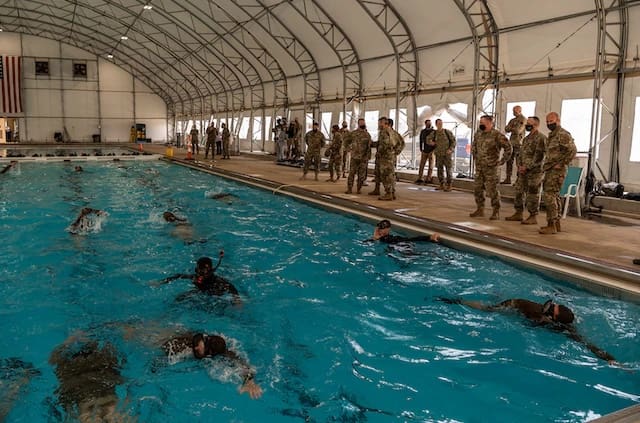
Training begins with the Special Warfare Preparatory Course before recruits are vectored into an Air Force specialty code. Depending on their AFSC, trainees move to other locations around the country for schools such as Air Force Combat Dive School, Airborne and Survival, Evasion, Resistance and Escape School. Each course is meant to push trainees’ mental and physical abilities to their limits.

“As a tactical air control party, I can attest that this training pushes our Airmen to their limits, but it also prepares them for the reality of the austere environments they will face as an operator,” said Chief Master Sgt. Adam Vizi, Second Air Force command chief. “Going through all of the training associated with the TAC-P pipeline ensured I was trained, equipped and ready to deliver timely, accurate and lethal effects on the battlefield.”

There are several training pipelines, which, depending on the specialty, vary in length. Airmen who successfully complete training proceed to their operational units and join Air Force special tactics teams or joint forces at USSOCOM.

The tour also included a visit to the Career Enlisted Aircrew Center of Excellence. Here, members of the 37th Training Group have established an Air Force specialty code baseline and prepare candidates to complete follow-on flight training programs. The COE staff members prepare graduates for nine AFSC-awarding courses, including four that directly support special operations. After completing the Aircrew Fundamentals Course, students who complete the Basic Flight Engineer, Basic Loadmaster Course or Basic Special Missions Aviation Course attend initial qualification courses that prepare them to be Air Commandos.

“These enlisted Airmen take the training they gain here in the First Command and carry it with them through their operational careers,” said Chief Master Sgt. Erik Thompson, AETC command chief. “It is imperative we provide them with the preparation they need to compete in every domain and win for the joint force and the nation.”

Story by Jennifer Gonzalez, Air Education and Training Command Public Affairs

Photos by Johnny Saldivar

17th STS Moves from 720th STG to 724th STG

Friday, October 2nd, 2020

The 24th SOW transitions responsibility of the 17th STS

FORT BENNING, Ga. —

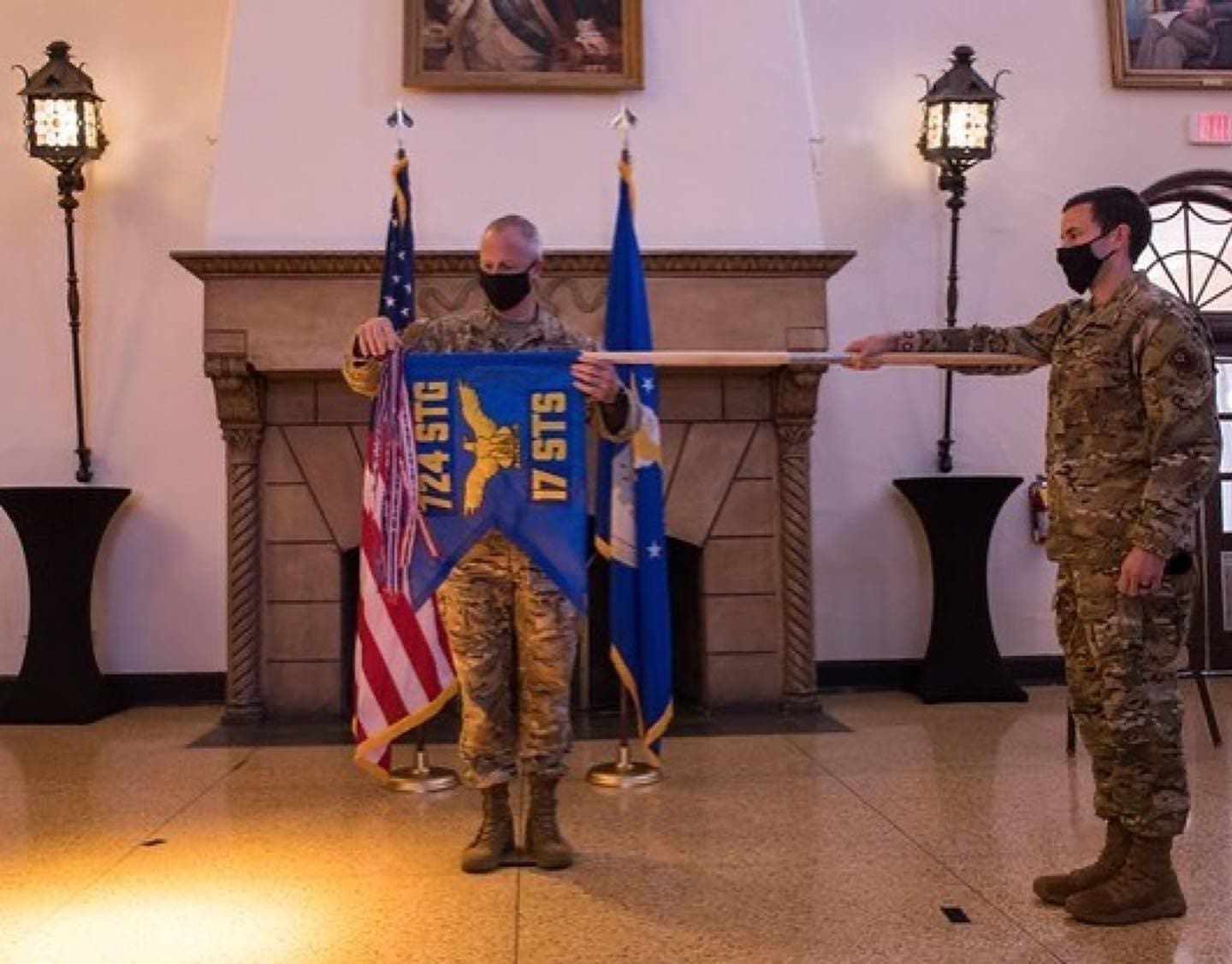
The 24th Special Operations Wing transitioned responsibility of the 17th Special Tactics Squadron from the 720th Special Tactics Group to the 724th Special Tactics Group during a re-assignment ceremony at the 17th STS headquarters, Fort Benning, Georgia, Oct. 1, 2020.

“Today we recognize the end of a tremendous era under the 720th Special Tactics Group and the start of an exciting opportunity as part of the 724th Special Tactics Group,” said Lt. Col. Travis Deutman, commander of the 17th STS. “Reassignment is nothing new for the 17th.”

In August of 2013, the squadron, originally known as the 17th Air Operations Support Squadron, was re-designated as the 17th STS by then-Col. Robert Armfield, the 24th SOWs first wing commander. This time around, Col. Matt Allen, the current 24th SOW commander, presided over the ceremony and the presentation of the new guidon.

 “The 17th STS continues to forge its voice as one of the premiere units within Air Force Special Operations Command and the United States Air Force,” said Allen. “I want to thank the individuals within this unit who have built this legacy of honor and valor.”

The primary mission of the 17th STS is to provide Special Tactics Tactical Air Control Party Airmen to the U.S. Army’s 75th Ranger Regiment for unconventional operations and the transition will provide further opportunities to continue supporting the regiment.

“We look forward to continuing steadfast fires and reconnaissance support to the Ranger mission and its objectives,” said Deutman. “Reassignment to the [724th Special Tactics Group] will realize synergies, efficiencies and unite of command to push our operational alignment with the Ranger Regiment to the next level.” 

The 724th STG is one of two subordinate groups under the 24th SOW, which provides training and technical assistance in the development of tactics, techniques, and procedures to ensure standardization across the AFSOC Special Tactics community. 

“The [17th STS] has always been part of the family, but this will put them in the right organizational construct to become even more effective,” said Col. Mark McGill, commander of the 724th STG. “It’s all about optimizing our ability to train as well as generate mission effectiveness and this is a necessary step to actualize that.”

The 17th STS is geographically separated in three locations so the unit can train and deploy alongside all five of the U.S. Army Special Operations Command’s 75th Ranger Regiment battalions. The squadron is headquartered at Fort Benning, Georgia, alongside the Regimental Headquarters, 3rd Ranger Battalion, Regimental Special Troops Battalion, and Regimental Military Intelligence Battalion. Two operational detachments are located at Hunter Army Airfield, Georgia, alongside the 1st Ranger Battalion, and Joint Base Lewis-McChord, Washington, alongside the 2nd Ranger Battalion. The unit’s physical locations will remain the same through the transition. 

“While a lot might be changing, I can guarantee the commitment, professionalism and excellence of the 17th STS members will remain,” said Deutman.

Another aspect which will remain is the application process for future ST TACP candidates looking to join the 17th STS’ community of warriors. The 24th SOW will continue to host assessment and selection iterations for Special Tactics TACPs at Hurlburt Field, Florida, hand-selecting the most skilled operators to carry out the wing’s special operations precision strike mission.

“You have furthered the reach of America’s combat power,” said Allen. “You’ve held at bay violent extremist organizations and state actors as they challenge us from abroad, and you have kept a promise to Americans … especially to our joint teammates, that no matter where they are on the battlespace, they will never be outmatched.”

Air Force Special Tactics is U.S. Special Operations Command’s air-ground integration force and the Air Force’s ground force specializing in Global Access, Precision Strike, Personnel Recovery and Battlefield Surgery operations. 

For anyone wanting more information on how to join the 17th Special Tactics Squadron, email SDScreening@jdi.socom.mil

By Lt Alejandra Fontalvo, 24th Special Operations Wing

Quantico Tactical Announces a $950,000,000 Award for Air Force Special Warfare

Tuesday, September 15th, 2020

Aberdeen, North Carolina – September 2, 2020 – Quantico Tactical is pleased to announce the award of up to $950,000,000 as part of the United States Air Force Special Warfare – Multiple Award Contract, SW-MAC, for the Special Warfare Acquisition Group and Refresh (SWAGR) program.  The contract was approved by the Air Force Life Cycle Management Center to provide a convenient contract vehicle for Air Force Special Warfare.


“We have an extensive history of supporting the U.S. Air Force with our rapid and simplified procurement processes,” said Sam Lerman, Vice President of Sales & Marketing.  “This contract award demonstrates our unwavering customer commitment and support for the varying mission requirements within Air Force Special Warfare.”

“This contract award is a result of the reputation Quantico Tactical has developed throughout the U.S. Military and federal agencies for providing on-time worldwide delivery of high-quality products from leading manufacturers.  We value our relationships with customers, suppliers, and contracting professionals,” said David Hensley, Founder and CEO.

The contract is a 10-year Indefinite Delivery/Indefinite Quantity (IDIQ) award to provide equipment, training, and product support to approximately 3,500 Air Force Special Warfare operators, as well as authorized users in support of Special Warfare mission requirements.  The contract’s overall objective is to rapidly procure supplies, provide supply chain management, product training, and support, and integrate into larger systems in support of mission requirements.

This contract provides support in the following areas:

Assault Zones (AZ): Capabilities supporting tactical zones of action, including drop zones and fixed-wing and rotary-wing landing zones supporting the forward projection of a force by air.  AZ capabilities to be equipped under this contract include survey equipment for data collection and analysis, assessment of runway surface distress, and airfield geometrics to include obstacles and approach paths.  Also required is airfield control equipment, including airfield markings/lighting, signaling devices, airspace de-confliction tools, and navigational aids.

Fires: Equipping operators for close air support, surface-based and air-to-surface fires, communications architecture, weapons data, digital fire support, and target designation and marking.  For the contract’s purposes, this may include support to ACC-assigned Joint Terminal Attack Controller (JTAC)s.

Weather: Equipping operators to collect, analyze, tailor, and report critical meteorological and oceanographic information.  Additional capabilities include environment analysis and forecasting, vertical atmospheric data collection, processing externally produced weather data, portable environmental observation, and unattended ground-based weather collection.

Personnel Recovery (PR): Equipping Pararescue Jumpers to prepare, recover, and reintegrate isolated personnel.  PR capabilities include, but are not limited to, PR information management, locating survivors, rescue and recovery tools, analyzing environmental conditions, mass casualty management, recovery support, and reintegration.  For the contract’s purposes, this includes the Guardian Angle Mission.

Enabling Capabilities: Common across all mission sets and career fields; include mission management, friendly force detection, geo-locating and range finding, visual augmentation, communications, unmanned capabilities, infiltration/exfiltration, and enhanced training.