GORE-TEX Professional

Archive for the ‘Air Force’ Category

B-21 Raider Makes Public Debut; Will Become Backbone of Air Force’s Bomber Fleet

Wednesday, December 7th, 2022

PALMDALE, Calif. (AFNS) —  

In a tangible display of the nation’s resolve in meeting security threats, the U.S. Air Force, on Dec. 2, publicly unveiled the B-21 Raider, the first new, long-range strike bomber in a generation and an aircraft specifically designed to be the multifunctional backbone of the modernized bomber fleet.

While the B-21 isn’t expected to be operational and introduced into service for several more years, the formal unveiling ceremony hosted by Northrop Grumman Corporation at its production facilities in California is a significant milestone in the Air Force’s effort to modernize combat capabilities. The B-21 is designed to be a more capable and adaptable, state-of-the-art aircraft that will gradually replace aging B-1 Lancer and B-2 Spirit bombers now in service.

According to design requirements, the B-21 is a long-range, highly survivable stealth bomber capable of delivering a mix of conventional and nuclear munitions. The aircraft will play a major role supporting national security objectives and assuring U.S. allies and partners across the globe.

Senior defense officials note that the National Defense Strategy and other analyses make clear the need for the B-21 and its capabilities.

“The B-21 Raider is the first strategic bomber in more than three decades,” Secretary of Defense Lloyd J. Austin said during the ceremony. “It is a testament to America’s enduring advantages in ingenuity and innovation. And it’s proof of the Department’s long-term commitment to building advanced capabilities that will fortify America’s ability to deter aggression, today and into the future.”

The B-21, Austin said, “is deterrence the American way. … This isn’t just another airplane. It’s not just another acquisition. … It’s the embodiment of America’s determination to defend the republic that we all love. It’s a testament to our strategy of deterrence—with the capabilities to back it up, every time and everywhere.”

The world and its threats have changed dramatically since the last new bomber was introduced in 1988, as has the way the Air Force, other U.S. military services and allies work together as a joint, multi-domain force. Senior defense officials say that new thinking and innovation are needed to meet the new and emerging threats.

“That innovative spirit is sitting behind us right now,” Air Force Chief of Staff Gen. CQ Brown, Jr., told reporters shortly before the plane was unveiled.

“You think about what we’re able to do in the amount of time with the workforce here from Northrop Grumman, the collaboration with the United States Air Force to bring in a capability using a digital approach which is new and different from anything we’ve done any major program, that’s part of the Raider spirit,” he said.

The B-21 is the first new bomber to be introduced since the end of the Cold War. Air Force officials envision an ultimate fleet of at least 100 aircraft with an average procurement unit cost requirement of $692 million (base year 2022 dollars).

“When I think about accelerate change, this is exactly what it means to be able to bring this kind of capability very quickly and be able to adapt it vis-à-vis the threat,” Brown said in his meeting with reporters. “And so today, I’m really excited that we bring the B-21 Raider into the future. It’ll be the backbone of our bomber fleet.”

The aircraft is designed with updated stealth qualities and mission flexibility that senior leaders in the Air Force and across the Department of Defense say are necessary to achieve the U.S. goal of achieving integrated deterrence, and if necessary, capabilities required to successfully respond to aggression anywhere in the world at any time.

The specific B-21 unveiled Dec. 2 is one of six under production. Each is considered a test aircraft, but each is being built on the same production line, using the same tools, processes, and technicians who will build production aircraft. This approach has enabled production engineers and technicians to capture lessons learned and apply them directly to follow-on aircraft, driving home a focus on repeatability, producibility and quality.

The timing for first flight will be data and event, not date driven.

While the precise date when the B-21 will enter service is unknown, basing decisions have been made. Ellsworth AFB, South Dakota will become the first Main Operating Base and formal training unit for the B-21. Whiteman AFB, Missouri, and Dyess AFB, Texas, are the preferred locations for the remaining home bases. Each will receive aircraft as they become available.

In addition to building a bomber with state-of-the-art technology and capabilities, Air Force officials emphasized the focus on containing costs while simultaneously allowing for maximum flexibility.

For example, the B-21 is designed with an open systems architecture that will enable rapid future capability integration to keep pace with the highly contested threat environment.

The B-21 design is based on firm requirements with existing and mature technology to control program costs. In fact, the plane’s prime contractor, Northrop Grumman, has been directed to use production processes, production tooling, and a production workforce that ensures sustained and seamless production while avoiding unnecessary costs.

“Leveraging innovative manufacturing techniques, open systems architectures and active management allows us to integrate new technology as it matures and ensures the B-21 can adapt to future threats and be successful when and where we need it,” Assistant Secretary of the Air Force for Acquisition, Technology and Logistics Andrew P. Hunter, said.

By Secretary of the Air Force Public Affairs

Pease ANG Crew Flies Record-Breaking Endurance Mission

Tuesday, December 6th, 2022

PEASE AIR NATIONAL GUARD BASE, N.H. (AFNS) —  

In a feat of air mobility endurance, a KC-46A Pegasus from the 157th Air Refueling Wing flew a non-stop mission halfway around the globe and back, Nov. 16 to 17.

The point-to-point, 36-hour, 16,000-mile, multi-crew, total force sortie was the longest such mission in the history of Air Mobility Command, the active duty major command to which the 157th ARW is aligned.

Gen. Mike Minihan, AMC commander, has relentlessly driven the command to find new ways to employ current assets in anticipation of a future fight.

“This extended mission is yet another example of capable Airmen taking charge and moving out to accelerate our employment of the KC-46A,” Minihan said. “This total force mission boldly highlights the imperative to think differently, change the way we do business, and provide options to the joint force.”

Leaving from the east coast of the U.S. on a cold and rain-soaked morning, the crew flew west across the country and out into the Pacific Ocean. After overflying Hawaii, the crew flew across the International Dateline to Guam, before turning around and retracing their steps home to New Hampshire, where they landed on the evening of Nov. 17; 36-hours to the minute after they launched.

Maj. Bill Daley, the mission’s aircraft commander and a traditional member of the New Hampshire Air National Guard, said the flight demonstrated the aircraft’s abilities to project and connect the joint force through its capacity for endurance, aircrew sustainment, refueling, situational awareness and connectivity, and airborne mission planning.

The KC-46A provides strategic flexibility to the Air Force through its unique blend of persistence and presence. It takes a continuous supply of fuel to stay aloft for hours on end. Since every KC-46A can itself be refueled in flight, each aircraft can persist in operations areas to provide sustained support to armed aircraft. The endurance mission put these capabilities on display, taking on fuel three times throughout the flight and delivering gas to F-22 Raptors while flying a closed-loop pattern off the coast of Hawaii.

The crew also leveraged the KC-46A’s secure and unclassified networks and situational awareness systems, which allow for a broad array of future uses. The platform’s situational awareness capabilities enable its protection in contested environments.

It takes more than gas to stay in the air — the crew must also be sustained, and this was another refueling barrier tested and shattered on the mission. Taking turns at the stick were two aircrews from the New Hampshire ANG’s 133rd Air Refueling Squadron and one active-duty crew from the affiliated 64th ARS. While one crew flew, the other two rested, taking advantage of the modern amenities provided by the jet.

According to Daley, earlier generations of refuelers lacked the basics needed to sustain crews for long-duration, multi-day missions. He said the old jets were incredibly uncomfortable and could go from hot to cold, contributing to crew fatigue. The Pegasus is a stark contrast to this.

“It’s like flying with first-class service,” Daley said, who is a civilian airline pilot when not flying for the Guard.

The KC-46A is climate controlled and comes equipped with kitchen, crew bunks and a lavatory. The configurability of the cargo area also allows for the placement of airline-style seats and additional sleeping areas to accommodate larger crews. For the endurance mission, a palletized kitchen and lavatory was also added to support the crew of 16 that included boom operators, aircraft maintainers, and a flight surgeon.

To pass the long hours when not on duty, the crew, spent time reading, watching movies, preparing meals, and sleeping in cots spread out through the cargo area.

Master Sgt. Michael Windy, a 133rd ARS boom operator who had nearly 3,000 hours of flight time on the KC-135 before converting to the KC-46, agreed with Daley on the increased comfort levels on the new aircraft that make missions like this one possible. With only a few hours remaining in the endurance sortie, Windy said he felt rested and comfortable.

“I was on the 22-hour sortie we flew to Saipan a few months ago, so I already had an idea of what to expect,” Windy said, who worked hard to keep the rest of the crew comfortable and fed. “I really haven’t noticed that much of a difference in how I feel.”

Senior Airman Paige Dunleavy, a 157th ARW avionics technician, said this was her first trip with a crew.

“The joke is that my first TDY is to Pease,” she said of the unusual point-to-point mission.

As a newer Airman who is in upgrade training, it was an excellent opportunity to see first-hand how the crew uses the systems she maintains.

“I definitely learned things and it was the first time I was able to troubleshoot a system in flight,” she said, indicating the civilian satellite communications system reboot she and another avionics technician were called on to execute when it was giving the aircrew problems.

Near the end of the mission, Dunleavy reported feeling normal overall, though she added that the hiker in her was excited to get back to the ground after flying over the Grand Canyon on the return leg of the trip.

Maj. Heidi MacVittie, a Pease ANG base flight surgeon, served as a human performance monitor aboard the flight and collected quantitative data throughout the mission. This data, along with that collected during the wing’s recent 20-hour mission, will be used to inform decision making for similar missions in the future.

“This mission was a true example of total force integration,” said Lt. Col. Brian Carloni, the 157th Operations Group commander. “The expertise of both our Guard and active-duty Airmen in executing this mission, demonstrated how critical teamwork is in any wartime scenario.”

Daley said the success was due to more than the total force crew aboard the jet. The mission, which came nearly two months to the day after Minihan approved the KC-46A for worldwide deployments—including combat missions—was the result of the hard work and dedication of the whole wing over multiple years and ultimately demonstrated the strength they bring to the fight.

“We have a healthy fleet and demonstrated full mission-readiness with onload and offload capabilities. We could execute tomorrow if we had to,” he said.

By SMSgt Timm Huffman, 157th Air Refueling Wing

“Apollo’s Warriors”

Saturday, December 3rd, 2022

“Apollo’s Warriors: United States Air Force Special Operations during the Cold War” was written by Col Michael E Haas, (USAF, Ret), and tells the story of the rise of Air Force Special Operations post World War Two and up until the late 70s. There are some fascinatikng periods in the command’s history like the creation of the Air Resupply and Communications Service.

It’s available as a free download and definitely worth a read.

Air Force Basic Military Training Replaces Four-Day Field Exercise With 36-Hour Event

Thursday, December 1st, 2022

The Air Force recently replaced the four-day BEAST field exercise during Basic Military Training with a 36-hour experience. The old event was woefully inadequate to actually prepare a new Airman for a deployment, but it was designed around a FOB-centric deployment model.

The new reality the Air Force finds itself in is an environment of constant threats and movement, little rest, and high stress. So what does the Air Force do in light of this threat? They dumb down preparation for it. Not only that, but they’re proud of it.

Air Force leaders at all levels should be required to read the accounts of the opening days if the Korean War, the fate of ill-prepared Airmen in particular, and see the images of what happened to our troops when they were overwhelmed by North Koreans. Add in a bit of history on the attacks on sapper attacks on airfields in South East Asia.

Here’s the Air Force’s story about their new toy.

Forging the next generation: BMT leads the way

JOINT BASE SAN ANTONIO-LACKLAND, Texas (AFNS) —

Following a 16-year run, Basic Expeditionary Airman Skills Training, or BEAST, has come to an end.

With an eye toward the future fight, Air Force basic military training is implementing a revised training exercise – PACER FORGE – where Agile Combat Employment and the concept of multi-capable Airmen are the beating heart.

Primary Agile Combat Employment Range, Forward Operations Readiness Generation Exercise, or PACER FORGE, is a fast-paced, two-day scenario-based deployment that mirrors the Air Force’s force generation process and reinforces concepts introduced at BMT.

“The move toward PACER FORGE is not just a renaming or re-branding of BEAST,” said Col. Jeff Pixley, 737th Training Group commander. “This was a year-long effort to reimagine BEAST.”

BMT has had dedicated training days to instill the warrior mindset, initially called “Warrior Week,” since 1999. In 2004, that training was expanded and in 2006, the four-day BEAST exercise stood up and had largely remained unchanged, until now.

Pixley assumed command of BMT in 2021, and assessed that BEAST was more centered around just-in-time pre-deployment training which led to the re-engineering and birth of PACER FORGE.

“The creation of the PACER FORGE program is an opportunity for students to prepare for their roles as multi-capable Airmen and for instructors to hone their leadership skills to mentor the new generation,” he said.

PACER FORGE is executed in the sixth week of BMT. During a 36-hour window, military training instructors and trainees, will deploy to the former BEAST site where they will be organized into smaller dispersed teams. Here, they will be put to the test with scenarios that are built to provide flexibility, promote information seeking, teamwork, decision making and are results focused.

Pixley said the PACER FORGE curriculum is designed to enhance force packaging with teams tailored for mission generation, command and control, and base operating support functions to help meet the vision of the 2030 Enlisted Force Airman. It is also a change in that cadre are now in a mentorship and facilitation role, versus giving direction and instruction.

“The most important thing we do at BMT is plant the seeds of personal discipline, wingmanship, teamwork, and embrace our core values,” Pixley said. “This culminating event for BMT does just that while focused on the future fight. We are providing basic trainees with their first opportunity to put their teamwork, discipline, and problem-solving skills to the test in a scenario-based deployment that is physically demanding and based on real-world operations.”

Pixley added that trainees can put into practice the basic war fighting skills learned in earlier weeks of training. Skills such as tactical combat casualty care and weapons handling.

“Agile Combat Employment is about building foundational skills and problem-solving behaviors in an increasingly challenged threat environment to codify repeatable and understandable processes,” said Lt. Col. Jeff Parrish, 319th Training Squadron commander, whose squadron is responsible for the oversight of PACER FORGE.

He added that instructors also love that the new curriculum affords them the freedom of creativity to adjust and adapt in real-time based on trainee actions, skill level, and capability.

“What we are doing is making them [trainees] ready to join any team, to work well together, to solve tough problems, to be good wingmen and teammates, and to innovate,” Pixley said. “If we get it right, it will be the highlight of their BMT experience, despite only being 36-hours in length. Early feedback suggests we are absolutely on the right track.”

PACER FORGE is operational, but officials are purposely keeping the scenarios close to the vest, “We want it to be something trainees consider so important and formative that they don’t spoil it for those that follow,” Pixley stated. “This is not the end of an era but rather a symbolic change to develop capable and ready Airmen and Guardians … anytime, anywhere.”

Story by Joe Gangemi, 37th Training Wing Public Affairs

Photos by Thomas Coney

Fall 2022 Special Operations Center for Medical Integration and Development

Tuesday, November 29th, 2022

BIRMINGHAM, Ala. —  

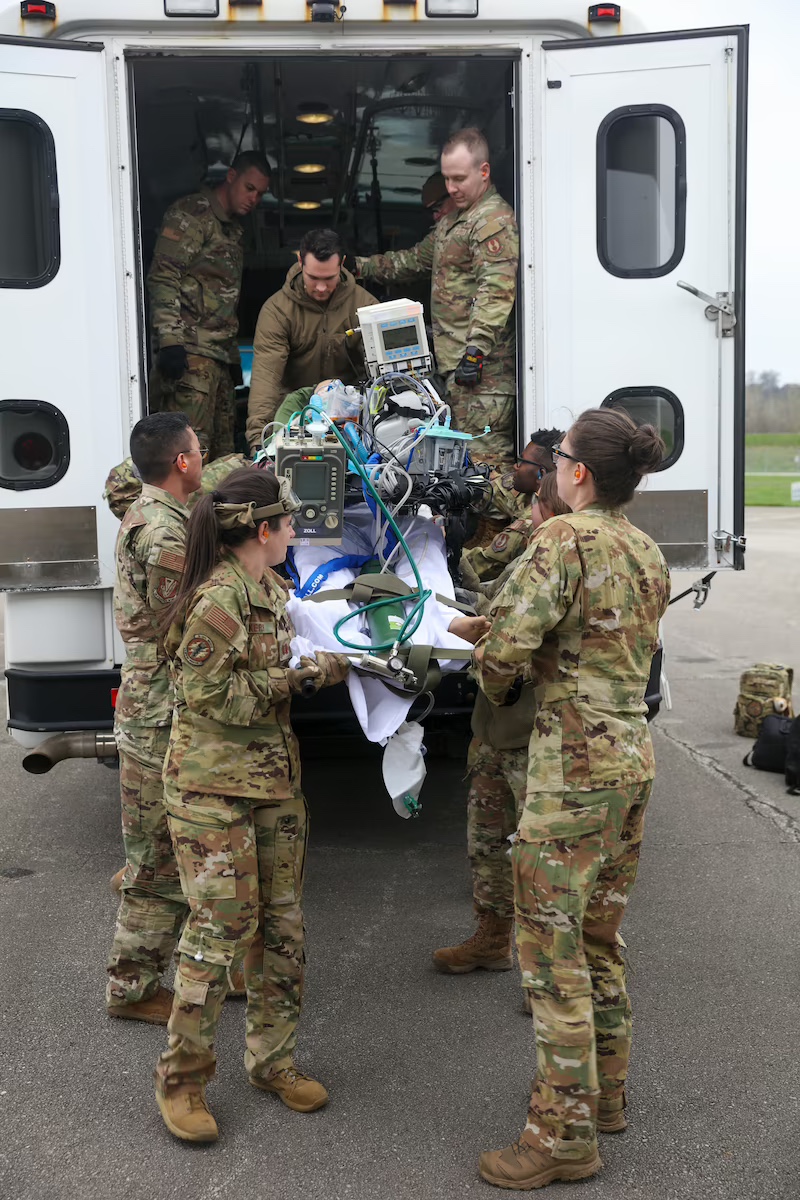
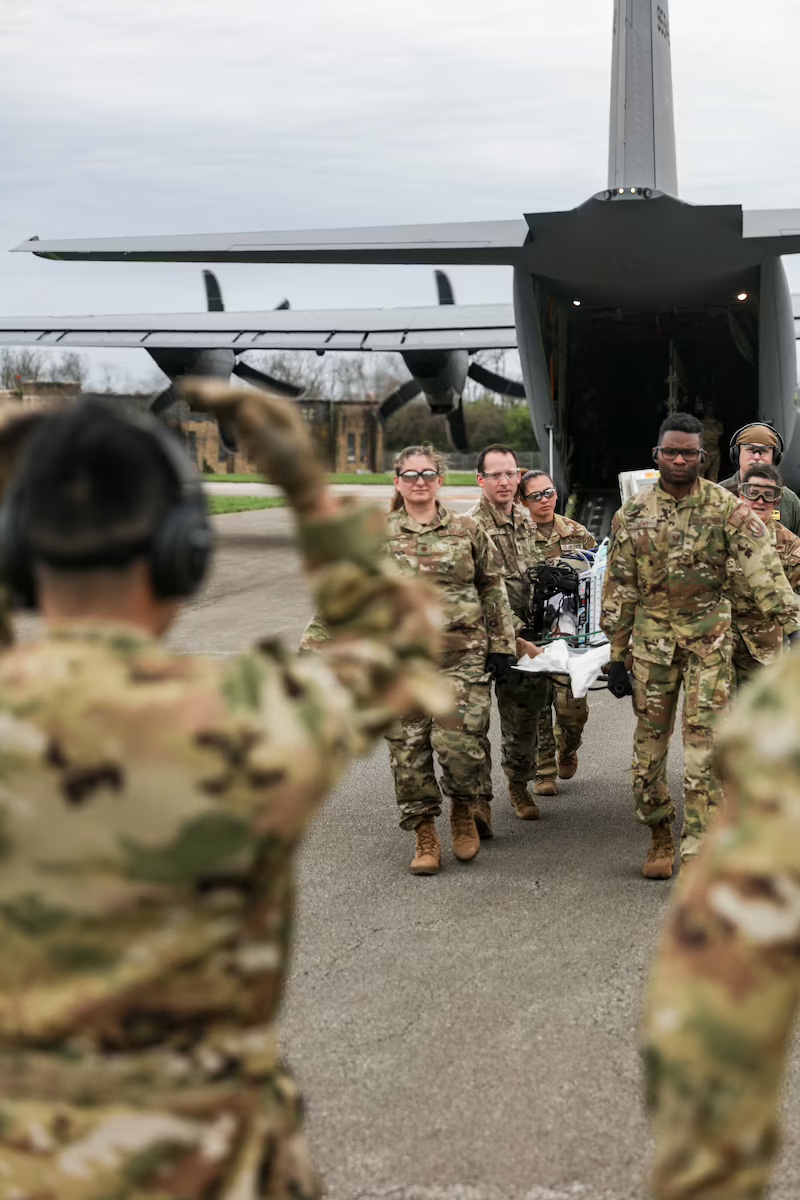
U.S. Air Force Pararescuemen executed the Fall 2022 Special Operations Center for Medical Integration and Development culminating field training exercise in Birmingham, Alabama, Nov. 17, 2022. 

Training provided the pararescuemen various controlled scenarios to enhance medical readiness, whether in day-to-day operations or in austere, resource-limited locations.

The culminating FTX was the capstone to a two-week-long certification course where students applied skills learned in civilian hospital care to tactical scenarios.

SOCMID is embedded with the University of Alabama at Birmingham Hospital. Their vision is to establish the premier trauma skills, sustainment and recertification platform for pararescuemen and Special Operations Independent Duty Medical Technicians. 

The partnership with UAB Hospital is beneficial to students as it is a level one trauma center, allowing them to conduct clinical rotations in operating and emergency rooms. 

“The civilian-military partnerships are important to our sustainment program,” said U.S. Air Force Col. Clayton Rabens, 24th Special Operations Wing command surgeon. “Some of these skills are perishable, so having partnerships like we do with UAB allows us to replicate scenarios and solve problems hands-on, then apply them to tactical scenarios for students to practice.” 

Some of the other training was completed with virtual reality headsets. Specific VR training helps students refine cognitive skills in approaching medical problem sets.

Additionally, prolonged casualty care scenarios allowed pararescue teams to work through casualty care with new skillsets learned while attending SOCMID real-time with wounded mannequins. 

“We want to ensure they’re prepared to meet real-world missions,” added Rabens. “The high stress environment they encounter during the FTX ensures we are able to meet that goal.” 

By 1st Lt Victor Reyes, 24 SOW Public Affairs

USSOCOM’s Armed Overwatch Aircraft Designated OA-1K

Monday, November 28th, 2022

Earlier this year the United States Special Operations Command selected the L3 Harris AT-802U Sky Warden as their new Armed Overwatch aircraft. It has now been designated as the OA-1K. Aircraft officianados will recognize the OA designation which identifies the combined Observation Attack role.

The decision to reuse model 1 is an odd choice considering 7 is the next number in line for Observation aircraft and 14 is next up for Attack aircraft. It seems that they are attempting to assert some sort of SOF aviation heritage on this completely new airframe by reusing the model 1 designation shared with the Skyraider and assigning variant K to the Sky Warden.

Thousands of Douglas A-1E, A-1H and A-1J Skyraiders were operated by the US from 1946-1973 with significant service in AFSOC’s forebears, the Air Commandos, during the Vietnam War.

The Armed Overwatch program provides SOF with dedicated Close Air Support, precision strike, and airborne intelligence, surveillance, and reconnaissance (ISR) from austere locations in a permissive environment.

USSOCOM plans to procure 75 OA-1Ks and form then into four operational squadrons of 15 aircraft each and an additional 15 for use in training. Special Operations Squadrons operating U-28 Drago and MC-12W Liberty will replace their aircraft with OA-1Ks. However, AFSOC plans to keep some Dragos in service.

“Force Plate Vertical Jump Scans are Not a Valid Proxy for Physical Fitness in US Special Warfare Trainees”

Sunday, November 27th, 2022

Members of the Air Force Special Warfare Human Performance Support Group’s Research Flight recently published an article in a peer-reviewed journal, “Force plate vertical jump scans are not a valid proxy for physical fitness in US special warfare trainees.”

The Research Flight is the only embedded research team in the DoD, tasked with supporting the Special Warfare Training Wing with data driven decisions to identify trends, maximize the effectiveness and reduce injuries within the pipeline.

Read the full article here.

Airmen Innovate, Ensure HH-60W’s First Deployment

Friday, November 25th, 2022

MOODY AIR FORCE BASE, Ga. (AFNS) —

In preparation for the Air Force’s newest rescue platform’s first deployment, Airmen from the 41st Rescue and Rescue Generation Squadrons conducted extensive training to learn the intricacies of the new HH-60W Jolly Green II.

As a result of the increase in training, the 41st RQS expended more of the aircraft’s hoist cables than anticipated, lending to a potential shortfall. A team of 41st RGS maintenance Airmen, however, quickly recognized the need to replace these cables and jumped at the chance to accelerate change and make an Air Force-wide impact.

“Our maintenance Airmen have a won’t-fail mentality and are constantly working to make things better not only for the 23rd Maintenance Group but for the entire Air Force,” said Col. Jason Purdy, 23rd MXG commander.

These hoists are critical to the success of combat search and rescue operations. They are used in high-stakes scenarios to rescue individuals in dangerous or remote areas that aren’t accessible by ground transportation, or if the victim is trapped by fire or water.

Recognizing the need to adapt, the Airmen came together and discovered they could circumvent the supply shortage by using the HH-60G Pave Hawk cables in the HH-60W with only slight modifications.

“We used our subject matter expertise to troubleshoot the issue,” said Staff Sgt. Nicholas Cellini, 41st RGS flying crew chief. “We improvised and adapted to overcome the supply shortage, by using a cable that we know is reliable and the Air Force has plenty of.”

Cellini and his counterparts went to the field training detachment hoist trainer to test and write the operating procedures for converting the HH-60G cables for use in the HH-60W. The process ensured the safe use of the hoist cables by synchronizing the speed in which they extend at the appropriate points of the cable.

The 41st RGS submitted an engineer request and engineers from Warner Robins Air Force Base came to Moody AFB to provide safety checks and approve the process.

With the process approved and implemented, the rescue Airmen ensured the HH-60W was fully mission-capable and ready to deploy by Air Combat Command’s initial operational capability deadline.

“Finding and testing this information and realizing it can work for us is going to make a huge difference knowing there will never be a shortage of cables,” said Master Sgt. Jonathan Holford, 41st RGS production superintendent.

Discovering innovative solutions for unpredictable circumstances is a testament to the Airmen who feel empowered to do so. The Airmen with the 41st RGS said they feel confident in providing creative solutions to these shortfalls thanks to their leadership.

“People say aircraft maintenance is pretty black and white, but some of it’s not,” Cellini said. “Our leadership is open to ideas; as long as it’s safe and we can effectively and efficiently accomplish it, our whole chain of command will back us.”

Holford attributed the success of the organization to this leadership philosophy and the teamwork mentality fostered within the unit.

“We encourage Airmen to solve problems,” Holford said. “We always want to afford them the opportunity to fail, but we fail together; we learn from it and continue to grow on what we learned.”

The mission relies on Airmen’s ingenuity and initiative to succeed, and Moody AFB Airmen have exemplified these traits throughout the transition to the HH-60W.

“I’m very proud of our maintainers for leading the way on the HH-60W fleet,” Purdy said. “Whether it’s been a hoist, a gun system, or a lapse in technical data, our Airmen developed ways to make the entire program better.”

Story Airman 1st Class Deanna Muir, 23rd Wing Public Affairs

Photos by Staff Sergeant Devin Boyer