GORE-TEX Professional

Archive for the ‘Air Force’ Category

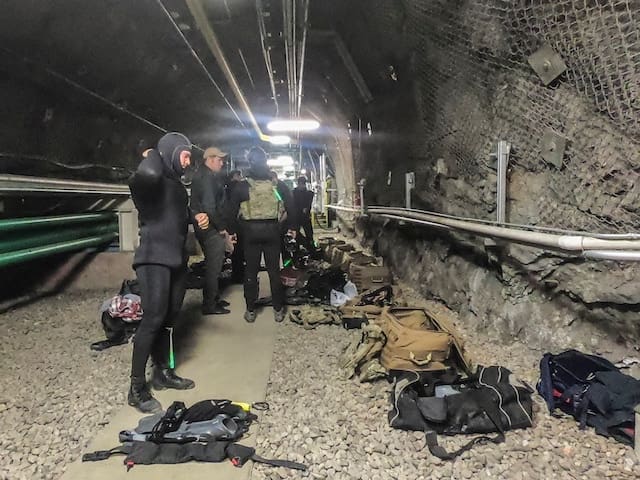
Combat Divers Submerge Inside Cheyenne Mountain

Thursday, December 10th, 2020

CHEYENNE MOUNTAIN AIR FORCE STATION, Colo. —

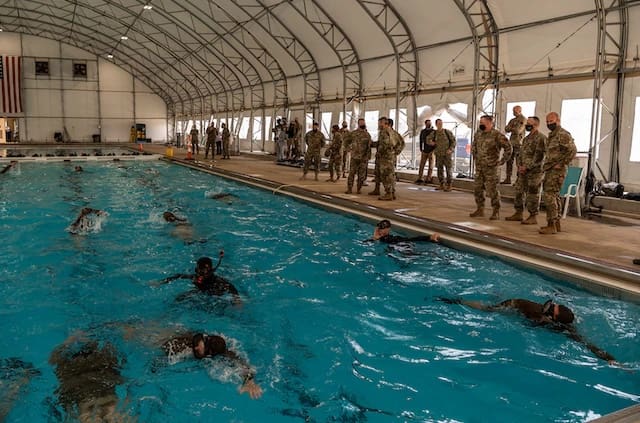
A Special Forces Operations Detachment – Alpha (SFOD-A) with 10th Special Forces Group (Airborne) put their combat dive skills to use November 5, 2020 where one would least expect: in the heart of the Cheyenne Mountain Complex. 

Inside the complex are three reservoirs that hold water for a variety of uses, including cooling the mountain’s generators and expelled exhaust. Because the mountain is designed to function independently, the water systems are vital to the success of the mountain’s operations. Assessing the Structural integrity of the reservoirs and ensuring the water is flowing freely through the cave systems that connect them keeps things running smoothly. 

“They originally contracted with a civilian company to get this done,” says the Officer in Charge of the Dive LIfe Support Maintenance Facility at 10th SFG (A). “My brother, an Air Force Logistical Officer tasked to the Space Force, recommended they get in contact with (us) to do it for free.”

The facility manager of the complex and the DLSMF and a chosen combat dive SFOD-A set out to accomplish the mission.

“Dive operations don’t happen very often in special forces,” says the OIC. “This was a good chance for us to go out and showcase our capabilities as a legitimate maritime force within (Special Operations Command) to actually do a real world mission. It’s not infiltrating into enemy country or territory, but it was a chance for us to show everyone that we do have this capability and it’s important to keep the capability within the Special Forces community.”

10th SFG (A) to establish and develop relationships outside of the Army and Special Operations Command. It started a relationship with the Cheyenne Mountain complex to provide future opportunities for real world missions, training and equipment testing. These relationships are essential to interoperability within different branches of the military enhancing our overall capabilities as one united force. 

By Sgt Angela Walter, 10th Special Forces Public Affairs

Finally! Department of the Air Force Removes Waist Measurement from Physical Fitness Assessment Composite Score

Monday, December 7th, 2020

WASHINGTON (AFNS) —

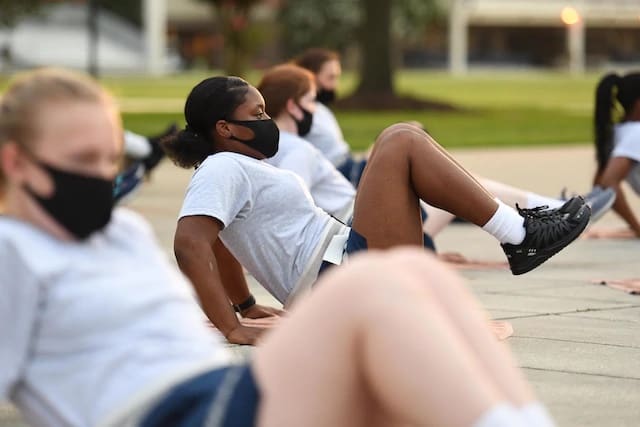
The Department of the Air Force announced physical fitness assessments will now resume April 2021 and will no longer include the waist measurement component.

To ensure social distancing practices remain in place during the ongoing COVID-19 pandemic, and to give Airmen and Space Professionals time to prepare, testing was delayed from October to January and is now further delayed to April.

While the waist measurement is permanently removed from the assessment, height and weight measurements will resume October 2021.

“We trust that our Airmen understand the standard of good physical health practices and we are all finding innovative ways to stay fit,” said Air Force Chief of Staff Gen. Charles Q. Brown, Jr. “We also trust that leaders will take the appropriate steps to keep their Airmen safe while making every effort to provide fitness options during the pandemic.”

Fitness assessment cells, fitness center staff, physical training leaders and members performing fitness assessments will adhere to physical distancing protocols and other local precautions as determined by installation commanders once assessments resume.

Commanders may delay official fitness assessments beyond April 2021 if necessary, based on the recommendation of local public health officials, the continuation of closed fitness centers and extended state-wide restriction of movement and gatherings.

Space Professionals will adhere to the physical fitness policy of the Department of the Air Force.

Airmen and Space Professionals may determine their next fitness assessment due date by visiting the Official Physical Assessment Due Date Matrix on myPers which will be updated and available Dec. 8. Fitness assessment due dates will primarily depend on the date and score of the last official test.

“Originally, we hoped to resume testing by January 2021,” said Chief Master Sgt. of the Air Force JoAnne S. Bass. “However, based on the number of cases nationwide, the right thing to do is focus on keeping our Airmen and their families safe. Delaying and reevaluating the PT test is the best option for our people.”

The test will still consist of a 1.5 mile run, 1 minute of pushups and 1 minute of situps. However, the composite score will be calculated with full points for the waist measurement portion until system changes can be made.

Department leaders are also looking to reevaluate certain testing criteria moving forward.

“Along with removing the waist measurement, we are also exploring alternative strength and cardio components to our current Air Force fitness assessment,” Brown said. “We believe these potential test structure changes will impact Airmen in a positive way and help with a holistic approach to health and fitness standards.”

For more information, Airmen and Space Professionals should contact their fitness assessment cells and visit the COVID-19 Fitness Guidance page on myPers.

Secretary of the Air Force Public Affairs

AFSOC’s SOF DT Undergoes Transformation

Saturday, December 5th, 2020

HURLBURT FIELD, Fla. —

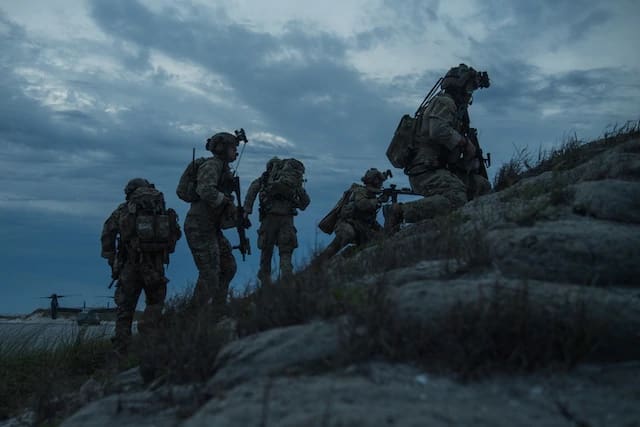
As Air Force Special Operations Command drives towards transformation to the “AFSOC of Tomorrow” by developing its human capital, the Special Operations Forces Developmental Team instituted a more rigorous evaluation and scoring process to give SOF officers more specific feedback and purposeful career development. This enhanced process kicked off this year with the Apr. 20-24, 2020 SOF DT.

 “Over the last five to seven years, development team scoring hasn’t changed,” said Maj. Brandon Webster, Chief, Command Force Development. “There was no clear path on how we wanted to develop an individual, and we wanted to give officers more options and transparency on the future of their career.”

Historically, the DT only scored records for officers who were being considered for promotion to Lieutenant Colonel. The new process now incorporates scoring to begin with Captains, allowing for feedback and mentorship at a much earlier point in an officer’s career.

“Looking at an officer earlier on allows us to be intentional,” said Webster. “We now have the ability to look at a Captain’s records and tell him or her where they stand against their peers, and what their career pathway could look like five to ten years down the road based on where they’re at right now.”

DT record scoring provides objective data for more informative assignment placement, hiring for special duty positions, flying assignments outside of an officer’s normal aircraft, and the addition of sub-developmental pathways.

 “Overall, we’ve revamped the entire DT process. We’re focusing a lot more time on the individual to provide substantial feedback and mentor our officers at all levels, beginning at the rank of Captain,” said Webster. “It is the DT’s responsibility to ensure the right officer is placed in the right job at the right time, with the right training, education, and experiences.”

The fall DT, held Oct. 19-23, consisted of group scoring for Captains, Majors, and graduated squadron commanders. Each officer’s developmental vector will follow a percentile format, giving members direct feedback on where they fall among their peers.

“Synchronizing our efforts provides senior leadership the ability to manage officers and strengthen our future force,” said Webster. “The transformation of the SOF DT is one-step closer to building the SOF officers we need for tomorrow.”

Story by Capt Savannah Stephens, AFSOC Public Affairs

Photo by SSgt Rose Gudex

B&T Provides the United States Air Force with APC9K PRO Models

Friday, December 4th, 2020

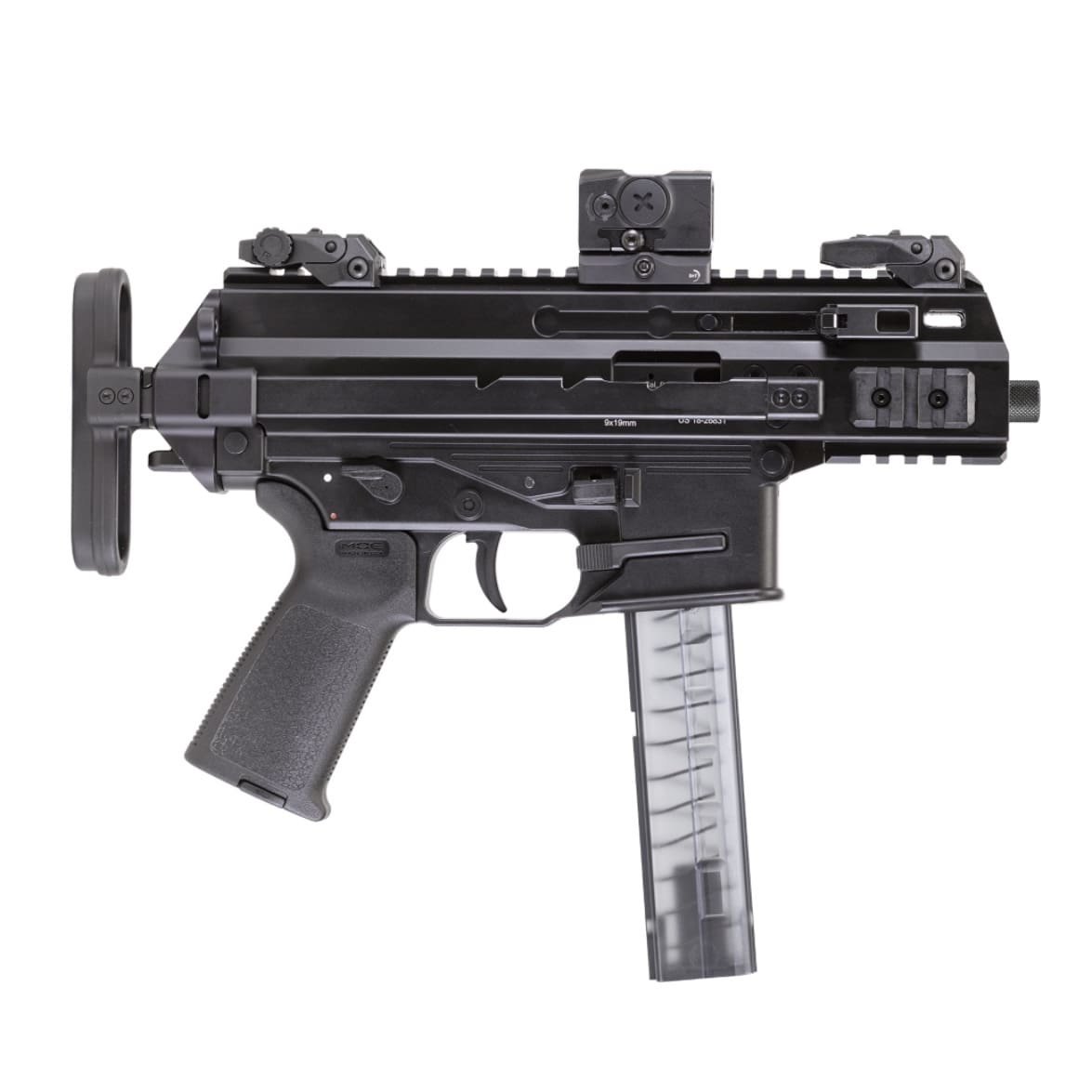
Tampa, FL (December 4, 2020) – B&T, Inc. is proud to announce the United States Air Force has purchased B&T APC9K PRO platforms. These ultra-compact weapon systems are destined for specialized service and close personal protection use within the branch.

“B&T is honored to have our APC9K PRO selected by the United States Air Force. We’re pleased to know that specially trained Airmen will be equipped with the finest equipment available to not only ensure their personal safety during challenging assignments, but contribute to the overall success of their mission,” stated Jon Scott, Vice President of Sales, B&T USA.

The United States Air Force is the second branch of service to purchase APC9K PRO sub compact weapon systems after identifying an operational need for a highly concealable, sub machine gun. At less than 15-inches in length, the APC9K is optimized for low visibility carriage and discreet deployment; use in and around vehicles, and within confined spaces — all while delivering unsurpassed accuracy, controllability and ergonomics.

About the APC9K

The APC9K utilizes a hydraulic buffer system to drastically reduce felt recoil and muzzle rise and is the most compact version the APC9 PRO line. The platform features functional updates to include dual auto-folding, non-reciprocating and ambidextrous charging handles, improved lower receiver ergonomics that include a side positioned bolt hold open/release, removable M4 compatible grip, and Magpul M-Lok accessory slots located on the forend. Additionally, the APC9K can be equipped to accommodate Glock 9mm magazines, SIG P320 magazines or proprietary B&T magazines, by simply switching the non-serialized lower receiver group. 

www.bt-arms.com

Special Operations Terminal Attack Controller Course

Monday, November 30th, 2020

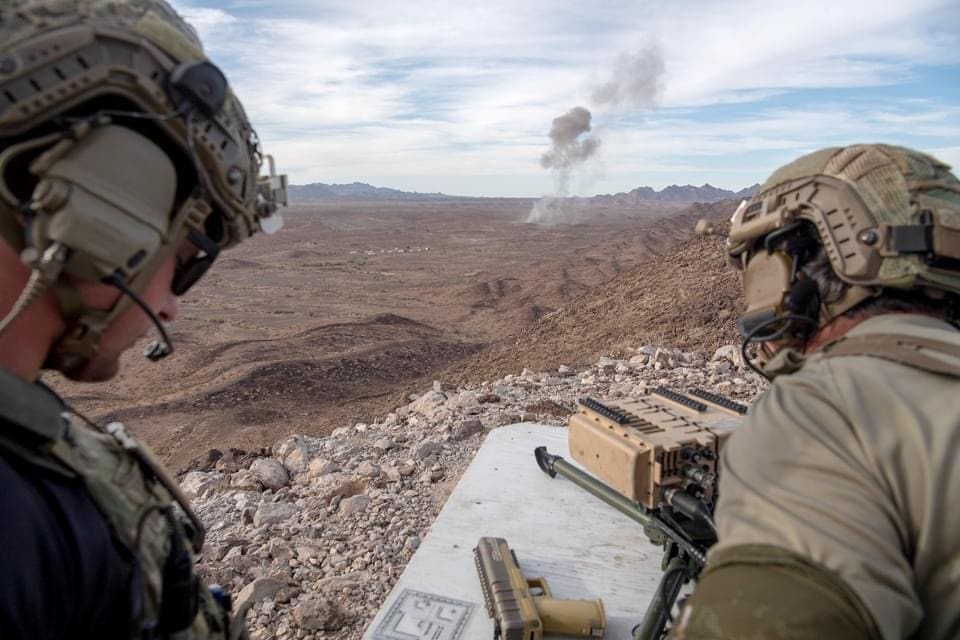
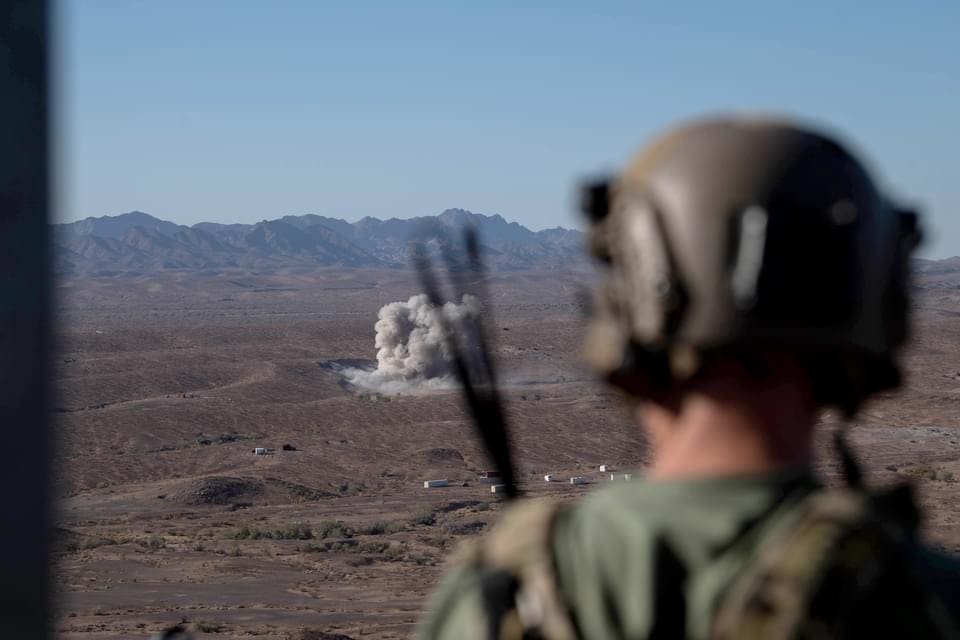
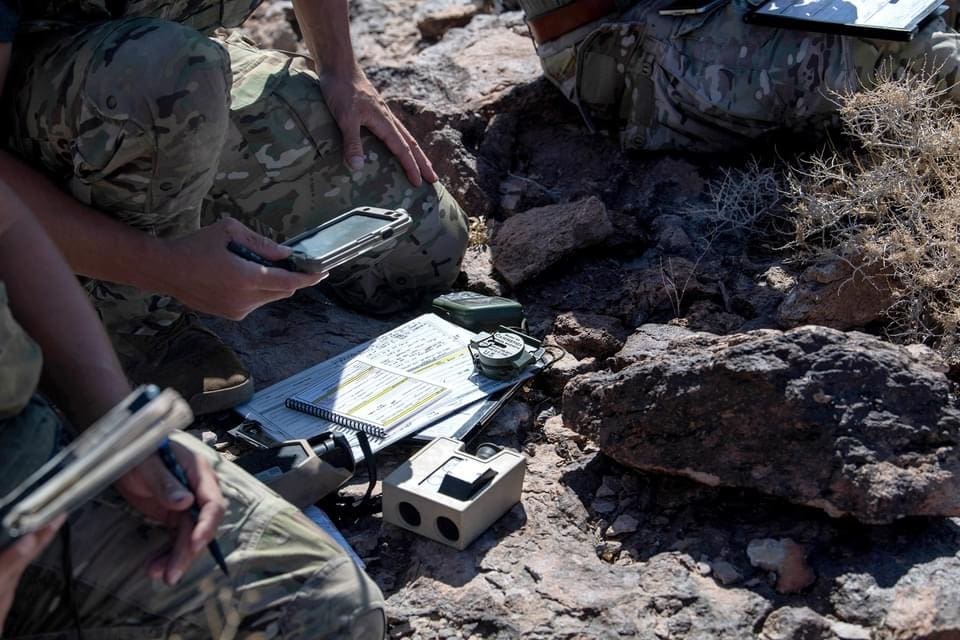
The Special Operations Terminal Attack Controller Course (SOTACC) is hosted by the 24th Special Operations Wing, which allows trains SOF from all branches and partner nations to receive their Joint Terminal Attack Controller certification. Students conduct special operations focused close air support missions from several types of aircraft.

(U.S. Air Force photos by Tech. Sgt. Rose Gudex, ST Combat Camera)

Special Warfare Preparatory Course Changes the Way Airmen Train

Sunday, November 29th, 2020

JOINT BASE SAN ANTONIO-CHAPMAN TRAINING ANNEX, Texas – The Air Force’s Special Warfare Training Wing has refined its training program for Airmen attempting to enter the Tactical Air Control Party, Special Tactics or Guardian Angel weapons systems, in an effort to create more well-rounded future operators.

Following graduation from Basic Military Training, new enlisted Airmen interested in becoming a candidate for a career in special warfare must complete the eight week Special Warfare Preparatory Course (SWPC). In this course, training coaches, dieticians, counselors and other staff members expose Airmen to the tools needed to become successful within the various special warfare training pipelines. Upon completion of SWPC, Airmen enter into the course of initial entry for their particular career field.

“Our course is meant to better develop operators,” said Master Sgt. Michael Blout, Special Warfare Preparatory Course superintendent. “We are providing better, more well-rounded training, which provides the Air Force with more capable operators straight out of the training pipeline.”

This deliberate approach to training takes a more holistic edge involving multiple disciplines and modalities consisting of strength & conditioning, mental toughness, nutrition, sleep hygiene and active recovery. Additionally, the SWPC staff incorporates Human Performance monitoring to track conditioning throughout the 8 week course. This Human Performance capability informs the staff on the level of effectiveness for each of the SW candidates.

“In the past, candidates arrived unprepared both mentally and physically for the rigors of the special warfare pipeline, which drove historical levels of high attrition,” said Chief Master Sgt. Todd Popovic, Special Warfare Training Wing command chief. “However, this course provides a firm foundation to educate and prepare each Airmen for what’s ahead and has proven to decrease attrition in the follow-on courses.”

For more information on special warfare career fields visit www.airforce.com/careers/indemand-careers/special-warfare.

By 1st Lt Jeremy Huggins, Special Warfare Training Wing

Son Tay Raiders Commemorate 50th Anniversary of Operation, Release New Book, Film Documentary

Saturday, November 21st, 2020

Today is the 50th anniversary of Operation Ivory Coast, the famous joint service raid deep into North Vietnam to rescue American POWs held by the communists in a camp near Son Tay.
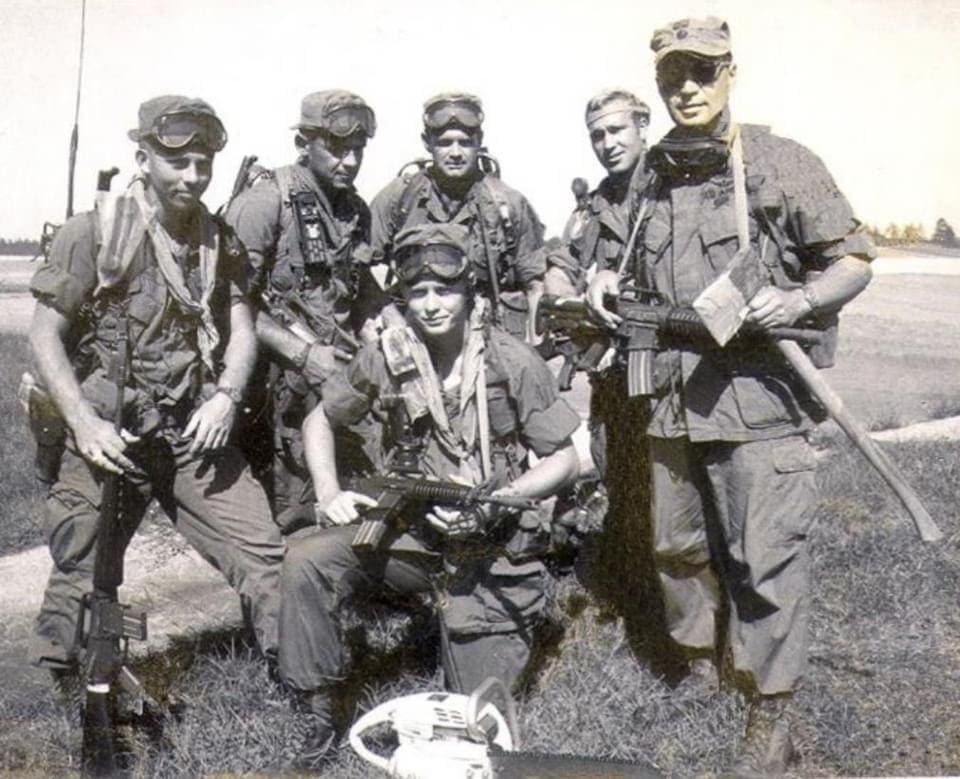
Principally, the assaulters were members of Army Special Forces recruited for a secret mission from units in Fort Bragg and the Aircrews who were responsible for getting them there were Air Force.
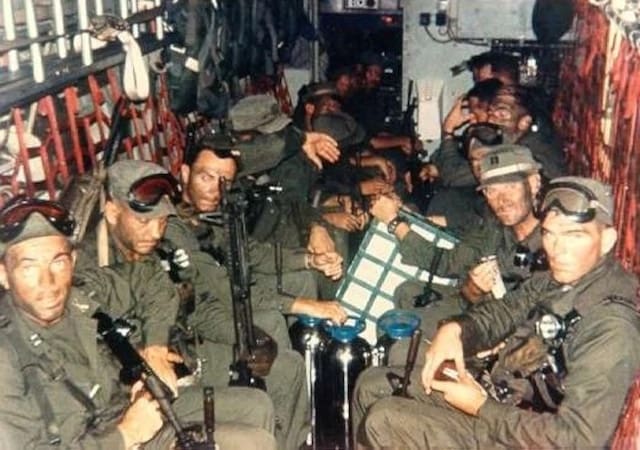
The Raiders flew to the target from an Intermediate Staging Base in Thailand on HH-3s and were refueled by HC-130s. An MC-130 served as pathfinder, leading the mission. There was also armed overwatch via AC-130 gunship and A-1E Skyraider. A myriad of other aircraft provided support from afar for the assault element, including command and control, intelligence overwatch and suppression of enemy air defense.
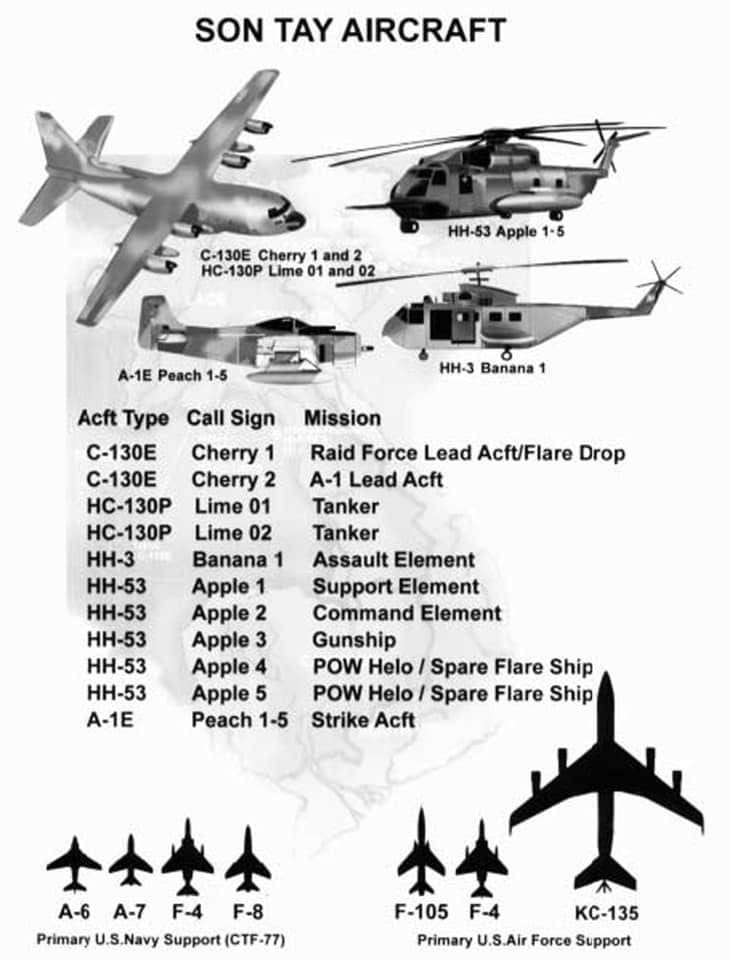
The Navy also played a vital, although unwitting role by flying MIG Combat Air Patrols and conducting deception operations to keep the North’s air defense system busy. Thanks to their efforts, the North Vietnamese didn’t get one aircraft off the ground that night. Ironically, none of the Navy crews knew what they were doing until was all over.
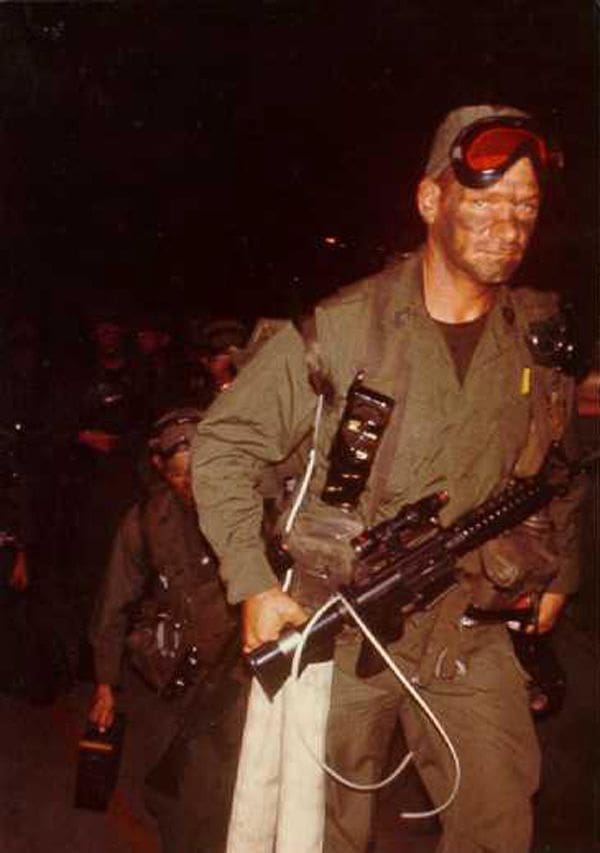
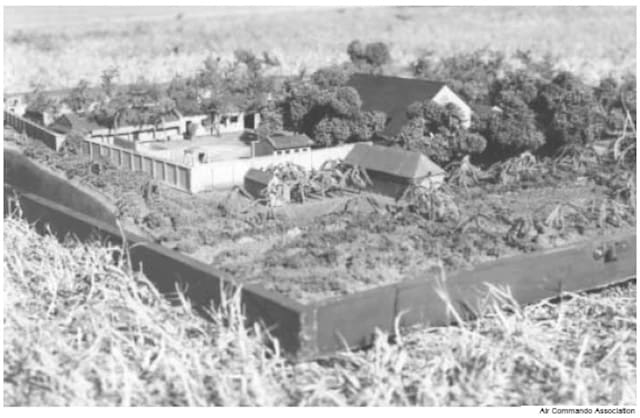
But to get the ball rolling, the task force was assembled at Eglin Air Force in Florida where it trained for the mission in isolation and secrecy. So careful were planners that rehearsals were conducted only when Soviet satellites weren’t overhead so as not to alert the communist bloc of an impending operation. They even went so far as to disassemble the target camp in between rehearsals. Planners also had access to ‘Barbara’, the code name for a scale model of the compound.
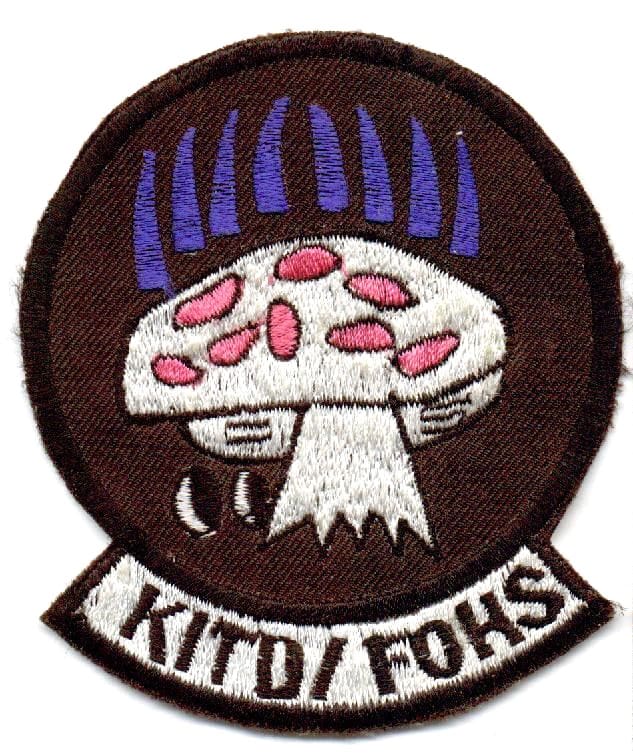
Elements and aircraft were assigned code names. All of this secrecy led to the infamous commemorative patch created by the Air Force crews featuring a mushroom with the letters KITD FOHS for Kept In The Dark, Fed Only Horse Shit.
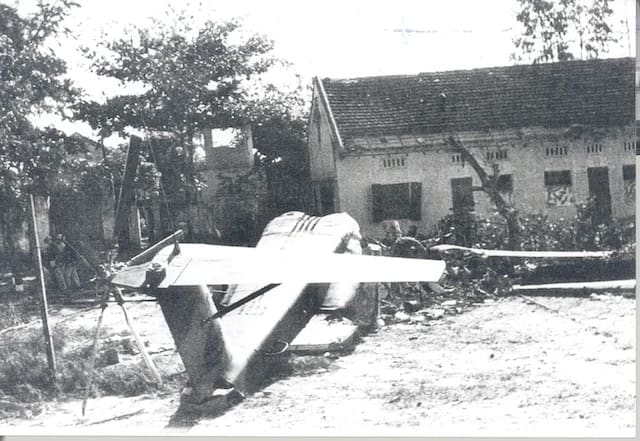
The actual raid was called Operation Kingpin and was initiated when an HH-3, call sign Banana-1, purposefully killed the engine and autorotated into the POW camp, Raiders running out of the stricken aircraft once it came to rest. In all, the ground force consisted of three teams: an assault group, a support group, and a command and security group.
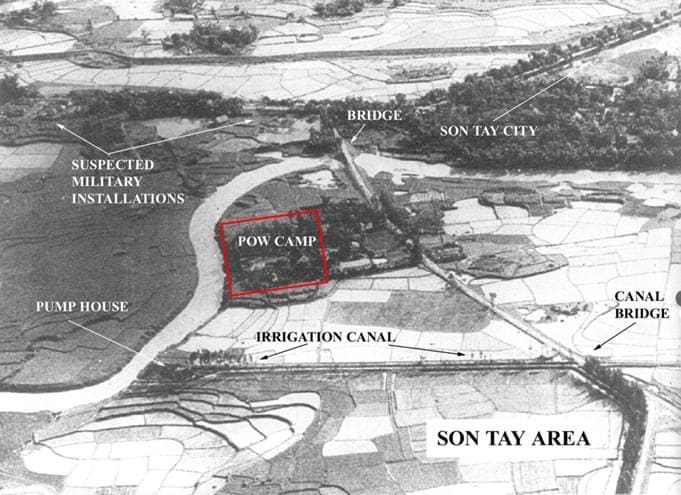
Although the task force succeeded in breaching the compound, it turned out to be a dry hole, the POWs having been moved days earlier. The ground force having spent 28 minutes in the ground.
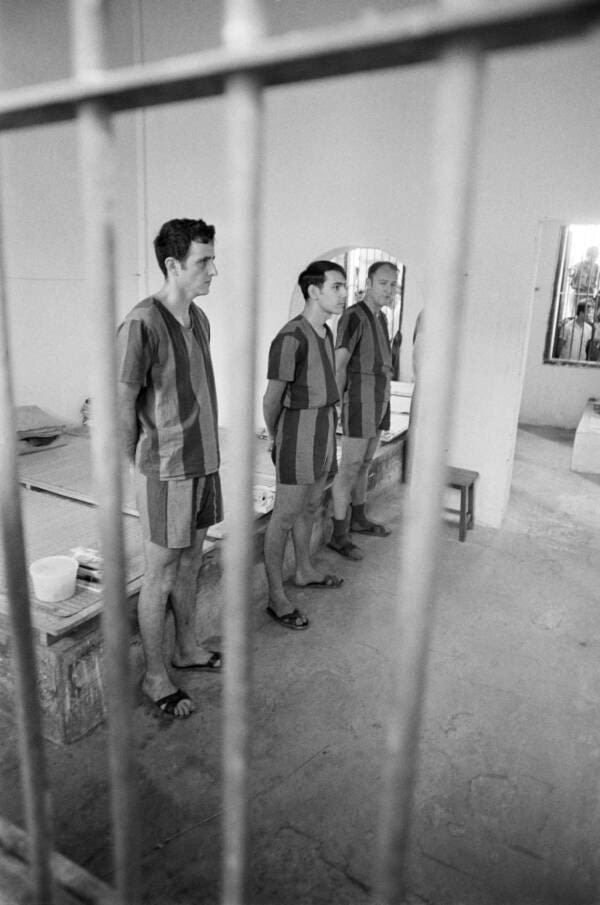
Despite this tactical loss, the operations proved a strategic victory. The North Vietnamese moved American POWs together and improved their conditions which greatly raised morale.
As you can see, Operation Ivory Coast was a major operation, serving as the template for multiple deep enemy ration raids for decades.

Unfortunately, United Special Special Operations Command had to cancel their event due to COVID-19 restrictions so the Silent Warrior Foundation stepped in and out a great weekend together. It is an amazing event and Silent Warrior Foundation even worked with a Hollywood prop house to recreate the clothing and equipment each man wore on the raid.
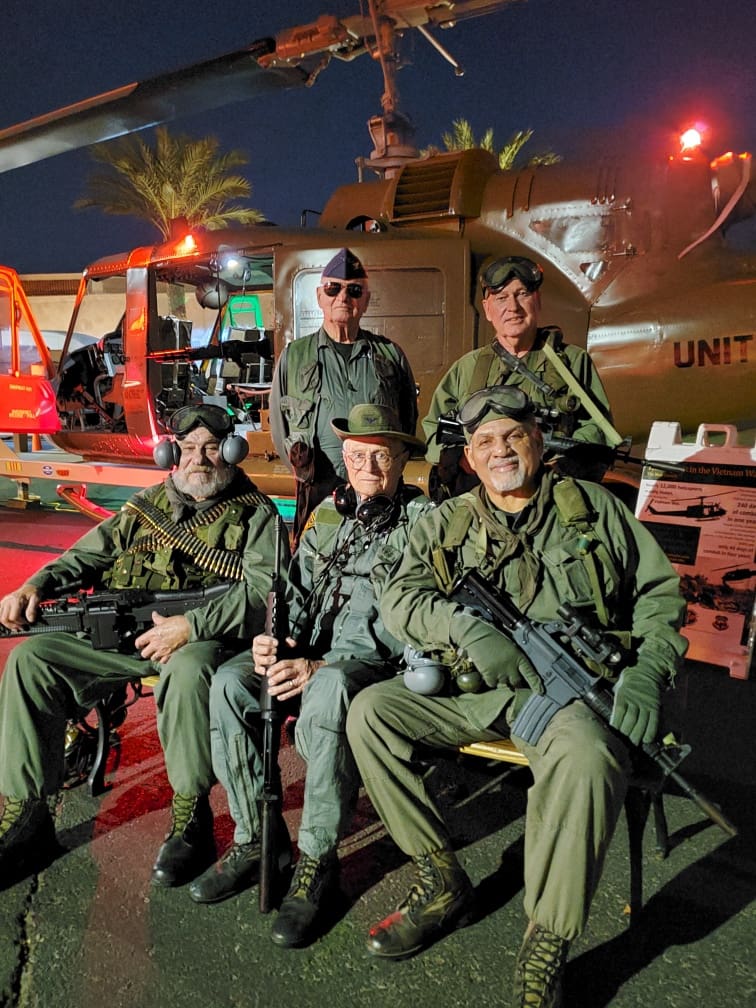

Seen above are Neal Westbrook, Colonel USAF, Ret. Son Tay Raider (Lime 2), Terry Buckler, Sergeant, USA Son Tay Raider (Red Wine), Vladimir “Jake” Jakovenko, Sergeant Major, USA Ret. Son Tay Raider (Green Leaf) John Gargus, Colonel, USAF, Ret. Son Tay Raider (Cherry 2) Tyrone Adderly, Sergeant Major, USA Ret. Son Tay Raider (Red Wine)

There’s not enough room on SSD to tell the whole tale and numerous books have been written about the operation like “The Son Tay Raid” by air planner and pilot Col. John Gargus.
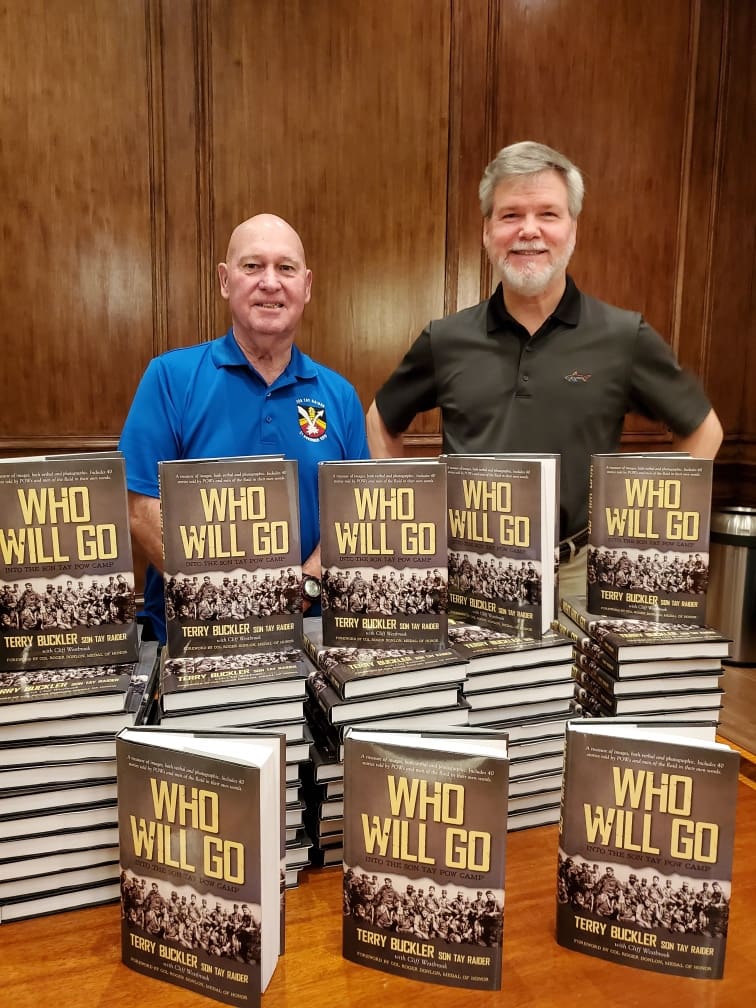
However, a new book has just been released, “Who Will Go” by Terry Buckler. It is the first time the tale has been told by a Raider with actual boots on the ground. He was assisted in his effort by CI-author Cliff Westbrook. Author Terry Buckler was there as the RTO for the Redwine element. Even better, he was the “baby” of the group and had not served in combat in SE Asia prior to the assault.
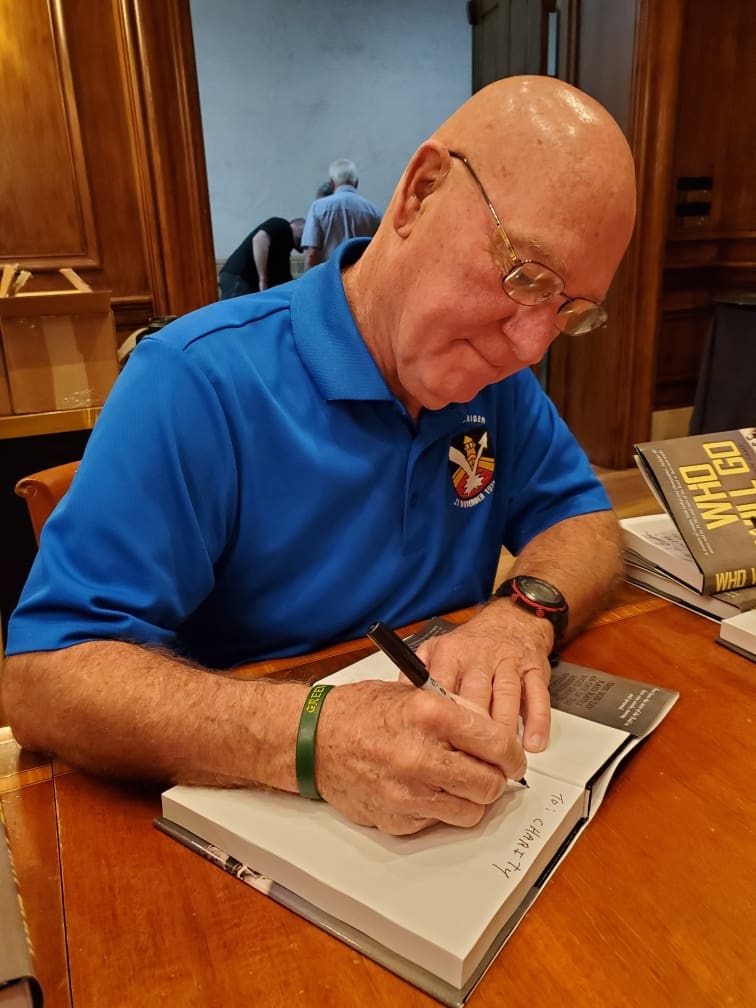
For those of you interested, you can get a copy of “Who Will Go” signed by the Raiders on hand for the event by visiting silentwarriorfoundation.com/collections/gear-accessories/products/signed-book-who-will-go.

During the event, a documentary is also being produced. “Operation Kingpin” can use your support to finish their work.


27 SOCS Tests New Equipment, Supports Special Tactics Training

Saturday, November 21st, 2020

CANNON AIR FORCE BASE, N.M. —

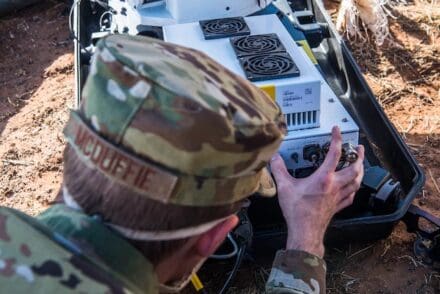
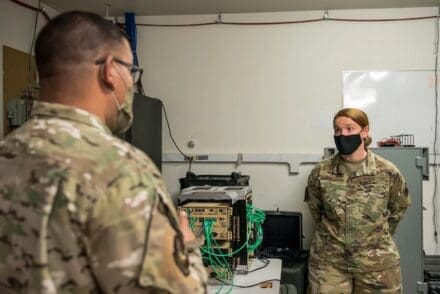
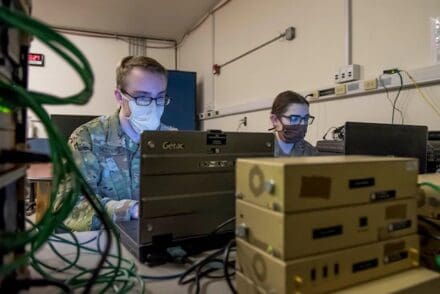
The 27th Special Operations Communications Squadron utilized new equipment to provide over 60 special tactics Airmen assigned to the 22nd Special Tactics Squadron, Joint Base Lewis-McChord, Washington, with network access to ensure that the teams could have full access to the necessary resources to ensure proper training while at Cannon.

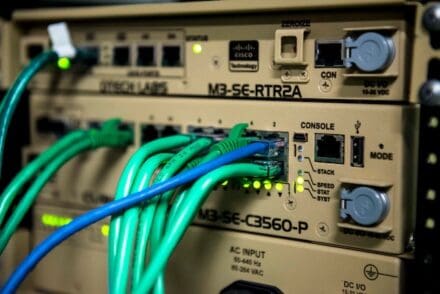
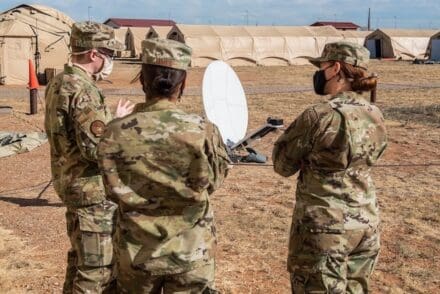
The tactical local access network is a piece of mobile tactical equipment that provides the ability for more online services in an isolated area. It is utilized by pairing with a satellite dish network, which normally provides support for five to ten computers, and moves the workload off of the SDN to the TACLAN, which provides access for 75 computers.

“The TACLAN gives us the same capabilities as the base’s network system,” said Staff Sgt. Thomas Jara, 27 SOCS non-commissioned officer in charge of the TACLAN team. “Printers, shared drives, we can control everything the base would on the TACLAN. As of right now, Cannon is the only base in the Air Force Special Operations Command and United States Special Operations Command utilizing this model.”

This is the first time that the current TACLAN model has been mobilized to provide mission support. While the team was able to properly operate the system for the 22 STS’s training operations, the TACLAN team is currently planning to receive more training on how to better utilize the equipment.

“We are deployable with this capability, but I want to be better,” Jara said. “While we are able to fix any issues that arise while working the system, I want more people to learn the system so it becomes commonplace.”

While the team maintained the system so it was fully operational, Maj. Emily Short 27 SOCS commander, came by to receive a brief overview on what they were working on.

“The TACLAN team is phenomenal,” Short said. “This training gives them an opportunity to learn more, allow younger Airmen to grow alongside them, and this operation has given us the opportunity to link up with other organizations for cross-utilization which can only lead to further growth for our efforts.”

While the satellite currently used with the TACLAN system allows up to 75 users, the 27 SOCS has access to equipment that would allow over 300 users on the system.

“I think the system absolutely bolsters our capabilities,” Short said. “It helps our users, people like mission planners and members of the 22 STS during this training operation. Speeding up their network gives them better planning control and speeds up the planning process. It all leads to increased lethality in the end.”

By Senior Airman Vernon R. Walter III, 27th Special Operations Wing Public Affairs