TYR Tactical

Archive for the ‘Air Force’ Category

USAF Phoenix Raven Course Continues Strong During COVID-19

Thursday, September 3rd, 2020

JOINT BASE MCGUIRE-DIX-LAKEHURST, N.J. (AFNS) —

U.S. Air Force Expeditionary Center instructors executed the first Phoenix Raven Qualification Course of the year from July 27 – Aug. 19.

Due to the constraints of COVID-19, Phoenix-Raven instructors from the 421st Combat Training Squadron had to completely redesign the PRQC in order to maintain the health and safety of the students and instructors, while also meeting all the training requirements to produce fully qualified Air Force security forces Airmen.

Typically the course is very hands-on, said Staff Sgt. Melida Diaz, 421st CTS Phoenix Raven Qualification Course instructor. “We had to think outside the box and figure out how we can train the students; including combatives and (Armament Systems and Procedures) baton training where they can still receive the training that they need with no contact with the instructors.”

The solution was to divide the course into two parts. The first part required 14 days of restriction of movement, or ROM, of the students in Joint Base McGuire-Dix-Lakehurst lodging. During this two-week period, the students were monitored for any symptoms or signs relating to COVID-19.

While the students were restricted to their rooms in lodging, they also had 14 days of virtual training with instructors being available, so they were able to complete most of the academic classes prior to the second part of the training, said Staff Sgt. Alonzo Piper,  421st CTS PRQC instructor.

The PRQC academics covered multiple subjects, such as warrior mindset and comprehensive Airman fitness, arming and use of force, cross-cultural communication, individual protective measures, anti-terrorism, surveying airfields, aircraft familiarization, embassy operations and legal considerations.

Upon completion of the ROM, the students transferred to the 421st CTS student dorms and started 10 days of physical training where they learned verbal judo, various Air Force combatives, weapons defensive principles and the use of the ASP baton.

“We teach Air Force combatives at a comprehensive level,” Piper said. “Air Force combatives are self-defense techniques from the ground or standing positions. The standing position is where we teach different strikes, takedowns and different grip techniques to control an individual; and then we go into a ground portion to show how to defend yourself on the ground with the different fighting positions that you can end up in, different submissions or chokes that you can use if you need to use them to defend yourself.

“We teach weapon takeaways and weapon defensive principles as well, it allows us the ability to defend ourselves if we are threatened with weapons when we don’t have a weapon to defend ourselves.”

Implemented in February 1997 and launched at the then Air Mobility Warfare Center, at Fort Dix, the Phoenix Raven Program ensures protection for Air Mobility Command aircraft operating out of airfields where security is unknown or inadequate. Teams of specially trained and equipped security forces personnel, known as Ravens, deploy aboard AMC aircraft.

“The Ravens are specialized security that go with different aircraft to austere environments. These airfields don’t have adequate security and we are there as the insurance policy to get the mission done. The jet, personnel, cargo and everything with it; we’re there to secure it, and at the end of the day, that’s what it’s all about,” said Staff Sgt. Tanner Hall, 421st CTS PRQC instructor.

Explaining what distinguishes a Raven, Hall noted the ability to use verbal judo and the ASP baton “are kind of the bread and butter of what makes a Raven, because a lot of these environments we don’t necessarily have the capability of taking weapons off the jet, and being able to verbally de-escalate a situation is the key to most of these interactions. However, we have our ASP baton that we drill to perfection as a secondary means of gaining compliance where we might not be able to by other means.”

The term “Phoenix Raven” is a combination of the word “phoenix,” a standard AMC program prefix and the word “raven,” an intelligent bird with keen eyesight.

To become a Raven, students must “pass the evaluations that we have here at the course such as the baton training as well as use of force,” Diaz said. “The students also have different types of tests such as the end-of-course exam and a written test for the baton.”

She also noted that it was important for the students “to show that they have heart, dedication, a positive attitude and that they are going to be ambassadors for not only security forces but the Air Force.”

Upon completion of the qualification course, Phoenix Raven graduates earn an individual Raven Number, owned by them forever.

Raven candidates can volunteer though their unit where they are vetted through their chain of command and selected by their commanders.

By Maj George Tobias, U.S. Air Force Expeditionary Center Public Affairs

17th Special Tactics Squadron Surpasses 6,900 Days in Combat in Middle East

Wednesday, September 2nd, 2020

HURLBURT FIELD, Fla. —

In the wake of the 9/11 terrorist attacks which marked the beginning of the Global War on Terrorism, U.S. service members saw an increased spike in deployments that has ultimately sustained its high tempo for nearly two decades.

For the men and women of the 17th Special Tactics Squadron, since their initial response to the GWOT in October 2001, there have been no breaks in deployments and combat operations for over 6,900 days in support of Operations IRAQI FREEDOM, ENDURING FREEDOM, FREEDOM’S SENTINEL and RESOLUTE SUPPORT.

Day in and day out, members of the unit can be found scattered around the globe, bringing the fight to the enemy’s front door. These never-ending actions are one of the many that directly reflect the testament of the heritage, courage and sacrifice of the unit that can only be foreseen to continue.

“The 17th STS members have single handedly removed [thousands] of [high value targets] from the battlefield and therefore severely degraded terrorist networks that pose a threat to U.S. interest,” said U.S. Air Force Lt. Col. Travis Deutman, the commander of the 17th STS. “Most importantly, our operators are consistently providing desperately needed close air support at the most critical times in combat, while also coordinating insertion, extraction, and medical and casualty evacuation lift for critically wounded teammates.”

The 17th STS is unique within the Air Force Special Tactics community in several ways.

The squadron, instead of residing in one location, is geographically separated in three locations so that the unit can train and deploy alongside all five of the U.S. Army Special Operations Command’s 75th Ranger Regiment battalions. Headquartered at Fort Benning, Georgia, alongside the Regimental Headquarters, 3rd Ranger Battalion, Regimental Special Troops Battalion, and Regimental Military Intelligence Battalion. Two operational detachments are located at Hunter Army Airfield, Georgia, alongside the 1st Ranger Battalion, and Joint Base Lewis-McChord, Washington, alongside the 2nd Ranger Battalion.

Consisting of primarily tactical air control party Airmen, the unit’s primary mission is to provide Air Force Special Operations Command’s Special Tactics TACPs to the 75th Ranger Regiment, pairing the Department of Defense’s most lethal joint terminal attack controllers with the most premiere direct-action raid force. Essentially, the 17th STS operators are directing precision strike munitions and delivering destructive ordnance on enemy targets in support of the Ranger ground scheme of maneuver.

Aside from TACPs, the unit also provides special reconnaissance Airmen, combat controllers, Special Tactics officers and combat mission support Airmen to the 75th Ranger Regiment to enhance its precision strike and global access capabilities.

“No other unit in the [United States Air Force] offers the opportunity to close with and destroy enemies of the United States like those of us selected to support the Ranger Regiment,” said an ST TACP operator with the 17th STS. “The Ranger Regiment is its own legend-generator and the opportunity to serve alongside one of the most lethal light infantry forces on earth is humbling.”

The bond between the 17th STS and the 75th Ranger Regiment is inimitable due to the respective units being geographically located together and conducting entire training cycles with the exact team that they will be deploying with.

“The 17th STS promotes what I would argue is the foremost example of joint service relationships,” said U.S. Air Force Staff Sgt. Aaron Inch, an ST TACP operator with the 17th STS. “This unit has an extremely proud lineage and comes with the responsibility for each member to uphold and/or surpass the standard that has been set by those before us.”

With ongoing involvement in combat comes valor, and the Special Tactics community has just that. It is the most highly decorated community in the Air Force since the end of the Vietnam War with the 17th STS having a large hand in that statistic, seeing its members receive more than 80 high valor medals for courageous actions in combat.

“The foundation of this unit is the heritage of warriors that distinguished themselves in combat before we walked these halls,” said U.S. Air Force Senior Master Sgt. Steve Reedy, the 17th STS operations superintendent. “Every member of this organization earns their right to be a member every day in keeping with that heritage.”

One of the latest examples of recognition that the 17th STS has been awarded was in April 2019 when U.S. Air Force Tech. Sgt. Cam Kelsch, an ST TACP operator with the 17th STS, was awarded the Silver Star Medal for actions while deployed with the 75th Ranger Regiment to Afghanistan in 2018. With this presentation, Kelsch became the first TACP to be awarded a Silver Star for actions in combat during the last seven years.

“Getting to lead people for whom undertaking such dangerous missions are just another day is inexplicable,” said U.S. Air Force Senior Master Sgt. Evan Serpa, the 17th STS Senior Enlisted Leader.

For the quiet professionals of this prestigious squadron, it is common to hear throughout the unit for one operator’s battlefield successes to be credited to his entire team. They spend days, weeks, and months training alongside each other to forge trust and competency to take downrange.

“The training that we provide simply adds different layers and different [tactics, techniques, and procedures], seeing that the Ranger Regiment conducts operations in a very specific way,” said U.S. Air Force 1st Lt. Evan Patoray, 17th STS, Detachment 2 flight commander. “All of our training is fast paced and complex, and although the basics do not change, the level and repetition at which we do the basics is what sets us apart. As a team, we push each other beyond what we have all seen in combat. We do this because we understand that if this training does not save their own life, it will allow them to save the lives of the Rangers around them.”

The physical and mental challenges the operators undergo for at least 275 days out of the year equips them for the demanding environment they will face downrange.

“Technical competency matters, professionalism matters, but your mental fortitude and intellectual flexibility might be the most important attributes,” said an ST TACP operator with the 17th STS. “The training to get here and working with [the Ranger Regiment] prepares you for the realities of combat.”

The high-speed operations tempo can be brutal and toxic to the operator and their home life if they do not have the proper training and decompression time, according to U.S Air Force Staff Sgt. Ryan Duhon, an ST TACP operator with the 17th STS.

The Special Tactics Airmen aren’t alone with their sacrifices; their families have also sacrificed immensely for over 6,900 days in support of their loved ones. They’ve missed birthdays, holidays, anniversaries, and much more, to be a part of something bigger than themselves.

“A lot of personal sacrifice has to happen to make a unit like this one so effective and professional,” said U.S. Air Force Master Sgt. Ferguson, squadron flight chief. “We do not take breaks. We operate alongside our 75th [Ranger Regiment] brothers.”

In order to be welcomed into the Special Tactics community, aspiring conventional TACP Airmen undergo a harrowing week-long assessment at Hurlburt Field, Florida. The assessment is designed to test the candidates limits and determine if they have what it takes to join the ranks within ST. Candidates are then are hand-selected into the 17th STS.

“The team will push you to be the best version of yourself on and off the battlefield,” said U.S. Air Force Tech. Sgt. Joey Hauser, an ST TACP operator with the 17th STS. “The missions you will be of have impact felt at a national strategic level, and the legacy you will be of, will be some of your proudest accomplishments in life.”

If you asked members of the 17th STS what it means to be a part of the combat-proven unit, one common answer would stand out – humbling.

“We fight, bleed and laugh beside [the Rangers]. We win as a team or fail as a team,” said Duhon. “When we are downrange, there is no deviation or segregation between Air Force and Army. We are one team fighting daily together to overcome adversaries.”

For anyone wanting more information on how to join the 17th Special Tactics Squadron, email SDScreening@jdi.socom.mil

Story by SSgt Rachel Williams, 24th Special Operations Wing
Photos by TSgt Sandra Welch and SrA Rachel Yates

Fifteenth Air Force Activates, Consolidates Air Combat Comand’s Conventional Forces – Includes Significant Amount of AF Ground Forces

Saturday, August 29th, 2020

SHAW AIR FORCE BASE, S.C. (AFNS) —

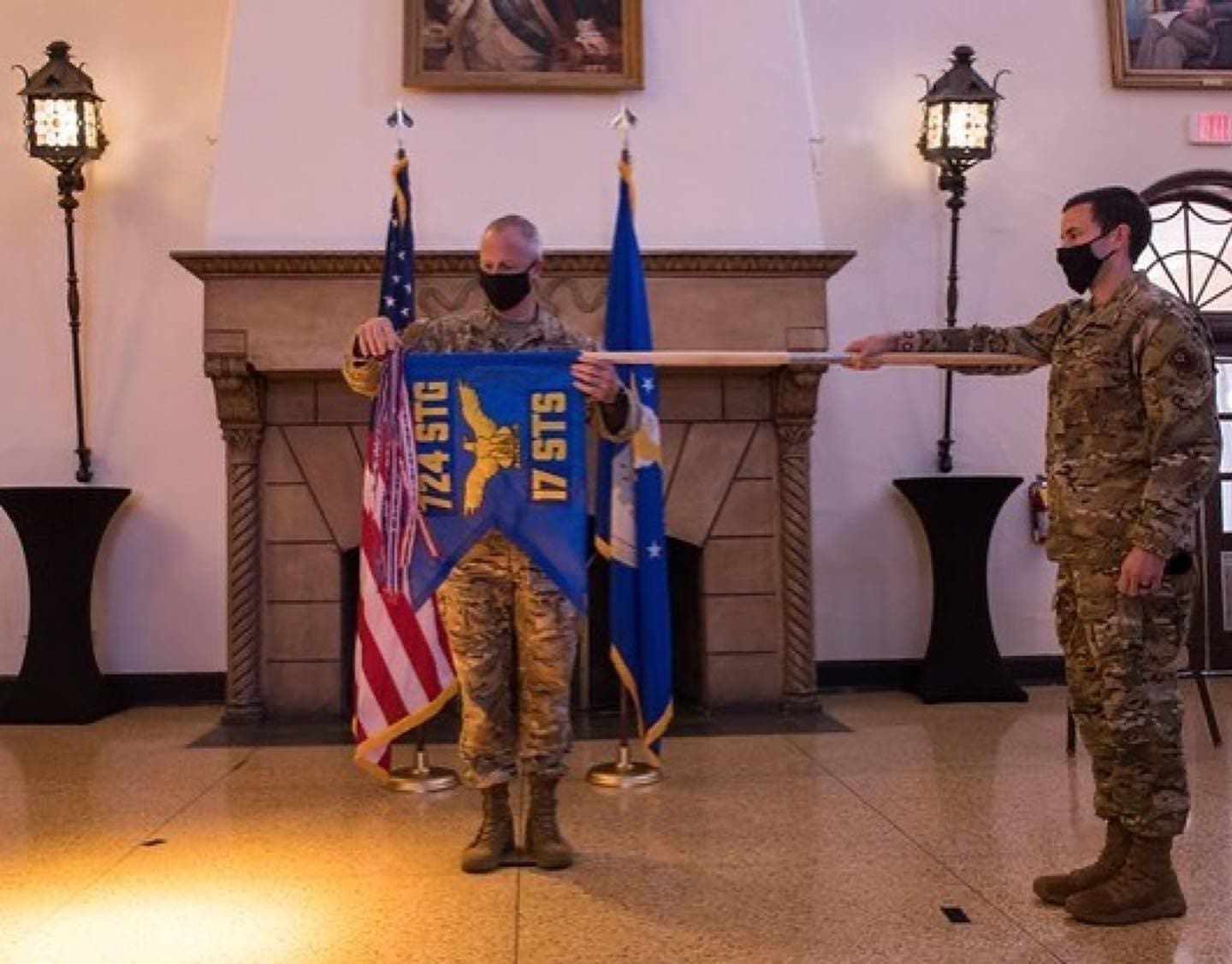
Fifteenth Air Force activated Aug. 20, integrating wings and direct reporting units from Twelfth Air Force and Ninth Air Force to form a new Numbered Air Force responsible for generating and presenting Air Combat Command’s conventional forces.

ACC’s conventional capabilities include fighter, remotely piloted aircraft, command and control, and rescue flying units plus Air-Ground Operations Airmen who integrate Air Force capabilities in combined arms operations, the Air Force’s dedicated base defense group, RED HORSE, or Rapid Engineer Deployable Heavy Operations Repair Squadron Engineers, and the agile combat support units that open and operate our bases. In addition to organizing, training, and equipping ACC’s conventional forces, this new NAF will also present a deployable joint task force-capable headquarters that can provide command and control of integrated ACC forces.

“Consolidating these forces into the Fifteenth Air Force is another step toward implementing the Air Force’s new force generation construct and will enable the delivery of dynamic and agile combat airpower as directed by the National Defense Strategy,” said Gen. Mike Holmes, commander or ACC. “This reorganization will streamline and improve the way we present our conventional forces as part of the new USAF construct, while honoring our history and the dedication of our Airmen.”

Following this transition, Twelfth Air Force will focus on its component role for U.S. Southern Command as 12 AF/AFSOUTH. Meanwhile, the existing Ninth Air Force will be inactivated and U.S. Air Forces Central Command will be re-designated as 9 AF/AFCENT.

The creation of the new NAF is part of a larger force optimization effort within ACC, which began with the stand-up of Sixteenth Air Force, a dedicated information warfare NAF, last fall.

Maj. Gen. Chad Franks received the guidon from Holmes, assuming responsibility for leading the more than 45,000 Airmen assigned to the new NAF.

“When I took command of the Ninth Air Force in June 2019, I stated we would focus on getting even better, so we could continue to deliver unmatched lethal fires for our joint and coalition partners wherever it is required,” Franks said. “Through our joint task force-capable mission and the advocacy for our units, we have done that. As the Fifteenth Air Force, we will continue to progress further toward that vision and provide a lean and agile mission command and control of forces to enable us to protect, deter, and deploy against emerging threats. Thank you for allowing me the great honor to be the commander of the Fifteenth Air Force and I look forward to visiting all of the units in the near future.”

The Fifteenth Air Force was first established in 1943 as the Mediterranean theater’s air force. After World War II, it served as one of the primary NAFs in Strategic Air Command deterring Cold War Soviet aggression before transferring to Air Mobility Command in 1992 as an expeditionary task force.

No units will be physically moving and the majority of affected Airmen will not experience changes in their day-to-day operations.

www.af.mil/News/Air-Force-TV/videoid/764061

By Staff Reports, Air Combat Command Public Affairs

ATAC Wins Air-to-Ground Training for Air Force

Wednesday, August 19th, 2020

Airborne Tactical Advantage Company (ATAC) to Deliver JTAC Training to Air Force Special Operators

Washington, DC — August 13, 2020 — Airborne Tactical Advantage Company (ATAC), part of the Textron Systems segment of Textron Inc (NYSE: TXT), announced today that it has been selected to provide live contract close air support (CCAS) training for Joint Terminal Air Controllers (JTACs) under the U.S. Air Force’s Combat Air Forces Contracted Air Support program.  

A team flying ATAC’s L-39 Albatros and Valkyrie Aero’s A-27 Tucano aircraft will support Air Force Special Operations Command (AFSOC) JTAC training at numerous bases and locations throughout the continental United States.  The contract calls for approximately 900 sorties and more than 1,100 flight hours on tactical ranges annually, with flight operations commencing in the summer of 2020.  This is the first CCAS award the Air Force will grant the contracted air services industry for what could be up to 10 locations under the Combat Air Forces Contracted Air Support program.

“ATAC is proud to support the training of AFSOC JTACs, the gold-standard in their field”, said Scott Stacy, ATAC General Manager. “This work expands on ATAC’s previous air-to-ground training and positions the company for future growth in this important training area”.

The ATAC-Valkyrie team also supports JTAC training under the U.S. Navy’s Terminal Attack Controller Trainer (TACT) program, and recently completed an evolution for the Naval Aviation Warfighting Development Center (NAWDC) on the Fallon ranges. The ATAC-Valkyrie team was competitively selected to participate in the TACT program in April 2019.

ATAC is the global leader of tactical airborne training, having pioneered much of what are now contracted air services industry standards with a fleet of over 90 aircraft, over 60,000 flight hours, and 20 years of operating experience.  ATAC has provided a wide range of contracted air support capabilities to the U.S. Department of Defense (DoD) in locations world-wide, including the continental United States, Hawaii and the Western Pacific region. ATAC has helped train crews from the U.S. Navy, U.S. Air Force and U.S. Marine Corps and regularly operates out of as many as 25 different air bases per year.

USAF 36th Contingency Response Group Hosts Exercise Machete Green on Guam

Tuesday, August 18th, 2020

ANDERSEN AIR FORCE BASE, Guam (AFNS) —

COVID-19 has disrupted many plans for governments, businesses and military operations but in some ways has created unique opportunities.

The 36th Contingency Response Group hosted and completed exercise Machete Green July 29-31, at Northwest Field. 

The exercise objectives were to open an airfield in a hostile and contested environment that teamed service members from the 36th CRG and the U.S. Navy’s Helicopter Sea Combat Squadron 25.

The 36th CRG normally, almost always, has a vast majority of its members from the expeditionary group traveling in support of real-world operations. However, due to COVID-19, the 36 CRG took advantage of the opportunity with many members present and in garrison to “sharpen their skill sets,” according to Col. Eric Schmidt, 36th CRG commander.

“This gives us an opportunity to come together and go through our mission sets,” Schmidt said. “It’s an opportunity to get some muscle movements on the exercise itself, which would be an air base opening in a contested environment.”

The 36 CRG enabled 107 warfighters the ability to hone their training techniques and procedures during EMG that focused on 85 tactical objectives that included: airfield survey, setting up defensive-fighting positions, temporary command center, and airfield withdrawal once the CRG’s objectives were completed.

“We are highly specialized,” Schmidt said. “All of these service members are getting an opportunity to do what they do, because everyone brings something different to the fight.”

Maj. Ryan Kiggins, 736th Security Forces Squadron commander, mentioned that opening an air base puts into practice tactics, techniques and procedures, or TTPs, that are employed in any environment that they could be sent to.

“This exercise will help validate and verify multiple positions and teams in order to maintain our quick-turn global-response capability,” Kiggins said.

Schmidt also mentioned that completing this exercise will improve sharing procedures with partners and allies to ensure a free and open Indo-Pacific.

“We are heavily invested in the PACAF, INDO-PACOM theater,” Schmidt said. “Currently, due to things outside our control, we have to exercise internally, but when restrictions ease in the future, we are looking to partner and build stronger relationships with our host-nation partners. One of the CRG’s primary goals is to bring the Koku Jieitai (Japan Air Self Defense Force) and Royal Australian Air Force into these exercises. Whenever we can work with a host nation or partner and work together in any kind of environment, developing those TTPs is important when we go have a joint fight together.”

Schmidt plans on leading the 36th CRG into more of these training events in the future.

“My plan is that our next exercise will focus on humanitarian assistance, and the following one, disaster response,” Schmidt said. “My main focus is to give our folks the opportunity to be out here working and training together. In my opinion, that’s a huge win in this environment and when we get tasked and go out the door. There is no doubt we will be ready.”

By SrA Michael S. Murphy, 36th Wing Public Affairs

Special Tactics Airman Awarded Silver Star Medal

Sunday, August 16th, 2020

POPE FIELD, N.C. – A Special Tactics Airman was awarded the nation’s third highest award for valor, the Silver Star Medal, during a ceremony at Pope Field, N.C., Aug. 14, 2020.

Master Sgt. John Grimesey, a Special Tactics combat controller with the 21st Special Tactics Squadron, 24th Special Operations Wing, was recognized for his efforts in Afghanistan in 2013. He not only saved the life of a fellow special operations troop, but called in multiple airstrikes while being under attack by the enemy.

It was supposed to be a routine mission. Then again, no mission in Afghanistan in 2013 was “routine.” The objective was to clear and secure a village in Ghazni Provence to establish local Afghan police presence without the threat of opposition forces. Grimesey and his team partnered with the local Afghan police and together they set out to clear the area. Until one of the teams encountered a large band of Taliban fighters.

“Our Afghan team got separated and started to take on enemy fire,” said Grimesey. “Myself and an Army Special Forces Solider maneuvered to provide assistance and quickly found ourselves engaged with the Taliban.”

When Grimesey peered around the wall to gain situational awareness, he noticed the wounded and dead Afghan police officers, to include the police chief. It was then Grimesey was struck by a rocket propelled grenade. “I remember the ringing in my ears,” recalled Grimesey. “I knew I was concussed from the blast because of the ringing, my vision was blurry and I was fatigued.”

Despite suffering a concussion and shrapnel wounds, Grimesey was able to drag his Army Special Forces teammate away from the immediate danger zone and assess the situation. “I snapped into a problem solving mode,” he said. “The situation was dire and the only way to solve it was to rely on my extensive training and attempt to break down the large problem into small chunks. I had to prioritize with what I was being faced with.”


The Special Tactics combat controller was able to call in additional support from other Army Special Forces units, and from aircraft for close-air-support; all the while engaging in a fire fight with opposition forces. “Eventually we were able to gain control and eliminate the Taliban resistance while also finishing the mission to secure the village,” he said.

Grimesey said it was later discovered there was a Taliban training team who had made their way to the village thus drastically increasing the number of fighters they encountered.

Lt. Gen. James Slife, commander, Air Force Special Operations Command, presided over the ceremony and remarked on Grimesey’s actions.

“You may not call yourself a hero Master Sgt. Grimesey, but I do,” said Slife. “Because of your actions that day, families and friends did not experience loss. The men whose lives you saved will continue to positively impact those around them creating a chain of reaction that ripples across generations.”

“I think about it every day. I even dream about it,” reflected Grimesey. “It’s an event that left an impression on me. While it was a harrowing experience, I look back with great pride and believe that my team and I were able to save lives and help ensure the security of the village.”

Grimesey’s Silver Star Medal was upgraded from an Army Achievement Medal. During the ceremony he also received the Bronze Star Medal, second oak leaf cluster with Valor for another battle in the Middle East in 2017.

As Grimesey looks ahead to start his medical retirement process, he remembers his time in the Special Tactics community fondly, “If there are any other young men and women out there looking for a community with a sense of purpose and opportunity to make a positive impact on the world at large, they don’t have to look any further than Air Force Special Tactics.”

Special Tactics Airmen are U.S. Special Operations Command’s tactical air to ground integration force, and AFSOC’s special operations ground force, leading global access, precision strike, personnel recovery and battlefield surgery operations. Since 9/11, Special Tactics Airmen have received one Medal of Honor, 11 Air Force Crosses and 49 Silver Star Medals making Grimesey’s the 50th.

By Capt Katie Spencer

USAF Removes Uniform Barrier for Women, Authorizes Pants Option for Mess Dress

Saturday, August 8th, 2020

WASHINGTON (AFNS) — Based on overwhelming feedback from the field, Department of the Air Force officials announced today women may elect to wear pants or a skirt with their mess dress uniform.

The changes, which are effective immediately, are outlined in an exception-to-policy memorandum addressed to all Air Force personnel.

“It’s our responsibility to provide flexible uniform options that are functional and comfortable for all Air and Space Professionals,” said Lt. Gen. Brian Kelly, deputy chief of staff for manpower, personnel and services. “We have a lot of people working really hard to review our existing policies to make sure there are no unintended barriers or unfair practices that may be impacting specific groups of people on our team. We still have our work cut out for us, but this is a step in the right direction in creating an inclusive culture.”

Previously, women were required to wear a floor-length skirt with the mess dress uniform. As an interim solution, until women’s mess dress slacks are available for purchase in approximately 18-24 months, women are authorized to immediately purchase and alter men’s mess dress trousers.

Alterations for women opting to wear the men’s mess dress trousers will be provided by the Army and Air Force Exchange Service at no cost to the member.

“We hear you,” said Chief Master Sergeant of the Air Force Kaleth Wright. “This is a bit of good news for some of our teammates who’ve wanted this change for a while now. A small thing, but one that I hope can go a long way to helping Airmen realize that we listen, we hear and we care.”

Changes will be incorporated in the next update of Air Force Instruction 36-2903, Dress and Personal Appearance of Air Force Personnel. In the interim, for more information, the exception to policy memorandum and frequently asked questions are available on the public website of the Air Force’s Personnel Center at www.afpc.af.mil/Career-Management/Dress-and-Appearance.

The United States Air Force Awards Gentex Corporation Aircrew Laser Eye Protection (ALEP) Daytime Spectacle Contract

Monday, August 3rd, 2020

CARBONDALE, PA July 16, 2020 – Gentex Corporation, a global leader in personal protection and situational awareness solutions for defense forces, aircrew, emergency responders, and industrial personnel, announced today that it was awarded the United States Air Force Aircrew Laser Eye Protection (ALEP) Daytime Spectacle contract to develop and produce its laser protective eyewear for aircrew, the Block III Day Spectacle.

This order includes 10,000 Block III Day Spectacles over the next 18 months including development and full rate production. The Gentex lenses integrate the latest laser protective filter technology developed by the Air Force Research Laboratories (AFRL) for daytime applications. The lightweight, aviator-style frames fit comfortably on the face and feature contoured temple arms that integrate well with helmets and helmet components. The Gentex Block III Day spectacles joins our unique product line of other LEP spectacles developed for F-35, U.S. Navy EDU series and laser dazzle spectacles.

“With over 40 years of experience creating the highest quality vision protection for aircrew, this contract recognizes our continued innovation and evolution in the eyewear and visor market,” said Robert McCay, vice president at Gentex Corporation, “We’re proud to have won our second consecutive Delivery Order under Block III to develop products and technology that meet the challenges of ever-advancing technologies.”

Gentex’s portfolio of air products includes helmets, optical protection, respiratory, and situational awareness solutions. For more information visit, www.gentexcorp.com/industry-solutions/defense/air.