SIG SAUER - Never Settle

Archive for the ‘Ammo’ Category

HOP Munitions and SOAA Join Forces to Advance Responsible Firearm Ownership and Veteran Wellness

Tuesday, November 25th, 2025

HOP Munitions, a veteran-operated ammunition manufacturer, and the Special Operations Association of America (SOAA) are proud to announce a strategic partnership centered on responsible firearm ownership, safe storage, and community wellness. This collaboration seeks to elevate awareness of firearm safety, PTSD education, and mental health within both the veteran and civilian shooting communities.

At its core, the partnership aligns two mission-driven organizations that share a commitment to keeping America safe, America’s veterans, and responsible gun culture. Through thought leadership, educational initiatives, and open dialogue, HOP Munitions and SOAA aim to strengthen understanding around safe firearm practices, suicide prevention, and the physiological impacts of shooting on long-term health.

Bridging Industry and Community

For the men and women of SOAA, veterans who have served at the highest levels of U.S. special operations, responsible firearm ownership is not merely a policy discussion; it’s a lived responsibility. SOAA’s community engagement initiatives focus on addressing real issues such as suicide prevention, PTSD awareness, and the importance of recognizing signs of distress in peers.

“Many gun owners, even within the tactical and sporting communities, don’t always recognize the warning signs that someone may be struggling,” said Daniel Elkins of SOAA. “Our goal with this partnership is to open up those conversations, equip people with knowledge, and build a culture of awareness that saves lives.”

Together, HOP Munitions and SOAA will co-produce educational content and host discussions that encourage open conversations about mental health, including identifying the behavioral cues that precede crises and exploring how our community can intervene responsibly.

Advancing Safety and Performance Through Thought Leadership

This partnership also emphasizes the importance of safety in firearm use, from eye and ear protection to understanding the physiological effects of overpressure in high volume shooting, factors increasingly linked to cognitive and auditory damage in both military and civilian shooters.

“Responsible firearm ownership goes far beyond marksmanship,” said Joe Nook, Chief Executive Officer at HOP Munitions. “It’s about education, awareness, and taking care of the people who take care of others. We’re honored to partner with SOAA to address not only the technical side of shooting but the human side as well, mental health, safe storage, and long-term well-being of our veterans and the 2nd Amendment community.”

HOP Munitions and SOAA plan to co-author a series of expert-led articles that cover:

? Safe storage practices and accident prevention in the home

? Recognizing early indicators of PTSD and suicidal ideation

? The role of overpressure and hearing damage in long-term health

? Community education to promote responsible ownership and safe handling of firearms

These initiatives will be featured on both organizations’ platforms and shared across national media outlets, bringing expert-driven discussions to the forefront of the firearms industry.

A Partnership with Purpose

Both organizations share a unified goal: to protect, educate, and empower.

For HOP Munitions, that means producing high-quality, American-made ammunition while giving back to the community that shaped its values.

For SOAA, it means leveraging the experiences of America’s veterans to improve mental health awareness and foster responsible, informed firearm ownership nationwide.

“Partnerships like this are how real change begins,” said Daniel Elkins. “When the firearms industry and the veteran community come together to focus on wellness, safety, and education, we move the entire culture forward.”

ARK Protection Group Partners with HOP Munitions as Official Ammunition Provider

Monday, November 10th, 2025

Haysville, OHHOP Munitions, a veteran-operated ammunition manufacturer based in Ohio, is proud to announce its new partnership with ARK Protection Group, a premier security and executive protection firm. Through this partnership, HOP Munitions will serve as ARK’s official ammunition provider for both training and operational requirements.

Several key factors contributed to this collaboration, including the close geographic proximity of the two companies, HOP Munitions’ proven record of producing high-quality, consistent ammunition, and a shared mission to support and equip law enforcement and security professionals with the necessary tools to protect and serve.

“Partnering with ARK Protection Group aligns perfectly with our mission of supporting those serving in the line of duty,” said Tyler, Operations Manager of HOP Munitions. “Their professionalism and dedication to training & protecting mirror our own commitment to quality and performance in every round we produce.”

ARK Protection Group, founded by Ron Gazboda, a former U.S. Air Force Master Sergeant with extensive operational and training experience, provides executive protection, estate security, event security, tactical training, and armored vehicle solutions to clients worldwide. Leveraging decades of combined military and private security experience, ARK delivers a comprehensive range of protective services. The company’s agents are trained to manage complex, high-threat environments with discretion and effectiveness.

“This partnership demonstrates both companies’ pledge to support law enforcement and security professionals with reliable equipment, standardized training procedures, and optimal performance.”

– Ron Gazboda

This partnership reflects both companies’ commitment to supporting law enforcement and security professionals with reliable tools, proven training standards, and real-world performance.


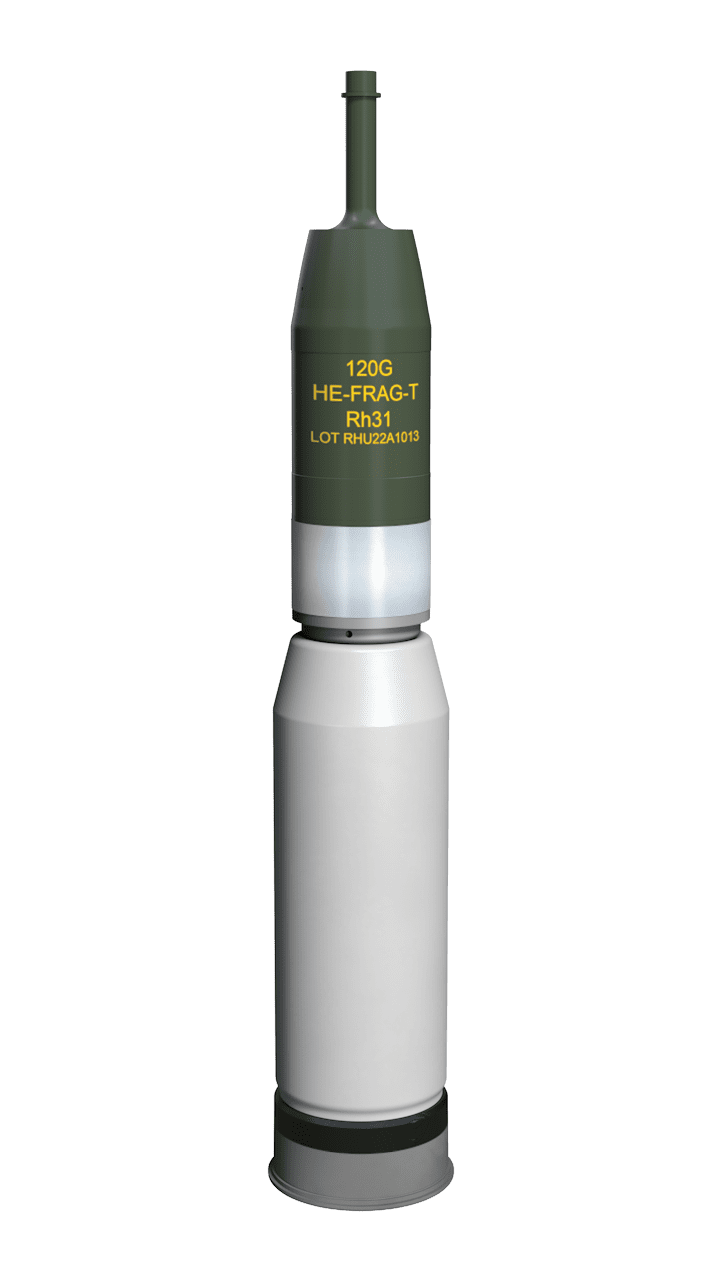
Cooperation with Bulgaria: Rheinmetall and VMZ Establish Joint Venture for the Production of Artillery Ammunition

Friday, October 31st, 2025

Rheinmetall and the Bulgarian company VMZ (Vazovski Mashinostroitelni Zavodi) are establishing a joint venture for the development and manufacture of artillery shells and energetic materials. A corresponding agreement was signed today. The total investment in the joint venture amounts to approximately €1 billion – one of the most significant investments in ammunition production in recent years. Rheinmetall holds a 51% stake in the joint venture, while VMZ holds 49%.

The production facility will cover an area of around 100 hectares. The site is located in the Sopot region of Bulgaria. The joint venture is expected to create around 1,000 jobs. Annual production capacity will be around 100,000 shells and propellant charges for up to 150,000 shells. In addition, the joint venture will produce approximately 1,300 tonnes of propellant powder. This capacity will support VMZ’s business. According to current plans, production of projectile casings is scheduled to begin in 2027. Energetic materials are to be produced from 2028 onwards.

‘We are grateful for the Bulgarian government’s confidence in our capabilities,’ said Armin Papperger, CEO of Rheinmetall AG. ‘With the new production facility, we are further expanding our leading role as a manufacturer of artillery ammunition to continue supporting the defence capabilities of the European Union and NATO.’

About Rheinmetall: As an integrated technology group, the listed company Rheinmetall AG, headquartered in Düsseldorf, stands for a company that is as strong in substance as it is successful internationally, and that is active in various markets with an innovative range of products and services. Rheinmetall is a leading international systems supplier in the defence industry and at the same time a driver of forward-looking technological and industrial innovations in the civilian markets. With 40,000 employees on 174 sites word wide, Rheinmetall generated sales €9.8 billion in 2024.

Global Military Products and Hanwha Defense USA Sign Teaming Agreement to Modernize the Army’s Domestic Advanced Ammunition and Energetics Production Capabilities

Thursday, October 16th, 2025

TAMPA, FL – (October 14, 2025) – Global Military Products (GMP), a wholly owned subsidiary of Global Ordnance Holdings, announced today the signing of a strategic teaming agreement with Hanwha Aerospace to jointly pursue future U.S. Department of Defense opportunities in ammunition and energetics production.

“This partnership represents a significant step toward strengthening the domestic defense industrial base,” said Jeff Brunozzi, President of Global Ordnance Holdings. “By aligning GMP’s U.S. program management and manufacturing expertise with Hanwha’s advanced energetics and munitions technologies, we are positioned to bring cutting-edge capabilities to the U.S. Army and allied forces.”

Under the agreement, GMP and Hanwha intend to pursue operating contracts and establish new energetics and munitions technologies. The collaboration will focus on developing next-generation energetics, propellants, and ammunition components to support Army modernization efforts and ensure resilient, scalable U.S. manufacturing for critical munitions.

“Hanwha is committed to expanding our presence in the U.S. defense market through meaningful industrial partnerships,” said Mike Smith, President & CEO of Hanwha Defense USA. “Together with GMP, we aim to strengthen supply chain resilience and deliver advanced munitions solutions that enhance the readiness and capability of U.S. and allied forces.”

This agreement underscores GMP’s continued growth as a trusted U.S. defense partner It reflects the company’s long-term commitment to revitalizing domestic ammunition and energetics production infrastructure in support of the Army’s modernization priorities.

www.global-ordnance.com

AUSA 25 – Northrop Grumman Precision Grenadier System

Wednesday, October 15th, 2025

During AUSA I got to spend some time with a model of the Northrop Grumman Precision Grenadier System which is one of several counter defilade and counter UAS weapon systems currently being evaluated by the US Army.

They’ve been at this project longer than most with early experience during the XM25 Punisher program. A study undertaken years ago for OICW (which the XM25 was derived from) led them to the 25mm ammunition size. Others are using 30mm or even 40mm.

So far, they’ve developed rounds for air-bursting, proximity, close quarter battle as well as target practice and they produce them themselves.

I find the airburst round to be the most impressive. It is a programmable, dual-warhead high-explosive fragmenting round that can be fired in both airburst and point detonate. By dual-warhead they mean that there are explosive charges at both the front and rear of the warhead.

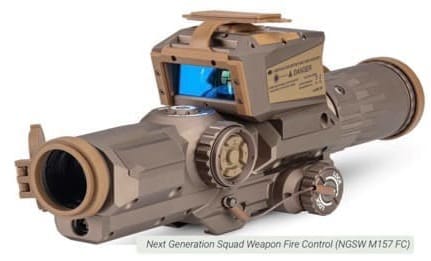
To arm the round, the target is lased (in this case with the XM157) using the middle button. The Grenadier can use the plus and minus buttons above and below the lase button to add or subtract a meter per detent to where the warhead will detonate. This, combined with the dual-warhead would allow for a round to detonate above an open trench or fighting position, or within a room of fired through a window, door, or breach.

The High Explosive Proximity incorporates a proximity sensor to identify and explosively fragment the projectile in-flight to defeat stationary or moving UAS. This round does not require programming.

The CQB round uses buckshot for trench clearing a close-in CUAS.

The training practice round is a marker similar to the 40mm ammunition used in the M320 and is ballistically matched to the 25mm HEAB and 25mm PROX rounds.

Is my understanding that the army is considering replacing the M3 20 grenade launchers in the squad with PGS and that PGS will be the Grenadier’s primary weapon.

Because they selected 25mm, Northrup Grumman offers three round as well as five round removable, box magazines.

Lastly, I’d like to mention that the weapon weighs in at 12.9 lbs loaded with 5 rounds and 11.4 lbs empty and is ambidextrous in controls and ejection. There are ejection ports on either side and the weapon can configured to use either one. For charging, the black lever at the top is spring loaded and nonreciprocating. The shooter pulls it to either side and it snaps back onto the carry position once it is released.

Major Order from the USA: Rheinmetall to Supply Artillery Ammunition to Eastern European Customer – Total Worth €444 Million

Wednesday, October 1st, 2025

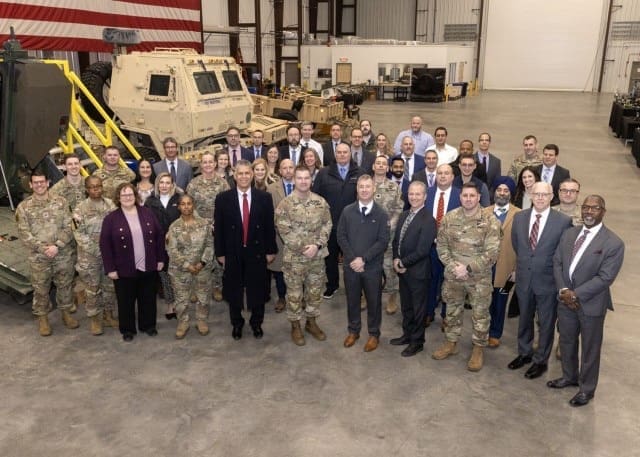
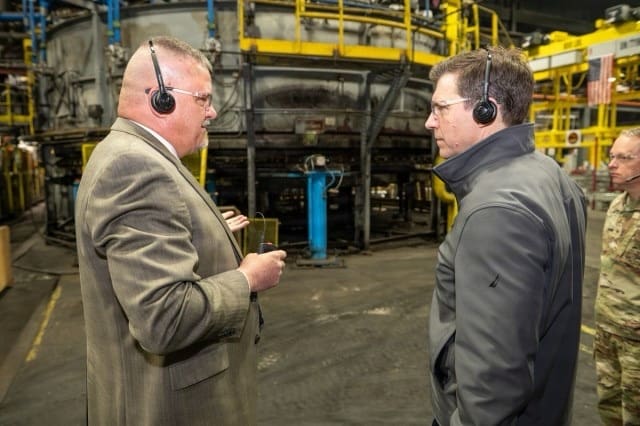
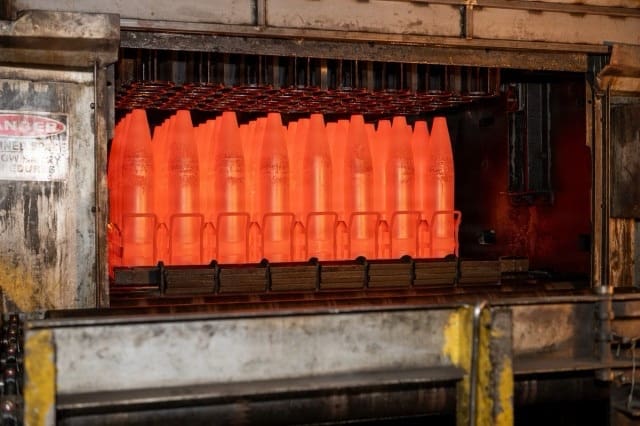
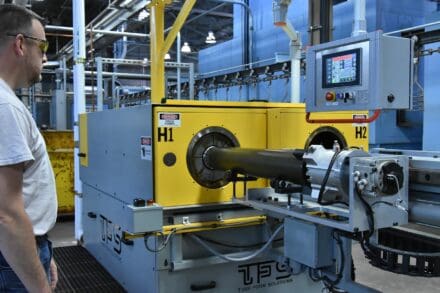
Rheinmetall has been commissioned to supply ammunition to an Eastern European customer. As a subcontractor to Global Military Products, a company commissioned by the US government, Rheinmetall Expal Munitions will supply 155 mm M107 projectiles with M4A2 propellant charges and 105 mm M1 projectiles to the customer. The total value of the contract is around €444 million. Of this, €170 million has already been booked as a pre-order, meaning that a further €274 million in new orders has now been booked. Deliveries are scheduled to begin in 2026 and be completed in June 2027.

The order underscores Rheinmetall’s high level of expertise and manufacturing capacity in the field of ammunition. The Düsseldorf-based technology group is one of the world’s leading manufacturers of large-calibre ammunition. Rheinmetall has been increasing its production capacity since 2022 and aims to be able to produce up to 1.5 million 155 mm artillery shells per year by 2027.

Rheinmetall is also one of the world’s leading manufacturers of weapons and ammunition systems. Its product range extends from medium-calibre ammunition for armoured personnel carriers and anti-aircraft guns to tank and artillery ammunition, aircraft armaments and high-energy laser applications.

Latvia Orders Rheinmetall Ammunition Factory – Group Expands Global Ammunition Production Network

Monday, September 29th, 2025

Rheinmetall is further expanding its ammunition production capacity and is now planning to build a modern production facility for 155 mm calibre artillery ammunition in Latvia. In the presence of Latvian Prime Minister Evika Silia, a corresponding Memorandum of Understanding was signed today in Hamburg. The facility shall be operated by a joint venture between Rheinmetall Waffe Munition GmbH (51%) and the Latvian State Defence Corporation, LLC of Latvia (49%). The key points were documented in a memorandum of understanding, which was signed by representatives of both sides.

By establishing its own 155 mm ammunition production facility, Latvia is taking a further step towards strengthening its defence capabilities and expanding its independent defence sector. The produced ammunition is to ensure supplies for the National Armed Forces of Latvia, as well as strengthen security of supply chains and be available to partner countries.

The production line will feature a state-of-the-art production facility, including a shell forging and filling line. Construction is scheduled to begin in spring of 2026, with production expected to start around a year later. The €275 million investment will enable the facility to produce tens of thousands of artillery shells and create at least 150 local jobs. Regional companies and the domestic economy will be integrated into the facility’s value chain.

Latvian Prime Minister Evika Sili?a said: “Signing this MoU is a clear step towards strengthening Latvia’s security and developing our defence industry. By aiming to establish partnership with Rheinmetall Latvia not only builds stronger national defence, but also contributes to security of supply in Europe, enhancing industrial capacity as well as facilitating economic growth. I have been directly involved in this process because I believe that investing in our defence industry is investing in the safety and future of our people.”

Armin Papperger, CEO of Rheinmetall AG: “We are delighted to be able to contribute to Latvia’s national sovereignty in the field of ammunition. At the same time, the production line will strengthen our position as the world’s leading manufacturer of artillery ammunition. At Rheinmetall, we are committed to supporting our customers as a reliable partner with first-class services. I am confident that we will also build similar partnerships for ammunition production in other countries”.

Ingrida Kirse, Board Member of the State Defence Corporation: “With the utmost sense of responsibility, we are taking on the entrusted task of jointly establishing an artillery ammunition production facility in Latvia. I am confident that all the necessary conditions are in place, as this project brings together several essential components. On the one hand, the mission of the State Defence Corporation is to ensure the needs of the National Armed Forces and to foster the development of Latvia’s defence industry by developing manufacturing capacity. On the other hand, Rheinmetall contributes its longstanding expertise, accumulated know-how, high standards, and international recognition. This synergy forms the foundation of a strong partnership that will both advance the industry and strengthen the security of Latvia and the wider region.”


It was only at the end of 2024 that Rheinmetall was commissioned by Latvia’s neighboring Lithuania to build a modern ammunition production facility for artillery shells. Construction of the plant, which is set to begin in a few weeks at the Baisogala site in the heart of Lithuania, mirrors the size and design to the facility planned for Latvia.

“The Caliber Cluster” by LAV

Saturday, September 27th, 2025

This is a guest post by my longtime friend MSG Larry Vickers, (USA, Ret) or as he’s known by many, LAV. He discusses a situation the Us military has created for itself which he refers to as the “The Caliber Cluster” and by cluster I think he intends it as half a word. I too am concerned with the logistics of so many small arms cartridges and I fear it will only get worse as we continue to chase the next great thing.

Alright, folks, let’s dive into the absolute train wreck that is the U.S. military’s small arms and ammo situation, specifically with the Army and Special Operations Forces (SOF), and why the current mess of guns and calibers is a logistical nightmare that’d make even a seasoned logistician’s head spin.

We’re talking a situation so convoluted it makes the Germans’ multi-caliber chaos in WWII look like a well-oiled machine. And trust me, that’s saying something.

General Omar Bradley is credited with the saying “Amateurs study tactics; professionals study logistics,” and that hits the nail on the head here. In war, logistics is king. You can have the fanciest tactics and the slickest operators, but if your supply chain is a dumpster fire, you’re done. Interoperability—ensuring your weapons and ammo work seamlessly across units—is critical to keeping the fight going. Right now, the Army and SOF are juggling so many calibers and platforms if they don’t reel them in soon they will have serious problems in any prolonged conflict.

The Caliber Cluster

Let’s run through the ammo mess. The U.S. military is fielding a ever growing number of calibers, each with its own quirks, supply chains, and compatibility issues. Here’s what we’re dealing with, based on my own digging:

5.56x45mm NATO: The bread-and-butter round for the M4 and M16 platforms. It’s lightweight, allows soldiers to carry a ton of rounds (standard combat load is about 210 rounds—seven 30-round mags), and it’s been the standard since NATO adopted it in 1980. But it’s got issues: limited stopping power and range, especially against modern body armor. Stories from the field, like in Afghanistan, have guys dumping multiple rounds into targets with minimal effect unless you hit something vital.

7.62x51mm NATO: The old-school heavy hitter, used in everything from the M14 to modern designated marksman rifles like the M110. It’s got range and punch but weighs a ton compared to 5.56mm—about half as many rounds per soldier due to the weight. Still in use for machine guns like the M240 and sniper platforms, but it’s a bear to hump around.

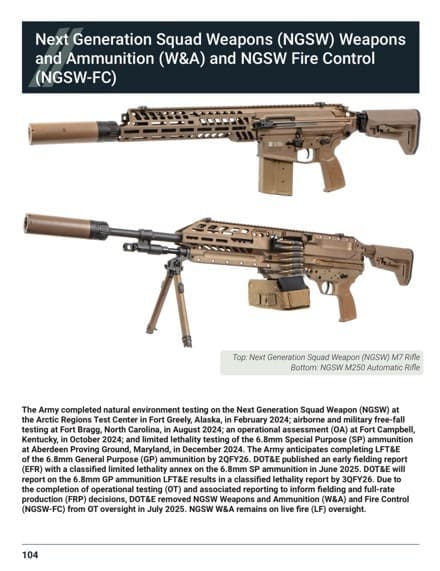
6.8mm (XM1186): The Army’s new darling, part of the Next Generation Squad Weapon (NGSW) program with SIG Sauer’s MCX Spear (NGSW-R) and MG 6.8 (NGSW-AR). Designed to split the difference between 5.56mm’s portability and 7.62mm’s lethality, it’s supposed to offer better range and terminal ballistics. Problem? It’s a whole new supply chain, and the Army’s betting big on it replacing both 5.56mm and 7.62mm. Good luck with that transition in a war zone.

6mm ARC: This one’s a niche player, primarily tied to the Surefire MGX gun that Delta Force is reportedly messing with. It’s a lightweight, high-performance round for long-range shooting, with better ballistics than 5.56mm but less recoil than 7.62mm. Sounds great, except it’s another caliber to stock, and reliability issues with the larger case diameter have been noted.

6.5mm Creedmoor: SOCOM’s been hot on this one for a while, with new rifles like the Mid-Range Gas Gun-Assault (MRGG-A) and machine guns like the FN Mk 48 Mod 2. It’s got better range and accuracy than 5.56mm, less weight than 7.62mm, and is seeing use in designated marksman rifles and now machine guns. The Secret Service is even sniffing around it to replace their M110s. But again, another caliber, another logistics headache.

Others in the Mix: Let’s not forget .300 Blackout, used in SIG Sauer’s MCX Rattler for SOF close-quarters work. It’s got subsonic options for suppressed shooting and mimics 7.62x39mm ballistics in short barrels. Then there’s .338 Norma Magnum, which the Army’s eyeing for long-range machine guns to outrange the M240. And don’t get me started on the 9mm for pistols and submachine guns or the .50 BMG for heavy snipers like the Barrett M82. Each of these adds another layer of complexity.

This isn’t just a list; it’s a logistical disaster. Every caliber needs its own ammo production, shipping, storage, and distribution. In a high-intensity conflict, you’re begging for shortages, mix-ups, or units stuck with the wrong rounds. The Germans in WWII had a mess with captured weapons and mismatched calibers, but at least they had the excuse of desperation. We’re doing this to ourselves.

The Guns: A Hardware Nightmare

Now let’s talk platforms. The Army and SOF are running a gun show with so many rifles. Here’s the rundown:

M4/M4A1 Carbine (5.56mm): The workhorse of the Army and SOF, with the M4A1’s full-auto capability and SOPMOD kit (rails, optics, lasers) making it versatile. It’s reliable, lightweight, and proven, but the 5.56mm round’s limitations are dragging it down. SOF units like Delta and SEALs still use it, but they’re supplementing with other options.

HK416 (5.56mm): I personally assisted in developing this rifle for Delta Force so yeah, I’m partial to this one, it’s essentially an M4 with a gas piston system for better reliability in harsh conditions. It’s replaced the M4A1 in some SOF units and is used by over 20 nations’ special forces. It’s a stud, but it’s still 5.56mm, so same range and stopping power issues.

SCAR-L (Mk 16, 5.56mm) and SCAR-H (Mk 17, 7.62mm): FN’s modular platform was supposed to solve the caliber debate by letting operators swap barrels and bolts. In practice, it’s a step up from the M4 but heavier, and SOF units love the flexibility. Problem is, it’s another system to maintain, and the 7.62mm version is a beast to carry.

KAC M110 SASS (7.62mm): Knight’s Armament’s semi-auto sniper rifle. It’s accurate but has reliability issues—rounds flying off target by eight MOA or more in some cases. Operators loved its predecessor, the SR-25, but the M110’s been a letdown for some.

HK M110A1 (7.62mm, 6.5mm Creedmoor): A newer semi-auto sniper system based on the HK G28. It’s part of SOCOM’s push to replace older 7.62mm sniper rifles with 6.5mm Creedmoor for better range and less weight. It’s solid but, again, adds another caliber.

Geissele SOF Gun: This is likely the Geissele Super Duty rifle, a high-end AR platform used by some SOF units. It’s 5.56mm, built like a tank, and tricked out with top-tier components. Great for close-quarters, but it’s still tied to the 5.56mm’s limits.

Surefire MGX (6mm ARC): Delta’s experimenting with this lightweight rifle for long-range engagements. It’s cutting-edge, but the 6mm ARC’s reliability issues and niche status make it a risky bet for widespread adoption.

SIG Sauer MCX Spear (6.8mm): The Army’s NGSW-R, meant to replace the M4. It’s a beast with better ballistics, but it’s heavier, and the 6.8mm round means a whole new ammo pipeline. The MG 6.8, the light machine gun version, is also part of this program. Early feedback is promising, but scaling this across the Army is going to be a logistical beast.

FN Mk 48 Mod 2 (6.5mm Creedmoor): SOCOM’s new “assault” machine gun, offering better range than 5.56mm M249s but lighter than 7.62mm platforms. It’s a step toward standardizing 6.5mm Creedmoor in SOF, but it’s yet another system to support.

Why This Is a Train Wreck

Here’s the deal: every new gun and caliber adds complexity. Different parts, different maintenance, different training. In WWII, the Germans struggled with a hodgepodge of captured weapons and calibers, which screwed their logistics when supply lines got tight. We’re doing the same thing, voluntarily.

The Army’s pushing 6.8mm as the future, but SOF is playing with 6.5mm Creedmoor, 6mm ARC, and .300 Blackout, while still relying on 5.56mm and 7.62mm. That’s five major rifle calibers, not counting pistol or heavy rounds. In a prolonged conflict, good luck keeping everyone supplied without cross-unit cannibalization or ammo shortages.

SOCOM’s agile acquisition process is a double-edged sword. They can field new toys fast—6.5mm Creedmoor rifles, .300 Blackout Rattlers—but it creates a patchwork of systems that don’t play nice together. The Army’s NGSW program is trying to streamline things, but it’s years from fully replacing the M4 and M249, and the transition’s going to be messy.

Meanwhile, SOF’s modular platforms like the SCAR are cool but heavy, and the M110’s reliability issues show what happens when bureaucracy rushes a system into service.

Fixing the Mess

If I were king for a day, I’d tell the Pentagon to pick a lane. Standardize on two calibers max for rifles—say, 5.56mm for close-in work and 6.8mm for everything else—and phase out the rest over a decade. Push modularity like the SCAR but simplify the platforms. One rifle, one machine gun, interchangeable parts, done. SOF can keep their niche toys like the .300 Blackout for covert ops, but the big Army needs to stop chasing shiny objects. And for the love of all that’s holy, test these systems to death before fielding them—no more M110-style flops.

The Germans learned the hard way in WWII that too many calibers kill your supply chain. We’re not there yet, but we’re flirting with disaster. Logistics isn’t sexy, but it wins wars. Time to stop playing gear tickler and start thinking like professionals.

Let’s take a page from our grandfathers’ book. The U.S. “Green Machine” in WWII—the only country to fight and win on two fronts did it with just four main calibers: .45 ACP for pistols and submachine guns, .30 Carbine for the M1 Carbine, .30-06 for rifles like the M1 Garand and BAR, and .50 BMG for heavy hitters like the M2 Browning. Four calibers, that’s it. No fuss, no muss. They supplied entire theaters—Pacific and Europe—without the logistical nightmare we’re building today. Those boys didn’t need a dozen rounds to get the job done; they standardized, simplified, and steamrolled. We could learn a thing or two.

LAV out

If you like whether you’ve read, LAV has a regular column over at Firearms Fridays.