FirstSpear

Archive for the ‘Armor’ Category

IOTV III is Coming

Thursday, April 19th, 2012

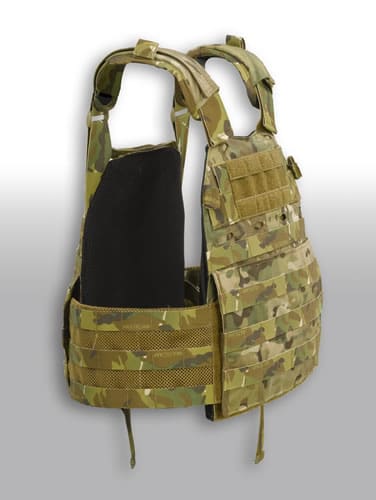
The Army has inserted a couple of improvements into the Improved Outer Tactical Vest version III. Overall, you won’t notice many cosmetic changes. A contract was recently awarded for production of 57,000 of the new carriers which incorporate the National Molding Molly Stix to secure the side plate carrier to the cummerbund but also their Quad Release Trigger Assembly. The Quad Release Trigger Assembly allows the wearer to rapidly don and doff the carrier. The most interesting aspect of the system is the simplicity of re-assembling the components. It’s a simple snap of four side-release buckles. This cutaway system is certainly going to be easier for Soldiers to put back together.

IOTV Gen III – National Molding Parts

MultiCam Materials – 500D Cordura

Wednesday, April 18th, 2012

Every two weeks SSD showcases a different MultiCam print fabric from Duro Textiles LLC. This week, we are covering Beaver. MultiCam is a single camouflage pattern designed to help the wearer hide in varied environments, seasons, elevations, and light conditions. After a great deal of commercial success and adoption by elements of US Special Operations Forces, in 2010 MultiCam was selected for use by the US Army as its Operation Enduring Freedom Camouflage Pattern (OCP).

Duro prints on genuine Cordura fabric from Invista. A mid-weight fabric, 500D Cordura is rapidly becoming the industry standard for load carrying items that need to be light and durable. This material is coated on the back side for water resistance and features a face side finished with a durable water repellent.

Specs:
Finished Width – 60 inches cuttable
Finished Weight – 7.1 oz/yd² approximately
Fiber Content – 100% Nylon
Construction – 46/35 (warp/fill)
Breaking Strength – 453/348 (warp/fill) (lbs, minimum)

DOWNLOAD Test Report here.

Manufactured from 500D Cordura for its great balance of weight and durability, the new High Ground Plate Carrier incorporates several interesting features.

First off is the Mix-&-Match cummerbund with internal as well as external cummerbund PALS webbing. Additionally, the bungee system allows you to change out whole cummerbunds rather than reconfigure MOLLE pouches. The HGPC also incorporates a cable routing system to eliminate cable clutter. You can also ditch your plates one at a time without dropping the whole carrier kind of like in the first gen of BALCS carriers. Finally, it incorporates an internal pocket for flat items (or your hands) that is accessible from either armpit as well as internal breathable spacer cloth to assist with air flow.

Overall, the HGPC weighs only 2.5 lbs due in no small part to fabric selection. Please note, it is only available in MultiCam and Coyote.

Duro offers progressive pricing based on the number of yards ordered. For more information on this or any of the full line of MultiCam fabrics visit www.multicamfabric.com or email Galpen_Ben@DuroLink.com.

Warrior Trail Consulting Training Armor

Thursday, April 12th, 2012

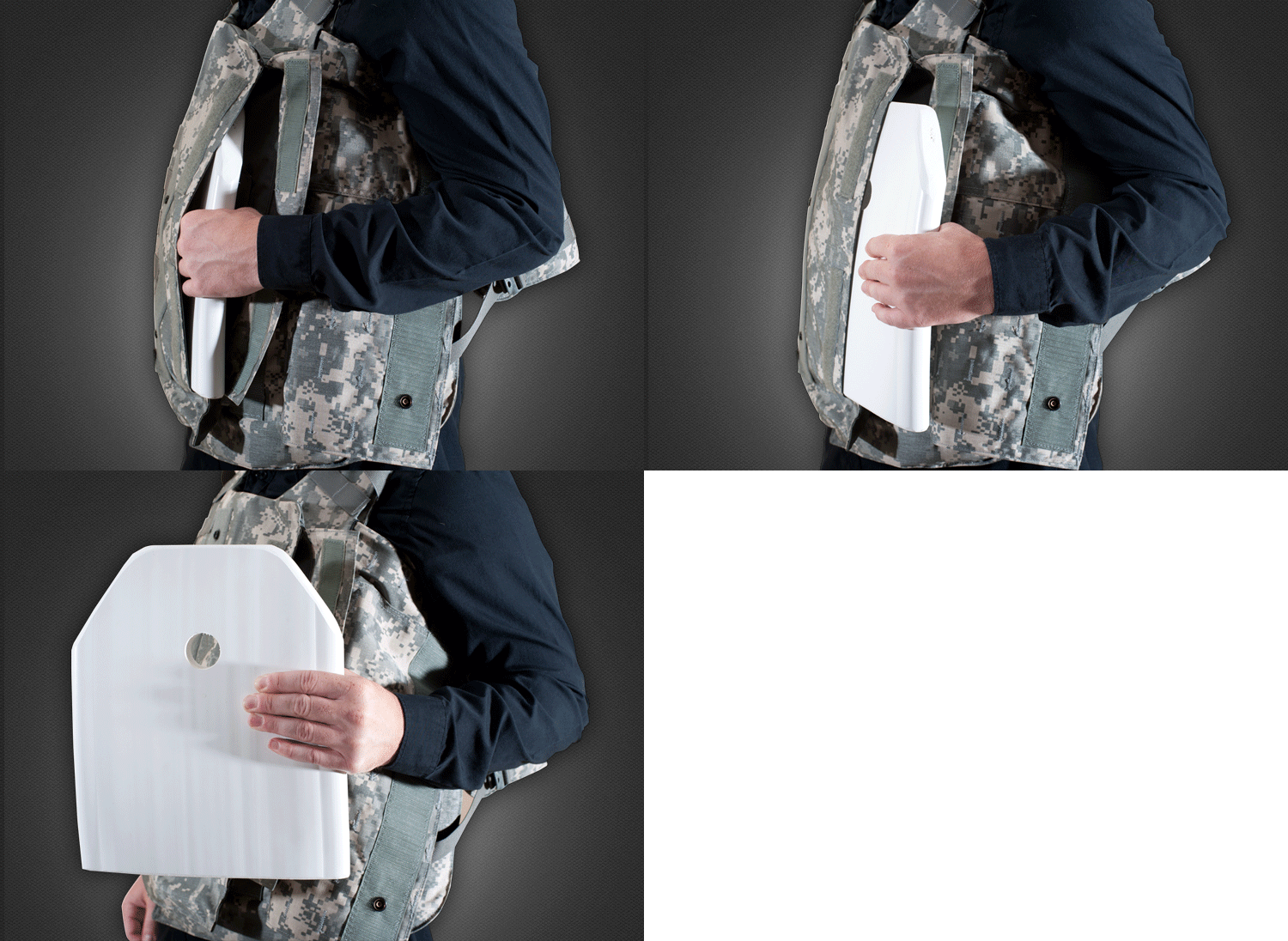
We’ve written about training plates in the past from a couple of manufacturers. They offer a great alternative to using real ballistic plates during training iterations that may result in damage to the plate. Now, Warrior Trail Consulting, LLC has introduced their version of training plates, training side plates and soft armor. That’s right, training ballistic insert panels which could come in VERY handy for MAROPS training or any other training that might result in damaged soft armor.

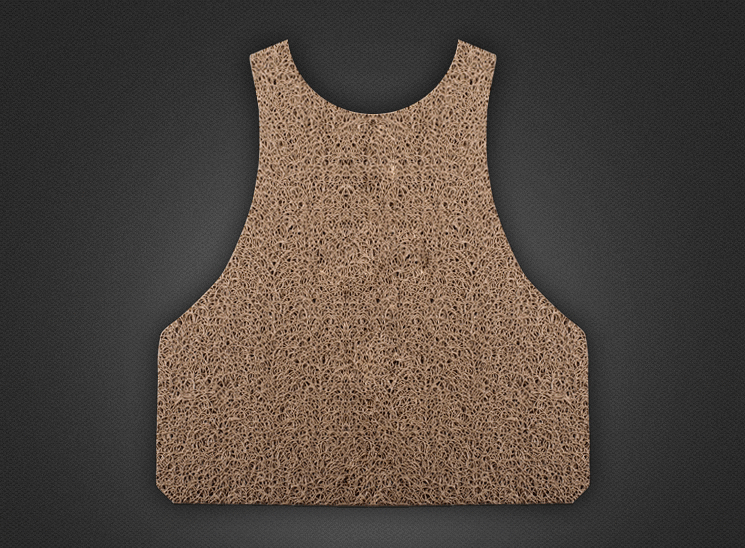
The soft armor inserts are IOTV shape and made from woven PVC fiber. They replicate the size and weight of armor panels. They are available in sizes X-small – X-large.

The plates are available in both E-SAPI in sizes Small – Large. The SAPI versions come in X-small and Medium and the ESBI side plates are one size.

These products are VERY cost effective when considering the cost of the loss of even one plate in training. But remember, these offer NO ballistic protection and are for training (non-ballistic event) only.

www.warriortrail.com

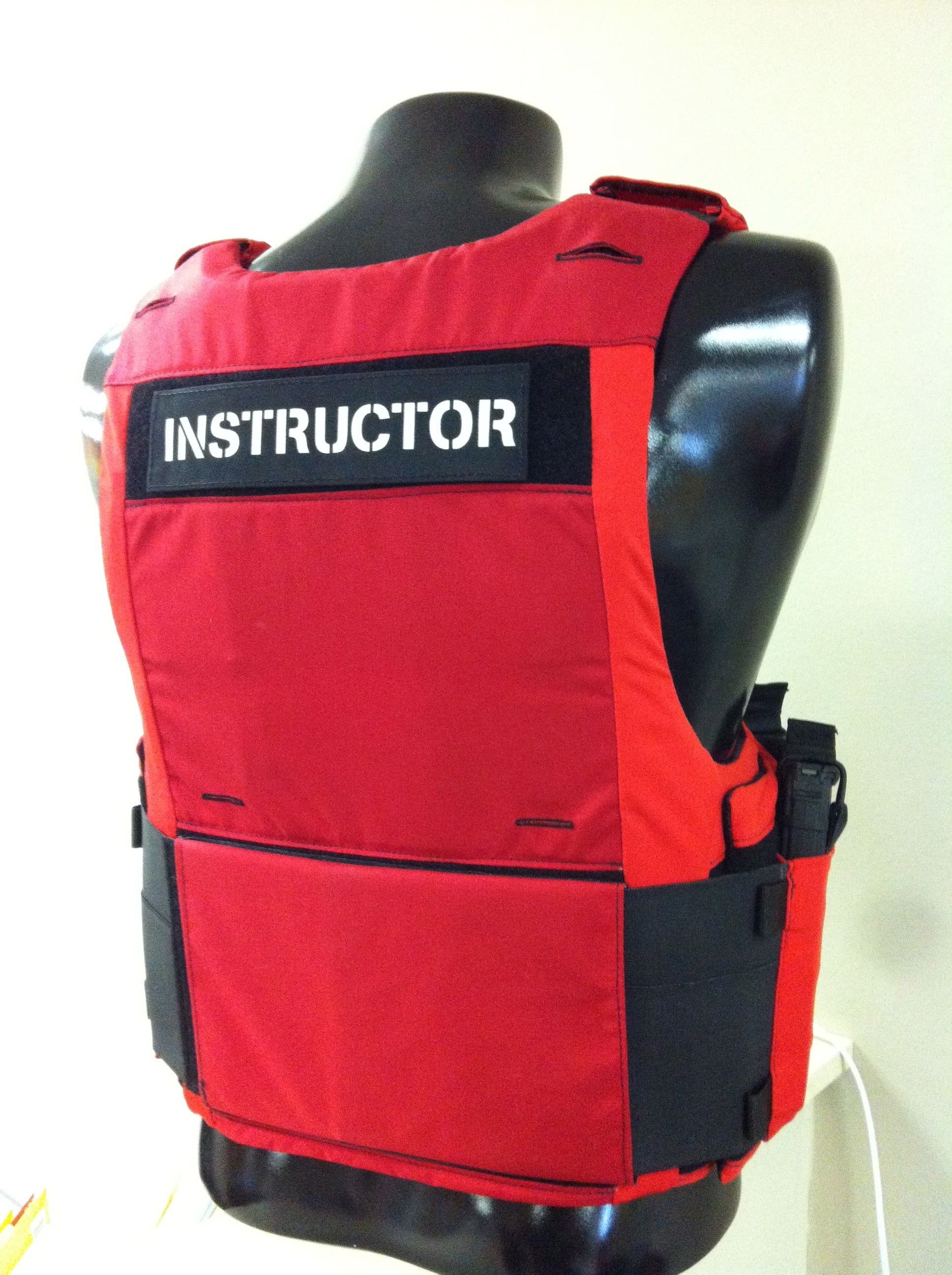
FirstSpear Introduces the Red Sleeper

Wednesday, April 11th, 2012

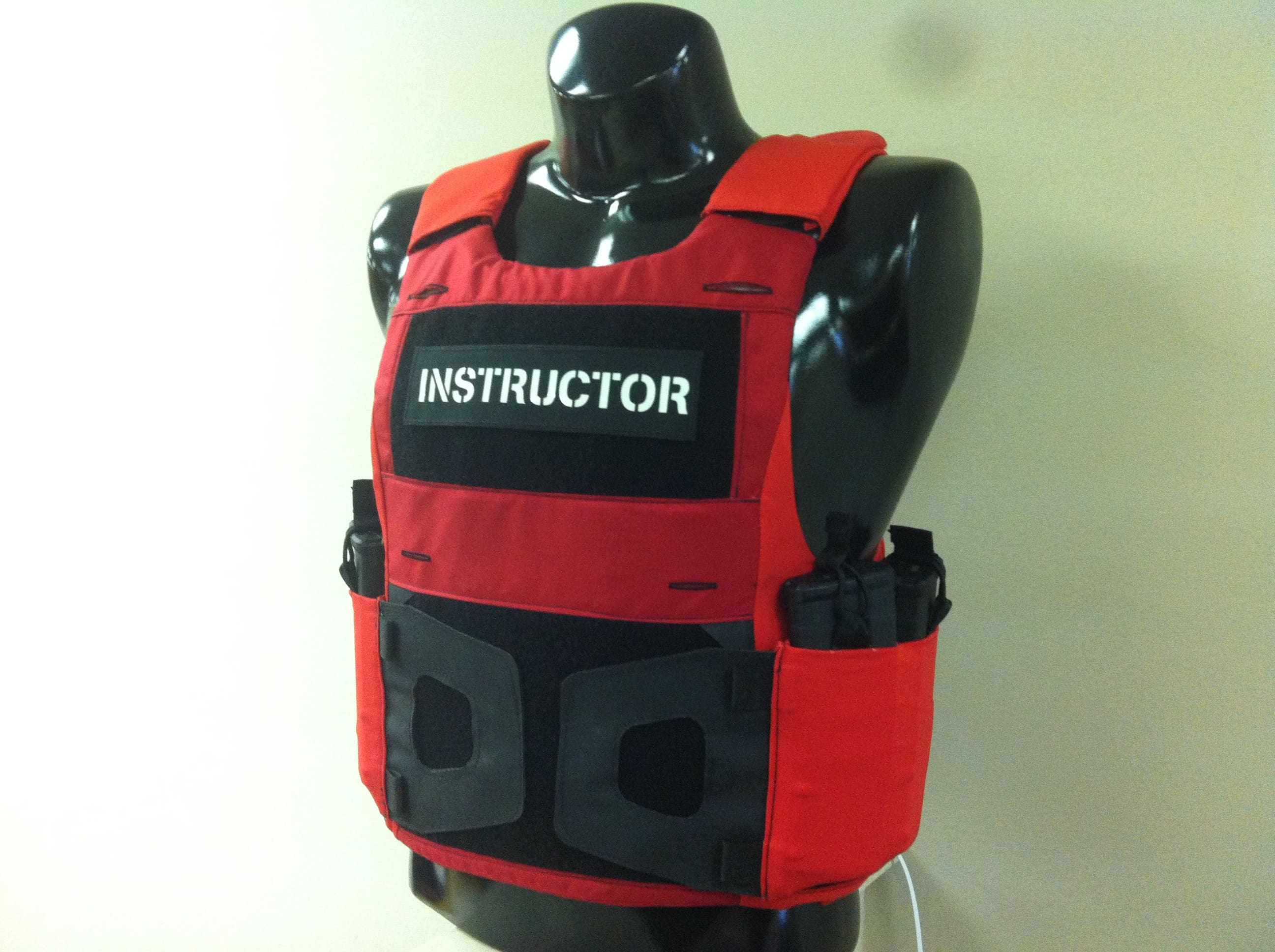
If you are a Range Safety Officer or member of EMS / Fire then the newly introduced Red color for FirstSpear’s Sleeper soft armor carrier might be just the ticket.

Designed in conjunction with Crye Precision, the Sleeper SOCOM’s SPEAR BALCS soft armor as well as Hard Armor plates cut to SAPI/ESAPI/SPEAR as well as Swimmer cut. The Sleeper is also available in Black, Coyote, Ranger Green and MultiCam sizes Small – XLarge.

www.first-spear.com

BAE Releases Liquid Body Armor Video

Tuesday, April 10th, 2012

BAE Systems (and others) has been working on liquid body armor for some time. It’s a very promising, low weight ballistic solution. They are using a shear thickening fluid which hardens as force is violently applied against it. You can make some up with cornstarch and water. Pour it out on a flat surface and then hit it with a hammer.

Unfortunately, you aren’t going to get much out of this video other than seeing body armor do what it is designed to do; act like a catchers mitt.

Part 1 shows 10 layers liquid armor in a durable casing
Part 2 shows 31 layers of untreated Kevlar

When I was in industry and we were working on the Explosive Formed Penetrator threat, one of my team’s engineers suggested using a non-newtonian fluid. While the technology shows promise, we decided that for our application, the material itself might compromise its ability to work when needed. Based on the magnitude of teh threat we’d need to go with a true shear thickening fluid. Form our standpoint, the issue was ensuring that the material would be in place when needed. A combat vehicle such as an MRAP is exposed to a wide variety of threats and environmental hazards any one of which might compromise the armor’s integrity and result in the fluid leaking from its section in the armor array. Instead we came up with another way to dissipate the energy of an EFP.

Body armor will present its own set of challenges in maintaining the proper amount of ballistic material in the proper place on the panel. Gravity tends to work against you with liquids in non-rigid containers, even in the case of thickened fluids or in this case coatings. Additionally, the fluid coating might dry out over time. What BAE has done to mitigate this effect is to use their “fluid” to treat woven Kevlar. Not only does this give the coating “body” but gives the material even more surface area to spread the energy of a ballistic threat across.

BAE testing has indicated that they can maintain ballistic protection at a 45% reduction in the thickness of the armor which results in increased mobility.

US Army Seeking Sources for Protective Over Garment

Tuesday, April 10th, 2012

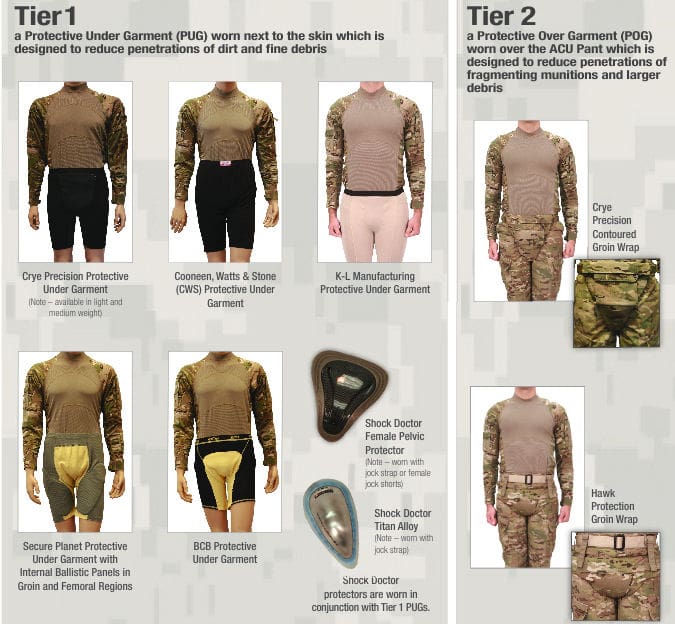
Product Manager – Soldier Protective Equipment (PM SPE) has issued a Sources Sought Notice for companies capable of producing the Tier II – Protective Over Garment (POG). Actually, this name is some what of a misnomer as it envisions a CBRNE garment rather than what it truly is; the outer component to the Pelvic Protection System which is used in conjunction with the Tier 1 Protective Under Garment (PUG).
According to the RFI, “The POG is worn over the Army Combat Uniform trousers and provides protection of the pelvis, femoral arteries, and lower abdominal organs in a blast or fragmentation event. The POG will also reduce the penetration of dirt and fine debris into a wound area to prevent infections.

For those of you unfamiliar with PPS, there are several variants currently in use from a variety of manufacturers.

At a minimum, the Tier II Protective Over Garment (POG):

– Shall consist of three (3) distinct areas of ballistic protection to provide an optimum balance of protection and mobility. The front section shall provide at least 69 in2 of ballistic protection, the center section shall fit between the legs and provide at least 50 in2 of ballistic protection, and rear section shall provide at least 52 in2 of ballistic protection for a size medium system.

– Front and rear sections shall provide ballistic protection which conforms to the base vest requirements of FQ/PD 07-05E. Center section shall provide ballistic resistance (V50) of at least 1120 ft/s against 17gr Fragment Simulating Projectile (FSP). Wherever there is no continuous ballistic material, a minimum 1 in. overlap shall be maintained to prevent gaps in coverage.

– Front, center, and rear ballistic materials shall be removable/replaceable.

– Ballistic filler areal density of front and rear sections shall not exceed 1.10 lb/ft2 with a maximum 0.30 in. thickness. Ballistic filler weight of center section shall not exceed 0.40 lb/ft2 with a maximum 0.10 in. thickness.

– Shall provide a secure fastening mechanism to prevent flapping or shifting during use. The system shall be compatible with currently fielded personal protective equipment and combat uniform and shall attach either to the body armor and/or the belt loops of the trousers.

– Front section shall be capable of being disconnected from the center/rear section and worn as a standalone item, with the option of fastening to the belt or Improved Outer Tactical Vest. Shall provide a secure fastening mechanism to prevent flapping or shifting during use.

– Attachment point(s) connecting the front section to center section must be able to withstand a peak load of 150 lbs break strength in accordance with ASTM D-5043

– Attachment points/seams connecting the rear panel to center section must be able to withstand a peak load of 600 lbs break strength in accordance with ASTM D-5043

– Shall be capable of donning and doffing without removing the belt from the Army Combat Uniform trousers

– Must be available in multiple sizes to fit 5th percentile female through 95th percentile male waist circumference.

– Outer facing cloth shall be constructed with the following camouflage pattern: US Army Operational Enduring Freedom Camouflage Pattern (OCP)

This is a short turn around on this Request for Information. Interested parties must reply no later than 4:00 pm eastern standard time on Wednesday, April 11 2012.


Tactical Floatation Support System

Thursday, April 5th, 2012

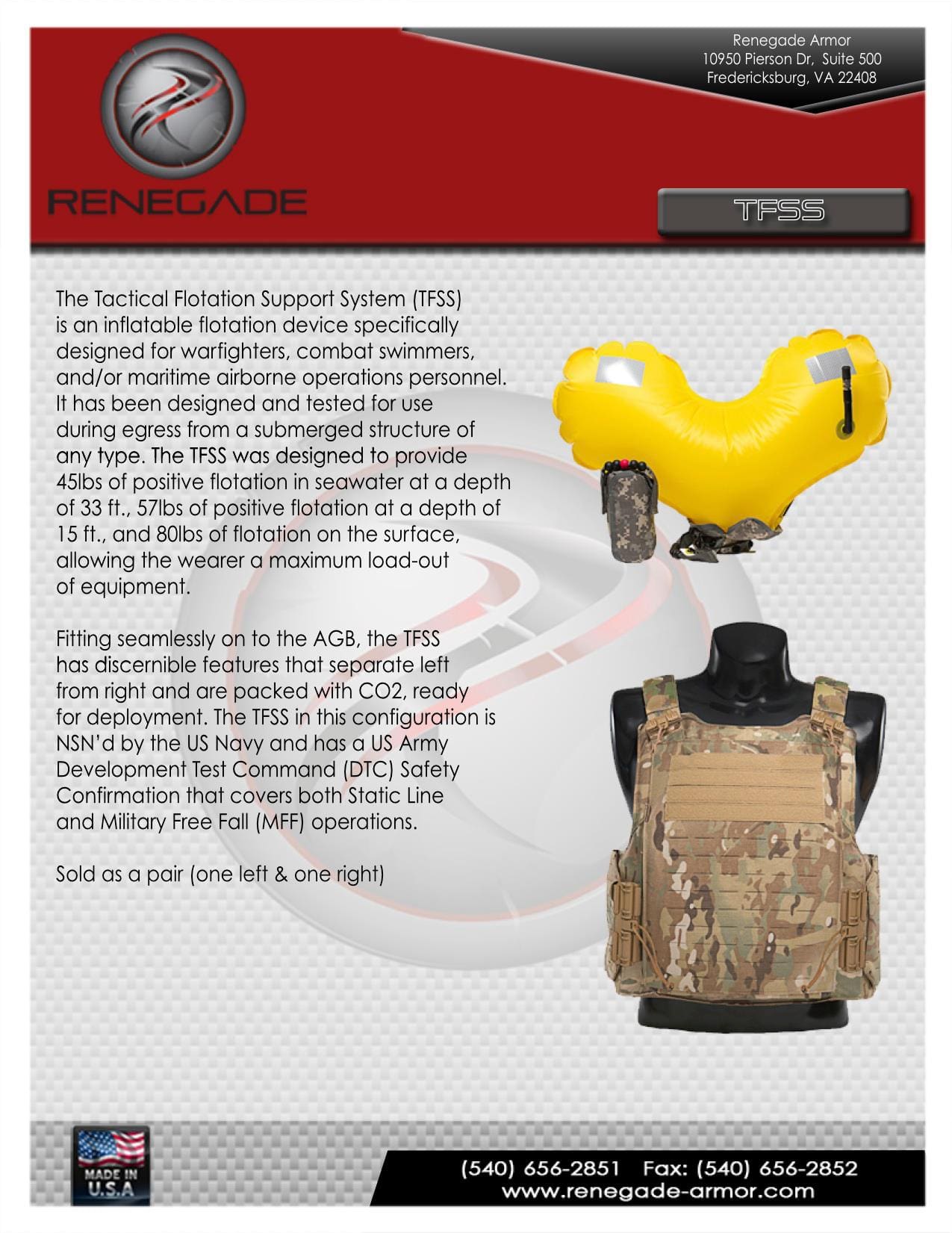
PECI Flotation LLC has introduced new armor compatible form factors of their highly popular Tactical Floatation Support System. Available with Overt (yellow) or Covert (black) bladders, TFSS provides 45 pounds of positive floatation in seawater at 33 feet, 57 pounds at 15 feet and 80 pounds on the surface. Additionally, TFSS has a safety confirmation for both staticline and MFF parachute operations from the US Army Developmental Test Command.


TFSS has been integrated into several armor designs including those by FirstSpear. In fact, FirstSpear is an early adopter. They immediately saw the lifesaving potential and went right to work on adapting their systems to accommodate TFSS. TFSS is not only a great way to provide emergency buoyancy it’s also low weight and volume compared to alternatives. FirstSpear’s integration is seamless and you won’t even know it’s there.

As you can see, Renegade Armor is offering TFSS as a stand alone system or integrated into any one of a variety of armor carriers.

DSM Dyneema Appoint Atkins & Pearce Premium Distribution Partner

Thursday, April 5th, 2012

DSM Dyneema has appointed Atkins & Pearce, Inc, a US-based supplier to the technical textile industry, as a Premium Distribution Partner for North and Central America and Mexico, effective immediately. Atkins & Pearce will market and distribute ultra-high molecular weight polyethylene (UHMWPE) fiber manufactured by DSM Dyneema and provide customers in the United States, Canada, Mexico and Central America with application engineering expertise and technical services, including fiber enhancement capabilities. The company will play an active role in developing new markets for UHMWPE fiber and servicing existing markets, including a select number of customers currently supplied by DSM Dyneema. A similar distribution agreement in Europe was announced by DSM Dyneema in 2011.

“This strategic partnership with Atkins & Pearce marks the next step in DSM Dyneema’s efforts to supply and service the North American and Central American textile industries with sustainable and high-performance fiber solutions,” said Jeff Brule, regional manager, Americas, DSM Dyneema. “Customers will benefit from shorter lead times, value-added application development and technical services, and a higher level of collaboration that can help drive business growth.”

“We look forward to working closely with DSM Dyneema to meet the strong and growing demand for its high-performance UHMWPE fiber among customers in this region,” says Jeb Head, owner of Atkins & Pearce. “Our long history of expertise in textile braiding and other fiber technology, our customization capabilities and our proactive approach to service will help current and new customers leverage DSM Dyneema’s products to achieve a clear competitive advantage.”

This announcement is interesting news as the demand for PE products continues to rise. DSM has invested a great deal in increasing their domestic capacity to produce Dyneema. This looks to be a move to diversify their risk as military demand for Dyneema decreases. Although, Dyneema is the critical component in the Army and Marine Corps’ new Enhanced Combat Helmet.