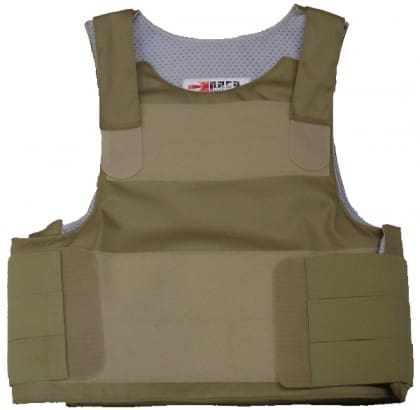
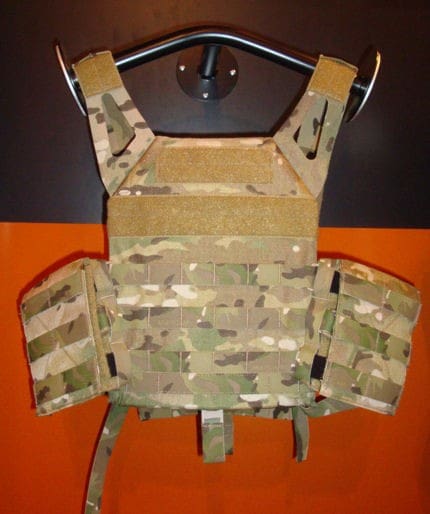
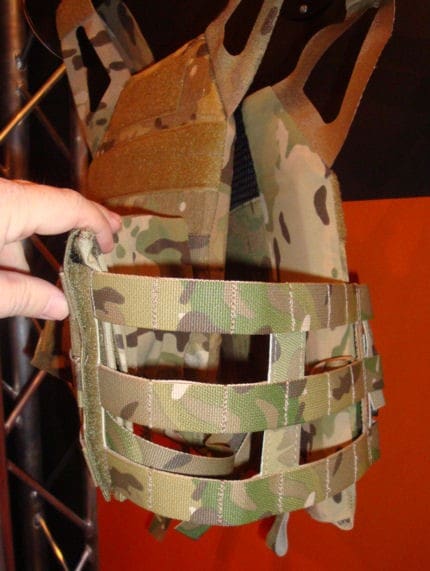
Current “lighten the load†efforts focus on shaving ounces from the tactical load. The thinking follows that if you can decrease the actual load carried, you can decrease the rate at which you get tired. Inversely, this should result in increased performance. However, based on the current state of the art and desired protection levels, this approach may take some time to produce a significant difference. On the other hand, a recent load carrying study undertaken by North Carolina State University seems to validate an entirely different approach. The basic claim is that use of Archangel Armor’s Internal Frame Load Bearing Armor (IFLBA) removes the load from the neck, back and shoulders of the wearer, and redirects it to stronger load carriage muscles groups. The major effect indicated is a reduce rate of fatigue.
Redistributing the weight from the back neck and shoulders, prevents translating the weight through the neck back and spine in order to be carried by the strong load carrying muscles of the hips and legs. Many of the effects of fatigue can be felt between the neck and the hips. This system literally bypasses this sensitive area, and there fore the negative effects they suffer.


The end state of redirecting the weight is to reduce the rate of fatigue. An objective measure of this was conducted at Fort Bragg, NC last November. The pilot study was sponsored by the Partnership for Defense Innovation, and conducted by NC State University, Ergonomics Center. Additionally, the data was peer reviewed by Dr Richard Kuhns who conducted an independent Medical and physiology review.
“The Archangel IFLBA re-directs the load bearing to a stronger, more secure area of the body, which will reduce injuries to the spine and its supporting structures. It allows greater range of motion in the head/neck/shoulder are regardless of loads carried. The nominal changes in total measured weight are negligible especially in light of the idea that the Archangel IFLBA creates less fatigue which equates to greater levels of job performance and decrease injury occurrence. The Archangel IFLBA also provides ergonomic support for the spine. The added benefit of this will be evident with prolonged periods of standing, sitting, walking, running, laying prone, and laying supine.” Independent Evaluation, Jan 2010, Dr Richard Kuhns
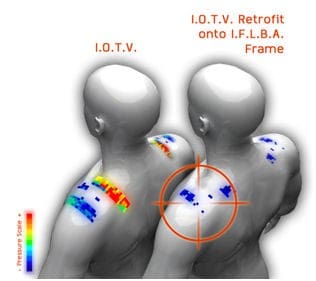
During a measurement conducted at the NC State University, Ergonomics Center at Chapel Hill, NC, this graphic was produced to provide an objective measure of how the weight is removed from the back, neck, and shoulders. On the left is a Improved Outer tactical Vest (with soft armor and full plates), the right is that an IOTV – IFLBA retrofit. In addition to the armor load, the Soldier also carried a rifle and pack with 30 pounds. As you can see from the graphic, the use of the IFLBA retrofit resulted in over 80% of the load being removed from the shoulders.

The study at Bragg used several objective events to measure a baseline load configuration against the IFLBA system. The Modular Body Armor Vest is fielded to SOCOM units.
Independent variables:
• 2 types of equipment (Fielded MBAV – Existing, IFLBA – New)
• 2 loads (armor + 25 lbs, armor + 40 lb pack)
Three tasks: (Average over 6 hours)
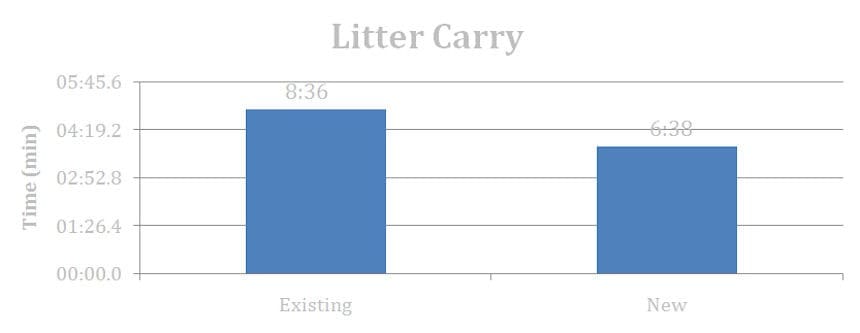
• Litter Carry (simulated casualty) – 400 m
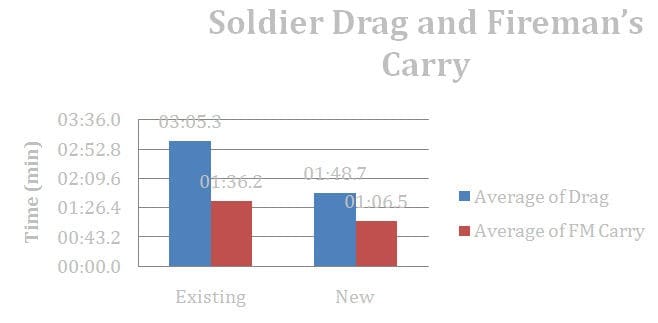
• Fireman’s Carry – 100 m
• Soldier drag – 100m
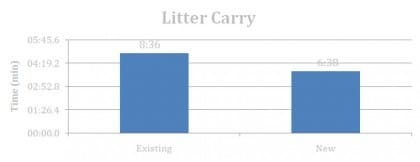
400M Litter Carry
This task was conducted more than 20% faster with the IFLBA than the MBAV.
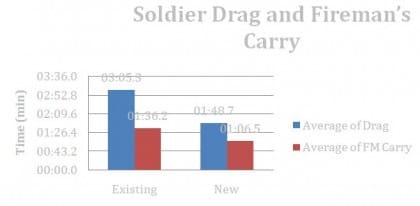
Fireman’s Carry, 100M lane
This task was conducted more than 30% faster with the IFLBA than the MBAV.
Soldier drag, 100M Lane
This task was conducted more than 40% faster with the IFLBA than the MBAV.
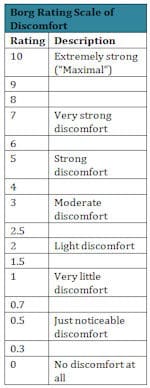
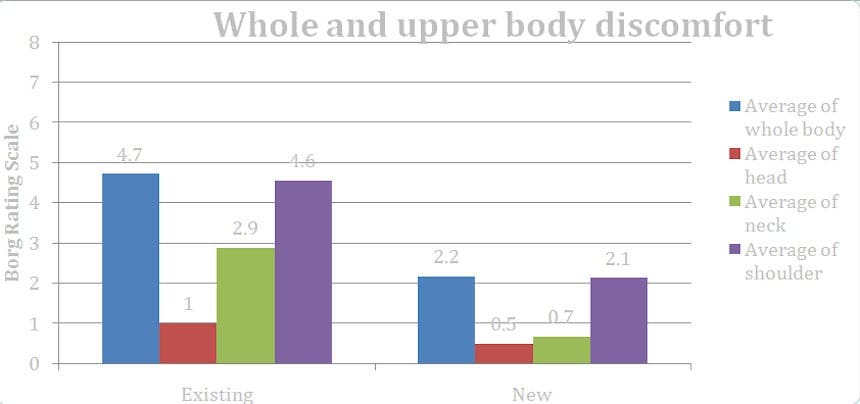
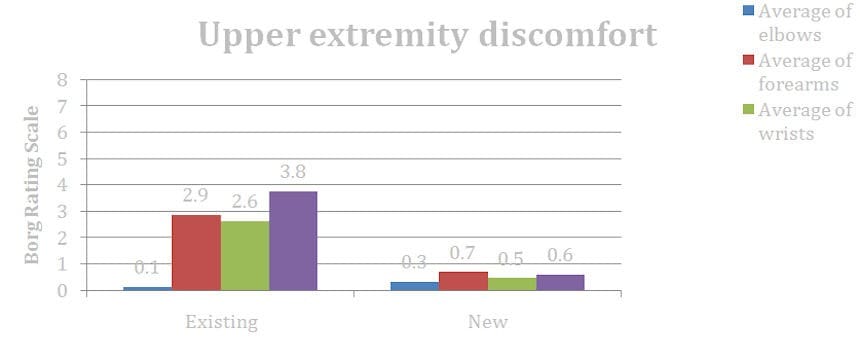
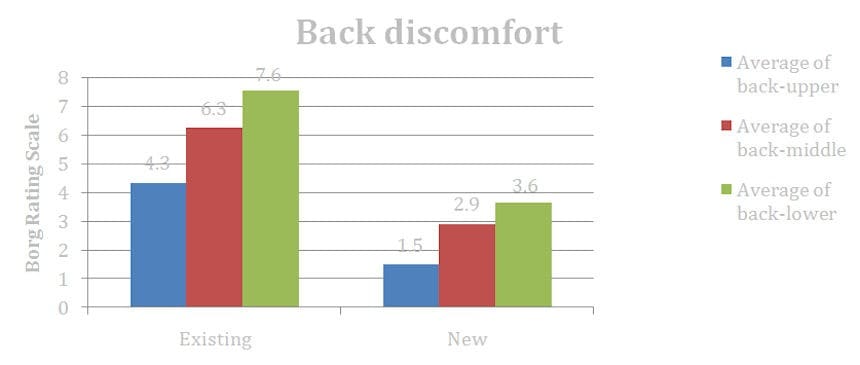
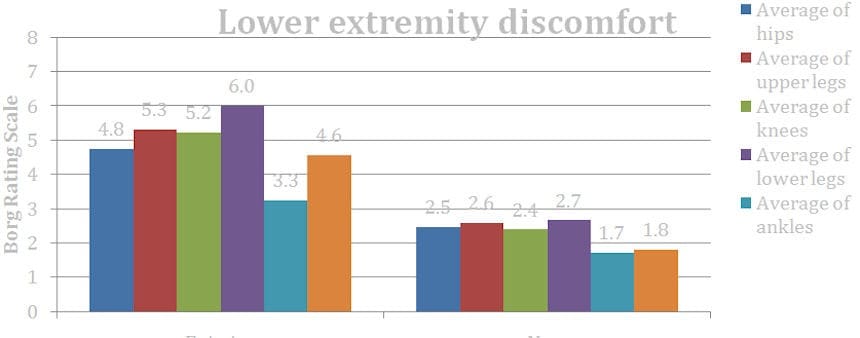
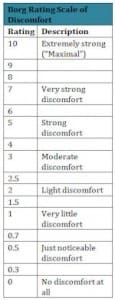 Additionally, NC State researchers collected subjective data from study participants rating levels of discomfort experienced. Data is based on the Borg Rating Scale of Discomfort which is often used in the medical field to allow a patient to communicate pain levels to a physician. On the scales shown below, the MBAV is on the left as the baseline and the IFLBA on the right. The results shown are as the mean of multiple iterations over a 6 hour period. Also please note that the IFLBA team demonstrated a lower level of discomfort after 6 hours than the MBAV team showed on the first iteration.
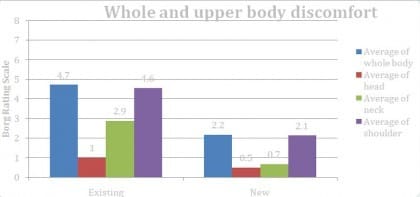
Whole and Upper Body Discomfort
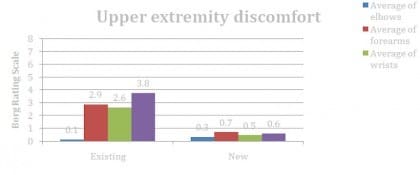
This data set covers the muscle groups used to operate small arms
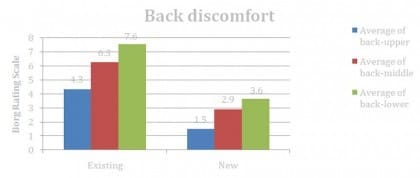
This shows Back Discomfort was lower for those wearing the IFLBA
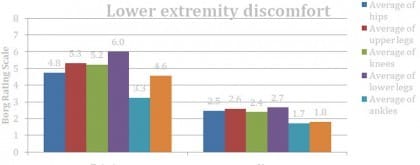
This shows how the fatigue in the legs and lower extremities was decreased as well. The decreased fatigue in the lower extremities is explained by Dr Kuhns.
“When unencumbered, the body is used for upright posturing, and the lower extremities are used for locomotion. When under load, the body must compensate for balance, starting and stopping, and more muscles are recruited for these tasks. This increases the amount of work placed on them constantly. The increased demand on these muscles makes them tire faster, and prevent recuperation, i.e. “fatigueâ€. “When carrying loads that increase spinal load bearing you can either remain upright and compress the spine itself or bend the upper body to take the pressure off the spine and use the lumbosacral muscles and waist as a fulcrum, especially when running, jogging, carrying something with the hands, as this only further compresses the spine and creates more discomfort. The decision to adjust body posture to minimize spinal impact is a self-preservation reaction that people will instinctively due as pain or pressure builds in bony structures. The resulting fatigue is due to the fact that the lower extremities are now tasked with using mostly the leg muscles to balance and carry the weight that is not evenly balanced over the core of the spine in a non-spinal bearing fashion. If the weight is balanced over the core structure on a non-spinal load bearing and spinal supporting method, then the person does not need to bend in any unusual manners to compensate for an unnatural fulcrum created out of discomfort or fear of injury.†Independent Evaluation, Jan 2010, Dr Richard Kuhns
In summary, the information presented in the study illustrates three main points:
1. The IFLBA redistributes the weight from the back neck and shoulders to the stronger load bearing hips and legs, as measured by the NC State University Study.
2. This decreased the rate of fatigue and increases performance as measured by the NC State Study.
3. An Independent Medical and physiology review by Dr Richard Kuhns provides scientific explanations for the enhancements exhibited during the study and how this system can reduce the number and severity of the spinal compression injuries suffered by the wearers of tactical equipment.
The final report for the study as well as the review by Dr Kuhns are available to Government acquisition officials in addition to select parties contact Archangel Armor.