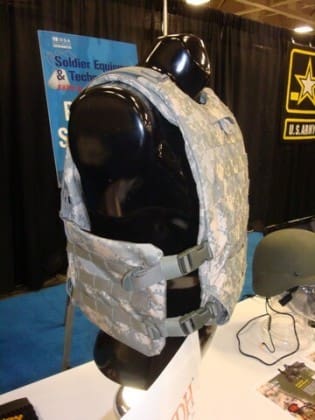
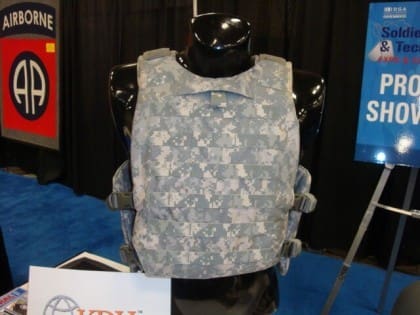
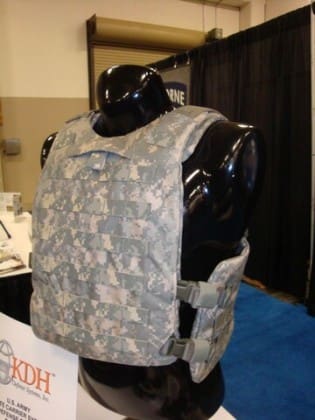
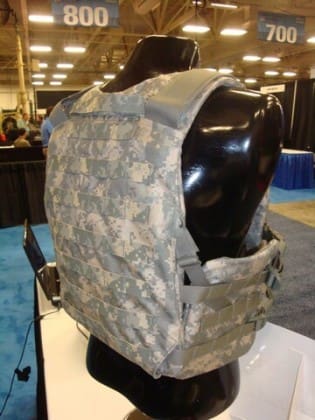
Usually, we want to focus on the on the destination when we speak of a journey but oftentimes, the story of the road traveled is much more interesting. So for me, it was much important that I find out about how the requirement for a Plate Carrier was developed than focus on the name brand that was eventually selected. Learning the facts of how decisions were made would tell me much more about why the solution was adopted. Ultimately, you may not agree with the system that was adopted, but after reading this article you will begin to understand why it was. On October 8th an $18.6 million contract for 57,000 plate carriers was awarded to KDH Defense Systems. An additional 1,000 Eagle MBAV carriers were also purchased on a REF contract vehicle to support PEO-Soldier Camouflage study in Afghanistan. These MBAVs were produced in MultiCam.
I was fortunate enough to have the opportunity to speak with COL William Cole, Project Manager Soldier Protection and Individual Equipment and LTC Jon Rickey, Product Manager Soldier Protective Equipment about the program as well as how it evolved.
It is best to go back to the beginning of the requirement. While SOF had been using plate carriers since 2002 and the Marine Corps had begun their program in early 2008, the Army had not received any requirements for the fielding of a plate carrier system. However, in December 2008, the 3rd Brigade, 1st Infantry Division requested 1,500 plate carriers. The time line was very short and the Rapid Equipping Force (REF) set about searching for a suitable item to fulfill the warfighter’s need. The Eagle Industries Modular Body Armor Vest (MBAV) in use with SOF was chosen and fielded to support this immediate need and also later used as a component of a Soldier’s Load Assessment conducted by the Asymmetric Warfare Group with contracting support from the REF.
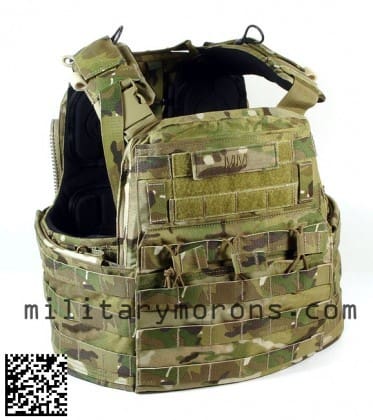
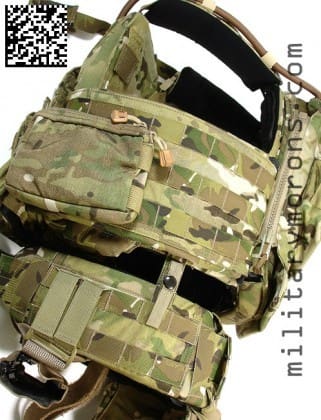
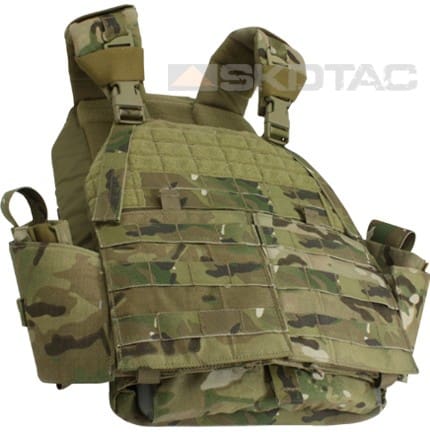
Based on the requirement for a plate carrier, PEO-Soldier conducted Soldier Protection Demonstration – VII. An SPD is designed to allow the Soldier Survivability community to assess protection technologies offered by Government, industry, and academia to determine what the state of the art consists of and to shape realistic requirements. Sixteen companies met with PEO-Soldier during an industry day and the field was down selected to four commercial offerings. These were the KDH carrier, the TAG Rampage, Eagle Modular Plate Carrier System – Army (MPCS-A), as well as an offering from MSA-Paraclete. Additionally, for SPD-VII, PEO-Soldier included the US Marine Corps’ Scalable Plate Carrier, the Modular Body Armor Vest used by SOF, and an IOTV with no attachments as a baseline for comparison.
One important requirement of the SPD was that the system had to include 1″ of soft armor around the edge of the E-SAPI plate. This is to protect the wearer from spall that may be caused by edge shots on the plate. One of the test candidates did not include this feature and had to receive a waiver to be included in the demonstration. This same issue still plays heavily in post procurement decision debates over the validity of the Army’s selection of the KDH solution.
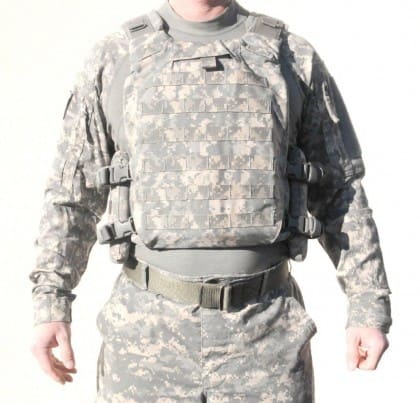
Testing was conducted in conjunction with the Army Infantry Center representatives at Yuma Proving Grounds. Twenty-five Soldiers from the 82d Airborne Division and 173d Airborne Brigade participated as test subjects for two weeks of intense activity.
Evaluations included road marches, obstacle courses, close range marksmanship, Individual Movement Technique course negotiation, ingress/egress drills, buddy aid and wound access, don and doff drills, and room-clearing exercises.
Every scenario was evaluated on objective as well as subjective criteria. In addition to established performance-based criteria, Soldiers were asked for their opinion of each carrier for that iteration. For example, during SPD VII Soldiers were asked, “Would you be willing to wear this armor system on a dismounted combat mission in Afghanistan?†This is the question to which 88% of Soldiers in the SPD said yes for the KDH plate carrier as well as the TAG Rampage. These two carriers did in fact come in second to the Eagle MBAV. Interestingly, no system was universally liked or disliked with even the IOTV still garnered a 24% approval rating.
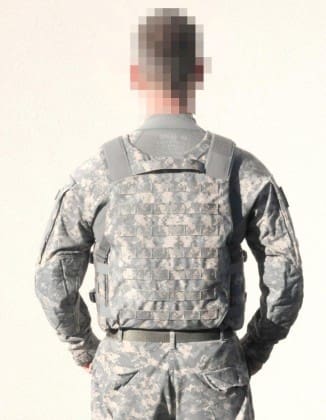
There was no “winner” of SPD-VII. rather, information collected during the demonstration was used to refine the requirement. For instance, while a cutaway feature was mandatory for commercial items in SPD-VII, don and doff times and intended operational use revealed that a true cutaway was no required for the actual fielding of the system. Instead a rapid don and doff capability fit the bill.
There seemed to be a lull over the summer as the Infantry Center and Army Staff worked out the exact number of carriers to purchase. Ultimately, the decision was made to procure the plate carrier via GSA. GSA is a Government controlled procurement system that allows vendors to place products on offer to the Government at special rates. GSA was chosen in order to even further speed up the process of buying the carriers.
For this procurement, Technical (Protection and Weight) was the most important factor in determining which system the Army should procure. This was followed by Schedule as they were needed quickly on the battlefield. The final factor was cost. In the realm of Soldier Protection in particular, procurement cannot go to the lowest bidder based solely on cost.
COL Cole was emphatic that cost was not the driving factor in the selection of the KDH solution although it was in fact, at a good price. The technical and schedule elements of the proposals were evaluated at PEO-Soldier but the cost element was left to officials at the contracting office. Technical evaluators never saw the cost figures during the evaluation. In the GSA solicitation criteria, the Government reserved the right to award multiple vendors to fulfill the requirement. This is an indication of how urgent the need was and how important schedule was to the overall scheme.
Even I raised the question of whether KDH would be capable of meeting a very aggressive delivery schedule based on their bevy of recent armor contract wins. LTC Rickey related that they had similar concerns and discussed the issue with KDH. KDH walked PEO-Soldier through their plan to execute the contract at their new Eden, North Carolina plant and disclosed that they were planning on opening a dedicated line and hiring an additional 45 sewers to get the job done on time. This plan seems to have worked as PEO-Soldier informed me that they will begin fielding the SPCS in January. It will not only be fielded in theater but also here in CONUS prior to deployment to units identified as part of the surge.
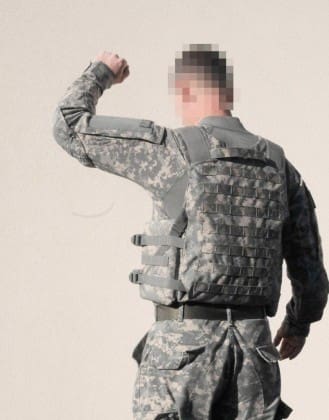
Operationally, the SPCS will not be a replacement for the IOTV but rather issued in addition to. It will be up to the commander, based on METT-T whether or not to use it. Some education will be required so that a commander can weigh the risks of decreased soft armor against threats found in the AO. Specifically, the SPCS offers exactly the same amount of hard plate coverage as the IOTV. However, it offers significantly less soft armor which protects against frag. While there is less coverage, there is also less weight and bulk and this will prove to be a boon to those operating in mountainous areas. In fact, when initially adopted, the SPCS without armor plates weighed in at 6.47 lbs vice an IOTV 9.86 lbs without accessories. OEO-Soldier has already prompted a change to the design of the SPCS to make it lighterweight. The original design presented to the Government featured 1″ of soft armor around the edge of the side plates. The new design already implemented deletes this extra armor and lowers the weight to 5.77 lbs. Now a fully loaded SPCS weighs 21.8 lbs and an IOTV is 31.09 lbs.
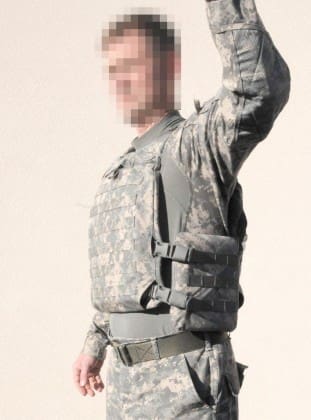
The new SPCS is intended to be compatible with MOLLE equipment and will also accept the newly issued Tactical Assault Platform (TAP). Interestingly, the TAP is currently intended to replace the Fighting Load Carrier in the MOLLE system. Additionally, systems integration has already taken place to fit Land Warrior’s Ground Soldier Ensemble on to the carrier.
So is this story over? I think not. You must remember that the current system fulfills an Operational Needs Statement from theater rather than a larger, more encompassing requirements document. The President’s surge in Afghanistan means that there will be an even larger need for a plate carrier by the Army. Additionally, the Army may decide it wants the capability for other theaters as well. If this becomes the case, COL Cole related that the Army would most likely issue a solicitation based on requirements from the field and insist that the winning design become government owned to facilitate long-term sustainment.
Will the Army learn more about the use of a plate carrier once it is fielded? Absolutely. The Marines are essentially on the third version of their Plate Carrier. They worked with industry to develop a government owned design and tweaked it based on operational feedback. In fact, they just awarded an IDIQ contract partially to KDH to produce additional Plate Carriers in a Government owned design.
So is this a great leap forward for the American Soldier? Yes, if for no other reason than it is better than what he had previously; which was nothing. It will be interesting to see how the Army’s use of the SPCS evolves. Hopefully, this article will serve to dispel some of the misunderstandings associated with this procurement. I know for example, that after learning of the importance placed on weight and ballistic performance and seeing the weight of the KDH, I now understand why it was selected. If you take anything away from this article, remember that the Soldier Protection Demonstration and the GSA procurement were two separate events. The SPD defined and validated the requirement and the procurement satisfied it. Additionally, consider that this acquisition fulfills a new requirement and that over time the Army will learn more about how to further enhance this capability for the Soldier.