GORE-TEX Professional

Archive for the ‘Army’ Category

ERDC Constantly Improving World-Class Computational Capabilities

Wednesday, July 20th, 2022

VICKSBURG, Miss. – The U.S. Army Engineer Research and Development Center (ERDC) is taking care of its employees and stakeholders by perfecting the tools they use, such as the Research and Development Environment (RDE) network. Over the years, the RDE has grown into a suite of tools, services and applications that allows engineers and scientists a high-speed network for performing world-class research for the warfighter and civil works customers.

The U.S. Army Corps of Engineers (USACE) has always used Corpsnet, which is an enterprise system that is used by most USACE districts and divisions, but that isn’t specifically designed for research and development. About twenty years ago, the RDE was developed after ERDC leadership realized the need for a network with more capabilities, and today it is under the purview of the ERDC Office of the Chief Information Officer (OCIO). Robert Walker, the deputy chief information officer, and the rest of the OCIO team are constantly asking themselves: how do we make it better?
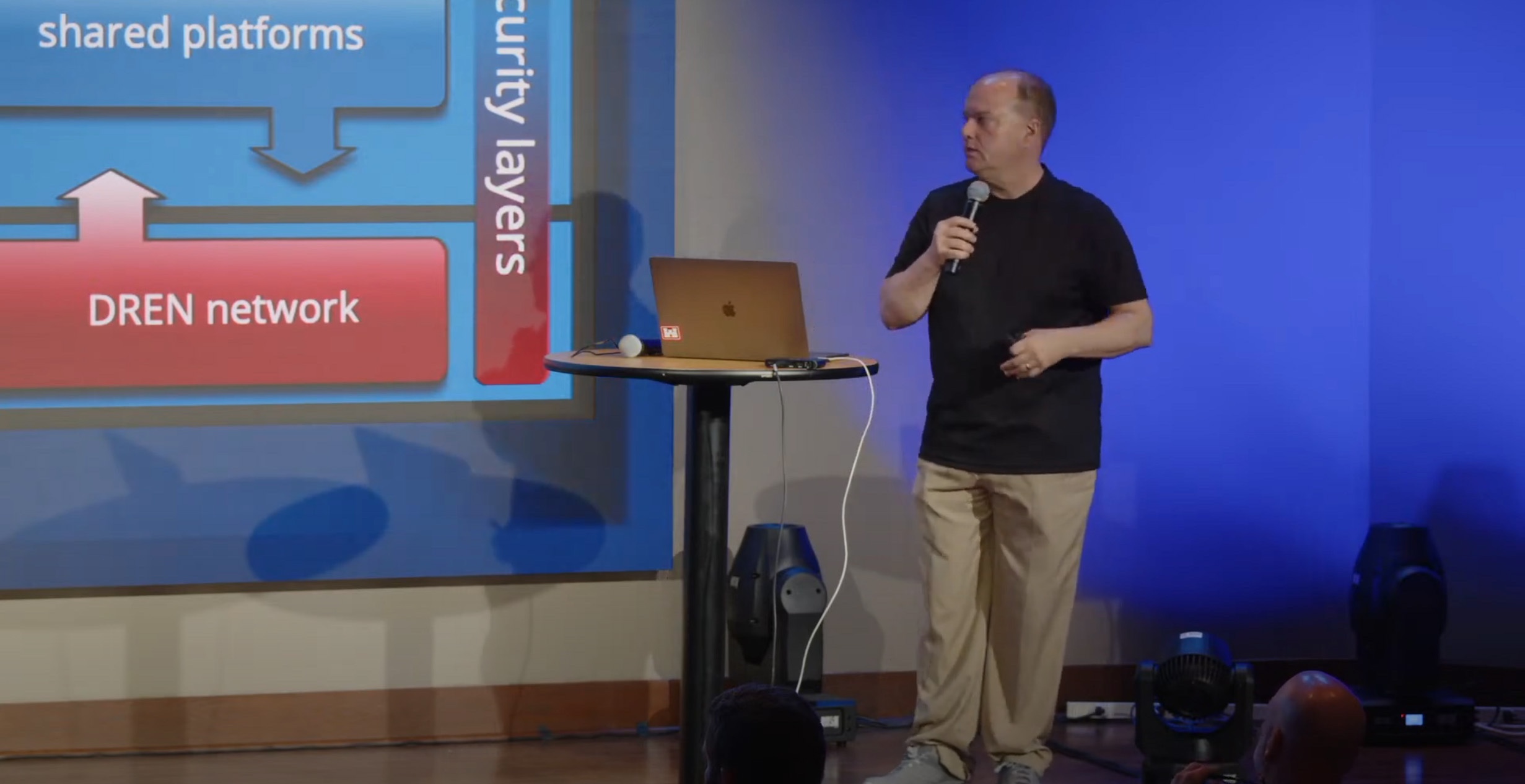
“Every year, if we aren’t improving, then we are not keeping up with industry,” Walker said. “If we want to develop world-class products, we need world-class resources. If we want to attract world-class talent, then we have to give them world-class computational capabilities.”

During the RDE town hall earlier this year, the OCIO team showcased new offerings, which included productivity and time-management tools, cloud-hosting services and the ERDC DevSecOps platform 2.0. DevSecOps, which is short for Development, Security, and Operations, is a suite of tools that allows ERDC software developers to collaborate with cybersecurity and operations teams from the start of the project instead of waiting toward the end.

“Instead of waiting until a project is almost complete, security is able to scan the software from day one so that the developers can find potential security problems early and prepare it for operations much sooner in the process,” said Walker. “This way, when you are ready to officially deploy your product, it’s more prepared for operations from day one.”

Another significant advancement over the years has been the Cloud Computing Environment (CCE), which allows users to request server resources any day of the week or time of the day. The CCE allows users to specify server configurations and storage allocation, instead of being responsible for personal servers or network attached storage (NAS) devices under their desks. Some of the benefits to using the CCE is the baked in security, redundancy, and scalability.
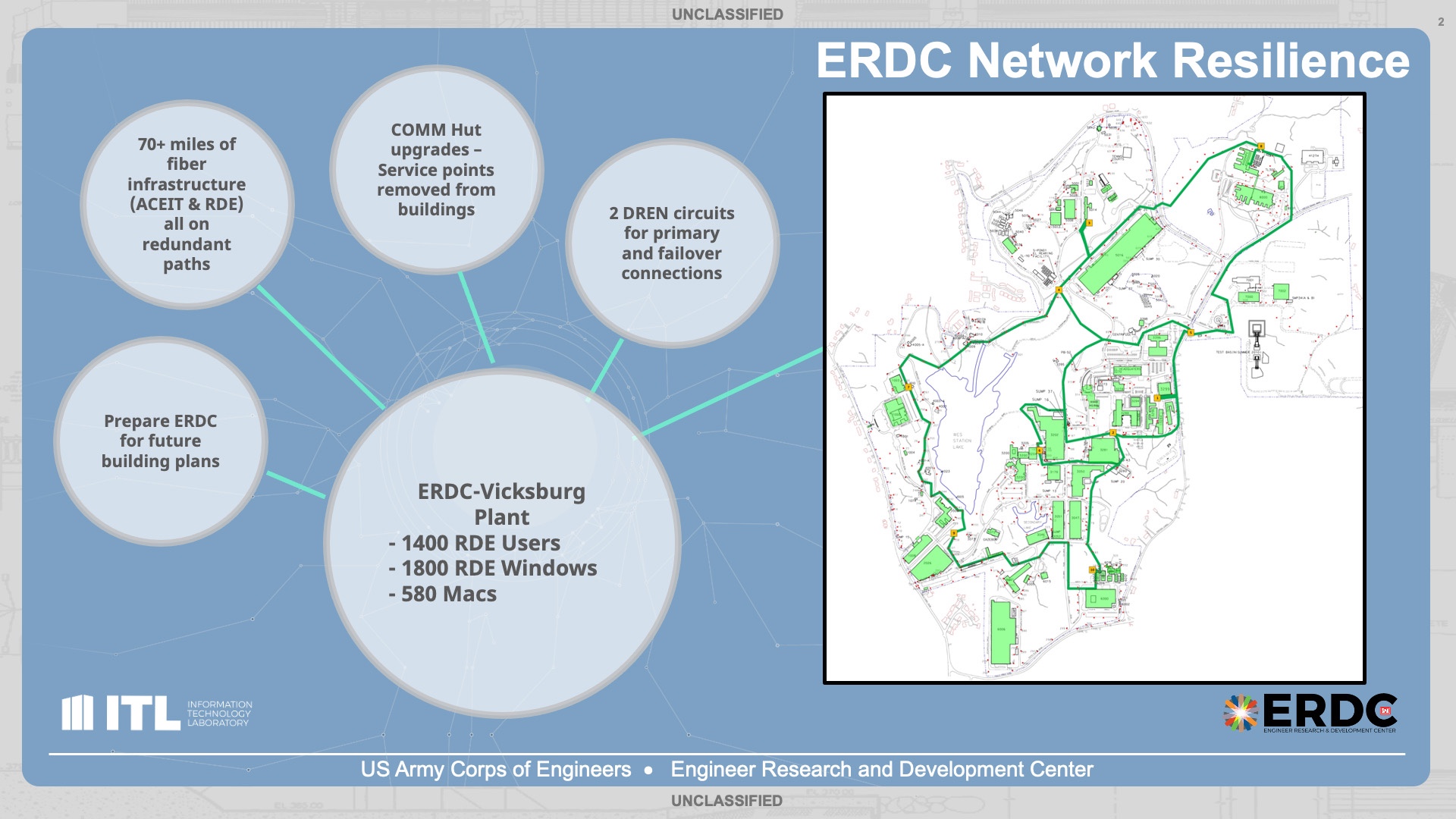
Allyson Windham, the computing services lead on the OCIO team, was one of the driving forces behind getting the CCE running after a policy was released from the DOD saying that servers needed to be in an approved data center.

“Prior to the CCE, folks would purchase servers, put them under their desk, and run their workloads,” said Windham. “A large part of my time when I joined the OCIO team was finding these type of configurations and moving them to the DOD-approved CCE.”

At the RDE town hall, the team also introduced a new capability of cloud platform services on the Azure Information Level 4 (IL4) DOD servers. The capability provides a means for researchers to access the variety of tools that are needed for computational analysis at a much lower cost. The scientists and engineers are only charged for the time spent using the tool, which is much more affective from a financial standpoint.

“ERDC could never afford to purchase, install and manage every computational platform offered by commercial partners,” says Walker. “By acquiring Azure IL4 space, and bringing it directly to our ERDC researchers’ desktops, they can now access all the computational platforms that industry has to offer.”

The enhanced capabilities of the RDE have enabled ERDC to utilize digital twin technology to support the rebuilding of Tyndall Air Force Base. When Hurricane Michael came ashore in 2018 as a category 5 hurricane, it left Tyndall Air Force Base completely destroyed. A partnership was formed to repair the base, and ERDC’s Lance Marrano, a lead researcher in Installations of the Future (IotF), was placed there as a science and technology advisor to assist with navigating technological innovations during the complex reconstruction process.

After listening to the wishes of base leadership, Marrano decided that a digital twin ? a digital replica of physical assets, processes, people, and places — of the base was needed to provide decision-makers with quick and easy access to up-to-date data and analyses during the process of this massive construction project.

“That’s what digital twin technology is about, in as realistic and virtual world as possible, recreating the base, the buildings, the roads, the runways, the utilities, and saying ‘now what does that enable us to do?’” said Marrano.

Marrano worked with ERDC’s Information Technology Laboratory to establish an RDE network segment at Tyndall as a home for the Digital Twin prototype. “Without having the Defense Research and Engineering Network (DREN) connection and the RDE services, the digital twin of Tyndall Airforce Base would not have been executed,” he said.

“If we don’t have the right environment or tools to explore these new innovations, then we simply can’t,” he continued.  “It is vital that we have capabilities that allow us to experiment, prototype and improve without worrying about putting the mission at risk – it allows us to push the envelope.”  

The diligence of the OCIO team has helped position ERDC as a viable competitor against any organization for quality IT computational resources. The staff is constantly learning and training to provide core capabilities and assistance to ERDC engineers and researchers, which ultimately impacts the ERDC mission: supporting the warfighter and the nation.

“We try to keep up with industry so that we can offer our developers and researchers the best tools to help make their job easier – we are really customer focused,” said Windham. “It is challenging, but the reward is offering tools that help different domains; from the warfighter to the environmentalists.”

Claiborne Cooksey, ERDC Public Affairs
US, Moroccan Special Forces Team Up For Inaugural Cyber Training

Tuesday, July 19th, 2022

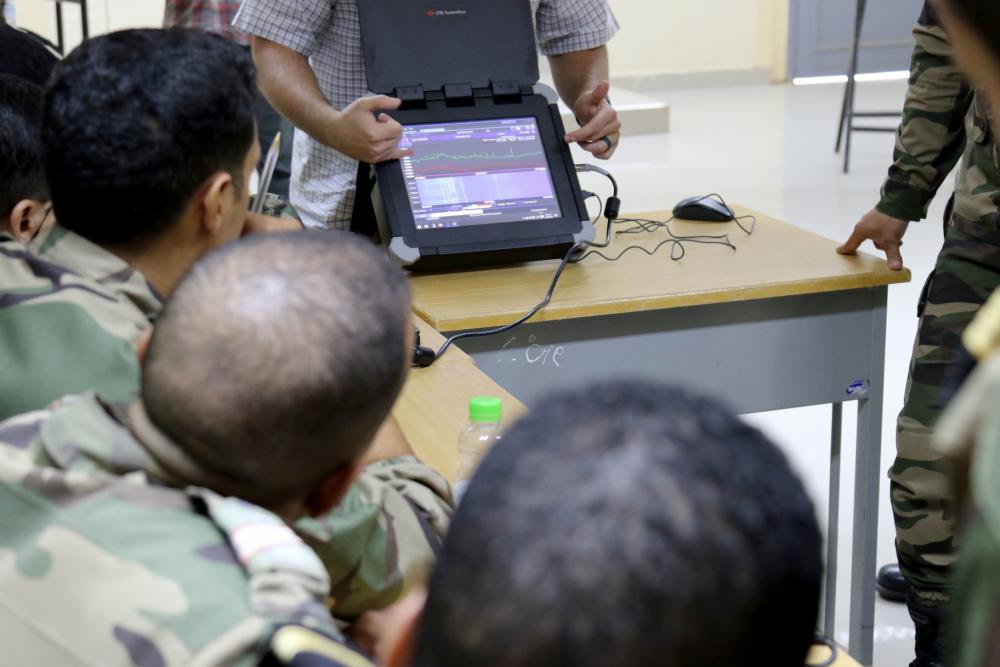
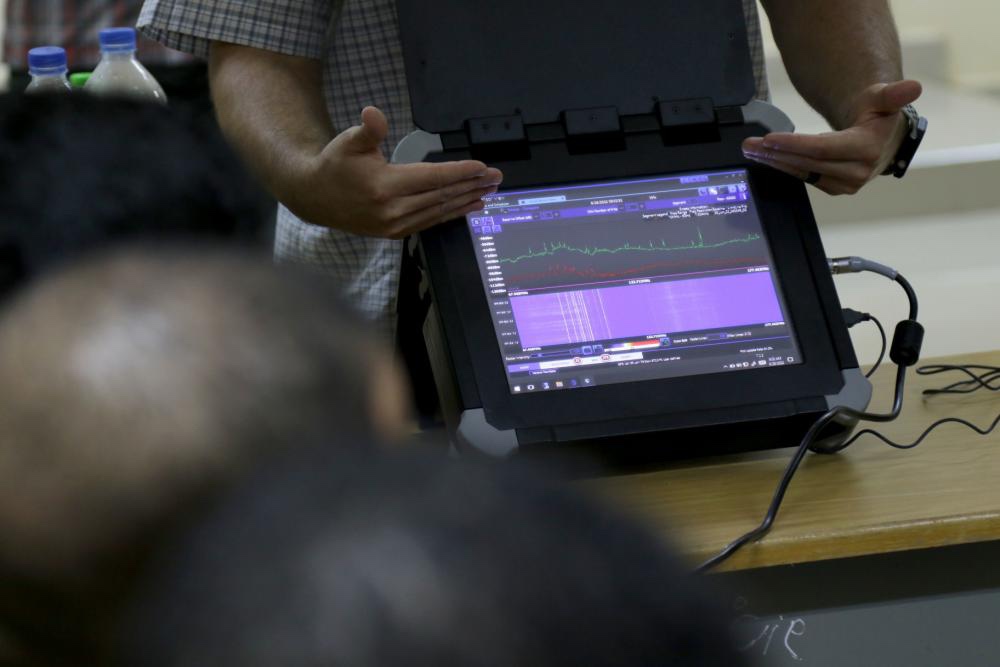
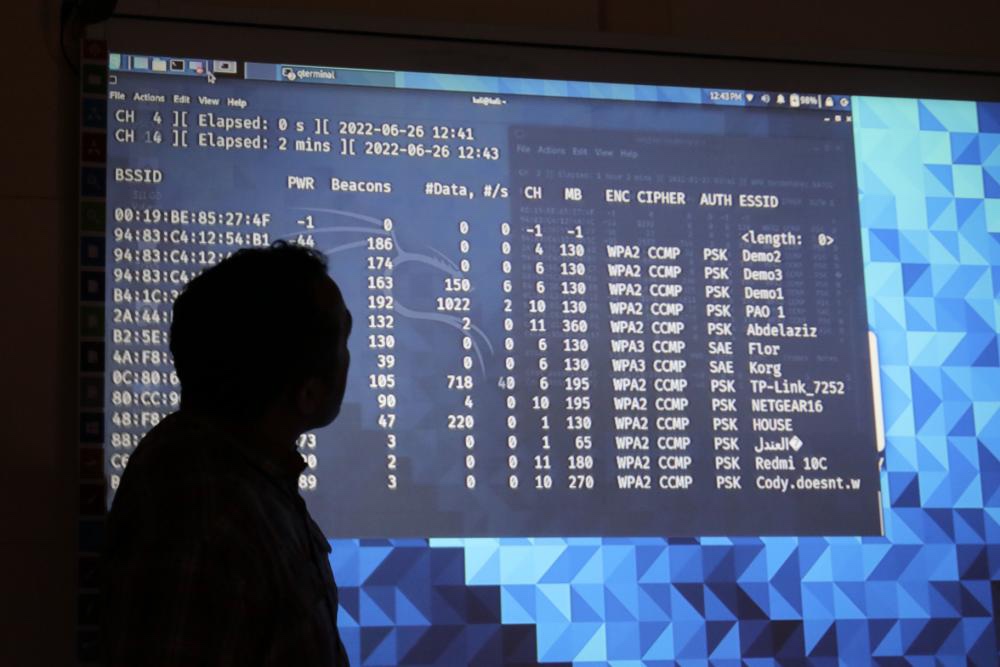
TIFNIT, Morocco – U.S. Army Soldiers with 3rd Special Forces Group (SFG) Tactical Information Support Center, Expeditionary Cyber Team 2, and Royal Moroccan Special Operations Forces (SOF) teamed up to conduct prototype cyber effects training during African Lion 22, June 26, 2022.


African Lion 22, U.S. Africa Command’s largest, premier, joint, annual exercise hosted by Morocco, Ghana, Senegal and Tunisia, June 6 – 30, is a critical opportunity for members of the joint team to build and test their strategic readiness to deploy, fight and win in a complex, multi-domain environment. The cyber training collaboration was the first of its kind and sought to discover how low equity cyber solutions can expand options for key decision makers at the tactical, operational, and strategic levels.


The cyber effects training included hands-on cyber lab demonstrations using commercial tools and comparing them to less accessible high-tech devices. The lead 3rd SFG trainer described the hands-on training as an ‘opportunity to take cyber security to the field and into the mind of each Service Member in a combat situation.’

3rd SFG endeavors to learn, iterate, and eventually offer flexible cyber options at scale while maximizing the indigenous approach through partner forces.

“By actually shifting the focus of training to the modern combat environment, which is now becoming rapidly digital, you create a more potent, lethal force, moving into the future,” stated a member of 3rd SFG.

Building an understanding of multi-domain digital activities would allow U.S. and partner forces to work with more sustainable equipment and better understand digital threats to their missions.

U.S. Africa Command is ready to provide the necessary resources to advance mutual interests and respond to crisis in Africa because of successfully forged and maintained partnerships and demonstrated operational success.

African Lion 22 is a joint all-domain, multi-component, and multinational exercise, employing a full array of mission capabilities with the goal to strengthen interoperability among participants and set the theater for strategic access. More than 7,500 participants from 28 nations and NATO train together with a focus on enhancing readiness for U.S. and partner nation forces.

Story by Charli Turner, U.S. Army Southern European Task Force, Africa

Photo by SFC Katie Theusch, U.S. Army Southern European Task Force, Africa

AFC Cross-Functional Team Tackles Modernization of Air and Missile Defense

Monday, July 18th, 2022

AUSTIN, Texas — The U.S. Army Futures Command Air and Missile Defense Cross-Functional Team, or AMD CFT, based in Fort Sill, Oklahoma, is coordinating and accelerating Army efforts to outpace strategic competitors who have invested heavily in indirect fire and missile capabilities.

The Army’s development of new air and missile defense technologies, which is the largest modernization undertaking of its kind since the Cold War, will serve to defend ground forces against air attacks, as well as protect the infrastructure of U.S. and allied forces against a host of adversary air and missile threats.

While a number of stakeholders are involved in the development, testing and eventual fielding of new air and missile defense systems, the AMD CFT’s specific focus is on strengthening the integration and synchronization of requirements and acquisition processes and resources.

“I’m honored and humbled for this opportunity, and really, to continue this momentum on the modernization path we’ve taken,” said incoming AMD CFT Director Col. Patrick M. Costello.

“The Army transformation that we’re undergoing right now is the biggest in many, many years — bigger than any of us have witnessed during our careers. And the capabilities that we’re bringing forward right now will fundamentally change the way that we are designed, and employ these capabilities, in support of the warfighters out there. So, an exciting time to be here at the CFT and an exciting time to be part of the air defense modernization efforts,” Costello said.

The AMD CFT is currently working on multiple projects that harness leading-edge technologies to protect military personnel and resources, as well as civilian populations.

These efforts include Army Integrated Air and Missile Defense — AIAMD — and its materiel solution, the Integrated Air and Missile Defense Battle Command System — IBCS; Maneuver Short-Range Air Defense — M-SHORAD; Integrated Fire Protection Capabilities — IFPC; and the Lower Tier Air and Missile Defense Sensor — LTAMDS.

AIAMD is a command-and-control program that integrates sensors, weapons and a common mission command capability across an integrated fire control network to provide a single air picture — bringing together many essential layers and systems that are currently functioning disparately.

AIAMD will be enabled by the development of IBCS, a keystone system that will provide a decisive battlefield advantage through weapon and sensor integration and a common mission-command system across all domains.

Once developed, IBCS will deliver integrated fires capability to the warfighter while improving battle space awareness, decision timing and protection against threats in complex integrated attack scenarios.

In December 2021, the U.S. Army’s Integrated Fires Mission Command Project Office awarded a competitive, best-value contract for the low-rate initial production and full rate production of IBCS over the next five years.

The contracted organization, Northrop Grumman, will deliver up to 160 systems to support air and missile defense modernization for the Army and foreign partners. Following a full rate production decision in FY 2023, the contract will enable the program to seamlessly ramp up production to meet fielding priorities.

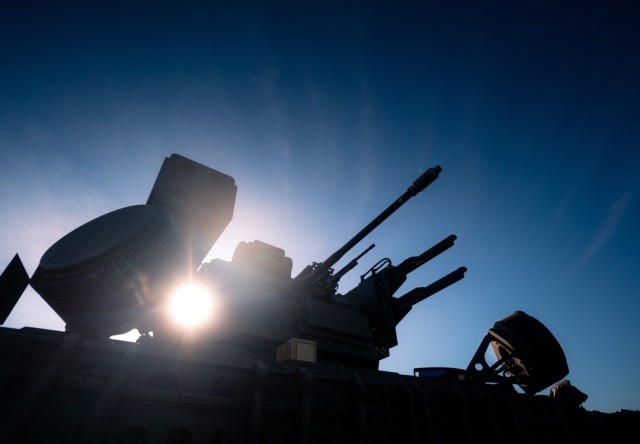
M-SHORAD, which is on track to be fielded to four battalions by fiscal year 2024, is designed to provide Soldiers with a more nimble, safe, survivable and durable mobile air defense system.

The system expertly integrates guns, missiles, rockets and sensors onto a Stryker A1 vehicle to defend maneuvering forces against unmanned aircraft systems and rotary-wing and residual fixed-wing threats.

Initial field assessments of M-SHORAD prototypes enabled by the AMD CFT and its partners have informed improvements, hardware modifications and system upgrades.

IFPC is a mobile, ground-based weapon system that is capable of defending against fixed and semi-fixed assets, sub-sonic cruise missiles and unmanned aerial threats, in addition to fixed and rotary-wing aircraft.

IFPC fills a crucial gap by bridging the space in between short-range and high-altitude air defense, providing the Army with additional options for sensing, targeting and destroying threats.

In September 2021, the Army announced an other transaction agreement award of approximately $237 million to Dynetics for the development of 16 launchers and 60 interceptors as part of an IFPC Increment 2 Prototype.

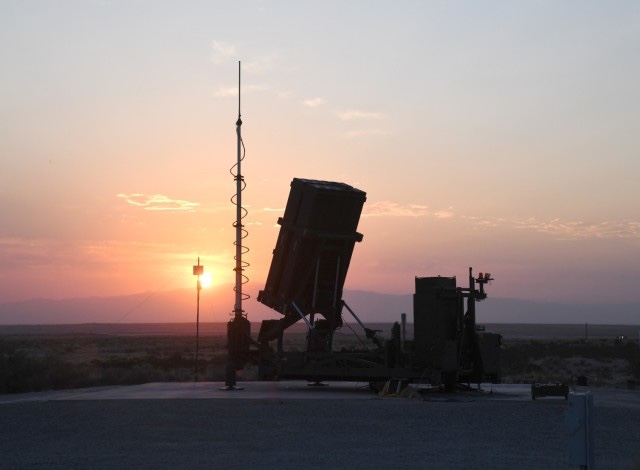
Also included in the IFPC category is the Army’s Iron Dome Defense System, an interim cruise missile defense capability. Iron Dome was tested during a live-fire exercise in June 2021 and will undergo further testing during a missile flight test scheduled to take place by the end of 2022.

LTAMDS is an expeditionary, networked radar developed to be compatible with AIAMD. It provides network sensing, interrogation and uplinking to interceptors in the lower-tier portion of the air and missile defense battlespace in support of IBCS tactical functions.

The enhanced capabilities offered by LTAMDS will improve the Army’s ability to defend against complex integrated attacks and advanced electronic threats.

The Army plans to begin development testing of LTAMDS prototypes at White Sands Missile Range, New Mexico, in late 2022 and is on track to achieve initial operational capability of LTAMDS by late 2023.

For each of its modernization efforts, the AMD CFT helps identify and resolve potential issues early on in new technology concept drafting and initial development, including by facilitating Soldier touchpoints that illuminate end user needs and concerns well ahead of system fielding.

The CFT also engages with members of industry and congressional/budget staff to ensure the Army’s AMD program is well-resourced and utilizing the most effective technologies available to address future threats.

It is through these activities and various others that the AMD CFT is able to fortify the Army’s ability to protect maneuvering forces and critical Army and Joint Force personnel and assets, as well as converge weapon and sensor awareness and activities to pave the way for transformational warfighting.

“As a senior air defender, it’s incredibly satisfying to see, at this point in my career, the amount of energy and the amount of direction and leadership and resourcing those in the Army and above us have provided for this modernization. It is making a difference and will continue to make a drastic difference for our Army and for our Joint force, and for our partners,” said Maj. Gen. Brian W. Gibson, who served as the AMD CFT Director from 2019 to 2022.

By Maureena Thompson, Army Futures Command

New Data Warfare Company Activates as Beacon of Innovation for XVIII Airborne Corps

Saturday, July 16th, 2022

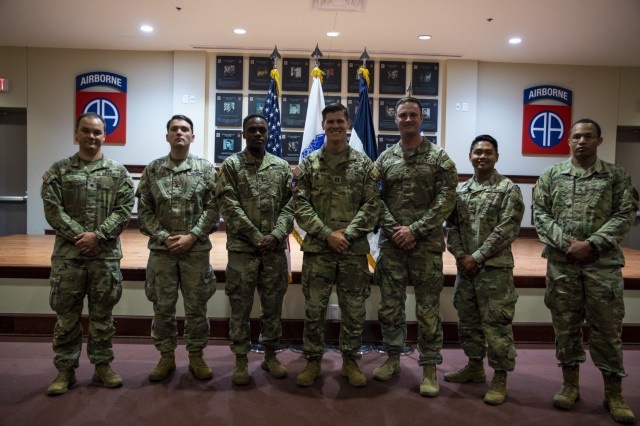
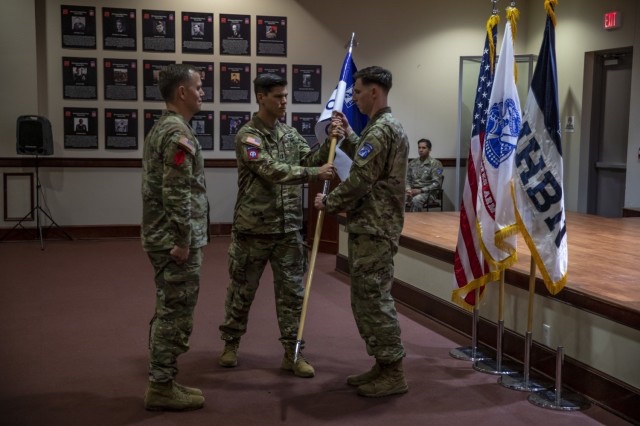
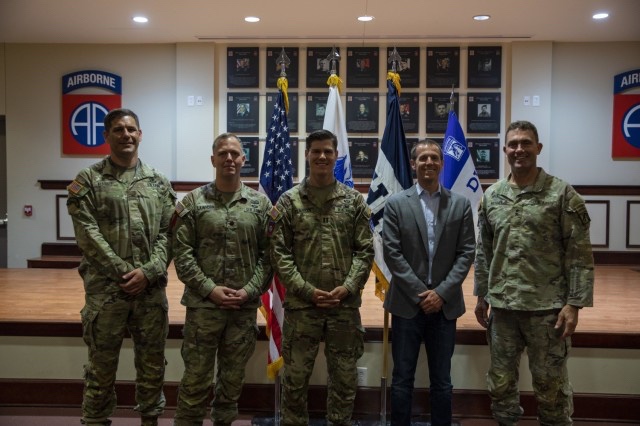
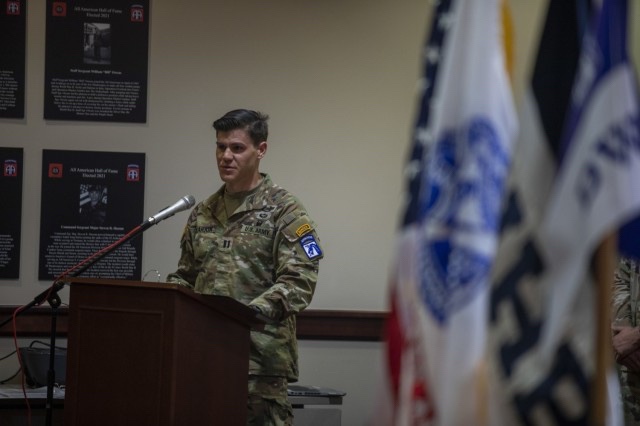
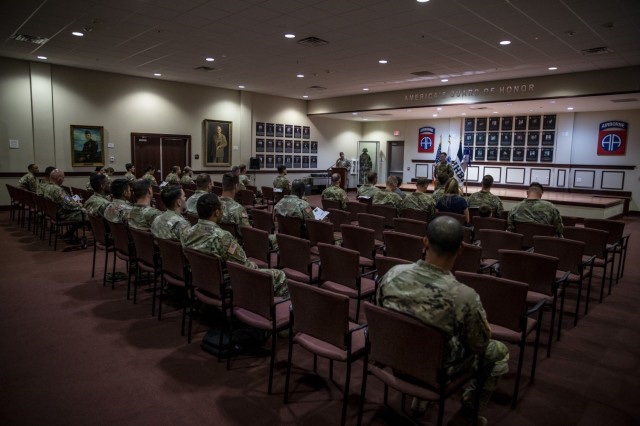
FORT BRAGG, N.C. – The Data Warfare Company (DWC), Headquarters and Headquarters Battalion, XVIII Airborne Corps, was officially activated on June 1, 2022 during a ceremony at Fort Bragg, N.C.

This innovative unit was specifically requested by Lt. Gen. Christopher T. Donahue, the commanding general of the XVIII Airborne Corps and Fort Bragg as America’s Contingency Corps continues to build on a culture of innovation.

The activation of the DWC will set conditions for an enduring force structure across the U.S. Army which allows and empowers units to provide data-centric problem solving to enable command and control and develop tools to improve how the XVIII Airborne Corps fights.

One of the main missions of the company is to leverage the unique skill sets from Soldiers across the Corps to assist with the use of artificial intelligence to enable Corps initiatives.

“The DWC allows individuals taking on different projects within the Corps and actually operationalizing them,” said Capt. Christopher Clarkin, the unit’s commander. “One of the biggest hurdles we find in a large organization like the Corps, is how to take people from small units who have specific issues that only they see, but are important because they help fulfill the Corps’ mission.

Some of the current capabilities of the unit include Soldiers who have skills such as software engineers, program managers, cloud engineers, innovation officers, and who understand digital infrastructure. The unit is currently small compared to traditional Army companies but will be growing and improving as more inbound personnel arrive this summer.

Soldiers in the DWC recently put these capabilities on display when they were called upon to provide support for our European Allies and partners with critical software for warfighting systems.

Many of the Soldiers within the unit are also trained software engineers who are graduates of the TRON program.

TRON is an intensive 12-week software development program teaching critical skills in software engineering to Soldiers by providing them access to various tools and education. The course is a collaboration between the Corps, Joint Special Operations Command and the U.S. Air Force, to send Soldiers through the program to enhance the ability of the Soldiers who get assigned to the DWC and help the Corps achieve its mission.

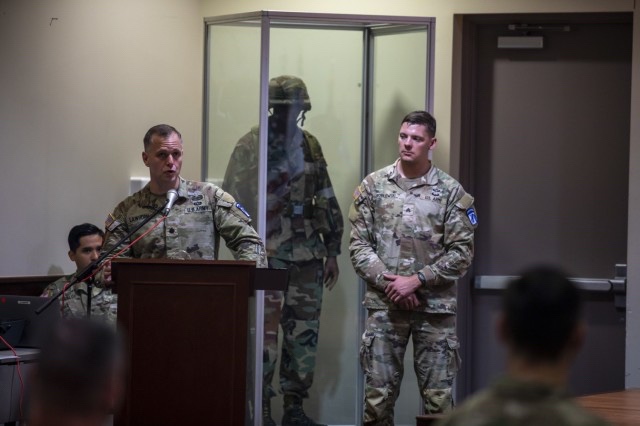
“The establishment of the DWC is a focal point that will allow the Corps to achieve its vision,” said Lt. Col. Jeremy D. Lawhorn, the commander of Headquarters and Headquarters Battalion, XVIII Airborne Corps. “Capt. Christopher Clarkin has been specifically selected to command this company based on his requisite knowledge both in leading and in innovating. I can think of no other person to lead this company.”

The XVIII Airborne Corps is on the leading edge of innovation within the U.S. Army Forces Command and always seeking improvement. In order to remain at the forefront of innovation, the Army must become more agile and adaptable.

The DWC allows for faster innovation maintaining the advantage as we fight and win the nation’s wars.

“Innovation is a top priority for our Corps commander,” Lawhorn said. “Creating this company represents the Corps’ acknowledgment that we must innovate or become irrelevant . As America’s Contingency Corps, we have a moral obligation to the people we serve and the organization to innovate. To prepare our Soldiers, Army Civilians and Families, to ensure that we can deploy, fight, win, survive and thrive.”

The U.S Army is an army in transition that must win in the current environment and build for the future. Everyone, regardless of rank, is empowered to solve problems and identify opportunities to improve how we fight and how we take care of our Soldiers, Civilians, and Families.

Units like the DCW highlight the XVIII Airborne Corps’ dedication to foster and sustain an innovative culture while capturing initiatives that will continually improve the U.S. Army as a whole.

Story by SPC Joshua Cowden
Photos by Nathaniel Gayle

Testing the Limits of the Improved Ribbon Bridge

Thursday, July 14th, 2022

VICKSBURG, Miss. — In today’s ever-changing world, technology is advancing at lightning speed. For the U.S. Army that means constantly evolving vehicles, weapons and systems. With that in mind, the U.S. Army Engineer Research and Development Center, or ERDC, has partnered with the U.S. Army Program Executive Office Combat Support & Combat Service Support’s Project Manager Bridging to test high military load capacity vehicle weight limits of the Improved Ribbon Bridge, known as the IRB.

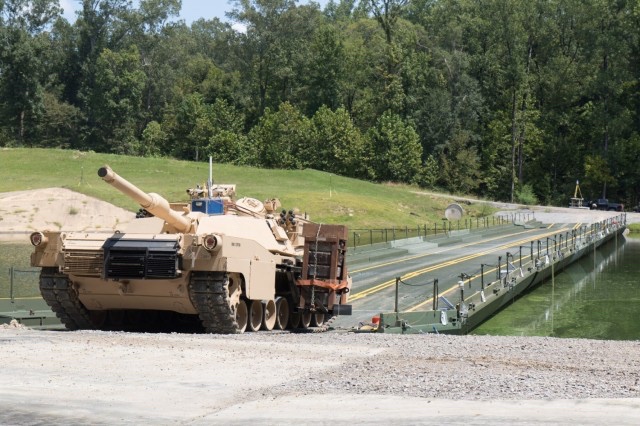
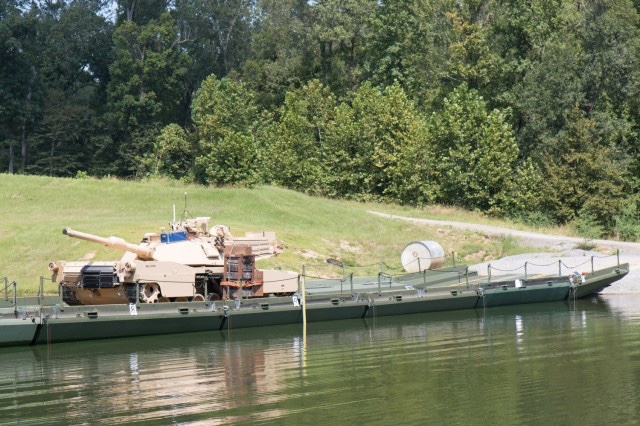
The IRB floating bridge system is used to transport weapon systems, troops and supplies over water when permanent bridges are not available. It provides wet-gap crossing capabilities either as a floating bridge or as a multi-bay raft for tracked and wheeled combat and tactical vehicles and has seen extensive combat operations with the Army and the U.S. Marine Corps since 2003.

“The family of high military load class bridging program is a program that we have here at ERDC that leverages subject matter experts across the ERDC to evaluate the structural response of the IRB when subjected to extreme loading conditions,” said Stephanie Robert, program manager and research civil engineer with the ERDC’s Geotechnical and Structures Laboratory. “We are able to look at the IRB and test it against different loading and hydrodynamic conditions to determine operational conditions in which the IRB can be deployed and subject it to increased weight and heavier vehicles.”

The multi-laboratory project reaches across the organization and includes personnel from the Mississippi Army National Guard and Anniston Army Depot. The project itself will span two years and has three testing phases: a full-scale still-water prototype test, a small-scale model test and computational modeling and analysis.

The first test phase, completed in September 2021, consisted of full-scale water testing of several military vehicles at various speeds and weights.

“We executed a fully successful test series with the IRB here at one of our testing basins,” said Dr. Wes Trim, a research mechanical engineer with ERDC Geotechnical and Structures Laboratory.

“The IRB is a complex float bridge system, and it’s difficult to test it under laboratory conditions,” he said. “We developed, designed and executed a full-scale still water test of the bridge, specifically aimed toward evaluating it against high military load capacity vehicles, by incrementally increasing our loading cases, not jumping into the heaviest most potentially damaging load first, but rather ramping up and taking a lot of measurements and inspections in between to safely approach our highest load targets.”

The team has since moved to the small-scale model testing phase of the project which will replicate the full-scale test and began in October 2021.

“We are going to take our results from our full-scale static flow testing, and we are going to validate it with our small-scale model testing,” said Robert.

“In full-scale, we had still water conditions, so there was no flow going through the channels,” she continued. “It was just the bridge out there, and we ran our vehicle across. Now we’re introducing hydrodynamic effects. We’re introducing river velocities and speeds across it that we didn’t test out in the field, so we’re able to bridge that gap.”

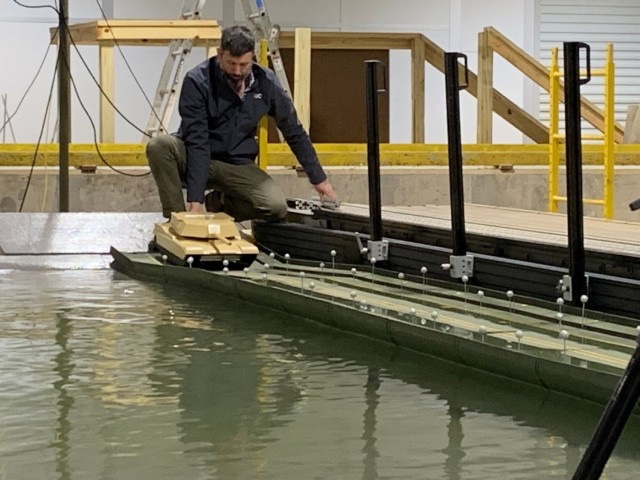
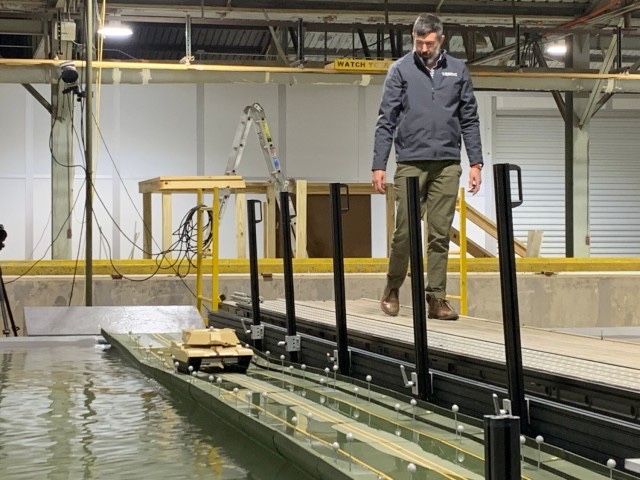
“We are doing scaled testing on the IRB,” said Dr. Duncan Bryant, a research hydraulic engineer with the ERDC’s Coastal and Hydraulics Laboratory. “We take a lot of care to make sure that we choose a scale where the hydrodynamic forces that we get here are captured and can be correlated up to a larger scale.”

The two tests are designed to complement each other with the small-scale test incorporating hydrodynamic aspects such as flow and depth.

“We can introduce river velocities, so we can ramp the river velocity up or down depending on what we are trying to simulate,” said Bryant. “As the water comes in, it impacts the IRB and changes the hydrodynamics. There is an operational space where it’s just too much flow for the bridge, and as you add more weight, that operational space changes. The way to do that safely is a scaled model. Here we don’t have to worry about sinking a tank or sinking a bridge, and we can try a lot of different scenarios out without any risk to anybody or any property.”

“We’re able to test conditions that we weren’t able to test in the full-scale here in a safe environment,” said Robert. “We’ll be able to determine river velocities. We’ll be able to determine max crossing speed of vehicles. We’ll be able to determine the type of crossings. We’ll be able to determine exactly how many bays we need in order to support the conditions that we are testing.”

The final phase of the project will begin when small-scale testing is complete. All data will go into a computational model to look at all loads and conditions the team was unable to test with the previous methods, which will allow the warfighter to know under what operational conditions they can safely cross the IRB.

The IRB is a robust bridge,” said Trim. “It has significant capability. It’s impressive the amount of load that it’s actually able to carry.”

By Carol Coleman

US and Finnish Soldiers Kick Off Summer Exercise

Tuesday, July 12th, 2022

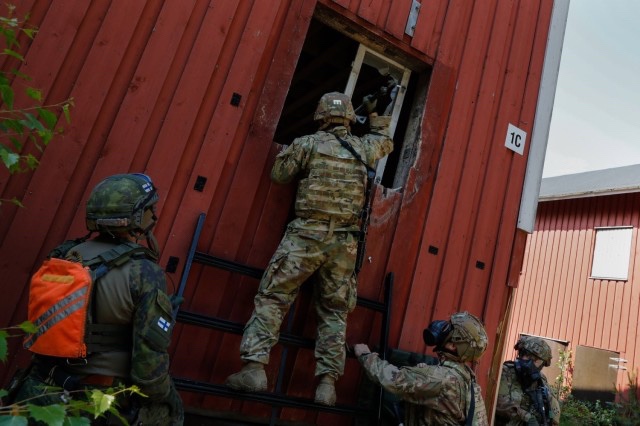
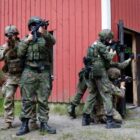
HELSINKI – Soldiers of the 3rd Brigade Combat Team, 82nd Airborne Division; the 3rd Armored Brigade Combat Team, 4th Infantry Division; and the Guard Jaeger Regiment of the Finnish Army, conducted bilateral training in Santahamina Island, Finland, June 28, 2022.

Over 200 U.S. Soldiers conducted urban operations training alongside Finnish soldiers, learning tactical skills from each other in order to operate seamlessly with partner nations.

The training is part of the Finnish Summer Exercise, a training exercise conducted in various bases throughout Finland, running from the end of June to September.

“Finland has been great. We appreciate the hospitality. From a military standpoint, the training has been exceptional. The Guard Jaeger Regiment has been very accommodating for anything we need,” said U.S. Army Lt. Col. Jacob Teplesky, commander of the 4th Squadron, 10th Cavalry Regiment, 3rd Armored Brigade Combat Team, 4th Infantry Division.

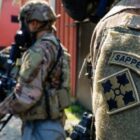
During the exercise, U.S. engineers and sappers conducted training on breaching, demolitions, and have learned how to use Finnish type charges they’ve never experienced before, said Teplesky

The Guard Jaeger Regiment’s primary mission is to train soldiers for urban operations. These soldiers would defend the capital as part of wartime units formed by the regiment.

“It’s very important, the cooperation between Finnish and U.S. forces. I think you will continue to see, as we continue to expand these exercises, throughout the summer as … we move from squad and platoon level, to a battalion command post exercise, we fly our unmanned aerial systems and we shoot a mechanized gunnery,” said Teplesky.

The 3rd Armored Brigade Combat Team, 4th Infantry Division is among other units assigned to the 1st Infantry Division, proudly working alongside regional security partners to provide combat-credible forces to V Corps, America’s forward deployed corps in Europe.

SPC Hassani Ribera Soto

AFC Releases Army Medical Modernization Strategy

Friday, July 8th, 2022

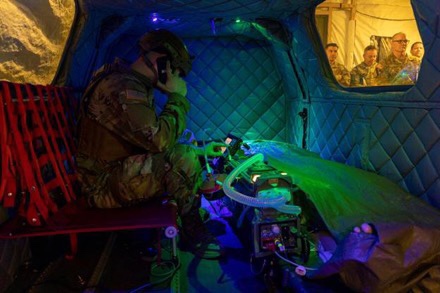
AUSTIN, Texas – U.S. Army Futures Command released a comprehensive Army Medical Modernization Strategy today that clarifies the vision and enhances the cohesion of future force health care activities.

“Soldiers are at the heart of our mission. Putting in the work now to ensure that Soldiers have access to cutting-edge health care equipment and resources for years to come is a core element of Army modernization,” said Lt. Gen. James M. Richardson, Acting Commanding General of Army Futures Command.

“The Army Medical Modernization Strategy is important because it describes in detail how the Army will work alongside the Joint Force to provide outstanding health care to the Future Force. The strategy calls for activities that will increase our ability to deliver agile emergency medicine on the battlefield, maintain well-equipped hospitals and medical facilities at home and overseas, and support and develop highly talented health care personnel,” Richardson explained.

The 20-page strategy document seeks to improve the integration and modernization of mission-critical medical resources and proficiencies to ensure the Army Health System is well-equipped to provide highly adaptive and effective care on and off the battlefield for years to come.

The strategy will guide the requirements, priorities and direction of Army medical modernization efforts, including in areas of advanced medical research and Army Health System doctrine, organization, training, materiel, leadership and education, personnel, facilities and policy analysis.

Developed by Army Futures Command headquarters in collaboration with multiple Army and Department of Defense medical organizations and stakeholders, the Army Medical Modernization Strategy fully aligns with and supports the Army Modernization Strategy.

Richardson is scheduled to sign the strategy document during a ceremony at Army Futures Command headquarters in Austin on the afternoon of July 7. Lt. Gen. R. Scott Dingle, Army Surgeon General and Commanding General of U.S. Army Medical Command and Col. James Jones, Director of the Medical Capability Development and Integration Directorate at the U.S. Army Medical Center of Excellence, will also be in attendance at the event.

AFC Communication Directorate

US Army Photo by Austin Thomas, Army Futures Command

Army Publishes Optionally Manned Fighting Vehicle (OMFV) Request for Proposal (RFP)

Wednesday, July 6th, 2022

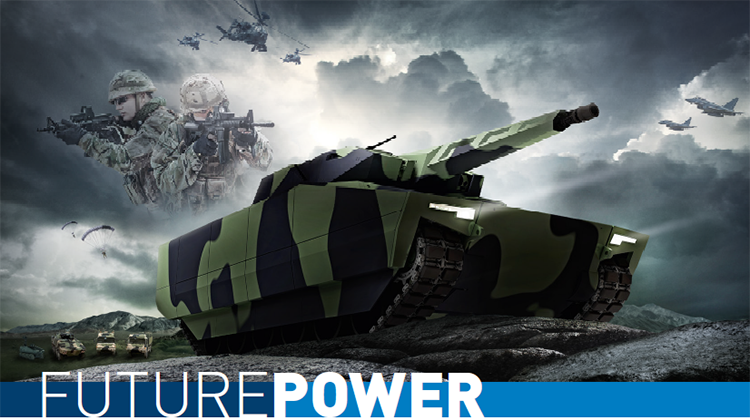
The Army’s search for a Bradley Fighting Vehicle replacement took another step forward last week when they released a request for proposals to industry for Optionally Manned Fighting Vehicle (OMFV) Phase 3 and 4 Detailed Design, Prototype Build and Test Effort.

The last phase saw five companies involved: American Rheinmetall Vehicles, BAE Systems Land and Armaments, General Dynamics Land Systems, Oshkosh Defense, and Point Blank Enterprises. As a full and open competition, this latest round opens the program to additional comers, including foreign companies.


American Rheinmetall Vehicles Lynx

No matter how many end up bidding, only three will be down-selected for phases three and four which will take place this fall. Those companies will build a minimum of seven prototype vehicles with up to four additional prototypes and well as two ballistic hulls, turrets, and armor coupons. A phase 3 and 4 contract is worth up to $903 Million.

Like the Bradley, OMFV must carry six dismounts, with a crew of two. Reportedly, the Army envisions six OMFVs per platoon, to carry a minimum of 30 soldiers total with room for enablers in addition to close combat forces within the Armored Brigade Combat Team.

While the system must be capable of optional manning, via remote control, the Army foresees that eventually, it will be capable of autonomous movement. There are currently plans to hand off autonomous target engagement to machines although ISR and target engagement sensors are already being used to look for situations of interest to alert the human-in-the-loop.

While Infantry and Armor NCOs may currently earn an Additional Skill Identifier for operations of ground robots, the service is considering development of a non-accessions MOS of 19R for CMF 11 and 19 NCOs in grades SGT – SFC to operate the suite of remotely operated capabilities currently under development.