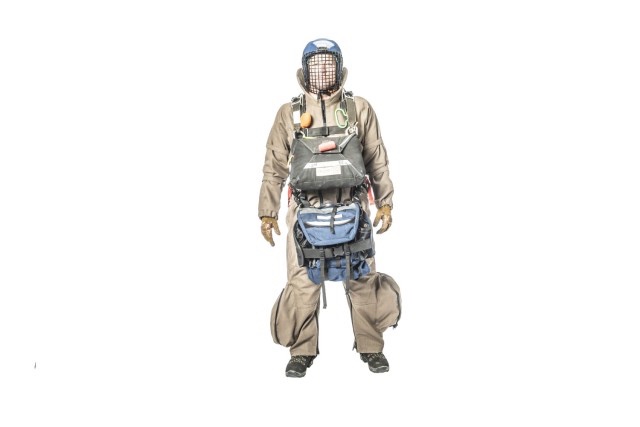
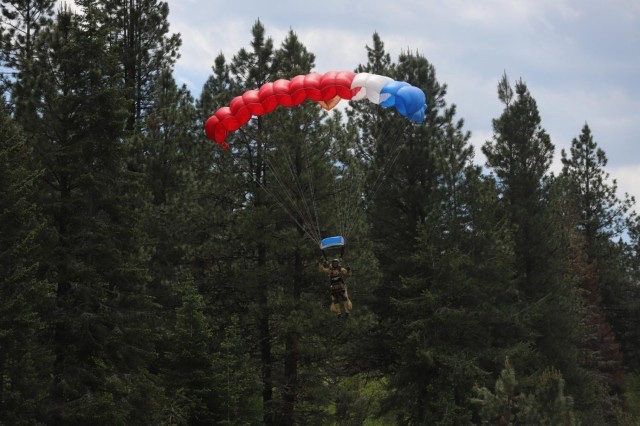
BOSS-Xe from Wilcox Industries

Archive for the ‘Army’ Category

US Army’s Precision Fires Software Upgrade Delivers Enhanced Operational Picture, Usability

Saturday, April 2nd, 2022

ABERDEEN PROVING GROUND, Md. — Thanks to a key software upgrade, dismounted Soldiers are receiving the most up-to-date common operational picture of fires assets across the battlefield as they submit calls for fires to artillery battalions.

Earlier this month, personnel from Product Manager Fire Support Command and Control conducted new equipment training and new equipment fielding to the 2nd Battalion, 319th Field Artillery Regiment, assigned to the 2nd Brigade Combat Team, 82nd Airborne Division at Fort Bragg, North Carolina, rolling out an upgraded version of Precision Fires-Dismounted software known as PF-D Block 2.

PF-D is a software program residing on Nett Warrior End User Devices used by forward observers and fire support teams to transmit and receive fire support messages over standard military line-of-sight, high-frequency and satellite communications radios.

“Since transitioning to a software only program, PF-D has modernized mission command for Field Artillery forward observers,” said Lt. Col. Jason Carney, Product Manager for FSC2. “The Block 2 upgrade is ensuring those warfighters have the right information at the point of need to enable mission success for fire support teams.”

This fielding upgrades the legacy PF-D Block 1 software with a newer version that aligns with the Mobile Handheld Computing Environment and incorporates updates directly based on input from Soldiers.

“The PF-D Block 2 software was developed with Soldier-centered design in mind, which is why their feedback and input is so critical to the design of a well-accepted user interface that caters to the next generation of Soldiers that grew up on smart devices,” said Maj. Jonathan Hardin, assistant product manager for PF-D.

Additional improvements over PF-D Block 1 include adopting the Android Tactical Assault Kit infrastructure to run PF-D as an ATAK plugin, enabling maneuver and fires data on a single map. Resource utilization has been reduced since NW and PF-D are operating in one application rather than separate instances, resulting in a reduced memory footprint, reduced application overhead, and faster response times to user interaction. The PF-D Block 2 system also runs on the most current NW Samsung Galaxy S20 EUD hardware, so interaction with the unit is faster and more efficient than the previous generation of hardware.

Product Manager Handheld, Manpack and Small Form Fit, assigned to Project Manager Tactical Radios, participated in a follow-on practical exercise to test capability and interoperability with newly fielded tactical radios — Two-Channel Leader Radios — and waveforms — Mobile User Objective System and TrellisWare Scalable Mobile. PdM FSC2 also collected usability and training feedback from 2nd Brigade Combat Team, 82nd Airborne Division, which will deploy to the Joint Readiness Training Center later this month and exercise PF-D Block 2 in a near-combat environment.

As part of Block 2 development, PdM FSC2 conducted developmental operations with the 3rd Infantry Brigade Combat Team, 25th Infantry Division in Hawaii last year, inviting representatives from the Army Capability Manager Fires Cell-Targeting and the Fires community at-large. DevOps and a focus on user-centered design have led to key improvements to the PF-D user interface and workflow optimization for sending free text messages between echelons.


“To meet Soldiers’ evolving battlefield needs, we include them in our development efforts early, often and throughout the entire life cycle process,” said Dr. Pam Savage-Knepshield, Human Systems Integration research psychologist for PdM FSC2, adding that the HSI team will continue to gather feedback post-fielding to incorporate lessons learned from real-world system use in operational environments.

The initial PF-D Block 2 baseline is fielding as part of Capability Set 21 and is being coordinated across various network stakeholders.

“We are working closely with PEO Soldier to identify where we can align with the Nett Warrior fielding schedule,” said Hardin. “As a software-only Program of Record, PF-D is dependent on the hardware and coordination is important to align fielding priorities.” Subsequent fielding in FY22 and FY23 are aligned to the Army’s Integrated Tactical Network fielding schedule.

Follow-on enhancements to PF-D are aligned to Capability Set 23 and will offer additional capabilities such as sharing position location information/situational awareness data with maneuver units over the new Secret-and-below TSM radio network.

PdM FSC2 also plans to retouch units previously fielded with PF-D Block 1 who do not appear on the ITN fielding schedule, including field artillery battalions of the 10th Mountain Division.

By Justin Eimers

Army Prototype Uses Windshield Washer Fluid to Power Soldier Electronic Devices

Friday, April 1st, 2022

AUSTIN, Texas – The Army recognizes the need to provide future Soldiers with more durable and reliable energy sources, and is experimenting with a variety of new and creative solutions to deliver the power required for tech-supported warfighting.

One such innovation uses commonly available, filtered windshield washer fluid — which contains the key ingredient methanol — to recharge Soldiers’ mission-critical electronic devices – such as radios and situational awareness aides – while on the go.

The tool, referred to as the Soldier Wearable Power Generator (SWPG), is a small and mobile fuel cell capable of rendering power through innovative thermal energy technology.

Developed in partnership with UltraCell, the SWPG weighs 5 pounds, is designed to be Soldier-worn on a back plate or carried in a backpack, and can run off either filtered windshield washer fluid or a commercial methanol/water mix.

When filtered properly, 1 pound of windshield washer fluid can provide enough energy to charge the equivalent of three Conformable Wearable Batteries that weigh 7.8 pounds; the SWPG’s refillable cartridges can be as small as 1 pound or as large as 24 pounds, depending on charging needs.

Beyond charging individual batteries, the SWPG is equipped to directly support tactical, software-based systems such as Nett Warrior. It can also feed battery-charging power scavengers, such as the Universal Battery Charger-Lite and hubs like the Integrated Soldier Power and Data System-Core. While the SWPG provides a 50-watt base load on its own, it can be paired with rechargeable lithium ion batteries to help fuel hybrid charging systems that offer increased power surges.

The apparatus, which does not get excessively hot or cause ventilation issues for the Soldiers wearing it, seeks to address the Army’s small unit power requirement of providing on-the-move recharging capabilities that extend battery life and minimize the need for frequent battery exchange or reliance on heavy generators.

The Army’s Command, Control, Communications, Computers, Cyber, Intelligence, Surveillance and Reconnaissance (C5ISR) Center leads the service’s applied research and development in energy storage and power generation component technologies.

“Army researchers are continually working on solutions to meet Soldiers’ anticipated needs during this time of rapid modernization,” said Marnie Bailey, C5ISR Center’s Power Division Chief. “The SWPG is the latest example of using our in-house expertise to enable greater Soldier lethality.”

In addition to being compact, lightweight and more efficient than traditional recharging methods, the SWPG is also significantly quieter than conventional gasoline or diesel-powered generators — an important consideration in combat settings. The reception to the device has been positive, with Soldiers saying that the system does not interfere with their ability to conduct their operations.

The SWPG is just one of the unique technologies undergoing field assessment during this month’s Army Expeditionary Warrior Experiment (AEWE) at Fort Benning, Georgia.

The experiment, which is hosted annually by the U.S. Army Maneuver Center of Excellence, takes a closer look how small unit innovations — those geared toward advancing capabilities at the Soldier and squad levels — can have powerful impacts on Soldier maneuver, lethality and survivability.

Insights gathered during AEWE inform the development of priority warfighting capabilities and support the ongoing modernization work of Army Futures Command Cross-Functional Teams. For example, previous AEWE events helped to shape iterative SWPG prototypes by incorporating valuable Soldier feedback, which was then used to tailor and improve the new device.

“AEWE serves as an innovation engine, providing collaboration opportunities and Soldier touchpoints that enable capability developers to rapidly iterate tactical solutions,” said Col. Christopher Budihas, Director of the Army’s Maneuver Battle Lab, adding that “the SWPG is a great example of what this innovation engine can produce.”

By Maureena Thompson, Army Futures Command

Project Director Soldier & Squad Integration Helps Forge Relationship Between PEO Soldier and USASOC

Thursday, March 31st, 2022

FORT BELVOIR, VA – Project Director Soldier & Squad Integration (PD S&SI) hosted a side-by-side gear comparison between Project Executive Office (PEO) Soldier and U.S. Army Special Operations Command (USASOC) on Fort Belvoir, March 8-10.

PD S&SI held an event at the Soldier Integration Facility on Fort Belvoir, designed to provide a familiarization of selected items from Project Manager Soldier Survivability (PM SSV) and USASOC’s respective portfolios.

“We put the event together and facilitated bringing everyone in at the same time,” said Christopher Baker, survivability and power lead for the operational synchronization team for PD S&SI. “USASOC’s chain of command believed that they could realize some cost savings by leveraging the work that PEO Soldier is doing and what they’re fielding. The most interest and discussion were around the protective equipment, helmets and body armor, and the differences between what PEO Soldier fields and what USASOC has right now.”

Product Manager Soldier Protective Equipment (PdM SPE) displayed the modular scalable vest (MSV), the blast pelvic protector (BPP) and the ballistic combat shirt (BCS). SPE personnel went over the capability and functions of the MSV, BPP, BCS, their threat levels and the differences between the Enhanced Small Arms Protective Inserts (ESAPI) plates and the legacy ESAPI plates. The SPE presentation highlighted the Army’s focus on increasing protection but slimming down on weight.

“A lot of the questions we received were predominantly on sizing and the kinds of threats our plates stopped,” said Capt. Kim Pierre-Zamora, assistant product manager for PdM SPE. “For us, the key message we want to convey to our audience, especially the Special Forces community, is that not only are we scaling back on these extra areas of redundant coverage or parasitic weight, but we’re also able to scale up the coverage depending on what they’re doing, where they are, and their commander’s intent.”

“Not only are we looking to make Soldiers lighter and more mobile, but also more lethal. Because if they can move enough to avoid a threat, they can engage that much better.”

The gear comparison not only presented an opportunity for USASOC personnel to get their first hands-on look with gear currently fielded by PEO Soldier, but it allowed for in-depth discussion of what goes into developing and producing that equipment.

“From my perspective, especially working in Future Capabilities, it’s good to see where the Army is with their equipment,” said Lt. Col. Rachel Cepis, S8 Future Capabilities Director, 95th Civil Affairs Brigade. “At the tactical level, you hear Soldiers sometimes complain and say, ‘why is this like this?’ or ‘when are we going to get this?’ Therefore, it is good to be able to see what is out there and being developed. It’s going to be helpful for me to be able to pass that message on to other Soldiers.”

The gear comparison event was the first step in developing the relationship between PEO Soldier and USASOC, with the future collaboration already in the works. Within the next six months, a future follow-on event, hosted by USASOC, will be scheduled.

Story by Jason Amadi, PEO Soldier

L3Harris Equips US Army With Another 1,500 Enhanced Night Vision Goggle-Binoculars

Wednesday, March 30th, 2022

LONDONDERRY, N.H. — L3Harris Technologies (NYSE:LHX) has delivered more than 1,500 combat-ready Enhanced Night Vision Goggle – Binocular (ENVG-B) systems to the U.S. Army’s 10th Mountain Division unit, improving the soldiers’ situational awareness, mobility and protection.

The ENVG-B provides enhanced capability to the entire force by delivering imagery and data from the battlefield directly to the soldier’s eye. The system includes a new, high-resolution display and an embedded soldier wireless personal area network, rapid target acquisition and augmented reality algorithms to interface with the Army’s Nett Warrior.

The complete system will interface with the Army’s family of weapon sights, while enhancing interoperability and data sharing. The system also integrates with L3Harris’ AN/PRC-163 two channel leader radio which further extends the network across the battlefield.

“The ENVG-B continues to be the most advanced night vision goggle ever developed for and fielded by the US Army,” said Lynn Bollengier, President Integrated Vision Solutions, L3Harris. “With this delivery, the US Army has received more than 9,000 combat-ready L3Harris systems, which are directly supporting operational needs and real-time threats facing our close combat forces.”

Pennsylvania Guard First Guard to Field New SIGINT System

Tuesday, March 29th, 2022

FORT INDIANTOWN GAP, Pa. — The Pennsylvania National Guard is the first National Guard in the country to field the new Tactical Dismounted Electronic Warfare and Signals Intelligence (TDEWS) system.

Eight Pennsylvania National Guard Soldiers trained at Fort Indiantown Gap March 13-17 on the TDEWS, which filled a significant gap in the training of Soldiers in the intelligence Military Occupational Specialties. Signals Intelligence advisers from the Army National Guard Technical Control and Analysis Element and the Intelligence and Electronic Warfare Program of the Mission Training Complex facilitated the training.

“This system adds a huge amount of value to our intelligence capabilities,” said Warrant Officer Trevor Burgess, a signals intelligence analysis technician with 28th Infantry Division, the Pennsylvania Guard’s senior SIGINT technician. “Soldiers train for six months to acquire the MOS, then when they get to their units here in Pennsylvania, they didn’t have this equipment to train on and the support of full-time subject matter experts that the Army National Guard G2 provides, so this does improve our intelligence capability.”

The TDEWS is a dedicated, all-weather, tactical electronic warfare system providing force protection and situational awareness to commanders at any echelon.

“We went from classroom instruction to hands-on setting up and tearing down the system over and over, to using it in a controlled dismounted environment, and then in the past two days, we’ve been able to pack it up in our special man packs we were issued for the system and actually come out here and work with trainers who built situational training exercise lanes for us to train on,” said Sgt. Emily Rivas, a cryptologic linguist with the 103rd Brigade Engineer Battalion, 56th Stryker Brigade Combat Team, 28th Infantry Division.

The 56th SBCT will be doing a rotation at the National Training Center at Fort Irwin, California, this summer. The training will ensure these Soldiers can employ this new equipment during the brigade’s validation exercise and can execute their mission as they would on the battlefield, Burgess said.

“The thing with this system that makes it so nice for our training is that we’re able to just fire it up and use it whenever we want at any training site,” said Rivas. The previous system required a lot of coordination and approvals, which became cumbersome.

During the recent training at Fort Indiantown Gap, the eight Soldiers were divided into two-person teams to locate trainers posing as enemy forces at a rubble pile. Rivas’ team was the first to locate their target.

“We were able to lock it down really fast, locating the enemy really quickly and let the other teams know where they were and how they were communicating,” she said. “It felt really good to actually be able to see the system working and how it all comes together.”

“As of right now, I’m feeling very good about it,” said Sgt. Joe Falcone, a cryptologic linguist with the 103rd Brigade Engineer Battalion, 56th Stryker Brigade Combat Team, 28th Infantry Division. “We have a total of eight days so far training on this equipment, just due to the nature of being in the National Guard and that it was only fielded to us at the beginning of January, but every single day I feel leaps and bounds better.”

Falcone said he didn’t feel as comfortable with the device earlier in the week, but this event significantly improved his confidence in advance of the upcoming rotation.

“The NTC rotation will allow the Soldiers to actually utilize the skills that they train hard in, and use that to improve the intelligence footprint, the intelligence picture and make the overall mission a success,” said Burgess.

By SSG Zane Craig, Joint Force Headquarters – Pennsylvania National Guard

$20 Million in APS-2 Materiel Delivered to Armored Brigade in Grafenwoehr

Saturday, March 26th, 2022

MANNHEIM, Germany – What’s easily apparent are the tanks and armored vehicles being prepared, loaded, transported, offloaded, staged and issued. But what’s less obvious are all the supply items, tools and repair parts needed to keep those vehicles and the 1st Armored Brigade Combat Team, 3rd Infantry Division, up and running.

And that’s another area where Army Field Support Battalion-Mannheim has once again excelled.

More than 4,700 lines of materiel — some containing over a thousand items per line — were recently accounted, reported, shipped and issued to 1st ABCT, 3rd ID, by a team of about 30 personnel under the command and control of AFSBn-Mannheim and the watchful eye of the 405th Army Field Support Brigade.

Valued at nearly $20 million, tens of thousands of Army Prepositioned Stocks-2 individual repair parts, supply items and tools in more than 40 containers were shipped from Coleman worksite in Mannheim, Germany, to Grafenwoehr Training Area, Germany, and issued to the U.S.-based armored brigade combat team deployed there from Fort Stewart, Georgia.

Army Sgt. 1st Class Georgie Rodriguez said the mission was a total team effort. Broken down into mostly 2-person teams, logistics supply specialists and contractors assigned to AFSBn-Mannheim, 405th AFSB and 1st ABCT, 3rd ID, completed the mission in just five days.

“It’s a very tedious process,” said Rodriguez, who serves as the Supply Support Activity noncommissioned officer at Support Operations, 405th AFSB. “They have to check everything – every single item – and then re-check and check again. And then they have to post all this information into the Global Combat Systems Support-Army.”

The Global Combat Systems Support-Army, or GCSS-Army, is a web-based automated logistics system that tracks and maintains accountability of repair parts and supply items. It’s capable of managing large volumes of transactions, and it provides current item location updates as well as expected times of arrival. It also interfaces with the General Funds Enterprise Business System, or GFEBS, for financial data tracking and feedback.

Rodriguez said two key individuals who helped lead the process and ensure the mission was a success were Phillip Bosco from AFSBn-Mannheim, who was the accountable officer for the more than 4,700 lines or materiel, and Nixon Pierre-Louis from 405th AFSB Support Operations, who was the materiel manager, planner and operations officer for the mission.

“I commend them and the entire team of Soldiers, Army civilians and contractors – to include Sgt. 1st Class Rodriguez, Mr. Bosco and Mr. Pierre-Louis – for ensuring the process was finished in record time with 100 percent accuracy,” said Lt. Col. Brian Astwood, AFSBn-Mannheim commander. “Thanks for all your hard work.”

Rodriguez said his main responsibility was providing updates on the process to the Support Operations director, who in turn updated the 405th AFSB commander.

“Watching the representatives from the various organizations come together and react so quickly – it was outstanding,” said Rodriguez. “They executed the mission flawlessly – on time and on point.”

The 405th AFSB is assigned to U.S. Army Sustainment Command and under the operational control of the 21st Theater Sustainment Command, U.S. Army Europe and Africa. The brigade is headquartered in Kaiserslautern, Germany, and provides materiel enterprise support to U.S. Forces throughout Europe and Africa – providing theater sustainment logistics; synchronizing acquisition, logistics and technology; and leveraging U.S. Army Materiel Command’s materiel enterprise to support joint forces. For more information on the 405th AFSB, visit the official website and the official Facebook site.

Story by Cameron Porter, 405th AFSB Public Affairs Officer

Photos by SFC Georgie Rodriguez

Secretary Approves Implementation of Revised Army Combat Fitness Test

Wednesday, March 23rd, 2022

WASHINGTON – Secretary of the Army Christine E. Wormuth issued an Army Directive today outlining a time-phased implementation of a revised ACFT as the Army’s general physical fitness test.

Changes made to the ACFT incorporate feedback from Soldiers and independent analysis of test performance.

Among the key changes announced by the Army are new age-and-gender-performance normed scoring scales; the replacement of the leg tuck with the plank for the core-strength assessment; and the addition of the 2.5-mile walk as an alternate aerobic event.

“The ACFT is an essential part of maintaining the readiness of the Army as we transform into the Army of 2030,” Wormuth said.

“The revisions to the ACFT are based on data and analysis, including an independent assessment required by Congress. We will continue to assess our implementation of the test to ensure it is fair and achieves our goal of strengthening the Army’s fitness culture.”

A common concern identified by the Army’s independent analysis and the RAND study was that a gender-neutral test might not accurately measure all Soldiers’ general physical fitness levels. One example was using the leg tuck as the assessment of core strength.

RAND concluded that Soldiers might have the core strength that is not accurately measured if they lack the upper body strength required to perform a leg tuck. Now, the plank will be the sole exercise to assess core strength, using recognized standards from sister services as a baseline, and modifying the scales based on Army requirements.

The revised ACFT will utilize scoring scales that are age and gender normed, similar to the APFT. The Army designed the new scoring scales from nearly 630,000 ACFT performance scores, historical performance rates from the APFT, and scoring scales used by other military services.

The Army will continue to assess performance data and has established an ACFT governance body to provide oversight of the full implementation of the new test. This structure will assess ACFT scores, pass rates, injuries and environmental considerations, and report those findings along with any recommended changes to Army Senior Leaders. The first comprehensive assessment will be in April 2023.

Unlike the APFT, which went largely unchanged for 40 years, Army leaders believe the ACFT must be adaptable.

“Since 2018 we’ve said this test would evolve, and it has,” said Sgt. Maj. of the Army Michael Grinston.

Grinston noted the governance structure will continue to advance the ACFT to maximize the physical fitness of the force.

The six-event ACFT now provides commanders and Soldiers an accurate assessment of a Soldier’s physical fitness level and sustains the Army’s efforts to maintain a physically fit force capable of a wide range of missions.

Implementing the ACFT

Beginning April 1, units will start diagnostic testing under the new structure. Record testing begins for Regular Army and Active Guard Reserve Soldiers on October 1, 2022, to allow Soldiers six-months to train. Also on October 1, a passing ACFT score will be used for retention, graduation of initial military training, professional military education, and evaluation reports for Regular Army and Active Guard Reserve Soldiers. Implementation of separation actions may begin in April 2023 for Regular Army and Active Guard Reserve Soldiers.

The Army also approved similar, but longer, timelines for Army Reserve and Army National Guard Soldiers, with April 2023 marking the start point for most personnel policies, and the implementation of separation actions beginning in April 2024.

“During this transition, we want to make sure all Soldiers have the proper time to succeed,” Grinston explained. “Put the test on the calendar and make sure your Soldiers have a solid training plan.”

Grinston said while Regular Army Soldiers can be flagged beginning October 1, 2022 for failing the ACFT, no Regular Army Soldier will be separated solely for ACFT failure until April 2023.

The policy also directed a change to extend retesting periods from 90 days under the APFT to 180 days for Regular Army and Active Guard Reserve Soldiers, and 240 days for Reserve Soldiers for the ACFT. Grinston noted that the extended reconditioning timelines will guarantee that Soldiers who are willing to put in the time and training are provided an opportunity to pass the test.

Chain Teach throughout the Force

To help inform the force of all the policies and procedures of the test, the Sergeant Major of the Army is initiating a chain teach throughout the force – and personally gave Army Command, Army Service Component Command, and direct reporting unit command sergeants major a class on changes to the ACFT.

“They will turn around and give that class to the NCOs who report to them as well as the [command sergeants major] for their subordinate units,” Grinston said.

The chain teach will continue throughout the Army to ensure all noncommissioned officers and Soldiers are directly informed of the policy.

“This is an opportunity for leaders to get engaged and understand their Soldiers’ questions and concerns about the test,” Grinston said. “Know where they are struggling and develop a plan to help them succeed. Leaders need to address more than just physical training and focus on the Soldier’s overall fitness.”

To ensure Soldiers throughout the Total Army have comparable training opportunities, the Army procured and distributed more than 40,000 sets of equipment, 60% of which were designated for Soldiers in the Army Reserve and National Guard.

Grinston encouraged Leaders to use their equipment for physical readiness training, including on drill weekends for the Reserve Component, to help Soldiers familiarize themselves with the events before testing.

There are also a number of resources available on the ACFT website to help Soldiers train, including workout program examples and videos of exercises – many of which require no equipment.

Holistic Approach

Army leaders expect units to incorporate principles of all the Holistic Health and Fitness (H2F) System domains into their training. In addition to the physical domain, Leaders should include proper nutrition, sleep, and spiritual and mental fitness to improve overall Soldier readiness. Unit master fitness trainers are the subject-matter experts and are trained to advise in all domains of fitness.

“H2F is an incredible system that looks at training in ways the Army has never done before,” said Brig. Gen. John Kline, commanding general of the Center for Initial Military Training – the Army’s lead proponent for the H2F system.

“Incorporating things like mindfulness training, proper nutrition counseling, and better sleep techniques are proven methods to improve mental and physical readiness,” Kline said.

“If you really want to improve your ACFT score,” Grinston agreed, “start with those other four domains of fitness.”

For the full details on the implementation of the ACFT, visit www.army.mil/acft.

By SFC Will Reinier

DEVCOM Tests Airdrop System for Rapid Deployment in the Field

Wednesday, March 23rd, 2022

YUMA PROVING GROUND, Ariz. — For U.S. Army Soldiers on the move, getting a vehicle in the field increases their survivability and mobility. Safely airdropping the vehicle and quickly de-rigging it is important to reduce Soldiers’ exposure to threats. As a measure to increase operational readiness, the Army recently tested the ATAX land airdrop system, an off-the shelf prototype.

The Foreign Technology Assessment Support program provided funding that enabled the U.S. Army Combat Capabilities Development Command, or DEVCOM, Soldier Center to test the ATAX system, manufactured by United Kingdom-based IrvinGQ. The system was originally designed for British and NATO standards, which are similar to the U.S. but not identical.

The funding enabled the DEVCOM team to ensure it meets U.S. airdrop and air transportation specifications and to address any issues gathered during the testing. A follow-on Foreign Comparative Testing program, sponsored by the Office of the Secretary of Defense Comparative Technology Office, enabled detailed integration, prototype fabrication and additional airdrop flight testing.

The U.S. Army Yuma Test Center conducted four live airdrop tests between November 2020 and May 2021. The team used ballast weight for the first three airdrop tests and a High-Mobility Multipurpose Wheeled Vehicle for the fourth and last airdrop test, which they drove off the ATAX platform at the conclusion of the test.

“Overall, the project was a success. At the final demonstration, we derigged the HMMWV and drove it off the platform without any issues,” said Sean Wellman, DEVCOM SC engineer and ATAX project lead.

The ATAX airdrop system is modular and consists of eight-foot platforms connected by hinges. It can be adapted to different lengths, typically between 8 and 32 feet, and it is surrounded by a self-contained structure where the parachutes are mounted and attached. The vehicle is loaded onto the ATAX platform with an under-mounted airbag system. In a typical low altitude airdrop, it takes between two to three minutes for the vehicle to drop from a height of 1,500-2,000 feet. Airdrop systems can weigh up to 42,000 pounds including the payload and airdrop equipment.

The ATAX airdrop system has significant advantages over traditional systems because it uses reusable airbags to soften the impact when the vehicle lands. Traditional airdrop systems use multiple layers of stacked paper honeycomb that is three inches thick to soften the landing. The paper honeycomb, which is crushed by the impact, is left in the field and can take up to an hour or more for Soldiers to free the vehicle from the paper honeycomb. One of the goals of the project is to reduce de-rigging time by 75 to 80 percent, which will reduce the amount of time that Soldiers are in the drop zone.

“Airbags minimize or avoid the need for paper honeycomb, saving time during preparation and recovery. The risk of becoming stuck in a stack of honeycomb is eliminated when airbags are used. Basically, when the vehicle is dropped, everything comes off, and the vehicle is ready to execute the mission,” Wellman said.

DEVCOM SC teamed with Product Manager Force Sustainment Systems on the FTAS and FCT project. PM FSS is executing the Rapid Rigging and Derigging Airdrop System Program of Record, which will enable wheeled vehicles to drive on and off the aerial delivery platform, decreasing the amount of time Soldiers are in the drop zone. Funding provided by the FCT program enabled the Army to maintain competition that would otherwise have not been possible. The FCT program provides funding to acquire, test and evaluate mature products from foreign industry that might fill a capability gap or satisfy an urgent need.

DEVCOM SC established a Cooperative Research and Development Agreement with IrvinGQ in 2018, to share information about the ATAX system and other aerial delivery technology. DEVCOM is leveraging the CRADA for other projects that support its mission. According to IrvinGQ, numerous European forces are using the ATAX system.

“Ultimately, the ATAX system was not selected for further development but it was a key enabler for modernization efforts in aerial delivery. The ATAX is still available as a test bed for future science and technology projects, if needed,” said Andrew Meloni, lead of the DEVCOM SC Airdrop Research, Capabilities & Systems team.

By Argie Sarantinos, DEVCOM Public Affairs