GORE-TEX Professional

Archive for the ‘Army’ Category

Project Origin Robotic Vehicles Join JRTC Rotation in Historic First


Monday, November 1st, 2021

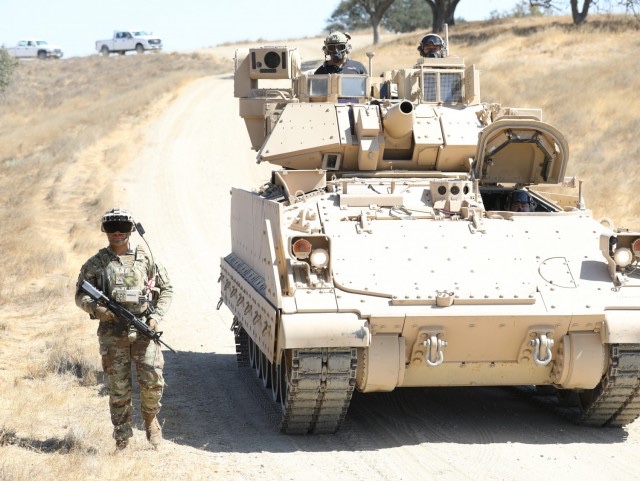
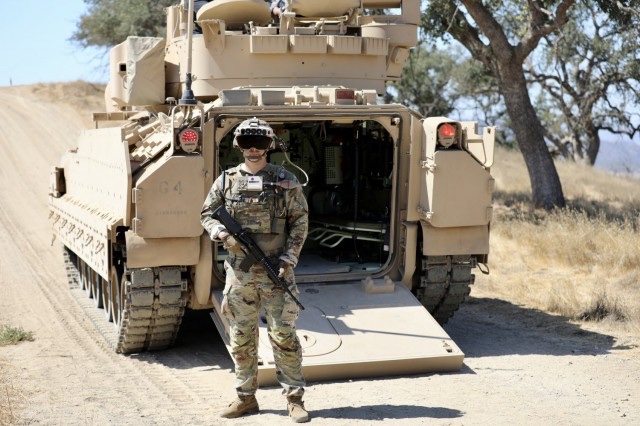
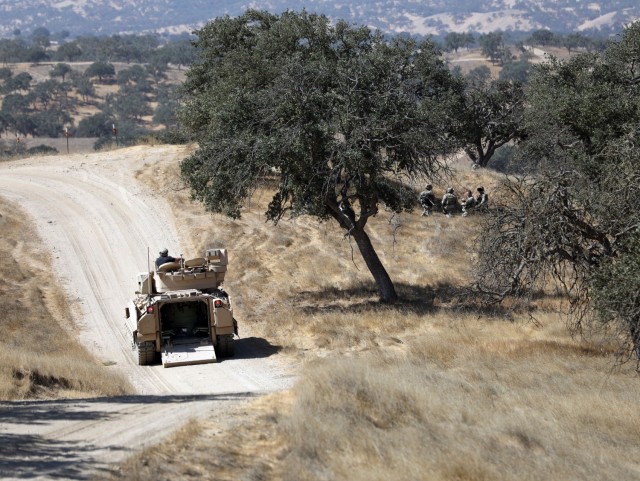
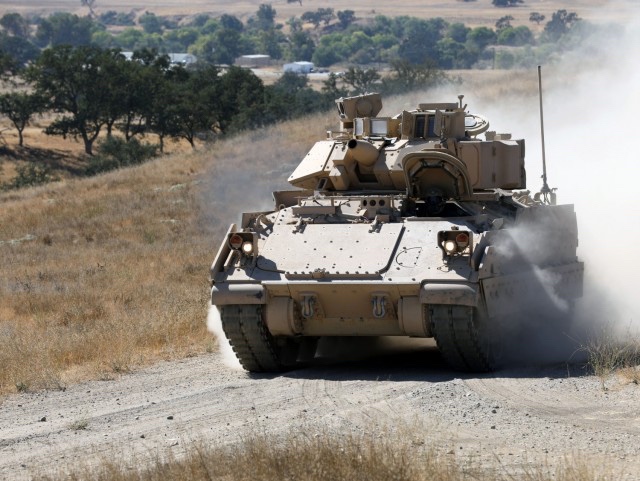
DETROIT — In an historic first, U.S. Army Soldiers integrated a Robotic Combat Vehicle (RCV) surrogate into the opposing force during a recent rotation at the Joint Readiness Training Center at Fort Polk, Louisiana, in September. This event enabled the Army to gain valuable insight in how best to utilize robotic vehicles in combat and furthered its ongoing Campaign of Learning around RCV development.


During the exercise, Soldiers from the 1st Battalion (Airborne), 509th Infantry — known as Geronimo — used two Project Origin vehicles (RCV surrogates) in a simulated battle with the 3/101st (Air Assault). The Origin vehicles are an Army Development Command (DEVCOM) Ground Vehicle Systems Center (GVSC) prototyping effort and provides the Army with the ability to conduct rapid technology and autonomous behavior integration that Soldiers assess during multiple touchpoints each year.

While on-site engineers and technicians collected technical data, the Soldiers in the field further validated the combat benefits of adding robots to a manned-unmanned teamed formation and identified new capabilities desired for the next Project Origin Soldier operational experiment.

“With these units, the human survivability rate increases significantly,” explained Sergeant First Class Eugene Lackey (Pathfinder Company). “This system allowed us to close with and destroy the enemy safely from a distance. It [also enabled] us to the find the enemy before he could find us. It is a great tool and I wish we could have it for little bit longer to really see how we can change the way wars are fought.”

The feedback from Geronimo Soldiers adds to the Army’s growing library of information on the use of robots.

“Project Origin’s key competency is its ability to collect Soldier feedback and technical data, use this information to rapidly iterate both its software and physical payloads, and evaluate the changes in relevant tactical environments,” said Todd Willert, Project Origin project manager at GVSC. “The lessons learned during Project Origin experiments directly support the development of the Robotic Combat Vehicle and the Army’s forthcoming Ground Autonomy Software, user interfaces (Warrior Machine Interface), and modular architectures.”

GVSC and the Army’s Next Generation Combat Vehicles Cross Functional team, both based at the Detroit Arsenal in Michigan, and the Army Capability Manager-Infantry Brigade Combat Team (ACM-I), based in Georgia, worked together to integrate the Project Origin platforms into the JRTC rotation.

“JRTC stressed the systems to their breaking points, allowing us to identify problems that would undoubtedly arise in the future,” said MAJ Cory Wallace, RCV lead for NGCV CFT.

During the exercise, the Soldiers and the robots also endured a tropical storm, further adding to its complexity.

Among the highlights of the exercise, the Geronimo force used the Project Origin platform to block a key intersection for 36 hours, an effort that benefitted from Origin’s low heat signature while conducting long hours of battery-powered “silent watch.” In addition, Geronimo used the project Origin vehicles to deny helicopter landing zones and conduct route reconnaissance. Using the robots to conduct these operations – the two platforms were controlled by four operators and an NCO – allowed the Soldiers who would have been assigned those tasks to be assigned different missions.

“This validated the notion that if we assign the dumb, dirty, dangerous missions to the robots, we can re-assign our Soldiers to the high-priority complex missions and tasks,” Wallace said.

The Army has additional Soldier Touchpoints, with Project Origin and other RCV platforms, scheduled throughout 2022 as it prepares to make future decisions on the potential acquisition of RCVs.

By Dan Heaton

Natick Holds Optimizing the Human Weapon System Study

Saturday, October 23rd, 2021

The US Army Combat Capabilities Development Command Soldier Center’s Optimizing the Human Weapon System (OHWS) recently participated in a sensor-based study relating physiological status to health stressors with 560 Soldiers from the 10th Mountain Division.

Leveraging the CCDC SC’s Measuring and Advancing Soldier Tactical Readiness and Effectiveness Program they took physiological data from commercially available sensors to monitor Soldier health and develop algorithms for detection of presymptomatic or asymptomatic signatures of infection and illness.

Sensors included the Oura ring for sleep and recovery data, Polar Grit X watch to quantify physical exertion and Smartabase athletic management software.

Joint ASA ALT and AFC Statement on the Integrated Visual Augmentation System

Thursday, October 21st, 2021

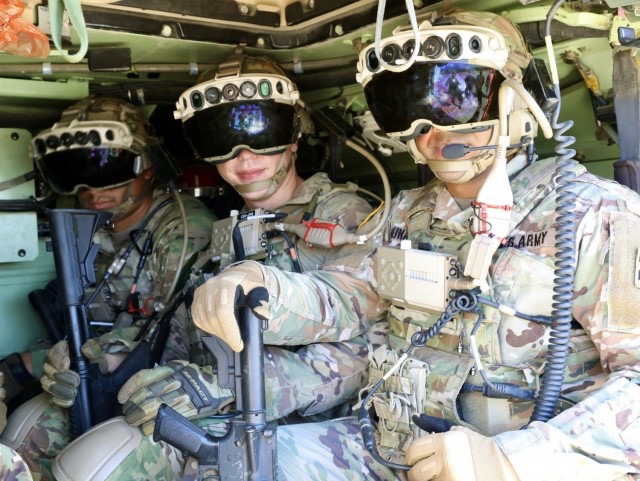
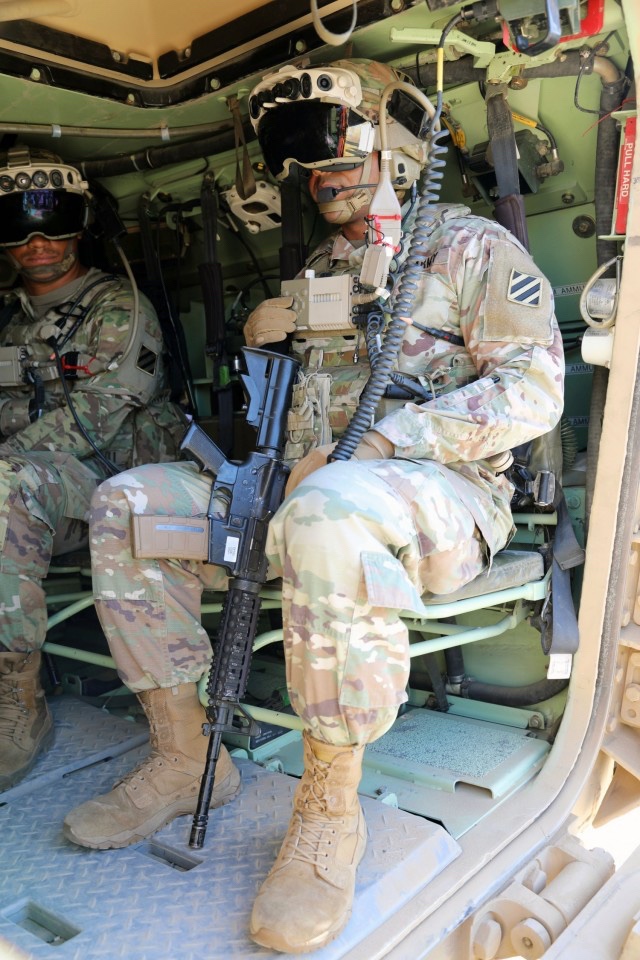
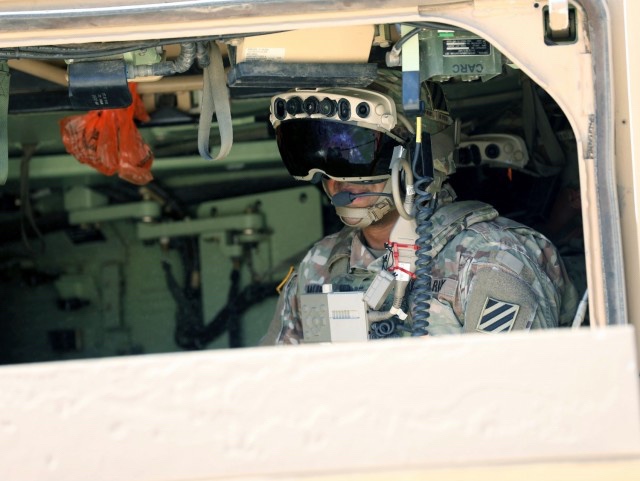
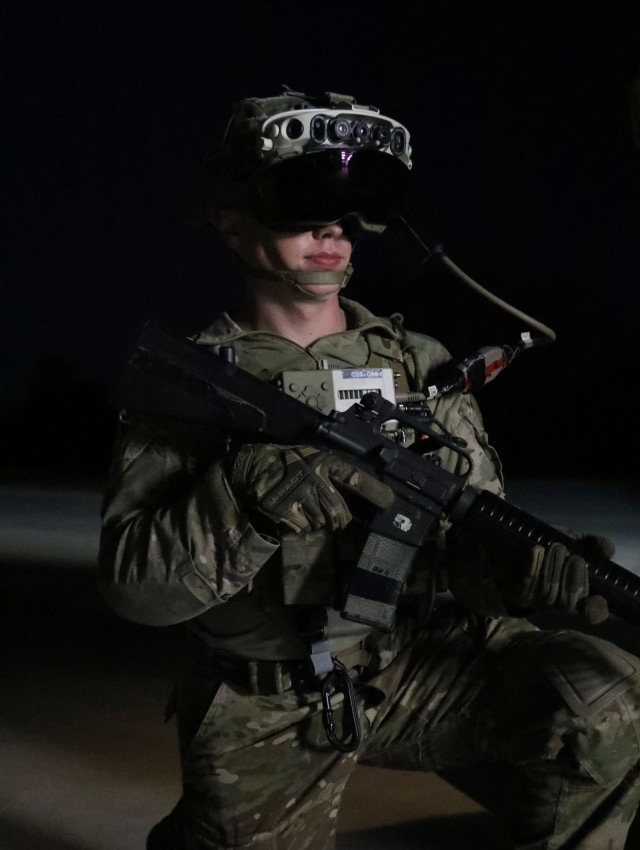
The Office of the Assistant Secretary of the Army for Acquisition, Logistics and Technology, in coordination with Army Futures Command, has decided to shift the Integrated Visual Augmentation System operational test to May 2022 and its fielding to September 2022.

The Army did not halt or stop the IVAS program, and remains committed to getting the best equipment in the hands of our Soldiers as quickly as possible. The shift in the IVAS program will allow the Army and industry team to continue to enhance the IVAS technology platform, ensuring Soldiers achieve overmatch in multi-domain operations.

The Soldier Lethality Cross-Functional Team, Program Executive Office Soldier, and Microsoft are working together to develop and field IVAS – a technology platform for fighting, rehearsing and training – which will provide close-combat forces with unprecedented capabilities that are extensible to any combat environment or combat platform.

Developers used the Microsoft HoloLens to build a system capable of rapid target acquisition, navigation, target marking and a host of other features, including a field of view nearly twice as wide as those offered by current systems.

At 80 degrees, IVAS pushed the boundaries of waveguide technology capabilities, and the field of view began to lose resolution. By making minor reductions, developers are finding greater quality and clearer visibility.

The process will require a little more time, but it will still result in the fielding of a next-generation combat system six to 10 years ahead of the traditional acquisition program timelines.

Calculated risk and time for adjustment have been baked into our processes, and are vital to rapid Army modernization practices. The new timeline does not affect contract agreements.

At this year’s Association of the United States Army annual event we stated, the Army has to be willing to accept some early risk, or we will never be able to keep up with the pace of change required to achieve and maintain overmatch in MDO.

By Karen Saunders and Gen. John M. Murray

Karen Saunders is the senior official performing the duties of the assistant secretary of the Army for acquisition, logistics and technology. Gen. John M. Murray is the commanding general of Army Futures Command.

4ID Stryker Brigade Combat Team Tests Army’s Newest Mounted GPS Devices

Wednesday, October 20th, 2021

WHITE SANDS MISSILE RANGE, New Mexico – 4th Infantry Division Soldiers tested the Army’s next-generation Assured Positioning Navigation and Timing (APNT) solution here, which allows Soldiers to maintain integrity of position and timing in GPS-contested environments.

The Mounted Assured Position Navigation and Timing (MAPS) will integrate across the Army’s wheeled and tracked platforms, bringing heightened protection levels against evolving GPS threats to support multi-domain operations.

During the first week of testing, 1st Stryker Brigade Combat Team (1SBCT) Soldiers received New Equipment Training (NET) to familiarize them with the MAPS system capabilities and user interface.

Throughout the rest of the test, they provided feedback on the system during operationally realistic missions, including Call for Fire (CFF), Reconnaissance, Quick Reaction Force (QRF) and Medical Evacuation (MEDVAC) in a GPS degraded environment.

“I’ve never seen what happens to GPS Systems when they encounter an Electronic Warfare (EW) attack,” said Capt. Christopher Mazeau, Assistant Operations Officer for 1SBCT.

He said he is glad to see the Army is working to develop an answer to such threats.

MAPS is designed to support command and control by replacing the need for multiple GPS devices on a single platform, and it also helps to mitigate EW attacks with an onboard anti-EW antenna.

The system aligns with the Army Futures Command (AFC)-directed requirement to prepare for tomorrow by providing overmatch in multi-domain operational environments.

By MAJ Matthew Truax, Test Officer, Intelligence Electronic Warfare Test Directorate, U.S. Army Operational Test Command

Galvion Wins $5.8 million Contract to Supply US Army with EOD Tools and Equipment Kit (ETEK)

Thursday, October 7th, 2021

Galvion, a world leader in the design and manufacture of military power and data management solutions is pleased to announce that its Squad Power Manager™ (SPM) kit will be included in the U.S. Army EOD Tools and Equipment Kit (ETEK).  A $5.8 million contract from Program Manager Close Combat Systems (PM CCS) was awarded to supply an EOD-tailored SPM™ system to all active EOD units starting in December 2021.  The Squad Power Manager is a core element of Galvion’s Nerv Centr® Active Systems range, which provides scalable power and data solutions to the dismounted soldier.  Galvion will be exhibiting the SPM, along with their full range of active systems and their next generation head systems, in booth 3817 at the AUSA exhibition, taking place in Washington DC, 11-13 October 2021.

EOD teams use specialized equipment that requires sustainable and lightweight power when off-grid.  The US DoD were seeking to upgrade their entire EOD dismounted kit and needed a single, customizable solution that could recharge the batteries for EOD tools and scavenge power from multiple sources such as solar, vehicle power or AC mains.  The SPM ETEK Kit includes multiple cables and accessories that offer operational flexibility, allowing EOD units to harvest, scavenge and provide power to mission-critical equipment. The SPM requires no special configuration or programming, converting and managing power as efficiently as possible depending on power sources and equipment needs.  This allows teams to minimize weight and logistical burden by carrying fewer batteries, while increasing operational efficiency through active monitoring and management of power usage.

Kristen Lomastro, President of Active Systems, said: “We are a company that is dedicated to delivering mission success by fully understanding not just the military requirement, but the environment, the conditions and the additional circumstances that the dismounted soldier may encounter.  We pride ourselves on providing the very best technical and engineering solutions possible and by reducing the physical, cognitive and logistical burden for the warfighter, we increase their agility, lethality and survivability.  Galvion is extremely pleased to announce this new contract for ETEK with US Army EOD units, and to continue in our mission to protect and support those who protect us.”

Galvion’s modular and scalable power management systems are battle-ready, flexible and easily integrated with commonly fielded equipment.  The Squad Power Manager is a field-proven system, with customized kits in use across all U.S. DoD branches, including units of the U.S. Army, Navy, Marines, Air Force, and SOCOM.  In addition, Galvion’s power management systems are being used by allied forces in Canada, the UK, Australia, France, Denmark and Sweden, among others.

www.galvion.com

Value of History in the Army

Thursday, October 7th, 2021

WASHINGTON, D.C.— The study and use of history is a critical tool in the Army profession. It helps to inform current decision making, inspires Soldiers to serve, and builds morale and esprit in units.

“History helps us learn from the past, see the present and be ready for the future” said General Paul E. Funk II, Commanding General of the U.S. Army Training and Doctrine Command (TRADOC). “You have to understand your historical roots to become an effective leader.”

At this year’s Association of the United States Army (AUSA) Annual Meeting from October 11-13 at the Washington Convention Center, the U.S. Army Center of Military History (CMH) will host a Kiosk promoting the value of history in the Army.  Preparing Soldiers at all levels to be historically minded is a significant role for CMH, an organization within TRADOC.

The Executive Director of CMH, Charles R. Bowery, Jr. points out, “All ranks in the Army, from the most junior trainee to the Chief of Staff, benefit from historical awareness in different ways. Every Soldier should understand that they are serving something bigger than themselves.”

A true understanding of history goes well beyond simply knowing key dates and events. The lessons of history develop critical thinking skills in Soldiers as they understand the reason why and how events unfolded in the past and their connection to today. It develops a more informed use of actionable history in current staff planning and decision making.

According to Dr. Peter G. Knight, Chief of Field and International History Programs at CMH, “We frequently respond to requests for information about historical events to help develop viable courses of action for Army leaders.” Knight recommends all Soldiers can use existing programs within the Army to improve their historical perspective. “There are professional military education courses and leader developmental programs like staff rides that can hone critical thinking skills.”

Staff rides are a unique and persuasive method of teaching the lessons of the past to the present day leaders. They can bring events to life and provide a greater understanding of tactics, leadership, strategy, communications and the psychology of Soldiers in battle. The staff at CMH develop and lead staff rides for U.S. Army organizations and provide detailed staff ride pamphlets online for free downloads.

Beyond decision making, history is also a key part of many aspects of a Soldiers career from understanding the rich heritage of his or her unit to accessing VA benefits as they transition to civilian life. Knight says, “A unit history program not only helps build esprit de corps, but it helps ensure unit awards and unit campaign participation credit are up to date.”

History also builds morale and helps to inspire men and women to serve by providing examples of those who exemplify Army values. “It connects Soldiers to their unit through activations, lineage and honors, unit decorations, and unit heritage” Knight said.

Leader support for the Army History Program will improve the understanding of history and its essential application in all units. Key elements of the program include assigning unit history officers, including Command Historians as part of staff functions and the use of Military History Detachments. Knight says “If you ever asked your staff if a certain situation has happened before or how did we handle a situation in the past, then you need a unit historical program.”

Other ways to expand historical mindedness is accessing the publications and research resources on the CMH website. Bowery also points out that “The Chief of Staff’s professional reading list is the best place to start. CMH and Army University Press also have thousands of free publications that Soldiers can access.”

The value and benefits of using history in the Army are significant factors to the success of units and individual Soldiers careers. The Center of Military History is a valuable resource with multiple tools that are available to all Army units and personnel.

“The Center of Military History can do all sorts of things for a leader development program, they can provide staff rides, they can provide lessons learned, and they can be the historical reference you need.” GEN Funk said.

By Francis Reynolds

Additional Resources:

history.army.mil

U.S. Army Awards AeroVironment $11.7 Million Third and Final Contract Option for Raven Radio Frequency Modifications Under Existing FCS Contract

Wednesday, October 6th, 2021

• Final contract option exercised under the sole source Flight Control Systems (FCS) domain of the Army’s multi-year small unmanned aircraft systems contract

• Total final value of contract is $54,632,776

• U.S. Army possesses largest fleet of Raven tactical unmanned aircraft systems in the world


The Raven system is designed for low-altitude intelligence, surveillance, and reconnaissance missions that depend on rapid deployment and pinpoint maneuverability. (Photo: AeroVironment, Inc.)

ARLINGTON, Va., Oct. 6, 2021 – AeroVironment, Inc. (NASDAQ: AVAV), a global leader in intelligent, multi-domain robotic systems, today announced the United States Army exercised the third and final option under the Flight Control Systems (FCS) domain of the Army’s multi-year small unmanned aircraft systems (UAS) contract on Sept. 9, 2021. The value of the contract option is $11,731,740 and includes flight control system kits, ground control stations and tail booms for the Army’s existing fleet of Raven® tactical UAS. Delivery is scheduled to be completed by September 2022.

The contract option was exercised under the Army’s FCS domain awarded to AeroVironment in June 2019 and announced in November 2019 – the first of six domains comprising the Army’s existing five-year Indefinite Delivery, Indefinite Quantity (IDIQ) SUAS contract – bringing the total final value of contract to $54,632,776.

“The Raven system was created to provide frontline forces with real-time, accurate over-the-horizon situational awareness in conflict areas; a capability that was unavailable at the time of its inception,” said Trace Stevenson, vice president and product line general manager of small UAS. “Today, Raven is the most widely deployed unmanned aircraft system in the world and continues to serve as a modern tool for customers to gain superiority on the battlefield.”

The Raven system is designed for rapid deployment and high mobility for operations requiring low-altitude intelligence, surveillance and reconnaissance (ISR). With a wingspan of 4.5 feet and weighing just 4.2 pounds (1.9 kilograms), the hand-launched Raven provides situational awareness, day or night, with an operational range of 6.2 miles (10 kilometers). The Raven’s Mantis i23 EO/IR gimbaled payload delivers real-time video or infrared imagery to ground control and remote viewing stations.

AeroVironment’s family of tactical UAS comprises the majority of all unmanned aircraft in the U.S. Department of Defense (DoD) inventory, and its rapidly growing international customer base numbers more than 50 allied governments. To learn more, visit www.avinc.com.

Army Assesses IVAS Network Capability at NetModX

Friday, October 1st, 2021

?

JOINT BASE McGUIRE-DIX-LAKEHURST, N.J. — The Army is continuing to inform  Integrated Visual Augmentation System (IVAS) network integration by evaluating  emerging commercial radio technology that enables data exchange among Soldiers.

A series of experiments this summer at the Army’s annual Network Modernization Experimentation (NetModX) allowed engineers of the Command, Control, Communications, Computers, Cyber, Intelligence, Surveillance and Reconnaissance (C5ISR) Center — a component of Army Futures Command (AFC)’s Combat Capabilities Development Command (DEVCOM) — to help inform Army program offices of potential capability by providing a technical assessment and analysis on the state of available industry radio communication solutions.

IVAS enables greater situational understanding and decision making through high resolution display of sensor, target, and target engagement data. The system provides Soldiers with a single platform to fight, rehearse and train. These unique characteristics require a tactical radio that can provide Soldier-wearable connectivity for the IVAS platform, according to Dan Ku, a C5ISR Center electronics engineer.

“Events like NetModX enable the Army to assess commercial-off-the-shelf radios’ ability to support the IVAS system in terms of scalability and resiliency,” Ku said. “The data from the field event informs the design of the network to support IVAS.”

The C5ISR Center provides engineering support to Army organizations — Project Manager Tactical Radios (PM TR) and PM IVAS — that are making network design considerations by incorporating NetModX results. The event helps the Army validate and verify which performance metrics and requirements are most important leading to the procurement process.

The radios enable Soldiers to pass IVAS data helping to establish a common operating picture (COP) among the unit during a mission. The real-time COP is displayed on the IVAS heads-up display for improved situational awareness.

Engineers are evaluating the performance of each vendor’s radio system for transmitting differing network traffic loads in benign and contested environments, Ku said. Each type of radio must be able to scale to a specific number of units while transmitting data among a team of Soldiers.

“Experimentation gives the Army a holistic picture on how radios perform initially in a lab setting and then during a large-scale field environment like NetModX,” said James Koh, chief of the Center’s Commercial Technology and Integration Branch. “With these complementary experiments, we’re able to produce a comprehensive set of data and radio system characteristics to support Army acquisition decisions. NetModX also serves as a forum for industry partner collaboration.”

By Dan Lafontaine, DEVCOM C5ISR Center Public Affairs

Additional photos by SGT Robert Whitlow, 49th Public Affairs Detachment