XC3 Weaponlight

Archive for the ‘Army’ Category

Turning Thermal Energy into Electricity Could Help Soldiers

Sunday, September 5th, 2021

RESEARCH TRIANGLE PARK, N.C. — With the addition of sensors and enhanced communication tools, providing lightweight, portable power has become even more challenging. Army-funded research demonstrated a new approach to turning thermal energy into electricity that could provide compact and efficient power for Soldiers on future battlefields.

Hot objects radiate light in the form of photons into their surroundings. The emitted photons can be captured by a photovoltaic cell and converted to useful electric energy. This approach to energy conversion is called far-field thermophotovoltaics, or FF-TPVs, and has been under development for many years; however, it suffers from low power density and therefore requires high operating temperatures of the emitter.

The research, conducted at the University of Michigan and published in Nature Communications, demonstrates a new approach, where the separation between the emitter and the photovoltaic cell is reduced to the nanoscale, enabling much greater power output than what is possible with FF-TPVs for the same emitter temperature.

This approach, which enables capture of energy that is otherwise trapped in the near-field of the emitter is called near-field thermophotovoltaics or NF-TPV and uses custom-built photovoltaic cells and emitter designs ideal for near-field operating conditions.

This technique exhibited a power density almost an order of magnitude higher than that for the best-reported near-field-TPV systems, while also operating at six-times higher efficiency, paving the way for future near-field-TPV applications, according to Dr. Edgar Meyhofer, professor of mechanical engineering, University of Michigan.

“The Army uses large amounts of power during deployments and battlefield operations and must be carried by the Soldier or a weight constrained system,” said Dr. Mike Waits, U.S. Army Combat Capabilities Development Command’s Army Research Laboratory. “If successful, in the future near-field-TPVs could serve as more compact and higher efficiency power sources for Soldiers as these devices can function at lower operating temperatures than conventional TPVs.”

The efficiency of a TPV device is characterized by how much of the total energy transfer between the emitter and the photovoltaic cell is used to excite the electron-hole pairs in the photovoltaic cell. While increasing the temperature of the emitter increases the number of photons above the band-gap of the cell, the number of sub band-gap photons that can heat up the photovoltaic cell need to be minimized.

“This was achieved by fabricating thin-film TPV cells with ultra-flat surfaces, and with a metal back reflector,” said Dr. Stephen Forrest, professor of electrical and computer engineering, University of Michigan. “The photons above the band-gap of the cell are efficiently absorbed in the micron-thick semiconductor, while those below the band-gap are reflected back to the silicon emitter and recycled.”

The team grew thin-film indium gallium arsenide photovoltaic cells on thick semiconductor substrates, and then peeled off the very thin semiconductor active region of the cell and transferred it to a silicon substrate.

All these innovations in device design and experimental approach resulted in a novel near-field TPV system.

“The team has achieved a record ~5 kW/m2 power output, which is an order of magnitude larger than systems previously reported in the literature,” said Dr. Pramod Reddy, professor of mechanical engineering, University of Michigan.

Researchers also performed state-of-the-art theoretical calculations to estimate the performance of the photovoltaic cell at each temperature and gap size and showed good agreement between the experiments and computational predictions.

“This current demonstration meets theoretical predictions of radiative heat transfer at the nanoscale, and directly shows the potential for developing future near-field TPV devices for Army applications in power and energy, communication and sensors,” said Dr. Pani Varanasi, program manager, DEVCOM ARL that funded this work.

By U.S. Army DEVCOM Army Research Laboratory Public Affairs

US Army Lab Gets Green Light for Supercomputing Project

Tuesday, August 31st, 2021

ABERDEEN PROVING GROUND, Md. — The U.S. Department of Defense High Performance Computing Modernization Program announced its selection of an Army supercomputing project for fiscal 2022.

Since 2014, DOD has awarded what are known as Frontier Projects to enable research, development, test and evaluation outcomes that could not be achieved using typically available DOD High Performance Computing Modernization Program resources.

Researchers from the U.S. Army Combat Capabilities Development Command, known as DEVCOM, Army Research Laboratory along with the Naval Air Warfare Center, submitted a winning proposal for a project to explore large-scale integrated simulations of gas turbine engines.

Drs. Luis Bravo from the laboratory and Russell Powers from the Naval Air Warfare Center are primary investigators for the research.

“The advanced design tools resulting from this project will lead to ?quantum leaps in the performance, efficiency and reliability of next-generation gas turbine engines,” Bravo wrote in the proposal. “We are now able to tackle such large problems due to the recent breakthroughs in artificial intelligence and advanced computational fluid dynamics.”

The researchers hope to create a digital twin of an actual gas turbine engine.

This will enable real-time engine health awareness and reduce lifecycle cost, Bravo said.

“This award will provide the supercomputing resources to make possible our collaboration between our laboratory, NAVAIR, Pratt & Whitney, the University of Cincinnati and Cascade Tech on digital twin models in propulsion,” Bravo said. “We are partnering across government, industry and academia to address a grand challenge in propulsion and we are all very excited about receiving this announcement.”

“The selection of our project shows a focus on advancing state of the art capabilities in numerical predictions for naval aviation engines,” Powers said.

The collaboration will help demonstrate increased capability and applications of predictive modeling and simulation tools, setting a new standard for the use of modeling and simulation in future engine and acquisition programs, he said.

“We are very grateful for the opportunity to use these resources, the support of our leadership, and excited to get started,” Powers said.

The award is one of four projects the DOD selected in its Foundational Research and Engineering category and the only one across the Army. The other awardees in this group include the Air Force Research Laboratory and the Office of Naval Research.

DOD will allocate resources starting Oct. 1, 2021. While the project will get quarterly reviews, the effort is planned to cover up to four years of research.

“We have high expectations that all Frontier Projects will produce notable achievement and strong mission impacts,” said Dr. Will McMahon, DOD HPCMP director in a memo announcing the award.

By U.S. Army DEVCOM Army Research Laboratory Public Affairs

116th IBCT Trains on New Squad Designated Marksman Rifle

Monday, August 30th, 2021

FORT PICKETT, Va. – Virginia and Kentucky Army National Guard Soldiers assigned to the 116th Infantry Brigade Combat Team trained on and fielded new M110A1 squad designated marksman rifles July 12-15 at Fort Pickett.

The new weapon is a 7.62 mm rifle, which gives Soldiers greater range and accuracy than the standard M4 rifle. It makes use of an advanced targeting system and sound suppression and fills a distance gap between the M4 and larger-caliber sniper rifles.

Those advantages make infantry Soldiers more lethal and allow them to engage the enemy at a greater distance, according to 1st. Lt. Matthew Arnold, the Virginia Army National Guard’s New Equipment Training / New Equipment Fielding state coordinator.

“The M110A1 SDMR allows our Soldiers to be able to reach targets out to 800 meters and beyond, depending on the Soldier’s skill level,” said Arnold. “This basically allows the standard infantry squad to have more standoff between them and their target as well as increased time and space for maneuver as a result.”

Thirty Soldiers assigned to the Lynchburg-based 1st Battalion, 116th Infantry Regiment, the Winchester-based 3rd Battalion, 116th Infantry Regiment, the Portsmouth-based 2nd Battalion, 183rd Cavalry Regiment, the Fredericksburg-based 229th Brigade Engineer Battalion and the Kentucky National Guard’s 1st Battalion, 149th Infantry Regiment, participated in the training and fielding.

The event started with time in the classroom with civilian instructors from the U.S. Army Tank-automotive and Armaments Command, Materiel Fielding and Training Directorate, Soldier Lethality Team, learning the nuances and mechanics of the new weapon. From there, Soldiers took to the range to zero the rifles before firing at targets up to 800 meters away, taking turns behind the trigger and shot-spotting. Command Sgt. Maj. Ronald Smith, the VNG command sergeant major, and Sgt. Maj. Latane I. Gilliam, the 116th IBCT operations sergeant major, observed the live-fire range and took turns behind the new rifle.

Arnold said in the past, the higher-caliber and increased-range rifles were primarily used as weapons for snipers.

“The main point is that this weapon, which was previously used as a sniper rifle, is now going to be in widespread use across our formation and the ways we use it will change depending on the situation,” said Arnold.

The M110A1 fielding was the most recent in a series of small arms fieldings across Virginia Army National Guard’s formations the past several months to bring its Soldiers up to speed with their active-duty Army counterparts. Other fieldings included the M3E1 Multi-purpose Anti-armor Anti-personnel Weapon System, a recoilless rifle that is replacing the AT-4, as well as the M17 pistol, replacing the M9, and the M320A1 grenade launcher, which replaces the M203.

Those small arms fielding highlights the important role the NET/NEF facility plays in improving the Virginia Army National Guard’s warfighting capabilities.

“It’s important to keep our Soldiers up to date with the latest weaponry because it can and will change how they fight,” said Arnold. “NET/NEF is the process that keeps us on par with the active component.”

By Mike Vrabel, Virginia National Guard

5th SFG(A) Chemical Recon Det Conducts Sensitive Site Exploitation Training

Saturday, August 28th, 2021

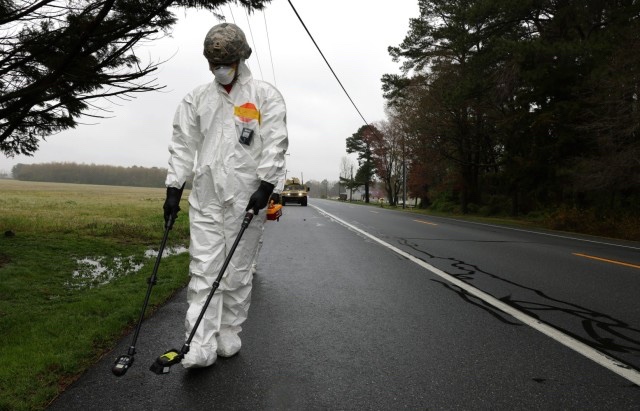
The Special Forces Chemical Recon Detachments are entirely under appreciated.

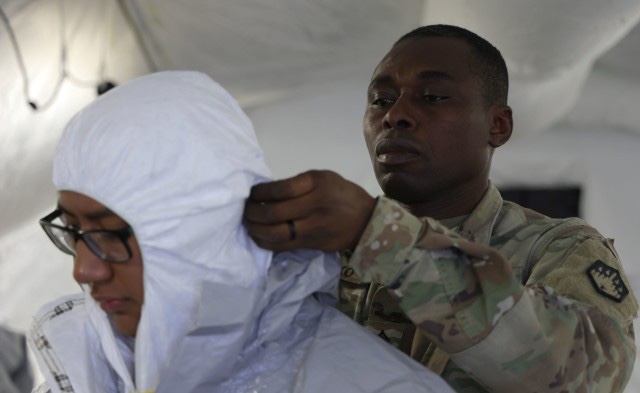
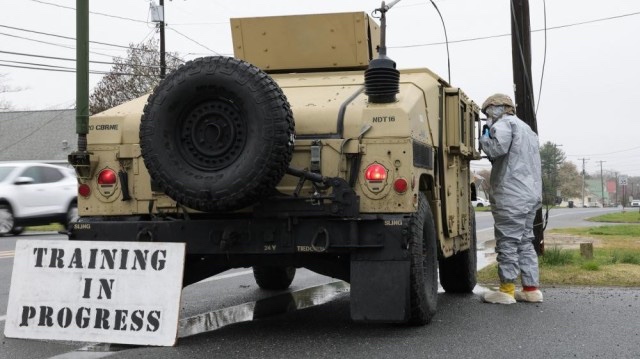
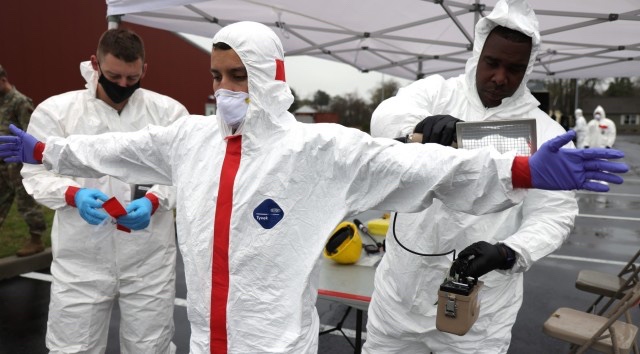
Soldiers from the 56th Chemical Reconnaissance Detachment (CRD), 4th Battalion, 5th Special Forces Group (Airborne), conduct sensitive site exploitation training during their 1st Special Forces Command validation exercise in Dugway, Utah, from Aug. 2, 2021 to Aug. 13, 2021. The exercise evaluates each CRD’s technical and tactical skillsets in order to deploy in a combat environment. (U.S. Army photos by SSG Frances Ariele Tejada.)

Army to Field Laser-Equipped Stryker Prototypes in FY 2022

Thursday, August 26th, 2021

WASHINGTON — The Army recently conducted a successful evaluation of a new directed-energy capability, moving the service one step closer to fielding a platoon of four laser-equipped Stryker combat vehicle prototypes next fiscal year, program leads said Wednesday.

The Directed Energy Maneuver-Short Range Air Defense system, or DE M-SHORAD, is a 50kW-class laser designed to protect divisions and brigade combat teams against unmanned aircraft systems, rotary and fixed-wing threats, rockets, artillery, and mortars, said Marcia Holmes, the deputy director of hypersonics, directed energy, space and rapid acquisition.

“Our goal is to deliver prototypes that Soldiers can use as the mission requires and that the Army can leverage as a baseline for a program of record,” Holmes said. “A Soldier-centered design is a key part to reduce risk and to ensure an operationally effective weapon system.”

A strong partnership between the Army Rapid Capabilities and Critical Technologies Office and science and technology industry leaders led to the development and implementation of the first prototype in 24 months, Holmes said.

The addition of the DE M-SHORAD and other directed-energy capabilities like the Indirect Fire Protection Capability-High Energy Laser, or IFPC-HEL, and IFPC-High Power Microwave are all designed to complement the Army’s kinetic air defense capabilities, said Craig Robin, deputy director of the RCCTO’s directed energy project office.

The unique design of the DE M-SHORAD leverages the Stryker’s gas-powered engine to energize its batteries, cooling system, and laser. The self-contained system has enough electricity to address multiple threats at a time before needing a period to recharge, he said.

“There are places where directed energy can provide a significant advantage,” he added. “All the bullets are built into the system, so the logistics associated with moving a platform and supplying it requires just gas and parts.”

Robin added that directed-energy systems are also more cost-effective from a life cycle perspective, making them a strategic tool to take out low-cost threats like an UAS to save the Army’s kinetic capabilities.

The Army plans to demonstrate the DE M-SHORAD capabilities during Project Convergence 21, where it will participate in a joint and coalition exercise later this year, said Col. Scott McLeod, the program’s manager.

“[PC 21] will be a big opportunity for us to show how we can integrate with our systems and demonstrate the capability against other threats,” McLeod said.

In July, the prototype proved its abilities during a combat shoot-off at Fort Sill, Oklahoma. During the event, Soldiers faced several realistic scenarios intended to refine future DE M-SHORAD characteristics, as program leads collected extensive data and user feedback to refine the system, McLeod said.

In addition to Project Convergence 21, the DE M-SHORAD development team will make minor adjustments to improve the device’s performance in the coming months, followed by several internal system verifications, he added.

“We are delivering a brand new capability -– it is not a modification or an upgrade. It is unlike any other system the Army has fielded to date,” McLeod said. “This event was a major step in the prototyping process and an informative waypoint as we move forward with building and delivering a prototype platoon in [fiscal year 2022].”

By Devon L. Suits, Army News Service

US Army Revamps Cyber Doctrine to Support Joint Warfighters

Wednesday, August 25th, 2021

AUGUSTA, Ga. — The Army plans to update its cyber operations doctrine, as it continues to march toward a more data-driven joint environment, a top Army cyber officer said last week.

Once published, the updated field manual, FM 3-12, will outline how the service plans to integrate its cyber operations mission into the larger vision of a modernized Army, said Brig. Gen. Paul T. Stanton, commander of the U.S. Army Cyber Center of Excellence.

Although no timeline was given on the document, Stanton said during the AFCEA TechNet conference on Aug. 17 that his team was moving quickly. The doctrine was last revised in 2017.

“The [new doctrine] is being drafted as we speak,” said Lt. Gen. Ted Martin, commander of the Army Combined Arms Center, in a pre-recorded video.



Martin said the doctrine, which stems from the National Defense Strategy of 2018, will continually evolve to keep pace with new technology and help the Army increase its lethality against near-peer threats.

Despite being a cyber-based field manual, Stanton said the entire Army could benefit from it and not just cyber operators.

For example, at the Army Maneuver Center of Excellence, Soldiers can adapt the document in their classrooms to explain how cyber can be used by them, he said.

The major role cyber plays in the future is also why leaders across the Army need to be on board with how to use it, he added.

“If there’s one theme across all this, it’s that we are driving operations for commanders,” Stanton said. “Commanders are the ones that make the decisions [and] commanders are the ones that develop the course of action and scheme of maneuver.”

In the future, all commanders will have to know the ins and outs of the Army’s cyber doctrine and cannot “bury their heads in the sand and say, ‘I can’t understand the science,’” he said.

“We can help abstract away some of the complexity of the science, but our commanders have to understand the fundamentals because this is a huge part of how we’re going to fight in the future,” he continued.

Even with knowledgeable leaders, achieving an information advantage through cyber is not possible without a unified network supporting it, he said.

To bring about a unified network, the Army is looking to use the latest technologies such as 5G capability, zero-trust cybersecurity and pulling data from the cloud.

No place where information advantage is more critical than on a joint battlefield, Stanton said, where warfighters may need to collaborate against a potential adversary.

Multi-domain operations will require data to be pulled from several locations. By pulling information, it “implies that my tactical edge assets are combined with my operational [and strategic] assets,” Stanton said.

“I have to move the right data to the right place at the right time inside the decision cycle of the adversary, so that I can maintain [the] information advantage,” he continued. “I can’t do that without a unified network.”

A common operational picture that brings together data from the tactical, operational and strategic levels helps enable commanders to make quick decisions, he said.

However, being able to pull the data isn’t enough. Army officials “have to protect that information,” Stanton said. “We’re pushing hard toward a zero-trust environment and an architecture to support and apply zero-trust principles across the entire Department of Defense Information Network.”

While the future of cyber warfare continues to change, Martin said that with the help of junior leaders, “we can get it right.”

“You don’t have to be a general to come up with this doctrine,” Martin told the crowd. “I feel that the best ideas are out there in the audience right now, because at [U.S. Army Training and Doctrine Command] — victory starts here.”

By Thomas Brading, Army News Service

CSASS Goes To War

Sunday, August 22nd, 2021

Paratroopers of the 82nd Airborne Division’s Immediate Response Force prepare personnel and equipment for a deployment to the U. S. Central Command Area of Operations. The Immediate Response Force is charged with remaining ready to answer the Nation’s call to deploy to anywhere in the world at a moments notice.

10th SFG(A) Group Foundations Course

Saturday, August 21st, 2021

The Group Foundations Course is a two-week course designed for Green Berets new to 10th SFG(A). During this two-week process, the new Special Forces Operators learn about the history of the group and cover the fundamentals of being an Original – which includes combatives, pistol and rifle marksmanship, physical fitness and in-depth military vehicle familiarization.