SIG SAUER - Never Settle

Archive for the ‘Army’ Category

US Army Updates Grooming Standards

Tuesday, January 26th, 2021

Revised Army regulation and grooming standards support diversity, equity and inclusion and people first priority

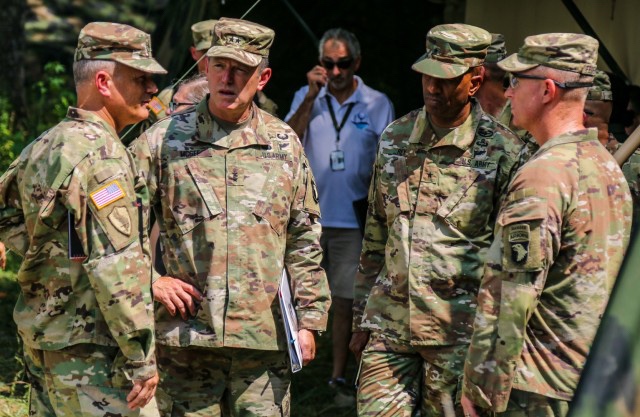
WASHINGTON — The U.S. Army has announced major revisions to Army Regulation 670-1, Wear and Appearance of Army Uniforms and Insignia, which will include guidance on wearing the new Army Green Service Uniform and several other key changes. In addition, the Army is also revising its grooming standards to support its People First priority and diversity and inclusion efforts.

“The Army must continue to put people first by fostering a culture of trust that accepts the experiences and backgrounds of every Soldier and civilian,” said Lt. Gen. Gary Brito, Deputy Chief of Staff for Personnel. “Our diverse workforce is a competitive advantage, and the Army must continue to offer fair treatment, access and opportunity across the force.”

The new version of AR 670-1 will go into effect Feb. 24. Major changes include implementation of the AGSU, clarified policy on breastfeeding or pumping in uniform, authorization for breastfeeding/pumping Soldiers to wear an optional undershirt, implementation of the Improved Hot Weather Combat Uniform, and full transition to the Operational Camouflage Pattern — removing references to the Universal Camouflage Pattern.

“The Army has maintained a longstanding tradition of Soldiers presenting a clean and professional appearance,” said Sgt. Maj. Mark Anthony Clark from the Army’s Office of the Deputy Chief of Staff for Personnel (G-1). “A professional appearance is an outward manifestation of the pride they have in themselves and in service to our country.”

New grooming standards, which will be reflected in a forthcoming memo (ALARACT), will also go into effect in February. Approved revisions include optional wear of earrings, lipstick and nail colors for women and clear nail polish for men. Earrings will remain unauthorized in field environments, combat-related deployments or locations where access to normal hygiene is not available.

Approved hairstyle changes include no minimum hair length for female Soldiers, allowing multiple hairstyles at once (i.e. braiding, twists or locs). Soldiers will be able to wear ponytails if unable to form a bun, and may wear long ponytails while conducting physical training, in the combat uniform or when female Soldiers wear equipment such as, but not limited to, combat helmets.

“In an effort to stop hair damage and loss stemming from hairstyles like the bun, the Army approved healthier hairstyle options that are more inclusive of various natural styles,” said Clark.

Soldiers will also be allowed to have a uniform hair color blend (also known as highlights) as long as it presents a natural appearance. However, purple, blue, pink, green, orange, bright red, fluorescent or neon colors, and some others will be prohibited.

In addition, the revised regulation will not contain potentially offensive language used to describe several hairstyles – for example, “Mohawk, eccentric, faddish, Fu Manchu, dreadlock” – which will be replaced with alternative verbiage.

“We are continuously assessing our policies to identify areas for improvement, then implementing policies that demonstrate our commitment to ensuring all Soldiers feel as though they are valued members of the Army team,” said Brito. “We know that actions speak louder than words when it comes to inclusivity and equity within our ranks, and we believe that the changes we announced today are one example of policies that put our people first.”

By U.S. Army Public Affairs

Editor’s note: Here is the link to the updated DA PAM 670-1

For the Pandemic and Beyond, Wearable Technology Points the Way

Saturday, January 23rd, 2021

Like all the best ideas, this one started with a question – a question about how to slow the spread of the novel coronavirus; refined over a series of meetings between U.S. Army Medical Research and Development Command scientists and researchers in the early days of the pandemic. For Cmdr. Christopher Steele, director at USAMRDC’s Military Operational Medicine Research Program, it was a question that would ultimately guide what’s become a nearly year-long funding effort.

“For active duty personnel and civilians, we wanted to know – what does ‘normal’ look like from a health perspective?” says Steele, repeating that initial query once again during a conversation in early 2021. “And how do changes from normal translate to early detection of disease?”

The answer to that question may soon be found on your finger, on your wrist, or even around your neck. Just as a pair of vaccines for COVID-19 have become available to the American public, USAMRDC is pushing the limits of its virus research even further. The goal: to develop wearable technology to detect the virus before a person might even begin to notice symptoms – however slight or subtle – in the first place.

“Having some wearable measurements on how you’re doing leading to [infection] is extremely helpful,” says Steele, “because we can understand additional concerns about your health and if they need to be taken more seriously for quarantine procedures or for advanced care.”

USAMRDC’s quest to find technology capable of detecting pre-symptomatic exposure to the virus began in March 2020 – just weeks into the pandemic – as part of a joint funding opportunity between both MOMRP and USAMRDC’s Military Infectious Diseases Research Program. As part of a planned program announcement, a total of seven wearable technology projects were selected for funding through the Command via its partnership with the Medical Technology Enterprise Consortium; the latter entity using a unique contracting tool called an “other transaction agreement” (or, OTA) to facilitate the delivery of advanced technology prototypes for a wide array of military-relevant injury conditions. Of those seven investments, one of the more promising efforts is a proprietary algorithm being developed jointly by Dr. Ashley Mason, an assistant professor with the Department of Psychiatry at the University of California, San Francisco, and Dr. Benjamin Smarr, an assistant professor with the Department of Bioengineering and Data Science at the University of California, San Diego.

In a recent study, Mason’s team showed that wearing a so-called “smart-ring” – a wearable device that generates continuous temperature data – may foreshadow the presence of COVID-19, even in cases when infection is not suspected. By analyzing data from 50 people previously infected with COVID-19 who agreed to wear the ring (which, in turn, came equipped with the aforementioned algorithm) Mason and Smarr found the ring accurately identified higher temperatures in people with symptoms of COVID-19. Ultimately, the algorithm may help lead to earlier isolation and testing – thereby potentially curbing the spread of infectious diseases.

“Continuous temperature assessment allows us to look at [human patterns of change] by allowing us to analyze changes in temperature as processes,” says Mason, noting the difference between continuous and single-point temperature monitoring. “If we think about temperature as a process – imagine a wave – then we can start to ask questions that go beyond, ‘are you high or low in temperature,’ [and] we can examine the shape of the waves both within one person over time and we can compare the shapes of peoples’ waves to each other.”

Mason’s work was initially sponsored by Finnish company Oura Health (who agreed to provide the “smart rings” used in the study), which gave her team a substantial amount of early data on virus exposures compared to other external groups. In July 2020, MTEC began funding Mason’s multi-pronged TemPredict study, providing key infrastructure resources. Then, last month, Mason’s team published the study’s aforementioned initial findings in the peer-reviewed journal Scientific Reports.

“Having a device that’s doing surveillance on you at the time and to say, ‘hey there’s something different about you’ – those are potentially powerful opportunities to intervene before a situation becomes a lot more complicated to treat,” says Steele.

While it is not known how effectively the algorithm-enabled smart ring can detect asymptomatic COVID-19 infection, Mason’s team reported that in 38 of the 50 participants (or, 76 percent), fever was identified when symptoms were unreported or even unnoticed. According to Mason, the second leg of her TemPredict Study, which was launched in early December and has already enrolled tens of thousands of participants across the globe, will continuously apply the algorithm to the participants’ smart ring data, then alert participants when the algorithm suggests COVID-19 testing is warranted.

“[The algorithm] does seem to be working well,” says Dr. Jenifer Ojeda, Health Science Program Manager at USAMRDC’s Congressionally Directed Medical Research Programs, and additionally the science officer providing DOD oversight on Mason’s award. “It is detecting early – pre-symptomatic, if you will – cases, and with some degree of fidelity.”

Still, Mason’s algorithm – which is intended to be agnostic and not exclusive to any one particular device – is just one of many entrants in this particular race. Other performers receiving funding – including the makers of the Fitbit family of trackers and smartwatches – are using their own, internally-developed platforms, while others are utilizing off-the-shelf platforms to meet their end goals.

While Steele admits USAMRDC is likely months away from receiving an actual, refined product to review, it is possible such a product could be developed and then deployed during the current COVID-19 pandemic. That would depend, of course, on a chosen performer delivering the kind of clear and consistent data demanded by the U.S. Food and Drug Administration for such devices. Regardless, this kind of technology clearly has a role in any kind of future, similar public health emergencies, and would make a substantial impact on the ability to detect illness on the future battlefield as well. The latter, while an ancillary perk for now, may indeed provide a showcase for any wearable technology’s likely ultimate benefit: to provide a near-continuous level of support and resilience to any U.S. Soldier across the globe.

Says Steele, “Wearables may be the premise that allows for truly integrated telemedicine content because now you have the ability to measure a person from a distance, or outside the clinic, or anywhere.”

By Ramin Khalili

US Army Micro-Atomizer Contributes to COVID-19 Research

Monday, January 18th, 2021

Aberdeen Proving Ground, MD – A device patented by researchers at the U.S. Army Combat Capabilities Development Command Chemical Biological Center (DEVCOM CBC) is being commercialized as a tool in the study of COVID-19.

The micro-atomizer, U.S. Patent 8,882,085, is a device that produces an aerosol spray on a very small scale for studying aerosolized particles inhaled by humans. The micro-atomizer has a .005 in diameter sample pass through — slightly larger than a human hair. This invention allows scientists to scale things down into a much smaller space to model what would happen on a larger scale.

DEVCOM CBC biologist Michael Horsmon, senior engineering technician Richard Kreis, and retired Army scientist Charles Crouse are the inventors behind the micro-atomizer. This product was developed to enable detection, protection and decontamination technology development geared toward protecting the warfighter from toxic chemical agents by simulating those agents on a micro level using aerosol spray.

While the micro-atomizer was developed as a research tool in chemical agent protection, it can also be used to simulate human sneezing, hacking or coughing. This will enable researchers to model the COVID-19 flow that would be expelled by someone who already has it. According to Kreis, “by allowing the molecules to get down to the same size as you would with COVID-19, it is easy to replicate continuously, repeatedly and accurately.”

Techlink, the DoD’s national partnership intermediary for technology transfer typically reviews all government patents and publicizes technologies that are ripe for commercialization. “We were notified by our partner, Techlink who’s in Montana, that there was interest in this patent. Our office investigates the status of patents and if there are existing prototypes. When we investigated, we learned that there were no more prototypes, so we went to the Research and Technology Directorate and asked them if they were willing to fund a few more prototypes because of the commercial interest and they agreed,” said Matt Jones of the Center’s Technology Transfer Office.

The test was a success and the company signed a patent license agreement this year. The inventors are currently focusing on reproducing the micro-atomizer and building the product consistently. The goal is to commercialize it so that it is available worldwide. “Universities, industry and other government agencies can use the micro-atomizer and it can be used in fields ranging from aerobiology, toxicology, and maybe even generating aerosols of coding materials for protection of surfaces. It has a wide range of uses,” Horsmon said.

By Richard M Arndt

Army to Lead New DOD Strategy Against Drone Attacks

Saturday, January 16th, 2021

WASHINGTON — In the future, drones could threaten U.S. defense systems with a swarming capability that uses artificial intelligence while leveraging 5G connectivity, the director of an Army-led joint office said Friday.

To help combat against these increasing dangers presented by adversaries’ small, unmanned aircraft systems, or sUAS, the Defense Department unveiled a counter strategy during a media event last Friday. The strategy calls for risk-based assessments and viewing counter-sUAS defense from a joint perspective to rapidly track, defend and defeat drone attacks.

“We have to be able to keep pace with an ever-changing threat,” said Maj. Gen. Sean Gainey, director of the Joint C-sUAS Office. “And to do that we have to leverage things like rapid prototyping and middle-tier acquisition to be able to bring these components into our open-architecture system as we’re seeing changes on the battlefield.”

Small UAS capabilities provide U.S. adversaries with maneuverable assets capable of intelligence, reconnaissance and lethal attacks at a low cost for the enemy.

The DOD plans to counter the threat with rapid innovation, synchronization with materiel and non-materiel solutions, and by leveraging relationships with allied nations and partners.

As part of those efforts, the Joint C-sUAS Office, or JCO, with service support, is slated to host a low-collateral damage interceptor demonstration focused on technologies and systems during the first week of April.

Strategic pillars

The Army, which oversees the JCO, aims to use three lines of effort to guide the strategy.

The first, “Ready the Force,” centers on the development of innovative solutions using a risk-based approach in the creation of counter capabilities. The strategy focuses on utilizing systems with a common architecture.

Risk assessments will be performed at each DOD location to evaluate the impact of potential sUAS threats. The assessments will cover a wide range of threats, from violent extremist organizations to near-peer adversaries.

“We can’t put every defensive measure at every DOD location,” said Nicole Thomas, the joint office’s division chief for strategy and policy. “So we have to look at the different locations to see what is the risk, where is the vulnerability and then get the appropriate countermeasures for that particular location.”

In the second focus area, “Defend the Force,” the JCO looks to create mission-ready forces capable of defending against and defeating sUAS threats. The office will achieve this through development of doctrine, operational concepts and the establishment of joint training standards and refinement of existing training. The JCO will then deliver joint capabilities that are synchronized across the force.

Finally, the last pillar, “Build the Team,” the JCO will strengthen itself by stressing partnership in national security innovation with federal and non-federal organizations while prioritizing interoperability. The leveraging of partner relationships will help the joint force maximize its C-sUAS effectiveness domestically and in ally nations, Thomas said.

Gainey said each of the military branches have embarked on individual efforts to defend against the threat since 2016. But the approach may not have been the most efficient, as it led to redundancy in the proposed system. Gainey said the new enterprise, joint approach will help the JCO achieve its goals more efficiently.

“You had different efforts moving out and it wasn’t a synchronized effort,” Gainey said. “So essentially you created this scene where you had the acquisition community just rapidly developing stuff, but with no framework around that.”

Interoperability is key

Gainey added that interoperability will be critical toward carrying out the C-sUAS strategy.

Last year, the Army selected 10 interim systems as C-sUAS solutions to guide the strategy, each with interoperable components, including the Army’s fixed site-low, slow, small UAS integrated defeat system, or FS-LIDS, and the Air Force’s negation of improvised non-state joint aerial system, or NINJA.

“What you want to start with first is to have a common interoperability with the services so we can integrate the command and control system through an open architecture to where we then integrate systems components into that,” Gainey said. “So you have a changing, improving, componentized architecture to keep up with technology.”

FS-LIDS is equipped with air surveillance radar and can detect and defeat low flying, smaller UAS targets, while NINJA can take control or disable a small UAS. The Navy’s CORIAN, or counter-remote control model aircraft integrated air defense network, can be used to disrupt drone signals.

Gainey added that by having the Army lead the effort, the DOD has taken a holistic approach that can identify potential individual service problems and strengthen interoperability across the joint force.

“How do we create something that’s going to meet our future architecture and common operating picture? That’s what we focus on,” Gainey said. “That’s where we all want to go as a department in the future: any sensor, any shooter has that common operating picture to be able to make rapid decisions based off of the growth that we’re seeing.”

By Joseph Lacdan, Army News Service
US Army Space Company Replaces Communication System with Portable Alternative

Friday, January 15th, 2021

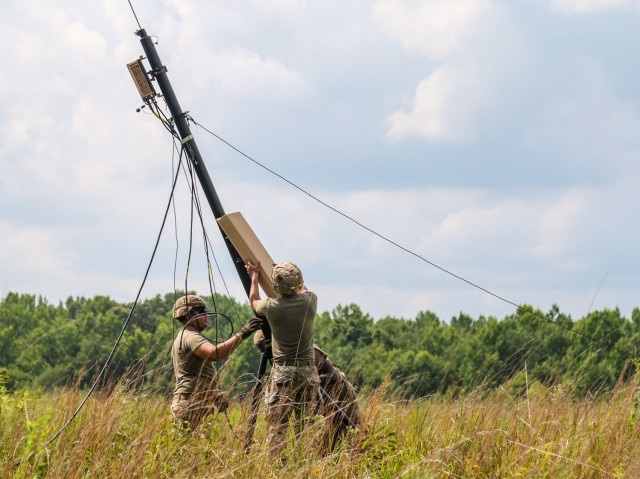
FORT CARSON, Colo. – The 1st Space Battalion’s 4th Space Company is trading in their old ground satellite terminals for a lightweight, portable option – the Ground Antenna Transmit and Receive.

Chief Warrant Officer 2 Carlos Gil, network management technician, 4th Space Company, said the GATR‘s portable design will provide the company the satellite terminal mobility Soldiers need in theater.

“It’s a lightweight, portable and durable system that will be beneficial in remote areas,” Gil said. “We can pack it in just two cases and we can set up in 30 minutes or less.”

4th Space Company provides support to geographical combatant commanders and U.S. Strategic Command by supplying critical information and timely data on the health and status of various satellites, ensuring reliable communication channels. This means being able to communicate from anywhere, even remote locations difficult to reach in large vehicles.

The GATR is replacing the company’s Secure Internet Router/Non-Secure Internet Protocol Router Access Point ground satellite terminals, which weigh 300-400 pounds and are typically transported in the back of high-mobility multipurpose wheeled vehicles or helicopters.

The GATR, consisting of a flexible, inflatable ball and a dish, weighs approximately 25 pounds and can fit into two cases the size of checked airport baggage. Chief Warrant Officer 2 Nathan Paquette, a 4th Space Company network management technician, said it is small and light enough for Soldiers to carry.

“The antenna is easily deployable and provides the same high-bandwidth satellite communications as the larger, heavier SNAP ground satellite terminals,” Paquette said.

The company recently completed a 10-day training session to become familiar with assembling and operating the new system. All three companies in 1st Space Battalion will receive GATRs for field communications.

1st Space Battalion, which generates and provides space combat power for Army and joint forces to conduct global and continuous multi-domain planning and operations, is assigned to the 1st Space Brigade, U.S. Army Space and Missile Defense Command

By SFC Aaron Rognstad (USASMDC)

DOD utilizes 3D-printing to Create N95 Respirators in the Battle Against COVID-19

Thursday, January 14th, 2021

In response to the COVID-19 global pandemic, the U.S. Army Medical Materiel Development Activity’s Warfighter Expeditionary Medicine and Treatment Project Management Office, as part of the U.S. Army Medical Research and Development Command’s Additive Manufacturing Working Group, has played an integral role in the ramped-up effort to produce N95 respirators for healthcare and frontline workers across the nation. As stated on the U.S. Food and Drug Administration’s website, an N95 respirator is “a respiratory protective device designed to achieve a very close facial fit and very efficient filtration of airborne particles.” Compared to a surgical mask, which is loose-fitting, the edges of the N95 mask are designed to form a very tight seal around the individual’s nose and mouth, providing the highest levels of protection against infection from COVID-19.

U.S. Air Force Maj. Daniel Williams serves as product manager of the WEMT PMO’s N95 respirator efforts at USAMMDA. These include coordinating programmatic and regulatory support, leveraging existing government resources, and developing synergies within the Department of Defense’s organic industrial base to successfully generate N95 respirator products. He explained that his primary task is to ensure the medical device meets military needs and regulatory requirements, and that development of the product remains on schedule and within budget.

In a recent interview, Williams offered a great deal of insight with regard to USAMMDA’s N95 respirator efforts, and the work to produce and distribute these products as quickly as possible in the battle against the spread of COVID-19 throughout our nation and the world.

JS: As product manager within the WEMT PMO, please describe your responsibilities in regard to the N95 respirator effort.

DW: The N95 effort is a slightly atypical experience, in that we are primarily working with DOD partners who have never manufactured medical devices. However, they have extensive experience in various methods of manufacturing, including additive manufacturing, also known as three-dimensional, or 3D, printing. So, our primary responsibility is assisting these DOD manufacturers in navigating the medical device world, including compliance with U.S. Food and Drug Administration and National Institute for Occupational Safety and Health regulations. Further, we facilitate test and evaluation of their products, by leveraging DOD laboratories and government partners to obtain performance feedback on respirator prototypes.

JS: Please describe the features of the N95 respirator, and why this device is superior to others currently on the market. What is its significance, especially with regard to COVID?

DW: It’s not so much superiority, as it is availability. One of the highest levels of respiratory protection for medical purposes, to include viral infection, is a NIOSH-certified N95 respirator. These come in multiple forms, but all are held to the same standard of filtering at least 95 percent of relevant particles, such as the Sudden Acute Respiratory Syndrome Coronavirus-2 virus. Most people are familiar with what is called an FFR, or a Filtering Facepiece Respirator. These are the standard disposable, one-time-use products typically worn by our healthcare workers. However, at this time, these types of masks are nearly impossible to 3D-print. Our group has been working on what is called an elastomeric half-mask respirator, which is a reusable frame produced by a 3D printer, with a disposable media or cartridge that filters at the 95-percent level.

When the pandemic hit, the on-hand supply of N95 respirators, specifically FFRs, was quickly exhausted and traditional N95 manufacturers were not prepared to meet this new demand. Therefore, the primary purpose of the N95 working group is to develop N95 respirators to supplement existing supplies of respirators, as well as to develop new manufacturing capabilities within the DOD’s organic industrial base, which consists of military arsenals, maintenance depots and ammunition factories. Ensuring the DOD has the capability to independently manufacture protective respiratory devices will help to protect frontline workers during the COVID-19 pandemic, and it will also help to maintain our military readiness in the face of future pandemics or biothreats.

JS: Please detail the current status of the N95 program, and explain what lies ahead.

DW: Currently, we’ve partnered with multiple organizations across the DOD including the Army, Navy, Coast Guard, and the Defense Logistics Agency to support N95 respirator design, manufacturing and distribution through existing logistics. To date, we’ve facilitated testing of 18 iterations of respirator design, and two have successfully passed preliminary evaluation at the Army’s Combat Capabilities Development Command’s Chemical Biological Center. Our next steps will be to assist these manufacturers with the NIOSH application and process, to obtain an N95 certification for these respirators. Further, we are continuously seeking new partners within the DOD who have N95-related efforts, so that we may be able to assist.

The COVID-19 pandemic has clearly illustrated that civilian medical supply chains were unprepared to rapidly scale-up production of critical medical supplies such as medical personal protective equipment, including N95 respirators. Although this crisis will end, the next one could come along at any time. Additionally, the impact of critical medical supply shortages on military readiness could occur again in future battlefields from natural pandemics or biothreat agents. By continuing to focus on producing medical devices within the DOD organic industrial base, we can translate the lessons we’ve learned with medical PPE shortages into better preparedness for the next medical crisis, as well as for future conflicts in a Multi-Domain Operational environment.

JS: Why was the WEMT PMO tasked with the N95 respirator effort?

DW: The WEMT PMO’s everyday mission is to develop and deliver medical devices to our Service partners in the Army, Navy, Air Force and Marines. In response to the COVID-19 pandemic, our program office was able to naturally pivot and leverage our staff’s medical product development expertise and apply it to the crisis at hand. This is truly what project managers do – we find creative ways to deliver effective, suitable and timely medical solutions when and where they are needed most.


JS: Please list the other members of the N95 respirator program team, and detail their responsibilities in the overall effort.

DW: The team has been phenomenal and is comprised of many professionals. However, the N95 program is actually a subgroup of the USAMRDC’s Additive Manufacturing Working Group, and nothing could have been accomplished without its assistance and guidance. The AMWG oversees three specific product lines: diagnostic swabs, ventilator parts and accessories, and the N95 respirator. As the lead for the N95 line of effort, I was tasked with outlining FDA and NIOSH requirements, initiating agreements between organizations, and leading an N95 working group to facilitate collaboration amongst all of our partners.


The N95 team specifically, can really be split into three different components, and we’d be nowhere without the ongoing collaborative effort from each component. First are our manufacturing partners, the U.S. Navy Underwater Warfare Center-Keyport, U.S. Forces Korea, Defense Logistics Agency, and the U.S. Coast Guard Academy. These organizations have the technical and subject matter expertise to not only design an N95 respirator, but actually to produce it through additive manufacturing methods.

Second is our AMWG team members at USAMRDC, comprised of the Office of Regulated Activities, Office of the Principal Assistant for Acquisition, Legal office, and USAMMDA’s Office of Research and Technology Applications and the WEMT PMO. The USAMRDC ensures all regulatory requirements for the respirator have been met, appropriate agreements are in place between organizations, and that any concerns with patents or intellectual property on the respirator designs have been addressed. It also provides clinical expertise on potential products, and facilitates test and evaluation of N95 respirator prototypes.


Last, but certainly not least, is the Army’s Combat Capabilities Development Command Chemical Biological Center. The CCDC CBC has been evaluating all forms of respirators for decades, and has an unparalleled knowledge of respirator design and evaluation. Once our manufacturing partners have produced a prototype, it is sent to CCDC CBC for evaluation, to determine whether it will meet the NIOSH standards for an N95 respirator. The CCDC CBC has been critical in providing performance feedback and offering design suggestions for our manufacturers, allowing iterative prototyping to expedite development of respirators.

JS: Other than for the current pandemic, what are some other (future) uses of the N95 mask?

DW: The N95 was thrust into the spotlight as COVID-19 is an airborne respiratory illness. However, the N95 respirator has long been used as medical PPE to prevent against other airborne illnesses, as well as in industrial settings to protect workers against airborne environmental toxins. Therefore, even when the COVID-19 pandemic ends, the N95 respirator will still be a much-needed product in these types of situations.

JS: Is there anything else you would like to say regarding the N95 working group?

DW: Tireless effort is put in on a daily basis, from N95 working group members internal and external to USAMMDA and USAMRDC, USAMMDA’s higher headquarters. It has been such an honor to work with such an amazing group of professionals, spanning the medical and non-medical communities, and a truly unique experience to see so many different specialties come together for a common goal. I am extremely grateful to have been a part of it, and I would like to say a sincere “Thank you” to everyone involved!

USAMMDA is a subordinate command of the U.S. Army Medical Research and Development Command, under the Army Futures Command. As the premier developer of world-class military medical capabilities, USAMMDA is responsible for developing and delivering critical products designed to protect and preserve the lives of Warfighters across the globe. These products include drugs, vaccines, biologics, devices and medical support equipment intended to maximize survival of casualties on the battlefield.

This Is My Squad: Forging Leadership Skills Through the Squad Leader Development Course

Tuesday, January 12th, 2021

“This Is My Squad,” an initiative of Sgt. Maj. of the Army Michael A. Grinston, aims to build more cohesive units across the Army and empower noncommissioned officers with the leadership skills to anticipate issues and address them early on. The Army Resilience Directorate’s contribution to TIMS is the Squad Leader Development Course, which aims to advance this initiative by giving squad leaders the opportunity to critically reflect on their leadership style and learn to employ evidence-based leadership skills. Leaders who understand their leadership philosophy, know their Soldiers, and live the Army Values can forge cohesive Army units that are strong and resilient in the face of any challenge.

SLDC facilitators will guide squad leaders to craft their personal leadership philosophy focusing on the areas of commitment, trust, and developing others. A personal leadership philosophy can increase leader consistency and effectiveness. It provides a plan for value-based action, which can be particularly helpful in challenging moments or at tough decision points. A personal leadership philosophy, particularly when shared with others, can improve relationships. It allows others to understand a leader’s values, priorities, approach to decision-making, and expectations. During this two-day course, squad leaders discuss doctrine from Army Doctrine Publication 6-22 and research from the field of human performance, organizational psychology, and positive psychology to highlight the impact and importance of squad-level leadership behaviors. During the course, Soldiers discuss effective leader behaviors in different components of leadership to include character, motivation, trust, and developing others. The intent of the course is to motivate students to identify, adopt, and internalize leadership behaviors outlined in doctrine and supported by research. R2 Performance Experts delivered SLDC as a pilot from Dec. 1-2 to 24 squad leaders that make up Grinston’s TIMS Leadership Panel. On Dec. 3, the TLP provided feedback to R2’s Curriculum Development Team on the course content and design so organizers can make improvements before making the course available to all squad leaders.

ARD requested that the Walter Reed Army Institute of Research conduct a longitudinal evaluation of SLDC to determine the effectiveness of the training in improving squad leader knowledge, attitudes, and behaviors that foster unit trust and exemplify ethical leadership. In partnership with R2 Performance Experts at Fort Riley, Kansas, it is anticipated that SLDC will be delivered to squad leaders with the 1st Infantry Division in March 2021. Half of the participating squad leaders will be randomized to receive SLDC training as part of the evaluation. The other half will be assigned to a wait-list control group to receive training following the completion of the evaluation. Soldiers receiving SLDC will complete surveys before training, following training, and at follow-ups scheduled over two months after the training. Surveys are designed to assess Soldier’s pre-training knowledge, attitudes, and behaviors and offer Soldiers the opportunity to provide feedback regarding the training.

By Piers Kowalski, Laura Kirschner, Ian Gutierrez, and Susannah Knust, Ph.D., Army Resilience Directorate

‘When Failure Thrives – Institutions And The Evolution Of Postwar Airborne Forces’

Saturday, January 9th, 2021

Published in 2015, ‘When Failure Thrives – Institutions And The Evolution Of Postwar Airborne Forces‘ was the first imprint from Army Press.

Author Marc R Devore examines the post-1945 evolution of airborne forces the US, UK and USSR have ever accomplished their objectives at an acceptable cost.

Go ahead and read it, the arguments are always the same either way, but it’s worth knowing what gets put in from of decision makers.

Thanks to Mud!