Colt

Archive for the ‘Army’ Category

Utilizing Semi-Autonomous Resupply to Mitigate Risks to Soldiers on the Battlefield

Wednesday, November 3rd, 2021

YUMA PROVING GROUND, Ariz. — Situated in a broad swath of Arizona desert, Yuma Proving Ground offers the U.S. Army a prime location for testing — or “proving” — new capabilities.

It is a fitting home base for Project Convergence 2021, a modernization experiment organized by Army Futures Command’s Joint Modernization Command.

The event brings together members of the Joint Force to test and retest novel equipment and systems.

“It’s the initial steps of working out how our joint forces will need to operate in the future,” said Joseph Cruse, data collection and analysis execution lead for Project Convergence 2021.

Dotted throughout the dusty landscape at Yuma Proving Ground are high-tech, multi-phase exercises designed to validate the utility of first-of-their-kind tactical and operational scenarios, many of which are enabled by artificial intelligence.

One such scenario explores the Army’s ability to use joint sustainment semi-autonomous resupply mechanisms to improve logistical dexterity while mitigating additional exposure and risk to Soldiers.

“The goal is to ensure that we’re able to extend our reach, especially during MDO, which is multi-domain operations,” said Maj. Christopher Jones, the lead for semi-autonomous resupply testing at Project Convergence 2021.

“We can do that by applying semi-autonomous vehicles into our formations, to provide rest for Soldiers, to take the Soldiers off the ground and expedite those pushes that we need to get out to our Soldiers,” Jones said.

The semi-autonomous resupply process, as envisioned and executed, starts with a need on the battlefield — for food, supplies, ammunition or even replacement parts for heavy machinery.

The exercise at Yuma Proving Ground specified a need for a replacement part required by a tank operator in the field, setting into motion a number of steps to deliver the essential item.

Communicating with a base of operations, the tank operator described his location and the part needed, and personnel set to work quickly to obtain the part. Those responsible for doing so assumed a spare parts-limited environment, so a replacement was fabricated using a field-ready 3D printer capable of producing both plastic and metal objects.

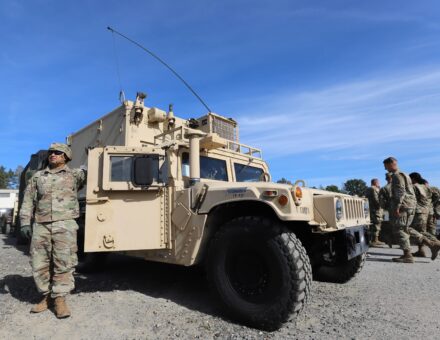
The Army then dispatched a small convoy of leader-follower tactical wheeled vehicles, which can be driven independently, remotely or be made to follow a vehicle, to deliver the part to an Expeditionary Modular Autonomous Vehicle (EMAV), a U.S. Marine Corps robotic vehicle, waiting at the (simulated) fighting edge.

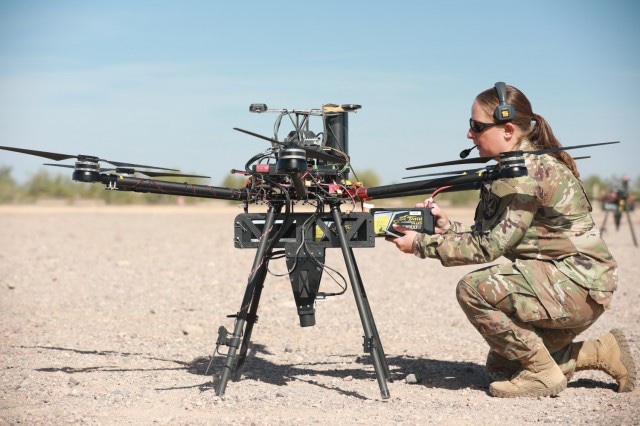
Once the part was secured to the platform of the EMAV, Soldiers sent remote communications from a distance, signaling to the vehicle exactly where it should deliver the item. When it received the message, the previously still machine revved into gear, kicking tan dust onto its black tracks and road wheels as it accelerated up a hill and turned toward its destination.
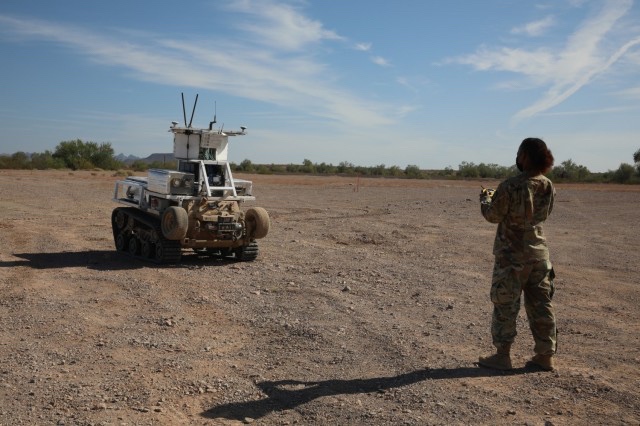
According to Dr. David Stone, a senior robotic engineer with the Marine Corps Warfighting Lab, the EMAV is operational in all terrains, possessing the ability to not only travel through muddy fields but also to pull other vehicles out of the mud. Despite its relatively smaller size, “the thing’s basically a truck,” Stone said.

Stone elaborated that the EMAV, which is a diesel-electric hybrid, is “very robust. Its versatility and the modular aspect — being able to do different warfighting functions — is the real value of it.”

Originally designed to accompany dismounted Marines, the durable autonomous vehicle can also serve the needs of Joint Force missions, as evidenced by the exercise.

“Between the Army and Marine Corps, we are going after the same thing,” Stone said. “Anything we can do to leverage on another’s work helps us do more with the money we have.”

While an EMAV was used for the training exercise, the Army also intends to use its Robotic Combat Vehicle-Light to serve a similar purpose in future semi-autonomous resupply missions.

Following the arrival to its destination approximately two miles away, and the human-assisted replacement of the tank part in the exercise, the EMAV returned to its starting point, powering easily through gravel and dirt as it traveled among a group of heavy military trucks.

The scenario demonstrated how the U.S. military can integrate new field-deployable technologies with existing ones, offering additional options to commanders while decreasing the human footprint necessary to carry out logistical resupply missions.

“People who are supplying us with ammo, water, food, etcetera — anything that puts Soldiers at risk, the EMAV takes them out, and it saves lives,” said Pfc. Daniel Candales of 1-508 Parachute Infantry Regiment, 3rd Brigade, 82nd Airborne Division, who was trained on the various functions of the vehicle.

The Army is additionally working to develop complementary capabilities that would allow for autonomous loading of supplies and digital tracking of items and vehicles and testing prototypes for these systems at Project Convergence 2021.

Reducing the need for hands-on support will also enable Soldiers who would otherwise be assisting with resupply chains to tackle other priority tasks. In addition, augmenting methods for delivering necessary equipment and supplies over treacherous ground will bolster the Army’s ability to function effectively across multiple domains.

“Logistics is something we always have to improve upon,” said Command Sgt. Maj. Robin M. Bolmer of the Army’s Futures and Concepts Center, who observed the exercise. He explained that new technologies open up numerous possibilities for growth, but that “the need to sustain what we have is always going to be there.”

The Futures and Concepts Center developed the initial concepts for many of the technologies and systems being tested during Project Convergence 2021, and will assume responsibility for organizing Project Convergence 2022, which is slated to include the participation of U.K. and Australian forces.

Bolmer shared that he was observing this year’s activities with an eye toward continual modernization progress, keeping the question of “how do we build upon all the great work being done here?” always at the forefront of his mind.

By Maureena Thompson, Army Futures Command
AF Supports Historic Army Warfighter Exercise, V Corps Becomes America’s Forward-Deployed Corps in Europe

Tuesday, November 2nd, 2021

The 505th Command and Control Wing supported the U.S. Army’s Mission Command Training Program resulting in the validation of Victory Corps as a European Command allocated corps headquarters during the execution of Warfighter exercise 22-1 at Grafenwoehr, Germany, Sept. 27-Oct. 5.

The multi-component exercise, which had the main command post at Grafenwoehr, Germany, a rear command post at Fort Riley, Kansas, and a U.S. Air Force Air Component and Air Operations Center replication cell at Hurlburt Field, Florida, tested the V Corps’ ability to mission command large-scale combat operations, or LSCO, in a multi-national environment.

The mission command proficiency of 1,402 joint service personnel including Soldiers from U.S. Army Europe and Africa, V Corps, 3rd Infantry Division, 34th Infantry Division, and their respective subordinate units were tested and honed during the execution of WFX 22-1.

Warfighter exercises are distributed, simulation supported, multi-echelon, tactical command post exercises fought competitively against a live-thinking regional adversary in a complex environment to prepare units for future LSCO. 

“The warfighter [exercise] is rigorous, complex, and very time-intensive. It is a nine-day sprint in large-scale ground combat operations. It’s the only time our corps and divisions are collaboratively immersed against a near-peer competitor, where they’re forced to really understand and improve their wartime mission,” said U.S. Army COL. Robert Molinari, chief of operations Group A, Mission Command Training Program, U.S. Army Combined Arms Center.

A substantial part of any Warfighter exercise is replicating the air component; this mission is the responsibility of the U.S. Air Force’s 505th CCW, Detachment 1, based at Fort Leavenworth, Kansas. This total force integrated unit’s mission is to provide airpower expertise and exercise support to the U.S. Army’s MCTP and act as the U.S. Air Force’s Air Warfare Center liaison to the U.S. Army’s Combined Arms Center.

“This was probably the most significant air component replication for a WFX that we’ve done to date,” said U.S. Air Force Col. Michael Goodman, 505th CCW, Det 1 commander.  “Most WFX events utilize a corps to role-play the Combined Forces Land Component, but GEN. Cavoli, the U.S. Army Europe and Africa commander, took the opportunity to train V Corps, his assigned subordinate unit, directly as the CFLCC. 

Goodman continued, “The entire USAREUR-AF staff participated and imposed a level of discipline and realism that we’ve never seen during the WFX.  It was impressive and helped ensure that the aligned Airmen got the most realistic we’ve seen to date.” 

For WFX 22-1, 505th CCW, Det 1 members forward-deployed globally to multiple exercise locations integrating into the exercise control group, standing up the exercise’s replicated AOC, and acting as observer, coaches/trainers providing subject matter expertise in areas that include intelligence, surveillance, and reconnaissance, airspace management, tactical air control, and joint all-domain operations.

“V Corps did a great job. They gave 110% daily. They were receptive to coaching and observations and every single day, across the board, they got better,” said Molinari. “So, I think it was a fantastic opportunity for V Corps to really see themselves, to improve on, and to prepare for what the Army might ask of them.”

“Our purpose is to ensure we coach our tactical air control party, or TACP, members to improve not just their technical proficiency, but also their overall integration with their supported Army maneuver unit command teams and planners.”  U.S. Air Force Maj. Thomas Hopkins, 505th CCW, Det 1 chief observer and coach, Fort Leavenworth, Kansas. Hopkins made sure his team of coaches/trainers did not lose sight of their larger purpose during the event. 

Hopkins continued, “The bottom line is that we do everything we can to assist the Army’s MCTP in providing a training environment which enables the TACP units to leave the exercise a more ready and lethal enabler than when they arrived.”

The 505th CCW, Det 1’s main U.S. Air Force training audience were the Airmen assigned to the 4th Air Support Operations Group, Wiesbaden, Germany, and their subordinate units in the exercise.

“The men and women at the 4th ASOG did a phenomenal job under the leadership of Col. Dustin Dupuis, the 4th ASOG commander and also the V Corps air liaison officer,” said Goodman.   “Col. Dupuis and his team made significant gains validating new capabilities and authorities that will enable increased lethality of the joint force in LSCO.  It was huge win for the joint force and they made it happen.”

A team of 47 Airmen from the 505th Combat Training Squadron, Hurlburt Field, Florida, provided AOC replication during WFX 22-1 in coordination with the forward-deployed exercise control group from the 505th CCW, Det 1, and this team represented a full-spectrum air component replication to the U.S. Army training audience.  

The 505th Communication Squadron configured and maintained command, control, communications, computers, and intelligence, or C4I, and models and simulations, or M&S, systems, in addition to collaborative tools (chat, voice, email, etc.). 

“The support provided by the 505th CS allowed the AOC controllers to push real-time updates for air tasking orders and airspace control orders to theater representatives and ensured a valid common operating picture was in play,” said U.S. Air Force Lt. Col. Veronica Williams, 505th CS commander, Hurlburt Field, Florida. 

WFX 22-1 was a crucial exercise for V Corps in that it marked the final event in a yearlong effort to become a fully certified, operational, and combat-capable warfighting headquarters after their reactivation as a corps in October 2020. 

“The success of WFX 22-1 has provided the European region and our NATO allies a forward-deployed Corps ready and equipped to meet the demands of a near-peer conflict,” said U.S. Air Force Capt. Darrin Nottingham, 505th CS operations officer, Hurlburt Field, Florida. “The 505th CS performed admirably while upholding their squadron’s three main objectives: train, innovate, and communicate.” 

Providing air component replication to the joint force is one of the primary mission capabilities of the 505th Combat Training Squadron at Hurlburt Field, Florida. 

“As our strategic competitors present increasingly complex problem-sets, it is more vital than ever that our joint partners have a full understanding of the capabilities of airpower and the role of the air component in tackling emerging challenges,” said U.S. Air Force Lt. Col. Michael Power, 505th CTS director of operations.

Power continued, “The professionals at the 505th Combat Training Squadron are uniquely positioned to combine a deep experience in Air Force command and control procedures with a keen understanding of developing concepts to replicate the air component and provide an exceptionally realistic operational-level training environment.”

During the 8-day exercise, the 505th CTS’s team facilitated 232 sorties to present full-spectrum airpower, produced over 19 thousand airspace control measures, and published 43 air component planning documents to inform U.S. Army planners.

WFX 22-1 exercised the people, processes, and procedures to ready the joint force for LSCO against near-peer adversaries. 

V Corps will assume enduring mission requirements in support of U.S. Army Europe and Africa as a split-based headquarters with locations at Fort Knox, Kentucky, and Poznan, Poland. The return of the Victory Corps to Europe enhances security in the region and reassures our NATO and partner nations of the United States’ commitment to our European allies. WFX 22-1 was V Corps’ final certifying exercise in becoming the U.S. Army’s fourth corps headquarters and America’s forward-deployed corps in Europe.

The 505th CTS and 505th CS, Hurlburt Field, Florida, report to the 505th Combat Training Group, Nellis Air Force Base, Nevada, and the 505th CCW, Det 1, Fort Leavenworth, Kansas, report to the 505th CCW which is headquartered at Hurlburt Field, Florida.

Story by Deb Henley, 505th Command and Control Wing

Photos by PFC Devin Klecan

Project Origin Robotic Vehicles Join JRTC Rotation in Historic First

Monday, November 1st, 2021

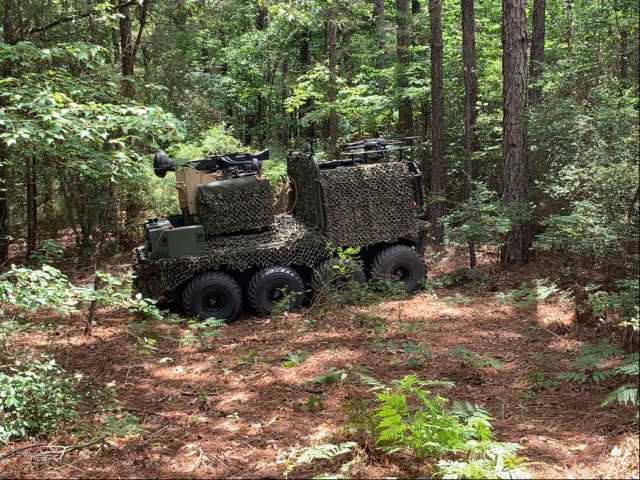
DETROIT — In an historic first, U.S. Army Soldiers integrated a Robotic Combat Vehicle (RCV) surrogate into the opposing force during a recent rotation at the Joint Readiness Training Center at Fort Polk, Louisiana, in September. This event enabled the Army to gain valuable insight in how best to utilize robotic vehicles in combat and furthered its ongoing Campaign of Learning around RCV development.

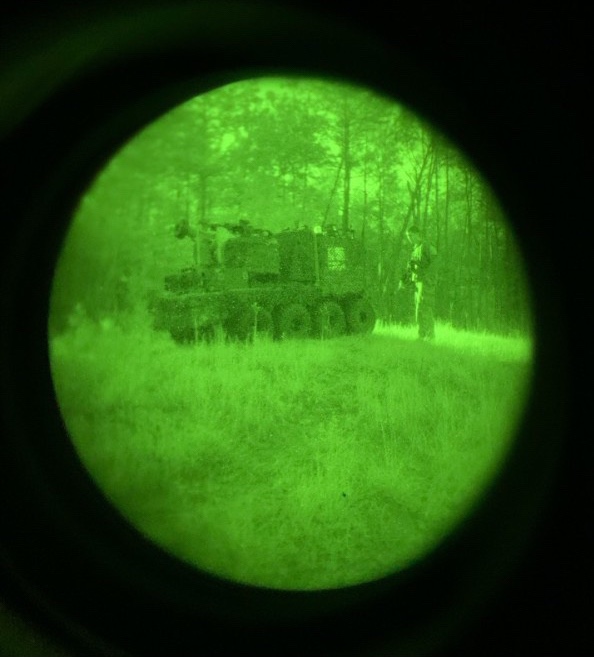
During the exercise, Soldiers from the 1st Battalion (Airborne), 509th Infantry — known as Geronimo — used two Project Origin vehicles (RCV surrogates) in a simulated battle with the 3/101st (Air Assault). The Origin vehicles are an Army Development Command (DEVCOM) Ground Vehicle Systems Center (GVSC) prototyping effort and provides the Army with the ability to conduct rapid technology and autonomous behavior integration that Soldiers assess during multiple touchpoints each year.

While on-site engineers and technicians collected technical data, the Soldiers in the field further validated the combat benefits of adding robots to a manned-unmanned teamed formation and identified new capabilities desired for the next Project Origin Soldier operational experiment.

“With these units, the human survivability rate increases significantly,” explained Sergeant First Class Eugene Lackey (Pathfinder Company). “This system allowed us to close with and destroy the enemy safely from a distance. It [also enabled] us to the find the enemy before he could find us. It is a great tool and I wish we could have it for little bit longer to really see how we can change the way wars are fought.”

The feedback from Geronimo Soldiers adds to the Army’s growing library of information on the use of robots.

“Project Origin’s key competency is its ability to collect Soldier feedback and technical data, use this information to rapidly iterate both its software and physical payloads, and evaluate the changes in relevant tactical environments,” said Todd Willert, Project Origin project manager at GVSC. “The lessons learned during Project Origin experiments directly support the development of the Robotic Combat Vehicle and the Army’s forthcoming Ground Autonomy Software, user interfaces (Warrior Machine Interface), and modular architectures.”

GVSC and the Army’s Next Generation Combat Vehicles Cross Functional team, both based at the Detroit Arsenal in Michigan, and the Army Capability Manager-Infantry Brigade Combat Team (ACM-I), based in Georgia, worked together to integrate the Project Origin platforms into the JRTC rotation.

“JRTC stressed the systems to their breaking points, allowing us to identify problems that would undoubtedly arise in the future,” said MAJ Cory Wallace, RCV lead for NGCV CFT.

During the exercise, the Soldiers and the robots also endured a tropical storm, further adding to its complexity.

Among the highlights of the exercise, the Geronimo force used the Project Origin platform to block a key intersection for 36 hours, an effort that benefitted from Origin’s low heat signature while conducting long hours of battery-powered “silent watch.” In addition, Geronimo used the project Origin vehicles to deny helicopter landing zones and conduct route reconnaissance. Using the robots to conduct these operations – the two platforms were controlled by four operators and an NCO – allowed the Soldiers who would have been assigned those tasks to be assigned different missions.

“This validated the notion that if we assign the dumb, dirty, dangerous missions to the robots, we can re-assign our Soldiers to the high-priority complex missions and tasks,” Wallace said.

The Army has additional Soldier Touchpoints, with Project Origin and other RCV platforms, scheduled throughout 2022 as it prepares to make future decisions on the potential acquisition of RCVs.

By Dan Heaton

Natick Holds Optimizing the Human Weapon System Study

Saturday, October 23rd, 2021

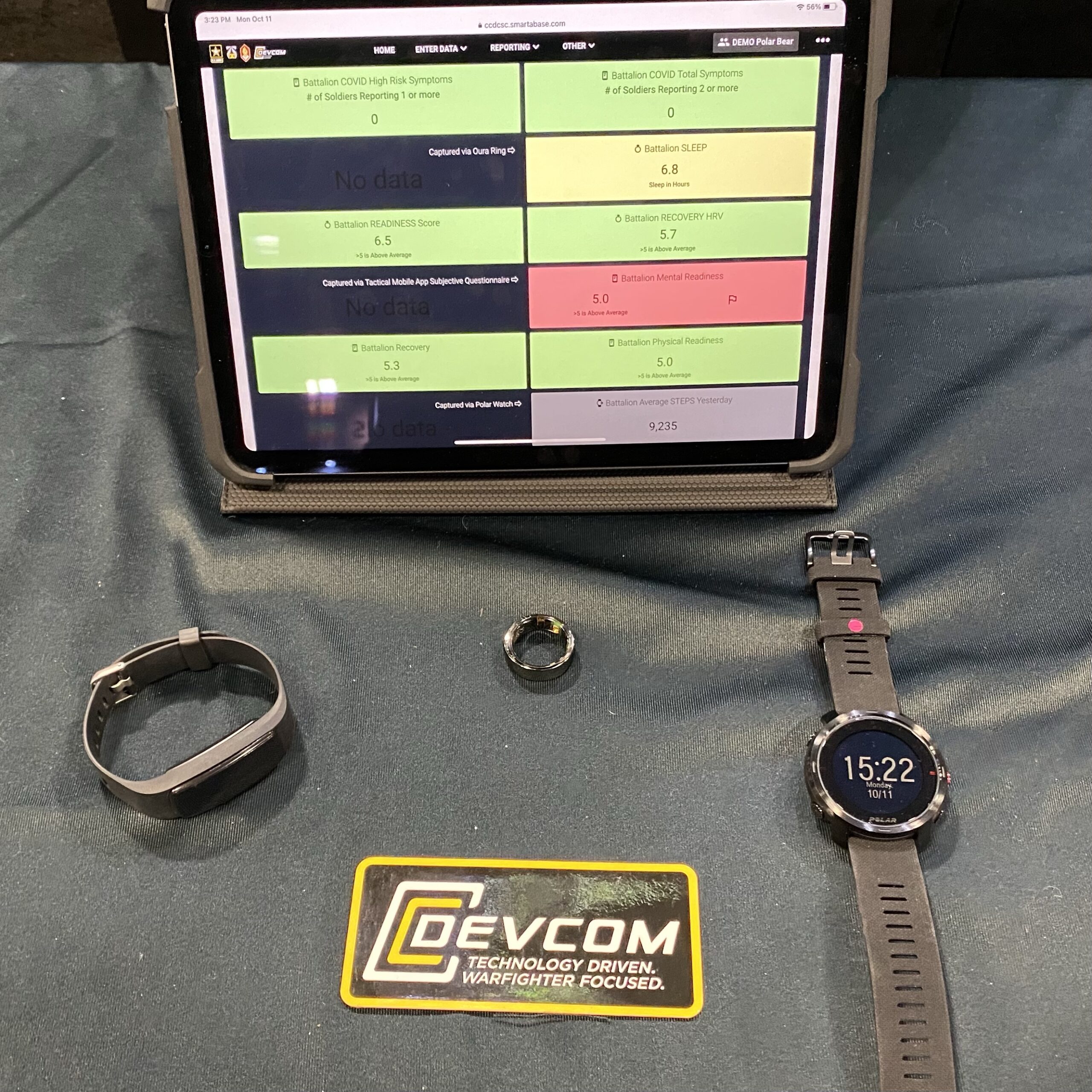
The US Army Combat Capabilities Development Command Soldier Center’s Optimizing the Human Weapon System (OHWS) recently participated in a sensor-based study relating physiological status to health stressors with 560 Soldiers from the 10th Mountain Division.

Leveraging the CCDC SC’s Measuring and Advancing Soldier Tactical Readiness and Effectiveness Program they took physiological data from commercially available sensors to monitor Soldier health and develop algorithms for detection of presymptomatic or asymptomatic signatures of infection and illness.

Sensors included the Oura ring for sleep and recovery data, Polar Grit X watch to quantify physical exertion and Smartabase athletic management software.

Joint ASA ALT and AFC Statement on the Integrated Visual Augmentation System

Thursday, October 21st, 2021

The Office of the Assistant Secretary of the Army for Acquisition, Logistics and Technology, in coordination with Army Futures Command, has decided to shift the Integrated Visual Augmentation System operational test to May 2022 and its fielding to September 2022.

The Army did not halt or stop the IVAS program, and remains committed to getting the best equipment in the hands of our Soldiers as quickly as possible. The shift in the IVAS program will allow the Army and industry team to continue to enhance the IVAS technology platform, ensuring Soldiers achieve overmatch in multi-domain operations.

The Soldier Lethality Cross-Functional Team, Program Executive Office Soldier, and Microsoft are working together to develop and field IVAS – a technology platform for fighting, rehearsing and training – which will provide close-combat forces with unprecedented capabilities that are extensible to any combat environment or combat platform.

Developers used the Microsoft HoloLens to build a system capable of rapid target acquisition, navigation, target marking and a host of other features, including a field of view nearly twice as wide as those offered by current systems.

At 80 degrees, IVAS pushed the boundaries of waveguide technology capabilities, and the field of view began to lose resolution. By making minor reductions, developers are finding greater quality and clearer visibility.

The process will require a little more time, but it will still result in the fielding of a next-generation combat system six to 10 years ahead of the traditional acquisition program timelines.

Calculated risk and time for adjustment have been baked into our processes, and are vital to rapid Army modernization practices. The new timeline does not affect contract agreements.

At this year’s Association of the United States Army annual event we stated, the Army has to be willing to accept some early risk, or we will never be able to keep up with the pace of change required to achieve and maintain overmatch in MDO.

By Karen Saunders and Gen. John M. Murray

Karen Saunders is the senior official performing the duties of the assistant secretary of the Army for acquisition, logistics and technology. Gen. John M. Murray is the commanding general of Army Futures Command.

4ID Stryker Brigade Combat Team Tests Army’s Newest Mounted GPS Devices

Wednesday, October 20th, 2021

WHITE SANDS MISSILE RANGE, New Mexico – 4th Infantry Division Soldiers tested the Army’s next-generation Assured Positioning Navigation and Timing (APNT) solution here, which allows Soldiers to maintain integrity of position and timing in GPS-contested environments.

The Mounted Assured Position Navigation and Timing (MAPS) will integrate across the Army’s wheeled and tracked platforms, bringing heightened protection levels against evolving GPS threats to support multi-domain operations.

During the first week of testing, 1st Stryker Brigade Combat Team (1SBCT) Soldiers received New Equipment Training (NET) to familiarize them with the MAPS system capabilities and user interface.

Throughout the rest of the test, they provided feedback on the system during operationally realistic missions, including Call for Fire (CFF), Reconnaissance, Quick Reaction Force (QRF) and Medical Evacuation (MEDVAC) in a GPS degraded environment.

“I’ve never seen what happens to GPS Systems when they encounter an Electronic Warfare (EW) attack,” said Capt. Christopher Mazeau, Assistant Operations Officer for 1SBCT.

He said he is glad to see the Army is working to develop an answer to such threats.

MAPS is designed to support command and control by replacing the need for multiple GPS devices on a single platform, and it also helps to mitigate EW attacks with an onboard anti-EW antenna.

The system aligns with the Army Futures Command (AFC)-directed requirement to prepare for tomorrow by providing overmatch in multi-domain operational environments.

By MAJ Matthew Truax, Test Officer, Intelligence Electronic Warfare Test Directorate, U.S. Army Operational Test Command

Galvion Wins $5.8 million Contract to Supply US Army with EOD Tools and Equipment Kit (ETEK)

Thursday, October 7th, 2021

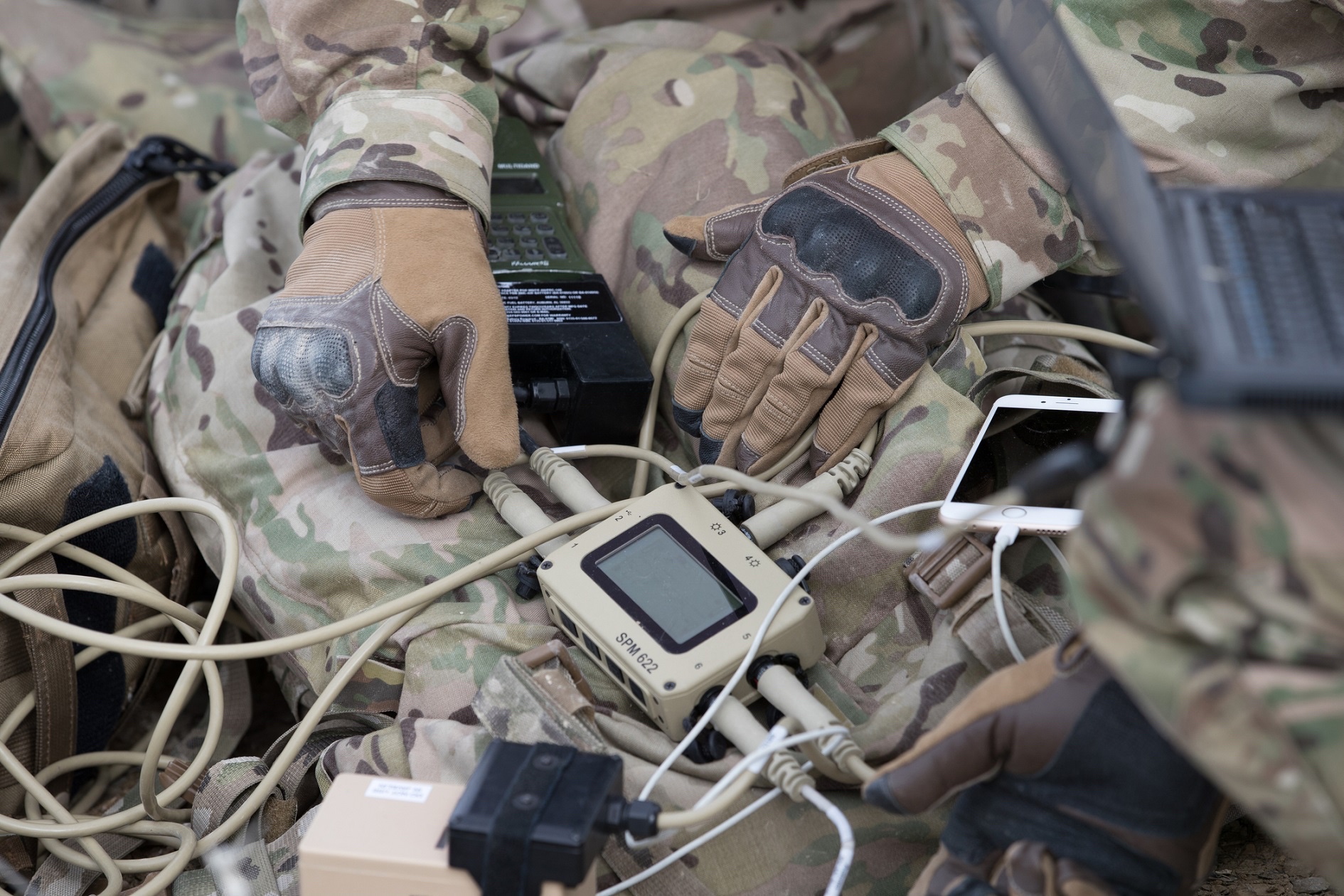
Galvion, a world leader in the design and manufacture of military power and data management solutions is pleased to announce that its Squad Power Manager™ (SPM) kit will be included in the U.S. Army EOD Tools and Equipment Kit (ETEK).  A $5.8 million contract from Program Manager Close Combat Systems (PM CCS) was awarded to supply an EOD-tailored SPM™ system to all active EOD units starting in December 2021.  The Squad Power Manager is a core element of Galvion’s Nerv Centr® Active Systems range, which provides scalable power and data solutions to the dismounted soldier.  Galvion will be exhibiting the SPM, along with their full range of active systems and their next generation head systems, in booth 3817 at the AUSA exhibition, taking place in Washington DC, 11-13 October 2021.

EOD teams use specialized equipment that requires sustainable and lightweight power when off-grid.  The US DoD were seeking to upgrade their entire EOD dismounted kit and needed a single, customizable solution that could recharge the batteries for EOD tools and scavenge power from multiple sources such as solar, vehicle power or AC mains.  The SPM ETEK Kit includes multiple cables and accessories that offer operational flexibility, allowing EOD units to harvest, scavenge and provide power to mission-critical equipment. The SPM requires no special configuration or programming, converting and managing power as efficiently as possible depending on power sources and equipment needs.  This allows teams to minimize weight and logistical burden by carrying fewer batteries, while increasing operational efficiency through active monitoring and management of power usage.

Kristen Lomastro, President of Active Systems, said: “We are a company that is dedicated to delivering mission success by fully understanding not just the military requirement, but the environment, the conditions and the additional circumstances that the dismounted soldier may encounter.  We pride ourselves on providing the very best technical and engineering solutions possible and by reducing the physical, cognitive and logistical burden for the warfighter, we increase their agility, lethality and survivability.  Galvion is extremely pleased to announce this new contract for ETEK with US Army EOD units, and to continue in our mission to protect and support those who protect us.”

Galvion’s modular and scalable power management systems are battle-ready, flexible and easily integrated with commonly fielded equipment.  The Squad Power Manager is a field-proven system, with customized kits in use across all U.S. DoD branches, including units of the U.S. Army, Navy, Marines, Air Force, and SOCOM.  In addition, Galvion’s power management systems are being used by allied forces in Canada, the UK, Australia, France, Denmark and Sweden, among others.

www.galvion.com

Value of History in the Army

Thursday, October 7th, 2021

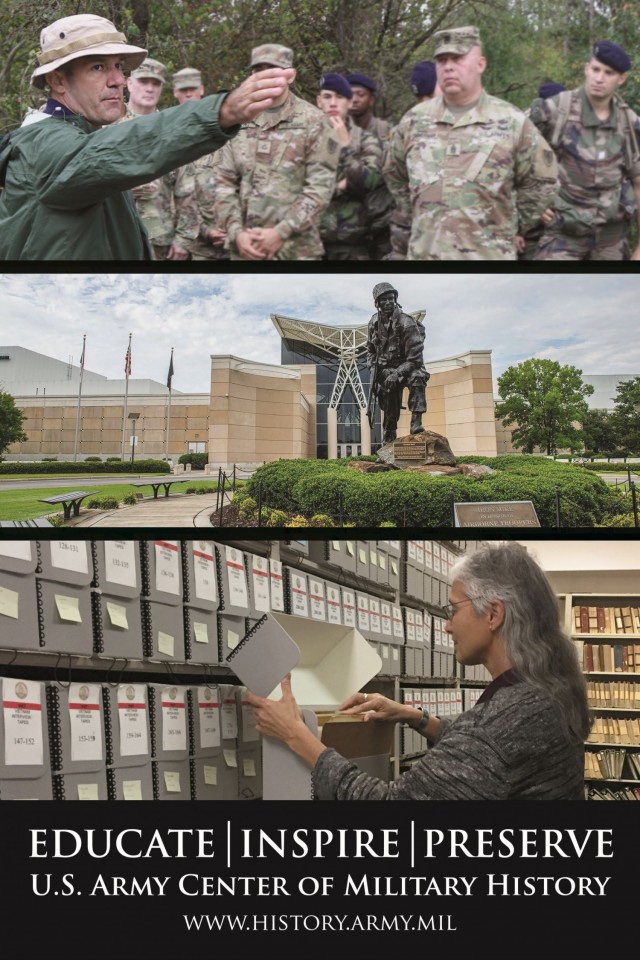
WASHINGTON, D.C.— The study and use of history is a critical tool in the Army profession. It helps to inform current decision making, inspires Soldiers to serve, and builds morale and esprit in units.

“History helps us learn from the past, see the present and be ready for the future” said General Paul E. Funk II, Commanding General of the U.S. Army Training and Doctrine Command (TRADOC). “You have to understand your historical roots to become an effective leader.”

At this year’s Association of the United States Army (AUSA) Annual Meeting from October 11-13 at the Washington Convention Center, the U.S. Army Center of Military History (CMH) will host a Kiosk promoting the value of history in the Army.  Preparing Soldiers at all levels to be historically minded is a significant role for CMH, an organization within TRADOC.

The Executive Director of CMH, Charles R. Bowery, Jr. points out, “All ranks in the Army, from the most junior trainee to the Chief of Staff, benefit from historical awareness in different ways. Every Soldier should understand that they are serving something bigger than themselves.”

A true understanding of history goes well beyond simply knowing key dates and events. The lessons of history develop critical thinking skills in Soldiers as they understand the reason why and how events unfolded in the past and their connection to today. It develops a more informed use of actionable history in current staff planning and decision making.

According to Dr. Peter G. Knight, Chief of Field and International History Programs at CMH, “We frequently respond to requests for information about historical events to help develop viable courses of action for Army leaders.” Knight recommends all Soldiers can use existing programs within the Army to improve their historical perspective. “There are professional military education courses and leader developmental programs like staff rides that can hone critical thinking skills.”

Staff rides are a unique and persuasive method of teaching the lessons of the past to the present day leaders. They can bring events to life and provide a greater understanding of tactics, leadership, strategy, communications and the psychology of Soldiers in battle. The staff at CMH develop and lead staff rides for U.S. Army organizations and provide detailed staff ride pamphlets online for free downloads.

Beyond decision making, history is also a key part of many aspects of a Soldiers career from understanding the rich heritage of his or her unit to accessing VA benefits as they transition to civilian life. Knight says, “A unit history program not only helps build esprit de corps, but it helps ensure unit awards and unit campaign participation credit are up to date.”

History also builds morale and helps to inspire men and women to serve by providing examples of those who exemplify Army values. “It connects Soldiers to their unit through activations, lineage and honors, unit decorations, and unit heritage” Knight said.

Leader support for the Army History Program will improve the understanding of history and its essential application in all units. Key elements of the program include assigning unit history officers, including Command Historians as part of staff functions and the use of Military History Detachments. Knight says “If you ever asked your staff if a certain situation has happened before or how did we handle a situation in the past, then you need a unit historical program.”

Other ways to expand historical mindedness is accessing the publications and research resources on the CMH website. Bowery also points out that “The Chief of Staff’s professional reading list is the best place to start. CMH and Army University Press also have thousands of free publications that Soldiers can access.”



The value and benefits of using history in the Army are significant factors to the success of units and individual Soldiers careers. The Center of Military History is a valuable resource with multiple tools that are available to all Army units and personnel.


“The Center of Military History can do all sorts of things for a leader development program, they can provide staff rides, they can provide lessons learned, and they can be the historical reference you need.” GEN Funk said.

By Francis Reynolds

Additional Resources:

history.army.mil