SIG SAUER - Never Settle

Archive for the ‘Army’ Category

Congratulations to PM IVAS

Friday, December 11th, 2020

Congratulations to Program Executive Office (PEO) Soldier’s Project Manager Integrated Visual Augmentation System (PM IVAS) for being recognized as Assistant Secretary of the Army – Acquisition, Logistics & Technology’s O6 Project Manager of the Year.

Combat Divers Submerge Inside Cheyenne Mountain

Thursday, December 10th, 2020

CHEYENNE MOUNTAIN AIR FORCE STATION, Colo. —

A Special Forces Operations Detachment – Alpha (SFOD-A) with 10th Special Forces Group (Airborne) put their combat dive skills to use November 5, 2020 where one would least expect: in the heart of the Cheyenne Mountain Complex. 

Inside the complex are three reservoirs that hold water for a variety of uses, including cooling the mountain’s generators and expelled exhaust. Because the mountain is designed to function independently, the water systems are vital to the success of the mountain’s operations. Assessing the Structural integrity of the reservoirs and ensuring the water is flowing freely through the cave systems that connect them keeps things running smoothly. 

“They originally contracted with a civilian company to get this done,” says the Officer in Charge of the Dive LIfe Support Maintenance Facility at 10th SFG (A). “My brother, an Air Force Logistical Officer tasked to the Space Force, recommended they get in contact with (us) to do it for free.”

The facility manager of the complex and the DLSMF and a chosen combat dive SFOD-A set out to accomplish the mission.

“Dive operations don’t happen very often in special forces,” says the OIC. “This was a good chance for us to go out and showcase our capabilities as a legitimate maritime force within (Special Operations Command) to actually do a real world mission. It’s not infiltrating into enemy country or territory, but it was a chance for us to show everyone that we do have this capability and it’s important to keep the capability within the Special Forces community.”

10th SFG (A) to establish and develop relationships outside of the Army and Special Operations Command. It started a relationship with the Cheyenne Mountain complex to provide future opportunities for real world missions, training and equipment testing. These relationships are essential to interoperability within different branches of the military enhancing our overall capabilities as one united force. 

By Sgt Angela Walter, 10th Special Forces Public Affairs

US Army Develops Advanced Integrated Kneepad for Army Combat Pant

Wednesday, December 9th, 2020

For years the Army Combat Pant has used the Crye Precision AirFlex Kneepad. The Army has had to buy them from Crye Precision and not owning the Intellectual Property isn’t able to make changes or outsource manufacturing elsewhere.


USSOCOM uses a different two-piece kneepad for their Level 9 combat uniform which was developed by Patagonia. It’s called the Versatile Integrated Knee Protection with a padded portion placed inside a pocket at the knee with four grommets to accommodate connecting a hard shell component to the outside.

Adoption of the VIKP would have put the Army in the same position regarding changes and manufacturing.

For some time the Army been working on an alternative and it looks like they’re getting close to fielding the Advanced Integrated Kneepad. Like the Patagonia VIKP, it’s a two-piece design, but connects via straps.

The differences in the AIK design required the Army to make changes to the ACP knee.

The Technical Data Package (TDP) for the Supply Request Package (SRP) is expected to be submitted to DLA 2nd Qtr FY 21 so it can be procured from industry.

Planned improvements will include various threat level protections as necessary and integration across additional operational ensembles such as the new Chemical Biological Protective Suit and National Fire Service Smoke Jumper Garment.

US Army Evaluating Mini Tactical 5-R System from Gantz-Mountain Inc

Tuesday, December 1st, 2020

As part of the ongoing Army Expeditionary Warrior Experiment 2021, they are experimenting with the Mini Tactical 5-R from Gantz-Mountain, Inc.

It is a smart surveillance system using ground sensors with artificial intelligence. This super micro-computer and artificial intelligence algorithms are packaged within one of five ruggedized camera systems with low light/night, thermal, and acoustic sensors.

The Experimentation Force (EXFOR), 1-29 IN, will conduct missions using the fixed or long range capabilities of the MT-5-R for AEWE’s Force-on-Force experimentation missions on Fort Benning, GA February through March 2021.

The Mini Tactical SOF Intelligence System is available for agency and unit orders through ADS Inc.

First Basic Training Class Graduates Wearing Army Green Service Uniform

Wednesday, November 25th, 2020

FORT SILL, Okla. — The first class of basic combat trainees to graduate wearing the new Army Green Service Uniform (AGSU) showed off their threads Nov. 16, during a ceremony at Fort Sill.

Almost 200 Soldiers from A Battery, 1st Battalion, 79th Field Artillery completed their 10-week basic combat training. The 434th Field Artillery command team and many of the drill sergeants also wore the AGSU.

Guest speaker Lt. Col. Jason Carter, Fires Center and Fort Sill Commanding General’s Planning Group director, highlighted the historical significance of the uniform.

“The Army’s greatest generation wore the iconic greens uniform when America was in the throes of World War II. Men like (generals of the Army Dwight) Eisenhower, (Omar) Bradley, and (George) Marshall wore it,” Carter said. “Now you, as our next great generation, are among one of the first in our United States Army to wear one of the most admired and recognizable uniforms in our history as it is being reinstituted to honor our heritage.

“While the Army Green Service Uniform invokes a feeling of nostalgia, it’s what’s under the uniform that counts,” Carter said. “The heart, the character, the grit, and the resolve of the American Soldier.”

Drill Sergeant (Staff Sgt.) Hayon Ju, A/1-79th FA, said the uniform links the greatest generation to millennials. She said she loved the practicality of the new dress uniforms.

“They’re a lot easier for females to set up our ribbons and badges,” Ju said. “We just go off our pocket flaps.”

Senior Drill Sergeant (Sgt. 1st Class) Antrell Bender, A/1-79th FA, said the trainees received the AGSU Oct. 14. They learned about the historical significance of the uniform. And, last week they were shown how to properly wear the uniform with adornments.

“On Saturday morning (Nov. 14), a final inspection was given to identify any deficiencies,” Bender said.

He noted that since it was the trainees’ first dress uniform they don’t have anything to compare it to, but for him, it’s the third dress uniform he has worn in his career.

“I’ve been in since we had the green dress uniform, then we switched over to the ASUs (Army Service Uniform),” Bender said.

Graduate Pvt. Rebeca Beaird, age 19, from Houston, recalled what she and some of her fellow trainees thought when they were first issued their AGSUs.

“A lot of us were thinking: Oh, Captain America, Like yea! We get to be there,” said Beaird, who will go on for further training at Fort Sam Houston, Texas, to become a behavioral health technician.

She said the AGSU is about building on the women’s legacy in the Army.

“Soldiers who wear this uniform are going to be honored to wear them,” she said. “Veterans who wore them will be happy to see us bring it back.”

Graduate Pfc. Tyree Smith, 20, of Indianapolis, said he was honored to be in the first class to graduate with the AGSUs. He said the uniform makes him feel like a man, ready to achieve.

Smith moves on to training at Fort Leonard Wood, Missouri.

Col. Daniel Blackmon, 434th FA Brigade commander, said the AGSU is special for him because his father and grandfather served in the Army and wore similar uniforms.

He said he’s heard a lot of positive comments when wearing his AGSU. “One, the history, and two, just the way it looks.”

By Jeff Crawley, Fort Sill Tribune

Next-Generation Headset Preps Soldiers for Future Battlefield

Tuesday, November 24th, 2020

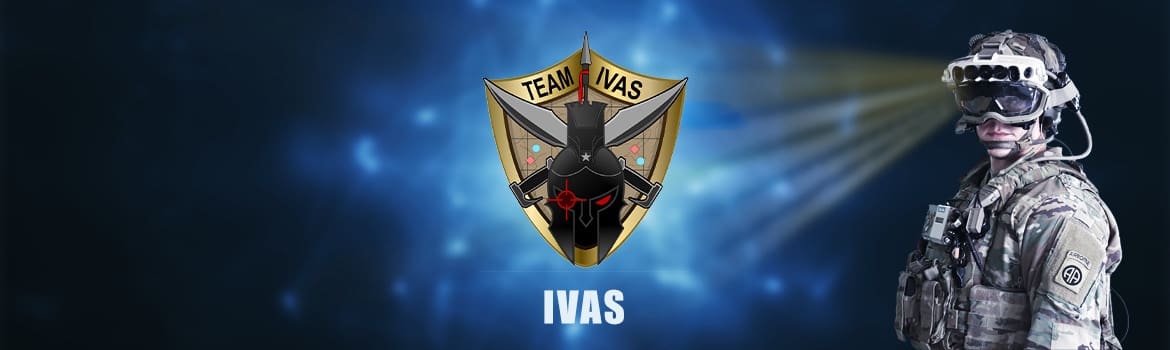
FORT PICKETT, Va. – The third Capability Set of the Integrated Visual Augmentation System (IVAS) was tested at Fort Pickett by 82nd Airborne Soldiers and 25th Marines during October 2020.

The project uses Soldier Centered Design (SCD) to evaluate the IVAS military fighting goggle through operational evaluations. Soldier involvement and engagement at every stage of prototype development has allowed the fast-paced rapid prototype effort to ensure that the final product will positively increase the situational awareness, lethality, mobility, and performance of the close combat force.

“When I look through the IVAS I see how we’re going to fight on the battlefield of the future,” said Staff Sgt. Kester, Weapons Squad Leader.

The Army is developing IVAS as a single platform that allows the Warfighter to Fight, Rehearse, and Train. It integrates next generation 24/7 situational awareness tools and high-resolution simulations to deliver a single platform that improves Soldier sensing, decision making, target acquisition, and target engagement. The visibility that it gives to higher command and control is unparalleled.

“With IVAS you now have the ability to paint a picture for higher ups, almost instantaneously,” said Sgt. Black, Combat Medic. “So now you have a Colonel who’s watching the battlefield like never before. That’s phenomenal, and that has the potential to increase our lethality in a way that we’ve never seen.”

IVAS also provides increased situational awareness for the leadership on the ground.

“In the field, a big part of my job is command and control,” said 1st Lt. Christopher, Platoon Leader. “I am basically moving my squads like pieces on a chessboard and maneuvering them into position and making sure that they’re in the right place at the right time. For me not only can I see where they are with IVAS, but I can actually go into the system and put a point here and say ‘Hey, you all need to go here’ or ‘Hey there are enemies over here watch out!’ I can also send messages non-verbally, so it is very, very critical for me for the command and control aspect.”

The first IVAS militarized form factor prototype was put through tactical exercise lanes, advance marksmanship, land navigation and squad reconnaissance, movement to contact with hasty attack, and enter and clear a trench to validate the military utility that the technology brings to the squad both day and night. The Soldiers and Marines spent a week learning the new equipment before using it in the various operational tests.

“It was extremely easy to pick up,” said Christopher. “It’s very simple in its controls, the menus and such are very easy to navigate, and they’re categorized in a way that if I want to do this function, easy over there, bring up the map, one button press away.”

Christopher also noted that the Microsoft data collectors had been receptive to their feedback and had already made progress and developments on the input given throughout the touchpoint event. Cpl. Sweckard, Team Leader, 25th Marines also expressed similar sentiments.

“Anytime we conduct any type of training with the IVAS, we immediately make contact with the [data collectors] from Microsoft and provide them with feedback, things that we’ve identified that could be an issue, things that we liked, and how we fixed the issue if we were faced with one,” he said. “That way they can put together the common things that are happening with the device and identify a resolution.”

Because of the similarities in operational responsibilities and as members of the collective close combat force, Marines were present to test the current IVAS capability set specifically during live fire execution.

“What it does for us mainly is combines a lot of things that we currently utilize, such as global positioning devices, or GPS’s, communication devices, as well as land navigation tools and mission planning tools,” said Sweckard. “Those are things that are commonly individual technologies that are now combined into this one system of IVAS.”

The project was initiated in response to an erosion in close combat capability relative to pacing threats identified in the 2018 National Defense Strategy. These capabilities will provide the increased lethality, mobility, and situational awareness necessary to achieve overmatch against our current and future adversaries in any domain.

“I think if it’s in the right hands it can be an effective tool, like an aid bag. An aid bag without a medic is nothing, but an infantry guy with IVAS is something much more,” said Black.

Though the Army is specifically developing this high priority modernization effort, the Marine Corps may also leverage the technology for their close combat operations.

“It will definitely be a force multiplier on the battlefield,” said Sweckard. “As a team leader I have three Marines that are under my charge and my basic mission is to employ those Marines in combat, make those three Marines look like 30. If I can do that, that’s going to make the Marine Corps more lethal. With the IVAS I can better achieve that mission, without a doubt.”

The integrated system is expected to be fielded to Soldiers next year.

“When Lieutenant Colonel Winn told us we want to field it next year I thought that was crazy. Then I looked and thought through it and I could see it, I can see the possibilities,” said Kester. “Some of my combat experiences made me pause for thought to look at it like Russia and China, they’ve been pushing technology like this for the last decade. And what have we been doing? Not that.”

Kester added that though he did not know about IVAS before coming to the third Soldier Touchpoint, as soon as he did, he was onboard with Team IVAS.

“I would say the only thing that’s going to hurt this program is people not being imaginative enough or trying to push the limits of what they think is possible, or what Soldiers want. I am really excited to see where this will go,” said Kester.

Marne Central Issue Facility Modernizes with Online Appointments, Less Equipment Turn-ins

Monday, November 23rd, 2020

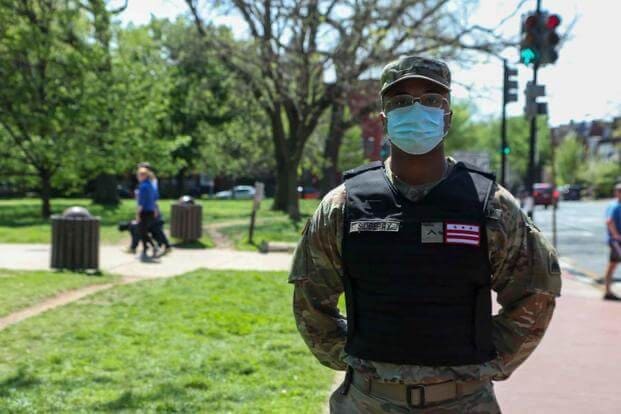
For many Soldiers, the thought of visiting their local Central Issue Facility invokes certain feelings: anxiety and frustration to name a couple. This might change soon for the Soldiers of Fort Stewart-Hunter Army Airfield as the CIF experience is transforming to make the process easier for the warfighter.

Transitioning to appointments

Transitioning to a modern storefront program, Soldiers are now able to schedule appointments online for their CIF turn-in and exchanges.

“After a few weeks of testing the system with the Marne Reception Center, the appointment system is now live. It lets Soldiers coordinate directly with the local CIF for times that work for them, and then the facility will get a daily report of how many Soldiers are coming in,” said Lt. Col. Chad Moniz, the battalion commander of the 406th Army Field Support Battalion-Stewart who is responsible for the Fort Stewart and Hunter Army Airfield CIF.

“The system will enable a better experience for the Soldier, while maintaining a forecastable schedule for the CIF staff who still need to be ready to respond to real-world surge requirements,” he said.

“We still have the ability with the appointment system to keep Soldiers informed,” Moniz continued. “If we were planning to support a real-world deployment surge, massive plate exchange or inventories, we can change it in the system so those times will show as unavailable in live time. This will reduce lines or Soldiers having to find out in person.”

Appointments will be made in 15-minute increments. The AFSBn team recommends Soldiers arrive 10 minutes early to allow for accountability. The system is set up to accommodate eight people every 15 minutes.

For now, the new program has focused times targeting different needs. Soldiers from the Marne Reception Center will be accommodated daily until 10:00 a.m. From 10:00 a.m. to 2:30 p.m., CIF has open appointments for any service. From 2:30 -3:30 p.m., the CIF will continue to have walk-in open time to enable Soldiers that do not have appointments or who may not have access to common access card-enabled computers to make the appointments. Appointments can be made up to two weeks prior to the requested date.

Moniz explained that the appointment program will send Soldiers an email once the appointment is booked. It will also notify the CIF of what services Soldiers are requesting, whether it is for exchanging equipment, receiving new issue, or turning in old equipment.

Overhauls to adjust to transformation

While the modernization will result in welcomed improvements, the transition caused some delays for CIF customers in August and September. Completing a 100% inventory of the multi-million-dollar property book between the two installations was required because of a key personnel change occurring at the same time as the modernization transition, which was further exacerbated by impacts from the COVID-19 pandemic.

“We are a very customer focused organization, with the majority of our employees being retired military,” said Nia Landry, deputy commander of the 406th AFSBn. “They take great pride in providing services for the Soldiers, but we did run into somewhat of a perfect storm.”

Landry said that an accountable officer unexpectedly retired during the key implementation of several phases of the modernization process, forcing the CIF to conduct a 100% accountability inventory of both sites. This, combined with a large surge of Soldiers with PCS orders, caused backups in the system.

“It was not our intent in any way to inconvenience Soldiers and their families,” Landry said. “Moving forward, we have several things in place that will improve your experience at CIF, and we always welcome suggestions as we strive to get better.”

Throughout the inventories, the average throughput did not decrease. The facility on average services 100 Soldiers in the morning, and 100 in the afternoon. As a result of an uptick in approved PCS orders following a long pause with COVID-19, the Fort Stewart and HAAF facilities surged to support more than 300 customers a day.

While the inventory took place, CIF also reorganized the entire warehouse and corrected internal processing issues. The facility also divested a large amount of inventory by moving equipment down to the unit level.

“Just like a company [executive officer] might prepare for their commander’s inventory layout several months in advance, inventory prep and accountability takes time,” said Moniz.

“Now expand that to a property book going through reduction from $98 million on hand and getting it down to $72 million,” he said. “We also packed and readied for shipment another $30 million just at Fort Stewart. HAAF is expected to reduce from $14 to only $1.5 million.”

The two CIFs support missions for not only the 3rd Infantry Division, but also a Ranger battalion, and other unique tenant units across both installations. They will continue to reduce stock by another half over the next few months as they send items to locations as directed by disposition instructions.

“We were sacrificing the time now to better support Soldiers later by improving our processes,” said Kevin Lewis, the supply and services division chief for the CIF facilities.

He explained tenant units like those in Special Forces will eventually go to systems managed by their supply sergeants to do more direct ordering. This process will solve more problems at the unit level and save Soldiers a trip across the base while also reducing strain on CIF.

Soldiers can also expect to get more of their equipment issued by their own supply rooms as fewer items are kept on hand at CIF. The facility will still handle exchanges and turn-ins. However, if units are exchanging something that is not typically stocked in the facility, it will have to be ordered.

Planning for future CIF visits, PCS moves

As thousands of 3rd ID Soldiers redeploy from Europe and South Korea in 2021 along with traditional PCS moves, it’s important to relearn what most career Soldiers already know: always try to clear CIF first.

While the experiences this summer were unprecedented, it was a good reminder for Soldiers to leave extra time in their clearing process for CIF in case they are missing items or if their equipment needs further cleaning.

“The best way to be prepared for CIF is to check your online Organizational Clothing and Individual Equipment record,” Moniz said. This will tell you exactly which items you can carry with you, and which ones need to be turned in.”

“For Soldiers at Fort Stewart/ Hunter Army Airfield who are in a PCS status, from now on most will only turn-in their [Enhanced Small Arms Protective Inserts] plates,” he said. They can carry forward their OCIE gear with their household goods through the transportation personal property office.”

ESAPI plates are turned in to allow them to be scanned for any possible deficiencies and ensure they can protect their wearer.

Soldiers can find their individual clothing record at ism.army.mil/ism/SelfServiceServlet?nav.nav_id=ssMyClothing and should conduct a personal inventory prior to arriving at CIF to ensure they have everything they need.

While the appointment system is now open, clearing papers and orders are still required for service. To make an appointment, click on the link labeled “CIF appointment” in the bottom left corner of the individual’s OCIE clothing record.

By LTC Lindsey Elder

Son Tay Raiders Commemorate 50th Anniversary of Operation, Release New Book, Film Documentary

Saturday, November 21st, 2020

Today is the 50th anniversary of Operation Ivory Coast, the famous joint service raid deep into North Vietnam to rescue American POWs held by the communists in a camp near Son Tay.

Principally, the assaulters were members of Army Special Forces recruited for a secret mission from units in Fort Bragg and the Aircrews who were responsible for getting them there were Air Force.

The Raiders flew to the target from an Intermediate Staging Base in Thailand on HH-3s and were refueled by HC-130s. An MC-130 served as pathfinder, leading the mission. There was also armed overwatch via AC-130 gunship and A-1E Skyraider. A myriad of other aircraft provided support from afar for the assault element, including command and control, intelligence overwatch and suppression of enemy air defense.

The Navy also played a vital, although unwitting role by flying MIG Combat Air Patrols and conducting deception operations to keep the North’s air defense system busy. Thanks to their efforts, the North Vietnamese didn’t get one aircraft off the ground that night. Ironically, none of the Navy crews knew what they were doing until was all over.

But to get the ball rolling, the task force was assembled at Eglin Air Force in Florida where it trained for the mission in isolation and secrecy. So careful were planners that rehearsals were conducted only when Soviet satellites weren’t overhead so as not to alert the communist bloc of an impending operation. They even went so far as to disassemble the target camp in between rehearsals. Planners also had access to ‘Barbara’, the code name for a scale model of the compound.

Elements and aircraft were assigned code names. All of this secrecy led to the infamous commemorative patch created by the Air Force crews featuring a mushroom with the letters KITD FOHS for Kept In The Dark, Fed Only Horse Shit.

The actual raid was called Operation Kingpin and was initiated when an HH-3, call sign Banana-1, purposefully killed the engine and autorotated into the POW camp, Raiders running out of the stricken aircraft once it came to rest. In all, the ground force consisted of three teams: an assault group, a support group, and a command and security group.

Although the task force succeeded in breaching the compound, it turned out to be a dry hole, the POWs having been moved days earlier. The ground force having spent 28 minutes in the ground.

Despite this tactical loss, the operations proved a strategic victory. The North Vietnamese moved American POWs together and improved their conditions which greatly raised morale.

As you can see, Operation Ivory Coast was a major operation, serving as the template for multiple deep enemy ration raids for decades.

Unfortunately, United Special Special Operations Command had to cancel their event due to COVID-19 restrictions so the Silent Warrior Foundation stepped in and out a great weekend together. It is an amazing event and Silent Warrior Foundation even worked with a Hollywood prop house to recreate the clothing and equipment each man wore on the raid.


Seen above are Neal Westbrook, Colonel USAF, Ret. Son Tay Raider (Lime 2), Terry Buckler, Sergeant, USA Son Tay Raider (Red Wine), Vladimir “Jake” Jakovenko, Sergeant Major, USA Ret. Son Tay Raider (Green Leaf) John Gargus, Colonel, USAF, Ret. Son Tay Raider (Cherry 2) Tyrone Adderly, Sergeant Major, USA Ret. Son Tay Raider (Red Wine)

There’s not enough room on SSD to tell the whole tale and numerous books have been written about the operation like “The Son Tay Raid” by air planner and pilot Col. John Gargus.

However, a new book has just been released, “Who Will Go” by Terry Buckler. It is the first time the tale has been told by a Raider with actual boots on the ground. He was assisted in his effort by CI-author Cliff Westbrook. Author Terry Buckler was there as the RTO for the Redwine element. Even better, he was the “baby” of the group and had not served in combat in SE Asia prior to the assault.

For those of you interested, you can get a copy of “Who Will Go” signed by the Raiders on hand for the event by visiting silentwarriorfoundation.com/collections/gear-accessories/products/signed-book-who-will-go.

During the event, a documentary is also being produced. “Operation Kingpin” can use your support to finish their work.