Wilcox Ind VIPR

Archive for the ‘Army’ Category

Army Research Lab & University of Central Florida Optimize 3D Printing Process

Monday, April 5th, 2021

ABERDEEN PROVING GROUND, Md. — Army researchers collaborated with academic partners from the University of Central Florida to improve additive manufacturing. This partnership may help deliver extreme lightweight components to future Soldiers.

By optimizing the printing process for the additive manufacturing of a high-strength magnesium alloy and fabricating 24 micro-lattice structures, researchers characterized the compressive strength and failure modes, which will enable much lighter Army components.

“We used a magnesium alloy known as WE43, which has only been successfully 3D printed by a handful of researchers,” said Dr. Brandon McWilliams, the lead researcher for 3D printing metals at the U.S. Army Combat Capabilities Development Command, known as DEVCOM, Army Research Laboratory. “In this work, we optimized the process to achieve higher density than previously reported and used that to produce and characterize lattice structures made up of WE43.”
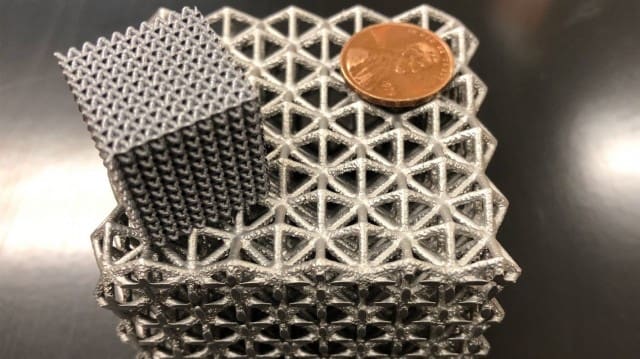
Magnesium Elektron WE43 is a high strength casting alloy. It can be used in temperatures of up to 300°C (572°F), according to AZoM, an online publication for the materials science community. “This alloy has good mechanical properties coupled with excellent corrosion resistance.”

Advanced additive manufacturing has the potential to deliver critical parts at the point of need, reducing the need for lengthy logistic chains. Also, the U.S. Army’s modernization strategy calls for lightening the load to help support future Soldiers.

The research team published their findings in the peer-reviewed journal Materialia.

McWilliams said he believes joining advanced lightweight alloys with novel multi-scale structures through additive manufacturing will be a key aspect of modernizing Army weapon systems. There are many lightweight structural applications in the automotive, aerospace and biomedical industries.

“Current systems are too heavy, which increases burden to the Soldier, reduces fuel efficiency and degrades mission effectiveness,” he said. “It is my goal as an Army researcher to conduct research, which has the maximum chance of success of transition from basic and applied research stage to practical application in order to enable transformational overmatch.”

Partnering with academia and industry has been a priority with the laboratory since it introduced its Open Campus initiative.

“This was an exciting and rewarding collaboration that produced the technological accomplishment founded on fundamental understanding of materials and additive manufacturing,” said Prof. Yongho Sohn, lead researcher at University of Central Florida. “Technological vision with clear scientific objectives defined by Dr. McWilliams and his team was the key to our contribution.”

Army researchers will now evaluate the high strain rate and ballistic properties of these 3D-printed materials and look for demonstration applications, such as ultra-lightweight unmanned aircraft system and robotic vehicle components, he said.

By U.S. Army DEVCOM Army Research Laboratory Public Affairs
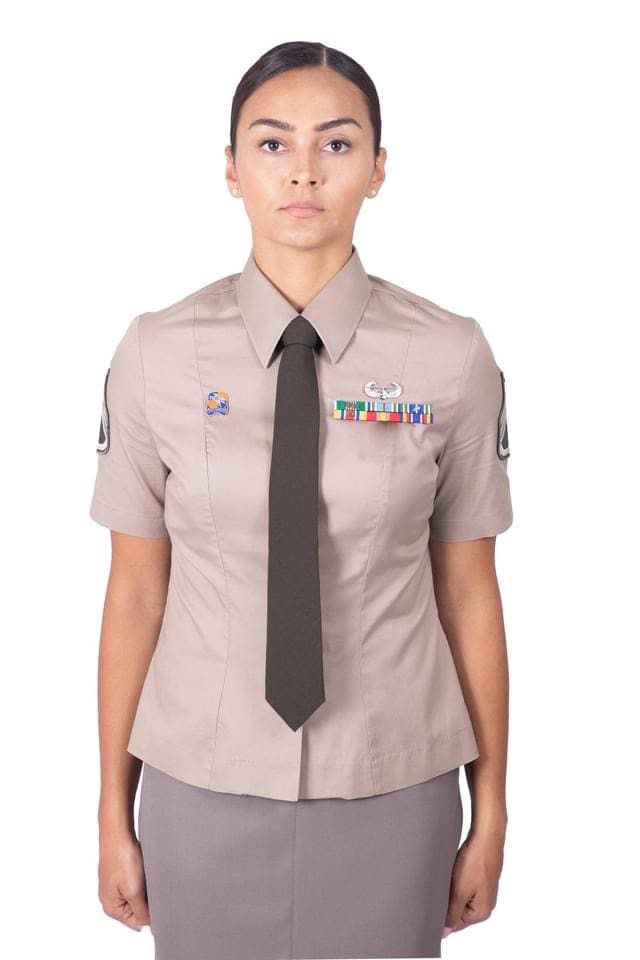
US Army Authorizes Optional Wear of Insignia and Accoutrements on the Class B Army Green Service Uniform and Tropical Dress Variations

Saturday, April 3rd, 2021

This week, the Army released ALARACT 029/2021, allowing the optional wear of insignia and accoutrements on the Class B Army Green Service Uniform.

The Tropical Dress Variation is primarily intended for Soldiers in hot climates and serves as the alternative for the Class A uniform. Local commanders will determine when their Soldiers wear this uniform variant.

Refer to ALARACT 029/2021for specific guidance and utilize DA PAM 670-1 (26 JAN 2021) for specifics on authorized items and composition of the uniform.

Read the slides here.

“Soldiers Love Tails!” Army Adds Tails to Mess Dress Uniform

Thursday, April 1st, 2021

On 1 April, the US Army announced it would be adding tails to the Mess Dress uniform, abandoning well over a century of tradition.

“My Squad loves tails,” exclaimed the Sergeant Major of the Army Michael A Grinston when discussing the move to add tails to the mess dress uniform, adding, “we’ve looked like bell hops for far too long.“

Army Chief of Staff General James C. McConville responded to media queries with, “it’s the only uniform we haven’t screwed up yet. It was time.”

According to sources close to the effort, there will be no wear out date for legacy tailless mess dress jackets but that those who don’t purchase new versions or at least opt for a button-in upgrade will be forced to empty the grog bowl at future dinning-ins.

During the announcement, SMA Grinston offered a look at other initiatives under consideration, “We’ve got a couple of other ideas we’re batting around as well. For instance, urinals…we’re getting rid of them. Everyone will have to sit down when they pee, but we’re going to get rid of skirts as well, so it kind of balances out. Aside from it’s just the right thing to do, the potential cost savings are enormous considering the size of the Army. Think about all of those broken urinals we won’t have to fix.”

Army Awards New Sniper Weapon System Contract to Barrett Firearms

Tuesday, March 30th, 2021

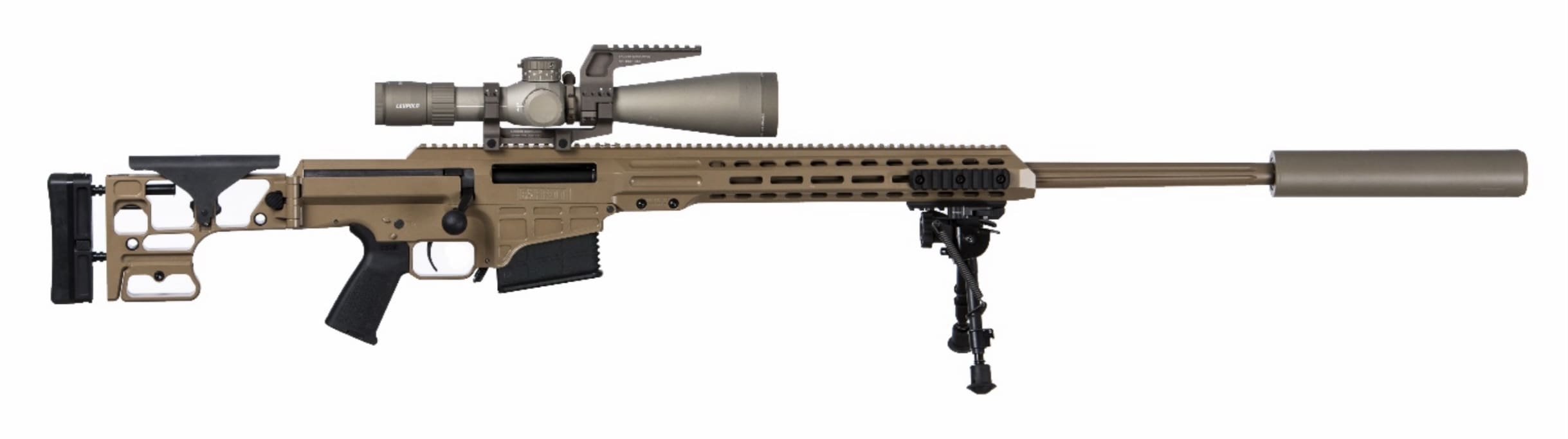
On 30 March 2021, the Army awarded a $49.9 million, five year contract to Barrett Firearms Manufacturing Inc. (Murfreesboro, TN) to acquire the MK22 Multi-role Adaptive Design (MRAD) rifle as the Army’s new sniper weapon system.

The Army will buy approximately 2,800 MK22 rifles from Barrett, the current maker of the Army’s M107 .50 Caliber Long Range Sniper Rifle.

The MK22 is part of the Army’s Precision Sniper Rifle (PSR) Program which also includes the Leupold & Stevens (Beaverton, OR) Mark 5 HD scope and a sniper accessory kit.

The MK22 is a modular system that will be fielded with three separate calibers, the .338 Norma Magnum, .300 Norma Magnum and 7.62×51 NATO. Army snipers will be able to conduct a barrel change and select calibers based on their mission operating environment.

The PSR program will allow the Army an extreme range weapon systems that is lighter than current sniper rifles and includes features that will mask the sniper signature for improved survivability.

SOCOM previously awarded a contract to Barrett to purchase the MRAD as part of their Advanced Sniper Rifle (ASR) program.

Soldier Center Helmet Lab Technology Leads to Revolutionary New Combat Helmet

Saturday, March 27th, 2021

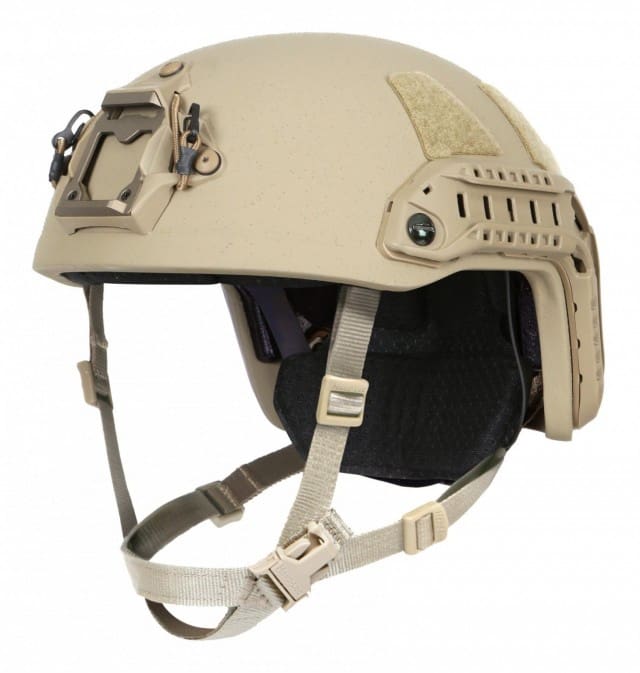
NATICK, Mass. – Research performed in the Helmet Laboratory at the U.S. Army Combat Capabilities Development Command, or DEVCOM, Soldier Center has led to a revolutionary new combat helmet.

Due to the Soldier Center’s Helmet Lab technology, and subsequent efforts working with key industry partners, the new combat helmets will provide the warfighter protection against a higher level threat – protection that previously could only be accomplished with a much heavier applique/helmet combination.

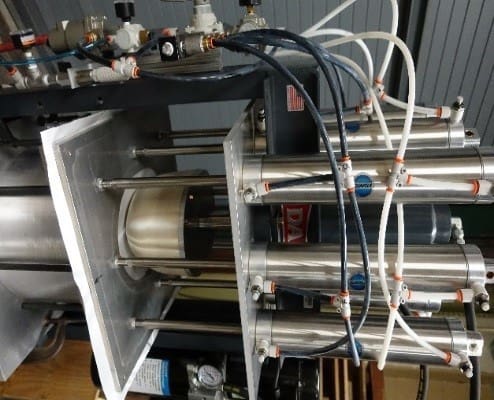
Researchers in the DEVCOM Soldier Center Helmet Laboratory have spent the past decade working to optimize combat helmet performance by developing new modeling, design and processing techniques. Combat helmets are comprised of flat sheets of ballistic material pre-formed into a helmet shape and then processed at a high temperature and pressure.

“Wrinkling and folds occur as the flat fabric conforms to the three-dimensional shape” said Jason Parker, a DEVCOM Soldier Center mechanical engineer. “These seams, wrinkles, and folds seriously degrade the ballistic performance, requiring more material and more mass to protect against a given threat. Through our research, we determined how these defects are introduced, how they affect ballistic performance, and how to eliminate them. The culmination of this research is a novel machine and process which produces a seamless, uniform helmet, free from defects such as folds and wrinkles.”

In 2015, the Helmet Laboratory developed a novel pre-form apparatus, process, and optimized helmet ply layup design. The Soldier Center used this technology to develop prototype helmets demonstrating breakthrough performance, providing a higher level threat protection that could previously only be achieved with the addition of a ballistic applique.

“In 2017, we tested prototype helmets targeting a higher level threat that were fabricated using our novel helmet preforming apparatus,” said Robert DiLalla, team lead of the Ballistic and Blast Protection Team in DEVCOM Soldier Center’s Soldier Protection Directorate. “The results far exceeded our expectation as we were getting stops well above the requirement and at 40 percent less weight than the current capability. The results were replicated with another batch of prototype helmets confirming that we had developed a new capability to significantly increase Soldier protection.”

Since 2017, the Helmet Laboratory, at the request of senior Army leadership, continued to mature and transition the technology to industry partners by establishing several Cooperative Research and Development Agreements, or CRADAs, and Research & Development contracts.

“After the Helmet Lab first demonstrated this breakthrough performance, the team worked diligently with our industry partners to rapidly transition this technology and contribute to the advancement from laboratory prototype to production ready helmets,” said David Colanto, PhD, who is the program manager for DEVCOM Soldier Center’s Integrated Multi-Threat Headborne System. “The collaborative effort with industry represents a successful technology transition and highlights the fact that Soldier Center applied research and technology demonstration efforts are critical to providing significant improvements to warfighter protection.”

In February 2021, Gentex Corporation announced that one of their Ops-Core® FAST Helmet Systems passed U.S. Government First Article Testing (FAT), a first for a helmet providing a higher level threat protection. This new helmet leverages helmet design and processing innovations transitioned through a CRADA with the DEVCOM Soldier Center’s Helmet Lab.

“This new FAST helmet is the culmination of a multi-year commitment to innovate the novel production processes necessary to manufacture helmets with next-generation ballistic materials,” said Des Walsh, vice president of Advanced Research and Development for Gentex Corporation. “It serves as an excellent example of successful, outcome-oriented government-industry collaborative development, resulting in the most advanced ballistically protective helmet shell ever qualified for production by Gentex and available to the warfighter.”

“It’s been a long road that started with an Army investment in science and technology which led to an invention,” said DiLalla. “That invention, when combined with industry knowledge, led to a finished product that offers a leap ahead level of protection. Today, the warfighter will benefit from that technological advancement. As a result of our efforts, we are currently undergoing a major renovation to our Helmet Lab having added new processing equipment to expand capabilities to help drive future research initiatives.”

By Jane Benson, DEVCOM Soldier Center Public Affairs

US Army Hoping to Field New Oxygen Generator

Saturday, March 27th, 2021

The Army is currently testing an oxygen generator that has a longer shelf life than the one currently in use and will meet the requirement of supplemental oxygen that medics provide to combat casualties.

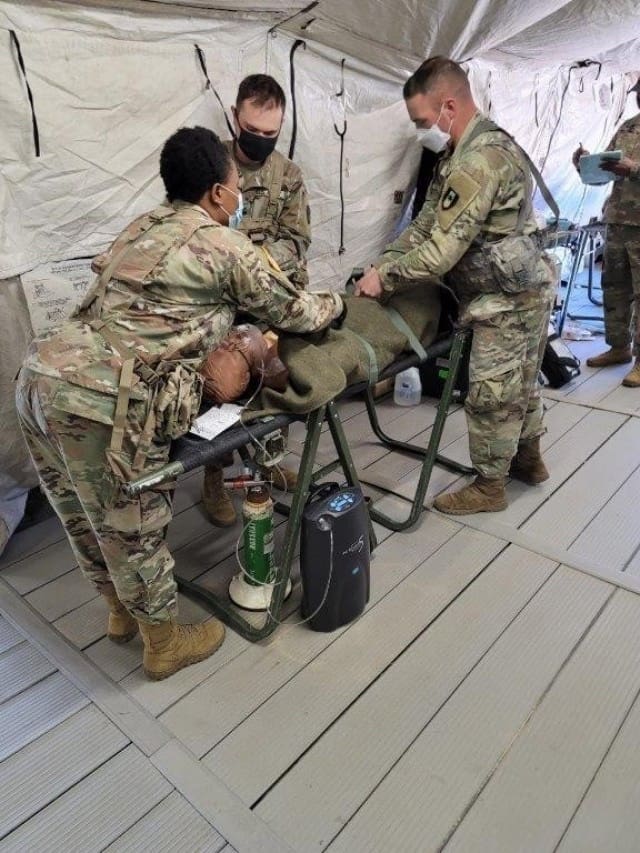
The Field Oxygen Generator Resource (FOGR) is being considered as a replacement for the Oxygen Generator, Field Portable (OGFP) that is currently used to supply supplemental oxygen to sick and wounded Soldiers in the field. In February, the U.S. Army Medical Department Board (USAMEDDBD) conducted an operational test using Soldiers from the 44th Medical Brigade during a field training exercise to test the effectiveness and suitability of the set up and operation of the FOGR to provide critical care.

According to Archie C. Kinnebrew Jr., lead test officer with USAMEDDBD, the success of the February test event will inform decisions that determine if and when the FOGR is fielded to Army units.

“There is truth in operational testing. Army leadership uses the results from test events to facilitate risk-reduction for product fielding,” Kinnebrew said. “The test articles under consideration will not only be evaluated by the testing community, but will also include input from the intended end-users on the battlefield. These test events ensure that Soldiers have a voice in the acquisition and deployment of new and improved systems.”

Kinnebrew had words of praise for the 44th Medical Brigade Soldiers who put the FOGR to the test through a series of exercises.

“The Soldiers of the 44th Medical Brigade – 36th Medical Company Area Support and the 240th Forward Resuscitative Surgical Team – were enthusiastic while putting the FOGR to use during the test,” Kinnebrew said. “They provided honest feedback, which greatly assisted the test team in capturing the data needed. Their participation was key to the success of this test event and is greatly appreciated. The professionalism and dedication displayed by these Soldiers really made me feel proud.”

Austin S. Langdon, assistant product manager with Warfighter Deployable Medical Systems, U.S. Army Medical Materiel Development Activity at Fort Detrick, Md., said the Army is replacing the OGFP because of sustainability issues.

“The old device was designed to operate 10-12 hours a day and 7 days a week. This is the case for most portable Oxygen Concentrators (POCs) on the market. However, when the device sits on a shelf, maintenance issues arise from lack of use, which are very costly,” Langdon said.

Langdon said that USAMMDA is currently testing two commercial off-the-shelf (COTS) products. One of the devices being tested has the ability to be placed on the shelf for up to three years without any need for maintenance, a bigger advantage over the current model in use.

“Since this is a COTS item, the devices being tested are already in production and can currently be purchased. However, the Army still needs to test it for airworthiness and also MIL-STD-810H testing,” Langdon said.

MIL-STD-810 is a United States Military Standard that emphasizes tailoring an equipment’s environmental design and test limits to the conditions that it will experience throughout its service life, and establishing chamber test methods that replicate the effects of environments on the equipment rather than imitating the environments themselves. Although prepared specifically for military applications, the standard is often used for commercial products as well.

The OGFP weighs 12 pounds and was an advanced development item that was specifically designed for the Army’s use. FOGR outweighs the current device by a few pounds, but has less maintenance issues.

Langdon said that the Army is looking to get quantitative data from the testing that will allow for informed decisions on these variants and if they will fit the end user’s needs.

When asked when FOGR will be available to the Army, he added, “These devices are both already in production. If one is selected, it will be fielded to the force later this year.”

By Jerome Mapp

Machine Learning Shows Potential to Enhance Quantum Information Transfer

Friday, March 26th, 2021

RESEARCH TRIANGLE PARK, N.C. – Army-funded researchers demonstrated a machine learning approach that corrects quantum information in systems composed of photons, improving the outlook for deploying quantum sensing and quantum communications technologies on the battlefield.

When photons are used as the carriers of quantum information to transmit data, that information is often distorted due to environment fluctuations destroying the fragile quantum states necessary to preserve it.

Researchers from Louisiana State University exploited a type of machine learning to correct for information distortion in quantum systems composed of photons. Published in Advanced Quantum Technologies, the team demonstrated that machine learning techniques using the self-learning and self-evolving features of artificial neural networks can help correct distorted information. This results outperformed traditional protocols that rely on conventional adaptive optics.

“We are still in the fairly early stages of understanding the potential for machine learning techniques to play a role in quantum information science,” said Dr. Sara Gamble, program manager at the Army Research Office, an element of U.S. Army Combat Capabilities Development Command, known as DEVCOM, Army Research Laboratory. “The team’s result is an exciting step forward in developing this understanding, and it has the potential to ultimately enhance the Army’s sensing and communication capabilities on the battlefield.”

For this research, the team used a type of neural network to correct for distorted spatial modes of light at the single-photon level.

“The random phase distortion is one of the biggest challenges in using spatial modes of light in a wide variety of quantum technologies, such as quantum communication, quantum cryptography, and quantum sensing,” said Narayan Bhusal, doctoral candidate at LSU. “Our method is remarkably effective and time-efficient compared to conventional techniques. This is an exciting development for the future of free-space quantum technologies.”

According to the research team, this smart quantum technology demonstrates the possibility of encoding of multiple bits of information in a single photon in realistic communication protocols affected by atmospheric turbulence.

“Our technique has enormous implications for optical communication and quantum cryptography,” said Omar Magaña?Loaiza, assistant professor of physics at LSU. “We are now exploring paths to implement our machine learning scheme in the Louisiana Optical Network Initiative to make it smart, more secure, and quantum.”

Visit the laboratory’s Media Center to discover more Army science and technology stories.

By US Army DEVCOM Army Research Laboratory Public Affairs

US Army Soldiers Provide Romanian Airmen New Equipment Training, Support Allied Readiness

Wednesday, March 24th, 2021

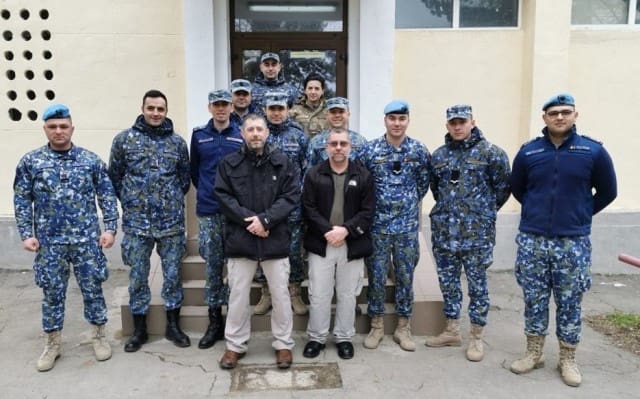
TOBYHANNA ARMY DEPOT, Pa. – Tobyhanna Army Depot personnel extended the organization’s reach last month when they traveled to a Romanian seaside community to train allies of the United States.

A two-person team traveled to Constanta, Romania last month to conduct Defense Advanced GPS Receiver (DAGR) New Equipment Training (NET) for Romanian Air Force artillery battalions. NET is an enduring workload for the depot and delivers training to military units after receipt of new assets, ensuring Warfighters across the globe know how to use lifesaving equipment on the battlefield.

Depot personnel spent a week instructing Romanian Airmen on the overall operations of the DAGR, typically used as part of the Patriot missile system. While NET missions often encompass a wide range of service members, this iteration of the training focused on a targeted group of 11 users, who were educated on the functionalities of DAGR. Students learned through classroom instruction as well as hands-on, practical exercises designed to ensure they could perform to Army Standards when operating the asset. Tobyhanna’s instructors gave the students rave reviews for their enthusiasm.

“The Romanian Airmen were very sharp and quick to learn. They made our job easy,” said Gregory Wirth, a training instructor in the Field Logistics Support directorate. Fellow training instructor Vincent Zuranski agreed.

“We had a great rapport with the class,” they said, adding that one highlight of the trip was the authentic Romanian food the Airmen treated them to every day. Wirth and Zuranski also noted the region’s rich history, home to many ancient Greek and Roman settlements.

The mission was the NET team’s first excursion out of Northeastern Pennsylvania since the onset of the COVID-19 pandemic. While travel into the country was relatively easy, returning home to Tobyhanna was a significant challenge, according to Wirth.

“Because COVID-related guidelines are always changing, there was uncertainty about what we’d need to do to get back to the U.S.,” said Wirth. “We ended up needing a negative COVID test for return travel through Germany – not something easy to navigate while in a foreign country where you don’t speak the language. Luckily, our students and personnel at the embassy helped us obtain the necessary information so we could get home.”

Despite the challenges, the duo said the opportunity to travel was more than welcome.

“As someone who travels for a living, I found it difficult to not be able to support our important missions across the world. It was extremely exciting to get back out on the road to support our Warfighters,” Zuranski said.

In addition to DAGR, Tobyhanna provides NET for military personnel on the Common Remotely Operated Weapons System (CROWS) and a variety of other systems. The mission is directly aligned with the depot’s long-range strategic plan, Toby 2028, specifically the C5ISR Readiness and Shape the Future lines of effort.

The program benefits all members of Team Tobyhanna, according to Eric Walker, who supervises the NET team.

“NET ensures Soldiers worldwide get the training they need to keep themselves, and the world, safe. When our NET instructors return home, they share any new knowledge with the depot employees who are responsible for repairing the equipment here on-post. It’s win-win and a program we’re proud very to support.”

Tobyhanna Army Depot is a recognized leader in providing world-class logistics support for command, control, communications, computers, cyber, intelligence, surveillance and reconnaissance (C5ISR) systems across the Department of Defense. Tobyhanna’s Corporate Philosophy, dedicated work force and electronics expertise ensure the depot is the Joint C5ISR provider of choice for all branches of the Armed Forces and industry partners.

Tobyhanna’s unparalleled capabilities include full-spectrum logistics support for sustainment, overhaul and repair, fabrication and manufacturing, engineering design and development, systems integration, post production software support, technology insertion, modification, foreign military sales and global field support to our joint warfighters.

About 4,000 personnel are employed at Tobyhanna, which is located in the Pocono Mountains of northeastern Pennsylvania. Tobyhanna Army Depot is part of the U.S. Army Communications-Electronics Command. Headquartered at Aberdeen Proving Ground, Maryland, the command’s mission is to empower the Soldier with winning C5ISR capabilities.

By Danielle E. Weinschenk, Lead Public Affairs Specialist