Register Now for SOF Week

Archive for the ‘Army’ Category

BRAKER Breakthrough: New Air-Delivered Bunker Busting Warhead Tests Successfully

Sunday, April 26th, 2026

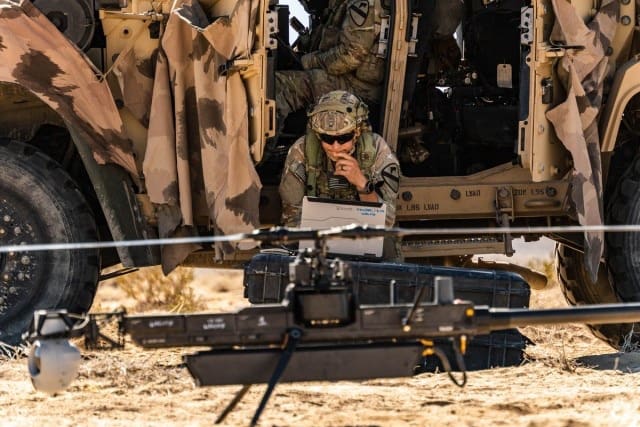
PICATINNY ARSENAL, N.J. – In a significant leap forward for battlefield technology, U.S. Army Infantry Drone Operators have successfully tested a new warhead designed to be delivered by an unmanned aerial system (UAS).
The live-fire demonstration of the Bunker Rupture and Kinetic Explosive Round (BRAKER), which took place at a Redstone Arsenal in Alabama on March 26, comes only weeks after the initial design and rapid prototyping of the system, showcasing the Army’s accelerated approach to innovation in the face of evolving threats.

VIDEO BELOW:

The Army continuously transforms by using the latest technologies for warfighting advantage, and ensures that the force is lethal, modern and ready. The development of this air-delivered munition directly supports that mission as well as two senior leader priorities in Readiness and Transformation.

SLOW-MOTION VIDEO BELOW:

The BRAKER project, led by a team from the U.S. Army Combat Capabilities Development Command (DEVCOM) Armaments Center and Project Manager Close Combat Systems (PM CCS), a project office under the U.S. Army Capability Program Executive Ammunition and Energetics (CPE A&E), aimed to create a lightweight, powerful, and lethal warhead that could be deployed from a small, agile drone.

“Our Picatinny team went from concept to live-fire in two weeks,” said Col. Vincent Morris, PM CCS. “BRAKER proves our ability to rapidly develop and safely deliver devastating effects from small unmanned aircraft systems (sUAS). We are now creating the architecture with Picatinny Common Lethality Integration Kit (CLIK) and the small universal payload interface (sUPI) for industry to scale this critical warfighter advantage.”

The Picatinny CLIK is a safe and effective method for integrating lethal payloads with UAS platforms, designed and developed by DEVCOM Armaments Center engineers.

The rapid development-to-testing timeline of BRAKER was made possible by the Army’s emphasis on additive manufacturing, also known as 3D printing.

Beginning in early March, Armaments Center engineers began design, explosive pressing, housing manufacture, and integration of the warhead to be used on a low-cost and expendable one-way attack drone.

Shortly thereafter, transfer and compatibility tests were conducted at Picatinny and approximately a dozen warheads were assembled, with one being tested on a makeshift bunker on one of the installation’s test ranges.

After proving worthiness and validating effectiveness, the prototype warheads departed Picatinny for Redstone where a live demonstration was conducted for U.S. Army leadership.

The successful detonation of the device deployed on a drone on a designated target demonstrates a new and potent capability for the modern warfighter and illustrates how engineers can quickly design, fabricate, and integrate hardware to meet urgent and compelling needs.

“Rapid demonstrations of overwhelming lethality such as BRAKER are attributed to years of continued technology investments and the organic core technical competencies and facilities resident at the DEVCOM Armaments Center,” said Anthony Sebasto, Executive Director, Munitions Engineering and Technology Center.

By Eric Kowal

Army Conducts Historic Large-Scale SERE Reintegration Exercise

Saturday, April 25th, 2026

FORT RUCKER, Ala. – In a historic first, the U.S. Army’s Survival, Evasion, Resistance and Escape (SERE) school at Fort Rucker partnered with U.S. Army South from March 14-18, 2026 to successfully execute a large-scale reintegration exercise, simulating the mass return of service members from a large-scale combat operation.


The landmark exercise processed nearly 50 students acting as returned prisoners of war (POWs), the largest reintegration since Operation Homecoming in 1973. It was the first event of its kind to include a mass Phase I medical triage and time-sensitive debriefings for all returnees, moving reintegration planning from a theoretical concept to a practical, battle-tested framework.


Maj. Tracy Beegen, US Army SERE School Psychologist and Chief of Human Factors, was named “Hero of the Battlefield” for her pivotal role in the initiative. Beegen initiated the concept with US Army Southern Command and orchestrated the complex, multi-service effort that brought together personnel from the Army, Navy and Air Force to build a comprehensive reintegration plan from the ground up.

The intense, real-world simulation pressure-tested the entire reintegration process, successfully identifying critical friction points in handling numerous returning POWs. Key outcomes of the exercise included the development of a triage system to assess personnel for a return to duty and the creation of new tactics, techniques and procedures, or TTPs, for intelligence gathering from group interviews.

The event was truly a joint effort, engaging units from the Joint Personnel Recovery Agency, the U.S. Air Force, the U.S. Navy, U.S. Army Special Operations Command and the U.S. Army SERE School. The exercise also trained SERE specialists from the Air Force and Navy, alongside SERE psychologists, for the U.S. Army Western Hemisphere Command Reintegration Team.

As a result of the training, the team is now mission-ready for Phase I and II reintegration in the U.S. Southern Command area of responsibility, as well as for service-level Phase III responsibilities. Furthermore, the Soldiers who were debriefed can now share their valuable experiences with their home units to increase readiness across the force.

Thanks to MAJ Beegen’s initiative and the collaborative efforts of multiple military branches—including the U.S. Army SERE School’s Human Factors and Medical Team—theoretical plans have been replaced by field-tested TTPs. The Department of Army and the broader joint force are now significantly more prepared for the challenges of large-scale combat operations, ensuring a proven, joint process to bring warriors home, reunite them with their families and return them to the fight when able.

By Lisa Foote

West Point Cadets Develop Innovative Weapon Upgrade

Saturday, April 25th, 2026

WEST POINT, N.Y. — Cadets at the U.S. Military Academy are enhancing battlefield adaptability with a new weapon mount that increases the versatility of the Army’s next-generation M250 automatic rifle. In support of the 2026 Projects Day Research Symposium focus on supporting the warfighter, cadets in the Small Caliber Weapon Mount capstone design team developed solutions for real-world applications.

Through collaboration between the Department of Mechanical and Aerospace Engineering alongside the U.S. Army Combat Capabilities Development Command Armaments Center, cadets developed an innovative approach to employ the M250 Automatic Rifle on the M192 tripod. Their objective was to create a reliable, lightweight and durable device that enables tripod compatibility with the newly fielded M250 while maintaining compatibility with legacy M249 and M240 machine guns and requiring no permanent modifications to the existing equipment.

Through live-fire testing, the team collected strain and durability data on their prototype tripod adapters, evaluating performance under representative battlefield conditions. The team also designed and tested a belt deflector system to ensure consistent weapon function during sustained fire. Their solutions prioritize reliability, durability, and ease of use in combat environments.

By making the M192 tripod universally compatible with the M240, M249 and M250, this project enhances weapon versatility, reduces logistical burden and increases Soldier lethality at the squad level. Soldiers can seamlessly transition the M250 between bipod and tripod configurations, improving adaptability and effectiveness on the modern battlefield.

“This new design increases Soldier mobility with the M250 automatic rifle by enabling rapid transitions between mounted and dismounted configurations while maintaining the ability to attach an ammunition sack directly to the weapon,” said Cadet Noah Winters, class of 2026. “This capability enhances operational flexibility and provides the Soldier with a wider range of employment options across varying mission requirements.”

The Small Caliber Weapon Mount capstone design team is part of West Point’s 27th annual Projects Day Research Symposium, which showcases hundreds of cadet-led research projects.

Learn more about Department of Mechanical and Aerospace Engineering select project features and how to partner with West Point at West Point Werx website.

By Jana Scardigno Marketing and Outreach Specialist, Department of Mechanical and Aerospace Engineering

Delivering Tomorrow’s Small Caliber Ammunition Lethality Today

Saturday, April 25th, 2026

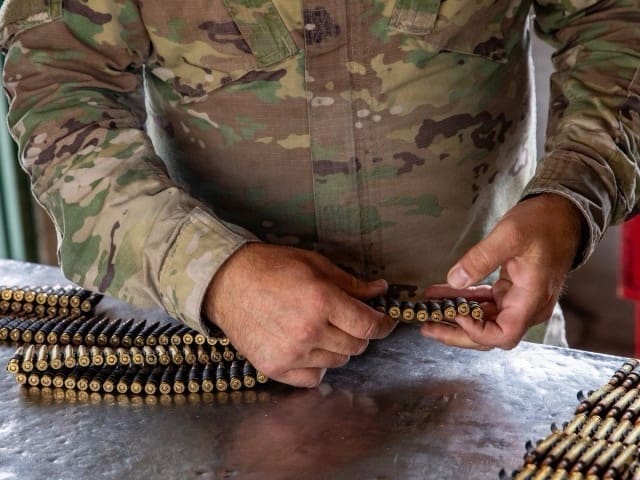
PICATINNY ARSENAL, NJ – The U.S. Army’s Capability Program Executive Ammunition and Energetics (CPE A&E), headquartered at Picatinny Arsenal, NJ, is spearheading a major transformation of the nation’s small?caliber ammunition industrial base, advancing one of the Army’s highest modernization priorities. Central to this effort is the delivery of next?generation 6.8mm cartridges that will equip soldiers with increased range, accuracy, and battlefield lethality as part of the Next Generation Squad Weapons (NGSW) program.

The NGSW program, featuring the M7 Rifle, XM8 Carbine, and M250 Automatic Rifle, represents the Army’s most significant small?arms upgrade in decades, replacing the M4 Carbine and M249 Squad Automatic Weapon. These new weapons, enabled by advanced 6.8mm cartridges, are designed to provide decisive overmatch in operating environments.

To accelerate production and strengthen readiness, Project Manager Maneuver Ammunition Systems (PM MAS), in partnership with Project Lead Joint Services (PL JS), has established an interim 6.8mm manufacturing capability at the Lake City Army Ammunition Plant (LCAAP) utilizing a mix of new and repurposed equipment. As of March 2026, operating contractor Olin Winchester is producing and delivering 6.8mm ammunition from this capability. The Army is also supplying projectiles from this interim line to SIG Sauer to support additional cartridge deliveries while LCAAP expansion continues.

CPE A&E is executing a long-term modernization strategy to ensure the Army’s ammunition needs are met well into the future. A key milestone was the February 2025 groundbreaking for a new 450,000?square?foot 6.8mm production facility at LCAAP. This state-of-the-art complex will house advanced manufacturing systems for every component of the 6.8mm cartridge and serves as a cornerstone of the Army’s organic industrial base modernization. Construction remains on schedule, with production equipment installation anticipated to begin in 2028.

“CPE A&E is leading the development, procurement, and fielding of cutting-edge ammunition and energetics ensuring the Army and its international partners maintain a significant technological advantage,” said Col. Jason Bohannon, Capability Program Executive Ammunition and Energetics. “The work being executed is foundational to advancing the Army’s modernization goals and ensuring combat readiness across the force.”

By Laura Emanski and Robert Goetz

US and Philippine Soldiers Conduct Electronic Warfare Training at Exercise Salaknib 2026

Friday, April 24th, 2026

FORT MAGSAYSAY, Philippines – Building from the ground up. From individual skills to full team integration, success in the modern battlespace depends on a shared, expert understanding of the environment.

U.S. Army 1st Lt. Andres Rodriguez, a Cyber and Electronic Warfare officer assigned to the 25th Infantry Division, explains the core goal of bilateral training during Exercise Salaknib 2026.
“The goal is… team integration, so that we can ensure that our Filipino partners know how to use our equipment and we can use their equipment,” Rodriguez said. “So they’ll be more proficient on the foundations and tactics of EW as a whole.”

Exercise Salaknib is an annual rehearsal designed to enhance the combined capabilities of the U.S. and Philippine Armies, strengthening the U.S.-Philippine Alliance and reinforcing a shared commitment to a free and open Indo-Pacific.

US Army video by SGT Taylor Gray

US Army Seeks Unmanned Ground Vehicle for “Last Tactical Mile”

Thursday, April 23rd, 2026

Researching for a presentation I gave last summer at the National Defense Industrial Association Future Forces Conferences on robotics and drones I realized that while the US Army is working diligently to field drones in large numbers, it’s just a drop in the bucket once they figure out how many ground robotic systems they’ll need. To illustrate my point I explained that at the time, the US Army had an inventory of around 3,900 aircraft and 700 enduring capability drones. Meanwhile, there were ~420,000 ground vehicles making it about 11:1 ground to air systems. I expect we’ll see a similar ratio of ground to air robotics once the capability fully settles into the enterprise and those ground robots will take many forms and perform many duties. This capability is just the beginning.

According to a Special Notice released last week, Capability Program Executive (CPE) Mission Autonomy is actively pursuing a UGV designed to autonomously support maneuver formations in the critical “last tactical mile”. This advanced UGV, owned by maneuver formations, will both sustain Platoon and Company formations by delivering essential supplies/energy and will evacuate wounded personnel from the point of injury to a casualty collection point. This dual use UGV shall feature a configurable payload to meet the dynamic needs of maneuver formations.

The UGV must be capable of teleoperation, autonomous navigation, and beyond-line-of-sight communications, and execute resupply and CASEVAC missions with minimal reconfiguration.

The modern battlefield is characterized by persistent enemy surveillance and rapid application of lethal effects at and behind the forward line of troops (FLOT), making any movement to and from the FLOT highly vulnerable. This environment challenges commanders’ ability to resupply units and evacuate casualties. The Army refers to the critical distance between the FLOT and supported units as the “Last Tactical Mile” – the final segment of ground over which supplies, equipment, or personnel must be moved under the greatest threat from enemy observation and fires. This phase is often the most dangerous and logistically complex, requiring innovative solutions to ensure mission success and force protection.

The UGV should be capable of supporting the sustainment needs of a dismounted Rifle Platoon or Company Headquarters for extended operations (reference ATP 5-0.2-1 Staff Reference Guide Volume 1, Unclassified, for Battalion weight needs). It should be able to transport various classes of supply and operate autonomously across diverse terrains and environments, maintaining reliable communications with supported units. The UGV should be able to navigate both on- and off-road routes, including areas without GPS, and support situational awareness. It should minimize detectable signatures and emissions during operations, including in the final approach to supported units.

The UGV should be capable of being reconfigured by the maneuver unit for multiple roles, including casualty evacuation. It should be able to autonomously transport at least two (2) casualties from the point of injury to a designated collection point, without causing additional harm to the patient. The cargo area should be modular and provide accessible power and data connections.

The UGV must support integration and collaboration within networked operational environments and be interoperable with current and future command and control systems. The solution must provide open and exposed APIs for integration with common control and mission autonomy applications.

Interested parties have until 28 April to respond. Learn more at www.sam.gov

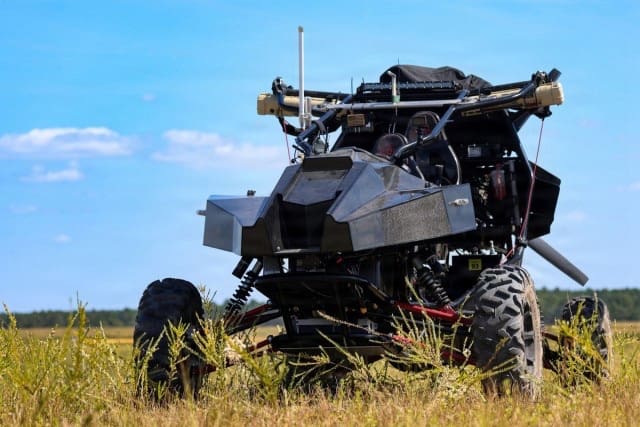
Photo above: A Hunter Wolf unmanned ground vehicle assigned to Charlie Battery, 3rd Battalion, 320th Field Artillery Regiment, 3rd Mobile Brigade, 101st Airborne Division (Air Assault), holds a steady overwatch position with a mounted remote operated .50-caliber machine gun during a combat simulation exercise at the Joint Readiness Training Center, Fort Polk, Louisiana, April 13, 2026. (US Army photo by MSG Anthony Hewitt)

US Army Announces New Combat Field Test to Enhance Soldier Readiness

Wednesday, April 22nd, 2026

WASHINGTON — The U.S. Army today announced the implementation of the new Combat Field Test (CFT), a major update to its physical readiness program designed to align fitness standards with the demanding realities of modern combat.

Implementation will begin in April 2026. The CFT is required annually for active-duty Soldiers serving in 24 designated combat military occupational specialties.

“The Combat Field Test is a critical step forward in ensuring our Soldiers serving in the most physically demanding specialties have the specific fitness required to dominate on the modern battlefield,” said the Secretary of the Army Hon. Dan Driscoll. “This is about readiness, lethality, and the well-being of our Soldiers.”

The CFT does not replace the Army Fitness Test. Combat specialty Soldiers in the Regular Army and Reserve Component on active-duty orders will be required to pass one of each test annually. All other Reserve Component Soldiers in combat specialties will take one fitness test per calendar year, alternating between the AFT and CFT.

The CFT is a seven-event sequence conducted continuously and scored on total time. Events include:

A one-mile run.

30 dead-stop push-ups.

A 100-meter sprint.

16 lifts of a 40-pound sandbag onto a 65-inch platform.

A 50-meter carry of two five-gallon Army water cans weighing 40 pounds each.

A 50-meter movement drill consisting of a 25-meter high crawl and a 25-meter 3-5 second rush.

A final one-mile run.

Soldiers must complete the test in 30 minutes or less while wearing the Army Combat Uniform, combat boots and a brown T-shirt, with no cover.

“This isn’t just about passing a test; it’s a direct measure of our commitment to readiness and ensuring our warfighters can dominate in any environment,” said Sgt. Maj. of the Army Michael Weimer. “We’re asking more of our combat arms Soldiers, and this test validates their ability to meet that high standard.”

To allow time for adaptation, no adverse administrative actions will be taken for failing the CFT during an initial 365-day diagnostic period for Regular Army and active-duty Reserve Component Soldiers, and a 730-day period for all other Reserve Component Soldiers. During this phase, Soldiers may request voluntary reclassification to a non-combat specialty if they determine they cannot meet the standard, allowing the Army to retain valuable talent.

The CFT establishes a single, mission-based standard aligned to the demands of combat to ensure readiness and lethality. All Soldiers in designated combat roles must meet the same passing criteria, regardless of age or sex.

The Army will provide support to Soldiers preparing for the CFT through command-led physical training programs, Holistic Health and Fitness resources, and a dedicated CFT microsite with additional guidance. For more information on the Combat Field Test, visit the Army Fitness Test website.

Via US Army Public Affairs

101st ABN DIV (AA) Test TEWS-I Integration on Infantry Squad Vehicle at JRTC

Wednesday, April 22nd, 2026

FORT POLK, La. — The 101st Airborne Division (Air Assault) took another major step toward Army transformation this month as Soldiers from the Multi-Functional Reconnaissance Company (MFRC), 3rd Mobile Brigade, tested and trained for its first time with the Tactical Electronic Warfare System–Infantry (TEWS-I) integrated onto an Infantry Squad Vehicle (ISV) during a Joint Readiness Training Center rotation, April 7–17, 2026.

The integration marks a milestone for the Army and the Division: TEWS-I now mounted on the ISV, a lightweight, highly mobile platform designed for rapid air assault and distributed operations. According to General Dynamics Mission Systems, TEWS-I on the ISV creates a “middleweight” electronic warfare capability—more powerful than man-portable systems but lighter and faster than heavy vehicle platforms. F or Sgt. Javan Isaiah, an electronic warfare specialist (17E) and EW squad leader with the MFRC, the rotation was both a challenge and an opportunity.

“This was my first time using the system in the field,” said Isaiah. “We only had about three days of actual hands?on time before coming out here, so a lot of what we learned came from troubleshooting in real time.”

Despite limited preparation, Isaiah said his team adapted quickly.

“EW Soldiers are critical thinkers. We’re used to new systems coming at us fast,” he said. “We had to learn the ISV and the TEW-I at the same time, but we figured it out together.”

Traditionally, electronic warfare systems have been mounted on heavier vehicles. Integrating TEWS-I onto the ISV gives EW Soldier in light infantry units a new level of mobility and flexibility.

The ISV’s off-road agility allows EW teams to reach better collection sites faster, reposition quickly, and keep pace with maneuver forces. Isaiah said the difference was immediate:

“Mobility across the battlefield in this modified ISV was a game-changer compared to heavier vehicles,” he said. “We can be employed faster, we can air assault in with the ISV, and we can get to the right place at the right time.”

This directly supports the Army’s push toward mobile, distributed, multidomain formations, a concept the 101st has been helping test through initiatives like the Mobile Brigade Combat Team prototype and “Transformation in Contact.”

TEWS-I gives commanders the ability to detect, identify, locate, and disrupt enemy signals—capabilities that are increasingly essential in modern warfare.

“There are enemies we can’t see who live in the electronic battlespace,” said Isaiah. “Our job is to find them, understand what they’re doing, and give the commander options to stop them.”

He described how TEWS-I can locate enemy communications, direction find their location, and—when authorized—jam or degrade their ability to coordinate.

“If the enemy can’t talk, they can’t fight effectively,” he said. “That gives our infantry an advantage.” The 101st Airborne Division is known for speed, agility, and the ability to strike deep. Isaiah believes TEWS-I on the ISV strengthens that legacy.

“The TEWS-I lives up to the air assault name by being a quick deployable fighting force,” he said. “It helps us stay ahead of near-peer threats and operate in a multidomain environment.”

The system also supports the Army’s broader modernization goals, including integrating cyber, electronic warfare, unmanned systems, and sensing capabilities at lower echelons—an approach highlighted in the Army’s emerging multidomain effects formations.

For the 101st, the JRTC rotation demonstrated not just a new piece of equipment in their arsenal, but a new way of fighting—one that blends agility, sensing, and electronic attack into the fast-moving air assault formations the division is known for.

“We’re staying ahead of the learning curve,” Isaiah said. “That’s how we protect the force and stay lethal.”

Story by MSG Anthony Hewitt 

101st Airborne Division (Air Assault)