Danner Reckoning GTX

Archive for the ‘Army’ Category

Fort Walker Hosts Collaborative Anti-Mine, Robotic Breaching Exercise

Monday, June 24th, 2024

FORT WALKER, Virginia – Deep in the heart of Fort Walker, where most people never go, there is a quiet facility dedicated to research. On June 12, it was exploding with engineers from all around the U. S. with one common goal: finding, and eliminating, land mines.

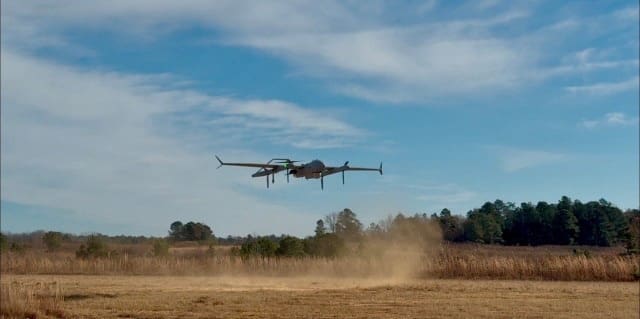
Organized by U.S. Army Combat Capabilities Development Command, Control, Communications, Computers, Cyber, Intelligence, Surveillance and Reconnaissance Center, various contracting organizations deployed Unmanned Aircraft Systems of different sizes and capabilities in an impressive exercise to demonstrate to Col. Anthony Gibbs from Program Executive Office Soldier, Program Manager for Soldier Warrior, how emerging technology can reduce battlefield casualties.

As the exercise began, one UAS live-streamed the area of operation to the command center, another identified enemy combatants (who were notionally eliminated by close air-support), while another discovered mines downrange, leading to a barrage of simulated mortar fire to clear the danger. A team of developers, role-playing Soldiers, raced downrange in an M1126 Stryker armored vehicle, deploying a robot dog and plotting a path through the destroyed mine-field and using sensors to identify any imminent dangers.

In a scenario that seemed like something out of a video game, the reality is this future tech will potentially allow for fewer Soldiers to be required to capture an objective, and with much less of becoming a casualty.

Following the conclusion of the exercise, the director of the facility invited everyone to a demonstration of the protection capabilities being researched. Behind thick, steel barriers and blast-proof glass, participants experienced the detonation of an anti-tank land mine from roughly 50 meters, and two anti-personnel mines from three meters, impacts that most, outside of a combat zone, will never see.

It’s simulations like this which provide an insider’s look to battlefield scenarios and environments. For researchers, it’s a critical component to staying one step ahead of enemy combatants and provide our warfighters the most cutting-edge capabilities for mission success.

“Army research partners were able to successfully integrate air and ground robotic assets to reduce the workload for Soldiers during mine clearance operations,” said Mike Donnelly of Research and Technology Integration Division of C5ISR. “I’m proud of the work everyone put in here today.”

By Chris Hall, Fort Walker Public Affairs Office

Emergency Response Trailer Strengthens Comms During Crisis Response

Friday, June 21st, 2024

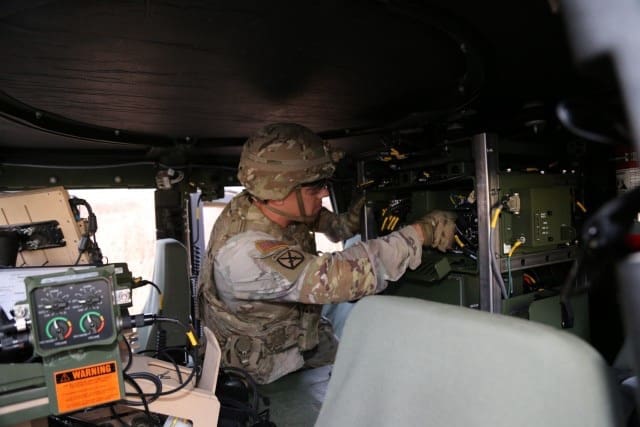
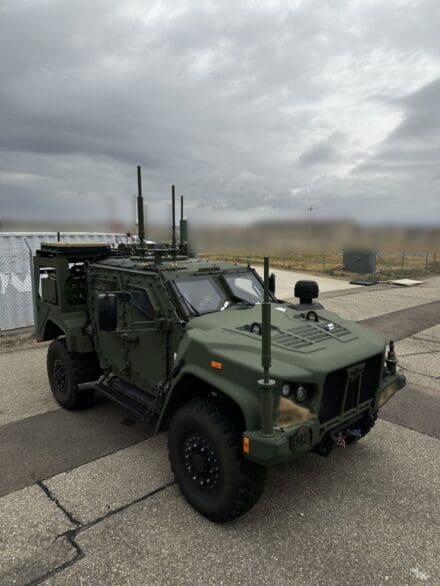
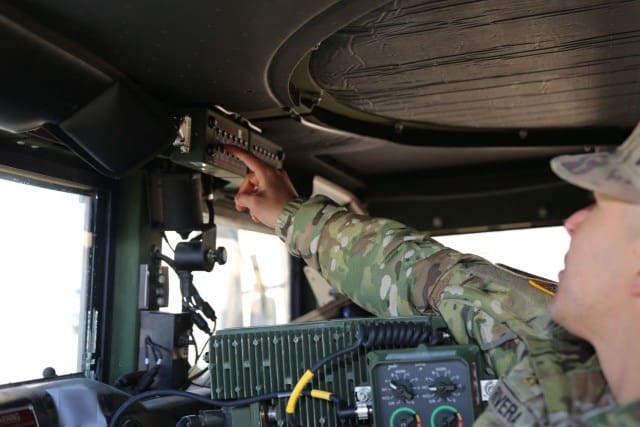
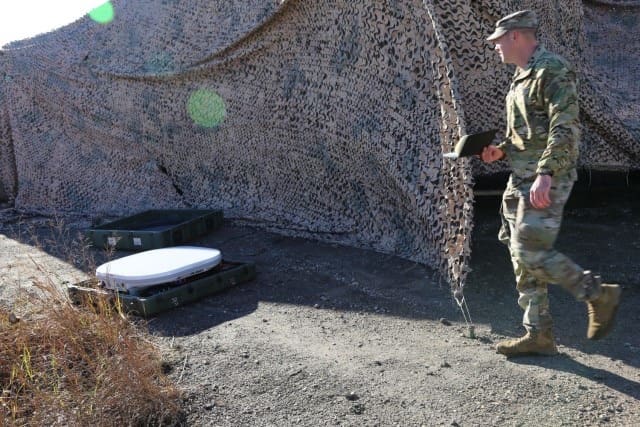
SAN ANTONIO, Texas — Communication is critical during times of crisis. The emergency response trailer, or ERT, provides digital communication platforms in austere environments. The Army’s first ERT belongs to Task Force 51, U.S. Army North’s contingency command post. When requested, U.S. Army North provides defense support to civil authorities to support local, state and federal partners during natural or man-made disasters as the command-and-control element. In such a scenario, an ERT can make all the difference.

The ERT is a modern and rugged response platform that replaced the emergency response vehicle, or ERV, as of February 2024. When disaster strikes, ERVs are employed by defense coordinating elements to rapidly respond. Like the ERT, ERVs provide digital communications but with limited capacity.

Engineered from the ground up, the ERT’s capabilities include unclassified and secret communications, Starlink satellite internet compatibility, long-distance radio transmission and increased self-sustainment capabilities. The ERT can also provide limited commercial bandwidth and cellular services to support interagency partners. Tested and certified at Aberdeen Proving Ground, Maryland, the ERT is now the program of record for military specification emergency vehicles.

“The ERT underwent rigorous testing by the Aberdeen team to confirm it could survive intense weather and hazardous terrain while supporting mission requirements,” said Matt Hopper, an ERT operator and subject matter expert. “Task Force 51 is the first unit in the Army to receive the emergency response trailer because of their role as the ARNORTH contingency command post.”

During disaster responses, U.S. Army North deploys Task Force 51, or TF-51, forward to coordinate between the lead federal agency and the military. The ERT allows TF-51 to operate in challenging environments, such as the aftermath of a hurricane.

The task force tested the ERT’s capabilities during Vibrant Response 24, an annual training exercise focused on a nuclear disaster event. The ERT provided secret and unclassified data and voice requirements for TF-51’s operations center, which consisted of 45 computer workstations. Maj. Gen. Scott Sherman, the TF-51 commander and exercise director, conducted daily commander update briefs from the ERT. Regional separation between the outstations were as far as California to Michigan.

“Communication is key to saving lives in a disaster response. Having the ERT and its capabilities allows the military, specifically U.S. Army North and TF-51, the capability to direct assets and resources to the right place and at the right time in support of our partners,” said Sherman.

The ERT’s interior features a control room, conference room and storage room. The conference room can host six seated individuals. Television screens mounted to the walls allow for easy presentation of information. The control room monitors communication output. Additionally, the ERT’s benches can be folded down into two twin beds allowing operators to live out of the vehicle.

The ERT is also imperative to U.S. Army North’s main mission of homeland defense. Close coordination with partners, like the Federal Emergency Management Agency, is important during disaster response and that is exactly what the ERT provides.

“The ERT was designed to withstand challenging environments for DSCA operations but also in the event of a homeland defense scenario. It is highly likely we will encounter a simultaneous DSCA event while defending the homeland; therefore, modernizing our emergency response platforms ensures we are ready if we are called upon,” said Hopper.

By CPT Tara Santon, U.S. Army North Public Affairs

SFABs in Army 2030: Experimenting with a Unified Approach

Thursday, June 20th, 2024

FORT MOORE, Ga. — Security Force Assistance Command conducted a tabletop experiment at the Maneuver Battle Lab to prepare for future conflicts and warfighting needs from May 13-17, 2024. It brought advisors together from 1st, 2nd, 3rd and 4th Security Force Assistance Brigades to evaluate and enhance their operational capabilities for 2030 and beyond, focusing on multi-domain operations and large-scale combat readiness during competition, crisis and conflict.

The primary goal of this exercise was for advisors to identify operational gaps and friction points in the current doctrine or structure to enhance readiness by providing improvement solutions. This insight will guide decision-making, optimize resource allocation and refine training and doctrine to foster continuous improvement and preparation for advisors in real-world scenarios.

“We took a deep look in terms of what multi-domain capabilities we would need to enable partner foreign security forces at the operational level, so large-scale formations and multi-domain operations, throughout large-scale combat operations,” said Lt. Col. Mark Morrison, Security Force Assistance Command strategist. “It was a great opportunity to pull Soldiers from the captain-led team level up to the brigade level to understand what capability gaps exist in the SFAB formation and to be able to close those gaps, so SFAB 2030 is capable of performing our wartime role.”

During the experiment, mentors threw out all sorts of scenarios to ensure advisors were ready for anything they might experience in competition, crisis and conflict situations.

This comprehensive approach ensures SFABs can maintain national security and support global stability.

“We incorporate lessons learned from all parts of doctrine, organization, training, material, leader development, personnel, facilities and policy changes,” stated Morrison. “With the training changes, we can implement some of them ourselves and mirror our signature validation exercise, Operation Combined Victory to incorporate some of these lessons learned so we close the gap through training.”

Our advisors must be able to navigate different environments — established through understanding the battle space.

Moving from large-scale combat operations to multi-domain operations, the use of SFABs will be critical to combatant commanders and the SFABs’ use on the battlefield,” said Maj. Jeremy Hillyard, Maneuver Battle Lab simulations officer. “Any exercise that SFABs can do as we transition from competition, crisis to a full conflict phase will only benefit planners going forward, so combatant commanders and divisions commanders in 2030 know how to use SFABs properly and know their capabilities.”

Participants formed small working groups of advisors to discuss detailed scenario analysis, examining potential outcomes and solutions.

“Every brigade does something different because they’re somewhere different, so seeing how they do things is very different from how my brigade does things, and it’s very challenging sometimes to understand how that makes sense to them,” said Capt. Javier Diaz Martinez, fires direction officer from 4th battalion, 4th SFAB.

“But, getting yourself in their shoes and seeing what they do and where they do it starts to make sense, and it’s sometimes even the better plan.”

The simulated scenarios included cyber-attacks, conventional warfare, and logistical challenges – simulating a wide range of threats to identify and address any gaps or friction points in current operational plans.

The Air Force’s participation demonstrated how crucial it is to work together during conflicts. By teaming up with other military branches, we improve our readiness, response capabilities, and effectiveness to achieve our goals with a unified approach.

U.S. Air Force Capt. Andrea Pangrac, logistics air advisor from the 818th Mobility Support Advisory Squadron, highlighted the value of joint solutions and collaboration across different military branches. “The [tabletop exercise] ultimately embodies not only the commitments advisors in the U.S. have with our regional partners but also across the sister services to enhance trust and transparency and create cooperative and collaborative solutions,” she added.

The experiment highlights the important role of an advisor network, a unity of effort across echelons.

Capt. Pangrac mentioned the value of the tabletop exercise in conditioning advisors to think innovatively and strategically.

“It was a phenomenal experience. This experiment prepares us as advisors to operate effectively by conditioning us to think outside of the box, to think about what we weren’t thinking about in existing doctrine and our existing tactics, techniques and procedures,” she explained.

After the simulated scenarios, mentors reviewed how the participants performed and how well the strategies worked. Guest speakers and mentors offered valuable feedback and pointed out areas where they could improve.

“I think that when you look at the SFABs now, and in the future, they are a very important component to the combatant commander, but more importantly, I would say to the Army commander because they can bring a lot of information and systems to the fight,” said Anthony Lieto, U.S. Army Peacekeeping and Stability Operations Institute.

“They can assess, assist and liaise where the theater commander needs that influence.”

For more information on the SFABs or to volunteer, visit the Security Force Assistance Brigade site on Army.mil.

By SPC Cristina Gomez

Army Renames Air Defense System After Vietnam War Medal of Honor Recipient

Monday, June 17th, 2024

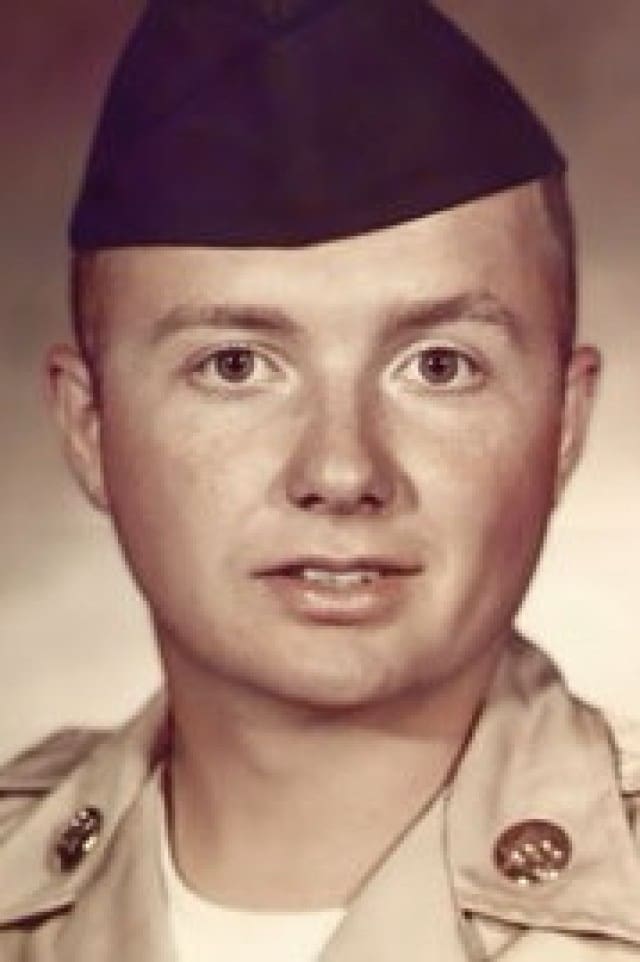
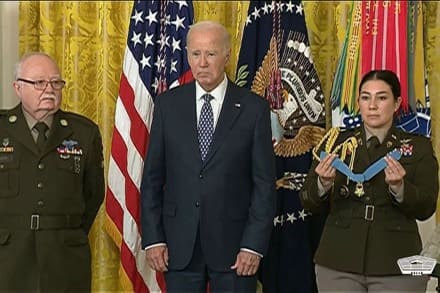
WASHINGTON — The Army renamed the Maneuver-Short Range Air Defense system for Medal of Honor recipient Sgt. Mitchell W. Stout during an Army birthday festival today at Fort Belvoir, Virginia.

Stout, an artilleryman with the 1st Battalion, 44th Air Defense Artillery Regiment, was killed during the Vietnam War protecting fellow Soldiers. He grabbed a grenade thrown into their bunker and ran for the exit. As he reached the door the grenade exploded, but by holding it close to his body, he was able to shield the other Soldiers from the blast.

“Naming this game-changing air defense capability after Sgt. Stout was appropriate and well-deserved, given his heroic efforts to protect fellow Soldiers from danger,” said Doug Bush, assistant secretary of the Army for acquisition, logistics, and technology. “The M-SHORAD was designed to do the same against a variety of airborne threats.”

The system uses a mix of guns, missiles, and onboard sensors attached to a Stryker Infantry Carrier Vehicle to defend against unmanned aircraft systems, rotary wing, and fixed-wing aircraft.

Soldiers with the 5th Battalion, 4th Air Defense Regiment were the first to receive and test four of the increment one defense systems. They successfully conducted live-fire tests at the Putlos Bundeswehr range on the Baltic Sea coast of Germany in 2021 and became fully equipped with the systems in 2023.

The Army plans to field 144 air defense systems to four battalions by fiscal year 2025 with an additional 18 systems for training, operational spares and testing.

Incremental upgrades to the system will feature enhanced effects including directed energy, and improved missiles and ammunition. The Rapid Capabilities and Critical Technologies Office completed the delivery of four directed energy systems to the 4th Battalion, 60th Air Defense Artillery Regiment last fall.

“The M-SHORAD family of systems adds commensurate mobility or survivability to maneuvering forces and joint maneuvering forces through protection against enemy air threats,” Bush added. “Its flexibility and versatility provide a best value for the nation and increases Soldier capabilities through performance and training capabilities.”

The M-SHORAD will now be named the SGT STOUT

Sgt. Mitchell W. Stout, from Loudon, Tennessee, joined the Army in August 1967 at 17 years old after dropping out of high school. He completed paratrooper school before the Army realized he was too young when he joined and discharged him.

By that time, he already turned 18. He went to a recruiter’s office the very next day and signed up again, this time as an artilleryman.

“He wanted to be where he was needed,” said his sister, Susan Tyler. “That’s the way we grew up. If your country needs you, you do what you can and volunteer.”

Stout completed a tour in Vietnam and returned home in 1969. After speaking with friends and family, he volunteered to return to Vietnam to help the young Soldiers still fighting.

“I think he had a calling, I really do,” Tyler said. “I think he knew somehow in his heart that if he went back, he could help someone in some way.”

A few weeks after returning to Vietnam, on March 12, 1970, a North Vietnamese company attacked his unit’s firing position at the Khe Gio Bridge. Stout and a crew of Soldiers went into a bunker as they came under heavy mortar fire.

When the firing stopped, the enemy threw a grenade into the bunker, prompting Stout to act and save the lives of his fellow Soldiers.

“He cared about those Soldiers that put their boots on every day, who shine their brass and do their best,” Tyler said. “And that’s what he died for, he died for them.”

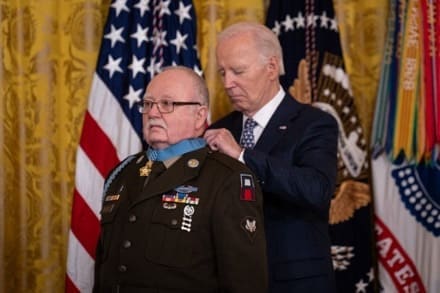
Stout was posthumously presented with the Medal of Honor on July 17, 1974. He is the only Army air defense artilleryman to earn the award.

By Christopher Hurd, Army News Service

Developers, Warfighters Come Together at DTRA Demonstration

Sunday, June 16th, 2024

ABERDEEN PROVING GROUND, Md. — Every year since 2018, the U.S. Army Combat Capabilities Development Command Chemical Biological Center — DEVCOM CBC — has helped the Defense Threat Reduction Agency plan and execute an in-the-field user assessment of chemical, biological, radiological and nuclear technology called Chemical and Biological Operational Analysis. This year, CBOA was held at Camp LeJeune, North Carolina from April 13 to 18, and DEVCOM CBC was in the thick of it.

CBOA is funded under the Chem-Bio Defense Program and executed by the Joint Science and Technology Office of the Defense Threat Reduction Agency, or DTRA. It brings technology developers from government agencies, industry and academia together with warfighters in order to put new technologies into warfighters’ hands. Warfighter feedback provides vital input to technology developers, enabling them to make improvements and correct shortfalls.

At Camp LeJeune, warfighters put these protypes through their paces in realistic field scenarios in which warfighters used them to interrogate mock unknown CBRN weapons caches. After running through each scenario, the warfighters gave the technology developers very specific feedback on what worked, what did not and how they could be improved.

That feedback is often simple but important, such as, “The labeling of the buttons on the chemical agent detection device is confusing.” It can also lead to new innovations, such as, “Can I mount the device on my helmet so that my hands are free?” Feedback can also include how warfighters are taught to use the new equipment, such as “Most of the people in my unit are visual learners, can you make a video version of the user’s manual?”

Clare Hamilton, a DEVCOM CBC program analyst, has supported CBOA since its inception. This year, she managed the Concept Tent during the CBOA event where technologies under development but not mature enough to use in the scenarios were displayed. Starting last October, she helped evaluate all the candidate technologies submitted by the technology developers and coordinated their participation in the Concept Tent. Of the 19 technologies displayed on tabletops in the tent this year, five were developed by DEVCOM CBC.

Some of the tasks DEVCOM CBC personnel took on were highly technical. David Glynn, a DEVCOM CBC liaison officer to the U.S. Army Maneuver Support Center of Excellence at Fort Leonard Wood, Missouri, assisted as a “lane walker” at one of the scenario locations. It is a role that requires a keen knowledge of both CBRN technology and the way the scenario was designed.

“It was my responsibility to ensure that the warfighters participating in the scenario were trained in the proper use of the assigned new technology. I also ensure all users were at the right location at the right time in order to start the missions,” said Glynn. “While conducting missions, I made sure that every technology was used in the manner it was designed to be used. I also ensured the right simulants were in place in order to properly trigger a response form the technology.”

DTRA organizers have used lessons learned over time to steadily improve CBOA’s value to both technology developers and warfighters. This year’s event included two full days of warfighter training on the prototype technologies before the actual scenario run-throughs.

There were six scenarios in all, spanning chemical, biological, and pharmaceutical-based agents, as well as radiological threats. The scenario participants, 110 in all, included U.S. Special Forces, Marines, Soldiers, Airmen, Coast Guard, and Custom and Border Patrol members. At the end of each scenario, warfighters shared their evaluations of the new CBRN technologies in both face-to-face discussions and by filling out detailed questionnaires. As the DTRA project manager for the event, Markham Smith, put it, “We want technology developers to make their improvements while the clay is still wet.”

DEVCOM CBC Director Michael Bailey attended the event and was pleased with what he saw. “At CBOA we get to see early science and technology that will pay off in time. Many technologies we and others have brought over the years have been licensed to industry for production and are now fielded,” he said. “CBOA is able to do this because of the wide range of organizations it brings together, agencies like the Department of Homeland Security, defense research laboratories, the services and many different technology developers from industry. That makes CBOA a big contributor to the nation’s CBRN defense. I appreciate that DTRA uses our help for this extraordinary event every year.”

By Brian Feeney

Army Leverages Army SBIR and xTech Prize Competitions to Secure AI Pipeline

Saturday, June 15th, 2024

WASHINGTON — The U.S. Army Small Business Innovation Research and xTech Programs collaborate with artificial intelligence innovators to find and scale solutions across the Army. Led by the Office of the Assistant Secretary of the Army for Acquisition, Logistics and Technology, Army SBIR and xTech prize competitions support a secure, Army-ready AI pipeline.

In March 2024, Mr. Young Bang, ASA(ALT) principal deputy, announced the ASA(ALT) AI Implementation Plan, that kicked off with a 100-day sprint. The plan aims to deliver a single, coherent approach to AI across the Army, aligning multiple, complex efforts within 100 and 500-day execution windows, and establishes the baseline to continuously modernize AI and contributing solutions as technologies rapidly evolve.

The Army SBIR and xTech Programs’ initiatives are at the forefront of these efforts to drive digital transformation and deliver required AI capabilities across the Army.

As the 100-day window concludes this summer, the Army is outlining a plan that leverages the outcomes of the 100-day sprint to adopt industry solutions without competing with commercial vendors. However, there are inherent risk factors associated with the adoption of AI solutions.

“Some of the obstacles include looking at and understanding AI risks such as poison data sets, adversarial attacks and trojans,” Bang said. “Developing AI in a controlled, trusted environment owned by the Army or Department of Defense can make addressing these risks easier.”

Bang and his team have prepared an initial AI Layered Defense Framework called #DefendAI to help tackle the risks associated with third-party algorithms, while helping to operationalize industry AI technologies. His team is looking to collaborate across industry and academia to evolve the framework and prioritize capability exploration and implementation in support of Army programs, such as Project Linchpin, which is building an operational pipeline of trusted AI solutions.

Initiated by Program Executive Office Intelligence, Electronic Warfare and Sensors, Project Linchpinaligns with Bang’s AI risk evaluation efforts. Bharat Patel, Project Linchpin-Sensor AI product lead, noted that the program aims to deliver commercial capabilities to the Army by applying fundamental concepts such as test and evaluations, and adopting an AI risk framework.

“It’s your infrastructure, it’s your standards, it’s your governance, it’s your process. All those areas are things that we’re taking on, because that’s how you can tap into the AI ecosystem and that’s how you deliver capabilities at scale,” Patel said.

ASA(ALT) is progressing with the AI Implementation Plan and its alignment to Project Linchpin to prepare the Army for AI at scale. As these initiatives ramp up, the Army SBIR and xTech Programs are strategically focused on leveraging excellence in the private sector to speed up the Army’s broad adoption of AI.

Army SBIR’s AI funding

The Army SBIR Program collaborates with small businesses and Army customers to align innovative solutions with Army priorities. It awards more than $350 million annually to reinvigorate the Army’s technology ecosystem, and is prioritizing and funding cutting-edge AI solutions.

The program has invested nearly $102 million in active AI projects in fiscal year 2024, distributed among approximately 75 small businesses across the country, and aims to align small businesses with the Army’s larger AI pipeline through funded AI initiatives.

In FY24, Automated Detection and Prevention solutions received $30 million in Army SBIR investments, representing 29% of the program’s AI and machine learning portfolio by the number of awards. Within this framework, the Army categorizes technologies as automated systemic-based controls that stop threats and predict the next attack for improved prevention.

There are currently 20 active Army SBIR Automated Detection and Prevention awards with organizations such as PEO IEW&S; PEO Simulation, Training and Instrumentation; and Army Test and Evaluation Command.

Army SBIR investments in FY24 have directly supported Army programs such as Project Linchpin, with two awards made in FY24 and 16 additional planned to start in FY25. The Joint Program Executive Office Armaments and Ammunition also recently leveraged $48 million in Army SBIR funding to modernize munitions manufacturing processes using AI.

Looking forward to FY25, Army SBIR’s AI/ML portfolio is projecting upwards of $105 million in AI funding. Six AI-focused solicitations are slated for release this summer, which will comprise approximately $55 million of the FY25 funding. Several of the solicitations, which include an AI/ML open topic solicitation, align to Project Linchpin thrust areas, amongst other potential Army transition partners.

xTech’s scalable AI

In late 2023, Bang requested that Dr. Matt Willis, the director of Army Prize Competitions and Army SBIR Program, and his team leverage xTech prize competitions to scale AI. This led to the launch of xTechScalable AI in December 2023, which sought innovative AI solutions from U.S.-based small businesses with scalable solutions to defend against adversarial AI threat vectors.

Leveraging prize competition authorities, xTech offers cash prizes along with opportunities for participants to receive direct feedback on their solutions, plus mentorship and networking opportunities with Army customers to help accelerate their unique AI solutions towards Army capabilities. xTech competition winners find themselves well-positioned to compete for follow-on contracts, such as Army SBIR awards.

xTechScalable AI was not the first competition aligning AI with Army needs. Earlier in the year, the xTechPrime competition funded two Army SBIR contract awards to inform Project Linchpin pipeline tools and services, totaling almost $4 million.

The xTechScalable AI competition is following a similar track, offering up to $370,000 in cash prizes and $8 million in follow-on Army SBIR contract awards for critical AI solutions.  Through these competitions, 150 small businesses received exposure and feedback from Army customers and experts, and introductions to follow-on contract opportunities to continue the development of their AI solutions for the Army.

“xTech is a valuable mechanism for identifying and nurturing scalable, commercial AI solutions to strengthen the Army’s security framework,” Willis said. “Paired with ASA(ALT)’s vision, we can operationalize AI to enhance data accuracy and combat cybersecurity threats.”

xTechScalable AI 2 launched in March 2024 and focuses on identifying small businesses with game-changing technologies that can feed into Project Linchpin’s operational AI pipeline. The competition offers up to $603,000 in cash prizes and opportunities post-competition to submit proposals for a Phase I or Phase II Army SBIR contract valued at up to $250,000 and $2 million, respectively.

xTech will host the finals at the Association of the United States Army Annual Meeting and Expo in October. Additionally, xTech will hold more AI-focused competitions in the coming year, including several AI-focused Technical Grand Challenges.

Commercial vendors and small businesses have made quick progress in developing and implementing AI capabilities. As part of ASA(ALT)’s AI Implementation Plan and the upcoming 500-day execution window, Army SBIR and xTech are adopting AI solutions and preparing them for operational use in a secure, government-owned environment.

“Army SBIR and xTech are committed to strategically investing in areas where we can leverage the excellence of the private sector and transition technologies to Army programs such as Project Linchpin,” Willis said. “We have the funding and processes in place to drive industry collaboration and investment opportunities for these large-scale Army efforts.”

About the programs

The Army SBIR Program offers Phase I contract opportunities to U.S.-based small businesses showing commercial viability, feasibility and technical merit. It also offers Phase II and Direct to Phase II contracts to vendors with mature technologies meeting Phase I qualifications.

The Army SBIR Program releases contract opportunities on an ad-hoc basis to address current and expected Soldier needs. The program will promote new contract releases via solicitation announcements and email. For more information, please visit the Army SBIR website.

Established in 2018, the Army xTech Program offers prize competition opportunities for entities including nontraditional vendors direct exposure to Army laboratories, program executive offices, program managers and end-users. Participants receive feedback from Army DoD stakeholders and have access to training, mentorship and networking, and opportunities to win non-dilutive cash prizes.

For current and upcoming competitions, visit the xTech website.

By Anna Volkwine, Office of Army Prize Competitions and Army SBIR Program

Trainers & Rescuers: Meet DOD’s Main Mountaineering School Experts

Wednesday, June 12th, 2024

From the harsh ridgelines in Italy during World War II and the frigid peaks of Korea during the 1950s, to the Hindu Kush in Afghanistan, mountaineering has long been a necessary skill for U.S. service members in battle. To deter conflicts and defeat aggression, service members need to be prepared to operate in mountainous terrain.

While the Defense Department has a few schools that train students on mountaineering, its main training center for the past 20 years is the Army Mountain Warfare School near Jericho, Vermont.

Operated by the Vermont National Guard, the school trains service members from all branches, as well as foreign militaries and civilian teams looking to learn the latest techniques for rescues and other missions. Training runs from basic to advanced for winter and summer conditions, and some courses focus specifically on training for marksmen and operational planners.

When it comes to the Army Mountain Warfare School’s instructors, students are learning from some of the best mountaineers in the world.

The school has 21 full-time Active Guard Reserve members, 14 of whom are instructors. About three dozen other members of the unit are Guard members and reservists who drill and do their annual training there. Many of those who work at the school have also worked with the 86th Infantry Brigade Combat Team (Mountain), which is headquartered down the hill from the schoolhouse.

The instructors have been through most of the school’s courses themselves, but more importantly, they have years of real-life experience. All of them have civilian mountaineering certifications, and since their military status lets them stay in Vermont long-term, they’re able to constantly hone their skills.

Training Students at Home & Abroad

Outside of the courses they teach to U.S. service members, these instructors are also called upon by partner nations to train foreign special forces units. Army 1st Sgt. Max Rooney said the school has sent teams to Kosovo to train security forces on mountaineering skills. They’ve also exchanged tactics and training with other experts in Austria, Switzerland, Senegal, Italy and other countries, often through the State Partnership Program.

“That’s been a huge part of our training here,” said Army Master Sgt. Bert Severin, the school’s training division noncommissioned officer in charge. “Name a mountainous country and we’ve sent a Mobile Training Team there, either to work with their mountaineering instructors or to teach there.”

Army Maj. Brad Patnaude, the school’s operations officer in charge, said their instructors get invited to more mountain-related exercises than they have the time and funds in which to participate. The courses they teach at the schoolhouse are their major focus.

“The instructors here are amazing. They’ve given us plenty of knowledge,” said Army Staff Sgt. Stephen Vigo, a recruiter with the Connecticut National Guard who took the basic military mountaineer course in March.

Just like their students, the instructors themselves are always learning because mountaineering techniques, strategies and equipment are constantly evolving, as are the terrain, weather and students. For many of the instructors, that’s what makes it exciting.

“It’s a constant struggle to try to manage risk while at the same time putting out the best possible product for the students,” said Army Sgt. 1st Class Dustin Dearborn. “That requires us to be pretty dynamic in our approach. I think that challenge is what really draws me to working here.”

Resident Experts, Local Heroes 

Perhaps no one is as experienced or qualified in the DOD mountaineering community than Dearborn — at least, that’s according to his fellow instructors, who all put him at the top of the heap when it comes to mountaineering expertise.

Dearborn grew up as an avid outdoorsman not far from the school’s training site, which made for a natural transition to him joining the school as an instructor in 2001. Since then, his experience has been called upon numerous times to help with local rescue operations over the years.

One involved the rescue of two skiers in 2020 who had ventured into the backcountry near Stowe Mountain Resort. The brothers got lost at night in deteriorating weather and ended up at the top of an ice climbing route. One of them fell off the 220-foot cliff. The second remained stranded at the cliff’s plateau but couldn’t make his way back to safety due to the deep snow, so he called for help. Local rescuers who responded couldn’t access the victims, so they called Dearborn, who led a team of five National Guard soldiers on a mission to reach them.

“We know the terrain pretty well. It’s our backyard,” Dearborn said. “We know the little places to sneak through.”

The rescue required Dearborn to conduct multiple risky climbs at night, including a climb up 200-feet of sheer ice. Eventually he reached the skiers, and he and his team were able to lower both victims to a recoverable position.

In June 2021, Dearborn was honored for his efforts with the Soldier’s Medal, the highest award a soldier can receive outside of combat. When asked about the accolade, Dearborn minimized it, saying he was just doing what he was trained to do.

“The Army has invested a ridiculous amount of time and money to send me to courses and to give me the training and experience to be able to do that,” he said. “It would be ridiculous, I think, if — at this point I couldn’t help in that way.”

Dearborn said rescues are something school instructors help with quite often, especially in areas like Smugglers’ Notch, a narrow pass through the Green Mountains that sits between two local ski resorts.

“We’ve [rescued] lots of snowboarders and skiers that have hit trees or tweaked knees and legs,” Dearborn said. “Conveniently, we’re there, and we have the equipment and the personnel and the training, so it’s easy for us to snatch them up before other folks have to get involved.”

Army Staff Sgt. Andrea Okrasinski is one of the few instructors not native to Vermont. Originally from Illinois, the outdoor enthusiast signed up for the Army Reserve at 18 and spent more than a decade serving as a construction engineer and in civil affairs. But when she attended the AMWS in August 2021, she realized that teaching mountaineering was her true passion. She began the process of transferring over, and in June 2022, arrived at the school to start her new career as a full-time instructor.

Okrasinski said that, aside from having the physical mountaineering skills, instructors need to be able to know how to drive, motivate and mentor students.

“It’s very selective here, which I think is a good thing for the Mountain Warfare School to have —that need to bring a specific skill set and a specific demeanor,” she said. “Safety is a huge [priority] and having that attention to detail for it is really important.”

Why Vermont?

The school’s instructors said they often get asked why they’re based in Vermont and not, say, Colorado’s Rocky Mountains or some other well-known mountainous region. They said the answer is pretty straightforward — their Vermont location is compact, offering a microcosm of everything a mountaineer in training might need to learn in a two-week span.

“We have every training site within 2 miles or 3 miles from here. We have cliffs. We have low elevation as far as altitude … so there’s no climatization needed, whereas in Colorado, that might be an issue. Same thing with the Marine Corps school. They’re at what’s considered a medium altitude, so you have to acclimatize when you get there. Here, you don’t have to,” Severin said. “Everything’s right here — a one-stop shop.”

Those who pass the basic military mountaineer course earn the coveted Ram’s Head Device and the military mountaineer additional skill identifier known as the echo identifier. Two other mountaineering schools also grant the echo identifier — the Northern Warfare Training Center in Delta Junction, Alaska, and the Fort Moore Troops School at the 5th Ranger Training Battalion in Dahlonega, Georgia.  

But, according to Severin, the AMWS is more involved in writing the course’s program of instruction, also known as POI, and the material to teach the course. Severin said Alaska’s students are mainly stationed in that state and train on terrain that’s more glaciated, with a focus on tactics for the Arctic as opposed to Vermont’s alpine-style environment.

The Marine Corps Mountain Warfare Training Center near Bridgeport, California, also teaches mountaineering; however, Severin said its students focus more on tactics performed as a unit instead of individually.

The AMWS sees a lot more students come through its doors as well. Officials said they train about 600 students a year, whereas the other schools see up to about 100 for certain specialties.

Keeping Busy

When courses are in session at the AMWS, instructors tend to work 10-12 hours per day, so finding the right work-life balance is sometimes the hardest part of the job.  

“We’re here a lot. We have a lot of courses. We don’t have a ton of time between courses to take our leave, so the amount of laundry that’s piling up right now is getting a little ridiculous,” Okrasinksi joked.

For most of the instructors, it’s the close-knit community they’ve formed that keeps them all coming back day after day.

“We trust each other. We respect each other. We work together and play together and fight with each other and, you know, we listen to each other,” Dearborn said. “And I think it’s a rarity in or outside of the military to have that kind of situation.”

By Katie Lange, DOD News

Soldier’s Injury Spurs Malpractice Claims Policy Changes

Saturday, June 8th, 2024

An Army family’s five-year struggle and advocacy efforts led to major changes in how the Department of Defense considers non-economic payments in medical malpractice claims filed by active-duty service members.

The changes, published May 10 in the Federal Register, say that potential financial damages in medical malpractice claims will no longer be offset or reduced by the compensation otherwise provided by the Department of Defense or the Department of Veterans Affairs. This change will ensure that families receive full compensation for pain and suffering.

“It wasn’t until the family brought this issue to the forefront that we were able to advocate on behalf of the entire military to remove the offset,” said Secretary of the Army Christine Wormuth. “Pfc. Del Barba and his family deserve the credit for bringing attention to this issue.”

The case began when Pfc. Dez Del Barba, of California, reported to what is now Fort Moore, Georgia, for basic training in January 2019 in preparation for attending Army Officer Candidate School. That February, he became ill and over the course of a week his symptoms worsened.

After numerous visits to sick call, Del Barba was transported to a Columbus, Georgia hospital, where he was diagnosed with necrotizing fasciitis, a form of a flesh-eating infection linked to a Strep A infection.

The Army had earlier received a positive test result for Del Barba’s Strep A infection but had not acted on it.

Placed in a medically induced coma, Del Barba was given a 10% chance of survival. As the infection ravaged his legs and torso, he underwent repeated surgeries in Columbus and at the burn unit at the University of Alabama at Birmingham Hospital to remove skin or tissue.

His left leg was amputated as the infection spread.

“What happened to me did not have to happen. This was preventable,” Del Barba told a Congressional subcommittee.

The Army is currently reviewing Del Barba’s medical malpractice claim.

“My life has changed forever. That once active and healthy 21-year-old man now must deal with a lifetime of challenges and obstacles because of the neglect I suffered,” he said.

“The last five years our family has worked tirelessly not just for our son … but for countless servicemen and women who have been grossly mistreated by the department due to military medical malpractice. This long-overdue change will finally bring some accountability to those responsible for their inexcusable actions. Our nation’s Servicemen and Women, our heroes, deserve better medical care,” the Del Barba family said in an emailed statement.

The DoD policy change also clarifies that future lost earnings may be awarded until the time DoD determines that the claimant is, or is expected to be, medically rehabilitated and able to resume employment.


“In addition to Pfc. Del Barba’s resilience and focus on his own recovery, the most remarkable aspect of his story is how he championed this change for all service members,” explained Secretary Wormuth.

Del Barba’s mother says he earned his bachelor’s degree in business management but cannot and likely will never be able to work.

“There are moments when we may think wecannot, until we change our mindset to say we can. I feel grief for all I have lost, but I am grateful for all that I have. We must stand firm, honor the sacrifices of our heroes, and fight for justice,” Del Barba said in an emailed statement.

The family wants more attention paid to the risk of necrotizing fasciitis, and May 31 is Necrotizing Fasciitis Awareness Day, with a focus on the impact of the disease.

The Del Barba family has also formed a nonprofit, called Operation Dez Strong, to assist children ages 4 through 18 who face or have had an amputation and need assistance in acquiring and adapting to prosthetic devices.

By Jonathan Austin, Army News Service