SIG SAUER - Never Settle

Archive for the ‘Army’ Category

Ranger Walks Grandfather’s WWII Path During D-Day Commemoration

Friday, June 7th, 2024

WASHINGTON — As Maj. Jack Gibson waited to board a plane to France last Thursday, he thought about his grandfather and what he went through 80 years ago fighting in Europe during World War II as part of the 2nd Ranger Battalion.

This wasn’t a normal work trip for Gibson, a judge advocate with the 75th Ranger Regiment, this one was special he said, because he was taking part in the D-Day anniversary commemoration and getting a chance to walk the same path his grandfather did so many years ago.

“I was inspired by him to become a Ranger,” Gibson said. “He inspired me by the way he lived his life, how he carried himself, and how he treated people. He was someone I emulated and even though he never really talked a lot about being a Ranger, I knew he was proud of it.”

Gibson and his five siblings spent much time with their grandfather, Jim Shalala, as they grew up in Cleveland. They attended church together every Sunday, played cards, and celebrated holidays. They often saw their grandfather at their youth sporting events cheering them on from the stands.

“He just loved being around people, especially his grandkids,” Gibson said.

When it came time for Gibson to decide on his future path, he followed his grandfather and older brothers into military service. In his junior year of high school, he was selected to attend the U.S. Military Academy.

To congratulate his grandson, Shalala gave him the red and black Ranger scroll he wore on his uniform during the war.

“This was something special to him about his time in service, and he wanted me to have it,” he said. “At the time, I didn’t really know what the 2nd Ranger Battalion was or what [the scroll] meant.”

A year later, Gibson’s grandfather, grandmother and sister passed away from injuries sustained in a car crash. They were traveling home from Louisiana after seeing Gibson’s older brother off before a deployment to Afghanistan.

They were all suddenly gone as Gibson started his military journey. He kept his grandfather’s scroll and learned more about the 2nd Ranger Battalion and their role in liberating Europe as his career progressed.

Prior to the war, the U.S. Army didn’t have special operations forces. That changed in 1942 when the War Department authorized the activation of the first Ranger unit. That was followed by the formation of six more units, including the 2nd Ranger Battalion, which was activated in April 1943.

Shalala was drafted in July 1943 and joined the elite infantry unit as a replacement in Normandy, France. He fought alongside his fellow Soldiers during battles in northern France, western Germany and central Europe until victory was declared in 1945.

After graduating college, Gibson entered the Army as a Medical Service Corp officer with the 3rd Infantry Division. There, he led 44 combat medics taking care of more than 700 Soldiers before being accepted into a transition program to become a judge advocate.

He attended the University of Georgia School of Law as part of the program and met his wife, Meredith, while he was there. He was assigned to the 101st Airborne Division at Fort Campbell, Kentucky after finishing school and he continued to learn more about the Rangers.

During a deployment to Afghanistan in 2018, he worked closely with Rangers and learned about a possible career path as a Ranger judge advocate. This fueled his desire even more. When he got home, he told his command he wanted to go to Ranger School.

“Luckily, I had a brigade commander and a supervisor who were supportive of allowing me to do it,” he said.

He went through the Pre-Ranger Course with the 101st before attending Ranger School in the summer of 2019. The 62-day course pushed the 32-year-old Gibson mentally and physically. During the Ranger assessment phase, he got lost leading a night patrol and got recycled, having to start the course all over.

He used his grandfather and his unit as motivation, learning more about the missions they went on and the hardships they endured. He also thought about his wife, who was pregnant with their first child, and his desire to set an example for his family, the way his grandfather had for him.

He pushed through and passed each phase of training earning his Ranger tab.

“I’ll definitely never forget that feeling,” he said. “It was satisfying for sure, but it’s also one thing to get the Ranger tab and it’s a completely other thing to try out for the Ranger regiment.”

That was next on his list and the timing worked out just right. He was promoted to major in early 2021 and a slot opened at the 75th Ranger Regiment at Fort Moore, Georgia that summer. He applied, went through the interview process, and was selected to attend the Ranger Assessment and Selection Program in the fall.

The eight-week course tests Soldiers in two phases. The first phase assesses their strength of character and leadership skills during ruck marches, land navigation exercises and medical first responder tests. The second prepares Rangers for their duties by developing skills for direct-action combat, airfield seizure, personnel recovery, marksmanship, and explosives.

The final test comes in front of a board to find out whether you make the cut.

“I was actually a lot more nervous during this than I was in Ranger School,” Gibson said. “This was something that I really wanted and as the board deliberated it felt like years but was probably only a few minutes.”

The nervous energy subsided as they called him back in to congratulate him on making it into the regiment. He’s now been with the 75th Ranger Regiment for the last two years, getting a little taste of the experience his grandfather got.

“It was a really cool opportunity to wear a similar scroll that my grandfather wore,” he said. “It was kind of a full circle moment for me. It’s been everything I thought it would be and more.”

Topping it all off, Gibson is getting a first-hand look at some of the places where his grandfather fought in France while participating in the 80th anniversary of D-Day commemoration. He’s jumping out of a WWII-era C-47 Skytrain and supporting several ceremonies during the week.

“I’ll certainly never know what he was feeling [during the war,] but literally being able to walk in the same steps as him will be a very revealing experience for me,” he said. “I’m looking forward to it and just plan on soaking in the opportunity.”

By Christopher Hurd, Army News Service

NIOA Opens Office on US Army Base

Wednesday, June 5th, 2024

NIOA’s American company is open for business in the heart of the US Army’s garrison for armaments development and procurement.

In officially opening the company’s office at Picatinny Arsenal in New Jersey, NIOA Group CEO Robert Nioa said the event marked a shared commitment to Australia-US security objectives and defence industry advancement.

“Co-development, co-production and co-sustainment within the allied network starts with co-location,” Mr Nioa said.

“NIOA is committed to expanding its participation in and collaboration with the US defence industrial base to enhance US and allied global security objectives.

“Opening a permanent office at the US Army’s centre for munitions research and technology provides a gateway for us to grow our presence in the US and work more closely with America’s long-standing allies, particular its AUKUS partners in the UK and Australia.

“We are excited about the opportunities this will bring, not only for our company but for the broader goals of our allied defence forces.”

Picatinny Arsenal Commanding General Maj-Gen John Reim and the NIOA Group’s US-based Advisory Board member Ellen Lord assist NIOA Group CEO Robert Nioa in cutting the ribbon at the official opening of NIOA’s office at the US Army’s New Jersey base.

Major-General John T Reim, Commanding General of Picatinny Arsenal and Joint Program Executive Officer Armaments and Ammunition, joined Mr Nioa, senior Picatinny military officials, NIOA executives and other US defence company executives for the ceremonial ribbon cutting.

Picatinny Arsenal has a workforce of more than 6000 across key organisations such as Joint Program Executive Office Armaments and Ammunition (JPEO A&A) and the Combat Capability Development Command Armaments Center (DEVCOM-AC).

The Picatinny tenancy is a significant step in NIOA’s US growth plan which included the 2023 acquisition of key US Army supplier, Tennessee-based Barrett Firearms, and the recent teaming agreement with California-headquartered Aerojet Rocketdyne.

NIOA also has long-standing relationships with American companies such as General Dynamics, Northrop Grumman and Winchester through its operation of the Lake City ammunition plant, each of which also have offices at Picatinny.

Earlier this year, leading US defence industry executive Dan Olson was appointed to the NIOA Group’s Advisory Board joining former US Under Secretary of Defense for Acquisition and Sustainment, the Hon. Ellen Lord.

NIOA’s residence at Picatinny comes as the US Department of Defense reaffirmed its commitment to double down on strengthening defence industrial resilience in the Indo-Pacific.

The “Statement of Principles for Indo-Pacific Defense Industrial Base Collaboration” released by the Pentagon on Friday endorsed action “to expand industrial base capability, capacity, and workforce; increase supply chain resilience; and promote defense innovation”.

About the NIOA Group…

• The NIOA Group includes NIOA Inc [USA], NIOA Australia, NIOA New Zealand, the Australian Missile Corporation, Barrett Firearms [USA)] and joint venture company Rheinmetall NIOA Munitions.

• Established in 1973, NIOA is a global firearms, weapons and munitions company with operations in the USA, Australia and New Zealand with a distribution network covering 75 US State department approved countries.

• NIOA is a major tenant at the Australian government owned, contractor operated (GOCO) munitions facility at Benalla in Victoria where it is currently manufacturing 120mm munitions for the Abrams tank along with 30mm and 35mm cannon ammunition.

• The company is a joint venture partner with Rheinmetall of Germany in the Rheinmetall NIOA Munitions 155mm artillery forging facility in Maryborough, Queensland, delivering key munitions for US allied nations.

• NIOA has a strategic agreement with Aerojet Rocketdyne, a L3Harris Technologies company, to explore the manufacturing of key munitions and components within Australia’s sovereign guided weapons enterprise.

www.nioa.com.au

New Army Policy Expands Reimbursement for Spouse Business Costs

Wednesday, June 5th, 2024

WASHINGTON – The U.S. Army is expanding its financial support for military spouses by enhancing the reimbursement program for business costs and relicensing fees. The new directive permits reimbursement of up to $1,000 for business-related expenses, in addition to the already authorized $1,000 for relicensing fees resulting from a relocation.

“Army spouses face unique challenges, especially during a relocation,” said Lt. Gen. Kevin Vereen, Deputy Chief of Staff for G-9. “We owe it to them to provide any opportunity to not just have a job but build a fulfilling career.”

Spouses often face logistical and financial challenges in transferring licenses or businesses to new jurisdictions. This new directive aims to alleviate these barriers, ensure continuity in their careers and enhance the well-being and readiness of Army families.

The new policy, which builds upon previous efforts initiated in 2018, aligns with the Fiscal Year 2023 National Defense Authorization Act Public Law 117-263, which authorized expanded reimbursements, and Fiscal Year 2024 NDAA Public Law 118-31, which adjusted eligibility criteria to include those moving from active duty to the reserve component. It also includes those authorized a final move or placed on the temporary disability retired list.

Qualified relicensing costs cover exam fees, continuing education, certifications, business licenses, permits and registrations. For business owners, reimbursement is available for equipment relocation, new technology purchases, IT services and inspection fees.

Details on qualifying expenses and how to apply for reimbursement are available on the Military OneSource portal at Licensure Reimbursement PCS Moves.

By Army Public Affairs

Soldiers Test Launched Effects Prototypes

Tuesday, June 4th, 2024

REDSTONE ARSENAL, Ala. — “No humans at first contact.” That was the goal of the APEX Lab during the Launched Effects Crew Station Working Group exercise held in April 2024.

The APEX lab — organized under the Systems, Simulation, Software, and Integration Directorate of the U.S. Army Combat Capabilities Development Command Aviation & Missile Center — hosted the exercise with support from mission partners Future Vertical Lift Cross-Functional team, Program Executive Office for Aviation and their program and product offices.

The laboratory welcomed seventeen Soldiers from across the U.S. Army to participate in the exercise. Pilots and crewmembers were selected from operational units to vet potential updates and additions to cockpit and cabin interfaces via government-developed, government-owned software. This enabled AvMC engineers to rapidly prototype some of the Soldiers’ recommendations in real time.

The Soldiers not only test launched effects prototypes in development at the lab, but to also influence — and possibly change — the Army doctrine that will accompany those effects in the future. The event was conducted using the Engineering Analysis Cockpit developed in support of the Utility Helicopter Program Office. Launched effects are drones that can be used in a multi-domain capacity — launching from air, ground, or sea for reconnaissance or target strike far ahead of the accompanying forces.

“All the data that comes from this is going to our PMs,” Jena Salvetti, lead human factors engineer for DEVCOM AvMC’s Aviation Crew Stations Branch, said. “It’s going to help inform requirements and it’s going to help inform a lot of the decisions made.”

As the subject matter experts on hand instructed the Soldiers — they are rewriting the rules.

“We need your help on what it’s going to look like,” FVL’s Chief Warrant Officer 4 Alex Drouin told the Soldiers. “That’s what we’re going to tackle this week. What do you, the users, think works? What doesn’t work? Because I can make a PowerPoint presentation that looks absolutely incredible and a great video, but if it doesn’t work for the users, we are going to fail.”

For Capt. Spencer Hudson, 3rd Battalion, 501st Aviation Regiment, who traveled from Fort Bliss, Texas, to participate, it was an opportunity to influence the equipment Soldiers use daily while also getting a first-hand look at how the engineers develop that technology.

“It is interesting to see the thought process of the developers,” Hudson said. “It builds trust when you have two sides that want to get to the same goal.”

Crew station working groups help ensure that technology is developed right on the first try. Long known as the tip of the spear on the battlefield, what launched effects will do for Army forces, Drouin said, is make that tip autonomous.

“The battlefield is drastically changing from the way we know it,” he said. “This is the future and this is where we are going.”

By Katie Davis Skelley, DEVCOM Aviation & Missile Center Public Affairs

GA-ASI on Contract to Build and Field First Gray Eagle 25M Unit for Army National Guard

Monday, June 3rd, 2024

SAN DIEGO – 31 May 2024 – General Atomics Aeronautical Systems, Inc. (GA-ASI) announces that the Army National Guard (ARNG) has ordered 12 Gray Eagle 25M (GE 25M) Unmanned Aircraft Systems (UAS) paid for as part of 2023 congressional funding. The funding comes after ARNG leaders, which make up 45 percent of the U.S. Army’s combat divisions, requested GE 25Ms to make ARNG Divisions mirror the active component in being Multi-Domain Operations (MDO) capable, deployable, and better able to team with newly formed Division Artillery Brigades (DIVARTY). They will also be available to support domestic missions, such as homeland defense and disaster response, as needed.


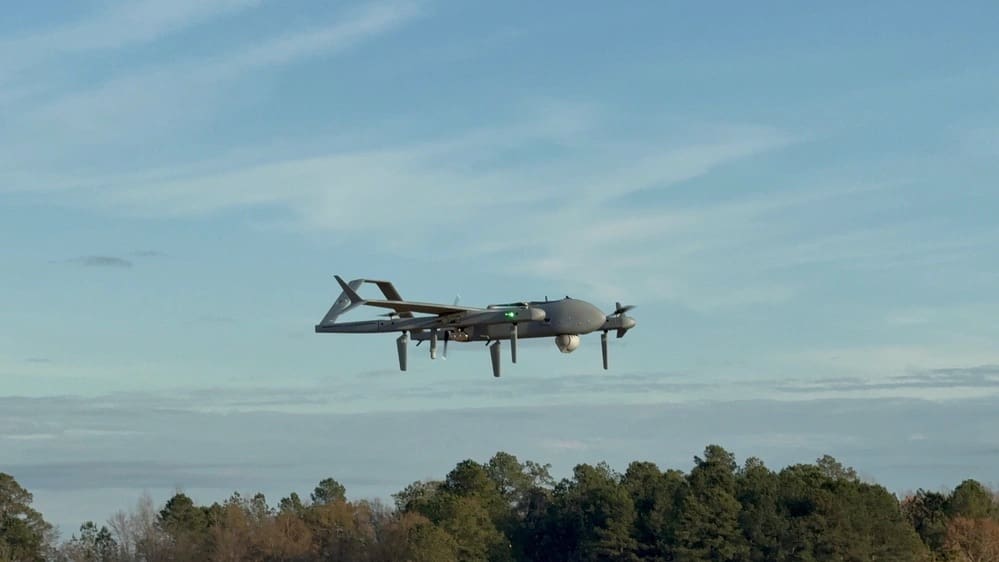
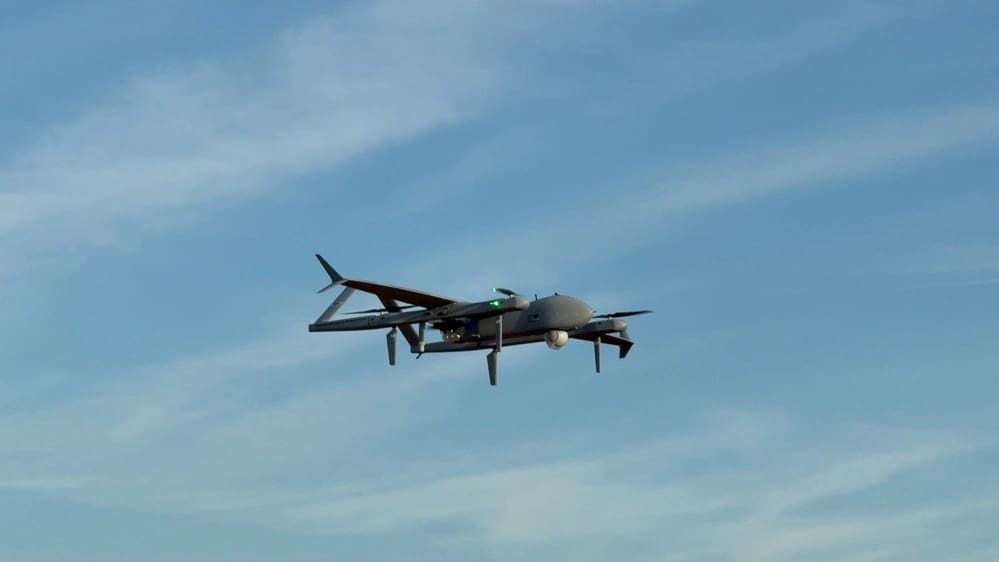
GE 25M is a modernized model of the Gray Eagle designed to meet the U.S. Army’s needs forMDO capability for both active duty and National Guard units. GE 25M is equipped with the new EagleEye multi-mode radar and electro-optical/infrared sensors, and can host a wide range of additional kinetic and non-kinetic payloads. Equipping ARNG Divisions with organic GE 25Ms makes possible the necessary mission planning, targeting, communications, detailed coordination, and realistic training needed to employ the systems successfully in combat. GE 25M will allow ARNG Divisions to have Divisional Reconnaissance, Surveillance, and Target Acquisition (RSTA) for the first time.

“The Gray Eagle platform has a proven record of performance with over a million hours of safe operations, including automatic takeoff and landing capability,” said GA-ASI Vice President of DoD Strategic Development Patrick Shortsleeve. “The aircraft excels as an enabler for Fires, Maneuver, Network, and Intelligence operations. It is also an integral part of the Army Aviation team, working closely with manned rotary-wing systems to achieve overmatch against pacing threats.”

GE 25M flew its maiden flight on Dec. 5, 2023, following the award of an undefinitized contract award announced on Dec. 1, 2023, for the Gray Eagle 25M Production Representative Test Aircraft.

Bioweapons Field Guide for Recovered Munitions to Fill Knowledge Gap

Monday, June 3rd, 2024

Aberdeen Proving Ground, MD — The U.S. Army Combat Capabilities Development Command Chemical Biological Center (DEVCOM CBC) Chemical Biological Applications and Risk Reduction business unit, known as CBARR, provides field response for recovered chemical munitions all over the country and around the world. Sometimes bioweapons munitions turn up, too. Robert Malone, the CBARR Plans and Assessments Branch chief, has a plan for that, he is writing a field reference guide for recovered bioweapons.

“We’ve had a field reference guide for chemical weapons since the mid-1990s,” Malone said. “It’s called the U.S. Chemical Weapons and Related Material Reference Guide. But there’s not one for biological weapons and related material, and that has always surprised me, so I decided to do something about it.”

What brought this need home for Malone is what happened at a field operations site at Holloman Air Force Base in New Mexico. Recovery team members encountered E-61 bomblets. “The CBARR project manager for this field operation, George Noya, came to me because he knew that I had done some extensive research on bioweapons some years back,” Malone said. “That provided me with some good background, but I also got help from a true CBC expert in this area, Chris Whalley, a Center subject matter expert in biological weapons.”

Malone and Noya went to Whalley’s office. Whalley was able to tell them what the item was, its delivery system, its potential agent fills, and he even had an unfilled example of one sitting in his office that they could hold and examine.

“That was enormously helpful to us, but then two things occurred to me,” Malone recalled. “First, why don’t we have this kind of detailed knowledge for the broad range of bioweapons in a form that can be shared? Second, Chris will retire soon, so how can we preserve that knowledge?”

DEVCOM CBC’s mission is to provide innovative chemical, biological, radiological, nuclear, and explosive (CBRNE) defense capabilities to enable the joint warfighters’ dominance on the battlefield and interagency defense of the homeland. It has programs with sources of seed money available to fund good ideas. Through the ‘Quick Empowerment leads to Successful Tomorrows’ program, or QUEST for short, projects of any size from $5,000 to $100,000 tied to the Center’s mission are considered. Applicants get ten minutes to pitch their ideas before the Center’s Innovation Council members, followed by five minutes for questions.

In 2023, Malone submitted his idea, made his pitch and was selected to receive a $22,000 grant to begin work on a concise, easy-to-use field manual. He pulled together a team of CBC colleagues which included Whalley plus Mindy Soethe and Andrew Bailey. Although they were frequently away performing field responses at CBARR’s many project sites, they were able to reach the 40 percent mark over the course of a year.

The manual, thus far, includes biological weapon types, the history of their development and use plus information on their likely prevalence. Compiling this data is a slow, meticulous process, but the team members believe that the usefulness of that data warrants the effort.

Malone and his team submitted a request for funding to finish the field guide and at QUEST 24 Pitch Day in April they gave their pitch to the Innovation Council. They were persuasive, the Innovation Council members gave them a QUEST grant of $25,000, enough to finish the job. As soon as they complete it, they will make it available to CBARR field teams as well as the rest of the Center.

By Brian Feeney

Soldiers Assess New Technologies at Fort Leonard Wood

Sunday, June 2nd, 2024

FORT LEONARD WOOD, Mo. — The Army Futures Command Maneuver Support Battle Lab is winding down this year’s Maneuver Support and Protection Integration eXperiments event, commonly referred to as MSPIX, after assessing 16 emerging technologies from May 6 to 23, 2024, at locations across Fort Leonard Wood.

According to Kyle Henry, MSBL Experimentation Branch chief and one of the key organizers of the event, MSPIX puts the latest tools in the hands of Soldiers while also giving capability developers and the science and technology community credible and validated operational experiment venues for their conceptual and materiel development.

Soldiers from Fort Leonard Wood; Fort Bliss, Texas; and Fort Riley, Kansas took part in the assessments.

“Soldier touchpoints early in the capability design process are key to influencing the end product and its ability to support the end user, U.S. Army Soldiers. Key stakeholders are invited to observe the assessment, including the (Maneuver Support Center of Excellence) regiments and members of the (protection warfighting function) community,” Henry said.

Jarret Ellis, an MSBL engineer, said it is crucial to get Soldiers involved in the development of technologies early on to make sure new equipment being issued meets their current needs.

“When these private industry companies come out with technology they think will be helpful, the Soldiers can point them in the right direction,” Ellis said. “A lot of times, the people developing the equipment are not Soldiers in the field — they are from academia, engineers and scientists. MSPIX brings the groups together.”

Soldiers from Army Engineer; Military Police; and Chemical, Biological, Radiological and Nuclear backgrounds participated in this year’s assessments, Henry said.

On May 15, Soldiers from the 16th Brigade Engineer Battalion at Fort Bliss and the 50th Multi-Role Bridge Company, based on Fort Leonard Wood, were at training area 224 to get their hands on a drone programmed to find subsurface explosives in real time by performing aerial surveillance.

The Soldiers were handed instructions on how to setup the Airborne Ground Mines Detection System, calibrate the software and prepare the unmanned aircraft system to sweep a designated area. After the Soldiers performed the steps, the drone took flight over the training area while sending data back to a computer the Soldiers were monitoring.

“Today we are assessing a means to detect explosive hazards. We are working on detecting threats that are buried or partially buried that could kill Soldiers and destroy equipment,” Ellis said. “This is one of the first looks we have had at something that is UAS-borne that could potentially detect hazards without putting Soldiers into the threat.”

Henry said the AGMDS was one of the technologies he was personally most excited to see in action this year. The others were the robotics for engineering operations and chemical, biological, radiological and nuclear sensors in robotic platforms.

“The REO provides standoff and autonomous terrain shaping. The CSIRP is an unmanned and autonomous area reconnaissance that relays information to mission commanders,” Henry explained.

Next year’s MSPIX focus areas will include, according to Henry, wet-gap crossing, situational understanding and protection decision support, obscuration and camouflage and toxic industrial materials site assessment.

By Melissa Buckley, Fort Leonard Wood Public Affairs Office

Joint Readiness Training Center Prepares Soldiers to Fight and Win

Sunday, May 26th, 2024

FORT JOHNSON, La. — Sweat drips down the faces of Soldiers assigned to the 1st Brigade Combat Team, 10th Mountain Division (LI), “Warriors,” as they experience life at the Joint Readiness Training Center at Fort Johnson, Louisiana.

Soldiers with 1st BCT enter a two-week character-building crucible inside the area commonly referred to as “the box.” The rotation equals a month-long experience to prepare Warrior Brigade Soldiers for their upcoming deployment.

JRTC allows brigade-sized combat teams to experience simulated large-scale combat operations — known as LSCO — to build readiness to support globally deployable missions.

Soldiers with 1st BCT are the first to experience the shift from limited contingencies that were used for over a decade to LSCO. This shift raised certain questions that Col. Daniel P. Kearney, commander of the 1st BCT, 10th Mountain Division, hoped to answer with this JRTC rotation.

“What does a light infantry brigade look like and what is it capable of,” Kearney said.

This question brings about a fundamental change in how operations will be conducted at JRTC and going forward for the Army.

This rotation represented the first implementation of the new Army force structure. The new force structure meant that 1st BCT would have to become a lighter infantry brigade and conduct the rotation with limited rolling stock. Rolling stock refers to military powered and unpowered vehicles that are used to transport personnel and equipment.

“We’re going from roughly 2,000-plus pieces — years of buildup of rolling stock — and the brigade is going to come in there (JRTC) with 498 pieces of rolling stock in total for the brigade,” Kearney said.

The limited rolling stock affects how quickly the brigade would be able to transport personnel and sustain the force in LSCO environments. These new challenges are why Kearney said it’s important to diversify how to sustain the brigade in LSCO settings.

“It means a heavier reliance on … our sustaining capabilities on both air and ground,” he said.

With a focus on air and ground sustainment and capabilities, this presented another challenge for the brigade at JRTC.

The 1st BCT conducted the rotation without using a U.S. Army cavalry squadron, who would normally provide the reconnaissance force. Their removal is part of the challenge the brigade faced while shifting their focus to LSCO environments. The brigade answered this question by instead coordinating with NATO allies to provide the same function.

The reconnaissance was instead done by partners with the British Army to serve as the cavalry unit and to build interoperability with one another. This JRTC rotation employed allies from the United Kingdom that included soldiers assigned with the Irish Guards; the 3 SCOTS, The Black Watch, 3rd Battalion, The Royal Regiment of Scotland; and the Royal Artillery.

Soldiers with the Number 2 Company, Irish Guards participated in a night air assault mission, May 1, 2024, to be the reconnaissance force. Guardsman Henry Fell, a machine gunner with Number 2 Company, Irish Guards, who participated in the joint air assault, said it was about ensuring the abilities of the British and U.S. Army would translate when working together.

“There needs to be that cohesiveness so that we can work properly together so we can achieve the same aim that we are looking for,” Fell said.

This is the first time that the 10th Mountain Division worked with NATO allies to facilitate the exercise at JRTC. Soldiers with 1st Battalion, 32nd Infantry Regiment, and 2nd Battalion, 22nd Infantry Regiment, 1st Brigade Combat Team, 10th Mountain Division would follow soon after and execute the main night air assault over two days.

“It allows us to test our systems as a battalion and find out our weaknesses to ultimately certify the brigade to deploy,” said 1st Lt. Sky Rahill, platoon leader, C Company, 1-32 Infantry.

The air assault exercise marked the second phase of JRTC known as the joint force entry. To prepare for this phase, Soldiers received their multiple integrated laser engagement system, or MILES, gear. The MILES gear operates in a laser tag system to simulate a combat scenario and track Soldiers and their progress. This was done during the reception, staging, onward movement, and integration phase, a process to ensure equipment is ready and accounted for before field exercises.

Staff Sgt. Jacob Hurley, a squad leader assigned to C Company, 1-32 Infantry, said MILES is a way to test the efficacy and lethality of Soldiers.

“The reason we have it and why it’s so effective is that we have to calibrate it through civilians and our military counterparts,” Hurley said, “so that when we go out we can simulate real-world training.”

This rotation served as a lot of firsts for the Warrior Brigade, but also for the division who participated at JRTC as the higher command role. To help support 1st BCT at JRTC, the division tested its ability to exercise mission command over live maneuver units during a force-on-force environment.

The division simultaneously simulated a LSCO scenario to get a better understanding of how to maintain mission command when in an active combat zone. To achieve this, the division displaced the higher command and moved it to another location.

Lt. Col. Christopher Rankin, commander of Headquarters and Headquarters Battalion, 10th Mountain Division, described it as a necessary function in LSCO settings, but it is also still new for Soldiers within the division.

“I’m pleased with the progress we’ve made from the first time we did this” Rankin said. “We are not perfect yet, but we will continue to gain more repetitions.”

Additional support given to the brigade was provided by the 10th Mountain Division Artillery, which incorporated their Hunter-Electromagnetic Spectrum VII Delta exercise.

JRTC served as the culminating event for Hunter-EMS VII Delta and validated the 10th Mountain Division’s capability to conduct friendly and combat enemy long-range digital and voice communication. Maj. Mark Smerka, 10th Mountain Division Artillery effects officer in charge, described the training as an opportunity to help develop brigades and divisions.

“The hope is that all of the capabilities we have either created or validated here are just further exercised,” Smerka said, “in ways that can lead to improvements of the organic equipment and capabilities that maneuver brigades and divisions (in LSCO environments).”

To the 10th Mountain Division, JRTC is an opportunity for small teams to contribute to large-scale movement in meaningful ways. Kearney said the challenge ahead does not serve as a deterrent to his 1st BCT Soldiers from striving to improve and master their crafts, but rather a motivation.

“My defined end state for the Warrior family is a tight-knight family of unbeatable companies and batteries, with staffs that plan in detail and develop and refine processes for the employment of the BCT in large-scale combat operations,” said Kearney. “We’re humble, we’re aggressive in our desire to learn, and we aim to be one percent better every day.”

By SPC Salvador Castro