ICE Tactical introduces the first of their new Firestorm line. It is a FR Short Sleeve T-Shirt Made from 65% Mod-acrylic, 25% FR Rayon, and 5% Spandex. It also features a permanent wicking treatment for warm weather comfort. This product is Berry Compliant and is offered in Coyote.
DuPont’s Spruance facility in Richmond, Virginia recently hosted SSD for an in depth look at Fire Resistance and Ballistic Protection.
Back in the 60s a new class of fabrics was developed, called Aramids with DuPont at the forefront of their creation. Two fabrics in this class have become the cornerstones of modern Soldier Survivability; Kevlar and Nomex. They provide Ballistic and Fire protection respectively. Kevlar was initially developed by DuPont for tire belts but not put to its current use until the early 70s. Nomex on the other hand was quickly integrated into flying and space suits not long after its creation.
The most compelling portion of the visit was the ThermoMan lab. Composed of 122 sensors, ThermoMan was designed with the assistance of NC State. In addition to the mannequin, there is also a skin burn injury model that takes data collected at the sensors and displays how a thermal threat would equate to an injury to the human body. One interesting aspect of the ThermoMan over other testing methods such as the commonly used vertical flame test is that the ThermoMan tests not only the material’s performance but also the garment’s overall design and construction. This is a critical factor in protecting a wearer from thermal threats. If a flame can get inside a garment then the wearer might as well not be wearing FR at all. Interestingly, the pocket configuration of the issue flight suit is designed to provide additional protection for the wearer by doubling the layers of Nomex in certain key areas. Testing has revealed that most injuries actually occur after the flame threat is removed and the wearer is subjected to residual heat retained by the garment.
We witnessed two burns consisting of a 3 second burn delivering 6 calories. It is intended to replicate a JP4 fire. In the first burn, an issue CWU-27/P US issue flight suit manufactured from Nomex III.
As you can see, minimal damage was sustained by the ThermoMan due to the material and design of the flight suit. it is important to note that while the ThermoMan does a great job predicting injuries, actual injuries may vary due to a wearers body and the fit of the garment. Experience has shown that 1% injury equates to 1 day in the hospital. In this case, the ThermoMan indicated 7% injuries.
In the second, a similar looking flight suit manufactured from 65/35 PolyCotton was subjected to the same threat. PolyCotton, a mixture of 65% Polyester and 35% Cotton is commonly found in Chinese made garments. There IS a place for this fabric, but as you will see in the video, it isn’t in a flame threat environment. Rather, PolyCotton is a cool fabric and very good for use in warm climates. The choice of materials goes back to our recent article concerning knowing your equipment, the threat, and environmental conditions and making an informed choice about which equipment to choose. As you can see the PolyCotton not only caught on fire but it continued to burn even after a direct flame was removed. In this case, the ThermoMan sustained 75% injuries.
During our visit to the ballistics lab we witnessed a demonstration of testing of an armor vest and were introduced to the various apparatus used during testing. Additionally, we were given the opportunity to try out first hand correctional armor which is designed to stop stab and puncture threats. We were amazed at how much differently ballistic and correctional armor reacted to the icepick type of shiv commonly found in correctional facilities. The bottom line is that correctional armor works.
We were fortunate enough to be able to discuss a variety of current Soldier Systems issues with the DuPont team but probably the most important message we got was that DuPont is constantly looking at new ways to use their flagship products. Adaptability is the key as they not work to improve the performance of their materials but also as they seek new ways to use their products as well as combine them with other fibers.
While in years past many vendors would have pushed monolithic solutions to threats, it makes more sense now to develop hybrid solutions that combine multiple fibers into a more robust material. This way, the best characteristics of different materials can be combined into a common solution.
Overall, the meeting was excellent and we left with a greater appreciation of the level of commitment DuPont has to protecting our troops and public safety professionals.
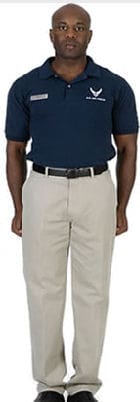
The Air Force Personnel Center has launched a new website dedicated to uniforms. While it highlights all of the Air Force’s Garrison uniforms, the most appropriate ensemble in the inventory looks to be the Informal Uniform. Seemingly designed for their endless Casual Friday, it consists of a blue polo shirt and khaki slacks (yes, we said slacks). In reality it is intended for select Air Force organizations while traveling or under conditions where the other uniform combinations would not be appropriate. No mention is made of any of the service’s combat uniforms unless you count the poorly monikered Airman Battle Uniform.
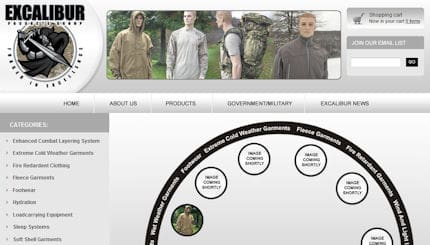
Apparently, ’tis the season to upgrade websites. Fortunately, all of the ones we have seen are very well done and the new site from Excalibur Products is no exception. We have mentioned their packs in the past and they also offer a couple of sleep system options but according to the main graphic on the new site, they have quite a bit on their plate and we are looking forward to seeing some more of their products.
Yesterday, SSD participated in a teleconference with PEO Soldier’s LTC Mike Sloane and CSM Bernard McPherson. Also on hand was SMA Kenneth Preston along with several Subject Matter Experts from PEO Soldier. The press event was in conjunction with the Army’s initial fielding to a Brigade of 19 items in the new OEF Camouflage Pattern (OCP) at Camp Shelby, MS. Up to 3600 Soldiers will be equipped with the new gear over the remainder of the week before shipping off to Afghanistan. From here out, all OEF bound forces Brigades will be fielded Organizational Clothing and Individual Equipment in OCP before deploying from CONUS. Beginning in November, units with more than 120 days left in theater will also receive the kit. PEO Soldier is poised to conduct limited early fielding for deployed Battalion and smaller units who require the enhanced camouflage based on their mission. They are also developing plans to ensure that Individual Augmentees are taken care of. Additionally, Army SOF will be issued gear in the new pattern.
The ambitious fielding schedule would not have been possible without the dedicated work of two communities; the contracting office at Natick and industry. LTC Sloane commented, “The American Industrial Base is leaning forward, flying items in and driving them here.” The other side of this coin is the Army’s contracting strategy. In three months, the contracting office at Natick issued 11 contracts with another six to eight pending. Very impressive.
This fielding marks the implementation of phase III of the Army’s Congressionally directed search for enhanced camouflage for troops in Operation Enduring Freedom. Within less than a year, the Army conducted an extensive down select of 57 to five patterns that included an in-theater data collection effort and a comprehensive photo simulation study and wear test. This culminated in the selection of the Crye Precision developed MultiCam pattern as the new OCP.
When asked if he felt that, based on his experience if Soldiers were better protected with the new OCP, SMA Preston commented, “Based on testing…Yes, I believe they are safer.”
So what’s next for OCP? In February 2011, Tier II items including the Aircrew Advanced Combat Uniform, Improved Combat Vehicle Crewman Coverall, Aviation Life Support Equipment, and Fire Resistant Environmental Ensemble items will be introduced in the MultiCam pattern.
Finally, LTC Sloane announced that the Army’s Phase IV of the Global Camouflage effort will not be as short term as initially described. Instead, the TRADOC-led project will not be ready for the Army leadership to make a decision until the end of FY13. This three year effort sounds now to be more of a science project than focused on presenting a near-term warfighting enhancement. On the plus side, the Air Force is participating, and both the Navy and Marine Corps are monitoring the program so there is a slight possibility that the project may deliver a true joint solution. The down side is that for at least the next three years Soldiers must continue to rely on the limited capability of the so-called Universal Camouflage Pattern that caused this whole program in the first place. Perhaps commanders in other theaters will begin to insist that their troops also require enhanced camouflage and we will see increased fielding of MultiCam.
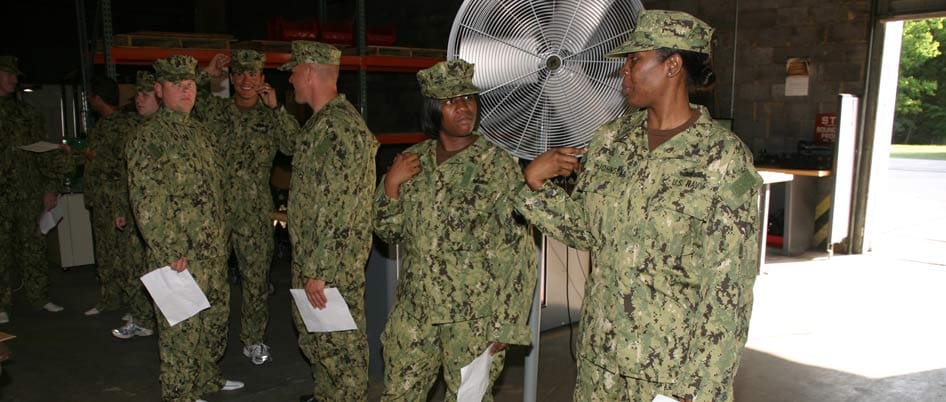
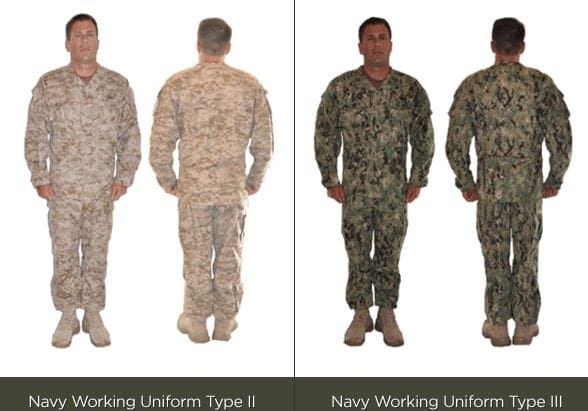
Kit Up! ran with our story on the two developmental variants of the new USN Type II and III NWU. They spoke with a couple of the officials working on the program and the program still doesn’t add up. They were unable to explain the desert camo issue plaguing the program. Additionally, Kit Up! came to a similar conclusion that we have. The Navy will most likely adopt a cut of uniform that NSW won’t want to wear due to the variant 1’s focus on garrison wear. Combine these two issues and you will have a Type II NWU in a restricted camo pattern and the only community that can wear it won’t because it doesn’t meet their functional requirements. Classic…
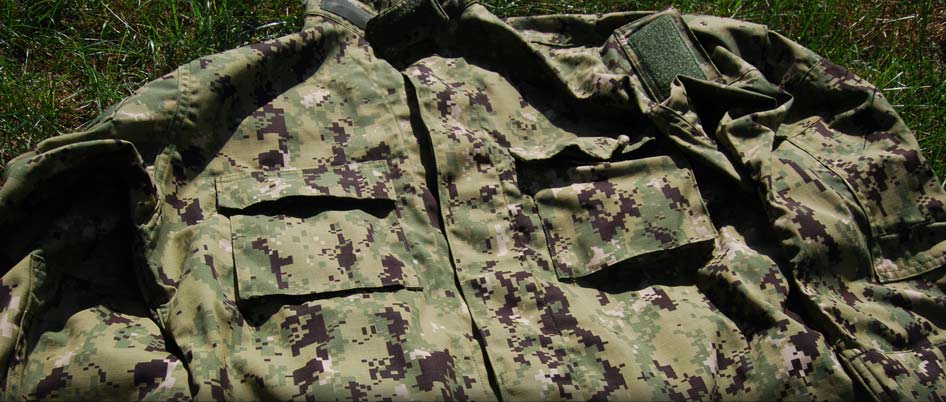
The Program Manager for the Naval Working Uniform has set up a fantastic web site to keep the Fleet updated on the roll out of the Type II and III variants of the NWU slated for fielding in Spring 2011. Two variants of the basic layout are currently in conformance testing pitting a traditional BDU cut most Sailors are used to against a more innovative style based on features found on commercially developed combat clothing. In the photo above you can see the Type III which will replace the Camouflaged Utility Uniform in the Woodland pattern. Unfortunately, the Navy plans on retaining two separate desert camo patterns, with Naval Special Warfare adopting the AOR I inspired variant and all others retaining the old 3-color desert pattern which first saw service in Operation Desert Storm.
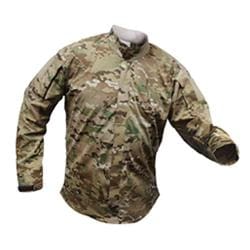
Vertx has announced that the upcoming Gunfighter shirt we recently wrote about will initially be offered in two versions. The first will be a classic 50/50 ripstop NYCO and the second labeled the Storm will be crafted from a water resistant lightweight soft-shell laminate.
Vertx/Fechheimer CEO Bob Getto wore the Storm on a recent Coyote hunting trip in Montana and filed a video report found at the link.
Pre-order now, these are offered in MultiCam and we are sure they will sell out fast. Vertx begins shipping in October.