GORE-TEX Professional - AWICS

Archive for the ‘Contracts’ Category

USSOCOM Issues Pre-Solicitation for SPEAR Family of Tactical Headborne Systems Coxswain Helmet

Wednesday, May 24th, 2017

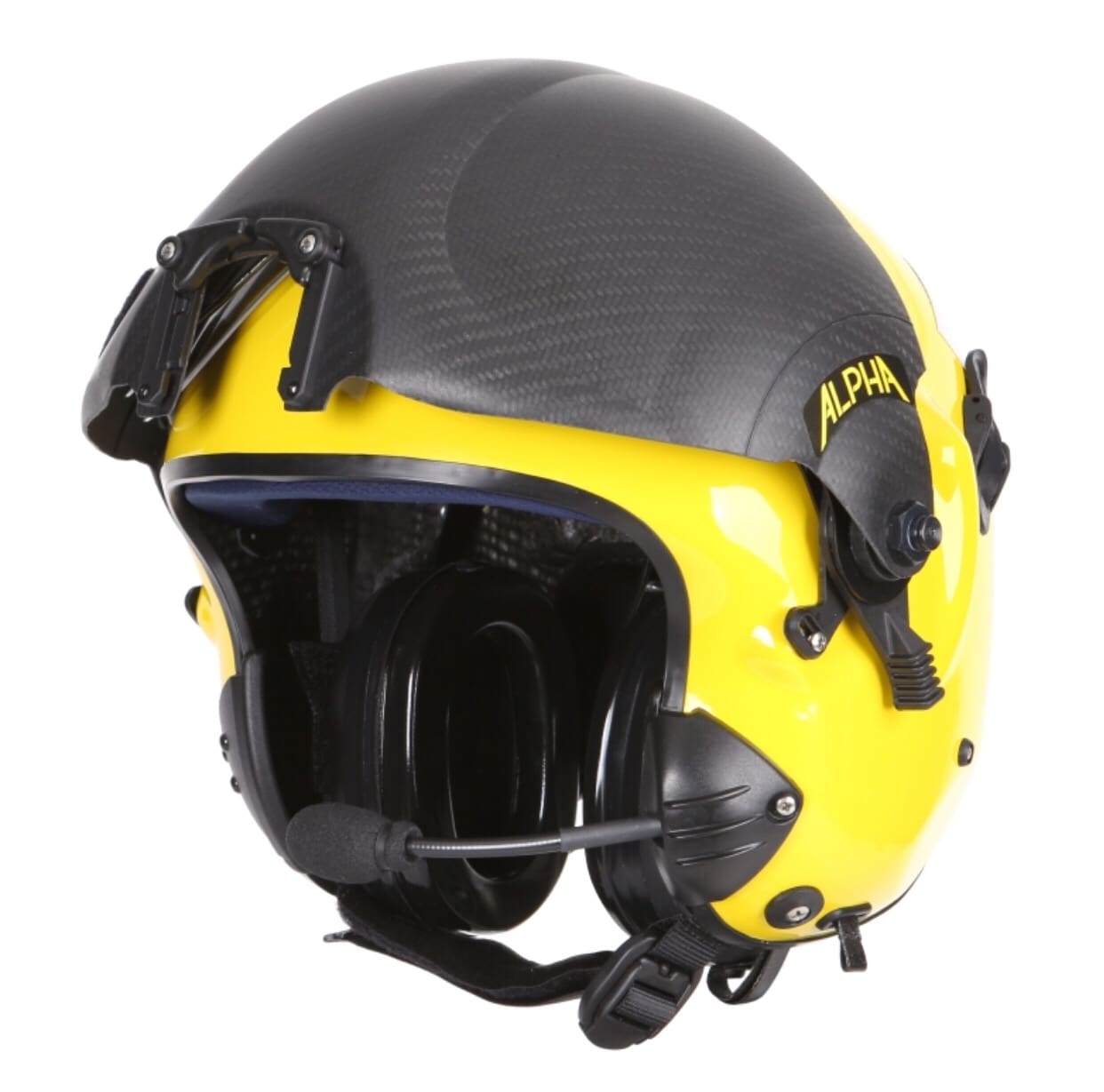
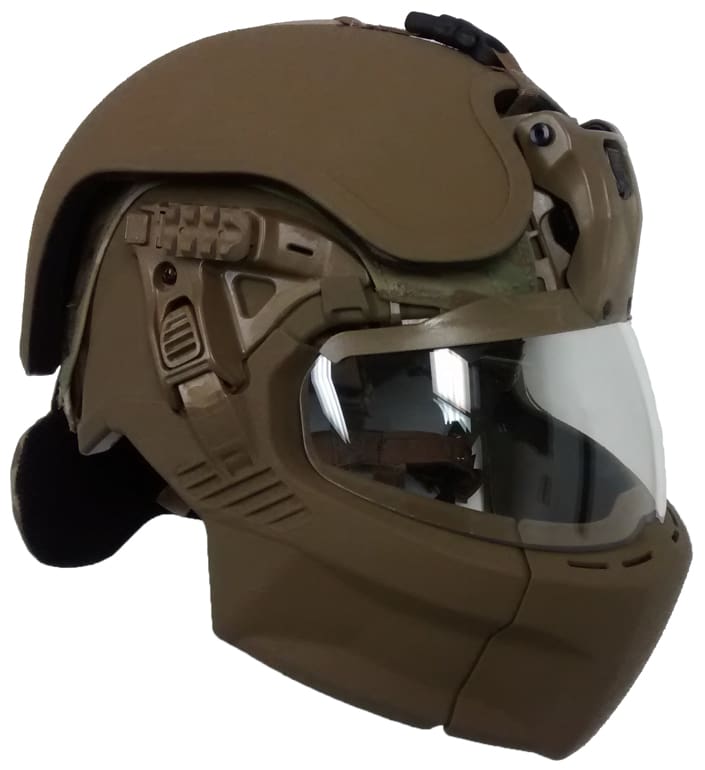
The United States Special Operations Command (USSOCOM) recently issued a pre-solicitation notice to industry pursuant to their requirement for a multi-year contract to procure Special Operations Forces Personal Equipment Advanced Requirements (SPEAR) Family of Tactical Headborne Systems (FTHS)-Coxswain Helmet System. The Coxswain Helmet system is the most interesting helmet system from a technical standpoint and more closely resembles the recent Next Generation Helmet work done for SOF by Ops-Core and Revision.  Although Ops-Core is keeping their’s under wraps, Revision recently released their candidate commercially, as the Batlskin Caiman Head System.


DoD Photo by MSG Timothy Lawn.

The coxswain helmet will consist of a non-ballistic helmet system with modular accessories which will consist of a visor, ballistic mandible, non-ballistic (i.e. impact) mandible, and two piece ballistic appliqué. Additionally, the helmets require a variety of VAS Shrouds, Helmet Covers, Accessory Rails, Pads, Exterior Velcro sets, and Peltor Adapters.

The helmets will be offered in five sizes in Tan, Neutral Grey, AOR 1, AOR 2 and MultiCam.

The government intends to award a five-year Indefinite Delivery Indefinite Quantity (IDIQ) Firm Fixed Price (FFP) production contract for a fully developed item to the offeror with the best value to the Government. They are looking for Commercial-Off-The-Shelf items. The actual solicitation should be issued in June and the minimum contract value will be $150K and the maximum contract value will be $95M.

Because of the scalability of the Coxswain Helmet I wonder how long it will be before other SOF personnel want it instead of the standard SOCOM helmet already in solicitation.  

For full details, visit www.fbo.gov.

US Army and 3M Provide Hearing Protection for Soldiers

Sunday, May 21st, 2017

Army’s PEO Soldier Orders 3M™ Personal Safety Division™ Tactical Communication and Protective Systems

ST. PAUL, Minn. The U.S. Army has accepted two 3M™ products to equip soldiers with hearing protection and auditory situational awareness. The 3M Personal Safety Division has received initial orders for more than 6,500 devices that include 3M™ PELTOR™ TEP-100 Tactical Earplug Kits and 3M™ PELTOR™ COMTAC™ III ACH Communications headsets, plus spare parts and accessories totaling more than $1.6 million. Deployment of these Tactical Communications and Protective Systems (TCAPS) is managed by PEO Soldier.

“3M supports PEO Soldier’s objective to maintain hearing protection and prevent hearing loss. These products will help soldiers be more effective in combat, and will help allow them to return home with their hearing intact,” said Shawn Gregg, U.S. Business Director, 3M Personal Safety Division.

“Our history with U.S. Special Forces, collaboration with the U.S. Army, and relationships with U.S. Military Audiologists all helped contribute to the hearing solutions we have been asked to supply,” said Doug Moses, U.S. Product Marketer for Protective Communications at 3M Personal Safety Division.

The patented 3M PELTOR TEP-100 earplugs were introduced to the market in 2014 when demand for ruggedized, stand-alone electronic “in-the-ear” hearing protection devices surfaced. 3M’s research and development team responded by designing and developing a low-cost, easy-to-use, system that could be utilized in a wide range of applications, and in remote locations. A key application was for military service members and tactical law enforcement teams requiring auditory situational awareness, as well as hearing protectors to protect against the effects of hazardous noise.

The 3M PELTOR COMTAC III ACH was originally introduced to U.S. Military forces and law enforcement tactical teams in the early 2000s. The COMTAC Headset was the first tactical communications headset to offer an environmental listening function, sometimes referred to as “Talk-Through,” which enhances the ability to locate and identify opposing forces, by allowing safe audio sounds through. The headset reduces harmful noises, which promotes increased mission effectiveness, safety and survivability. The headset utilizes a proprietary digital audio circuit to sense noise levels above the desired threshold and compress them to a safe decibel level. Additionally, weak sounds can be amplified to an audible level, to better serve team members with existing hearing loss. Now in its fourth generation, over 600,000 systems have been delivered to military forces worldwide.

3M PELTOR COMTAC Headsets and Tactical Earplugs are commercially available and sold through the 3M distribution network. For more information, please visit 3m.com/tacticalppe.

3M is a global leader in hearing conservation, specializing in hearing protection devices, communication solutions in high noise environments, detection products such as noise dosimeters, fit validation systems and seen as an education authority throughout the world. To learn more about 3M hearing protection, please visit: www.3m.com/hearingprotection. To speak to a 3M specialist about a particular safety issue or training need, please call 800-243-4630.

Total Game Changer – USSOCOM & USMC Take First Steps Toward Adopting a .338NM Lightweight Medium Machine Gun

Monday, May 15th, 2017

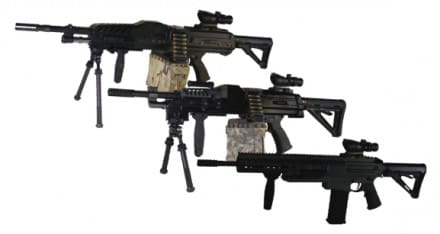
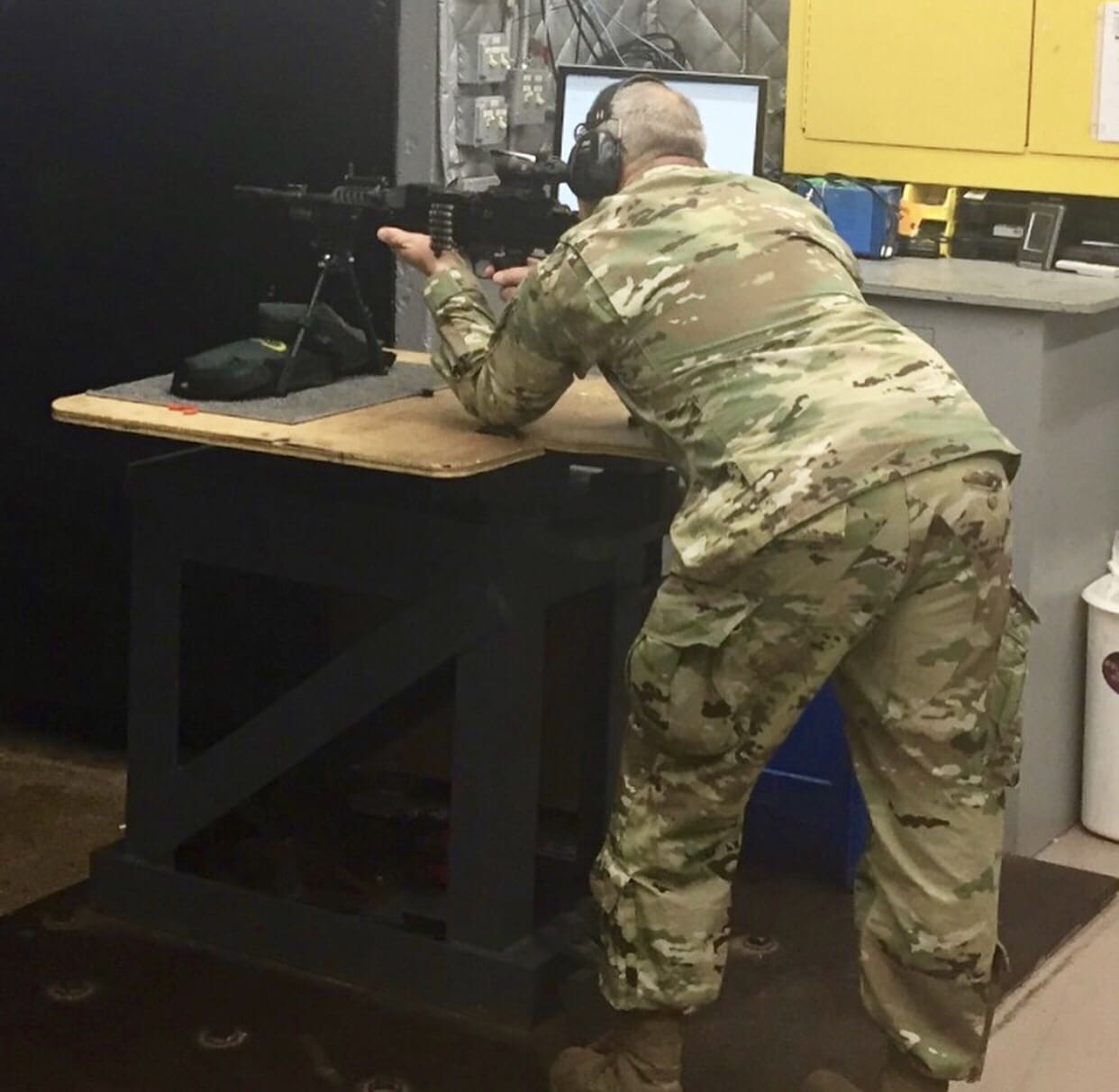
In a move that will turn the term “Overmatch” on its ear, the United States Special Operations Command, in conjunction with the United States Marine Corps has issued a sources sought notice for 5,000 Lightweight Medium Machine Guns in .338 Norma Magnum. The Russian PKM is a primary concern for dismounted infantry and the LWMMG doubles the 1000m effective range of the PKM.

Specifically, they are seeking producers who can provide:
-complete machinegun system to include weapon, suppressed barrel, and tripod
-any tools needed to conduct basic maintenance

In short, the capability will provide a machine gun which is lighter than the current 7.62mm M240, yet offers nearly the reach of the .50 M2. However, unlike the M2, this new capability will offer pinpoint accuracy at those ranges. What’s more, with the introduction of polymer cased ammo, the weight of ammunition comes much closer to 7.62 than .50.

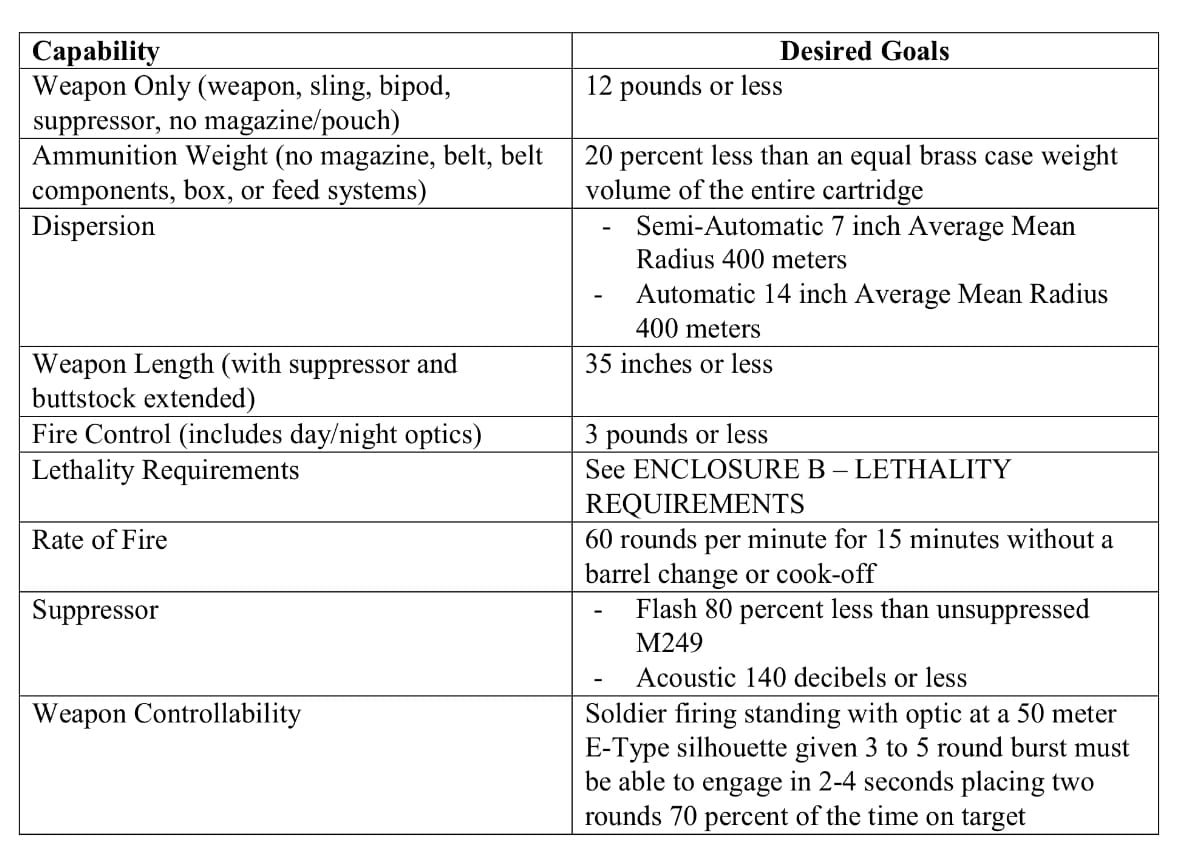
LWMMG specifics: The LWMMG should fire the belted .338NM round of ammunition with a polymer case. The LWMMG should weigh less than 24 pounds unloaded with a barrel length of 24in. The LWMMG should have a rate of fire of between 500-600 rounds per minute. Weapon shall be compatible with current rail mounted aiming systems with the ability to incorporate more advanced fire control technology. The system should include both a suppressed barrel and an unsuppressed barrel that can be rapidly changed. The LWMMG should include a tripod that is lightweight and provides the stability and accuracy required to engage targets at extreme ranges. The LWMMG should be able to mount in current machinegun mounts designed for the M240B/C. The weapon should have sufficient accuracy to engage area targets and vehicles at 2,000m.

At the recent NDIA Armaments Symposium, USASOC DCS G8, COL Samuel Ashley briefed this capability. The capability has been sufficiently demonstrated to move to procurement. However, COL Ashley related that this new capability will require new ootics amd target acquisition solutions.

To be sure, adopting a new cartridge is an expensive endeavor, but in this case, the new capability more than outweighs the cost. Additionally, SOCOM plans to introduce the caliber to its upcoming multi-caliber Advanced Sniper Rifle, along with a legacy 7.62 NATO and .300NM round.

One interesting point in the RFI is the mention of two types of barrels. One is a standard barrel and the other is suppressed. Notice they didn’t ask for a suppressor, but rather a suppressed barrel. As GD has demonstrated the weapon in use with a detachable suppressor in the past, this indicates they must have developed an integrally suppressed barrel. The amount of Interal Reasearch and Development Dollars GD has put into this weapon is impressive.

IMG_0535

This 2016 chart from a Jim Schatz briefing to industry depicts the weights of the M240, LWMMG and M2. In addition to weapon upgrades, Polycase technology is going to further lighten that load, or better yet, increase the amount of ammunition a machine gunner can carry.

We recently mentioned General Dynamics Ordnance and Tactical Systems’, Commercial Off The Shelf solution which this requirement is based on and is available right now, but I would not be surprised to see other vendors offer up solutions as well. I’ll keep my eyes peeled during this week’s SOFIC to see what turns up.

Some readers will get wrapped around the axel over the 5,000 number of systems in the RFI; but don’t. It’s a nice round number the government is using to measure industry’s capacity to produce the weapon. By no means is it a basis of issue plan based number.

In my opinion, adoption of this capability is the single greatest small arms capability enhancement to the US military in the last century. It offers the ability to deliver accurate sustained fire at ranges out to 2000m in a package which can be employed by one operator. MARSOC has been following the weapon’s development, but good on the Marine Corps writ large in seeing the value of this proposition. Hopefully, the US Army, a service very concerned about threat overmatch, will move this capability from a Future to Near-Term priority. However, based on recent directed requirement from the 4-Star level, I would not be surprised to see this happen as SOCOM’s program reaches maturity. This will not only enhance the Army’s capabilities but also help control ammunition costs.

For those interested in full details, visit www.fbo.gov.

SOFWERX Seeks Teams To Develop A K9 O2 Mask For HAHO Jumps

Monday, May 8th, 2017

Jump The Dog: Canine Oxygen Mask for High Altitude High Opening (HAHO)

IMG_1542

OpenWERX provides the general public with monthly opportunities to collaborate on innovative approaches relevant to SOCOM and other federal government agencies.

Prizes: First place: $6,000 – Second place: $4,000 – Third place: $2,000

OpenWERX Challenge-Jump the Dog

Open the description PDF here.

Here are some measurements that can be used as a guide to help develop the proper sizes for the masks:

– The average for a standard Belgian malinois is a nose length of approximately 4? with a circumference of approximately 10?.

– Variations in sizes should be able to accommodate nose lengths from 3? up to 5?, and circumferences of 8? up to 13?.

It might also be useful to do an Internet search for “how measure for a muzzle”, and other information about what will be comfortable for a dog (i.e. how much extra space to provide for the dog so as not to force their mouth completely shut). This site is an example.

Each team will create a video (10 minutes or less) presenting their concept to SOFWERX. The video will be viewed by the judging panel prior to the event. The teams will attend the OpenWERX event 1 June virtually or in person to answer questions by the judging panel.

June 1 Schedule
5:30-5:55 PM Networking (At SOFWERX)
5:55-6:05 PM Introductions
6:05-6:10 PM Air Bud Q&A
6:15-6:20 PM Summit Oxygen USA Q&A
6:20-6:25 PM Canine Performance Sciences Q&A
6:25-6:30 PM DKE Labs Q&A
6:30-6:35 PM Hack Tampa Q&A
6:35-6:40 PM Whiz-bang Q&A
6:40-6:45 PM Tampa Deep Sea Xplorers Q&A
6:45-6:50 PM The Shade Tree Mechanics Q&A
6:50-7:00 PM Tampa Technik Q&A
7:00-7:05 PM Birch Bunch
7:05-7:10 PM Break
7:10-7:15 PM Rossini Design Group Q&A
7:15-7:20 PM Frontier Labs Q&A
7:20-7:25 PM O.T.H.ER Team Q&A
7:25-7:30 PM Mako Design Q&A
7:30-7:35 PM Tampa Deep Sea Xplorers – Team Red Q&A
7:35-7:40 PM (MooLabs) Q&A
7:40-7:45 PM Lockheed Martin Aeronautics Co. Q&A
7:45-7:50 PM Quiet Professionals Q&A
7:50-7:55 PM IAG HAHO Dog Q&A
7:55-8:30 PM Judging
8:30 PM Prizes Awarded
9:00-9:15 PM Next Challenge Announced

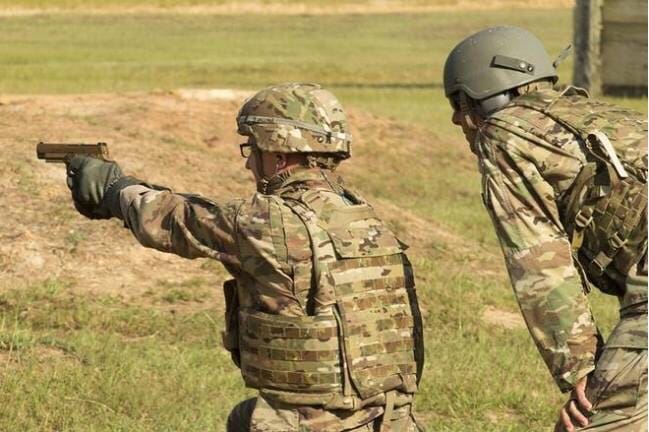
Army To Issue New M17 Modular Handgun To Ft Campbell Troops First

Wednesday, May 3rd, 2017

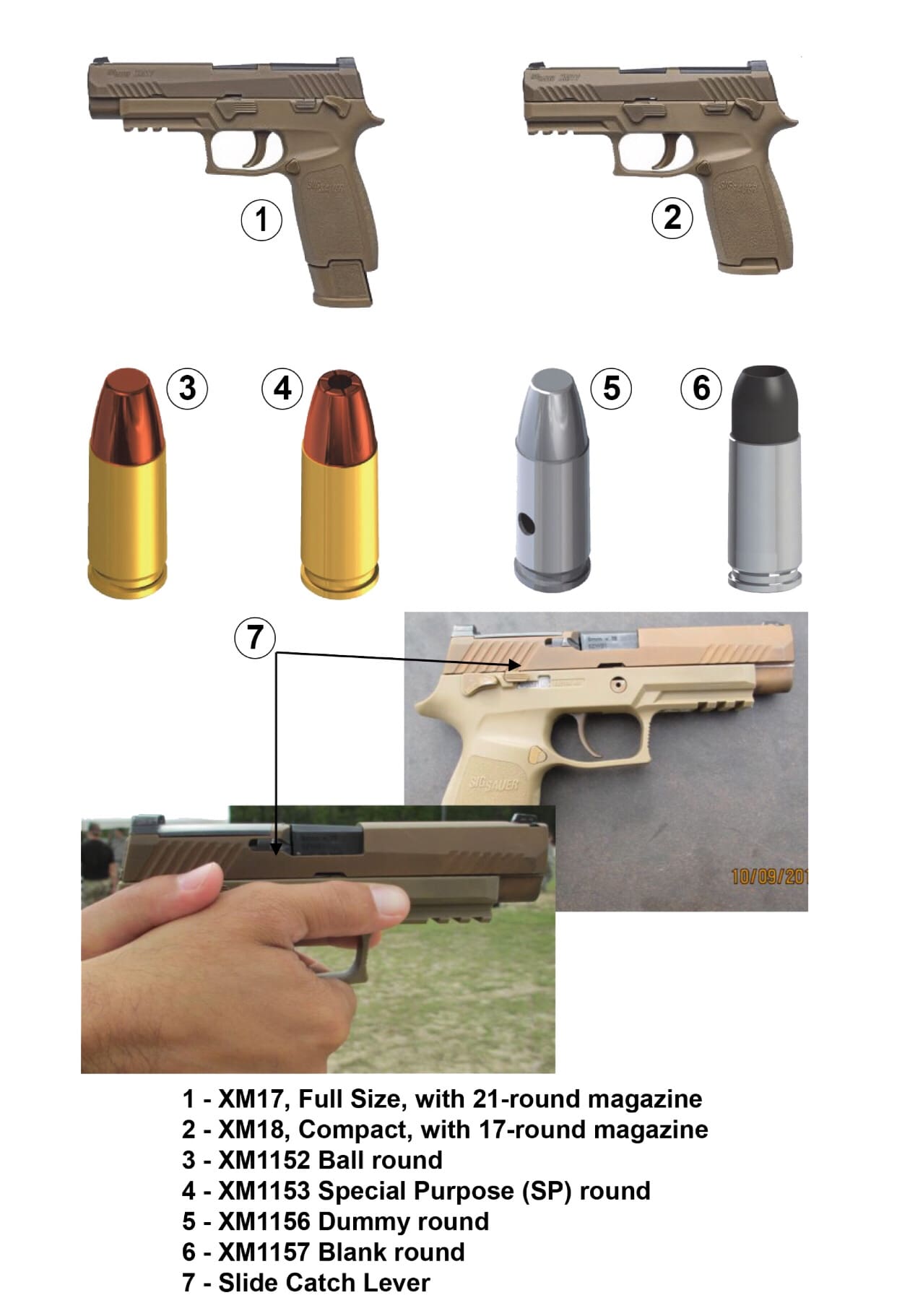
Earlier today at the NDIA Armaments Conference, PEO Soldier’s PM for Soldier Weapons, LTC Steven Power stated that the First Unit Equipped for the M17 Modular Handgun will be the 101st at Fort Campbell, Kentucky, during the first quarter of Fiscal Year 18. He also stated that other units on Fort Campbell would also receive the first of 190,000 Pistols the Army plans to buy.

In addition to multiple other Army units on the post, the 5th Special Forces Group ( Airborne) and elements of the 160th Special Operations Aviation Regiment are also there. Yesterday, USASOC Deputy Chief of Staff for Requirements (G8), COL Samuel Ashley stated that despite adoption of the GLOCK 19 by elements of the command, it was part of the Army’s fielding of the M17 as a replacement for their M9 pistols.

IMG_1388

In January during SHOT Show, the Army selected the SIG SAUER P320 as its new modular handgun. However, in Februrary, GLOCK protested the award. The GAO has until 5 June to make a decision on whether or not to sustain the protest. Despite this, the Army has developed a fielding plan for the new pistol, no matter who produces it.

USSOCOM Seeks Advanced Technologies

Tuesday, April 25th, 2017

USSOCOM Science and Technology Directorate’s (SOF AT&L-ST) has issued addendum J of their Broad Agency Announcement for advanced technologies. The directorate’s vision is to Discover, Enable, and Transition technologies to provide an asymmetric advantage for Special Operations Forces (SOF). SOF AT&L-ST has identified specific technology Areas of Interest to accelerate the delivery of innovative capabilities to the SOF warfighter.

Fires/Scalable Effects Weapons (SEW):
USSOCOM seeks to study, design, develop, and demonstrate advanced technologies associated with the application of fire from non-lethal through lethal. These technologies include, but are not limited to, weapons, munitions, and fire control, with the major development goals being lighter weight, lower cost of ownership throughout the entire lifecycle of the product, and increased effectiveness. Highly desired are:

Improved Effectiveness of Fragmentation Weapons. Alternatives to existing fragmentation weapons, or weapons where the casing is shattered upon detonation, and identifying munitions with greater effectiveness while applying the FBI standard for bullets (10-12 in penetration of tissue simulant) in the design of fragmentation munitions. The technology and approaches should assess what industries such as aerospace, automobile manufacturing and other non-ordnance suppliers have available or in development that applies to the needs. Specifically desired are:

Analysis of alternatives on potential of fragmentation weapons.

Enhanced 40mm x 46xx fragmentation grenade. USSOCOM is interested in an enhanced 40mm x 46mm cartridge propellant system that optimizes the acceleration curve enabling heavier payloads at current ranges or current payloads a longer range while remaining within current pressure and recoil limits. Peak chamber pressure is approximately 2320-3000 psi depending on barrel material and thickness. Recoil safety limit is 45 ft-lbs to 50 ft-lbs. USSOCOM is interested in increasing the lethal area of a 40mm x 46mm fragmentation projectile with enhanced energetics and optimize controlled fragmentation. USSOCOM defines lethal area as having a minimum of 2 fragments per square meter and 90% of those fragments penetrating 12 inches of 10% tissue simulant.

Payload Development. Technologies that can be employed as a payload to stop/disable maritime vessels and that can be delivered from an unmanned underwater vehicle (UUV). The payload can deliver a non-reversible effect, however, the effect should not betray hostile intent. Technologies/payloads that can be transported in a UUV compartment and can be exposed to a harsh, marine environment. Technologies/payloads should stop a vessel less than 50 meters long.


Human Performance
USSOCOM seeks to conduct research, design, development and demonstration of capabilities that enhance physiological, physical, psychological, and intellectual performance, and improve resistance to disease, stress, or injury caused by the demands of sustained operations in extreme environments. Highly desired are:

Performance Enhancements. Innovative solutions that will optimize human performance, reduce recovery time, and increase peak performance sustainability, including increased endurance, strength, energy, agility, enhanced senses, provide restorative effects of sleep, and enhance tolerance to environmental extremes. The technologies can be demonstrated through studies that provide proof of concepts or through solutions demonstrated in humans that quantify operational performance improvements. Technologies should not consist of new software applications, wearables, and additional studies on existing nutraceuticals that have been previously researched in depth. SOF AT&L-ST is specifically interested in:

Genomics, epigenetics, proteomics, and synthetic biology

Nutraceuticals and/or pharmaceuticals

Enhancing metabolic efficiency

Methods of improving oxygen delivery to muscles

Reducing the potential for musculoskeletal injury

Increasing tolerance to pain

Cognitive Enhancement

Sleep Restoration

Submissions should consider methods of demonstrating safety and efficacy, and a regulatory approval strategy if required. Proposed solutions do not have to be FDA cleared as a prerequisite, but nutraceuticals and/or pharmaceuticals must be US-sourced. Submitters should have access or partners with access to lab facilities.

Protection
USSOCOM seeks to conduct research, development and demonstration of advanced technologies associated with protecting the future dismounted SOF Operator. These technologies include, but are not limited to, ballistic body armor, helmets, and eye protection, with the major development goals being lighter weight and increased protection. SOF AT&L-ST is specifically interested in chemistry and microstructure improvements for advanced armor materials, including the following:

Mechanical property enhancements in existing armor ceramics through microstructure modifications

Development of new ceramic armor materials

Continued optimization of fiber-based armor materials, to include aramids, ultrahigh molecular weight polyethylene, and their associated resin systems

Investigations into additive manufacturing of armor materials (metals, polymers, and ceramics)

Thin, lightweight and low-cost transparent armor (polymer, glass and ceramic based solutions)

While the main focus of the research should be development of advanced armor materials, other considerations include projectiles of interest (7.62 x 39 mm MSC at 2400-2450 ft/s, 7.62 x 39 mm API BZ at 2400-2450 ft/s, 7.62 x 54R mm API B32 at 2850-2900 ft/s, and 7.62 x 51 mm AP M993 at 3050-3100 ft/s), a final system thickness of less than 1.0 inch, backface signature performance of less than 44.0 millimeters at the velocities listed above, and an ultimate goal of areal density reduction (with similar or improved ballistic performance).

Optical Electronics
USSOCOM seeks to conduct research, design, develop, and demonstrate advanced technologies associated with target engagement, intelligence, surveillance & reconnaissance, and neutralization of opposing force capabilities. These technologies include, but are not limited to, optics, lasers, sensors, and radar, with the major development goals being transition to the field within 5 years, backwards compatible with existing infrastructure, and do not require a significant cost investment to produce and sustain. SOF AT&L-ST is specifically interested in:

Observer to Point of Interest: Ground-to-Ground/Air-to-Ground

Man Portable Equipment and Turrets / Pods to Tower-Test

Characterization Abilities: Ability to identify and detect persons or objects of interest, identification of and thru material layers

Technologies that can be employed to effect long range enemy identification, to include laser vibrometry. Specific distances have yet to be determined, but should work outside the signature ranges of Intelligence, Surveillance and Reconnaissance (ISR) platforms to ensure surreptitious collection

Interested parties must submit whitepapers for this BAA Addendum which closes on June 5, 2017, at 11:59 p.m. EDT. USSOCOM may select some candidates which will then be funded up to $3m and given up to three years of development.

For full details, visit www.fbo.gov.

INVISIO Receives Additional Order from the UK Ministry of Defence Worth About SEK 15 Million

Monday, April 24th, 2017

INVISIO announced today that the initial order from the UK Ministry of Defence (MOD) worth about SEK 90 million was extended by an additional SEK 15 million order, which means that the contract value now amounts to approximately SEK 105 million. Deliveries will begin in the second quarter of 2017.

The contract with the British Ministry of Defence was announced on March 9, 2017, and comprises hearing protection and communication ancillaries for specialist land, maritime and air applications. The contract is for four years with options for a fifth year and a complete mid-life enhancement at two and a half years.

The contract follows previous MOD contract awards for hearing protection, THPS, announced in 2015.

The order was through INVISIO’s UK based partner Marlborough Communications Ltd (MCL).

USSOCOM Issues Presolicitation for SPEAR Family of Tactical Headborne Systems

Friday, April 14th, 2017

Recently, United States Special Operations Command (USSOCOM) issued a presolicitation notice to industry for a Commerical-Off-The-Shelf Special Operations Forces Personal Equipment Advanced Requirements (SPEAR) Family of Tactical Headborne Systems (FTHS)-Ballistic and Non-Ballistic Helmets. The FTHS-Ballistic and Non-Ballistic Helmets will consist of a ballistic helmet system as well as a non-ballistic helmet system.  

The government intends to award a five-year Indefinite Delivery Indefinite Quantity (IDIQ) Firm Fixed Price (FFP) production contract for a fully developed item to the offeror with the best value to the Government. This is not a R&D contract; the offeror must be the Original Equipment Manufacturer (OEM) and have an existing U.S. verifiable production line for any product proposed under this solicitation. All offerors must submit a proposal for both helmet systems; partial proposals will not be accepted. The helmet systems must meet the performance requirements as outlined in the Performance Specification and meet the requirements set forth in the Berry Amendment.

The acquisition will utilize full and open competition and the final solicitation is expected to be released this month. The minimum contract value will be $150K and the maximum contract value will be $95M.

Offerors will be required to submit Product Demonstration Models (PDMs) with proposal submission for evaluation. In addition, the Government may procure additional PDMs for testing purposes as part of this solicitation. These PDMs will be purchased from only those vendors remaining in the competitive range. Word is, the Government wants each offeror to submit in excess of 300 sample helmets, cost free. That’s a serious outlay to participate, considering the offeror may walk away empty handed.

It is important to note that these helmets are not the same as the Next Generatin SOF Helmet examples produced last year by Ops-Core and Revision.  Instead, these will be much more evolutionary in nature, bringing new materials and improved fit in packages much more like SOF currently use.  For example, this procurement is looking for solutions that include ballistic and bump shells, suspension systems including left and right eye dominant straps, accessory rails, exterior Velcro kits, 3M Peltor Accessory Rail Kit, and helmet covers.  Interestingly, SOCOM is said to be looking for a new hearing protection system soon making the interest in a 3M Pelton mount interesting.  Additionally, the offeror must propose a 3-Hole VAS shroud, provide the Wilcox G24 VAS mount, 4-Hole GSGM VAS Shroud, Wilcox GSGM VAS Mount, and the helmet itself must be compatible with currently fielded shrouds.  Kind of makes you think there should be a move to a more common VAS Shroud.  However,  another procurement is expected later this year for a separate SOF coxswain helmet which will likely include a bump helmet with ballistic appliqué upgrades as well as a mandible guard.

For additional details, visit www.fbo.gov.