Streamlight TLR VIR II

Archive for the ‘Contracts’ Category

FN Manufacturing Wins Contract To Build Mk 19 Spare Receivers For The US Army

Friday, March 7th, 2014

Mk19

McLean, VA – March 6, 2014 – FNH USA, LLC announced today that FN Manufacturing, LLC in Columbia, SC has received a new, three year, $7.6 million indefinite delivery/indefinite quantity (IDIQ) contract from the Defense Logistics Agency to build MK 19 spare receivers for the U.S. Army. This award is in addition to the $27 million contract the company currently has from the U.S. Army Contracting Command (ACC) to produce MK 19 grenade machine guns through August 2015.

“We are pleased that FN Manufacturing has been selected to produce the MK 19 spare receivers,” said Mark Cherpes, FNH USA President and CEO. “Since its founding in 1989, FN Manufacturing has proudly built a variety of military firearms for all branches of the U.S. Military including iconic products such as the M240, M249, M4 and M16 rifles. We are extremely proud of the high-quality and reliable firearms we build for our service men and women and look forward to continuing this tradition in the years to come.”

www.fnherstal.com

The Army’s Ongoing Schizophrenia Over the Future of Camouflage

Monday, February 10th, 2014

Since November I’ve been watching a rather interesting drama play itself out on Fed Biz Opps, the US Government’s website used to communicate procurement opportunities with the public. Aimed at industry, these postings spell out what the Government is buying. Normally, this isn’t a big issue. But in this instance it involves a constant flip flop over camouflage patterns.

Specifically, the Army wants to purchase 15,000 yards of Permethrin treated 50/50 NYCO fabric. It’s generally used to manufacture the Army Combat Uniform. The Permethrin treatment has been added to the fabric over the past few years as an insect repellant. That isn’t the issue. The issue has been whether to purchase the fabric in the Army’s current standard issue Universal Camouflage Pattern or in the Operational Camouflage Pattern known commercially as MultiCam by Crye Precision.

Originally posted 20 November, 2103, Army Contracting Command at Natick Soldier Systems Center posted a presolicitation, used to give industry a heads up, entitled “To purchase a minimum of 15,000 yards of Permethrin treated 50:50 Cotton/Nylon fabric from an EPA approved vendor” for “an acquisition requirement to purchase a minimum of 15,000 yards of Permethrin treated 50:50 Cotton Nylon (CoNy) fabric from an EPA approved Vendor. Fabric will be in the Operational Camouflage pattern…” Pretty cut and dried right?

OCP Definitely OCP

But then, January 13th came and the actual solicitation was released and they asked for “50:50 Nylon:Cotton fabric in accordance with MIL-DTL-44436B Class 8; Universal Camouflage Pattern (UCP) (emphasis added) treated with permethrin meeting the requirements of GL/PD 07-13D Type I, Class 2 and GL/PD 07-14D Type I, Class 2, as described in the Statement of Work, Section C, of this solicitation.”

It's gotta be UCP

Naturally, the head scratching began. The purchase of the fabric in OCP was right on track with the “soft launch” transition to OCP from UCP and here the Army is, asking for the old stuff. What was going on? The Army even went so far as to address the issue in a Q&A update to the solicitation. Their statement sounds like it put the issue to bed. But did it?

Q and A

Flipping isn’t any good unless there’s some flopping to go along with it right? Well this story has got some for you. On 06 February, 2014, an update to the solicitation reverted back to the original requirement, “Natick Soldier Research Development and Engineering Center’s (NSRDEC) has an acquisition requirement to purchase a minimum of 15,000 yards of Permethrin treated 50:50 Cotton Nylon (CoNy) fabric from an EPA approved Vendor. Fabric will be in the Operational Camouflage pattern…” Maybe it’s an administrative error, and maybe it’s schizophrenia, but either way, it’s painful to watch. UCP? OCP? Whatever works.

UCP-OCP whatever works

At this point I don’t even bother to ask the Army what they are up to as they have stopped communicating with me regarding camouflage as well as my colleagues at other websites. All any of us can do is watch what the Army does and report on its actions. In this case, ‘schizophrenia’ is the best word I can come up with to describe those actions. Yes, we’ve downloaded the documents and will post them here on SSD if the Army once again decides to alter the public record by deleting solicitation documents.

Hopefully, the Army will choose a single course of action regarding camouflage and make it work. The Soldier, industry and SSD are waiting.

Official Release – Army Awards Military Hardware & G-Code $49 Million for New Holster System

Friday, February 7th, 2014

Right after Christmas we shared the Army’s announcement that they had awarded contracts to Military Hardware LLC and ADS Inc for the new Improved Modular Tactical Holster (IMTH) for the M9 pistol. The Military Hardware entry is a G-Code holster system consisting of the XST holster along with Duty Drop Leg, H-MAR adapter for vests and MOLLE belt mount. Although this article isn’t about them, and for those too lazy to read the original article, ADS is providing the Blackhawk! Serpa holster.

20131006-205530.jpg

WILMINGTON, N.C., Feb. 6, 2014 /PRNewswire/ — Military Hardware llc announced today they received the U.S. Army’s primary IDIQ award to supply the new Improved Modular Tactical Holster (IMTH), a $49 million contract spanning 5-years. This watershed contract pitted two emerging small businesses against a multi-billion-dollar global aerospace and defense giant. The little guys won.

To win the award Military Hardware partnered with Edgeworks Manufacturing to provide the G-Code XST (Extreme Service Tactical) holster with four separate mounting platforms, exceeding the Army’s bid requirement. Both Military Hardware and Edgeworks are privately held small businesses located in Southeastern North Carolina.

Industry insiders credit Scott Evans, Founder and CEO of Edgeworks, as the original innovator of modular holster design. Military Hardware’s Founder and CEO, F. Scott Harry, said, “A decade ago when I saw the G-Code holster, I knew it was revolutionary. I wanted to be a part of the team that brought it to market.” They humbly credit the many Law Enforcement and Military personnel who have personally bought, used, inspired, and improved the products they offer.

Military Hardware specializes in marketing innovative small manufacturer’s products to the Department of Defense. They constantly collaborate with manufacturing partners and customers on product development. Retired Master Sergeant (USMC) Richard Cover, VP of Sales & Product Development for Military Hardware, is on a military base somewhere almost every day of the week and regularly brings ideas in from the field. Cover said, “We are all hands-on people. We work as a team and every person, from the factory floor to the front office, cares about what we do and who we do it for: the men and women of the U.S. Military.” It’s clearly this great dedication to the people wearing the gear that makes their products excel.

Mr. Harry also credits the North Carolina Military Business Center, a business development entity in the North Carolina Community College System. “I’ve worked with the NCMBC since it’s inception. Scott Dorney (Executive Director, NCMBC) has surrounded himself with knowledgeable people. Teresa Bouchonnet, in particular, has been indispensable to me.”

The IMTH can be purchased online at www.MilitaryHardware.US, by NSN through the Army’s procurement networks, and it will soon be available on GSAAdvantage.Gov. Contact Military Hardware for details.

Marines Seeking Enhanced Flame Resistant Combat Ensemble

Thursday, February 6th, 2014

FROG Banner sm

In January, MARCORSYSCOM released a pre-solicitation for an “Enhanced Flame Resistant Combat Ensemble” or EFRCE. While it sounds like something completely new, really what the Marines are looking for is a version of the Blouse and Trouser from the Flame Resistant Organizational Gear (FROG) that incorporates but improved fabrics and Permethrin treatment. There are no plans to alter the current cut or design of this popular uniform.

In terms of a general description, EFRCE is similar to the current Flame Resistant Combat Ensemble (FRCE) in the Marine Corps inventory; however, the design and fabrics used to construct the FRCE have been modified to increase durability (as such, producing the EFRCE)…Also, of note, following contract award, each shirt and trouser of the EFRCE must be factory permethrin treated and must conform to the permethrin concentration levels and percent bite protection requirements, as established by the Marine Corps.

They want vendors to use the following fabric types:

Cloth, Type I – Woven, Woodland, Marine Corps Pattern (MARPAT) Camouflage Printed
Cloth, Type II – Woven, Desert, MARPAT Camouflage Printed
Cloth, Type III – Woven, Navy Working Uniform (NWU) II, Desert Digital Camouflage Printed
Cloth, Type IV – Woven, NWU III, Woodland Digital Camouflage Printed
Cloth, Type V – Knit, Coyote, Solid (All Uniform Types)

Based on this, as you can imagine, the EFRCE will be offered in 4 variants:

As you can see, the Marines and Navy have no plans to abandon their camouflage patterns anytime soon. But, Marines and Sailors will have a great uniform in both woodland desert variants.

Class 1, Type I EFRCE Blouse and Trouser, Woodland MARPAT, with Durable Insect Protection
Class 1, Type II EFRCE Blouse and Trouser, Desert MARPAT, with Durable Insect Protection
Class 2, Type III EFRCE Blouse and Trouser, NWU II Desert Digital Camouflage Printed, with Durable Insect Protection
Class 2, Type IV EFRCE Blouse and Trouser, NWU III Woodland Digital Camouflage Printed, with Durable Insect Protection

As of now, the EFRCE will be produced by Hub Zone-based small businesses.

US Army Seeking Digital Printing Capability

Wednesday, January 29th, 2014

Natick has issued a Sources Sought Synopsis looking for companies that are capable of digitally printing on a variety of substrates (fabrics). Additionally, they must be capable of NIR and SWIR compliance. Specifically:

Natick Soldier Systems Center requires rapid printed fabrics for field/lab testing of camouflage patterns for use in woodland, transitional and arid environments that conform to visual, NIR and SWIR requirements.

The Army is interested in prints on 50/50 Nylon/Cotton Ripstop Fabric, 500D Cordura and Rayon/Para-Aramid/Nylon Ripstop Fabric.

Notice in the documentation they reference Woodland, Transitional and Arid patterns? They go on and on about this, repeating it four times which tells me that, despite the contractual machinations currently (not) underway with Crye Precision for OCP (MultiCam), Natick is committed to working with a family of camouflage consisting of a Transitional pattern combined with Bookend Woodland and Arid patterns. Perhaps someone has realized that they actually own the Scorpion pattern (seen below), a precursor to MultiCam developed for the Objective Force Warrior program and can do pretty much anything they want with it. Then again, maybe not.

OFW

At this point, the Army is in a bit of quandry, having banked on a soft transition to OCP. Now, no one seems sure if the Army will be capable of moving away from the UCP camouflage. If a friend asked me in October if I knew what was happening I’d say “yes.” If they asked me now, I’d tell a story that sounds like a plot to an episode of “Three’s Company” and say “Not so much.”

As for trying to keep up; the Army is getting pretty savvy on releasing solicitation notices that deal with developmental camouflage issues on FedBizOpps. Looks like they’ve figured out that folks are keeping an eye on them so they are issuing them without any discussion of camouflage on the actual notice. Take for instance this one. It is titled “Fabric Printing BPAs.” You have to get down into the attachments to see what is really going on. Sneaky, Sneaky. But don’t worry Army, we will keep an eye out for you to help keep you honest. Since the Army likes to alter the public record by deleting postings once they’ve been brought to light on SSD, we’ve included the meat of what the Army is looking for below.

Click to download: CAMO_BPA2_Spec23Jan2014

If you’re interested in answering up, you’ve got until February 4th.

For the full Sources Sought Synopsis visit Fabric Printing BPAs.

Revision Awarded Contract for SPS Integrated Head Protection System

Sunday, January 12th, 2014

Essex Junction, VT, USA (January 8, 2014) -– Revision Military, a world leader in protective soldier solutions, wins a contract for PEO Soldier’s Integrated Head Protection System (IHPS) Soldier Protective System (SPS). The 2 year development-to-acquisition program is to refine the U.S. Army’s next generation helmet system, a contract worth an initial $783,000 with additional options valued at $15 million.

Revision IHPS

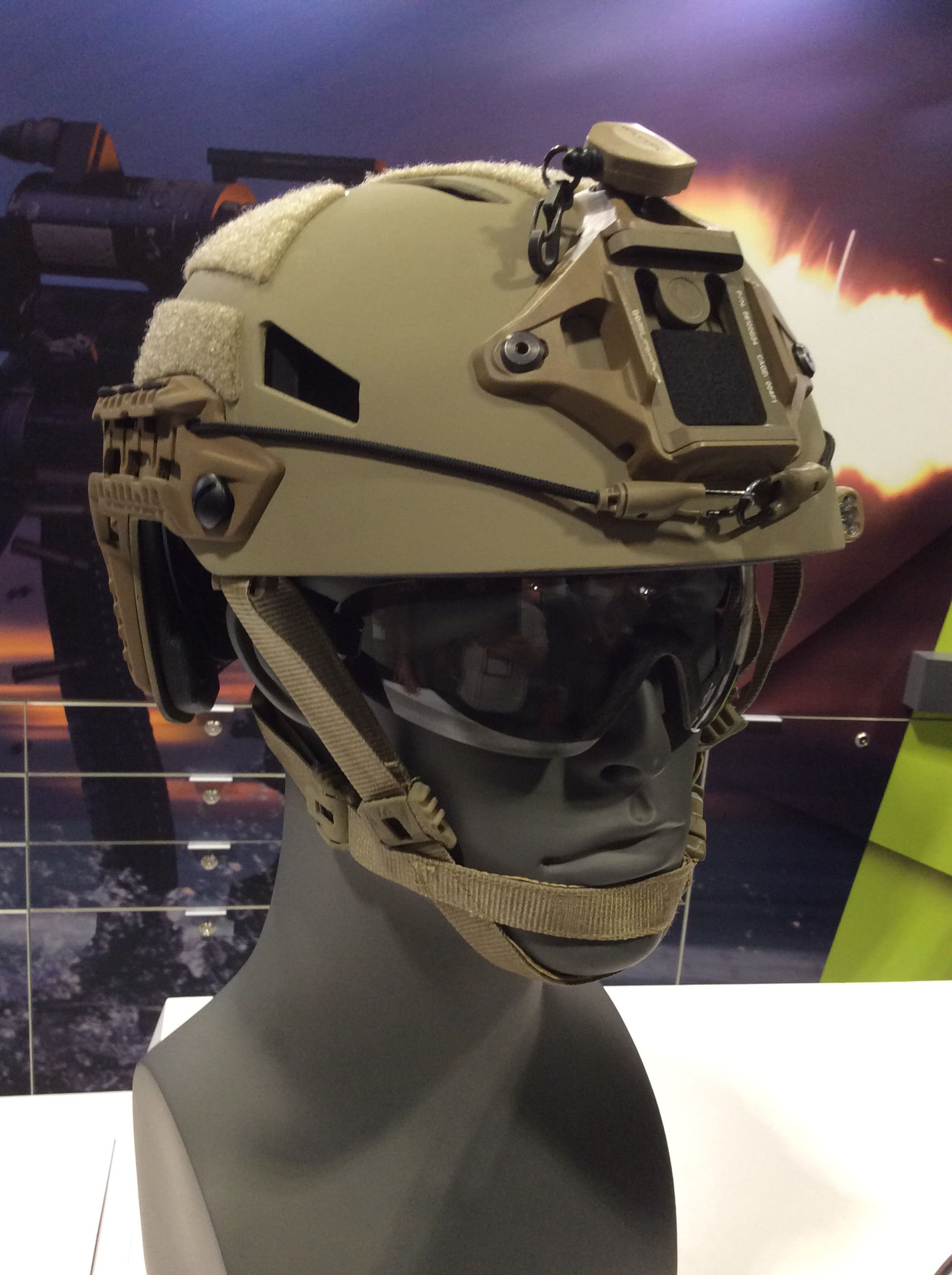
Revision’s IHPS small arms helmet serves as the foundation for the company’s proposed head protection system. The helmet’s optimized shell design contours the shape of the wearer’s head, increasing their area of coverage and protection while reducing system weight and unneeded space. The system weighs less than existing combat helmets and includes upgradeable mandible and visor protection. It also features an innovative retention and netted suspension system with dial-in comfort settings and high-impact ballistic padding. The suite includes modular ballistic armor plates that can be applied to the helmet’s exterior for an increased level of protection.

“Revision is proud to have been selected as a development partner for the U.S. Army’s next-generation head protection system,” explains Jonathan Blanshay, CEO of Revision. “With lineage emerging from NSRDEC’s HEaDS-UP Program and our history in protecting the soldier, the IHPS is a tailorable protection suite that will increase survivability through capability and technology. The use of next generation ballistic materials and progressive manufacturing techniques has allowed for increased protection at a lighter weight. We’re proud to provide a solution that ensures soldiers’ mobility on the battlefield while allowing them to tailor the system to their mission.”

PEO Soldier’s intent for this program is to conduct iterative human factors testing leading to ballistic and non-ballistic testing and the eventual fielding of an initial quantity of 7,000 systems to a U.S. Army Brigade, prior to moving into full rate production. The Army intends the IHPS SPS system to be their next, widely fielded head protection system.

www.RevisionMilitary.com

Thales Australia Solicitation For Weapon Accessories

Sunday, January 12th, 2014

f90_comp-with-grenade-launcher

Thales Australia is seeking Expressions of Interest for the provision of small arms accessories for an ongoing Australian Department of Defence procurement program. They will be commencing small arms accessories product analysis and testing in early 2014 under their current Land 125 Ph3C contract. Their primary area of focus is a small arms surveillance and target system ancillaries for fitment to Thale’s EF88 weapon system.

The ancillaries suite is to comprise of several elements that can be fitted by means of the STANAG 4694 rail system. These elements should provide surveillance, target acquisition, and point engagement by day and night. These elements should be compact, lightweight, simple, and robust while delivering the required performance.

The required elements:

  • Enhanced Day Sight Capability.

  • Backup/reversionary aiming capability – preference to be fitted concurrently with day sight.
  • Weapon Support Capability (bipod) – fitted in place of grenade launcher or foregrip.
  • Laser Aiming and Illumination Device (LAID) Capability – to be fitted concurrently with day sights and when in-line Image Intensifier is fitted to weapon.
  • Laser Aiming and Illumination Range Finding Device (LAIRD) Capability – to be fitted concurrently with day sights and when in-line Thermal Imager or Image Intensifier is fitted to weapon.
  • In-Line Image Intensification System (IIS) Capability – required to be fitted concurrently with Enhanced Day Sight (but not thermal imager).
  • In-Line Thermal Imaging System (TIS) Capability – to be fitted concurrently with Enhanced Day Sight (but not Image Intensifier).
  • Foregrip Capability.

  • More information can be found under the L125 Phase 3C Stage 2B EOI Supplier Information Template.

    www.thalesgroup.com/en/australia/thales-seeking-expressions-interest-small-arms-accessories

    More BAE Systems Body Armor Headed To Warfighters On The Battlefield

    Wednesday, December 4th, 2013

    PHOENIX, Arizona — For more than four decades, BAE Systems has partnered with customers worldwide to develop affordable, practical solutions to protect warfighters in harm’s way and bring them home safely. Under several recently issued contracts valued at a total of nearly $18 million, BAE Systems will continue to provide hard armor inserts for soldiers on the battlefield.

    ESAPI

    “The body armor is designed with the specific purpose of stopping armor-piercing bullets,” said Ashoo Agarwal, a quality engineer at BAE Systems. “Our team of engineers works hard to ensure every plate we make meets a rigorous set of requirements and standards. This commitment to quality helps protect warfighters around the world.”

    Among the contracts issued is a $10.2 million order from the U.S. Defense Logistics Agency for Enhanced Small Arms Protective Inserts (ESAPI); an Indefinite Delivery, Indefinite Quantity contract award for up to $6 million from the U.S. Department of Defense for SPEAR BALCS inserts and a $500,000 research and development contract from the U.S. Marine Corps for Enhanced Concealable Small Arms Protective Inserts.

    IMG_2499

    Hard armor inserts are worn inside the fronts, backs, and sides of outer tactical vests and provide advanced torso protection against increased threats on the battlefield. They are fully qualified by the U.S. government through arduous and independent physical, environmental, and ballistic testing.

    Since 1998, BAE Systems has produced more than 1.2 million hard body armor inserts, including ESAPI and other SAPI derivatives, under various Department of Defense contracts. BAE Systems manufactures body armor at its Phoenix, Arizona facility. Deliveries on these orders are expected to be complete by April 2015.

    www.baesystems.com/