Recently, Soldier Systems Daily published a story detailing the three latest courses of action that the Army is considering to adopt a new camouflage pattern. After reading that story, Crye Precision contacted me and said that they were considering providing SSD with some information that would clarify their position on the matter. Heretofore, Crye Precision has been very tight lipped about everything Army camouflage related and my questions have been met with a pat, “we can’t talk about that.”
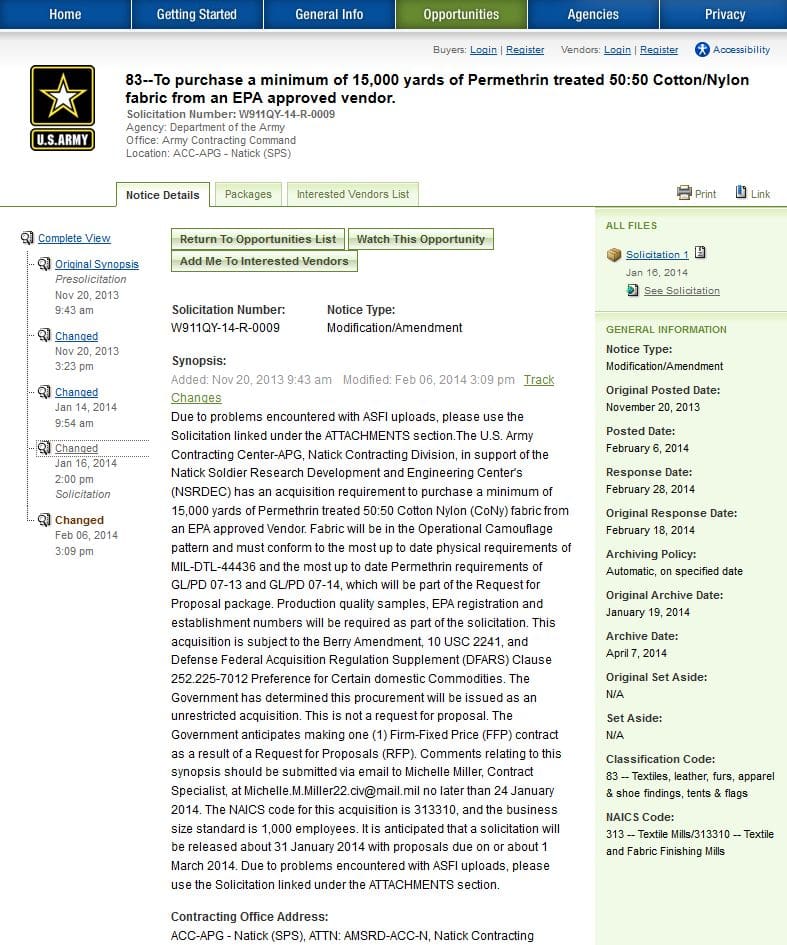
While no one in the US Army has made an official statement on the current state of the effort, it has definitely gone way off schedule and seems to have lost its focus. Unfortunately, the Army has abandoned its own plan and along with it the transparency that Phase IV of the Camouflage Improvement Effort once enjoyed. Facts are difficult to come by. Crumbs of information appear here and there. Sources leak confidential info to the press. In the process, we begin to see a distorted view of what is going on. From the Army’s standpoint, it seems that Crye Precision is asking for the moon. But based on what I’ve read from Crye, a new picture begins to take focus and I am beginning to feel that the Army and Crye Precision aren’t really in negotiations at all. In fact, I’d go as far as to say that the Army’s actions suggest they don’t seem to be negotiating in good faith. Hopefully, the Army and Crye can work this out. I remain incensed that no one in the US Government can seem to pick up a pencil and paper and work out the math on this. After investing over $1 Billion in equipment in the effective Operational Camouflage Pattern (OCP)/MultiCam since 2010, the Army should be happy to pay Crye Precision a fair and reasonable fee in order to negotiate a cost savings over the next decade or more.
Early this morning I received the following information in an email from Caleb Crye. It contains some very significant pieces of info. At least now we have one side of the story and hopefully, the US Army will be more forthcoming regarding their position on this.
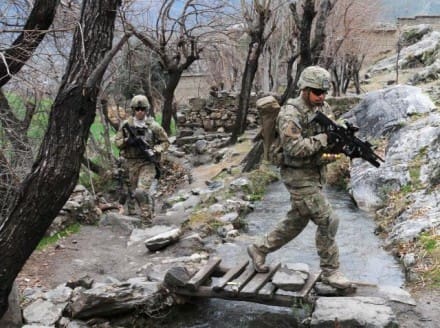
Ultimately, the goal is to provide the American Soldier with the most effective equipment. Let’s hope that institutional momentum, bureaucracy and personal agendas haven’t made the Army lose sight of this.
I have published the contents of the memorandum below and you can download your copy of the document here.
Introduction
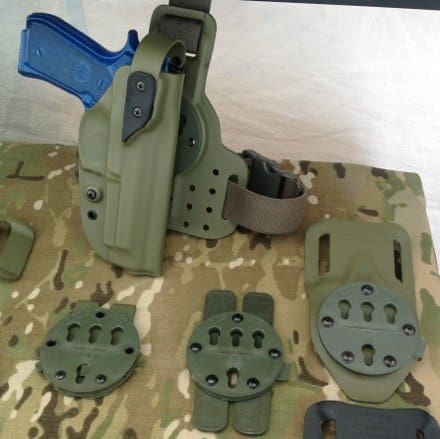
Over the past fourteen years, Crye Precision has produced millions of protective items for the US Army and other branches of the Department of Defense. We are proud of our work and are honored to serve those who put their lives on the line to ensure our freedoms. As a business, our focus and internal challenge has always been to develop innovative designs that help our warfighters survive and succeed on the battlefield. We have offered countless products, from body armor to protective apparel to simulation software that reduce casualties and save lives, however, it is our MultiCam® camouflage pattern which stands above all of our products as having done the most to safeguard our troops. Though it is impossible to accurately calculate the number of casualties reduced and Soldier’s lives saved as a result of being well concealed from the enemy, the overwhelming number of direct accounts from warfighters citing MultiCam’s® undeniable performance advantage in combat are the truest testaments to MultiCam’s® effectiveness.
Crye Precision rarely weighs in publicly but in light of recently released confidential information that has misrepresented Crye Precision and the situation surrounding the Army’s efforts to develop new camouflage patterns, we feel compelled to correct the record on behalf of our company, our industry partners, the taxpayers and the warfighters who deserve nothing less than our best efforts.
Key Facts
– On June 14, 2004, the Army officially adopted its familiar “pixely” blue-gray Universal Camouflage Pattern (dubbed “UCP”). Alarmingly, this pattern was adopted without scientific or operational testing.
– From 2005-2006, the Army tested MultiCam® against UCP. The Army’s official side-by-side test report confirmed that MultiCam® rated significantly higher than UCP in all environments, meaning that Soldiers wearing UCP were being put at significantly higher risk than if they were wearing MultiCam®. Despite this UCP remains the Army’s official camouflage pattern and is still being issued to this day.
– In 2006, after seeing the ineffectiveness of UCP on the battlefield in Iraq, U.S. Army Special Operations units independently tested MultiCam® against multiple patterns and adopted it. MultiCam® has been proven effective by these units during thousands of combat operations in Iraq, Afghanistan, and other theaters. To this day, it remains their issued camouflage pattern for organizational clothing and individual equipment.
– After numerous complaints in 2009 from Soldiers about the ineffectiveness of the Army issued UCP putting troops at risk in Afghanistan, Congress ordered the Army to take swift action to improve the situation. In response, the Army developed another program to test new camouflages. The Army tested sixteen patterns, including newly introduced Army developed patterns in a “Pattern-In-Picture” test against MultiCam®. Results: MultiCam® was cited as best overall performer.
– In early 2010 the Army conducted yet another camouflage test. This time testing five patterns against MultiCam® in numerous Afghanistan environments. Again, MultiCam® outperformed all others. The Army began a limited fielding of MultiCam® in 2010 to serve as an “interim solution” for Operation Enduring Freedom (OEF), all the while continuing to issue UCP to all troops not deployed to OEF. (The Army re-named MultiCam® as “OCP”.)
– 2011, the Army decided that it wanted to adopt a “family” of camouflage patterns (i.e., in addition to a multi or “transitional” environment pattern), and initiated yet another camouflage testing program. The Army program was launched under the name “Phase IV”, representing the fourth and final part of its most recent camouflage improvement effort. After two years of yet another expensive and exhaustive evaluation, the Crye submission, which was based entirely on MultiCam®, was again selected as the top performer. Crye was advised by PM-CIE leadership via teleconference on May 1, 2013 that its submission had won the final program phase of the camouflage improvement effort, and that a formal announcement would be forthcoming.
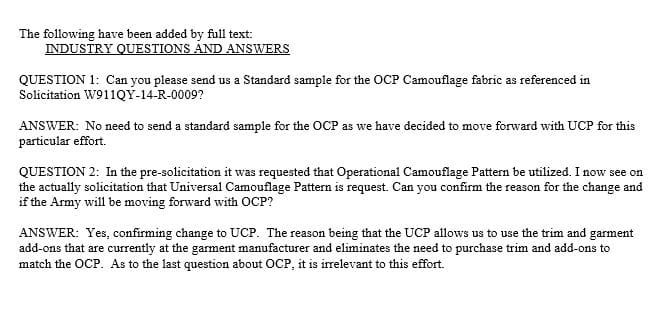
– Following the notification about winning phase IV from PM-CIE, Crye assumed that the Army would continue to take advantage of the already well-established manufacturing base for MultiCam® raw materials and end items, as it had been doing for years, as the Army does not currently license MultiCam® from Crye Precision, nor does it pay Crye Precision for its use.
– Instead, Army representatives approached Crye to discuss the market’s pricing of MultiCam® gear (such as uniforms) and told Crye that it would have to deliver “significant cost savings”. Since Crye does not supply the Army’s uniforms, Crye informed the Army that it, just like any other supplier deep in the supply chain, has no visibility on or ability to mandate the prices the government is charged by any of the uniform or gear makers. Crye agreed to do its part in the only way it could, which was by reducing already nominal fees it receives from its licensed fabric printers. Significantly, those fees represent only a very small part of the end-item cost and are deeply embedded in the supply chain (just as a fiber manufacturer or a dye provider is, for example.) Crye asked for nothing in return for offering this fee reduction. Crye’s proposal, which offered the Army a path to achieve immediate cost savings, was rejected outright by the Army.
– During negotiations with Crye, in October of 2013, the Army released a Justification and Approval (J&A) that it planned to issue MultiCam® as the Army’s “principle camouflage pattern”.
– Continuing its efforts to reduce costs to the Army and in an attempt to eliminate the Army’s concerns that MultiCam® was more expensive than UCP, Crye submitted several formal proposals which proved that the Army could procure MultiCam® gear at prices within 1% of UCP gear. Crye’s proposals additionally showed that this could be accomplished with no upfront cost to the Army.
– The Army rejected all of Crye’s proposals and did not present any counter proposals, effectively saying that a proven increase in Soldier survivability was not worth a price difference of less than 1%.
– The Army then requested that Crye provide a buyout price for MultiCam®. Crye advised the Army that a full buyout of MultiCam® was unnecessary, pointing to the fact that MultiCam® was readily available for competitive purchase and that the Army could simply continue its use of MultiCam® service-wide, with no new costs to the Army. In addition, Crye pointed out that this course of action would require Crye to cede quality and brand control to the Army, effectively undermining Crye’s commercial market permanently. As such, this option would have required the buyout price to include the entire lifetime value of the MultiCam® brand, and would have been prohibitively expensive.
– Crye declined to provide a buyout figure, which would have to be well into the tens of millions of dollars, because it was likely that any figure presented by Crye could be used out of context to misrepresent and mischaracterize Crye. It was only after continued requests from the Army, coupled with an acknowledgement from the Army that it fully understood that the cost would be in the tens of millions of dollars, and a promise that all information would be kept in strictest confidence, that Crye then agreed to provide a full valuation for the MultiCam® brand, along with a deeply discounted price to the Army for the buyout being requested.
– As Crye predicted, and despite the Army’s assurances to the contrary, Crye’s offer was rejected outright by the Army. No official counter offers to any of Crye’s proposals were ever provided to Crye by the Army.
– Confidential information provided by Crye to the Army has been released out of context, in a manner that misrepresents Crye as having been unwilling to negotiate with the Army and help it find the cost savings it indicated was its goal. In truth Crye has worked exceptionally hard to help the Army meet its stated goals and continues to so.
– Recent information suggests that the Army is now planning to yet again develop, test and field yet another new multi-environment camouflage pattern.
Summary
In Summary, MultiCam® is one of the most thoroughly-tested camouflage patterns in existence. It has been proven in combat and lab evaluations for the better part of a decade and is currently issued within multiple branches of our Armed Forces. It has been the top performer in every major Army camouflage test of the past decade and has been verified time and time again to provide a significant and undeniable Soldier survivability advantage. Its continued use by Soldiers in Afghanistan and Special Operations Forces is a testament to its effectiveness. MultiCam® materials and end-items are readily available today within the competitive market, and MultiCam® products have been proven to be available for nearly the same cost as UCP items. Despite all this, the Army remains on a persistent quest to replace MultiCam®, all the while it still issues UCP to this day, a camo pattern long-proven to put Soldiers at unnecessary risk.
A sincere thank you to all of you who risk your lives serving in defense of freedom. We remain unwavering in our commitment to you.
Examples of official feedback from Special Operations Forces:
“The MultiCam pattern is an excellent camouflage pattern that truly manages/reduces an individual’s signature on the battlefield. I firmly believe that more Rangers would have been seen
and shot during hours of daylight, if they hadn’t been outfitted with the MultiCam uniform. It’s a true force protection measure!”
“The camouflage pattern saved me and my gunner’s life by concealing us long enough to shoot first.”
“On specific missions where other members of the force were in ACU’s, they were specifically shot at or “drew fire” compared to members wearing the Crye pattern. The camouflage was amazing and
probably confused the enemy. It was very hard to see people at any distance with this uniform.”
“While taking fire in an area with moderate vegetation, the Soldiers wearing ACU’s stood out and received a higher volume of fire at their positions.”
“The MultiCam pattern is a must for combat operations in Afghanistan. We blended in perfectly with mountains of OEF.”
“We were ambushed on 3 sides by Taliban fighters. There was nowhere in my immediate vicinity that offered effective cover, so I dropped to the ground and fought from there. I was able to continuously spot and engage fighters approaching the rear of our formation before they were able to spot me despite the fact that I was laying in the open. I truly believe that your MultiCam uniforms kept me from being shot several times that day.”
And the list goes on…