BOSS-Xe from Wilcox Industries

Archive for the ‘Guest Post’ Category

Army’s First Long Range Fires Battalion Activates Second Mid-Range Capability Battery

Tuesday, January 23rd, 2024

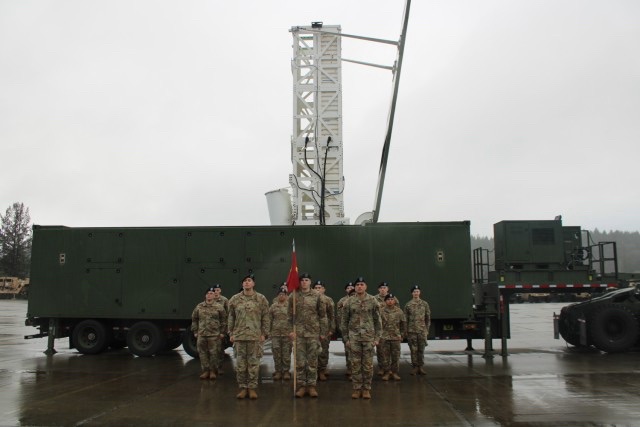
JOINT BASE LEWIS-MCCHORD, Wash. — The 5th Battalion, 3rd Field Artillery Regiment, the Army’s first Long Range Fires Battalion, conducted a ceremony on January 11, 2024, at the base to activate the second mid-range capability battery in support of multi-domain operations.
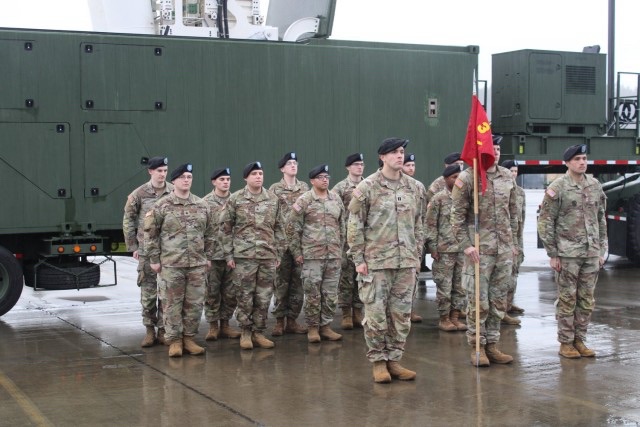
“The activation of Delta Battery, 5-3 FA expands our Long Range Fires Battalion capacity to support our Joint Indo-Pacific Mission — providing a credible, land-based maritime strike capability. Elements of this battery are already projected to operate in the Pacific later this year, a testament to our Army’s continuous transformation priority,” said Brig. Gen. Bernard Harrington, commander of the 1st Multi-Domain Task Force.

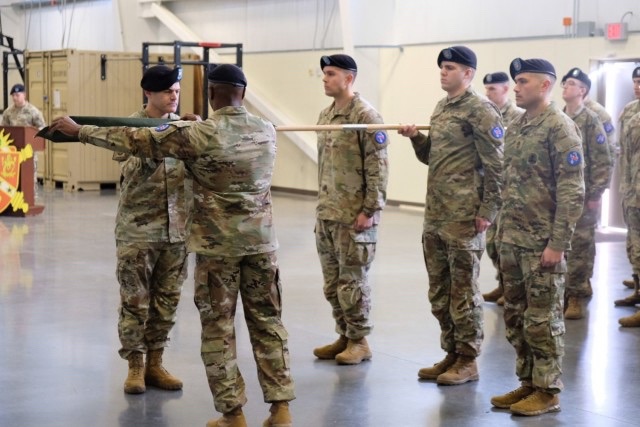
During the ceremony, the command shared the unique history of the unit and outlined a vision for what the activation means for the future of multi-domain operations.
“I always like to refer to the crest up here, the distinguished unit insignia, and one of the things you see on there is the dragon symbol. This is one of the few units in the Army today — and really across the joint force — that’s got credit for a campaign on mainland China. And so that is not a reminder for us to try to get back into China. That’s a reminder that we never want to go there again,” said Lt. Col. Benjamin Blane, commander of 5th Battalion, 3rd Field Artillery Regiment, underscoring the importance of the battalion’s mission to enable integrated deterrence in the Pacific.
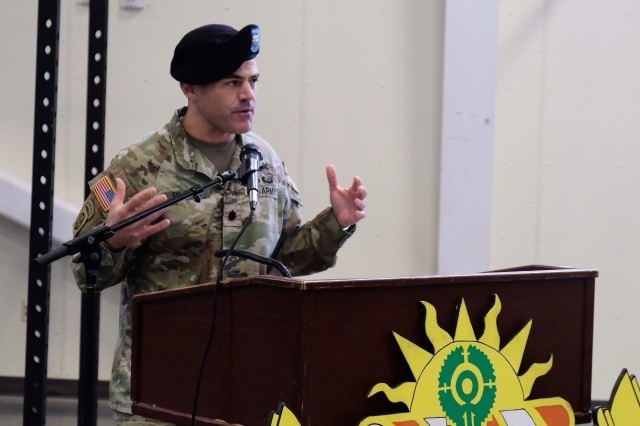
“So ultimately, we strive to deter the next fight. But if this is unsuccessful, I know that this unit stands ready to complete its mission of providing counter maritime capability in the Pacific,” said Blane.

The new battery command team for the unit is Capt. Michael J. Geissler and 1st Sgt. Jeremiah O. Bosley.

“Throughout this year, this battery will face the challenges that come with forming a combat credible force in the Pacific with a new unit and a new weapon system. We will overcome and succeed through each of these challenges together to help us prepare for the greater challenges ahead,” said Geissler.

The MRC uses the Navy’s SM-6 and Tomahawk missiles as part of the initial prototype. The system will incorporate future missile capabilities as they become available, expanding the effectiveness of mid-range capabilities.
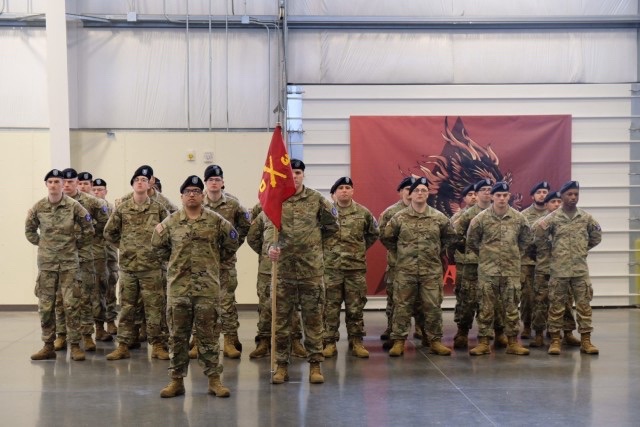
The 1st Multi-Domain Task Force is an Indo-Pacific assigned, theater-level unit. Multi-domain task forces are maneuver elements that synchronize long-range precision fires and effects in all domains to neutralize adversary anti-access and area denial networks.

Story by CPT Ryan DeBooy

Photos by Caitlyn Davies and SPC Michael Lopez

New Marine Radios Cement Electromagnetic Spectrum Superiority

Monday, January 22nd, 2024

In a decisive move meant to ensure dominance over the electromagnetic spectrum, Marine Corps Systems Command is on track to upgrade 50,000 legacy radios with state-of-the-art multi-channel, crypto-compliant models in Fiscal Year 2024.

In line with Force Design’s call for rapid force modernization, MARCORSYSCOM’s Program Manager for Communications Systems, or PM CS, team has moved quickly— fielding more than 4,000 radios across the fleet since October 2023.

In recent years, experts have warned that stagnation in U.S. electromagnetic spectrum operations– the strategic and tactical management of electromagnetic frequencies for military communications, intelligence, and combat operations– has enabled our adversaries to significantly challenge American dominance in this crucial domain.

Recognizing this urgent need for change, the 2018 National Defense Strategy laid the foundation for the Department of Defense’s 2020 Electromagnetic Spectrum, or EMS, Superiority Strategy—a document that emphasizes the EMS as a critical battleground where invisible waves and frequencies become pivotal in modern warfare.

With this new strategic reality in mind, PM CS has worked tirelessly to update the fleet’s radio capabilities, ensuring that the fleet has the communications capabilities required to fight and win– no matter the clime, place, or electromagnetic environment.

“We began fielding in October, focusing on a specific domain while being mindful of the capabilities of multi-channel radios,” explained Richard Sessions, program manager for Communications Systems. “In addition to their enhanced functionality, our priority was to transition to radios that meet cryptographic compliance standards mandated by the NSA. This compliance allows us to operate securely across various frequencies and within a secure environment. Our deadline for achieving this compliance is set for December 31, 2024.”

The new multi-channel radios provide the warfighter with a versatile, software-defined system that emphasizes modularity and flexibility to allow rapid integration of new waveforms and cryptographic standards. This enhances Marines’ ability to operate securely and effectively in the dynamically evolving electromagnetic environment.

“The closest analogy to our current transition in radio technology is akin to moving from the era of flip phones to the advanced world of smartphones,” said Sessions. “In the past, we were limited to purchasing radios with fixed capabilities and had to replace them with newer models as technology evolved. Now, we’re shifting towards acquiring highly adaptable hardware radios that are not just modular but also capable of supporting new waveforms, marking a significant milestone in our communication capabilities.”

As the Corps prepares to fight and win on the future battlefield, these fieldings prove crucial as superiority in the electromagnetic spectrum directly influences communication, intelligence, and combat effectiveness—safeguarding the warfighter’s strategic advantage ahead of the future fight.

In order to address challenges in transitioning from hardware-centric management to waveform and software configuration management, the PM CS team maintains regular contact with NSA partners. This ensures alignment and approvals for the necessary waveforms and configurations.
However, the team noted that communication with the fleet is also critical, underscoring the importance of Marine feedback throughout the acquisition process.

According to Stephenie Dodge, product manager at PM CS, “Our team has conducted extensive testing and field user evaluations involving Marine units to ensure that our systems meet their needs. In every aspect of our work, we actively involve Marines from the fleet. We provide them with the equipment, offer quick training sessions, and then seek their input on how they would use it, what improvements are needed, and what aspects need fixing.”

Ultimately, this effort is critical within the context of Force Design’s ambitious modernization goals. As Sessions highlighted, Tactical Communications Modernization bolsters our operational capabilities, securing robust communication and efficient data flow.

“In today’s Marine Corps operations, where combat often unfolds within the electromagnetic spectrum, our success relies heavily on maintaining effective communication across the fleet and with joint forces,” said Sessions. “Controlling this space is critical, as it directly impacts our physical deployment capabilities. A key focus in our communication systems’ rollout is minimizing detection and interception risks. We’re dedicated to making our systems challenging for the enemy to locate and disrupt, thereby enhancing the operational security and effectiveness of our units in this digital battlespace.”

Despite the logistical challenges associated with the modernization of the fleet’s radio capability, the PM CS team is on track for a successful fielding. In a transformative move for Marine communications, the planned deployment of 30,000 multi-channel radios by December 31, 2024, is poised to significantly enhance the communication capabilities of Marines in the field, marking a crucial advancement in military communications technology.

Story by Johannes Schmidt, Marine Corps Systems Command

Photo of AN/PRC-117/G by Cpl Summer Romero, Marine Aviation Weapons and Tactics Squadron-1

DAF Streamlines Awards Process

Sunday, January 21st, 2024

ARLINGTON, Va. (AFNS) —  

The Department of the Air Force will launch new software and policies to improve the decorations approval process today.

myDecs Reimagined, a new application on the myFSS platform, will be a single-page experience and allows ad-hoc routing to any myFSS user. The new application also eliminates the need for multiple screens found in the previous version.

“This new software coincides with a policy change to move the DAF away from reliance on the centralized Military Personnel Flights to file approved and signed decorations. Trust and responsibility is placed back with the approval authority and the record now updates automatically upon signature,” said Deputy Chief of Staff for Manpower, Personnel and Services Lt. Gen. Caroline Miller. “Our goal is to make the system more intuitive and create a smoother process for users.”

Airmen and Guardians in operational units met with DAF decorations experts to shape the new system and were the catalyst for the policy changes. Quality review checks previously performed by MPF members are now automated, freeing personnel to focus on strengthening their recognition programs.

Users and approval authorities will see the following changes:

• Like myEval, users choose who they route to and have a dashboard to track decorations
• Nominators name the approval authority when drafting the nomination
• Decorations are fully editable until signed
• Users may add comments and routing notes
• Upon approval, the decoration goes directly into the record
• MPFs no longer review each transaction and strengthen their advisory and audit role
• Like myEval, only HR Technician roles for the CSS and MPF are now needed

The following decorations will be processed in myDecs Reimagined. Others may be added in the future:

Air and Space Meritorious Service Medal
Air and Space Commendation Medal
Air and Space Achievement Medal
Aerial Achievement Medal
Combat Readiness Medal
Military Outstanding Volunteer Service Medal

Airmen and Guardians should visit myDecs Reimagined by going to myFSS and selecting “myDecs” for more information.

Secretary of the Air Force Public Affairs

Kitbadger – Cold Weather Gun Testing : Cleanliness & Lubrication

Saturday, January 20th, 2024

My friend Ivan has produced a video on cold weather shooting, including lubrication considerations, with various firearms.

Learn more at kitbadger.com/cold-weather-gun-testing-cleanliness-lubrication.

Washington Guard Soldiers, Thai Airmen Share Air Search and Rescue Tips

Saturday, January 20th, 2024

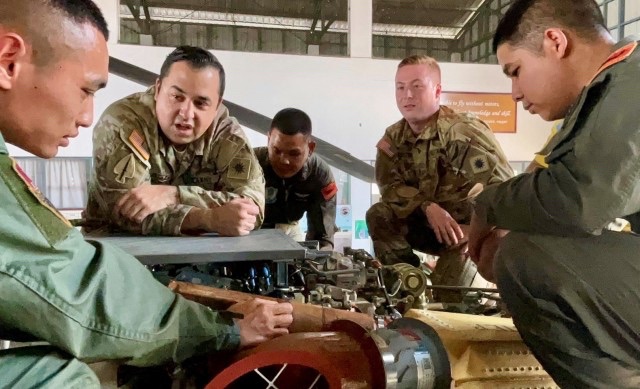
CAMP MURRAY, Wash. — Soldiers from the 1st Battalion, 168th General Support Aviation and a Tactical Air Control Party Airman from the 116th Air Support Operations Squadron shared knowledge with the Royal Thai Air Force during two aviation subject matter expert exchanges.

“One point that I think is interesting about this is that we sent an Army Aviation team supported with an Air JTAC to engage with the Royal Thai Air Force on search and rescue and then they pivoted to an aviation engagement with the Royal Thai Army,” said Lt. Col. Keith Kosik, director of the Washington National Guard’s State Partnership Program. “This reflects the future of our program. Increasingly joint in the teams we send, which brings a myriad of capabilities and perspectives, and able to engage across services with our partners. Not just Army to Army or Air to Air, but a blend of people and capabilities.”

The Washington National Guard and Thailand have been partners under the Department of Defense National Guard Bureau State Partnership Program since 2002.

From Nov. 27 to Dec. 1 in Lopburi, Kingdom of Thailand, the Washington National Guard Soldiers and Airman shared best practices for search and rescue operations.

“Washington Army National Guard aviation personnel exchanged information and practices with the Royal Thai Air Force by providing aviation medical evacuation, crash site and personnel recovery and distributed adaptive real-time teams for cross-level training,” said Capt. Taylor Payne, 1st Battalion, 168th General Support Aviation, and officer in charge of the exchanges.

In the past few years, the 1-168th GSAB has supported search and rescue efforts for missing or injured climbers and hikers in the state. Discussing these experiences was helpful during the exchanges.

“They were overtly happy with our integration of knowledge and tactics, techniques and procedures for search and rescue and humanitarian assistance,” said Payne. “The exchange helped build a foundation for future engagements and points of interest for defense support to civil authorities’ operations.”

During the week-long exchange, the team focused on search and rescue procedures with an emphasis on personnel recovery. The training also integrated Thai combat controllers for on-site airspace deconfliction. A U.S. team provided a search and rescue scenario and evaluation for both teams to work through during the final staff exercise.

“The exchange was successful in that we shared general knowledge on search and rescue with humanitarian assistance for civilian response and worked through constraints,” said Payne.

The following week, the Soldiers from the 1-168th GSAB traveled to the Royal Thai Army’s Aviation Headquarters in Lopburi to take part in an aviation subject matter expert exchange with air crews from the Royal Thai Army’s 9th Aviation Battalion. The exchange continues a long-term relationship between the two nations’ rotary wing communities.

“The team identified aviation operations, training, maintenance, supply, and standards needs,” said Payne. “We also identified challenges and opportunities in order to build a foundation for future engagements.

“It was important to share these stories with them,” Payne said. “It shows that the safety training we do can save lives.”

By Joseph Siemandel, Joint Force Headquarters – Washington National Guard

FirstSpear Friday Focus – FirstSpear Fight Panel is Live!

Friday, January 19th, 2024

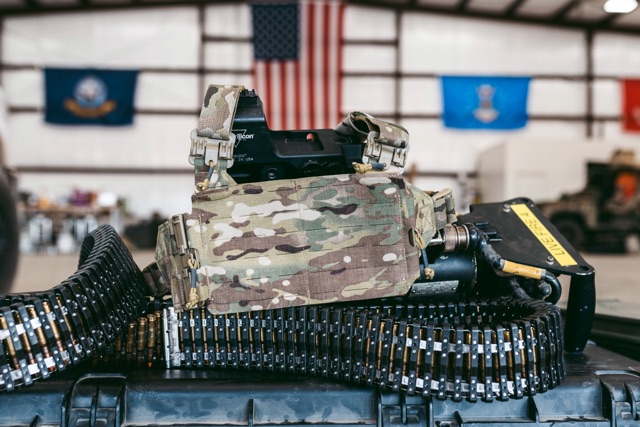
Born from a direct request by Tier 1 operators, the Fight Panel is a placard, panel and micro style chest rig, combined. Used in conjunction with the X-Strap (sold separately), this chest rig maximizes 6/12 laser cut technology for weaving pockets and pouches and Tubes Rapid Closure System for quick donning, doffing and reconfiguring.

As a panel and placard, it can be secured into any FirstSpear carriers’ cummerbunds that attach with the Tubes Closure System. The Fight Panel has an integrated hook backed placard that joins with abdominal loop on carriers such as the Strandhögg v3.

Affixed hook and loop strips on the back of the removable placard allow for weaving into MOLLE or Laser Cut platforms in order to secure for greater load bearing beyond a standard row of magazines and general purpose pockets. Now available in Multicam and Ranger Green, while supplies last.

To see the Fight Panel and the rest of whats new for 2024, come check us out at SHOT SHOW!

Visit FirstSpear to find American Made kit and accessories, Built For The X.

Help US Tactical Supply Celebrate Their 25 Anniversary During SHOT Show

Friday, January 19th, 2024

25 Year Anniversary & SHOT Show Booth # 75426

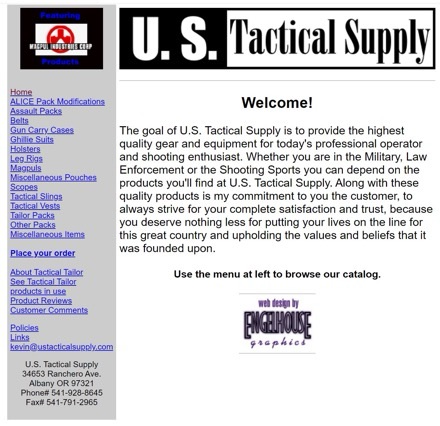
1999-2024 25 Years! Wow it does not seem like it has already been a ¼ Century since we started in a small garage and got a request from a vendor to add their TIS Sling to GSA. So much has changed in our industry over the past 25 years, like our original website and watching companies like Badger Ordnance, Tactical Tailor, Leupold, & Eberlestock become some of the Best in our industry for Quality and Innovation. But even more important are the many friendships that have been built over the years as well.

I look forward to seeing many of you at SHOT, we will be in the Caesars Forum Booth # 75426. Godspeed & Blessings to you All in 2024.

Kevin Swanson

President

U.S. Tactical Supply

Climb to Connectivity: 10th Mountain Division’s Alpine Legacy Echoes in Hunter EMS Mission

Friday, January 19th, 2024

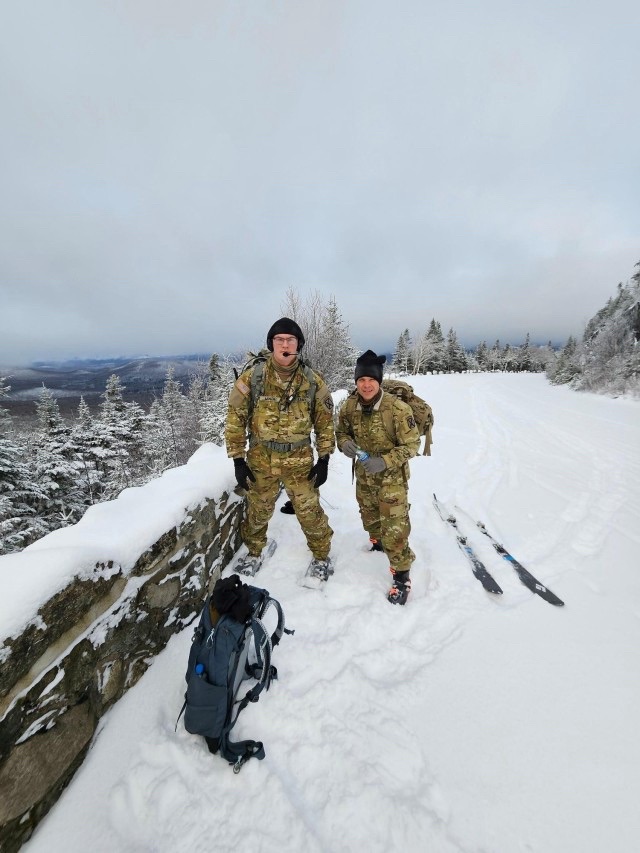
FORT DRUM, N.Y. (Dec. 7, 2023) – In a poignant echo of the 10th Mountain Division’s historic roots, two seasoned warriors shaped by the division’s legacy embarked on a perilous ascent of Whiteface Mountain, towering at an elevation of 4,867 feet.

Rooted in a tradition forged during World War II, where the division played a pivotal role in the Italian Alps, these Soldiers drew inspiration from their predecessors who braved the harsh terrain to dislodge German forces.

Tasked with a mission crucial for Hunter EMS VIIb, an exercise where Soldiers from the 10th Mountain Division Artillery (DIVARTY) executed electronic warfare tactics, Lt. Col. Gregory Eldridge, 10th Mountain Division deputy fire support coordinator, and Staff Sgt. Alex Miner, a fire direction noncommissioned officer from DIVARTY’s Fire Control Element, faced a race against time.

“We’re trying to see what electronic warfare assets can do against our systems so we can defeat it in the future,” Eldridge explained.

The exercise, held on Fort Drum and Ethan Allen, Vermont, from Nov. 30 to Dec. 5, aimed to validate and improve the division’s operational capacity in an ever-evolving battlefield by combining kinetic and non-kinetic effects.

“In addition to the electronic warfare, we conducted some training with radars,” Eldridge added. “We did a lot of work with the extension of line-of-sight communications.”

The previous day’s efforts to drive up the access road to Whiteface summit were thwarted by a snowed-in road and gate. This obstacle hindered industry partners from installing a directional antenna atop the mountain, vital for completing a line-of-sight linkage between Fort Drum and Ethan Allen.

“At the end of the day, we needed to get that antenna up to the top of that mountain,” Eldridge said. “I knew that there was a route to get there, and I had the equipment to get there. I just wanted to ensure that we had exhausted every means possible to extend the line of sight as far as possible.”

The two Soldiers ascended Whiteface on Dec. 5, the last day to attempt establishing communications between Fort Drum and Ethan Allen; it was all or nothing.

“To say Lt. Col. Eldridge and Staff Sgt. Miner’s efforts were crucial to the successes in extending line-of-sight communications during Hunter EMS VIIb is an understatement,” said Maj. Mark Smerka, DIVARTY fire support officer.

This was the unit’s last chance to attempt closing the communications link between Fort Drum and Ethan Allen before industry partners would have to depart for other obligations.

“If it weren’t for Lt. Col. Eldridge and Staff Sgt. Miner’s commitment to the challenge before them, we could only establish communications at approximately half the distance we did achieve,” Smerka added.

With the technical analysis underscoring the peak’s critical role in closing the communication link east of New York state, Eldridge and Miner volunteered for the challenging task.

“It takes specialized equipment to get there,” Eldridge explained. “I just wanted to get the job done.”

In less than 10 hours, they prepared for the cold trek, driving two hours from Ethan Allen, where they were supporting Hunter EMS VII, to commence their ascent at first light.

Their journey, spanning five miles, mirrored the division’s historical feats in the Italian Alps.

“I don’t know if it necessarily impacted my decision to volunteer to do it,” Eldridge said. “But you certainly think about it when you’re feeling sorry for yourself on the five-mile trip up, knowing full well that our forefathers went a lot further and were getting shot at.”

Battling a minus-2-degree wind chill, the trio, including industry partner Pat Murray, reached the summit. Despite the adversity, the two Soldiers, drawing on the division’s mountain warfare training, successfully installed communication gear at the observatory.

As they conducted troubleshooting efforts in conditions reminiscent of the division’s past battles, the communication link between Fort Drum and Ethan Allen proved elusive. Within 45 minutes, the weather turned on them.

“At first, it wasn’t too bad, and we didn’t have to troubleshoot too much. We just had to change the positioning of the antenna,” Eldridge said. “From our end, it was just a matter of finding where to put it, and then once we did that, we were able to establish the link.”

However, their selfless service paid homage to the 10th Mountain Division’s enduring legacy.

“I think it was appropriate, and it’s something that we as a light infantry force should be used to doing,” Eldridge said. “We just carried stuff in a ruck and got to a location and executed a mission.”

“And that’s really what the 10th Mountain’s about,” he added. “That’s what Alpine’s about. It’s about moving in small teams with your feet, skis, or snowshoes to a discreet place to do a distinct thing.”

The establishment of a digital line-of-sight link spanning 82 miles further solidified their place in the proud history of a division forged in the crucible of alpine warfare.

By CPT Eric-James Estrada

27th Public Affairs Detachment