GORE-TEX Professional

Archive for the ‘Guest Post’ Category

Yuma Proving Ground Pioneers Radar Sharing With Fellow Test Centers

Saturday, October 14th, 2023

YUMA PROVING GROUND, Ariz. — Radar units send out pulses of high-frequency electromagnetic waves that reflect off objects, and modern radar systems are sophisticated enough to track even small, rapidly moving objects like rockets and mortar and artillery shells.

The Army Test and Evaluation Command, known as ATEC, relies heavily on multiple radars to gather test data on a variety of military systems under evaluation.

“Out of all the ATEC test ranges, YPG’s systems have the greatest amount of usability for different types of testing,” said Herbert Kiser of Yuma Proving Ground’s Instrumentation Division. “Yuma does a lot of different things with what we have and does them well.”

This versatility in radar capabilities makes YPG’s systems prime candidates for supporting testing elsewhere across the ATEC enterprise in a bid to share expensive, highly specialized assets between installations.

Tests at U.S. Army White Sands Missile Range, the ATEC post that specializes in evaluating long-range missiles, tend to have a higher level of complexity than YPG. Most notably, the post’s range safety requirements often include double or triple redundancies that aren’t necessary for the shorter-range artillery and mortar testing conducted in Yuma.

Safety is so paramount that testers might have to detonate a missile in flight if a redundant radar doesn’t work due to technical problems, which would cause significant test delays and cost millions of dollars in lost time. Borrowing a radar system from YPG in such a situation helps prevent this, but at what cost in test delays and lost time at YPG if their radar was transported to WSMR for many weeks?

“We knew the systems could be used for a missile test, but YPG has a different network structure than White Sands does,” said Kiser. “The concern was always that it had never been done before.”

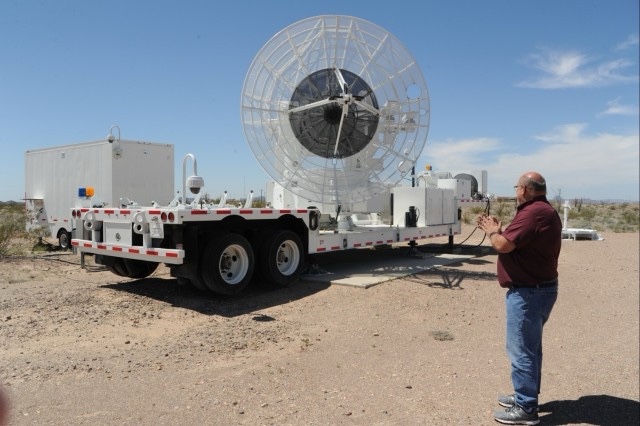
Among other things, it had been assumed by some that successfully integrating the two could take months of preparations, not least of which was moving the massive 12-foot dish that generates the AN/FPS 16’s one million watts of power along with its personnel shelter and calibration tower. Two support personnel also must accompany the apparatus.

“It’s not just sharing the radar systems, it’s sharing the personnel,” said Kiser. “Our greatest asset is the people we have with specialized knowledge and skill sets.”

To prove the concept, YPG personnel configured the AN/FPS 16 in the same manner as WSMR’s while the apparatus was still on site in Yuma. They then tracked an orbiting satellite as it passed, then electronically handed the track off to a radar at WSMR. The two installations then did the same test in reverse and were successful again.

“This proves that we can assist White Sands based on their schedule to accommodate a redundant range safety asset,” said Kiser. “It’s a big feat: We’ve taken our weapons systems and radars there as a stand-alone before, but we had never integrated with White Sands’ radars.”

By Mark Schauer
FS Friday Focus – Vertical Envelopment Pack

Friday, October 13th, 2023

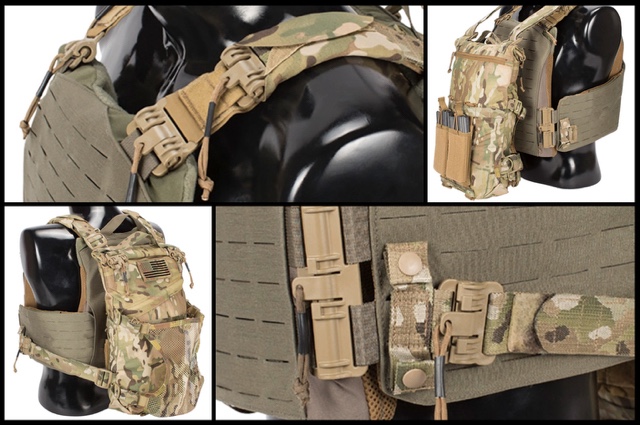
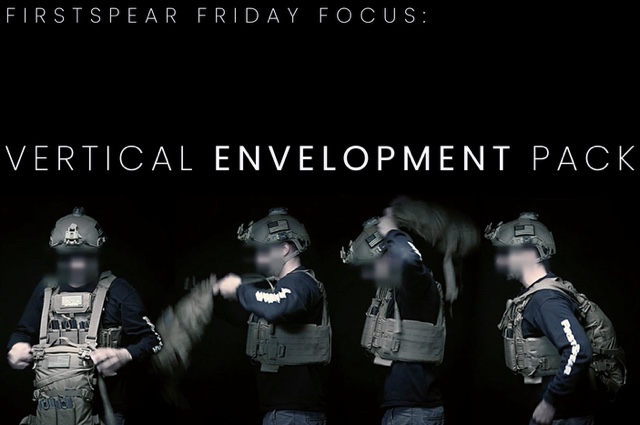
The VEP (Vertical Envelopment Pack) is a top-opening, roll-closure pack that is secured by tubes, making it an ideal pack for insertion and extraction operations. It can be mounted on FirstSpear Plate Carriers and flipped over the head for quick access to the contents inside. The front hanging feature also provides additional safety and comfort during infiltration when seated in armored vehicles and helicopters. This means that you can be assured of having quick and easy access to your gear, even in high-pressure scenarios.



Developed to “go forward from the objective rally point (ORP),” the VEP provides the assaulter with a unique capability which augments the full spectrum of modern combat operations. It provides the shooter with a clean shoulder pocket when shoulder firing a weapon, minimizing underarm “clutter”. This is especially important in tight and confined spaces where you need to be agile and have the ability to move quickly without any hindrance.

One of the most notable features of the VEP is its versatility. The pack and carrier can be removed and reassembled as one, making quick work for casualty inspection and treatment. Rapid jettison of FirstSpear Plate Carriers does not change with or without the VEP on. This means that you don’t have to worry about leaving gear behind or fumbling around trying to remove the pack in an emergency situation.

In terms of design, the VEP is a well-thought-out pack that is not only functional but also comfortable. It’s made from durable materials that are built to withstand the toughest conditions. The pack also features a range of compartments and pockets that are designed to provide ample storage space for all of your gear. Whether you’re a military professional or a prepared citizen, the VEP has everything you need to stay organized and prepared for anything.

Visit FirstSpear to find American Made kit and accessories, Built For The X.

Officer Training School Embarks on ‘OTS-Victory’

Friday, October 13th, 2023

MAXWELL AIR FORCE BASE, Ala. (AFNS) —  

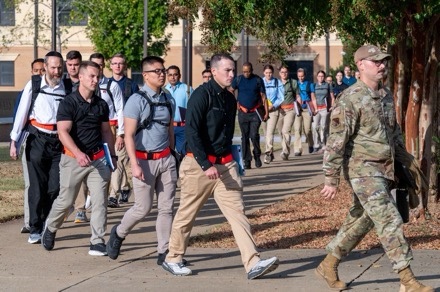
Officer Training School is implementing a new accessions program aimed at developing Air Force and Space Force leaders who are prepared to compete and win in today’s strategic operating environment.

The new training program, dubbed OTS-Victory, incorporates a five-modular approach designed to enhance the effectiveness of foundational officer development by focusing on specific knowledge, skills and abilities in each module. The course is structured to develop an officer trainee across all foundational competencies within 60 training days.

Officer graduates will be steeped in the Air Force and Space Force competencies through deliberate assessments tied to leadership, mission command, warfighting, communication and professionalism. In the end, OTS’s goal is to produce graduates ready for the challenges in an era of strategic competition.

Starting fiscal year 2024, OTS will conduct, on average, 20 classes per year with a new class starting every two weeks. The additional class start dates promote flexibility for stakeholders, reduces candidates’ wait time to attend training and allows for increased trainee throughput when necessary. At any point, OTS will have up to five classes in session, in various phases of training.

Additionally, the new training construct allows OTS to easily surge production to meet annual production numbers set by Congress in both steady state and contingency mobilization posture. If called, the school can surge up to 26 classes per year.

“Within existing resource authorizations, we are restoring OTS’s ability to serve as the officer accession ‘shock absorber,’ meaning we have the structural agility and organizational effectiveness to respond to production demands during peace or war,” said Col. Keolani Bailey, OTS commandant. “Whether we need to increase or decrease production, we won’t compromise the quality of training.”

In terms of the instructor cadre, they are now afforded the opportunity to become subject matter experts in the two-week modular blocks of instruction versus teaching the entire 60-day curriculum.

“Instructors will receive increased reps and sets and better feedback to elevate the overall performance of the team. This reduces lesson planning, preparation timelines and creates more opportunities for deliberate development, course updates, and instructor reconstitution time,” Bailey said. “This will allow instructors to reduce bureaucracy and concentrate on their primary mission — building warrior-minded leaders of character focused on the future fight.”

With OTS previously offering only five classes per year, thereby limiting time off between classes, the new program builds 10 weeks “off the line” each year for instructors. Therefore, when not actively instructing a class during these time periods, instructors are afforded the necessary time to refine course delivery, attend professional development programs, and enjoy their well-earned leave with family and friends.

Officer Training School is answering the call to produce warrior-minded leaders of character with a disciplined mindset who are willing and ready for the future fight. Through this reimagined learning-delivery model, OTS-Victory postures the Holm Center and our newest Air Force officers to compete and win, anytime, anyplace.

– Air University Commander and President Lt. Gen. Andrea D. Tullos

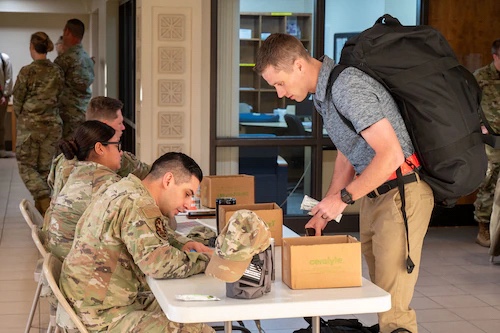
The first class of officer trainees to experience OTS-V arrived on campus Oct. 10.

The purpose of OTS is to train and develop new officers to fulfill Air Force and Space Force active duty, Reserve and Air National Guard requirements, in partnership with the U.S. Air Force Academy and Air Force Reserve Officer Training Corps.

Officer Training School is located at Maxwell Air Force Base and consists of two academic buildings with auditoriums, four dormitories, dining facility, physical conditioning center, parade field, running track and sports fields. Additionally, OTS maintains an Air Expeditionary Force garrison training site, a 200-acre field training facility, confidence course and two expeditionary assault courses.

Story by Air University Public Affairs

Photos by photo by 2nd Lt Kip Turner

AFSOC Embraces Extended Reality (XR) to Enhance Readiness

Thursday, October 12th, 2023

HURLBURT FIELD, Fla. —  

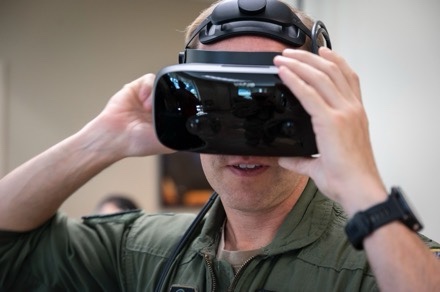
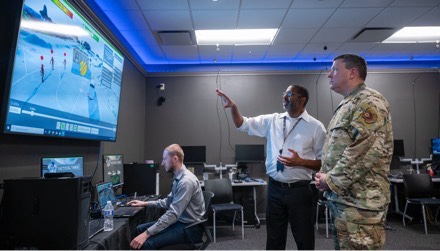
Extended Reality (XR) is revolutionizing the way Air Force Special Operations Command is approaching training and readiness. XR is an umbrella term that encompasses Virtual Reality (VR), Augmented Reality (AR), and Mixed Reality (MR) to create a spectrum of experiences that range from fully virtual environments to overlays of digital content onto the real world. These technologies manipulate our perception of reality, hence the term “extended.” The manipulation of reality is at the core of XR, and it’s transforming the training landscape of AFSOC.

The XR Training Program’s mission is to provide Air Commandos the ability to conduct repetitive readiness training anyplace at any time through secure, autonomous learning distribution and reporting across all command disciplines. The vision is equally ambitious: to be a training program that employs virtual, mixed, and augmented training methodologies, producing warfighters with greater skillset competencies and proficiency in a more realistic environment, at a reduced cost, and on a shortened timeline.

In the beginning of FY23, AFSOC established an XR cross-functional team dedicated to creating an XR Training Framework for the entire command.

“Our first step as a command was to admit we had fallen behind in the evolution of training technology,” said Capt. Kyle Schoonover, Chief of AFSOC XR Training Program. “In true AFSOC fashion, in just a few months we went from this realization to producing a MAJCOM-wide framework capable of incorporating all existing XR technologies as well as charting a path forward for future development in the years to come.”

This framework operates on a crawl, walk, run strategy, composed of four distinct lines of effort (LOEs):

LOE 1: Virtual Hangar

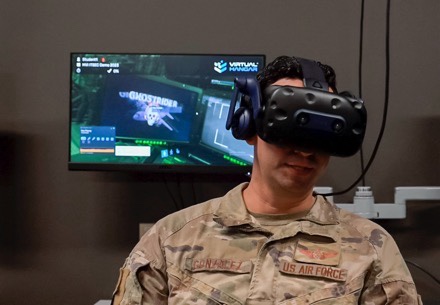
The foundational effort for XR in AFSOC focuses on initial qualification academic training for all aircrew support and mission support personnel, including maintenance and Mission Sustainment Teams. A prime example of this is the “Virtual Hangar” initiative by AFSOC A4. This innovative program leverages VR to enhance AC-130J, MC-130J, CV-22 and munitions maintenance workforce training. The “Virtual Hangar” offers comprehensive Instructor Tools and custom-built Learning Modules, ranging from checklist execution to 3D-modeled schematic overlays.

LOE 2: NexGen Instructor

AFSOC plans to incorporate VR into all Flying Training Units (FTUs) responsible for training AFSOC aircrew. Training modules will cover the academic phases of the FTU syllabi such as academics on aircraft systems and mission equipment. Collaborative partnerships with other Major Commands (MAJCOMs) will be pursued when appropriate, and pathfinding will be the norm when required.

LOE 3: Fusion & Integration

The integration of XR into operational units is a pivotal aspect of AFSOC’s strategy, with a particular emphasis on mission events. These events can range from emulated flight of AFSOC aircraft, to special tactics, to our medical community across the entire continuum of patient care.

LOE 4: The Future Fight

The pinnacle of AFSOC’s XR Training Framework envisions the utilization of Augmented Reality (AR) for aircrew and special tactics teams. Imagine a CV-22 pilot flying over Melrose Air Force Range in New Mexico while their visor displays real-world terrain from distant locations like the Indo-Pacific region. Meanwhile, the pilot’s visor reveals a digital wingman controlled by a ground-based XR device. The goal is to replicate any battlespace via XR technology back at the home station.

“AFSOC’s XR framework provides every unit in the command with a readily digestible and easily repeatable strategy to modernize their training through next-generation methodologies of instruction,” said Schoonover.

The AFSOC XR Training Framework’s implementation is ongoing. While teams across AFSOC continue to work through LOE 1 by immersing in virtual reality and “Virtual Hangars”, LOE 2 is on the horizon with small group XR testing sessions with the AC-130J FTU planned for Summer 2024 and the C-146 FTU planned for Fall 2024. As investment into the training program framework continues, the line of efforts will gain momentum.

“AFSOC is heavily invested in enhancing readiness and training through initiatives like XR,” said Lt. Gen. Tony Bauernfeind, AFSOC commander. “The use of XR in training allows Air Commandos to experience highly realistic simulations of complex scenarios, missions, and environments they may encounter in real-world operations. This practice is paramount as we prepare for current and future operating environments. I’m excited to see where this program goes and we will be ready to build upon each line of effort as resources become available.”

With a comprehensive XR Training Framework in place, AFSOC is poised to transform its training methodologies, ensuring that Air Commandos are better prepared and equipped for strategic competition.

By Capt Amy Rasmussen

Air Force Special Operations Command Public Affairs

MATBOCK at ADEX

Wednesday, October 11th, 2023

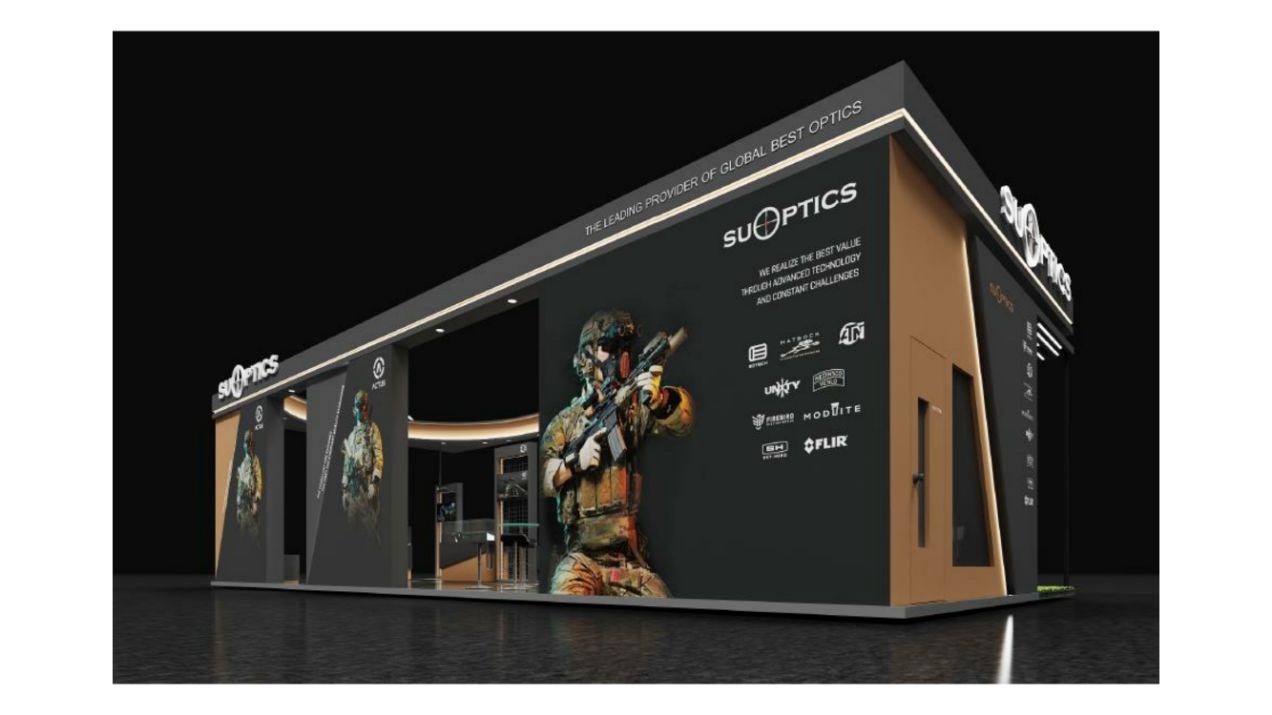
17-23 Oct, MATBOCK will be attending ADEX out in South Korea. MATBOCK will be in the booth with SUOPTICS, booth E577. Send them an email at sales@matbock.com to get on their schedule.

New Paladin Hoodie From Prometheus Design Werx

Wednesday, October 11th, 2023

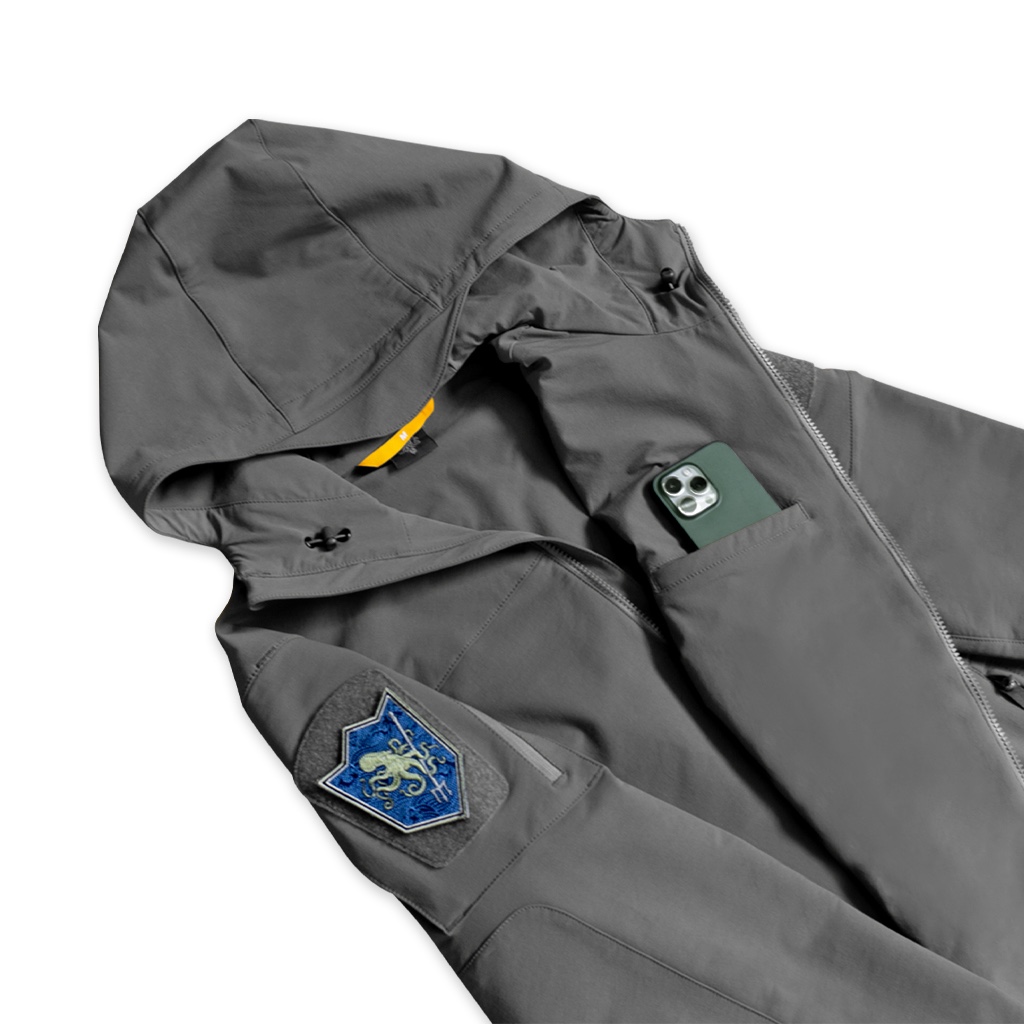
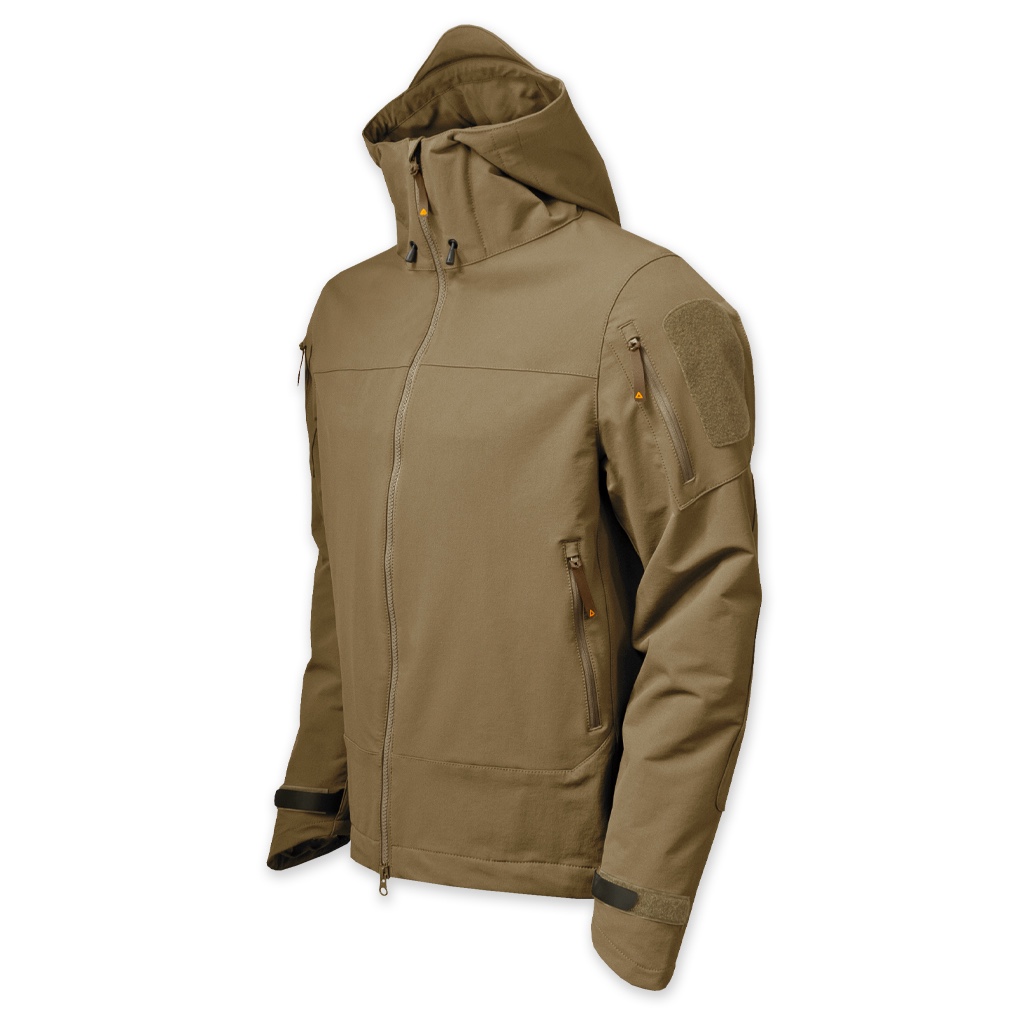
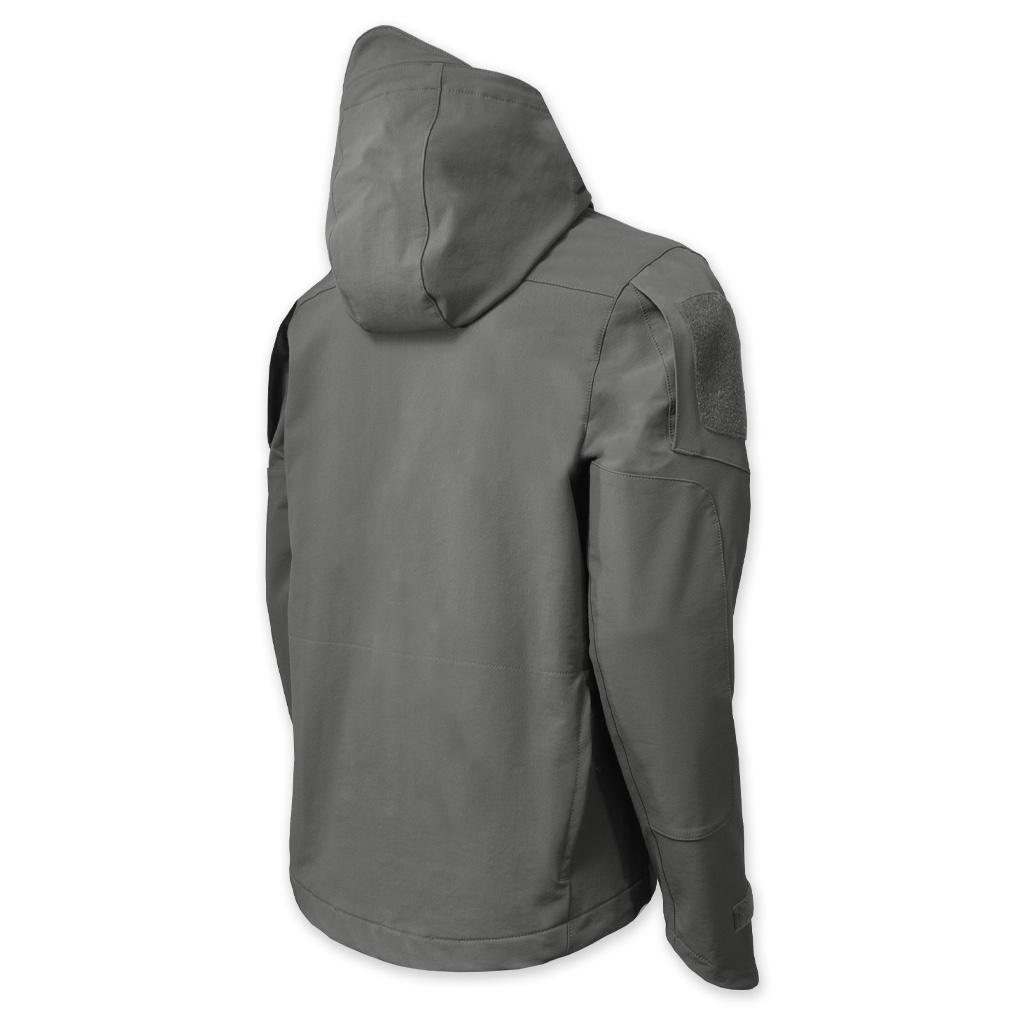
Made in USA, Full Zip, Technical Soft-Shell Hoodie Designed for Adventure, Built to Last

The SPD Paladin Hoodie is built to perform, built to last, built in the USA. A rugged, technical, soft-shell hoodie designed for adventurous pursuits in cool to cold weather and made for those who are more than just capable, speak softly, carry big sticks and the self-reliant who can move with confidence in wild to dangerous places. The Paladin Hoodie has ample freedom of movement by virtue of its 4-way stretch materials, blocks wind, is highly breathable, and shrugs off snow, damp, and drizzle. Made with traditional industrial sewing techniques and fully stitched construction, featuring our Expedition Cloth shell exterior, and fully lined with our Guide Cloth, this hoodie has got you covered. Cut to fit over moderate layers when desired for variable temperatures and features strategically placed pockets for generous storage of your EDC tools.

The Paladin Hoodie is made under Prometheus Design Werx’s sub-label Special Projects Division, and a part of their CORE-Line. Available in Universal Field Gray and All Terrain Brown.

The Design and R&D Team at PDW states:

“The Paladin Hoodie is something of a legacy style from our company Founder and Chief Designer, where his early apparel designs were often fielded by those who found themselves in dangerous places all over the globe. Purpose driven, practical, useful, versatile. Whether you’re running over washboard in a Hilux, stuck in a hurricane seat, or horse packing through Charyn Canyon, the Paladin Hoodie is your one grab-n-go, do-it-all cool-cold weather jacket. Like all of our apparel, we follow our own Long Life Apparel ethos where we design and produce our apparel to last far beyond the typical industry life cycle standards and do not subscribe to ‘fast fashion’ or disposable consumerism.”

The SPD Paladin Hoodie will be available for purchase for $309.00 via their website, prometheusdesignwerx.com on Wednesday 11OCT23 at noon PST.

Army Names USASOC Team as Best Squad, Best Soldier Winners

Wednesday, October 11th, 2023

WASHINGTON — With the Georgia heat bearing down on them, Sgt. Jake Phillips and members of 3rd Ranger Battalion, 75th Ranger Regiment, struggled to finish the final leg of the 2023 Army Best Squad Competition’s first phase in September.

Still, the Soldiers had confidence in one another as they carried 35-pound rucks for 15 miles in the woods of Fort Stewart, Georgia. The Soldiers operated on only two hours of sleep and endured food deprivation. Fortunately, the squad boasted some of the most physically-fit Soldiers in the Army including Spc. Chancellor McGuire, who had the highest physical training test scores among all 60 competitors.

They had also competed and trained together for at least three years and some members even deployed together. Knowing his team’s robust fitness levels, Phillips wanted to push his squad to its limits.

The fire team leader learned that slowing their speed during the march actually helped his squad find the endurance needed to secure victory.

“I was always wanting to push the pace past what I think we’re capable of as a squad,” said Phillips, 25. “I was wanting to put more gas when it should have been more brakes. That was personally more challenging.”

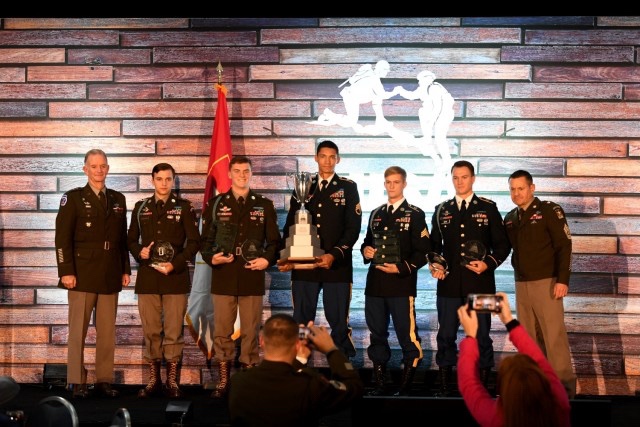
Phillips’ guidance helped his 75th Ranger Regiment, U.S. Army Special Operations Command squad win the 2023 U.S. Army Best Squad of the Year award. Phillips, a native of West Chester, Pennsylvania, took Non-Commissioned Officer of the Year honors. McGuire, who hails from Austin, Texas, won Soldier of the Year.

“I think the key for us to win was we’ve all been working together for years,” Philips said. “We all know each other pretty well.”

Sgt. Maj. of the Army Michael R. Weimer presented the awards in a ceremony at the 2023 Association of the United States Army Annual Meeting and Exposition in Washington, D.C. today. Soldiers from Army Medical Command finished in second place while the Army Pacific Command squad took third.

McGuire said keeping the goal in sight helped his squad weather through the endurance march.

“It was the last day of the competition. You can do anything for however long you tell yourself you can,” he said.

The 24-year-old McGuire credited his squad leaders and company commanders with helping mold him into a more capable special operations Soldier.

“It means I’m doing something right,” McGuire said of winning Soldier of the Year. “I took a lot from my team leaders coming up, my squad leaders. I took in everything that they have taught me … I’ve kind of become a sponge, so really I’m an image of them.”

The Army revamped its former Best Warrior contest two years ago into the Best Squad Competition to encourage a greater focus on team building and unit cohesion.

This year’s contest, executed by 1st Armored Brigade Combat Team, 3rd Infantry Division, featured another incentive. While competing, the participants could simultaneously earn their special skills certifications: the Expert Infantry Badge, awarded to Soldiers in infantry and Special Forces units; the Expert Soldier Badge, given to Soldiers who are not in infantry, Special Forces and medical branches; or the Expert Field Medical Badges, earned by outstanding medical technicians.

Twelve, five-person squads competed in the first phase of the competition during 10 grueling days at Fort Stewart.

The Soldiers went on ruck marches, completed exercises and did battle drills across more than 200,000 acres of land. The Soldiers engaged in land navigation, operated in urban areas and rucked from each destination. They learned to operate while sleep-deprived, while also taking part in night exercises.

During the competition’s final phase, the competitors travelled to Washington D.C. to be interviewed and evaluated by senior leaders.

McGuire said that his squad, which also includes Staff Sgt. Andrew Ewing, Spc. George Mascharka, and Spc. Shane Moon, finished first because of the bonds that the Soldiers share during and outside of duty. The Soldiers know each other’s families. They work out together and spend time studying in coffee shops.

The USASOC Soldiers faced stiff competition, particularly from the MEDCOM squad of Sgt. Jaime Padilla, Spc. Axxel Pasos, Sgt. 1st Class Kaleb Richardson, Spc. Robert Rupers and Christopher Trejo.

“My squad is the best squad,” said McGuire, a fire team leader. “We achieved something that we set our hearts and minds to, but at the end of the day we came out on top.”

By Joe Lacdan, Army News Service

Join TenCate Protective Fabrics for Happy Hour at AUSA 2023

Monday, October 9th, 2023

Heading to AUSA? Join TenCate Protective Fabrics for Happy Hour at their booth (#2333) beginning at 3pm on Monday, October 9th for an afternoon of good drinks and great friends. During that time, TenCate Protective Fabrics will be giving out Free Anchor Lite T-Shirts (Booth #2333 *while supplies last).

Checkout TenCate Protective Fabrics at booth #2333 to see their full lineup of innovative fabrics designed to keep you comfortable and protected in the field and on the job.