XC3 Weaponlight

Archive for the ‘Guest Post’ Category

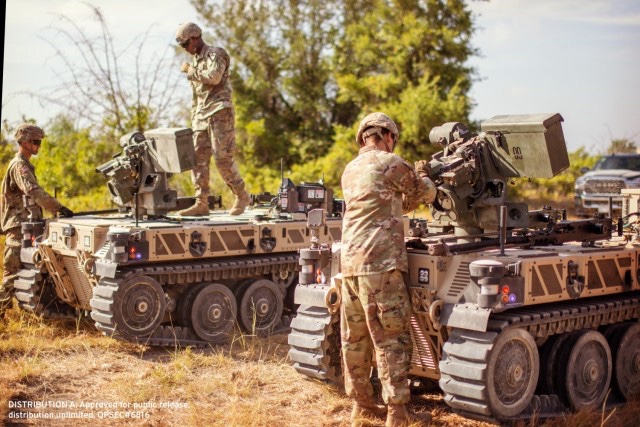
Future of Human-Machine Integration Must Bring Right Mix of Robotic Elements to Formations

Monday, October 9th, 2023

WASHINGTON — As ground robotics and autonomy are expected to play a critical role in future warfare, four Army leaders will jump start AUSA with a Warriors Corner discussion on human-machine integration at 12:50 p.m. Monday, Oct. 9, 2023.

Michael Cadieux, director of U.S. Army DEVCOM Ground Vehicle Systems Center; along with Brig. Gen. Geoffrey Norman, director of the Next Generation Combat Vehicles Cross-Functional Team, shortened NGCV CFT; Maj. Gen. Curtis Buzzard, commanding general at Maneuver Center of Excellence; and Col. Shane Upton, director of the Contested Logistics CFT, will address formation-based concepts developed with human-machine integration advances. Brig. Gen. Stephanie Ahern, concepts director at Army Futures Command, will moderate the panel discussion.

The session will be livestreamed on DVIDSHub.net.

Transforming for the future fight requires engagement across the Army and joint force. Advances in ground robotics and autonomy and the effective fusion of robotic systems into formations will provide new capabilities to help the Army achieve goals for multi-domain operations.

The fusion of robotics in formations is already taking place on the ground at various Army training locations.

“Soldier Touchpoints help us to help define future tactics and techniques for fighting with these revolutionary systems while informing future required capabilities for the science and technology community to develop,” Cadieux said.

“Human-machine integration is all about bringing the right mix of robotic elements to our formations to enable a total formation that is more capable than the sum of either the human or robotic elements,” he said.

Robotic combat vehicles will provide formation leaders new options on both the offense and the defense. The NGCV CFT has been at the forefront of robotic combat vehicle development and the experimentation that refines those vehicles.

“We’re already seeing the first robotic capabilities that we’ll be fielding, and our teams for years have been experimenting with the best way to integrate them into formations,” Norman said.

“We’re not sure yet what the integrated formations will look like, but it could require warfighters to control multiple platforms simultaneously, or perhaps multiple warfighters working different parts of the same system, or the flexibility to move between these two paradigms as the mission requires,” Norman said.

Robotic combat vehicles can accomplish some of the more dangerous and mundane tasks, such as refueling and for port logistics, while freeing up Soldiers to do the tasks that call for more thinking.

“Human-machine integration is fundamental to sustaining the future joint force operating in a contested logistics environment,” Upton said.

The integration of robotics into manned formations will iterate between doctrinal and training insights informing what the robots need to do and insights from experiments with the robots informing how doctrine and training need to adapt.

The Army has created a ground vehicle autonomy strategy built on a foundation of modular open systems approach, or MOSA, which will enable common unmanned maneuver capabilities across the ground vehicle fleet.

“Building a MOSA based, common approach to ground autonomy software lets the Army collaborate with a wide range of industry-leading partners while controlling current and future costs,” Cadieux said.

Understanding formation-based concepts developed with Human-Machine Integration advances is a key priority to designing the Army of 2040.

“The technologies Army pursues in the ground vehicle space drive at both robotic capability growth and in strengthening the interface between the Warfighter and the robotic elements,” Cadieux said.

By Jerome Aliotta
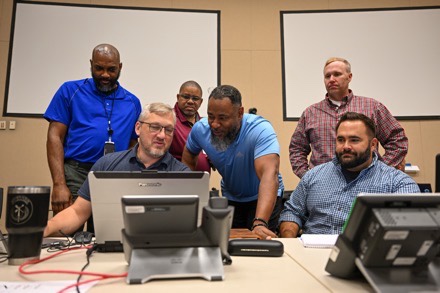
Information Operations Creates Global Reach

Saturday, October 7th, 2023

JOINT BASE SAN ANTONIO-LACKLAND, Texas —  

Integrated deterrence starts at the lowest level and at 16th Air Force’s (AFCYBER) 67th Cyberspace Wing A39, the Information Operations team is making a global impact at their level.

The IO team supports real-world operations, reach back, exercises and operations security.

“We are the only Air Force and Space Force OPSEC Support Team,” said Tyrese Stafford, 67th CW, A39 IO chief. “We are the ‘operational arm’ supporting units worldwide.”

As the two services’ OST, they are responsible for OPSEC Management Assessments and OPSEC External Assessments traveling around the world assisting organizations to achieve a more effective OPSEC program, while also testing units for vulnerabilities and their ability to mitigate them.

“This past year, our OST has assisted and evaluated over dozens of wings and deltas all over the world from the 100th Air Refueling Wing at RAF Mildenhall, England, to the 31st Fighter Wing at Aviano Air Base, Italy,” said Stafford. “Additionally, the OST conducted a multi-year, Air Force-wide OPSEC External Assessment to understand the Air Force’s ability to protect sensitive aircraft deployments.”

Once the team identifies any vulnerabilities, they incorporate them into exercises to test the units again and integrate lessons learned.

One such exercise is Air Force Special Operations Command’s Emerald Warrior, where the IO team applies these lessons learned from real-world operations to deliver trained and ready joint forces.

From Sept. 11-15, 2023, the IO team was leading the white “fusion” cell team that replicated a Theater Special Operation Command J39 and adjacent Joint Task Force along with other Information Warfare forces from space, cyber and public affairs.

The white fusion cell provides realistic and relevant training for personal recovery, humanitarian support and direct action missions to prepare headquarter special operations staff for an evolving strategic environment.

“The team trained the joint force on ISIO, Intelligence Support to Information Operations, making the exercise more information focused,” said Stafford. “The force is taught whether to reveal or conceal information depending on the objective and the adversary’s physical means.”

The ISIO training was first introduced at the 16th annual Emerald Warrior exercise in March 2023, to further synchronize information capabilities across cyber, space and public affairs, and prime AFSOC’s Special Operations Task Group (Expeditionary Group) and Special Operations Task Unit (Expeditionary Squadron) commanders when deployed.

For the past three years and four iterations, the IO team has supported Emerald Warrior exercises with exercise design, integration of military information support operations, OPSEC and military deception.

They have provided over 150 years of their combined experience and expertise in IO, which is why their unit trains the Air Force’s 14F Information Operations officers.

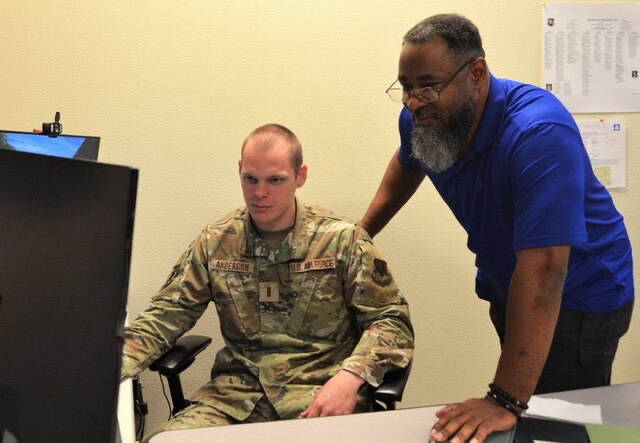
“We train continuously from the time we’re on board at the A39,” said U.S. Air Force 2nd Lt. Conner Anderson, 67th CW, OPSEC branch chief. “I’ve learned joint planning principles and the application if IO from the tactical to the operational level.”

Since 2013, over 20 IO officers have been trained at the 67th CW A39 with follow on assignments with Pacific Air Forces, 16th Air Force to Joint Task Forces under U.S. European Command, U.S. Africa Command and U.S. Central Command.

“Our IO officers go out into the force equipped to protect Air Force assets and operations,” said Stafford. “They also know, they can reach back to us anytime for support, even the IO officers we trained at Emerald Warrior.”

Through its mission, the IO team has created a global reach leveraging IW capabilities and achieving an information advantage across the competition continuum.

By Capt. Dorothy Sherwood

16th Air Force (AFCYBER)

FirstSpear Friday Focus – New Hooded Field Shirt v2 – ACM Base 150

Friday, October 6th, 2023

New Hooded Field Shirt v2 – ACM Base 150

When it comes to gear, only the best will do. That’s why our updated take on the popular Hooded Field Shirt is the perfect choice. Made right here in the USA from American wool, you’ll experience long-lasting comfort that will stand up to any challenge you throw at it.

Don’t be fooled by its lightweight feel – the ACM Base 150 wool fabric offers unparalleled performance and durability. Updated with 55% Lenzing, 33% wool and 12% nylon, the new Hooded Field Shirt offers the perfect blend of synthetic and wool. Features include a slightly larger hood, low profile cuffs, and thumb holes.

Use it as a base layer or standalone, no matter which way you choose, it will be a year-round go-to. The moisture-wicking properties of wool, means it’s perfect in all seasons. Whether its protection from the sun or a base layer in inclement weather, the Hooded Field Shirt gets it done. Available sizes are S-3XL and colors include Heather Grey, Black, Charcoal and Commando.

FirstSpear is proud to partner with Texollini in the creation of the Hooded Field Shirt. They are a fully vertically integrated company who specializes in yarn and fabric capabilities, and have a long standing history of quality fabrics, specifically in their wool offerings. They have been in the military industry for decades and are well versed with Berry Compliant offerings such as the Hooded Field Shirt. Check them out here: www.texollini.com.

Visit FirstSpear to find American Made kit and accessories, Built For The X.

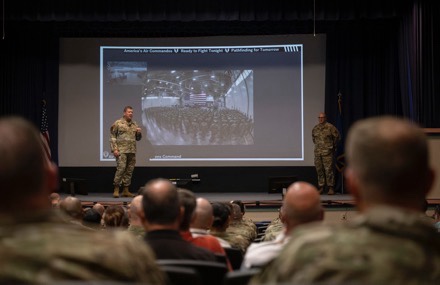
COMAFSOC Releases 2023 Strategic Guidance

Friday, October 6th, 2023

HURLBURT FIELD, Fla. —  

Lt. Gen. Tony Bauernfeind, Commander of Air Force Special Operations Command, released the 2023 AFSOC strategic guidance on September 18. 

The strategic guidance aligns with the 2022 National Defense Strategy and sets forth a framework for Air Commandos, their readiness, and pathfinding efforts. The command is transforming to properly prepare, prevent, and prevail against any adversary in today’s complex and uncertain operational environment.

“Warfighting, valor, and innovation are in our DNA,” said Bauernfeind. “We draw inspiration from the great legacy of Air Commandos who came before us. AFSOC has an immense history of Air Commandos who have paved the way, and we are committed to continuing the legacy in the years to come.”

The strategic guidance emphasizes that the AFSOC mission is to enable the joint force by delivering SOF Mobility, Strike, ISR and Air-to-Ground capabilities across the spectrum of competition and conflict.

The three lines of effort to achieve this mission are:

– Inspire and Develop a High-Performing Air Commando Force

– Trained and Ready Air Commandos

– Rapidly Pathfinding Concepts and Capabilities to WIN

Through these efforts, AFSOC will ensure that we sustain the level of peerless and professional Air Commandos in our force, that we are always ready to answer the nation’s call, and that we will advance our capabilities to create dilemmas for our adversaries.

“It’s going to take every Air Commando to implement this guidance,” said Bauernfeind. “I acknowledge that we’re in the whitewater of change, but I also know that we’re up for the challenge. The current and future operating environments will be demanding, but we will succeed because of our competitive advantage… our Air Commandos.”

By Air Force Special Operations Command Public Affairs

HIMARS Crews Demonstrate Capabilities and Cross-Train with NATO Allies in Estonia

Thursday, October 5th, 2023

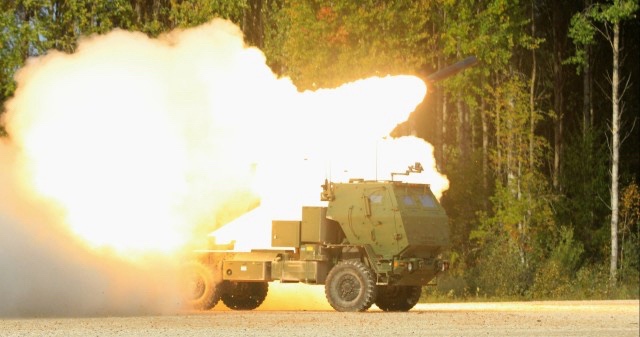
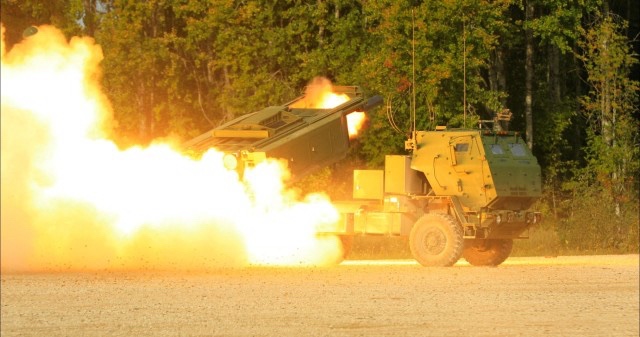
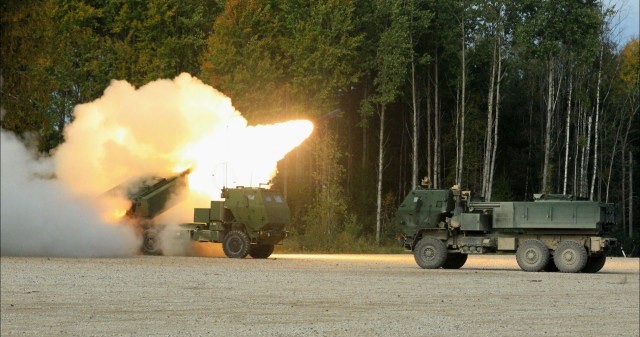
TAPA, Estonia — A U.S. Army-led High Mobility Artillery Rocket System, or HIMARS, live-fire exercise demonstrated the weapons system’s capabilities and enhanced allied interoperability with NATO allies in Estonia, Sept. 27, 2023.

U.S. Army Soldiers with Task Force Voit, assigned to 3rd Battalion, 27th Field Artillery Regiment, 18th Field Artillery Brigade, 82nd Airborne Division, supporting the 3rd Infantry Division, demonstrated M142 HIMARS operations to multinational troops comprising NATO’s enhanced Forward Presence Battle Group Estonia during the exercise at the Estonian Defense Force’s Central Training Area .

The Task Force Voit Soldiers demonstrated the capabilities of the HIMARS to NATO allies while conducting gunnery qualification on the system.

The live-fire demonstration followed months of multinational training, with Estonian troops training on the platform side-by-side with U.S. Soldiers in recent months at Camp Tapa. The training also coincided with Estonian Defense Forces purchasing HIMARS from the U.S. late last year to enhance its military’s operational capabilities.

Maj. Jeremy Rathbun, the executive officer for 3-27th Field Artillery Regiment, said his unit has been cross-training with NATO allies since they arrived in Estonia in June. Some of this training took place in the week prior to the exercise, with U.S. and Estonian troops participating in a simulated contested environment HIMARS training scenario, according to Rathbun.

Rathbun said the live-fire exercise set a foundation for the 3-27th Field Artillery Regiment’s real-world HIMARS capabilities and its readiness for future missions, operations, and exercises with NATO partners.

Staff Sgt. Austin Quiñones, a HIMARS crew section chief with 3-27th Field Artillery Regiment, said the HIMARS training with Estonians and the live-fire exercise increased his Soldiers’ readiness.

“The training value for my crews participating in this exercise, like with my crew specifically, they’ve never been overseas before; this is their first time,” Quiñones said. “They get to see not only what it’s like to be overseas, but helping the allies as well, and seeing what they’re really doing this stuff for. [It’s] not just checking a box that we’re certified — this is real world stuff that we’re doing.”

Quiñones added that the HIMARS training also enhanced interoperability with U.S. allies.

“It’s important to train with our allies, especially when we’re in their country,” Quiñones said. “If something were to happen, we need to be able to work together and efficiently. Even if something doesn’t happen, we’re building these bonds with them. They can see that it’s not just our countries that are allies, we’re allies too, on a personal level.”

Rathbun said the culminating live-fire demonstration shows the U.S. Army’s unwavering commitment to its allies.

“For them to come out here and witness the live-fire and the capabilities of the HIMARS platform is just a demonstration of our commitment to the mission here in Estonia,” Rathbun said.

Task Force Voit Soldiers, who continue to train with NATO allies in the Baltic, support the 3rd Infantry Division-led Task Force Marne. The 3rd Infantry Division’s mission in Europe is to engage in multinational training and exercises across the continent, working alongside NATO allies and regional security partners to provide combat-credible forces to V Corps, America’s forward deployed corps in Europe.

By SGT Cesar Salazar Jr.

Revolutionizing Soldier Firepower: US Army Adopts Next-Gen Weapons

Wednesday, October 4th, 2023

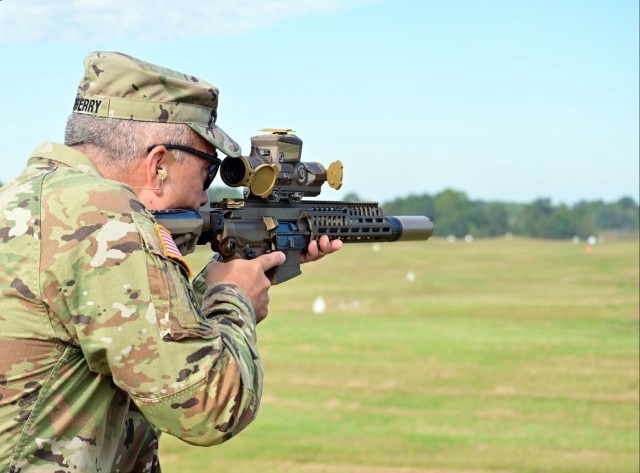
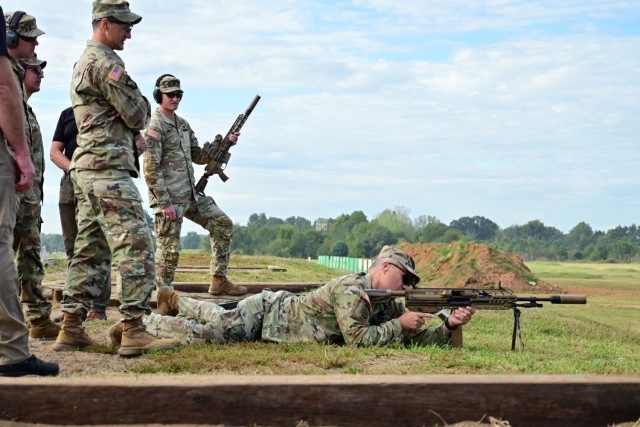
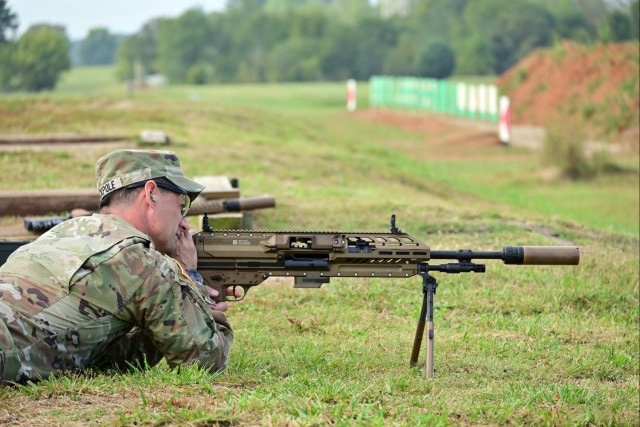
FORT CAMPBELL, Ky. — Fort Campbell is testing some of the Army’s newest weapons that has the potential to redefine the capabilities of U.S. infantry forces. Last month Soldiers began field testing the Sig Sauer XM7 Rifle and XM250 Automatic Rifle before the they respectively replace the M4/M4A1 carbine rifle and M249 Squad Automatic Weapon.

The contract, awarded by the U.S. Army, represents a significant investment in enhancing the Soldiers’ effectiveness on the battlefield.

“The XM7 has no fixed front sight post, allowing for full length rail systems and eliminating a heat source that interferes with thermal weapon sights,” said Communications Director Bridgett Siter, Soldier Lethality Cross-Functional Team at Fort Moore. “Both [Next Generation Squad Weapons] were purpose built and integrated to fire with visual and acoustic suppressors to improve survivability and command and control, and they have ambidextrous controls and improved operating systems. The XM250 incorporates a select fire system that allows automatic riflemen to maintain volume of fire in the team while improving their ability to do other tasks in semi-automatic mode.”

The transition isn’t just about the introduction of new firearms; it also signifies a shift in ammunition caliber from the 5.56mm to the more potent 6.8mm. This decision was fueled by the need for ammunition with improved armor-penetrating capabilities, and it is expected to bring about a substantial boost in lethality.

“The move to 6.8mm improves the probability of hitting a target, increases resistance to wind drift and enhances performance against personnel and battlefield barriers,” Siter said. “The NGSW weapons make the [close combat force] Soldier more lethal and survivable.”

These new weapons are not only armed with the common 6.8mm ammunition, which includes government-supplied projectiles and specially designed cartridges, but they also come equipped with the cutting-edge XM157 Fire Control optic. Crafted by Vortex Optics, the optic is equipped with a laser range finder, ballistic calculator, visible and infrared lasers, and even a compass, providing Soldiers with unmatched precision and tactical advantages.

This pivotal shift to an “intermediate caliber” round marks a departure from the Army’s reliance, for more than half a century, on the 5.56mm ammunition. The decision emerged from a comprehensive series of studies conducted, highlighting the limitations in range and energy delivery exhibited by the existing small-caliber squad-level weapons.

These groundbreaking weapons are designated for close combat forces, including infantry, combat engineers, and select enablers like scouts and special operations units. The integration of the 1-8x magnified XM157 fire control, with its advanced computer-assisted rifle optic, extends the weapons’ range, bolsters accuracy, and delivers more formidable hits.

“The Army adjusts tactics, techniques and procedures frequently based on many variables. As the Army transforms the [close combat force] into the future, the concepts of NGSW and other efforts will be integrated to attain and maintain overmatch,” said Siter.

“These efforts combined will give the [close combat force] better ability to detect and engage targets; improved performance of ammunition against personnel and battlefield barriers; better [commad and control] and nighttime fighting capabilities; greater effects against targets in defilade; and more. As we experiment, test, and field systems — through Soldier touchpoints, formal test events, and tactical training — leaders at all levels will develop and adapt [tactics, techniques and procedures] to capitalize on these synergistic gains.”

Fort Campbell Garrison Commander Col. Chris Midberry and Command Sgt. Maj. Chad Stackpolehad experienced the new weapon system firsthand.

“It is an incredible piece of equipment, incredible lethality,” he remarked. Looking ahead to the future, Midberry expressed anticipation about the widespread deployment of this advanced weaponry to units stationed at Fort Campbell. “I’m looking forward to getting it fielded to our units here on Fort Campbell.”

By Kayla Cosby

AI Security Center to open at National Security Agency

Wednesday, October 4th, 2023

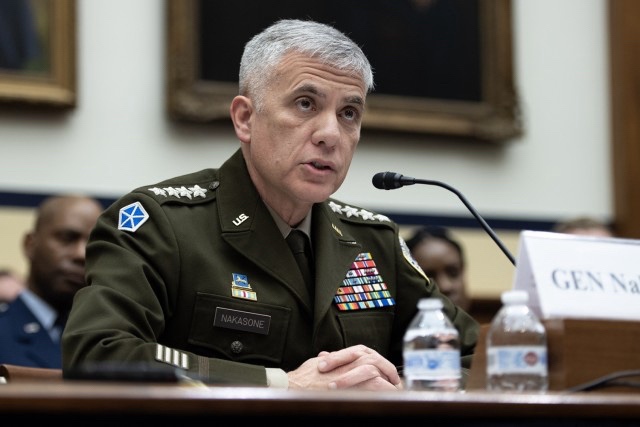
WASHINGTON — National Security Agency Director Army Gen. Paul M. Nakasone today announced the creation of a new entity to oversee the development and integration of artificial intelligence capabilities within U.S. national security systems.

The AI Security Center will become the focal point for developing best practices, evaluation methodology and risk frameworks with the aim of promoting the secure adoption of new AI capabilities across the national security enterprise and the defense industrial base.

The new entity will consolidate the agency’s various artificial intelligence, security-related activities.

“The AI Security Center will work closely with U.S. Industry, national labs, academia across the [intelligence community] and Department of Defense and select foreign partners,” Nakasone said during a discussion hosted by the National Press Club in Washington.

He added that the unique talent and expertise at the NSA make the agency well suited to support the government’s effort to ensure the U.S. maintains its competitive edge in AI.

U.S. officials have emphasized the increasing role AI is having in shaping the national security landscape and have taken steps to shape the future of the emerging technology.

Nakasone noted the most recent strategies guiding U.S. national security, defense and intelligence emphasize the increasingly consequential role of AI.

In January, the Defense Department updated its 2012 directive that governs the responsible development of autonomous weapon systems to the standards aligned with the advances in artificial intelligence.  In 2020, the department also published its Responsible AI Strategy and Implementation Pathway, which serves as a key example of U.S. leadership in promoting responsible stewardship of the rapidly emerging technology.

The U.S. has also introduced a political declaration on the responsible military use of artificial intelligence, which further seeks to codify norms for the responsible use of the technology.

Nakasone, who also commands U.S. Cyber Command and serves as the chief of the Central Security Service, warned that it is critical the U.S. maintain its leadership in AI as the technology matures.

“AI will be increasingly consequential for national security in diplomatic, technological and economic matters for our country and our allies and partners,” Nakasone said

“Today, the U.S. leads in this critical area, but this lead should not be taken for granted,” he said. “Our adversaries, who have for decades used theft and exploitation of our intellectual property to advance their interests will seek to co-opt our advances in AI and corrupt our application of it,” he said.

He said it is imperative that the NSA sets a clear path forward to address “both the opportunities and challenges of AI as industry rockets forward with innovation.”

“AI security is about protecting AI systems from learning, doing and revealing the wrong thing,” he said.

“We must build a robust understanding of AI vulnerabilities foreign intelligence threats to these AI systems and ways to encounter the threat in order to have AI security,” he said. “We must also ensure that malicious foreign actors can’t steal America’s innovative AI capabilities to do so.”

By Joseph Clark, DOD News

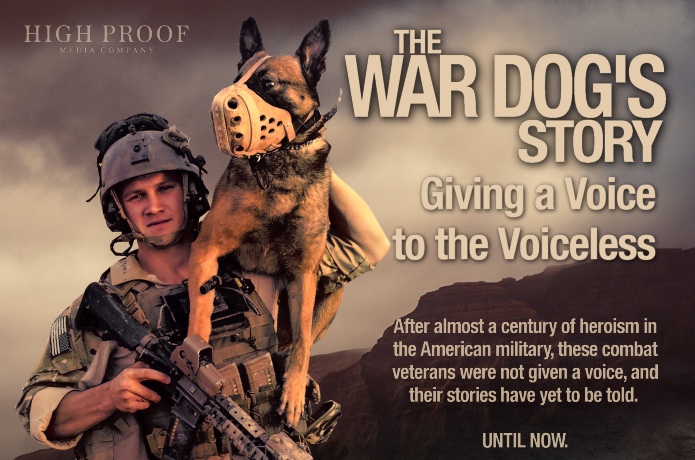
High Proof Media Company Launches IndieGoGo Crowdfunding Campaign for Groundbreaking Documentary Series: ‘The War Dog’s Story: Giving a Voice to the Voiceless’

Monday, October 2nd, 2023

October 2, 2023 – Many war stories have been told over the years, but rarely are those stories about man’s best friend, the military working dog. After speaking with many retired dog handlers, it became clear to us that the story of the working dog needed to be told. We started production on The War Dog’s Story back in July of 2022, and after 60 hours of filming, 39 interviews, 5 states around the country, and the potential for a 20-episode series, we need your help to cross the finish line.

For many months, we have worked on trying to get a major network to pick up the War Dog’s Story documentary. From the feedback that we received, the feelings were the same – there was no interest in war stories or the dogs in them. We decided to move forward on our own in order to get the War Dog’s Story completed and so we are now excited to announce our official crowdfunding campaign on IndieGoGo to honor these stories, and the dogs and people in them.

With the funds that we are able to secure, we will be completing the last of the interviews needed. How many episodes will go into the series ultimately depends on how much we’re able to raise with the crowdfunding campaign. Once the edit is complete, we’ll be submitting the documentary series to a distributor we have worked with previously. Other shows that we have produced have streamed on Amazon Prime, Tubi, and many other services in the past so we’re quite confident that The War Dog’s Story will end up on numerous streaming platforms as well.

Please help us spread the word to everyone you know about our crowdfunding campaign, which launches on October 2nd. Every like, share and contribution will help us cross the finish line. People can donate to the project via the IndieGoGo page or directly on the War Dog’s Story web site with our PayPal and credit card options. From the start, these stories that are being told are what matter the most to us and we could really use your help in letting everyone know about the campaign, the film and of course, the war dogs. 

Thank you,

Bri Coelho

Executive Producer, The War Dogs Story

High Proof Media Company

Where people can donate:

• IndieGoGo Site: igg.me/at/thewardogsstory

• War Dog’s Story Site: www.wardogseries.com

• PayPal: www.paypal.com/paypalme/highproofmedia

Social Media Platforms:

• Facebook: www.facebook.com/highproofmediacompany

•Instagram: www.instagram.com/highproofmediacompany

• Twitter:  twitter.com/@highproof_media

• YouTube: www.youtube.com/@HighProofMedia

• IMDB: www.imdb.com/title/tt29168674