Tropo Performance

Archive for the ‘Guest Post’ Category

Army Leaders Chart Path to Equipping the Force

Friday, December 15th, 2023

REDSTONE ARSENAL, Ala. — Senior leaders from around the Army met both virtually and in-person for the Army Modernization Equipping Conference, Dec. 4-7 at Army Materiel Command headquarters.

The AMEC, held semiannually, brought together leadership from the four major Army commands and Headquarters Department of the Army staff sections to synchronize equipment distributions and displacements in line with Army priorities and Regionally Aligned Readiness and Modernization Model phases to achieve cohesion throughout the Army.

“We’ve been busy supporting allies and partners in multiple theaters, and that’s impacting the Army’s equipping decisions and enterprise,” said Lt. Gen. Chris Mohan, AMC deputy commanding general.

He hailed the AMEC as a key Army synchronization conference and for being an important forum that provides the chance to review equipment fielding and modernization while resolving friction points.

In addition to equipping and modernization discussions, the AMEC also addressed special topics, including Second Destination Transportation, the Decision Support Tool and an update on the Rapid Removal of Excess pilot program, which wraps up Dec. 15 at Fort Liberty, North Carolina and Fort Stewart, Georgia.

“We’re here to support the Chief of Staff of the Army’s emphasis on continuing transformation and building the Army of 2030,” said Bryan Shone, Army G-8 deputy director of program analysis and evaluation.

Chief of Staff of the Army Gen. Randy George charged Army Materiel Command to pilot a new program aimed at increasing equipment on hand readiness through focused fielding, lateral transfers and divestiture. Since October, active units at both installations have been turning in items ranging from small electronics and general supplies to military vehicles at their respective Modernization, Displacement and Repair Sites.

“Lessons learned from the R2E pilot program are being captured by AMC, Army Sustainment Command, 3rd Expeditionary Sustainment Command and U.S. Army Forces Command, all of which have a stake in unburdening our Soldiers,” said Eric Cowan, AMC divestiture team lead.

Cowan discussed the potential expansion of the pilot program and the transfer options for collected equipment, including the potential transfer of equipment to U.S. Army Security Assistance Command for partner nation opportunities for foreign military sales.

Both Mohan and Lt. Gen. Paul Calvert, FORSCOM deputy commanding general, praised the pilot program as well as 3rd ESC and the Army Field Support Battalions at Fort Liberty and Fort Stewart for rapidly identifying and collecting thousands of pieces of equipment.

“We’re going to take a pause to capture what we learned and apply it to the next iteration of the pilot program,” Calvert said. “But ultimately, we’re seeing that we’ve met the intent of unburdening the Soldier.”

The Army is using data and analytics to not only capture the amount of excess equipment in the field, but also to extend the predictability of logistics into the future for combatant commands in the European and Indo-Pacific theaters. By having better visibility of equipment and the condition it is in, AMC can predict MDRS and Organic Industrial Base operations one to two years ahead of time.

As the AMEC concluded, the resounding sentiment from participants was one of commitment to modernization and strategic alignment, underscoring the Army’s dedication to staying at the forefront of military sustainment.

“As we continue to synchronize with other big Army-wide conferences, the AMEC is only going to get better,” Mohan said. “It will continue to be the driving force behind senior leader decisions.”

Story and one photo by Lindsay Grant

With one photo by SGT Vincent Levelev

First Army Taps AI to Enhance Command and Control

Thursday, December 14th, 2023

ROCK ISLAND ARSENAL, Ill. — First Army is leveraging the potential of artificial intelligence during large scale mobilization exercises and other missions.

Lt. Col. Melissa Sayers, First Army operations research systems analyst, or ORSA, said the first use will come during the 2024 iteration of Pershing Strike, First Army’s annual exercise to validate the Army’s ability to mobilize forces in support of large-scale combat operations.

The use will be limited but by the following year, the plan is for it be an integral part of the exercise and other First Army operations. It is forecasted to eventually be a routine part of how First Army does business. The hope, Sayers said, is that, “not only do will we have a simulation that we can run a million scenarios on but it’s part of our everyday operations, helping us get to decisions faster.”

Artificial intelligence is the use of computer systems to perform tasks that traditionally require human input and do them much faster. For First Army, faster information would lead to a boost in efficiency during operations that move a multitude of Soldiers and equipment to an assortment of locations across the country for training and mobilization.

“The machine can’t do it without the human,” Sayers noted. “Say we had a large-scale mobilization operation and we had all these units ready to head out the door and the medical unit shows up at 50 percent strength. With AI, we have the ability to pre-calculate solutions. We estimate what is going to happen if you make this decision, and we can go ahead and run it and calculate all those different decisions and have the best three or four recommended to the commander. The commander still makes the decisions but we can get there a lot faster if we have it pre-calculated and ready to run when something happens.”

AI is used in all manner of situations, from customer service to medical diagnoses to traffic patterns. At First Army, the plan is for it to create more efficient operations in exercises and mobilizations, including a large-scale mobilization operation if such an event arises.

“That’s what First Army cares about,” Sayers said. “We want to be able to push out the Reserve Component in a timely manner in event of a large-scale conflict. Once you have the model created, you can start playing with it. It helps leaders at very high levels figure out what levers to pull and what resources to apply to maximize what’s happening on the ground.”

Sayers noted the positive impact this can have for units of any size and the individual Soldiers.

“We have units full of people that need to be processed,” she said. “They need to arrive at their home station, they need to make sure they have all their equipment. What does it take to get the equipment fully maintained? What does the shipping network look like? How many observer coach/trainers should we have and of what flavor — do we need aviation, medical, infantry? How many medical stations? What if one of those stations goes down? What if one shows up at only half-strength? What happens at that location and what are our options to react to that problem. We can plot all this out.”

Partially due to the value of AI, First Army added an ORSA this year. “Anytime First Army has needed to do advanced analytics, it’s had to outsource it,” Sayers said. “They’ve never had anyone inhouse to advise the command and do the work.”

It’s a microcosm of what’s talking place across the Army.

”The ORSA role has exploded in the last couple of years,” Sayers said. “We’ve been limited on what we’re able to provide to the commands because the amount of data was not there to do deep qualitative analysis. Suddenly all this data is able to be collected because we have the hardware to be able to store it and we have the hardware to be able to collect it.”

Because of that, First Army and its partners will be better equipped to provide combatant commanders with trained and ready Reserve Component Soldiers.

By Warren Marlow

Tactical Resupply UAS Ready for the Fleet

Wednesday, December 13th, 2023

Naval Air Station Patuxent River, Md.

The Navy and Marine Corps announced Initial Operational Capability (IOC) for the TRV-150C Tactical Resupply Unmanned Aircraft System (TRUAS) Oct. 27 at Marine Corps Base Hawaii.

The first six production systems arrived last week at the Marines Third Littoral Logistics Battalion (LLB-3) in Kaneohe Bay, Hawaii, which means that LLB-3 is sufficiently manned, trained and ready to deploy with the TRV-150C.

“This achievement means the fleet is ready and fully capable of deploying and using this game-changing system, which will enable Marines to perform forward deployed contested logistics missions,” said Gregg Skinner, Navy and Marine Corps Small Tactical Unmanned Aircraft Systems program manager (PMA-263), whose Unmanned Logistics Systems-Air (ULS-A) team oversees the TRUAS program.

Prior to declaring IOC, support staff from the Air Test and Evaluations Squadron Two Four (UX-24) from Naval Air Warfare Center Webster Outlying Field in Maryland arrived at MCB Hawaii along with an instructor from the Training and Logistics Support Activity Pacific, to conduct final operator qualification with LLB-3. After reviewing the differences between prototype and production systems, the trainers and operators successfully completed 36 training flights to ensure that the unit was ready to deploy.

PMA-263 awarded the production contract for the TRV-150C in April 2023 following a rapid prototyping initiative that brought the system from inception to the fleet in less than four years.

“This was a total team effort in accomplishing this milestone in record time,” Skinner said. “Special thanks to the PMA263 Team, Training and Logistics Support Activity Pacific, Air Test and Evaluations Squadron Two Four (UX-24), and the Survice Engineering Company (TRUAS prime contractor) for their hard work and dedication aimed at getting this much needed Force Design 2023 capability in the hands of the Warfighter.”

TRUAS is a land based, autonomous UAS that provides organic logistics to Marine squads through automated launch, waypoint navigation, and automated landing and payload drop. The system provides battlefield logistics capability to distribute critical supplies at Expeditionary Advanced Bases, where the risk to manned aircraft would deny manned aviation resupply operations out to the last tactical mile.

“The contested logistics environment challenges the ability of our Marines to distribute necessary supplies to the right place at the time of need,” said Col. Aaron Angell, Logistics Combat Element Division director.  “TRUAS gives a logistics unit the organic ability to immediately respond with a precision ground launched air delivery system.  This is leap-ahead technology that we will learn to continue to shape future unmanned aerial logistics platforms.”

-NAVAIR News

See Ocean State Innovations at SHOT Show Suppliers Showcase

Tuesday, December 12th, 2023

Ocean State Innovations is excited to welcome you to our SHOT Show Suppliers Showcase Booth 52240, at The Venetian 5th Floor, Palazzo Ballroom, Las Vegas, Nevada on January 22 – 23, 2024. We have the following products to review with you and your production team:

• CORDURA® TrueLock™ Solution Dyed Fabrics – 500D & 1000D.
• Curv® Tactical – Innovative Curv® Thermoplastic Composite Technology
• ITW® Military Products & Hardware
• Velcro® Brand Hook 89 & Loop 1100
• Velcro® Brand Loop in MultiCam®
• OSI Printing Services – Woven Fabrics & Velcro® Brand Loop
• Innovative Textile Developments

Stop by and say hello to the OSI Team members or reach out to make an appointment:

Peter Raneri – peter@osinnovate.com

Geoff Senko – geoff@osinnovate.com

Nick Boulis – nick@osinnovate.com

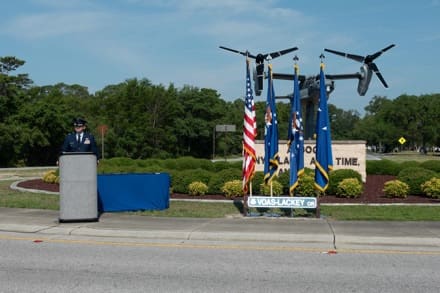
AFSOC Commander Directs CV-22 Operational Standdown

Tuesday, December 12th, 2023

HURLBURT FIELD, Fla. (AFNS) —  

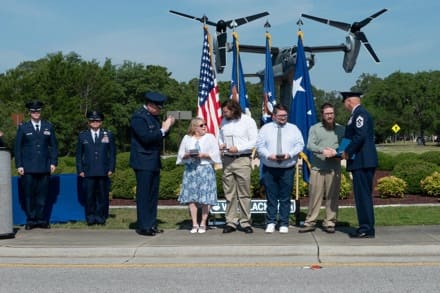
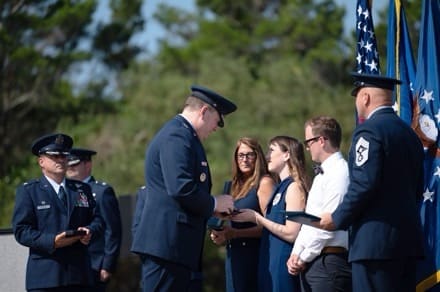
Lt. Gen. Tony Bauernfeind, AFSOC commander, directed an operational standdown of the Air Force CV-22 fleet Dec. 6, 2023, to mitigate risk while the investigation continues on the Nov. 29, 2023, CV-22 mishap near Yakushima, Japan.

Preliminary investigation information indicates a potential materiel failure caused the mishap, but the underlying cause of the failure is unknown at this time. The standdown will provide time and space for a thorough investigation to determine causal factors and recommendations to ensure the Air Force CV-22 fleet returns to flight operations.

We extend sincere gratitude to the Joint Force and Government of Japan’s Self-Defense Force, Coast Guard, law enforcement and civilian volunteers for their tireless assistance in the search and rescue operations for our Air Commandos.

By Air Force Special Operations Command Public Affairs

Next Generation Squad Weapons Tested by Ft Campbell Infantry, Rangers

Monday, December 11th, 2023

FORT CAMPBELL, Ky. — Screaming Eagle Division Soldiers here just completed training and testing the Army’s 6.8mm family of Next Generation Squad Weapon-Rifle (NGSW-R), NGSW-Automatic Rifle (AR) and the NGSW-Fire Control (FC) systems.

Troops of Alpha Company, 2nd Battalion, 502nd Infantry Regiment, 2nd Brigade, 101st Airborne Division (Air Assault) and members of 1st Battalion, 75th Ranger Regiment, undertook New Equipment Training on the NGSW.

“The New Equipment Training gave the Soldiers a good base before coming out and using the NGSWs,” said Infantryman Sgt. Jack Scott, a team leader in Alpha Company.

Their training covered the similarities and differences between the new weapons and the legacy 5.56mm M4A1 Carbine and M249 Squad Automatic Weapon systems, focusing on enhanced lethality.

“We did a lot of training with both static and maneuver ranges, so the product of Soldier you get now, during the live fire, is high quality due to all of that training,” added Scott.

Once complete with new equipment training, Soldiers tested the NGSW in a Limited User Test, or LUT, in a crawl-walk-run method to ensure all operational data is collected on the weapon, as well as user integration with the new equipment.

Alpha Company and 1st Battalion, 75th Ranger Regiment initially conducted static qualification and variable distance ranges with legacy weapon systems and NGSW, to compare performance of both and give Soldiers repetitions and familiarity with the NGSW.

Alpha Company 1st Sgt. Justin Babb appreciated the benefits of participating in an operational test and the opportunity for his junior Soldier’s feedback to contribute and impact Army modernization.

“The candid feedback that the Soldiers and NCOs provided during focus groups and surveys will provide the Army with perspective from the lowest level of user that will actually use the system,” said Babb.

Major differences between the legacy M4, M249 systems and the NGSWs were immediately noticeable by the Soldiers.

Spec. Maximiliano Arguindegui, an automatic rifleman with 1/75th Ranger Regiment, said, “Overall, I feel faster with the M249, but I prefer the NGSW-AR because it makes me more lethal.”

Scott added, “Stopping power with the 6.8 round is a big improvement compared to the M4 and M249 and having the ability to use with or without the suppressor is a huge feature for the support by fire element.”

Leaders of Alpha Company also said participating in a test with the Operational Test Command enabled them to get after their internal readiness.

Alpha Company Commander, Capt. Jordan Mares, said, “Being a part of the NGSW test absolutely supported our company readiness. The LUT gave us opportunities to hone our craft, practice lessons learned with feedback from subject-matter experts, and the ability to conduct a lot of repetitions to practice small unit tactics.”

Staff Sgt. Ivan Alvarez, a Squad Leader with Alpha Company, was initially skeptical of the NGSW.

“When we first started the LUT, I was very against the NGSW-R,” he said. “I’m used to the M4 — it’s lighter — I’m used to the recoil, the engagements, everything the M4 has to offer. But, as we went through the LUT with the NGSW-R, I can see the capabilities that it brings to an infantryman, especially at a longer distance.”

Alvarez also said testing the new weapons gave his squad added training opportunities.

“We got after a lot of training that we would normally have to wait months to set up and accomplish,” he said. “We were able to get more marksmanship time, more range time, and were able to train under various environmental conditions.”

Another squad leader with the Rangers provided his observations on the training benefit while participating in an operational test.

“We were able to get reps in on a new weapon system as well as our legacy equipment,” said Sgt. Joseph Martin. “We were able to train on many basic things that we want to train on every year, but condensed to get more repetitions, as well as live fire iterations for our younger, inexperienced Soldiers.”

Story by Maj. Rodrick A. Polk, test officer, Maneuver Test Directorate, U.S. Army Operational Test Command

Photos by Mr. Mark Scovell, Visual Information Specialist, U.S. Army Operational Test Command

Army Concludes Network Modernization Experiment 2023

Sunday, December 10th, 2023

JOINT BASE McGUIRE-DIX-LAKEHURST, N.J. — The Army completed its annual capstone Network Modernization Experiment, or NetModX, after 10 weeks of experimentation spanning 62 technologies.

Across three locations in New Jersey and Maryland, the Army’s Command, Control, Communications, Computers, Cyber, Intelligence, Surveillance and Reconnaissance Center and partner organizations experimented with a broad spectrum of network-related capabilities in an operationally realistic, threat-informed environment. The C5ISR Center is an element of the Combat Capabilities Development Command.

Because of the Army network’s vast reach, NetModX 23 encompassed 17 focus areas and five modernization priorities: Future Vertical Lift, Long-Range Precision Fires, Network, Next Generation Combat Vehicle and Soldier Lethality.

“As an enabler for multiple Army technologies, the network and its performance in multiple dimensions becomes critical to overall mission success,” said Joe Saldiveri, NetModX 23 lead strategic planner.

NetModX 23 featured projects leveraging a live, virtual and constructive environment that enables experimentation in a distributed manner. LVC assists the NetModX project management team to provide an all-inclusive service by combining real and simulated capabilities to simulate technologies under experimentation. The LVC environment fills in gaps where real systems are too expensive or too scarce to include.

“The C5ISR Center offers a critical service to the C5ISR community by providing the environments and engineering expertise to experiment and inform complex C5ISR integration decisions. LVC is a tool that enables us to answer more complex questions with greater fidelity and more efficiency. We continue to invest and work with our partners in building out our LVC capabilities — to ensure we are pushing the state-of-the-art boundaries,” said Seth Spoenlein, assistant director for system integration.

As part of NetModX, the C5ISR Center routinely partners with a fellow Army R&D organization, DEVCOM Analysis Center, to create an operationally relevant experimentation environment. This environment is vital to experimentation as it exposes emerging technologies to realistic threats for greater learning.

In addition to the work of Army scientists and engineers, the event included Soldier participation from the 75th Innovation Command, 101st Airborne Division and Fires Capabilities Development and Integration Directorate. This allows real-time Soldier feedback on how emergent technologies affect mission threads and performance within those threads.


“Soldier participation in NetModX allows technology developers to gain insights into how Soldiers would interact with the technology in an operational setting, providing valuable lessons across a broad range of technology readiness levels,” said Noah Weston, chief of C5ISR Center’s Strategic Experimentation Office.

New this year was Innovation Week, a two-week extension of NetModX with a focus on sensor-to-shooter experimentation, augmented by LVC capabilities to enhance realism. The intent was to explore high-risk, high-reward experimentation, to push the boundaries of learning by exercising a common sensor-to-shooter mission thread using uncommon technologies and network architectures.

Innovation Week resulted in a series of firsts for the Army network enterprise, providing a basis of knowledge for further exploration, Weston said.

“Leveraging initiatives such as Innovation Week, the Army can discover potential leap-ahead technologies or architectures that are distinct advantages over currently deployed systems. Innovation Week is focused on reducing risk for both our internal science and technology programs and, more importantly, our transition partners. It provided an operationally relevant “safe to fail” environment to conduct systems of systems experimentation,” he said.

By Dan Lafontaine, DEVCOM C5ISR Center Public Affairs

Some photos by James Lee, RJ Regars, and John Tang, DEVCOM C5ISR Center

Fairchild AFB Demonstrates Strategic Deterrence Readiness During Titan Fury 24-1

Saturday, December 9th, 2023

FAIRCHILD AIR FORCE BASE, Wash. (AFNS) —  

Airmen assigned to the 92nd and the 141st Air Refueling Wings conducted exercise Titan Fury 24-1 at Fairchild Air Force Base, Nov. 13-17.

During the exercise, Airmen demonstrated how various support activities contribute to mobilizing KC-135 Stratotankers at a moment’s notice if called upon to support strategic deterrence and other National Defense Strategy priorities.



“It’s critically important that Fairchild Air Force Base conducts exercises like this for one reason only, and that’s deterrence,” said Lt. Col. William Dowd, 97th Air Refueling Squadron commander. “We have to send a clear message to our adversaries and allies alike that Fairchild Air Force Base stands ready to execute this mission. Without making sure our crews are ready and able—regardless of how hard it is and how fast we need them to be—we can’t ensure the delivery of deterrence worldwide.”

For decades, the KC-135 has been the backbone of Air Mobility Command’s air refueling capabilities around the world because of its ability to extend global reach and project U.S. airpower.

Dowd explained how teamwork and collaboration are the keys to Fairchild AFB’s ability to keep this proud tradition going strong.

“The teamwork that goes into executing a mission of this scale really boils down to the relationship between operations and maintenance, then everything else has to come up and build the support pyramid for those two,” he said. “It is a challenging week for everybody, from maintenance and operations to the defenders in security forces who protect the ramp and aircraft and the folks in the Force Support Squadron who are turning out meals for them and bringing food to the crews at the jet.”

Dowd also praised the hard work and long hours of airfield managers, fuel operations, safety, inspector general and the other essential functions of the exercise that enable mission readiness.

“We could tell they were getting tired, but there was a gleam in their eyes, and we knew they were ready to show the world that Fairchild is ready to execute this mission,” he said. “The 92nd ARW, along with our Guard partners, the 141st ARW, conduct these exercises to ensure we are always prepared because there isn’t an aircraft in our fleet that can kick ass without tanker gas.”

In addition to the 92nd ARW active duty and 141st ARW Air National Guard units at Fairchild AFB, TF-24-1 included aircraft and personnel assigned to the 912th Air Refueling Squadron who traveled from March AFB, California, to participate. The 912th ARS is a geographically separated unit of the 92nd ARW.

According to Lt. Col. Roque Zarate, 912th ARS director of operations, participating in the exercise enabled his unit to integrate with 92nd ARW Airmen and build interoperability in a training environment that resembles the manner in which they would operate during a real-world scenario.

“Titan Fury is important, not only for the aircrews and maintenance, but for our controllers as well,” he explained. “They have to practice things that maybe they’re not used to with the crews that are organic to the 92nd. So, for them to actually integrate us into the exercise, being a geographically separated unit, there’s a lot more planning and a lot more nuances. It’s important for everybody to exercise the way we would go to war, or really, to deter our adversaries from attacking us.

“It’s nice just for us to be able to come here and see how our parent wing executes the same [mission],” Zarate added. “We’re taking lots of notes on how we can do things better at March, and we’re also providing notes to Fairchild on what they can do better.”

Master Sgt. Dustin Brockman, a generation superintendent for TF 24-1, highlighted the importance of exercising to build both proficiency and speed.

“[Getting] the aircraft ready quickly is important,” he said. “If it was a real-world situation, we don’t know how fast we would need to act. If we take too long to get ready, then we might not be able to meet the mission requirements. We work quickly yet safely to get the aircraft generated as fast as possible.”

Like many Airmen, this exercise was a first for Capt. John Will, a KC-135 pilot assigned to the 97th Air Refueling Squadron. He said his first Titan Fury experience enabled him to develop at a steady pace in his role as an aircraft commander supporting Fairchild AFB’s mission.

“There’s still a lot of learning to be done,” he said. “I feel like with every step of the process, I’ve been slowly learning this mission and getting better at it. We do other smaller exercises and classes to get us ready for this, so it’s not just everything at once. Seeing it all come together has been really cool.”

This recurring total force exercise is an example of how the 92nd ARW and the 141st ARW at Fairchild AFB are engaged, postured and ready with a credible force to assure, deter and defend in an increasingly complex security environment.

“We ran 24-hour operations for a week, generated 21 aircraft and demonstrated our ability to deploy personnel and conduct our mission from anywhere,” said Col. Chesley Dycus, 92nd ARW commander. “We did this all by combining our efforts with our teammates in the 141st ARW, and the crews and jet here from the 912th ARS. I couldn’t be more proud.”

92nd Air Refueling Wing Public Affairs