XC3 Weaponlight

Archive for the ‘Guest Post’ Category

FirstSpear Friday Focus: Everyday Sock (EDS)

Friday, February 6th, 2026

The FirstSpear EVERYDAY SOCK (EDS) is built for professionals who demand comfort, durability, and reliability from their gear. Constructed from an 82% Merino wool, 12% nylon, and 6% Lycra blend, these socks are engineered to perform under daily operational use. 

The Merino wool provides natural temperature regulation and moisture management, keeping feet dry and comfortable in changing environments. A thick, cushioned profile delivers comfort without sacrificing breathability during long hours on your feet. 

Reinforced heel and toe boxes are designed to withstand high-wear stress points common in boots. Enhanced arch ribbing provides added support and stability, reducing fatigue over extended movements.

An extra-light top panel improves heat dissipation, preventing hot spots during sustained activity. The reinforced cuff is built to stay locked in place, eliminating sagging or bunching inside footwear.

A subtle FirstSpear logo on the front reflects professional-grade design without unnecessary flash. These socks are equally suited for training, operations, or off-duty wear. 

To request an estimate click image above or visit First-Spear.com/Request-For-Estimate. FirstSpear is the premier source for cutting-edge tactical gear for military, law enforcement and those who train. For more information visit First-Spear.com.

Army Transforms Acquisition Process to Enhance Ammunition Support for Warfighters

Thursday, February 5th, 2026

PICATINNY ARSENAL, N.J. – The U.S. Army has established the Portfolio Acquisition Executive for Agile Sustainment and Ammunition, PAE AS&A, at Picatinny Arsenal under the command of Maj. Gen. John T. Reim. The move is a key part of broader Continuous Transformation efforts intended to increase efficiency and accelerate the delivery of critical capabilities to the warfighter.

The new organization was activated at a ceremony held on January 20 at Picatinny Arsenal where several thousand team members from all involved organizations were introduced to the new command. The Assistant Secretary of the Army for Acquisition, Logistics and Technology, the Honorable Brent Ingraham, presided over the ceremony and spoke to the significance of the new organization as a key part of the Army’s Acquisition reform initiative.

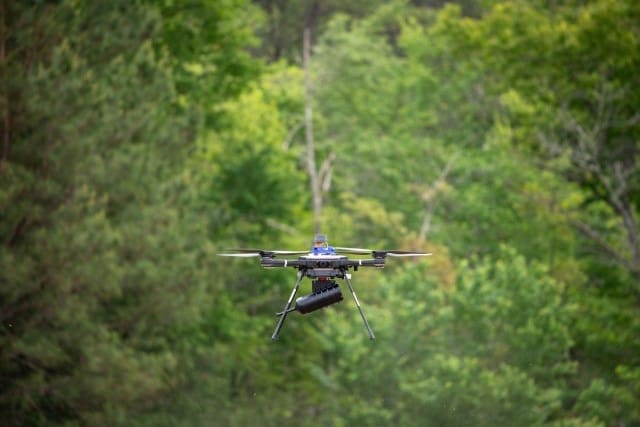
Following the ceremony, Ingraham witnessed a live demonstration featuring the Purpose Built Attritable System and a TRV-150 drone dropping smoke and a M69 training grenade onto a target simulating a small group of enemy Soldiers with a vehicle. This showed off one of DEVCOM’s latest innovations, the Picatinny Common Lethality Integration Kit or Picatinny CLIK. These are just a few of the of lethal UAS and counter-UAS technologies being developed by U.S. Army Combat Capabilities Development Command Armaments Center. The DEVCOM Armaments Center now serves as the Systems Center, a key enabler, of the PAE AS&A.

Subject matter experts from the PAE AS&A and DEVCOM Armaments Center then also briefed Ingraham on other lethal UAS, counter-UAS munitions, advanced artillery, next-gen energetics, expeditionary logistics and supply chain enabling systems that are the result of joint efforts of the two Picatinny based organizations.

“This marks a significant milestone in our journey to modernize Army Acquisition,” Ingraham said as he addressed the audience. “We are combining the capabilities of the Joint Program Executive Office for Armaments and Ammunition with critical combat logistic capabilities from PEO Combat Support and Combat Support Services to ensure fully capability alignment under our new structure.”

“Today we turn the page to an exciting new chapter in Army Acquisition,” Ingraham continued. “Every role in the organization plays an invaluable part in this journey. Cross organization engagement and agility are essential in ensuring the success of this transition. The future of Army Acquisition is bright and PAE AS&A is poised to lead the way.”

Ingraham’s visit underscored the installation’s vital role the various commands at Picatinny Arsenal play in maintaining readiness — delivering the capabilities, expertise, and innovation that ensures our Warfighters and allies are equipped to succeed in any environment.

“As we embark on this journey, we align our actions with the strategic guidance provided by our leadership including the President of the United States, the Secretary of War, the Secretary of the Army and the Chief of Staff of the Army,” said Reim who followed Ingraham. “This initiative is not merely a restructuring of our acquisition processes. It is a fundamental rethinking of how we approach the delivery of capabilities to our Soldiers, our joint warfighters, and our international partners.”

Legacies of Excellence

The Army is fundamentally restructuring its acquisition process to prioritize speed and efficiency over traditional approaches. As part of this initiative, the Army is establishing six Portfolio Acquisition Executives with increased focus on capabilities over specific programs.

The transformation includes the integration of the former Program Executive Office Combat Support and Combat Service Support, PEO CS&CSS, into the Capability Program Executive for Combat Logistics, CPE CL, led by Brig. Gen. Camilla White. PEO CS&CSS brings an unmatched history of logistics and sustainment support to the new CPE CL. It encompasses more than 200 programs spanning the Army’s transportation, ordnance, quartermaster, engineer, and training equipment portfolios.

As the CPE CL, it will continue to develop and deliver modernized tactical wheeled vehicles, engineering equipment, watercraft, power generation systems, and other force sustainment capabilities to Army, Joint, and global partners.

At the same time, the Joint Program Executive Office for Armaments and Ammunition, JPEO A&A, will realign into the Capability Program Executive for Ammunition & Energetics, CPE A&E, led by Col. Jason Bohannon. JPEO A&A has consistently delivered innovative acquisition solutions to provide Joint Warfighters and allied partners with overmatch capabilities. The JPEO was comprised of four project offices covering Combat Ammunition Systems, Close Combat Systems, Maneuver Ammunition Systems and Joint Services.

As the CPE A&E, it retains responsibility for life-cycle acquisition management of all conventional ammunition, which includes integrating budgets, acquisition strategies, research and development and life-cycle management across all ammunition families.

CPE CL will be headquartered at Detroit Arsenal, Michigan, while CPE A&E will remain at Picatinny Arsenal. Unlike the previous Program Executive Offices, each PAE will have comprehensive responsibilities and accountability for managing the full spectrum of acquisition activities, including requirements development, technology maturation, product development, testing, contracting, fielding, sustainment, and international sales. This flattened acquisition system empowers PAEs to make timely, risk-based decisions and accelerates capability delivery to Warfighters through problem-focused requirements, smarter contracts, informed risks, and faster pivots.

“This restructure achieves unity of command by establishing and empowering PAE AS&A with the full authority to direct research and development, prototyping, testing, production, and sustainment,” said Reim. “By prioritizing outcomes over processes, this new construct empowers us to award contracts faster by cutting through bureaucracy. Overall, this approach unburdens the acquisition enterprise and allows us to deliver warfighting capabilities at speed and scale.”

Accelerating Ammunition Acquisitions

Under the leadership of Maj. Gen. Reim, PAE AS&A will oversee an entire capability area including all conventional ammunition requirements including direct and indirect fire ammunition, close combat systems, explosives, and pyrotechnics, in addition to logistics, fielding, and sustainment. PAE AS&A will have oversight of the organic munition production facilities.

Maj. Gen. Sean Davis will serve as the new Deputy Portfolio Acquisition Executive adding the sustainment capabilities of the Army’s Combined Arms Support Command, CASCOM to PAE AS&A. CASCOM trains and develops adaptive Sustainment professionals for the total force while integrating innovative Army and Joint Sustainment capabilities, concepts and doctrine to sustain large scale combat operations in a multi-domain operations environment. It is also a part of Transformation and Training Command and is located at Fort Lee, Virginia. PAE AS&A is committed to supporting the warfighter through an innovative approach to ammunition acquisition and sustainment that leverages existing authorities to deliver tangible benefits, including accelerated capability delivery, smarter contracts, and informed risk management.

In addition to the two new CPEs, PAE AS&A will oversee multiple acquisition enablers including senior contracting officials, a test and evaluation integrator, the Sustainment Future Capability Directorate and the system center lead overseeing coordination among Army Combat Capabilities Development Command Centers. The PAE AS&A System Center Lead is Chris J. Grassano, the firector of the DEVCOM Armaments Center. The new structure will enable holistic management of conventional ammunition development, production and sustainment under a single command resulting in increased efficiencies and accelerated delivery of lethality aligned with the emerging Army Warfighting Concept.

Looking Ahead

In conjunction with this reform, the Army is investing $1.1 billion per year to overhaul depots, arsenals, and ammunition plants that produce and sustain Army equipment. This commitment will not only modernize facilities but also strengthen the defense supply chain and create jobs.

For industry partners, these reforms will mean faster contracts, clearer points of entry, and fewer bureaucratic hurdles. Soldiers will benefit from receiving new capabilities, such as drones, long-range fires, and next-generation command and control systems, years faster than before.

By Michael Chambers and Eric Kowal

War Department Announces Vendors Invited to Compete in Phase I of the Drone Dominance Program

Wednesday, February 4th, 2026

When Secretary of War Pete Hegseth took office a year ago, matching new technologies to threats was one of his core priorities. He commissioned an acquisition strategy to swiftly outfit our combat units with lethal drones.

The War Department today announced the 25 vendors invited to compete in Phase I of the Drone Dominance Program (DDP), an acquisition reform effort designed to rapidly field low cost, unmanned one way attack drones at scale as part of strengthening America’s Arsenal of Freedom.

“Drone dominance is a process race as much as a technological race,” Secretary of War Pete Hegseth wrote in his July 2025 memorandum, Unleashing U.S. Military Drone Dominance. “We are buying what works—fast, at scale, and without bureaucratic delay. Lethality will not be hindered by self imposed restrictions.”

The Phase I evaluation—the Gauntlet—will begin 18 February at Fort Benning, where military operators will fly and evaluate vendor systems. The Gauntlet will conclude in early March, when approximately $150 million in prototype delivery orders will be placed, with deliveries beginning shortly thereafter and continuing over the following five months.

Drone Dominance operationalizes the Secretary of War’s acquisition reformpriorities by sending a clear demand signal to industry—$1.1 billion over four phases, placing warfighters at the center of evaluation, and driving competitive, iterative cycles measured in months, not years. Across the program’s four phases, unit prices decrease, production volumes increase, and operational capability rises.

By 2027, the Department will be fielding hundreds of thousands of weaponized, one way attack drones ready for combat.

The Drone Dominance Program is sponsored by the Office of the Secretary of War and executed by the Defense Innovation Unit, the Test Resource Management Center, and Naval Surface Warfare Center, Crane Division.

The funding is ready and steady. The timeline to build combat power is compressed. The competition begins now.

The Department has invited 25 companies to Gauntlet I, listed below alphabetically.

ANNO.AI, INC.
ASCENT AEROSYSTEMS INC
AUTERION GOVERNMENT SOLUTIONS INC
DZYNE TECHNOLOGIES, LLC
EWING AEROSPACE LLC
FARAGE PRECISION, LLC
FIRESTORM LABS, INC.
GENERAL CHERRY CORP
GREENSIGHT INC.
GRIFFON AEROSPACE, INC.
HALO AERONAUTICS, LLC
KRATOS SRE, INC.
MODALAI, INC.
NAPATREE TECHNOLOGY LLC
NEROS, INC.
OKSI VENTURES, INC.
PALADIN DEFENSE SERVICES LLC
PERFORMANCE DRONE WORKS LLC
RESPONSIBLY LTD
SWARM DEFENSE TECHNOLOGIES, LLC
TEAL DRONES INC
UKRAINIAN DEFENSE DRONES TECH CORP
VECTOR DEFENSE, INC
W S DARLEY & CO
XTEND REALITY INC.

– Via Department of War

Yokota Supports First JGSDF-Hosted Multinational Airborne Exercise

Wednesday, February 4th, 2026

YOKOTA AIR BASE, Japan (AFNS) —  

U.S. Air Force C-130J Super Hercules aircraft assigned to the 36th Airlift Squadron supported a multinational airborne operation Jan. 17, at Ojojihara Training Area, Miyagi Prefecture, marking the first Japan Ground Self-Defense Force-hosted multinational airborne exercise conducted on Japanese soil.

The operation built on the momentum of New Year Jump Indo-Pacific 2026, which included participation from 14 nations, and served as the tactical phase of a broader training series designed to enhance airborne operational capability and interoperability among allied forces. While NYJIP26 at the JGSDF’s Narashino Training Area in Chiba Prefecture earlier this month was conducted as a ceremonial public demonstration, training at Ojojihara emphasized combat readiness and operational execution.

Operating from Yokota Air Base, four U.S. Air Force C-130J Super Hercules aircraft assigned to the 36th Airlift Squadron delivered approximately 130 paratroopers from the U.S. Army’s 11th Airborne Division to the drop zone in Miyagi Prefecture. The airborne insertion was conducted in coordination with the Japan Air Self-Defense Force, which employed one Kawasaki C-2 and two C-130H Hercules, both assigned to JASDF Air Support Command to transport paratroopers from the JGSDF 1st Airborne Brigade. 

The combined force conducted an airborne insertion and transitioned immediately to ground maneuver, executing reconnaissance and consolidation actions to validate command-and-control procedures and combined maneuver capabilities.

The operation required detailed coordination among multiple airlift platforms operating in the same airspace. U.S. Air Force aircrews synchronized rendezvous points, altitudes and airspeeds with JASDF C-2 and C-130H aircraft to operate as a single formation prior to the drop. Aircraft spacing and timing were established based on ground force requirements, with all aircraft slowing to a common drop airspeed before paratrooper exit. 

“Flying with multiple airlift platforms requires precise coordination from start to finish,” said U.S. Air Force Lt. Col. Stephen Larson, 374th Airlift Wing, C-130J pilot. “Once we establish visual contact, we bring the formation together at the same altitude and airspeed and set spacing based on what the ground force needs for a safe and effective drop.”

Despite low cloud ceilings and reduced visibility, aircrews maintained visual conditions and executed a precise airdrop. The C-130J’s automated systems assisted crews in generating accurate airdrop run-in profiles, allowing pilots to focus on formation coordination, drop zone communication and air traffic control. The coordinated airlift enabled ground forces to execute the operation as planned.

“The transition from the New Year Jump at Narashino to a full-scale tactical drop at Ojojihara is where training translates into operational capability,” said U.S. Army Sgt. 1st Class Kael Jordan, 11th Airborne Division, platoon sergeant. “The rehearsals and coordination we conducted beforehand allowed us to execute safely and effectively alongside our Japanese partners.”

Prior to the Ojojihara operation, participating forces conducted preparatory training at Narashino Training Area, focusing on procedural alignment, joint briefings and coordination drills.

The exercise brought together airborne forces from the United States and Japan to strengthen interoperability and reinforce combined airborne capabilities. The training was conducted as part of a series of linked exercises designed to enhance regional readiness and cooperation in support of a free and open Indo-Pacific.

By Yasuo Osakabe

374th Airlift Wing Public Affairs

Emerging Technology and Irregular Warfare: Launching a New Focus Area

Tuesday, February 3rd, 2026

Technology Is Redefining Irregular Warfare. Here’s What That Means

There’s no agreed-upon playbook for emerging technology in the gray zone, and no consensus on what’s next. Experts debate competing timelines. The policy community commissions studies that become outdated before publication. And those working in these environments face split-second decisions that involve technologies that didn’t exist in doctrine, dilemmas that weren’t in ethics training, and environments where old assumptions no longer apply. What’s more, for every strategic advantage a new technology offers—whether in the realm of artificial intelligence (AI), autonomous systems, cyber and electronic warfare, crypto, cognitive warfare, biotech, etc.—it also introduces new risks that we don’t always see coming.

By the time institutions have done the analysis, calculated the risks, and agreed on how these technologies have changed irregular warfare and how to respond, the operating environment is already different. It can take decades for defense organizations to change and adapt. Technology evolves in months. The gap is already wide, and it’s only growing. The result is a dangerous reality in which practitioners are forced to make irreversible decisions without clear guidance, but with high-stakes consequences that may not even be fully understood until it is too late.

We can’t close that gap with studies and strategies alone. We need to connect the people closest to the challenges and build a community that learns faster than adversaries adapt.

That’s why the Irregular Warfare Initiative is launching a new focus area: the Emerging Technology and Irregular Warfare Focus Area.

What sets this effort apart is both the challenges we are tackling and the people we are engaging. We intend to take seriously the strategic and operational tensions that emerge as new technologies are adopted and embedded in irregular warfare. And we will bring together communities that don’t always talk to each other to grapple with those tensions collectively.

The Challenges We Are Tackling

Technology in irregular warfare creates genuine tensions between competing priorities that aren’t easily resolved. At the heart of these tensions are questions about how to maximize operational advantages while managing expanding risks, and who gets to determine those tradeoffs. While individual technologies introduce distinct risks and benefits, our focus is not on the tools themselves, but on the tensions they generate, and how those tensions play out across different contexts and stakeholders and in exploring new directions and fresh proposals for navigating them. Some of these core dilemmas include:


Decisionmaking & Accountability – Technology enables faster, better-informed and more precise decisions, but only if our existing decisionmaking processes evolve in parallel. But by reshaping decision dynamics in decentralized and ambiguous environments, these tools also introduce new risks related to accountability, civilian harm, and the ability to maintain political control and influence.

Diffusion & Escalation – Dual-use, low-cost, high-impact technologies enable individuals, nonstate actors, and terrorist networks to adapt lethal irregular warfare tactics, evade traditional financial intelligence, and exploit deniability. At the same time, their diffusion accelerates escalation dynamics and demands new concepts and approaches to restraint and control in gray zone conflicts.

Legitimacy & Effectiveness – As artificial intelligence, autonomous systems, and cyber capabilities outpace laws and regulations, tensions arise between operational effectiveness and maintaining public legitimacy, especially when confronting adversaries that reject these constraints. In operating environments where information moves fast and decisions can’t wait, both effectiveness and legitimacy require new approaches to measuring impact, managing risk, and adapting in real-time.

Influence & Trust – Emerging technologies offer new tools for enhancing diplomatic and humanitarian effectiveness, critical components of securing influence among populations in irregular warfare. In contested environments, however, adversaries can exploit these same technologies to undermine public trust through surveillance, algorithmic bias, misinformation, and dependency creation.

The People We Are Engaging

This platform is built for and by everyone working across irregular warfare: government, military, civil society, private sector, humanitarians, academics, development actors, partners, and local communities. We believe experience matters as much as credentials. Ground truth matters as much as theory. And the hard lessons learned in one theater should inform decisions in another, in real time, not years later through formal doctrine updates. Most importantly, we believe the people navigating these challenges can’t wait for perfect answers. They need better options now, founded on clear principles to guide decisions under uncertainty.

How We Work

As we tackle these challenges, this Focus Area will be guided by the following principles:

Problem-driven – Our starting point will be the problems practitioners face on the ground, not technologies in search of applications. We want to identify what works, what doesn’t, and what principles can guide decisions when perfect information doesn’t exist. When doctrine exists but practitioners aren’t using it, we want to figure out why and identify solutions.

Whole-of-Government and Whole-of-Society Perspectives – Technology in irregular warfare doesn’t just affect military operations. It reshapes societies, influences populations, and creates dependencies that outlast any single intervention. These issues demand a coordinated response across the government and a systems approach that recognizes how technology’s societal impacts might reinforce or undermine strategic objectives over the long term.

Future-focused – What’s important in confronting the challenges above is not merely analyzing last year’s conflict, but remaining focused on what’s coming next. Responding adaptively to the emerging technologies, tactics, and dilemmas that will shape tomorrow’s irregular warfare environment will ensure we are staying ahead of the problem, not playing catch-up.

Join the Conversation

As IWI develops this Focus Area going forward, we want to hear from you. Submit an article. Join us on a podcast. Send us an email at EmergingTech@irregularwarfare.org. Engage on social media where these conversations reach beyond traditional circles to developers, humanitarians, local partners, and others navigating the same technology dilemmas.

We’re interested in emerging issues where the problem hasn’t been clearly defined, where consensus is lacking, or where solutions remain elusive. We also want to bridge gaps where doctrine exists but isn’t being applied. Help us understand why and what needs to change. What matters is the quality of the argument, the evidence behind it, and the technology’s impact on irregular warfare, not whether it meets an arbitrary definition of “emerging.” Contributions will not be dismissed on the grounds that a technology is too established, not novel enough, or insufficiently disruptive.

Technology will continue reshaping societies and conflicts at an accelerating pace. The only question is whether we learn fast enough to stay ahead, or whether we’re perpetually reacting to problems that could have been anticipated.

Practitioners on the ground can’t wait for perfect answers. They need better options, clearer principles, and a community learning together in real time. That’s what we’re building. And we want you to help us build it.

February 2, 2026 by Kristina Kempkey, Jeffrey Szuchman

Kristina Kempkey is a senior leader with over two decades of experience working at the intersection of national security and foreign policy in high-risk environments. She has led and advised major efforts with USAID, the U.S. Department of Defense, and the United Nations, working alongside military, diplomatic, and civilian partners across Africa, Eastern Europe, and South Asia. Her work centers on applying emerging technologies to real-world security, stabilization, and institutional challenges. She brings a practitioner’s understanding of interagency operations, coalition building, and decision-making under uncertainty. She has contributed to research with the Council on Foreign Relations and West Point on national security and military strategy. As a Fellow at the ML Alignment and Theory Scholars (MATS), Future Impact Group (FIG), 21st Century India Center at UC San Diego, and the Center for AI and Digital Policy (CAIDP), Kristina informs practical policy recommendations and operational insights for governments and security institutions navigating the risks and opportunities of advanced AI.

Jeffrey Szuchman’s work examines how emerging technologies shape governance and security in fragile and conflict-affected settings. He has held leadership roles at USAID in Washington, DC and in Africa, including as Deputy Director for Democratic Governance, Peace & Security in Kenya, where he managed multi-million dollar grants in security, governance, and peacebuilding, and advised on integrating digital safeguards and responsible AI principles into national strategies. He has also led teams at USAID in Liberia and in Washington, DC, where he served as Acting Director of Policy, leading agency-wide strategic planning and directing cross-functional teams on issues ranging from digital transformation, stabilization, and conflict prevention. Prior to USAID, he was a Professor of Global Studies at Zayed University in Abu Dhabi. He holds a PhD and MA in Near Eastern Languages and Cultures from UCLA.

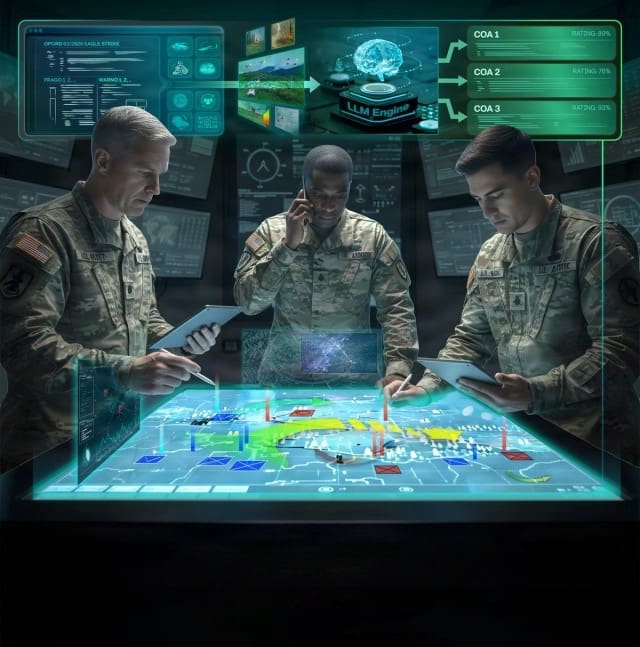
Main Image generated by ChatGPT using DALL·E, OpenAI (January 2026).

The views expressed are those of the authors and do not reflect the official position of the Irregular Warfare Initiative, Princeton University’s Empirical Studies of Conflict Project, the Modern War Institute at West Point, or the United States Government.

Army Security Cooperation Group-South: First of Its Kind Stands Up in Georgia

Tuesday, February 3rd, 2026

FORT BENNING, Ga. – On January 27, 2026, the Army Security Cooperation Group – South (ASCG-S) conducted a small ceremony on Kelley Hill, Fort Benning, Georgia to commemorate its ongoing transformation. ASCG-S, formerly 1st Security Force Assistance Brigade (1st SFAB), has become central to security cooperation in Panama, through its assumption of the Joint Security Cooperation Group-Panama (JSCG-P) and the combined Jungle Operations Training Center (JOTC) missions.

The ceremony was presided over by Col. Keith W. Benedict and Cmd. Sgt. Maj. Pedro Chavez, the command team for the ASCG-S. During the ceremony – coinciding with the furling of the colors and near-term departure of two organic battalions and one National Guard battalion from 54th SFAB. Col. Benedict reflected on 1st SFAB’s legacy and how it’s accomplishments and achievements will have long-lasting effects on the U.S. Army and our regional partners. Those bound for Panama then donned their jungle boonie headgear, and all donned the U.S. Army South’s 6th Army patch.

1st Security Force Assistance Brigade was activated in October 2017 to fill the growing requirement for Advisors for Afghan security forces, alleviating the existing practice of pulling leaders from their formations to help Afghan units. 1st SFAB conducted one deployment to southwest Asia, where Cmd. Sgt. Maj. Timothy Bolyard, the senior enlisted advisor of 3rd Squadron, 1st SFAB made the ultimate sacrifice. After the Afghanistan tour, 1st SFAB became regionally aligned to the Southern Command area of operations, where they conducted security force assistance with Colombia, Argentina, Panama, and Honduras, among other partners.

The Army Security Cooperation Group – South is a unique unit within the Army, that falls under the newly-established United States Western Hemisphere Command (USAWHC), leading efforts to deepen and widen interoperability with Panamanian partners on strategic terrain within the 2025 National Security Strategy’s priority region. “Our soldiers are excited to build upon their experience working in Panama to establish a digitized training environment and work with our partners,” states Col. Benedict, “to test and evaluate our warfighting capabilities in one of the most challenging jungle environs in the world.”

Under the new force restructure, ASCG-S has assumed responsibility for JSCG-P, which is working with the government of Panama to increase cooperation efforts between the U.S. Military and Panamanian security forces. JSCG-P is also crucial to the staging and reception of all U.S. military personnel coming to Panama to learn from partners and to test their mettle. “We are actively seeking jungle expertise and look forward to units across the joint force and the international community joining us this summer for Panamax 2026,” CSM Chavez states, “I assure you, this environment isn’t for the timid or entitled.”

JSCG-P is working with Panamanian partners to re-invigorate a combined JOTC at Aeronaval Base Cristobal Colon (formerly Fort Sherman). Panamanian security forces have run a unilateral course like the U.S. Army-run, combined course that existed for Panama for nearly 40 years until 1999. Now, once again JOTC students and cadre from both U.S. and Panamanian security forces convene in the “Green Hell.” The current course is 18 days and goes over primitive fire and shelter training followed by tracking and patrol exercises that test the students’ resilience and perseverance.

The activation of the ASCG-S is yet another visible step in the Army and U.S. military’s ongoing effort to revitalize security in the western hemisphere and with the regional partners therein. The Army Security Cooperation Group-South is excited to evolve into a premier jungle force capable of enabling training and readiness for and looking for units to train in this environment and individual soldiers seeking opportunities to enter the triple-canopy arena.

MAJ Val Bryant

USAMU Builds Lethality During M7 Fielding with 25th Infantry Division

Monday, February 2nd, 2026

Soldiers assigned to the 25th Infantry Division are training on the Army’s newest service rifle as part of the ongoing fielding of the M7, with instructors from the U.S. Army Marksmanship Unit providing hands-on support focused on marksmanship fundamentals.

USAMU instructors are working alongside Soldiers to reinforce proven shooting techniques that apply across weapon systems. While the M7 introduces new capabilities, instructors emphasized that effective marksmanship still depends on mastering the basics.

“We’re not here to reinvent the wheel,” said Sgt. 1st Class Alexander Deal, team chief for the U.S. Army Marksmanship Unit Service Rifle Team. “The fundamentals of marksmanship don’t change, even when the weapon system does.”

Deal said the training focuses on consistency and efficiency behind the rifle, especially as Soldiers transition to a new platform.

“When Soldiers pick up a new weapon, it’s easy to focus on the equipment,” Deal said. “What we’re reinforcing is that grip, trigger control, and follow-through still matter. If you have solid fundamentals, the weapon becomes easier to run.”

According to Deal, the techniques taught by USAMU instructors are rooted in competition shooting, where performance is measured under pressure.

“Competition shooting forces you to balance speed and accuracy,” Deal said. “Those same principles translate directly to combat. You have to be accountable for every shot, and you have to be consistent.”

Throughout the fielding, instructors observed Soldiers adapting quickly as they applied those principles during live-fire training.

“We’ve seen Soldiers gain confidence fast once they trust the fundamentals,” Deal said. “When they understand what right looks like, their performance improves.”

Deal said the intent of the training is to give units tools they can continue to use long after the fielding event ends.

“Our goal is to leave units better than we found them,” Deal said. “If leaders and Soldiers walk away with a stronger foundation in marksmanship, that training continues long after we leave.”

Training like this supports the Army’s broader effort to increase lethality across the force by pairing modern equipment with disciplined marksmanship.

SFC Timothy Hamlin

Grand Forks AFB Selected to Lead Point Defense Battle Lab

Sunday, February 1st, 2026

GRAND FORKS AIR FORCE BASE, N.D. —  

In October 2025, the 319th Reconnaissance Wing assigned to Grand Forks Air Force Base was selected to lead the Point Defense Battle Lab, supported by the 184th Wing, Kansas Air National Guard. The Total Force team at the battle lab supports Air Combat Command’s Point Defense Task Force, a larger Counter Small Unmanned Aircraft System (C-sUAS) effort within the Department of the Air Force.

The Point Defense Battle Lab will serve as a hub for collaboration, pushing boundaries in C-sUAS capabilities, ensuring the Air Force maintains tactical superiority against evolving threats, and is a key part of the service’s effort to develop and evaluate advanced technologies to defend installations from sUAS threats.

“The 319th Reconnaissance Wing is honored to lead the Point Defense Battle Lab alongside our Air National Guard partners,” said Col. Alfred Rosales, 319th RW commander. “Total Force integration enhances our ability to field emerging technologies and match our capabilities to the threat environment. The men and women of the 319th RW have extensive knowledge with unmanned, remotely piloted technology and will ensure our force is poised to secure our installations and defend the homeland.”

The PDBL is a critical initiative within the Department of the Air Force, designed to safeguard installations, protect vital assets, and ensure continuity of air operations. Specifically, the PDBL will focus on developing and validating tactics, techniques, and procedures for countering a wide range of airborne threats, including small Unmanned Aircraft Systems. The Battle Lab’s efforts will enhance the Air Force’s ability to detect, track, and neutralize these airborne threats effectively.

ACC selected the 184th Wing, in partnership with the 319th Reconnaissance Wing, based on combined current capabilities, missions, industry and academia partnerships and alignment with counter-small UAS fielding timelines. The 184th Wing was specifically selected for its expertise in air battle management, cyber operations, and AI-enabled intelligence, surveillance, and reconnaissance. The 134th Air Control Squadron’s continued efforts with the Air Base Air Defense System-Missile Defense, which has already positioned the 184th Wing as a leader in airbase defense, will also be contributing to the efforts of the Battle Lab.

“This is a significant opportunity for the 184th Wing to leverage our expertise and contribute to a critical national security mission,” said Col. Joe Deeds, commander of the 184th Wing. “Our Air Battle Managers, cyber warriors, ISR operators, and AI specialists are ready to work alongside the 319th Reconnaissance Wing to ensure the success of the Point Defense Battle Lab and to enhance the security of Air Force installations.”

The Point Defense Battle Lab (PDBL) will drive innovation and collaboration across the Total Force to address the growing challenges from increasingly widespread use of small Unmanned Aircraft Systems (sUAS). By integrating the expertise of the 319th Reconnaissance Wing and the 184th Wing, the PDBL will deliver critical tactical-level data, advanced site design concepts, and cutting-edge integration strategies for emerging technologies. Additionally, the lab will spearhead operational experiments and red teaming initiatives, ensuring the Air Force remains agile and prepared to counter evolving threats. Through its efforts, the PDBL strengthens the Point Defense Task Force’s ability to safeguard airpower, maintain combat readiness, and confidently respond to emerging challenges, further securing Air Force installations and operations.

By MSgt BreeAnn Sachs

319th Reconnaissance Wing Public Affairs