Troop Performance

Archive for the ‘Guest Post’ Category

ACE Course Prepares Airmen for Strategic Engagements in Indo-Pacific

Sunday, June 18th, 2023

MAXWELL AIR FORCE BASE, Ala. (AFNS) —  

The National Defense Strategy and the U.S. Indo-Pacific Strategy identify the Indo-Pacific as a priority theater vital to the nation’s security and prosperity.

The Air Force Culture and Language Center has partnered with the Air Force Special Operations School and the Defense Language Institute Foreign Language Center on an innovative agile combat employment course. The most recent course focused on U.S. Indo-Pacific Command and taught in the Tagalog language, to demonstrate U.S. long-term commitment to strengthening partner autonomy and options throughout this region.

Eight Tagalog-speaking scholars in the Air Force’s Language Enabled Airman Program with a wide range of operational backgrounds — from medical and cyber operations to logistics and bioenvironmental engineering—were competitively selected to participate in this three-week course, held May 8-26, at Hurlburt Field, Florida.

The course is designed to build on the language and cultural skills they’ve gained throughout their LEAP experience to prepare them for Agile Combat Employment and their role in advancing a free and open Indo-Pacific region.

“There’s a sense of urgency in seamlessly working with partners and allies for integrated deterrence, especially in the INDOPACOM region,” said Howard Ward, AFCLC director. “Our force must understand culture to work with our counterparts and be highly skilled in the languages to get tempo and speed to build capacity and operating capability for ACE to be a credible deterrent.”

The program consists of one week of the special operations school’s “Intercultural Skills for Engagement,” or ENGAGE, course followed by two weeks of operationally focused advanced Tagalog language and cultural studies taught by a DLIFLC professor.

During the two weeks of operationally focused language studies in Tagalog, students gained knowledge and enhanced language proficiency on strategic topics relevant to the INDOPACOM theater, such as the state of Philippine and U.S. relations, Philippine and China relations related to economy, current events, and humanitarian aid and recovery efforts.

“This course connects Airmen to the operational environment in the safety of the classroom while still offering sufficient authenticity and operational relevance,” said Dr. Aleksandra Churinov, site director for the DLIFLC Hurlburt Field Language Training Detachment.                   

The students also took a deep dive into the Enhanced Defense Cooperation Agreement to lead in-depth discussions on U.S. basing scenarios in the Philippines. This educational model prepared LEAP Scholars to use their language, regional expertise, and culture skills to facilitate future strategic conversations among senior leaders of U.S. military, partners, and allies in the Indo-Pacific while effectively bridging cultural barriers to enable ACE.

“There have been several announcements recently on basing and access agreements with the Philippines that are extremely important,” Ward said. “These students are being prepared in a unique way to have the conversation on how we, both the U.S. and the Philippines, can build our capacity together to move as one seamless team in deterring aggression from our adversaries.”

The ENGAGE course included lessons to help students enhance cultural competencies for military operations in areas such as modern information warfare, conflict de-escalation, negotiation strategies for military effectiveness, and key leader engagements. LEAP Scholars also integrated with air commando students during the course, providing a deeper cultural context to each lesson.

“It was incredible to have the Filipino students in this course to provide accurate and insightful cultural context to all the lessons we covered,” said Maj. Krista Schaeffer, a non-standard aviation pilot enrolled in the ENGAGE course. “I felt lucky to have this opportunity. I think this collaboration is a win-win, and I am excited about the future iterations.”

Scholars put the knowledge gained through classroom activities and discussion into practice in realistic scenarios conducted completely in the Tagalog language on operational tactics such as establishing operations centers, developing airfield suitability assessments, and conducting virtual planning conferences. These scenarios equipped students with the skills needed to determine the interest of the Philippines and the U.S. to increase strategic joint capacity.

“We create complex scenarios that students must navigate in the target language to demonstrate their cultural knowledge and understanding. When our Tagalog group can go to the Philippines and serve as liaisons between the Philippine military, the Filipino population, and the U.S. military personnel, they can bring a greater level of understanding and integration to facilitate a strategic partnership,” said Lt. Col. Jared Cordell, special operations school’s chief of faculty development.

Master Sgt. Ramchand Francisco, one of the Tagalog LEAP Scholars who participated in the course, recently supported bilateral cooperation in the Philippines with the Philippine marine corps and U.S. counterparts through LEAP. From his experience during that mission and this course, he said he saw the need to build rapport in the Philippines as one of the most critical factors for seamless integration in the Indo-Pacific region.

“The U.S. is very transactional and wants to get the job done in bilateral relations with the Philippines, but the Philippines will not agree without trust and a mutually beneficial bilateral connection. Our cultural skills as LEAP Scholars are essential to facilitate that strategic relationship,” he explained.

Upon completion of the course, these multi-capable Airmen will be postured to support advancing a “free and open Indo-Pacific” by modernizing long-standing alliances and strengthening emerging partnerships through expertise in the Tagalog language and the Philippine culture. They will also leave the course with integrated capabilities and interoperability across core functions, a vital component of the ACE framework.

By Mikala McCurry, Air Force Cultural Language Center Outreach Team

FirstSpear Friday Focus – Line One Belt

Friday, June 16th, 2023

Looking for a belt that can handle anything and still look stylish? Look no further than our Line One Belt! This tactical wonder is named after the old NSW term for first level clothing or gear and provides incredible performance without sacrificing comfort or flexibility. Made from urethane covered nylon, this belt can hold up against any weather and won’t crack, peel, or stiffen in the cold.

The non-slip coating means no more “break-in” time and it won’t lose its shape, even with sweat or water. Plus, it’s perfect for concealed carry or just keeping your pants up with panache. Don’t miss out on the Line One Belt, our most popular choice for everyday wear!

Check out FirstSpear to find American Made kit and accessories, Built For The X.

AFRL Collaborates with Industry Partners on In-Theater Alternative to GPS

Friday, June 16th, 2023

WRIGHT-PATTERSON AIR FORCE BASE, OHIO (AFRL) — The Air Force Research Laboratory, or AFRL, partnered with Luminous Cyber Corp. to develop a more resilient alternative to GPS for regions where coverage is not as reliable or where there is a risk of interference or jamming by malicious actors. Luminous develops alternative-position navigation and timing, or A-PNT solutions for navigation of crewed and uncrewed orbital, avionic, marine and mounted land-based systems.

Luminous submitted their in-theater GPS alternative through the Air and Space Force Tech Connect website, which helps entities from industry, small business and academia gain access to relevant Air and Space Force subject matter experts to provide opportunities to develop new technologies relevant to the U.S. military.

“The submission provides an alternative to GPS along with ultra-wideband secure communications links, an integrated capability needed by our warfighters,” said Dr. Nicholaos I. Limberopoulos, integration lead, aerospace components and subsystems technology at AFRL’s Sensors Directorate. “The submission met the needs for developing a needed integrated capability.”

Collaborating through the Tech Connect website, AFRL’s Sensors Directorate worked with Luminous Cyber to adapt their commercially available Location Information Service, or LIS, platform to provide resilient real-time geolocation and time synchronization information to warfighters in GPS-denied environments.

“We found out about the Tech Connect website through Aegis Creek, a team who specializes in helping small tech companies leverage non-dilutive funding to effectively bring ideas to market,” said Dr. Charles Barry, founder and CEO of Luminous Cyber Corp. “There are a large number of different ways to engage with Air Force and Space Force technical stakeholders. Tech Connect is one of the easiest and most responsive, and it’s well worth the effort.”

Strong collaboration with Tech Connect is key for continuous access to new technology ideas from industry and academia. The Tech Connect program has been a huge success, according to Limberopoulos.

Luminous Cyber sought to adapt their commercially available LIS platform, using their real-time network multilateration technology to include providing geolocation and synchronization data for fixed and mobile airborne Air Force assets in locations where GPS is less reliable because of the danger of outages, jamming, space weather impacts and geographical obstructions. Adapting an already commercially available option to work within the Air Force’s requirements also helped to provide a lower-cost solution than developing one from scratch.

“Luminous’ solution combines advanced algorithms, AI, machine learning and multi-sensor data fusion to provide the utmost in accuracy, safety and reliability,” said Barry. “Given the increasing reliance on GPS and the wide availability of inexpensive tools to jam, spoof and obstruct GPS transmissions, robust A-PNT tools are in high demand.”

According to Luminous, a clear and present danger exists to government and military assets in areas where GPS is not as dependable due to the dependence on GPS for A-PNT, data. Their LIS platform intends to provide an alternative to GPS in areas where signals are less reliable.

Luminous Cyber submitted the idea through the Tech Connect program in May 2021. After initial contact and determining that the proposal had merit, the AFRL Sensors Directorate reached out to Luminous Cyber and the Florida International University o proceed with further development.

“[Tech Connect] gives us confidence that no good ideas are rejected and that those considered and brought forth to us have a good chance of meeting our integrated capability development requirements and making a real difference to the warfighter,” said Limberopoulos.

After further development, Luminous Cyber was selected and funded and underwent a successful transition to a Small Business Innovation Research/Small Business Technology Transfer Phase II with a project kick-off in June 2022.

“Our experience with the Air Force has been quite positive and helped us drive our technology from ideation to product,” said Barry. “A-PNT is crucial to the future of shipping and transportation because of the rise of technologies that can interfere with GPS.”

Jeremy Dunn Air Force Research Laboratory Public Affairs

Underground Soldiers: Army Trains for Operations Below Surface

Thursday, June 15th, 2023

HONOLULU — Beneath the streets of the densely-populated Korean peninsula, U.S. Soldiers donned in heavy gear, traverse South Korea’s dim, underground tunnels.


To better face the daunting challenge of combat in large cities, Soldiers of the 2nd Infantry Division, 8th Army, have taken a step further: learning to move underground in the East Asian nation.

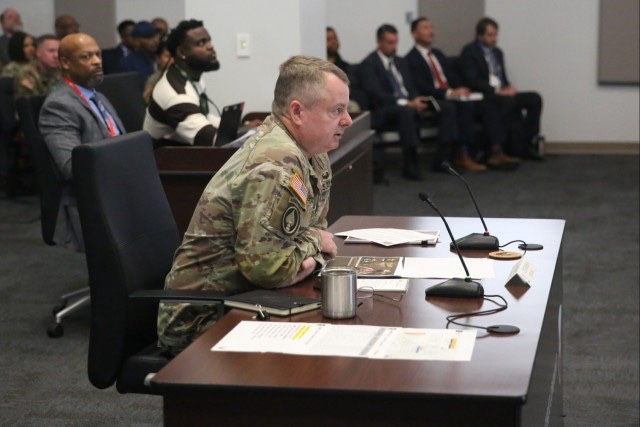
Eighth Army commander Lt. Gen. Bill Burleson said that Soldiers will need to learn how to operate below the surface to avoid sensors and monitoring devices on the ground level.

“When you look at the ability to move underground, in some ways the tunnels are completely unseen by other sensors,” Burleson said during the annual Land Forces Pacific Symposium May 17. “We’ve got to be able to do that and fight in terrain. And in cities, some of that involves tactics and techniques. There’s a leader development aspect to that. There’s a [communications] aspect to that.”

Four known underground tunnels exist in the 150-mile demilitarized zone between North and South Korea in the peninsula’s center.

U.S. Soldiers from the 2nd ID and the Republic of Korea have built subterranean training facilities to prepare for conflict in cities. The partner nations engaged Exercise Warrior Shield in March 2023 to strengthen US and ROK collaboration across all domains while improving tactics and procedures. The combined forces also conducted air assault and ground forces operations.

During Warrior Shield, Soldiers from 2nd Brigade, 2nd Infantry Division simulated breaching the entrances of underground buildings.

“They have actually acquired some material solutions to operate underground better without constraints,” Burleson said. “That will allow them to operate in underground facilities … and we know there’s facilities under North Korea that we’ve got to be prepared for should conflict come.”

The headquarters of 8th Army at Camp Humphreys, South Korea sits 40 miles outside of Seoul, a city of 10 million, where the most efficient form of travel lies underground in the city’s subway systems. To prepare for possible conflict, Burleson said Soldiers must become proficient in subterranean operations through training.

“Without degradation, they’d be able to evacuate casualties [and] be able to see, sense and communicate effectively,” he said.

Army Training and Doctrine Command adopted urban warfare training into its training centers, as the Army shifts from anti-insurgency operations to large-scale ground combat. “Increased urbanization is unavoidable,” Burleson said. “Conflict in urban areas is unavoidable. Although warfare has evolved, we’ve just got to accept the fact that there’s more to be done if we want to be prepared.”

Burleson said the shift to urban combat has become more apparent during the Ukraine-Russian conflict where the enemy combatants have fought in city settings. He added that the Army and U.S. forces must develop capabilities across multiple domains including communications functioning effectively in a cyber and electronic space.

“My question is, are we ready for the strategic shock of fighting in a mega city?” Burleson said. “We’ve [said] for a long time, avoid fighting in cities … The avoidance idea may no longer be possible.”

Burleson added that in cities, U.S. Soldiers will have to learn to operate in tight spaces and battle with precision weapons while considering the danger of using weapons near a civilian population. Retired Army Maj. Gen. Laura Yeager, former commander of the National Guard’s 40th Infantry Division, added that U.S. forces must adapt to the unique conditions of combat in large cities.

“You might have to use fires but you’re going to want to understand what those weapons’ systems’ effects are on the urban environment,” she said. “They may not have the effect that you expect.”

She said that in urban environments, aircraft such as helicopters will be more vulnerable to small arms fire as well as have limited places to land. She added that military leaders must make other considerations, such as enlisting the help of law enforcement and civic agencies.

Burleson said that the commitment to planning for combat in urban zones requires collaboration and interoperability achieved through exercises like Warrior Shield.

If forces do not prepare themselves, U.S. Soldiers and their allies may risk repeating history such as during the Battle of Osan on July 5, 1950. A North Korean Army had already captured Seoul from the South Korean military. Poorly-equipped and unprepared U.S. forces suffered heavy casualties during the fight.

“We’ve got to have willing commitment to prepare and be ready,” Burleson said. “Otherwise, we’re going find ourselves where we were on the fifth of July, 1950. We must be ready.”

By Joe Lacdan, Army News Service

US Army Soldier Wins Three Gold Medals in 300-meter Rifle Nationals

Wednesday, June 14th, 2023

ELK RIVER, Minn. — U.S. Army Sgt. Tim Sherry won three Gold Medals at the USA Shooting 300-Meter Nationals May 23 -27.

The Evergreen, Colorado native, who is a marksmanship instructor/competitive shooter with the U.S. Army Marksmanship Unit International Rifle Team, claimed the wins in Men’s 300-Meter Prone Rifle, Open 300-Meter Standard Rifle and Men’s 300-Meter Three-Position Rifle against top marksmen from across the United States.

To win each National Champion title, competitors were required to shoot each match’s course of fire twice on separate days. The Prone Match course of fire consisted of 60-shots in 50 minutes. Sherry fired a two-day aggregate score of 1187-57x, beating second place by eight points and 20 Xs. The Standard Rifle Match course of fire consisted of 60 shots in 120 minutes. In Day 2 of the match, Sherry shot a notable 588-21x that brought his winning aggregate score to 1171-39x. This impressive score beat the second place competitor by 58 points and 17 Xs. Then, the Three-Position Rifle Match course of fire consisted of 60 shots in 90 minutes. Sherry completed Day 2 of this match with a personal best score of 589-26x, which brought his winning aggregate score to 1168-45x. This win beat the next competitor by 46 points and 19 Xs. By the end of the matches, each competitor had fired a total of 360 rounds.

Competing at the 300-meter matches are a good test of our shooting positions and fundamentals, said Sherry, who was the only USAMU Soldier at the event.

“It was great to get validation on my training as I won all three events at the competition!”

In addition to adding three new medals to his collection, the Soldier’s performance also earned him a spot on the U.S. 300-Meter Rifle Team and will represent the United States, and Army, at the International Shooting Sport Federation World Championships in Baku, Azerbaijan starting in mid August, which is something Sherry said he is excited about.

“I am happy to have qualified for the team in all 300-meter events and am looking forward to Worlds later this summer.”

By LTC Michelle Lunato

Enhancing Lethality: US Army Marksmanship Unit’s Instructor Training Group Empowers Soldiers

Tuesday, June 13th, 2023

EWA BEACH, Hawaii- The U.S. Army Marksmanship Unit’s Instructor Training Group taught advanced marksmanship training to Soldiers from 2nd Battalion, 35th Infantry Regiment May 8-19 2023. The training built upon the foundation of basic marksmanship skills.

The Instructor Training Group is comprised of experienced combat veterans who provide tailorable marksmanship training courses to operational units globally. They provide training to Soldiers of all ability levels that meet the commander’s operational needs, while also supporting the USAMU’s mission to improve small arms lethality.

“I’ve learned a ton, a lot of this week refined our basic marksmanship skills,” said Sgt. Joe Calkin, an Orlando native and sniper team leader assigned to Headquarters and Headquarters Company, 2-35IN. “Everything we’ve learned will be able to translate to our Soldiers and increase our organization’s lethality.”

The training focused on both pistol and rifle marksmanship, refining the shooter’s form, grip, stance, trigger control, draw speed and accuracy.

“One of the most beneficial things for me was adjusting my shooting stance, with just a small change I was able to exponentially increase my stability and increase my accuracy. Small changes I learned here made me a better shooter,” said Calkin.

Emphasis was placed on consistency and eliminating any unnecessary movements that can affect accuracy. Practicing these fundamentals in a controlled environment lays the groundwork for more complex and demanding shooting scenarios.

“Developing my shooting skills with subject matter experts is a great experience and I would highly recommend it to any Soldier out there,” said Calkin. “If you get a chance to take a course from USAMU, do it.”

In 2022, the USAMU conducted 33 MTTs (Mobile Training Teams) at military installations, including four events training 50 drill sergeants. Each MTT is 5 to 10 days and includes an initial marksmanship assessment, classroom instruction, practical exercises, and a final evaluation to measure improvements in shooting metrics and knowledge. Training is tailored to the unit’s needs, focusing on basic rifle marksmanship with the M-4 carbine and the M-17 pistol. The average cost is $50 per Soldier to conduct world-class instruction, a cost that cannot be replicated in the DoD. MTTs are a force multiplier for partner units, institutional organizations, and division-level marksmanship assets to build the Army’s lethality program through spreading expertise and relevant knowledge with emerging technologies.

Instructor Training Group Soldiers conducted 76 lethality missions in 2022, improving over 2,340 Soldiers’ lethal hit rates by 40 percent in support of the unit’s mission to enhance lethality to enable the Army to win on a complex, competitive battlefield.

By SFC Kulani Lakanaria

U.S. Navy Selects 28 Top Students for Summer Flight Academy Program

Sunday, June 11th, 2023

While some students will spend this summer doing odd jobs or hanging out with friends, 28 high-performing 11th and 12th graders from throughout the country will complete an intensive eight-week U.S. Navy Summer Flight Academy aviation program. Upon completion of the program, each student will earn a private pilot certification and college credits from Delaware State University (DSU), Elizabeth City State University (ECSU), or D2 Aviation School. During the eight-week Summer Flight Academy, each student will receive classroom aviation academics, and approximately 40 hours of flight training in either a Vulcanair V.10 single-engine aircraft or Piper Warrior (PA-28).

The program was established in 2021 by Commander, Naval Air Forces (CNAF) to increase diversity in the field of aviation. The Navy partners with select universities throughout the country to provide the flight training to the participating students who were selected out of hundreds of applicants for the competitive program. The cost of the program is approximately $26,000/student, but is offered at zero cost to the student, and with no obligations. Most of this year’s CNAF Selects are from demographic groups that are historically underrepresented in the field of aviation, with an equal male/female split. The 2023 class also boasts multiple First-Generation-Americans who are leaders in their JROTC programs, and hope to serve their country by one day flying for the U.S. military. CNAF is proud of the international representation from this year’s cohort, which features Cadets with ties to Japan, Iran, Nigeria, India, Ukraine, and the Philippines.

The Department of the Navy sponsors the Summer Flight Academy program for students participating in Navy and Marine Corps Junior Reserve Officer Training Corps. The program is a new STEM initiative that was selected for funding by the Naval STEM Coordination Office – located at the Office of Naval Research – which oversees investments in STEM education, outreach, and workforce initiatives.

“The primary goal of the CNAF Flight Academy is to expose diverse, young talent to Naval Aviation, and inspire them to join the profession,” says LT Olivia Barrau, E-2C Hawkeye Naval Flight Officer, CNAF Operations Officer for Diversity, Equity, and Inclusion, and CNAF Flight Academy Program Manager. “For these motivated students, flying a plane and completing this program can empower them to consider Naval Aviation as a viable career choice. While we hope all our Cadets join Naval Aviation, we proudly contribute to their dreams of becoming aviators in any capacity.”

CNAF Flight Academy graduates from 2021 and 2022 now represent the program at all three Service Academies (USNA, USAFA, and USMA), and ROTC units and universities across the country at places like Morehouse College, Tuskegee University, Embry Riddle Aeronautical Institution, Virginia Technical Institute, Delaware State University, Ohio State University, Arizona State University, and Hampton University. Roughly 70 percent of the program’s alumni are now directly affiliated with the U. S. Military, mostly through commissioning programs.

2023 CNAF Summer Flight Academy Cadets

Delaware State University

Aliya J. Applin – Peachtree City, GA

Abdulmalik O. Aremu – Silver Spring, MD

Kianet Badal – Woodland Hills, CA

Hannah M. Bartlett – Allen, TX

Leland W. Boxer – Manassas, VA

Eli Boyd – Lorton, VA

Jackson D. Coberley – Okinawa, Japan

Jonathan R. Gerges – Mt. Juliet, TN

Sophia J. Ivchenko – Cypress, TX

Reva D. Jogdand – Richmond, TX

Caleb T. Payne – Portsmouth, VA

Nickole S. Rios – Allen, TX

Orianna M. Russell – San Diego, CA

Jeffrey T. Strader – Greensboro, NC

Jake M. Tirado – Madisonville, LA

Ryan K. Tran – Avondale, AZ

Tahirah L. Tyler – Hampton, VA

Skye A. Uyeda – Poway, CA

Cecilia R. Winters – Waco, TX

John D. Zeveney – Red Bank, NJ


Elizabeth City State University

John Lawrence R. Austria – Dededo, GU

Keisha C. Carlos – Dededo, GU

Isabella M. Hauri – Peoria, IL

Ryan J. Inge – Yorktown, VA


D2 Flight School

Taylor R. Carroll – Allen, TX

Alexandra S. Tibbets – Dayton, TX

Alfred J. Armstrong – Anderson, SC

John L. McGee – Dover, NH


Seeing into the Future: AF Looks to AI for Data Analysis

Saturday, June 10th, 2023

ARLINGTON, Va. (AFNS) —  

In an effort to digest and rapidly analyze the process of decision making, Headquarters Air Force Digital Operations Directorate (A3X) developed an artificial intelligence-based software that can be applied to all Air Force specialty codes to better examine and predict operational outcomes.

Tomorrow’s operating environment requires Airmen to have the most accurate and up-to-date intelligence to act quickly in real time, today. Headquarters Air Staff have developed six software programs for career fields using AI to conduct data analysis.

George Forbes, director of HAF Digital Operations Directorate, cited the exponential benefits of being able to make decisions more accurately, more predictably and more precisely.

“We can shift from spending time doing manual tasks – like putting information into computers – and move to more cognitive techniques where we can analyze the data because the computer is doing much of the busy and manual work.”

George Forbes, Director, HAF Digital Operations Directorate

Besides data management, the AI software can calculate predictions based off equations and programming, depending on the type of data available. Whether the predicted outcome is correct or not, the software is capable of learning and adapting to produce even more accurate outcomes for future calculations.

“We might take in different data, like how many people are in the Air Force, what is their behavior based upon their gender and age, or other demographic categories to anticipate [their behaviors] in a particular situation. For instance, we can predict their decision to stay in or leave the Air Force,” Forbes said. “We use the force’s past behavior to train the models to predict their future behavior. Specifically, we use a Recurring Neural Network Methodology, which is a high-end AI method.”

The software is adaptable across all AFSCs to interpret different situations. From tracking flight hours to locating equipment, this new application can replace cumbersome applications and software systems presently used to more user-friendly ones for newcomers. Past applications are portable to other asset management type work but not necessarily in AI.

“When you build an application to manage something like equipment, you want it to be kept alive. This is where standardized application development systems come in,” Forbes said. “You can build them at your current base, and, once you PCS [Permanent Change of Station], you can still use the same process.”

The overarching goal of the new software systems is to provide leaders quicker access to interpret data and make impactful decisions.

Secretary of the Air Force Public Affairs