XC3 Weaponlight

Archive for the ‘Guest Post’ Category

USAF, Navy Integrate for Bomber Task Force MineX

Thursday, November 3rd, 2022

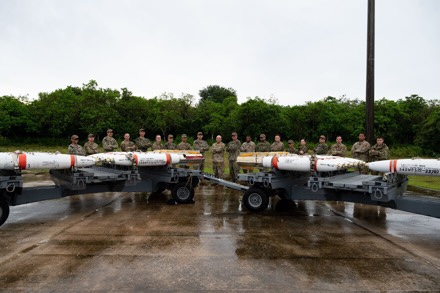
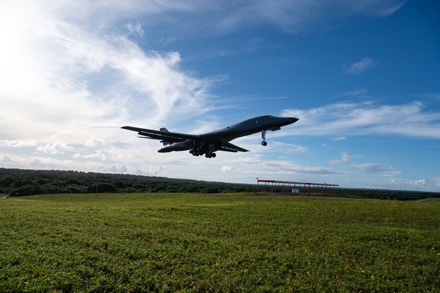
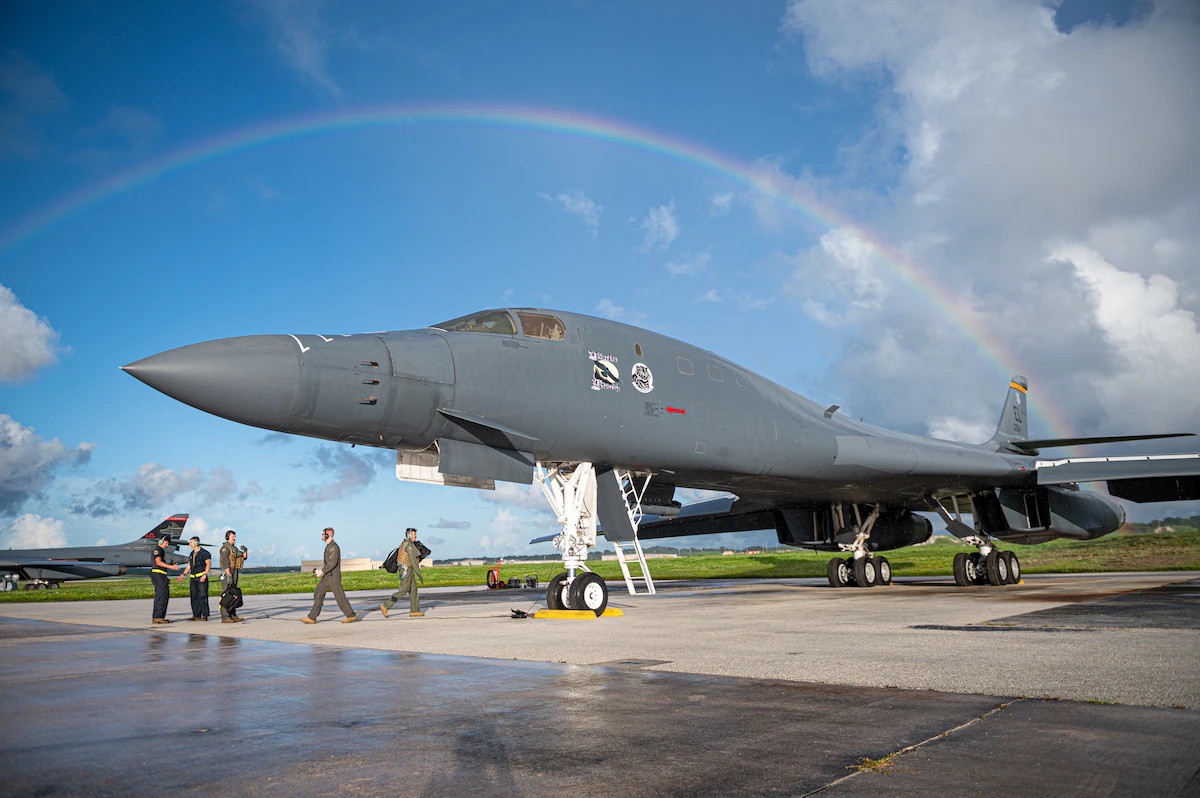
U.S. Air Force B-1B Lancers from the 37th Expeditionary Bomb Wing, Ellsworth Air Force Base, South Dakota, integrated with U.S. Naval forces over the Indo-Pacific region to conduct a naval mine exercise (MineX) during a Bomber Task Force mission at Andersen Air Force Base, Oct. 24. 

Bomber missions contribute to Joint Force lethality and deter aggression in the Indo-Pacific region by demonstrating the Air Force’s ability to operate anywhere in the world at any time in support of the National Defense Strategy. 

“MineX missions require close coordination and integration between the Navy and the Air Force,” said U.S. Air Force Col. Chris McConnell, 37th Bomb Squadron commander. “As one of the aircraft capable of releasing mines, we have to work with our Navy partners to understand where those munitions need to be placed to meet the desired objectives.”

A naval mine is a self-contained explosive device employed to destroy surface ships or submarines and provide a low-cost battlespace shaping and force protection capability. Mines may also be used to deny an enemy access to specific areas or channel them into specific areas.

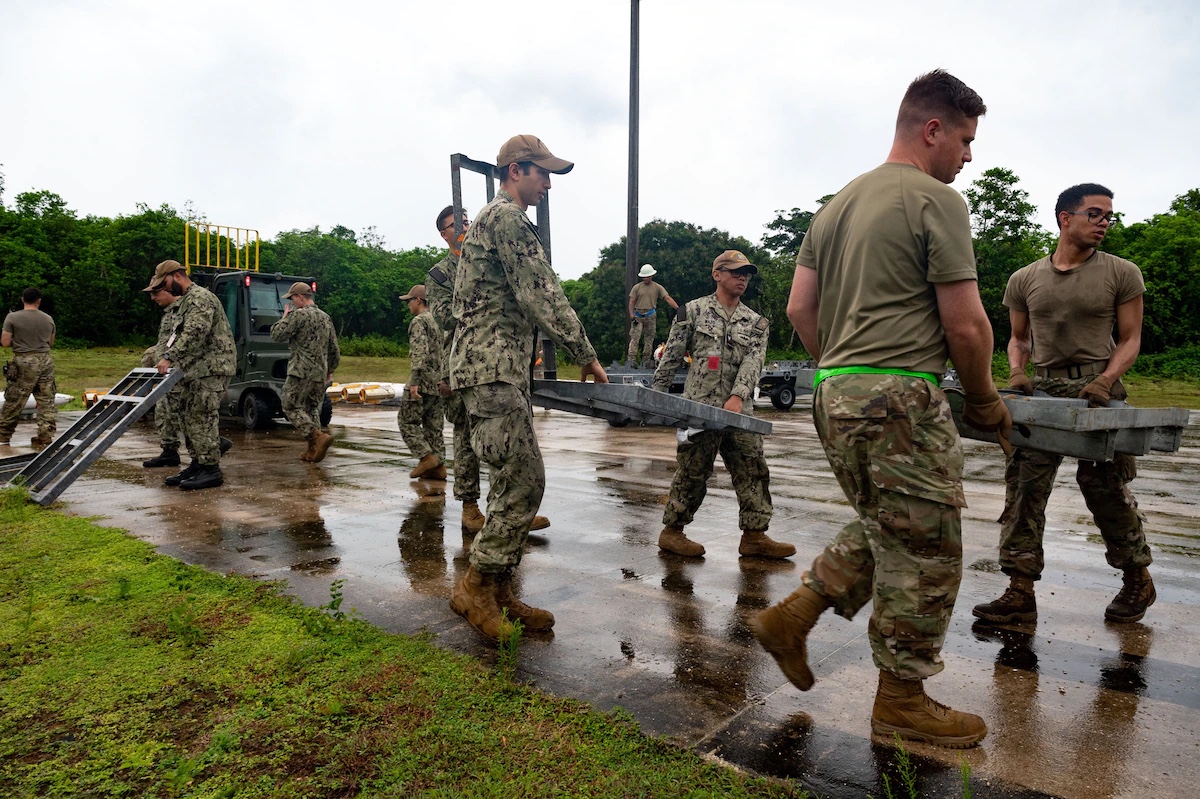
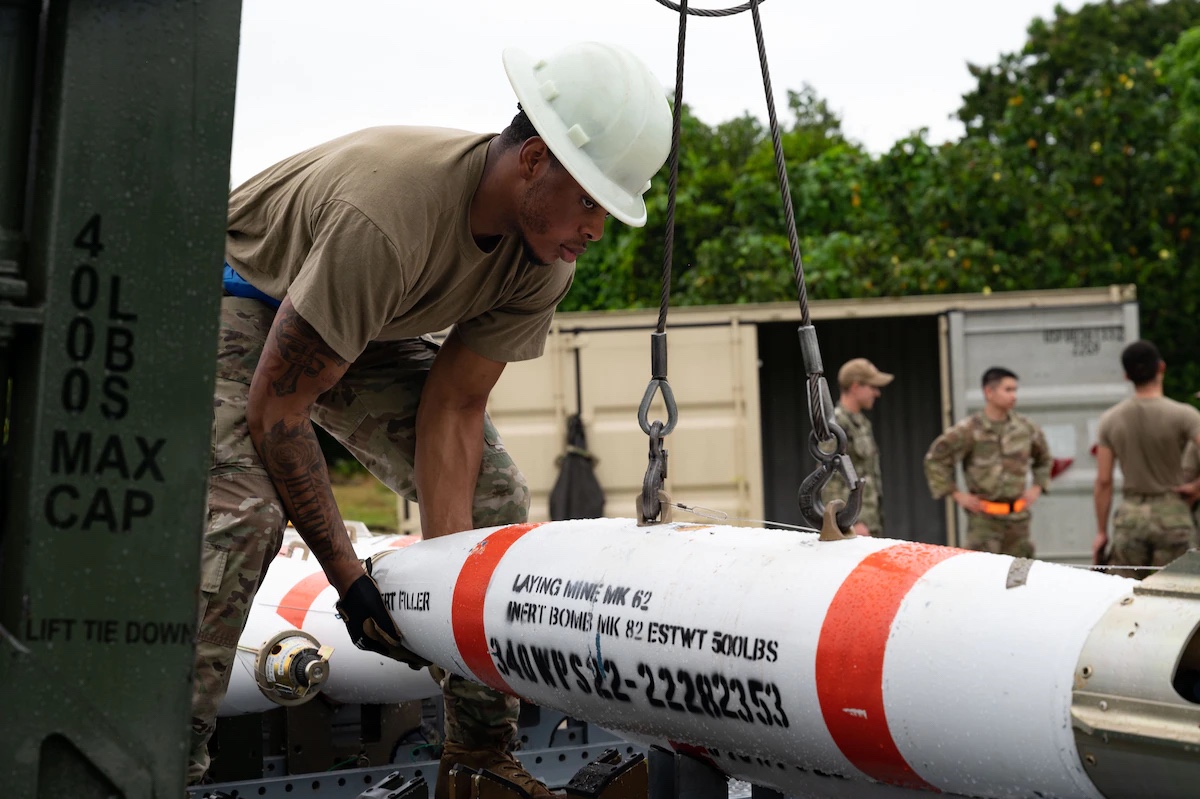
Together, a team of 28th Munitions Squadron weapons loaders and Sailors from Navy Munitions Command, Pacific Unit, Guam, armed B-1B Lancers with 21 Mark-62 Quickstrike mines, weighing 500 pounds each.

“Executing a MineX during a Bomber Task Force mission strengthens those ties through necessary integration training across the services to everyone involved in the process,” McConnell said. “From the Navy personnel building and delivering the munitions, to our weapons loaders ensuring they are loaded on aircraft properly, the aircrew and planners will execute the mission and fly alongside our Navy partners and Allies.”

The 37th EBS conducts several joint force exercises during BTF missions to enhance readiness and interoperability in support of a free and open Indo-Pacific.

By SSgt Hannah Malone, Pacific Air Forces Public Affairs

6th Special Operations Squadron is Reassigned, Provides New Support

Wednesday, November 2nd, 2022

CANNON AIR FORCE BASE, N.M. —  

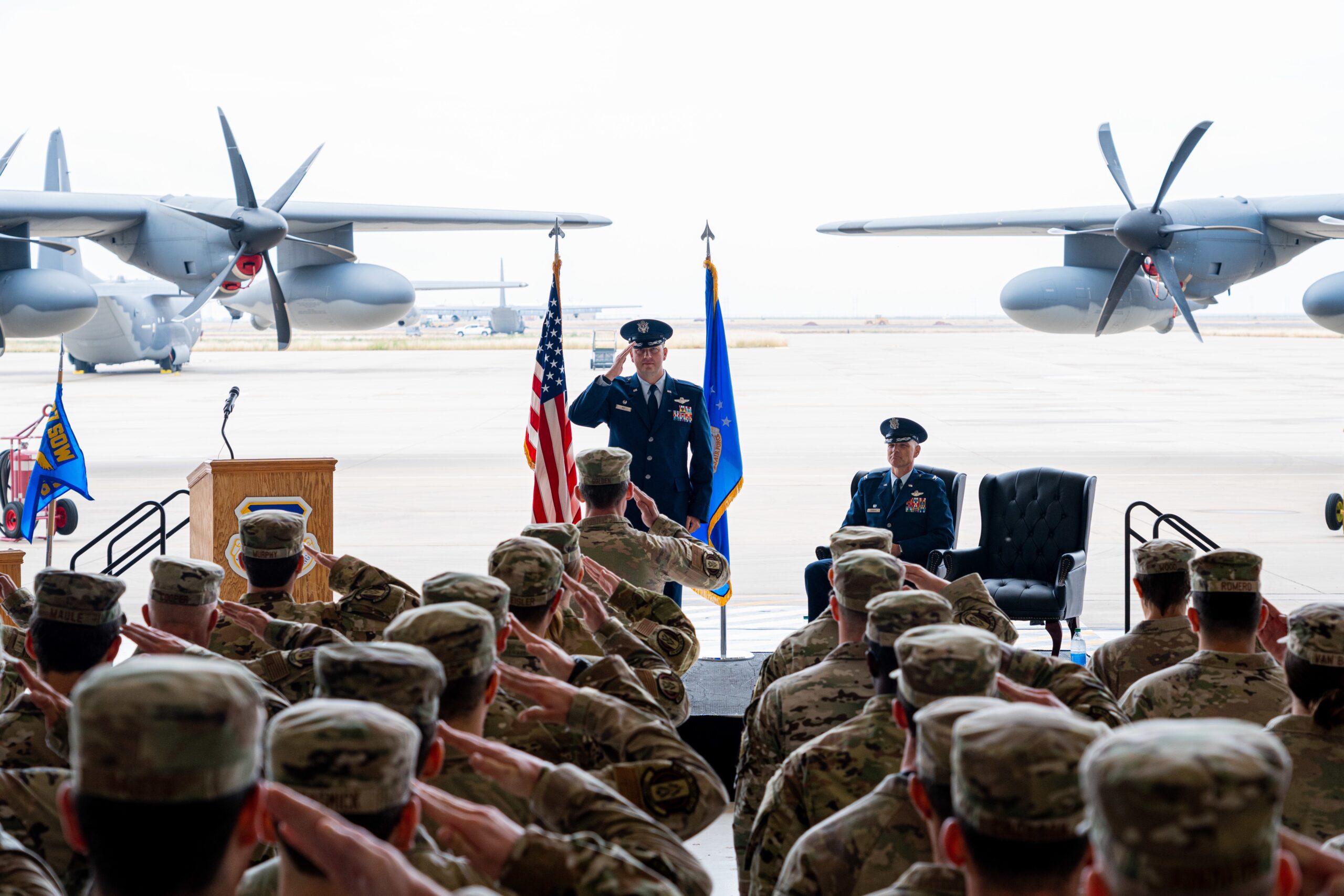
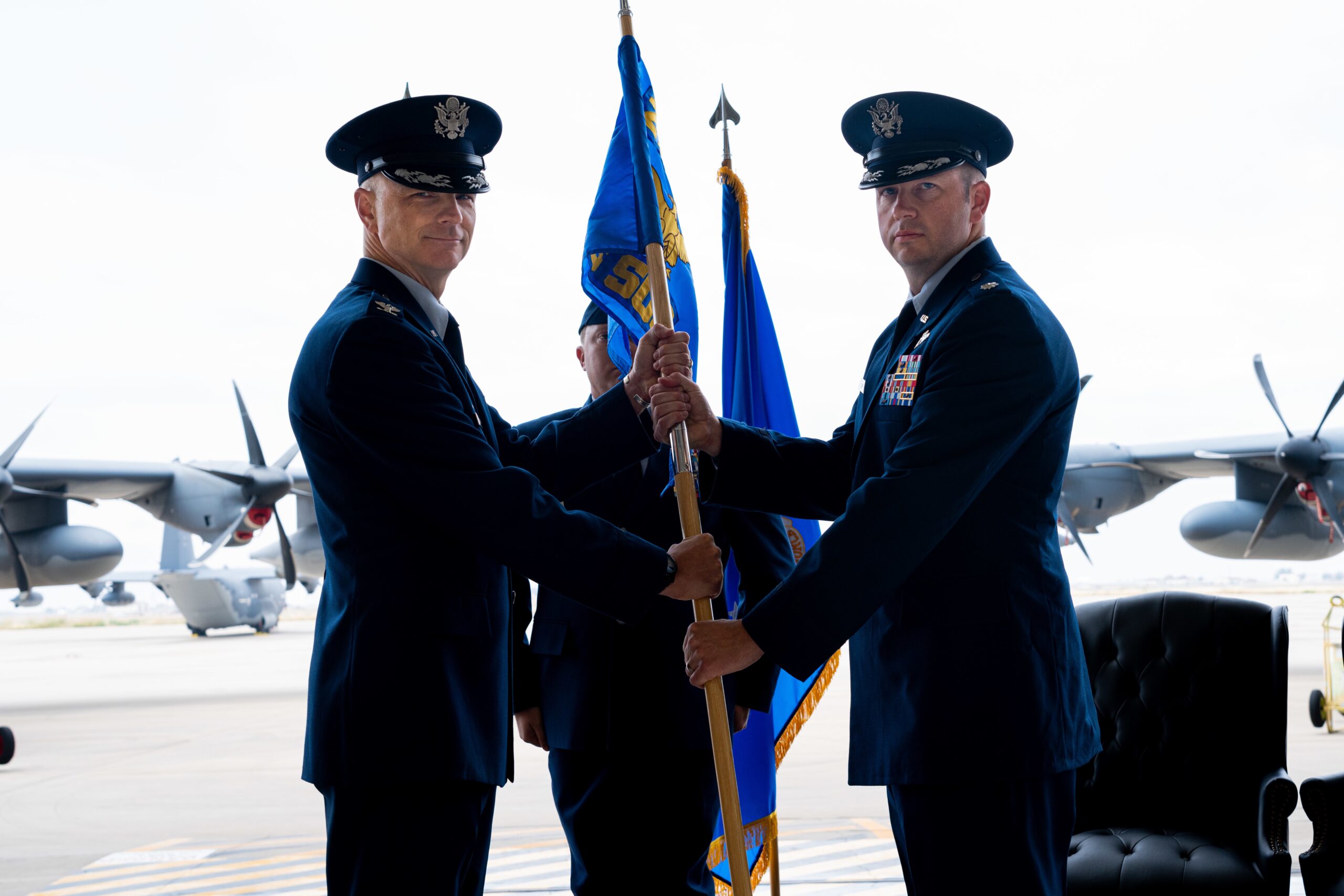
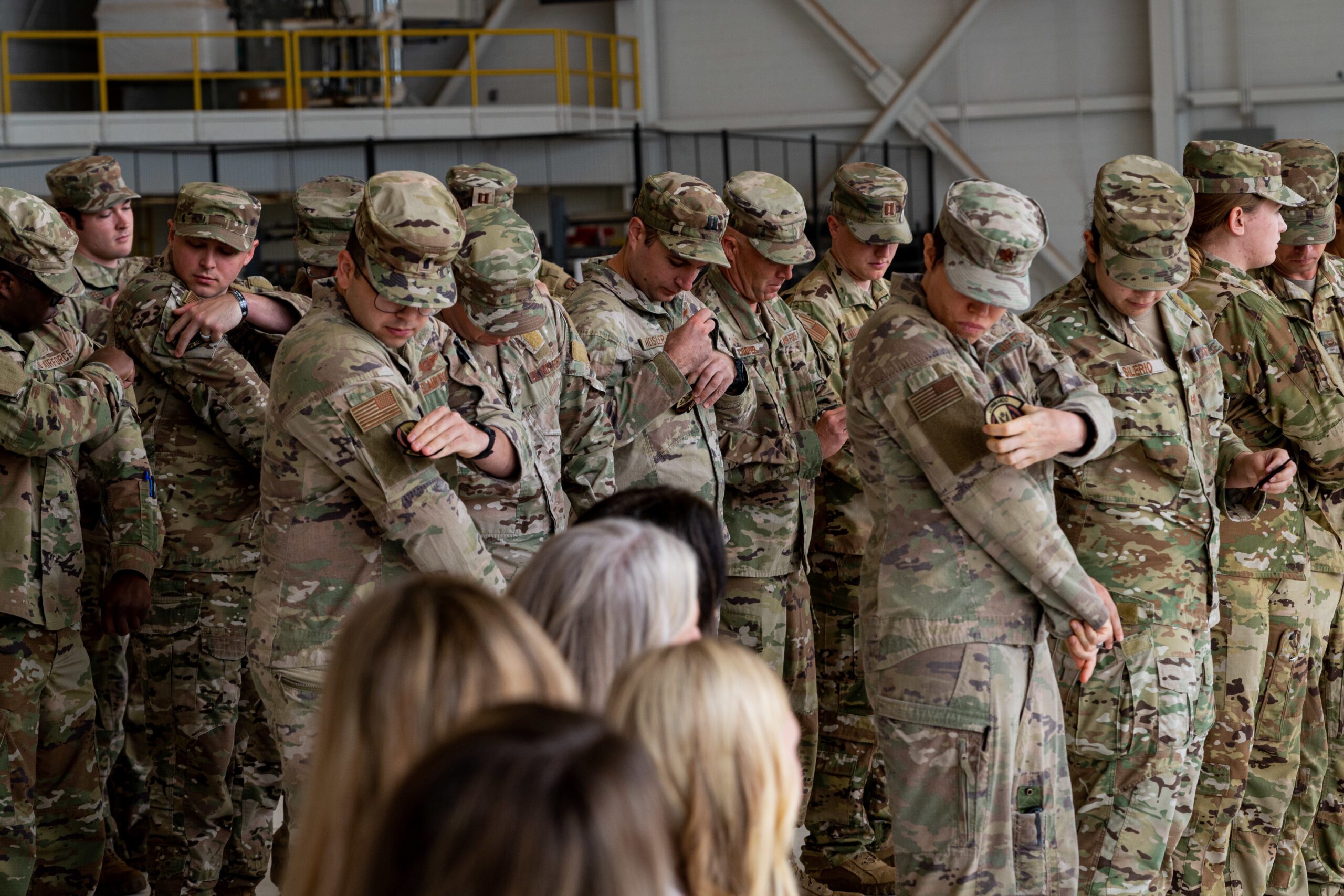
The 6th Special Operations Squadron, previously the 27th Special Operations Group Detachment 1, was officially reassigned here, Oct. 6, 2022.

The 6 SOS is an MC-130J Commando II aircraft flying unit that fulfills the 27th Special Operations Wing’s commitment to the Air Force Special Operations Command’s new deployment model.

“We stood up Det. 1 in an effort to get to the AFSOC we need,” said Lt. Col. Michael Roy, 6th Special Operations Squadron commander. “Now we’ve been reassigned, we’re able to work with the Force Generation and stay fully mission capable.”

The squadron’s mission focuses on utilizing the Commando II aircraft for a variety of low-level air refueling missions for special operations aircraft. It also supports infiltration, exfiltration and resupply of special operations forces.

As a newly reassigned and relocated squadron, the 6 SOS is ready to grow and become their own established unit.

“It’s extremely humbling,” said Roy. “Being asked to command a newly relocated squadron has been exciting. We have experienced people who know what they’re doing. They’re excited about the future of forming our own heritage and culture at the 27 SOW.”

The relocation of the squadron makes it the last step in fully completing the FORGEN model. As AFSOC turns to the FORGEN model, it seeks to provide Airmen and their families the deployment and training predictability to ensure readiness, continue to develop our force, and maintain resiliency.

“For the past two decades, our mission has required Airmen to endure frequent, often last-minute, deployments,” said U.S. Air Force Col. Terence Taylor, 27th Special Operations Wing commander. “The Force Generation model provides an opportunity to invest equally in Airmen professional development, be more deliberate with training, and improve individual resiliency.”

By Senior Airman Vernon R. Walter III, 27th Special Operations Wing Public Affairs

Space Force Embeds Cyber Squadrons into Delta Missions

Tuesday, November 1st, 2022

Schriever Space Force Base, Colo. —

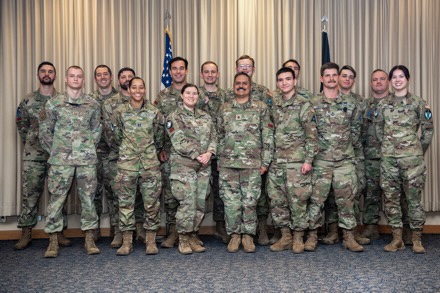
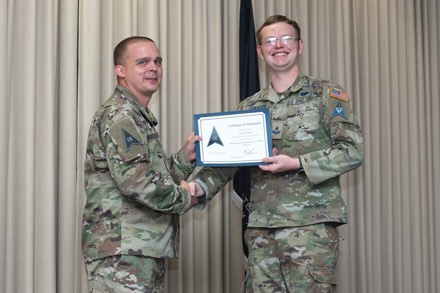
The Orbital Defense Initiation, or ODIN, is Space Delta 9’s initial training course where new members gain common knowledge on orbital mechanics, warfare principles, current threats to space assets and more.

However, their most recent graduation included Guardians wearing patches other than DEL 9’s.

The three ODIN graduates from Space Delta 6’s 69th Cyber Squadron are part of a U.S. Space Force initiative to embed cyber and intel capabilities into space operations squadrons to speed up decision making and improve readiness. They will work side-by-side space operators and intelligence experts, providing cyber capability to operational missions.

“It’s important for cyber operators to have the same fundamental orbital warfare knowledge base as the space operators. It allows them to better understand and react to the issues that space operators encounter every day,” said USSF Capt. Melanie Mohseni, ODIN deputy flight commander. “It’s also necessary to have cyber expertise on the operations floor so that when we encounter cyber issues, we have those subject matter experts helping the crew commander make decisions.”

The 69th CYS is one of several squadrons being formed from the 61st CYS and aligned under DEL 6 administratively.

“We exist to defend their terrain. The mission of 69 CYS is to enable the protect and defend mission of Delta 9 through active cyber defense,” said USSF Lt. Col. Shane Warren, 61st CYS commander.

Space operations involves around-the-clock missions, with operational squadrons continuously manned. This initiative puts the right expertise in the room instead of on-call. Cyber operators attending a delta’s initial training course ensures everyone can speak the same language.

“It helps our operators to know what normal looks like,” said Warren. “If they see indicators that something doesn’t look normal in the terrain they’re monitoring, because they’re trained and sitting side-by-side, they can determine if there is potentially malicious activity and what can we do to stop it.”

The knowledge sharing flows in both directions. The space operators are getting more in-depth cyber knowledge as well.

“The first thing I discussed with the three recent ODIN cyber grads was them helping us develop a Cyber curriculum,” said Mohseni.

Since the initiative is at the ground level, DEL 6 is allowing many Guardians the chance to have a voice in their assigned operational cyber squadron, numbered in the 60’s to match the delta they support, with the 69th CYS supporting DEL 9, the 68th CYS supporting DEL 8 and so on.

“We describe to the Guardians, ‘this is the Space Domain Awareness mission, this is the Electromagnetic Warfare mission, this is the SATCOM mission,’ and ask, ‘What interests you the most?’,” said Warren.

According to Warren, there are roughly 175 Guardians in the 61st Cyber Squadron, with a large portion assigned to active and future squadrons according to their own inputs.

This initiative is not just making space operations squadrons more capable, it is also providing force development for the future of the USSF.

“This is how we develop senior master sergeants in the Space Force. We’ve tried to go beyond ‘I’m cyber, you’re intel.’ In the Space Force, we all work on space,” said USSF Senior Master Sgt. Charles Presley, 69th CYS superintendent. “A superintendent for a Space Force squadron could come from any operational background, so it’s important to expose the next generation of enlisted leaders to all aspects of the space enterprise as early in their career as possible.”

As the USSF builds its culture and forges its own identity, Guardians in cyber are one step closer. They are a weapon system, practicing their craft to safeguard and enhance the space mission.

“You can see the spark in these Guardian’s eyes when they come in,” said Warren. “They’re definitely excited, and we’ve got some really talented Guardians.”

DEL 6 plans to have cyber squadrons embedded in other space deltas, expanding capabilities to more USSF missions, in the near future, eventually shaping a future where everybody is looking at the same problem through different lenses, tackling the same problem with different skillsets.

By Mike Slater, Space Base Delta 1 Public Affairs

Cold War Veterans Promote Knowledge Sharing at Future Force Experiment

Monday, October 31st, 2022

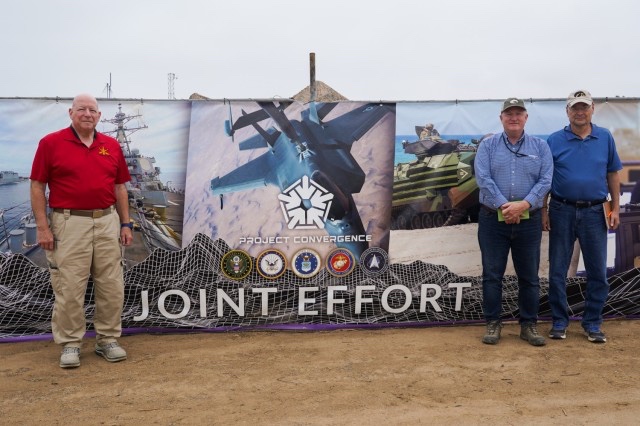
CAMP PENDLETON, Calif. — Bill Veitch, Jim Bailey and Russell Lange are expert military analysts who intimately understand the challenges the Army and its sister services are likely to face in the next 10-20 years. As Cold War Veterans and former air defense artillery Soldiers, the trio have firsthand experience preparing for the potential of major operations against formidable adversaries.

“We can drill down on the growing pains that the Army is having as it modernizes, coming out of counter-insurgency and going into large-scale combat operations,” said Veitch, an operations research/systems analyst with 49 years of experience working for the Army, including 28 years of experience serving as a Soldier.

Given their enduring commitment to the Army, the careers of Veitch, Bailey and Lange collectively represent roughly 130 years’ worth of military insights — insights they are now leveraging, along with a keen awareness of the changing nature of warfare, to help prepare future generations of warfighters.

“Most of the Soldiers today, their basis of experience is brigade-centric, because the brigade was the unit of action throughout the wars in the Middle East. But in the Cold War, the division and the corps were the central building blocks of combat power,” Lange explained.

Veitch, Bailey and Lange, who work for the U.S. Army Joint Modernization Command, have played an integral role in ensuring that Project Convergence 22, an all-service and multinational innovation experiment currently taking place at U.S. military installations across the Western United States, is actively utilizing, disseminating and preserving valuable warfighting knowledge.
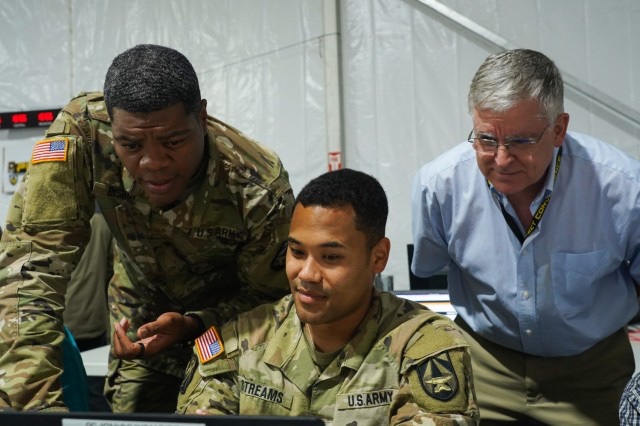
New to the experiment’s data collection and analysis efforts this year is the Table of Knowledge, or ToK, an on-site group of military professionals with specialized technical skills who can directly inform and troubleshoot experimentation.

“During PC21, we identified a big gap within the way that we collected data and the way that we conveyed the message back to the leadership,” said Bailey, lead analyst for Scenario Alpha of PC22. “We weren’t really presenting the facts in the correct languages.”

To remedy the issue ahead of PC22, Bailey brainstormed solutions with Lange and Veitch, eventually coming up with the Table of Knowledge concept, which promotes sharing and integration of field experience and technological expertise. Representatives from Army Futures Command’s Capabilities Development Integration Directorates, or CDIDs, populate the table, providing a centralized and easily accessible resource for robust information on capabilities ranging from fires, air defense artillery, cyber and intelligence to maneuver and sustainment.

“They serve as subject matter experts, so that when an issue or problem occurs in the [exercise control center], we have the right people in this ToK to start troubleshooting and pursuing a response or an answer to the issue,” Lange said, referring to the many activities being monitored simultaneously by the experiment’s exercise control center.

“It’s like a think tank,” Bailey said of the effort. “We do a lot of cross-domain talk.”

Whether addressing an issue through the perspective of multiple areas of expertise or via one specific lens, the ToK was built to offer highly customizable information.

“It’s a Swiss Army knife,” Veitch said.

The presence of CDID points of contact at PC22 also means CDID commanders located around the country can quickly obtain information on how experimentation is progressing. At the same time, experiment participants can draw on CDID expertise to resolve any gaps in understanding.

Individuals occupying seats at the ToK are not only well-versed in their subject matter, but also eager to ensure others comprehend and are able to apply useful information.

“These are the up-and-coming captains and majors who are going to lead the Army of 2030,” Veitch said. “They’re seeing firsthand where modernization is going, how it is going to impact them and what they can do to influence it.”

Capt. Jessica Burris of the Intelligence CDID is one of the ToK experts assisting PC22 participants with inquiries related to new technologies undergoing assessment. Since the start of the experiment, she has been busy providing guidance on aspects of sophisticated sensor-to-shooter systems and other prototypes that rely on intelligence collection, processing, exploitation, and dissemination to operate.

“It’s incredibly beneficial,” Burris said of the ToK, adding that the availability of subject matter experts “provides a lot more context to issues or situations with pre-prototypes.”

Burris added that CDIDs are especially well-suited to offer guidance because they are the organizations within the Army tasked with developing new capability requirements, and have a thorough understanding of how in-development technologies and solutions should be operating.

Omar Gutierrez, an operations research/systems analyst with The Research and Analysis Center, has been working alongside the ToK and has observed just how influential the new resource can be.

“Every conversation I listen in on is rich,” he said of the interactions observed, noting that experts are consistently purposeful about “talking through an integration lens.”

Gutierrez has also seen how conversations that take place at the table encourage a more holistic appreciation of what the event’s various experiments collectively aim to accomplish.

“The operational ‘so what’ — that matters a lot,” Gutierrez said.

By Maureena Thompson, Army Futures Command

SCUBAPRO Sunday – Over the Beach

Sunday, October 30th, 2022

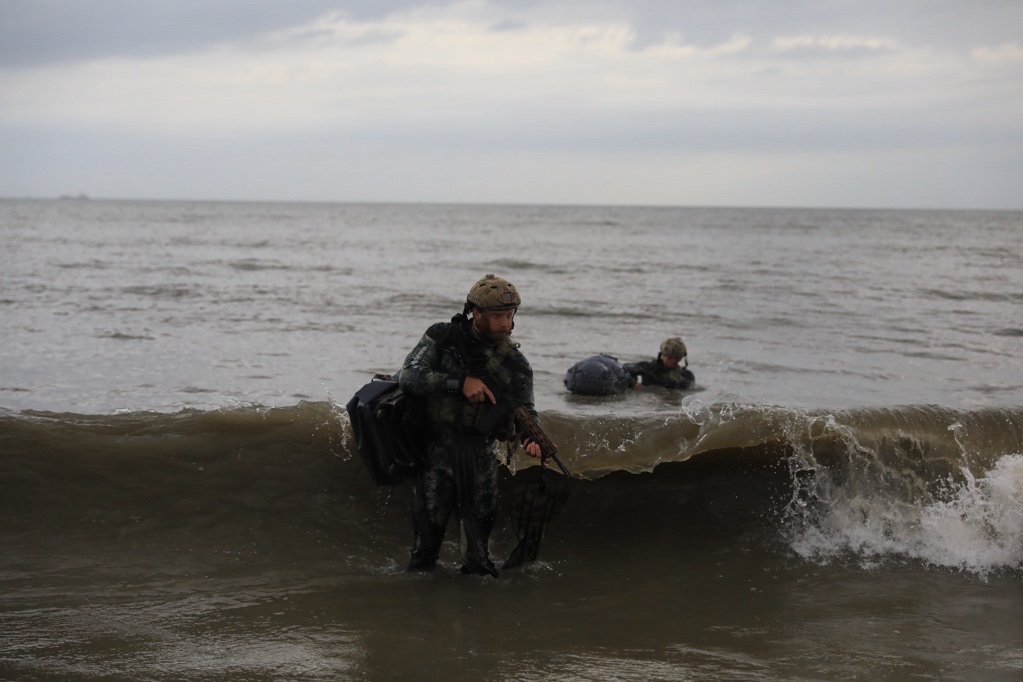
When conducting over-the-beach (OTB) operations, whether driving your boat onto the beach or being dropped off a couple hundred yards out and swimming/diving in. You will have to deal with the a mix of sand and salt water. The worst part is the microparticles of sand that will get into everything you bring over the beach. You will find sand in your ears and hair for a long time after you go over the beach. Going thru training, you would find sand in your hair on Sunday when you haven’t been near the beaches for days.

Starting with your gear prep and gear needed/ good to have.

Alice pack/ Pack prep

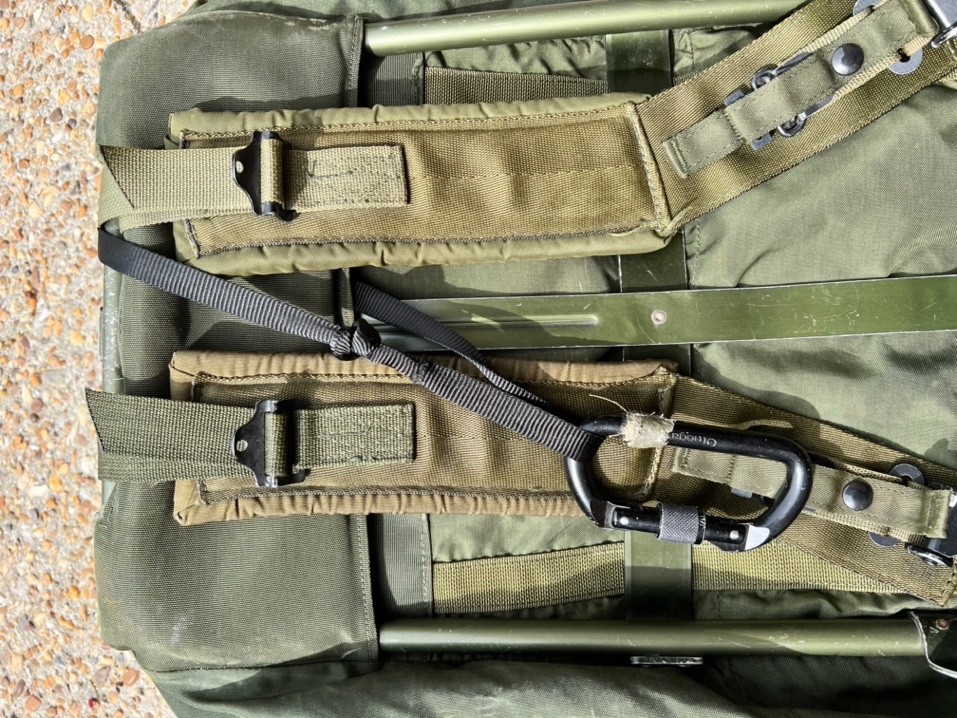
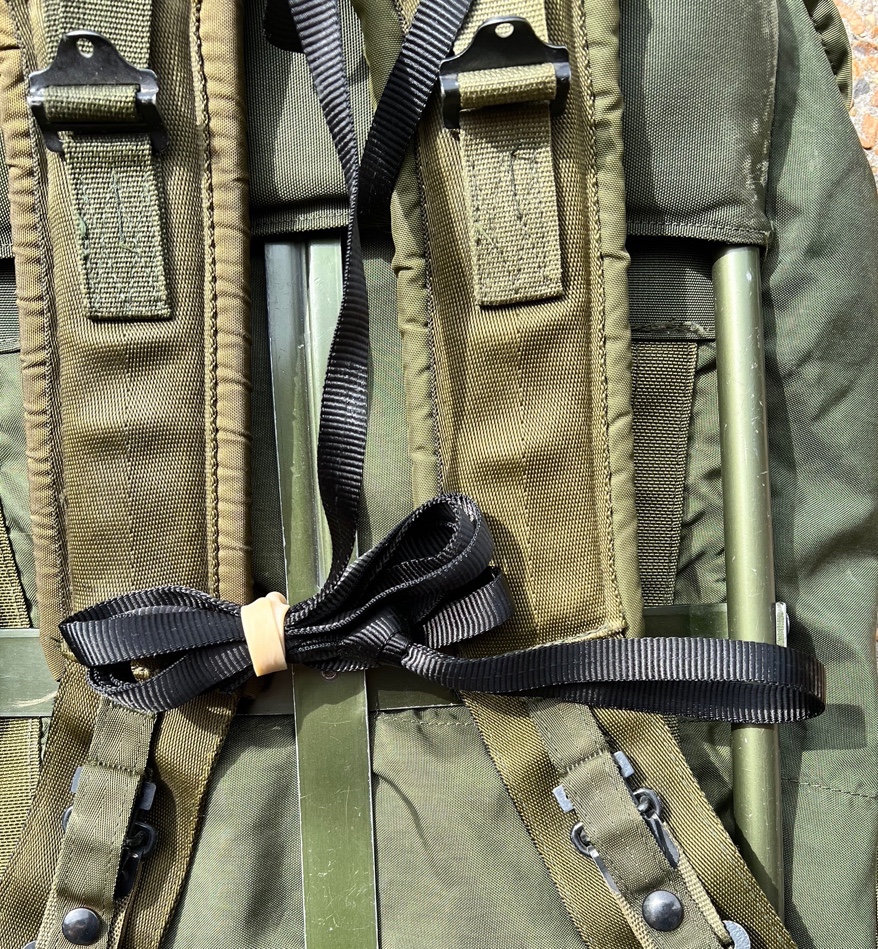
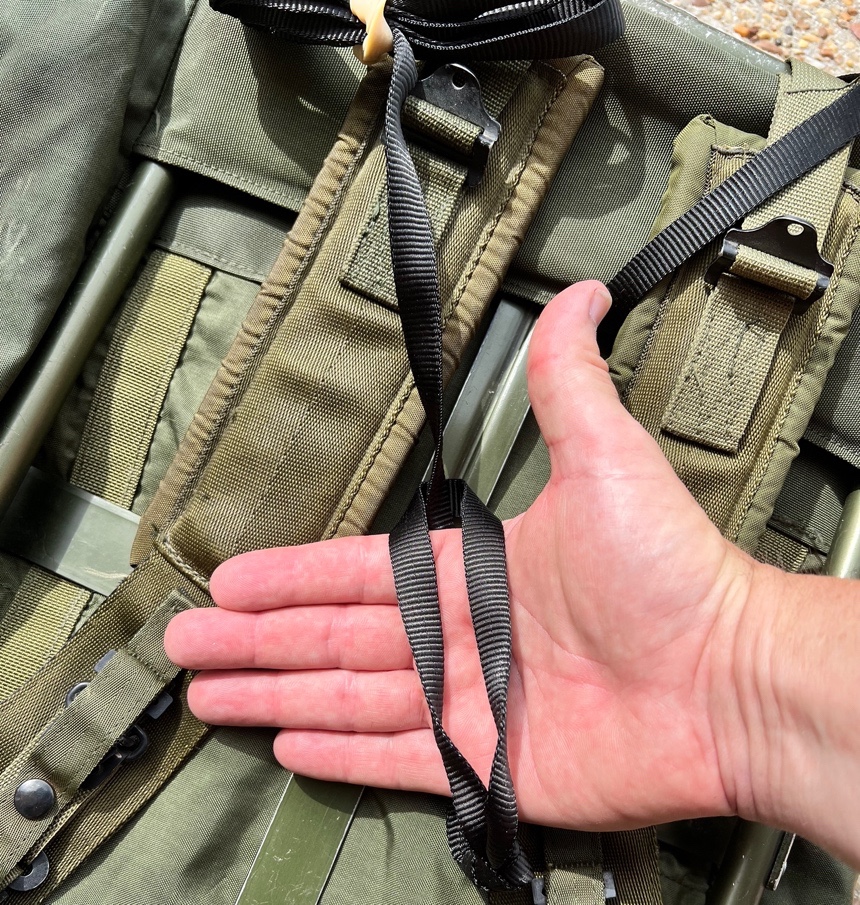
Make a loop of 1/2” webbing and have it weaved thru the top part of the ruck, do not just attach it to the frame. Put it around the padding, also. If the frame breaks, you won’t lose your gear. Have a carabiner on the loop; this way, if you need to repel or lift it to a helicopter or tie it in, have it. Use a locking aluminum one with tape on it to keep it from making noise. I like a locking one so you can close it, and it won’t lock onto anything you don’t want it to. I know you are saying, but it will get stuck closed. Not if you maintain it properly, you won’t have any problems. The one in the picture is a little long, but you should get the idea. I also use a bear knot; it is cleaner and will stay tied.

Next, take about a 6′-8′ of ½” webbing and have that attached to the same loop. I use that much, so I can get it away from me if needed, but I also have an extra line for repairing a shoulder strap or something. Also, if everyone has that much, you can use it to make fixed lines. It never hurts to have a light, strong cord with you. I like to use a small loop on the free end to make a girth hitch. This is used so you can put it around your hand so when you are swimming your ruck thru the surf or doing a river and stream crossing, you can let go of it if needed but also hold onto it if you are in control.

Do not put it around your wrist. If something happens and you get pulled down, you will not be able to let go of it. When it comes to gear or you, choose you. Make sure your pack has a good drain hold, so you are not carrying extra water with you and that it drains fast. If needed, add grommets to make the drain holes a little bigger. Lastly, always have some 550 cord in the bottom of your pack; you can always use it. The last thing I like to do is with all my bags I will use at night. I hang a tiny keychain Nitize microlight at the top of the bag; I put it on a retractable keychain leash so I can look around in my bag at night. I am about making life more accessible, which significantly helps. This is key when you are on a boat and are rocking and looking for a hat or something.

Ruck liner

The field pack liner is intended to be used as a liner for field pack to hold items other than subsistence items that must be protected from moisture. The liner is also designed as a flotation device for the individual carrying the field pack. The liner is fabricated of olive green 106 nylon cloth coated with polyurethane pigmented olive green 207. The coated side of the fabric is on the outside of the liner. I love the liner as it is easy to open and close, and it always works like a champ. No matter what you are doing, have a liner in your pack to keep things dry. Yup, even in the desert, it will help keep your gear clean and as sand free as it could be in that place.

MSR gear makes water storage bladders; it is always good to have a way to store extra water. You never know how far you will go to find water; take as much as you can carry as you don’t know when you will find more. (This is also depending on location and time of year) But they are also great for floatation. They are made from a heavy fabric, making them hard to break. They are great if your bag might be a little heavy, and you might be a little worried about swimming it in and you want more lift.

You should always have a poncho with you. It can be used as a ranger raft for crossing bodies of water. A ranger raft is excellent for keeping your ruck/pack into the beach and for any water crossing to keep all your gear dry, including your ruck. The one downside is you are rapping your bag in the poncho, so you can’t use the shoulder straps. So, it’s not the best idea to use it for OTBs. They have a way to waterproof it, and they make heavy-duty type waterproof storage bags; they are great for storing your poncho when not in use and reusable.

Do a good float check; that means soaking your bag in the water with the gear you intend to have when you go over the beach. Make sure your gear can float itself. You float you, and your gear should float on its own. Don’t think, “oh, I am a good swimmer I can just tuff it out; we are only swimming 100 yards “. First, as a former Boat guy and Team guy (yes, there is a difference), it’s never just 100 yards; always plan for the worst.

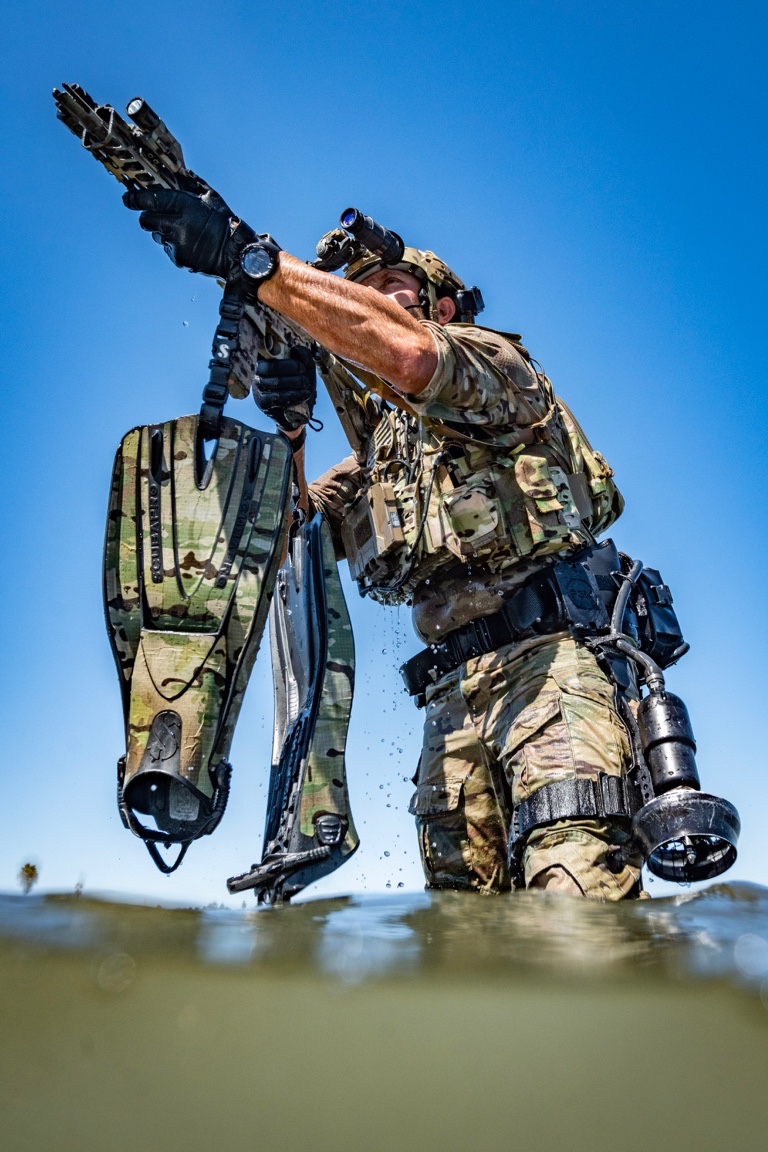
Fins, I like the SCUBAPRO Go Sports. They are light, have a ton of power, and have a big foot pocket that you can fit most combat-type boots. They are light enough that if you must carry them in the field, you can also. They have a bungee heal strap, making donning and doffing easy, so you are not fighting with them in the surf zone trying to get it on or off. I use a fin strap system that has two Fastens. I put the male on one fin and the female on the other. This way, I can clip them to each other, which makes it easier to carry them. I can also use it to hang them on the bottom of the ladder when doing ship boarding. I also have a male and female on each shoulder of my H-gear/ body armor. With the male and female on different fins, it allows me to attach them. It is also less of a snag hazard than having a loop of 550 cord on your fins. I also don’t have to carry a carabiner for just my fins.

When it comes to your other gear like boots and what to wear, this will all depend on where you are doing this and what time of year. In the winter, you will have a lot more gear. I will talk about all that stuff in a later article.

Nimble, Lightweight Command Posts Guide Tactical Operations at Project Convergence 22

Saturday, October 29th, 2022

CAMP PENDLETON, Calif. — At Project Convergence 2022, a large-scale, all-service experiment focused on evaluating innovative warfighting capabilities, lightweight command posts are illustrating how the U.S. military will enable nimble tactical operations on future battlefields.

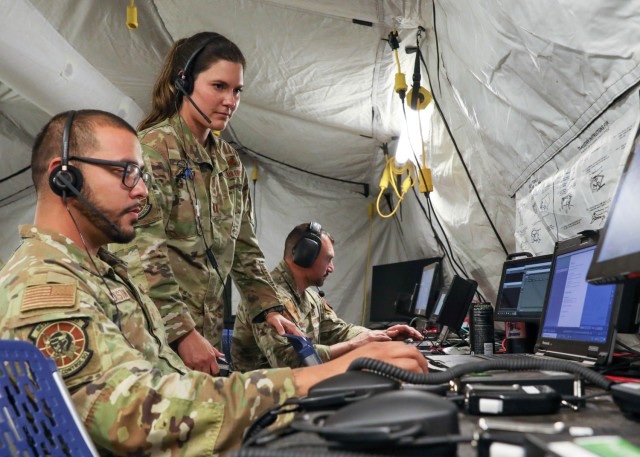
Staffed by Airmen and Soldiers, the command post prototypes, referred to in the exercise as Tactical Operations Centers — Light, are significantly smaller and more agile than previously fielded versions.

The U.S. Air Force provided the equipment that forms the centers — high-powered, ultra-secure servers and commercially compatible computing systems — following three years of iterative research and development with industry partners.

The effort originated from a desire to transform legacy Control and Reporting Centers (CRCs), which have for years served as the Air Force’s mobile command and control (C2) and communications radar centers in theater, while advancing distributed tactical C2 objectives.

While reliable and effective, CRCs are also heavy and large, making rapid relocation difficult.

“We’re just too big and clunky,” said Douglas Lomheim, deputy chief of Ground Battle Management Systems at the U.S. Air Force Air Combat Command.

The Air Force’s exploration of viable miniaturized alternatives has yielded multiple potential options for command centers with smaller footprints.

One option undergoing evaluation at Project Convergence 22 is the Modular Detachment Kit, which utilizes scalable, decentralized C2 and sensor nodes and remote voice and data communications to deliver a common operating picture.

The modular nature of the kit means warfighters can select and deploy only the capabilities they need for a specific operational environment, minimizing costs and optimizing transport efficiency.

A smaller, less detectable C2 center is also inherently a more survivable one, Lomheim explained, with the ability to establish a more dispersed setup, further improving operator safety.

The Modular Detachment Kit also leverages new technologies and open architecture framework to support increased data storage and an expanded range of data and communications assets, allowing for easier connection and integration with sister services and multinational partners.

“Anything that’s developed for [joint all-domain command and control] can easily be loaded on here,” Lomheim said, referring to the U.S. Department of Defense’s development of Joint All-Domain Command and Control.

The system’s diverse set of modules, which address various needs for C2, datalink, radio, radar and multi-mission operations capabilities, and ability to track air, land, maritime, space and cyber resources, make it well-equipped for deployment to a challenging, multi-domain environment – the precise type of environment that Project Convergence 22 is replicating.

As part of the experiment, the Tactical Operations Centers — Light are tracking simulated threats as well as real aircraft movements, conducting activities ranging from coordinating with Tactical Air Control Party members in the field to monitoring possible defense maneuvers by the Army’s Patriot Missile System and the Navy’s Aegis Weapon System.

“It’s a brand-new perspective,” said Air National Guardsman Master Sgt. David Joseph, Weapons Director with the 255th Air Control Squadron based in Gulfport, Mississippi.

“We’re kind of in that crawl, walk phase of it, mostly trying to just get a sense of how we’re all going to connect and how we’re actually going to integrate into the systems that we’re all using,” Joseph said, noting that the shift from having roughly 100 personnel manning a CRC to only a handful operating the new command post model has been interesting to see.

The dynamism of the system is also intriguing. “We’re essentially safeguarding both Air Force and Naval assets and airspace management,” said Staff Sgt. Caleb Kennedy of the Air Force’s 20th Air Support Operations Squadron at Fort Drum, New York.

Through the ongoing Project Convergence 2022 experiment, Joseph, Kennedy and fellow Airmen have worked alongside Army Air Defense Artillery Fire Control Officers and other specialists to amplify situational understanding and practice pairing sensors with the most appropriate shooters, harnessing the system’s potential to deliver improved battlespace awareness, decision advantage and information dominance.

“We’re learning a lot of additional roles, we’re seeing those roles and responsibilities meld together, and actually it’s really enhancing our team efficiency,” Kennedy said, adding that the experience is helping to build participants’ subject matter expertise on air power and execution.

“We’re showing that we’re able to connect in with any system that is provided from our other, sister services,” Kennedy said of the Air Force’s participation in Project Convergence 2022. “Having us here is giving just one more way to expedite battlefield effects and ultimately safe airspace management.”

“The further we go into the future, we’re going to be fighting a war a whole different way than we’re fighting it today,” Joseph said.

“I feel like this exercise here is going to be the baseline for how we go about fighting that war.”

By Maureena Thompson, Army Futures Command

FirstSpear Friday Focus: Florida SWAT Round-Up International 2022

Friday, October 28th, 2022

FirstSpear sets up shop at SWAT Round-Up International 2022

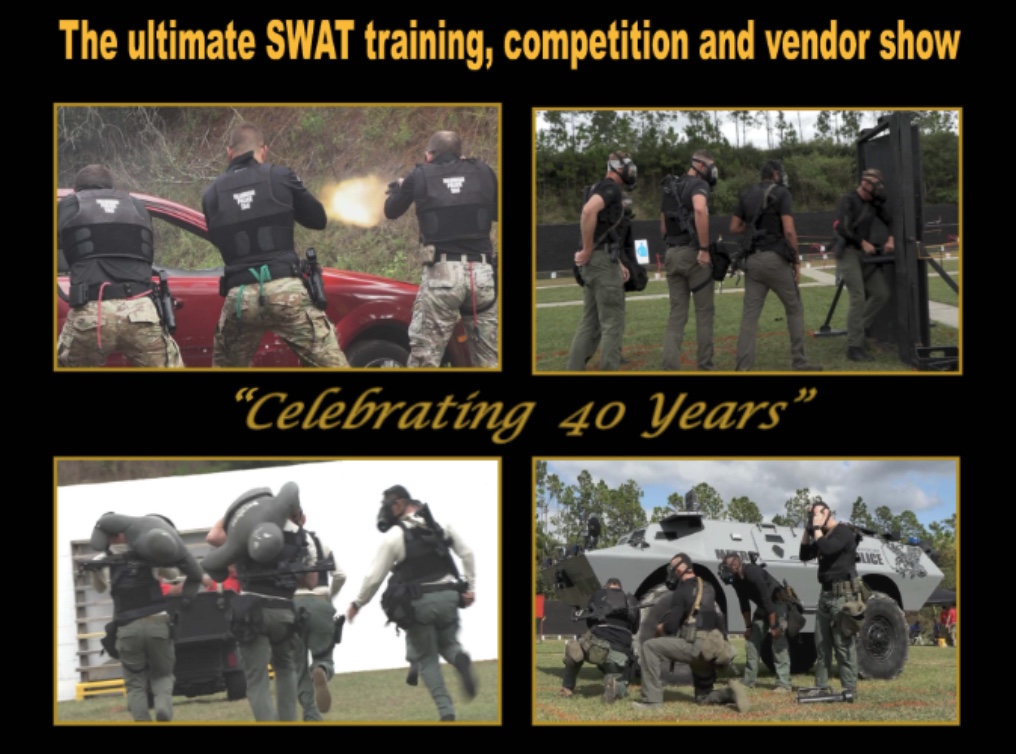
Check out the FirstSpear booth, 6-11 November in Orlando Florida. The Florida SWAT Round-Up International is a competitive training event organized by the Florida SWAT Association.

Training events cover SWAT and ERT courses lead by nationally renowned instructors for US and international participants.


To learn more about SWAT Round-Up International and Florida SWAT Association, visit www.floridaswat.org.

Visit FirstSpear to find all the gear and apparel for the modern day operator.

Washington Guard Snipers Train with Overseas Counterparts

Friday, October 28th, 2022

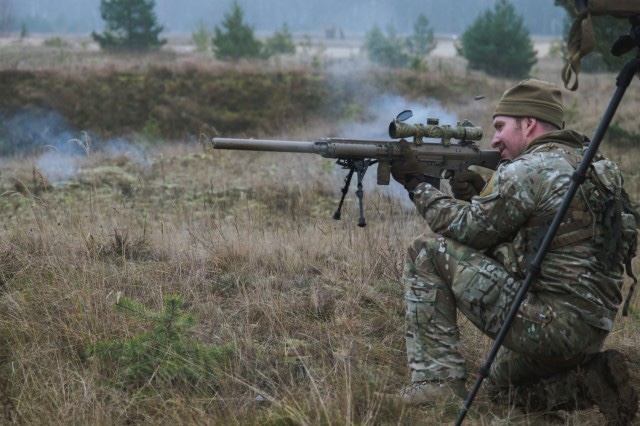
CAMP MURRAY, Wash. — As the 3rd Battalion, 161st Infantry Regiment arrived in Poland in April 2020 for the start of its NATO Enhanced Forward Presence rotation, Staff Sgt. Chris Smith sought training opportunities for his snipers. Almost a year after returning, those with whom Smith developed a working relationship continue to reach out for training and guidance.


“We were waiting for our vehicles to arrive, so one day I just walked over to the snipers with the British 20th Armoured Brigade Combat Team and said, ‘Hey we speak the same [sniper] language. Let’s get together and start training,’” said Smith. “We hit the ground running and forged some strong relationships.”

As part of the NATO Enhanced Forward Presence, 3rd Battalion, 161st Infantry Regiment Soldiers worked in a multinational, combat-ready force, demonstrating the strength of the transatlantic bond and making clear that an attack on one ally would be considered an attack on the whole alliance.

In early October, Smith received an email from his British counterpart asking for help with a sniper class. The email included an invitation to share knowledge and expertise in the field and participate in shooting concentrations during the multinational course.

“We have been asked to help with developing the circuits and being guest speakers,” said Smith.

National Guard snipers are often some of the best National Guard Soldiers who excel in physical fitness, mental fortitude and intelligence.

Guard snipers train at the National Guard Marksmanship Training Center at Camp Robinson, Arkansas, taught by instructors from the 233rd Regiment Training Institution. Guard members who complete the course receive their sniper identifier and are qualified U.S. Army snipers. They are also eligible to compete in the Winston P. Wilson and Armed Forces Skill at Arms Meeting National Guard Sniper Championship.

Smith, a law enforcement officer in Spokane, joined the Guard after leaving active duty. He left active duty as a captain but decided to pursue the sniper career field in the Guard.

“Not an average experience in the military,” said Smith. “This is more unique, more chances to do cross-training.”

While deployed to Poland, Smith said the highlights of the year included working with snipers from NATO nations and building that team comradery.

“It was truly the highlight of the trip. On deployments, you make of it what you can, and just those experiences were the best part of it,” said Smith. “We worked with snipers from Latvia, Lithuania, Poland, Norway, Sweden, Germany so many different countries. It was amazing.”

By Joseph Siemandel, Joint Force Headquarters – Washington National Guard