Register Now for SOF Week

Archive for the ‘Guest Post’ Category

Do You Need A New Med Pouch?

Monday, February 20th, 2023

MATBOCK’s Graverobber Hipster is the ultimate hip-worn medical bag.

Designed to fit around your waist, allowing for fast and easy access to your emergency medical supplies. Made from MATBOCK’s lightweight Ghost material you’d almost forget you were wearing it. In addition, this hydrophobic and superior strength medical bag will stand up to the test of time during many prolonged operations without degradation of materials.

Fits under most Assault packs in the small of your back when not in use.

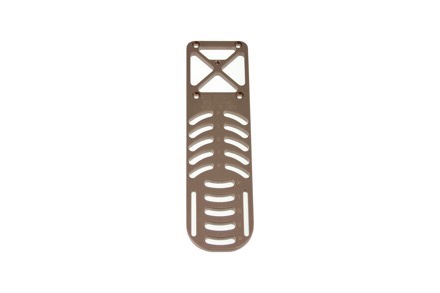
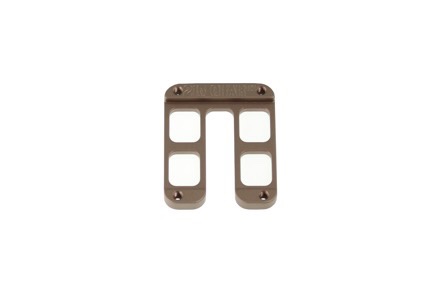
Two movable spacers create division within the compartment and four bungee panels can be velcroed to any loop surface inside to keep your tools and supplies organized.

Mounted on 1.75″ Type13 webbing and using a COBRA GT buckle as a closure. The outside is covered in MOLLE and the lid unzips nearly completely open to give you full access to the contents. Kevlar Webbing on the inside of the belt to facilitate attaching pouches and ensure they stay in place.

Find out more about The Graverobber Hipster or any other MATBOCK product at www.matbock.com or contact the Sales team at sales@matbock.com.

Army Announces Three Student Winners in xTechHBCU Competition

Monday, February 20th, 2023

WASHINGTON — The U.S. Army xTech Program announced three winners of the inaugural xTechHBCU Student competition on February 11, 2023. The winners were selected out of the 16 student finalists who delivered their final technology solutions pitches to a panel of Army judges at the 2023 Black Engineer of the Year STEM Conference in National Harbor, Maryland.

The xTechHBCU Student competition provided eligible historically Black college and university undergraduate students with the opportunity to pitch their innovative technology ideas addressing climate change, preventative care for Soldiers’ mental and physical health and implementation of artificial intelligence and machine learning.

Through its first-ever student prize competition, the U.S. Army awarded three promising young scientists and engineers $8,000 for first place, $5,000 for second place and $2,000 for third place. The winning students also have the opportunity to develop a prototype or seek a patent for their technology solution.

In addition to their innovative technology pitches at BEYA, students also had the opportunity to network with Army and industry leaders from across the research and technology ecosystem and discuss their future careers in STEM. Many of the finalists received on-the-spot interviews and job offers from the Army and industry organizations in attendance that were recruiting at the conference.

Leaders from across the Army enterprise also attended the students’ technology demos to learn more about the capabilities.

“The students who participated in xTechHBCU Student took each step of the competition in stride — from the concept submission and pitch preparation to the final live pitch event in front of a prestigious panel of judges,” said Dr. Matt Willis, director of Army prize competitions and the Army Applied SBIR Program. “It was exciting to see these students’ passion for research and development, as well as public service. This year’s competition is an excellent step in developing key partnerships the Army needs to continue driving toward its modernization priorities.”

The winning students of the competition are:

1st Place: Deneen Royal, Fayetteville State University: “AI For Independent Surveillance Missions (ASIM)”

2nd Place: Lirane Mandjoupa, University of the District of Columbia: “Ground-based remote sensing for Airdrops precision system: A data acquisition approach to mitigate supply chain and climate change risks”

3rd Place: Shirley Jacquet, Fayetteville State University: “QTL Mapping and Correlation Analysis of Amino Acids Contents in Soybean [Glycine max (L.) Merr.] Population”

The finalists represented nine HBCUs across the U.S. and finalists were invited to take part in an eight-week xTech Accelerator program that prepared students for their pitches, educated them on Army priorities and areas of interest, and provided insight into Army career pathways.

“I was greatly impressed by the talent and technologies presented during the final pitch event at BEYA,” said Dr. Travis King, director of basic research and science, technology, engineering and math in the Office of the Deputy Assistant Secretary of the Army for Research and Technology. “The success of the first xTechHBCU Student Competition reinforces the value of a diverse talent pool, specifically as a driver of innovation in science and technology. Collaboration with these HBCU students early in their careers is essential to the Army developing lasting partnerships with future research leaders.”

Established in 2018 by the Assistant Secretary of the Army for Acquisition, Logistics and Technology, the Army xTech Program strives to integrate small businesses and non-traditional vendors into the Army’s science and technology ecosystem by providing opportunities for direct exposure to laboratories, program executive offices and program managers from across the Army. The xTechHBCU competition series enhances opportunities for HBCU students as it works to develop relationships with institutions that directly serve minorities.

The xTech Program holds several competitions per year, from open-topic competitions such as xTechSearch, to technology-specific competitions targeting specific Army needs and challenges. For all competition information, visit the xTech website.

The Office of the Assistant Secretary of the Army for Acquisition, Logistics and Technology provides the American Soldier with a decisive advantage in any mission by developing, acquiring, fielding and sustaining the world’s finest equipment and services, and by leveraging technologies and capabilities to meet current and future Army needs. For more information, visit ASA (ALT)’s page on Army.mil.

By Melissa Hirsch, Office of Army Prize Competitions and Army Applied SBIR Program

Air Force Battle Lab Accelerates Battle Management for PACAF, ABMS CFT, ACC

Sunday, February 19th, 2023

NELLIS AIR FORCE BASE, Nev. (AFNS) —  

The 805th Combat Training Squadron, also known as the Shadow Operations Center-Nellis, recently hosted its second annual ShOC Flag event at Nellis Air Force Base. The event’s primary purpose was to analyze decision-making in a U.S. Indo-Pacific Command scenario to gather insights into operational and tactical command and control processes.

“The Air Force has identified some pretty significant command and control challenges when we apply our current way of doing business in a scenario versus a peer adversary,” said Col. Aaron Gibney, 505th Combat Training Group commander. “To get after these gaps, the ShOC-N has established an environment where we measure old way versus new way, old toy versus new toy, and start accelerating our ability to C2 the war—during deliberate planning and dynamic execution. These insights will inform future requirements and acquisition strategies, as well as our approach to tactics and training.”

The 805th CTS pitted current warfighter systems and procedures against new technologies to gather insights and streamline operational and tactical C2 processes to speed up the kill chain and decision-making timeline. The objective of ShOC Flag was to gather warfighter feedback and stakeholder involvement while showcasing key technologies ready for rapid acquisition decisions, accelerating the planning cycle, providing information superiority and decision advantage, and compressing the decision-making timeline.

These experimental efforts, along with showcasing developing technology on the horizon for the warfighter and the lessons learned from ShOC Flag, have contributed to proofing the current capabilities of the Air Force’s Advanced Battle Management System Battle Lab to instrument data to the Joint All Domain Command and Control ability, compress C2 planning, and execution to accelerate decision-making across the kill chain.

Planning for the event began over six months ago with collaboration between the 805th CTS, Secretary of the Air Force’s Studies and Analysis team, Headquarters Air Force ABMS Cross-Functional team, Rapid Capabilities Office, Air Combat Command, Pacific Air Forces, U.S. Air Force Warfare Center, 505th Command and Control Wing and industry partners.

With stakeholder’s objectives in mind, the 805th CTS built a three-day, three-scenario experiment intended to satisfy all stakeholders and provide warfighters with the opportunity to work through very complex and dynamic targeting processes against peer adversaries.

During the experiment, the ABMS team, in partnership with the SecAF’s Studies and Analysis team, conducted a ground-breaking battle management experiment which will allow the Air Force to identify credible capability improvements. This foundational event was a success and set in motion a repeatable process for discerning requirements aimed at SecAF Frank Kendall’s Operational Imperatives.

Separately, the PACAF and ACC teams were using the experiment to learn about capabilities advertised as ready for operations, one of which was the Tactical Operations Center prototypes using a joint long-range fires scenario.

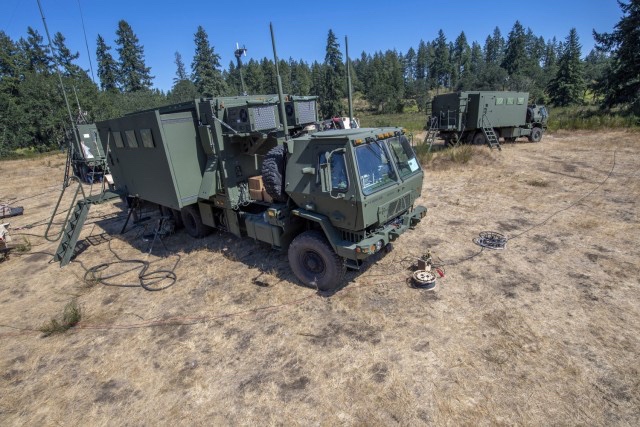
Participants used constructive modeling and simulation data to simultaneously utilize current and future technologies in a simulated deployed combat environment. The event also created an opportunity for the tactical air control party Agile Control Integration Team, or ACIT, to demonstrate its capability as a mobile C2 platform.

ShOC Flag also allowed industry partners to showcase their technology by enabling the warfighter to have hands-on use and provide direct feedback to mission partners.

“This level of feedback is critical in ensuring next-generation technologies meet the needs of the warfighter,” said Lt. Col. John Ohlund, 805th CTS commander.

A member of the ABMS CFT stated this event is the only one all year where you have this many levels of command and different C2 communities come together to have these kinds of important conversations.

In 2023, ShOC Flag events will be renamed ShOC Capstone events as the event’s emphasis shifts from advanced training to the culmination of experimentation events. The next capstone event, scheduled for December 2023, will result from the 805th CTS continuing to construct and execute smaller instrumentation experiments throughout the year.

By 505th Command and Control Wing Public Affairs

Mystery Ranch x Dior Collaboration

Saturday, February 18th, 2023

BUILT FOR: Dior

This is not a drill! Announcing DIOR X MYSTERY RANCH

Combining the formal with the informal, the practical with the purely aesthetic, and the outdoor culture with the demands of luxury, the creative exchange born of this unique collaboration gives life to the bags inspired by Monsieur Dior’s love of nature.

What many would think of as an unlikely collab, we see it differently.

“This collaboration is a testament to two companies that care deeply about their crafts and the communities they serve. Working with companies like Dior is the ultimate recognition that we are doing what we set out to do: To design and build great packs and bags specific to the mission. The Dior collection is a thing of beauty. Mission accomplished.”

– Dana Gleason

The Dior x MYSTERY RANCH collection features the Gallagator backpack with our signature 3-zip design, Saddle Bag, Belt Pouch (also a 3-ZIP design), Wallet, and Tactical Belt, in two colorways, featuring a CORDURA® re/cor™ fabric that is entirely recycled, resistant and durable, and embroidered with a leather crest intermingling the seal of the two Houses.

Meet the Winners of the 2023 Army’s Best Medic Competition

Saturday, February 18th, 2023

WASHINGTON — The Command Sgt. Maj. Jack Clark Army Best Medic Competition is a grueling three-day test of strength, knowledge and endurance held annually. This year’s competition at Fort Polk, Louisiana, put some of the best medics in the Army to the test by challenging their abilities to determine who is the most skilled.

This year’s winners, Capt. Alexander Kenney and Sgt. 1st Class Douglas Petty from the 6th Ranger Training Battalion, Airborne Ranger Training Brigade, demonstrated exceptional skill, resilience and teamwork, solidifying their place among the top medics in the Army.

Combat medic specialists — also known by their military occupation specialty 68W — play a critical role in the Army. They are responsible for providing medical support to Soldiers on the battlefield and ensuring their health and well-being. They are often the first line of aid and care when Soldiers are injured or become ill.

Medics are required to be physically fit, mentally tough and knowledgeable in a wide range of medical procedures and techniques. The Army’s Best Medic Competition is not only a test of individual skill and endurance but also a testament to the importance of the medic’s role in the Army.

Kenney explained the competition is broken down into multiple phases: the Army Combat Fitness Test; an obstacle course; aircraft repelling; Combat Water Survival Test; a helocast; a ruck march; an extrication exercise; casualty hoist operations; M4 rifle qualifications; stress shoots; a written test; day and night land navigation; tactical combat casualty care; health services and support; prolonged field care; a mystery event; and a chemical, biological, radiological and nuclear event.

Kenney is a former combat medic and currently serves as the battalion physician assistant, or 65D, for the 6th Ranger Training Battalion. Petty, on the other hand, had no medical experience prior to joining the Army in 2009. Despite this, he chose to become a combat medic and worked hard to become an excellent one. Both Soldiers put in tremendous effort to achieve their status as top-tier medics.

Winning the Best Medic Competition requires more than just physical fitness and knowledge of medical procedures. It requires a relentless pursuit of excellence, a dedication to being the best possible version of oneself, and an unwavering commitment to the well-being of fellow Soldiers.

Kenney and Petty have put in years of hard work and training to reach the level of skill and knowledge necessary to be the best medics in the Army. They have been tested in some of the most challenging and demanding environments imaginable, including combat deployments to Iraq and Afghanistan, and have emerged stronger and more resilient as a result. Their journey to the top of their field has been a long and difficult one, but it has prepared them well for the challenges that lie ahead.

Kenney noted that “being prepared and pushing the limits of what you know at any given time was super important.”

This mentality of being a lifelong student is essential to being the best medic possible.

Petty agreed, saying that “It made me realize real quick that if I don’t stay on top of my medicine and my mental state, that not only am I going to feel the repercussions of it, but the guys are going to feel the repercussions of it as well.”

Both Soldiers are now dedicated to teaching the next generation of medics.

“One of the best things about military medicine, especially as [physician assistants], is most of us are prior enlisted,” said Kenney. “Not a lot of us are direct commissions off the street or non-medical people beforehand, and we understand the value of building that in the next generation.”

Petty, who now serves as the battalion senior medic and medic platoon sergeant, knows the importance of sharing his knowledge and experience.

“I want to be able to pass that knowledge on to them and see them want to do stuff and be able to help them with the connections I have to get to these other places,” he said. “Train them up to go to these places and go to schools that I have been to and that Capt. Kenney has been to, we have that knowledge to pass to them to see them be successful.”

Petty is also keenly aware of the weight of his responsibility at 6th Ranger Training Battalion.

“It’s the most dangerous, the most high-risk battalion in the United States Army,” he said. “Maintaining health and welfare is a huge portion of that, and understanding what each one is going through — which is why we’re all Ranger tabbed as well — we’ve all been through the program. So knowing what their issues are, and knowing what their struggles are, are super helpful in being able to deliver effective care and anticipate what their challenges are going to be medically.”

The Ranger Tab refers to a badge earned by Soldiers who have completed the grueling Army Ranger School, a course that specializes in small unit tactics and leadership. Rangers develop functional skills directly related to units whose mission is to engage the enemy in close combat and direct fire battles.

Kenney and Petty have done what few in the Army have. They have proven that they are the best of the best. But for them, it is not about the accolades, but about the work they do every day to make sure that their fellow Soldiers are healthy and well.

“Integrity and dedication. It’s a no-fail mission, so you have to be dedicated to what you do,” said Kenney. “And the integrity piece of it is not only doing the right thing 100% of the time, but having the self-check, self-awareness, the integrity to take it up every day. Learn something new and be better than you were yesterday, because medicine is a lifelong learning experience.”

Petty agreed, saying he’s “trying to instill in them the confidence and knowledge and a willingness to want to grow both medically and as a Soldier.”

Kenney and Petty serve as role models for anyone who wants to make a difference in the lives of others, and they exemplify the very best of what it means to serve in the U.S. Army.

“The greatest benefit that you can actually see is from the ground up,” said Kenney.

“I do enjoy the fact that I continually have to learn, and it’s not something I get bored with,” said Petty. “That willingness to never give up has really made me succeed throughout the Army.”

By SGT Pablo Saez, U.S. Army Public Affairs

FirstSpear Friday Focus: Beanie Leather Patch

Friday, February 17th, 2023

FirstSpear’s New American Made Beanie Leather Patch is live!

This incredibly soft beanie will keep your dome warm while wicking away moisture. It features a double-stitched edging with a premium laser engraved leather FS logo patch that is stylishly offset. The beanie is constructed from FirstSpear’s ACM 600 Merino Wool, proudly sourced in the USA. It’s perfect for a cold day at the range or bustling around town. It’s carefully constructed to strategically taper slightly longer at the neck to reduce cold drafts and to prevent it from riding up out of place when you’re on the move.

This beanie is available now, while supplies last.

The ACM-Warm 600 is FirstSpear’s warmest wool layer.

Visit FirstSpear to find America’s premier tactical gear and equipment.

European Theater CSELs Participate in Nordic Regional Engagement

Friday, February 17th, 2023

RAMSTEIN AIR BASE, Germany (AFNS) —  

Command senior enlisted leaders from U.S. Air Forces in Europe and Air Forces Africa, NATO Allied Air Command, the Royal Danish, Royal Norwegian, Finnish, and Swedish air forces recently participated in a Nordic regional engagement to Sweden, Denmark, Norway and Finland.

The two-week engagement provided a platform for the CSELs to discuss Agile Combat Employment across the Nordic nations, explore multinational, professional military education exchange opportunities and discuss the operational environment in the High North.

“The Nordic visit is a significant engagement,” said Royal Air Force Warrant Officer Simon Waldock, command senior enlisted leader for NATO Allied Air Command. “The visit will provide an important steppingstone in developing and strengthening relationships and partnerships in the region.

Waldock also said this trip is paramount to the success of NATO.

“NATO’s fundamental goal is to safeguard the [allies] freedom and security by both political and military means,” Waldock expressed. “The expertise and knowledge the High North partners have is fundamental. The part they play in countering the threat from any adversary is critical, and their support to assist nullifying the effectiveness of any hostile air actions is fundamental in the success of NATO in the Nordic region.”

In conjunction with visiting NATO countries Denmark and Norway, the tour also visited Sweden and Finland, both of which have applied for NATO membership within the last year.

“Although not officially NATO members yet, both Sweden and Finland are critical to the NATO mission,” Waldock said. “Both geographically and strategically, the Nordic region is an area of significant importance to the NATO alliance. Both countries are near the High North and Arctic regions. These areas are key to the success of the NATO mission and will continue to be going forward.”

In addition to discussing strategic importance of the NATO region, the engagement focused heavily on the development of the enlisted corps, specifically the non-commissioned officers in the four nations, as well as professional military education exchanges across the allied nations and partners.

“Developing our NCOs is critical to the success of our air forces,” said U.S. Air Force Chief Master Sgt. Benjamin Hedden, USAFE-AFAFRICA command chief. “We’ve seen in recent history that a military without a strong NCO presence will fail. For that reason, it’s critical that we learn from each other, discuss ways to improve and work on ways to develop our enlisted force across the alliance.”

He continued by saying, “This trip gives us a unique opportunity to work face-to-face in developing the groundwork necessary to solve issues facing our enlisted forces. By learning more about the NCO corps of each nation, we find areas of common grounds and challenges that we can collectively work together to solve.”

Waldock summed up the two-week trip by saying in the end it’s all about the partnership events like the Nordic regional CSEL engagement build that are so important.

“It’s about enhancing CSEL relationships and friendships within the Nordic region,” he said. “Solidify already strong, current relationships with Norway and Denmark CSELs and develop new relationships with future NATO CSELs from both Sweden and Finland. The High North and Arctic region are a key area now and will continue to be a key region heading into the future.”

By MSgt Michael Battles, U.S. Air Forces in Europe and Air Forces Africa Public Affairs

1st Cavalry Division Hones Skills in Field Training Exercise

Thursday, February 16th, 2023

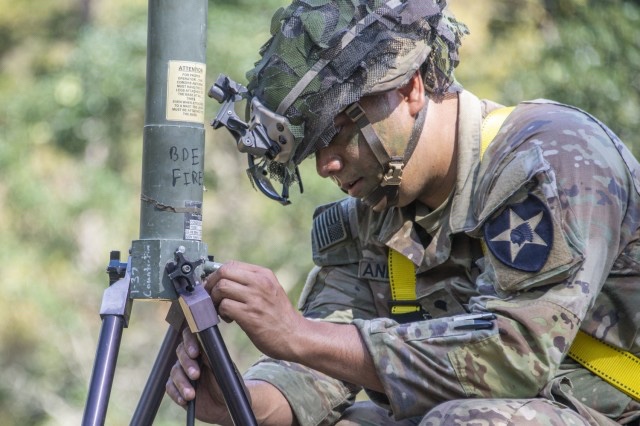
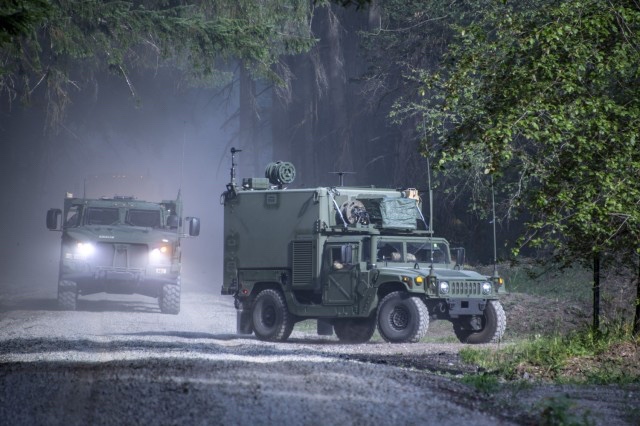
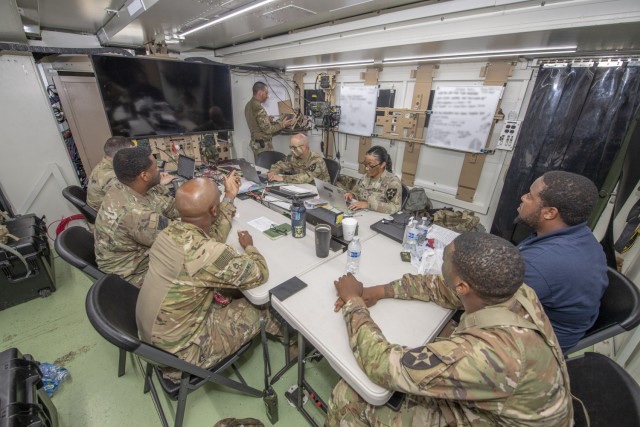
FORT HOOD, Texas — 1st Cavalry Division staff and subordinate brigades conducted a command post exercise at Fort Hood over the past in early February to test warfighting functions and refine processes ahead of a Warfighter exercise planned for this spring.




“It is absolutely critical to maintain the ability to deploy to multiple locations and stay in the fight, because failure to do so will diminish all warfighting capabilities,” said Sgt. Maj. Yolonda Jordan, division sustainment non-commissioned officer in charge, 1CD.

A command post exercise, or CPX, is a field training exercise that prepares units to fight in a large and complex environment. The exercise enables the commander to see if the staff’s processes and procedures work and identify what needs to change before being called to the fight.

“This CPX allows us to better prepare and execute our mission objectives,” Jordan added.

This is the second CPX iteration for the division as they prepare for their culminating exercise where the division will be evaluated in their proficiency, communication and warfighting capability in Warfighter 23-04 scheduled this spring.

“This is absolutely critical, you have to know the team that you work with,” said Maj. Mark Mckinney, division sustainment deputy officer, 1CD. “This sets the stage, so everybody gets their job done right so we don’t have to learn the hard way in combat.”

Testing the division’s ability to communicate as an effective warfighting team is vital, as the main command post and rear command post the staff works to effectively communicate and coordinate while also providing support towards subordinate units. Without synchronizing communication methods, the division would be unable to guide the fight.

“All elements of our division must be ready to contribute to the fight at hand,” said Jordan.

Projecting the First Team’s firepower includes augmenting the division with the right personnel.

“The goal is for us to be ready to support the “First Team” in training so that when the time comes to deploy we are not meeting for the first time,” said Maj. Robert Kaueber, deputy commander, of the Main Command Post Operational Detachment, Texas Army National Guard.

The exercise is just a steppingstone to test current tactical standard operating procedures and identify battle drills that work and things that no longer work so they can be updated before the Warfighter and potential deployments in the future.

It’s important for the staff to be able to interact with subordinate units across the battlefield and it’s also extremely important that everyone understands how to use command and control systems designed for sharing battlefield updates and communicating at different echelons.

“It’s always important to remember if you’re going to win the fight, every piece of equipment has a person behind it, whether it’s a weapon system, communication system, or planning tool,” said Maj. David Christensen, deputy command chaplain, 1CD. “If we don’t make sure our people are taken care of physically, mentally, and spiritually none of those systems matter. Conversely, if we spend a little more time taking care of our people, that effort can make the difference that ultimately wins the fight.”

By SGT Elliot Alagueuzian