XC3 Weaponlight

Archive for the ‘Guest Post’ Category

Air Force Cryptologic Office Establishes New Information Dominance Initiative

Tuesday, April 12th, 2022

FT. GEORGE G. MEADE, Md. —  

The Air Force Cryptologic Office recently established the first Converged Air Force Enterprise Mission (CAFEM) framework to harness total enterprise capacity and deliver information dominance now and for decades to come. 

As one of the new initiatives within the cryptologic component of the 16th Air Force (Air Forces Cyber), CAFEM is steering the enterprise away from the platform-centered intelligence analysis standard to a sensor agnostic and problem-centric architecture.  The concept is focused on modernizing the decades-old intelligence production framework and providing Combatant Commands, commanders, and intelligence partners with the necessary agility of analysis. 

CAFEM leverages the full potential within the cryptologic enterprise by connecting analysts working similar mission sets regardless of geographic location, unit of assignment, or Air Force component. The approach insulates missions against fluctuations in manning that might otherwise impede production. It provides a steady-state analytical and reporting capacity against identified missions. At its core, CAFEM is an intuitive methodology designed to center cryptologic Airmen on real-time collaboration and information exchange.

The collaborative ecosystem CAFEM provides is a major benefit to analysts. Here, the most junior and most senior Airmen participate in the same virtual space analyzing problem-sets, which provides a common learning experience for all participants. Centralized participation in CAFEM production also creates a link to cultivate a reporting standard that exceeds current norms and better meets customer requirements. 

The initial design focused specifically on Air Force cryptologic missions and requirements; however, it is scalable to encompass the entirety of the Air Force intelligence community and even joint service or national intelligence production.

As CAFEM becomes the standard for cryptologic analysis and production, it has the flexibility to evolve and grow to harness total capacity against any target-set.  

By Capt Francis Castillo, Air Force Cryptologic Office

Deckers X LAB Congratulates The Winners Of The 2022 Best Ranger Competition

Monday, April 11th, 2022

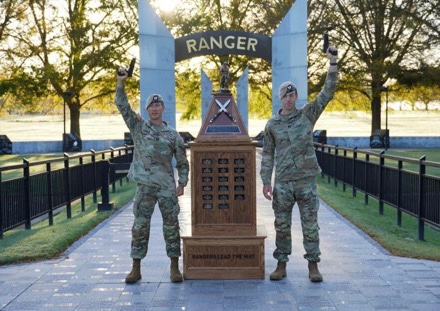
Deckers X LAB would like to congratulate CPT Josh Corson and CPT Ty Boyle of the 75th Ranger Regiment on their win at this years Best Ranger Competition. 5 of the top 10 teams chose to wear the G8 AR670-1 boot. This is the second year in a row that Deckers X LAB made the top spot. Congratulations to all of the competitors.

Medical Monday Pro Tip – IFAK Necessities with High Speed Gear

Monday, April 11th, 2022


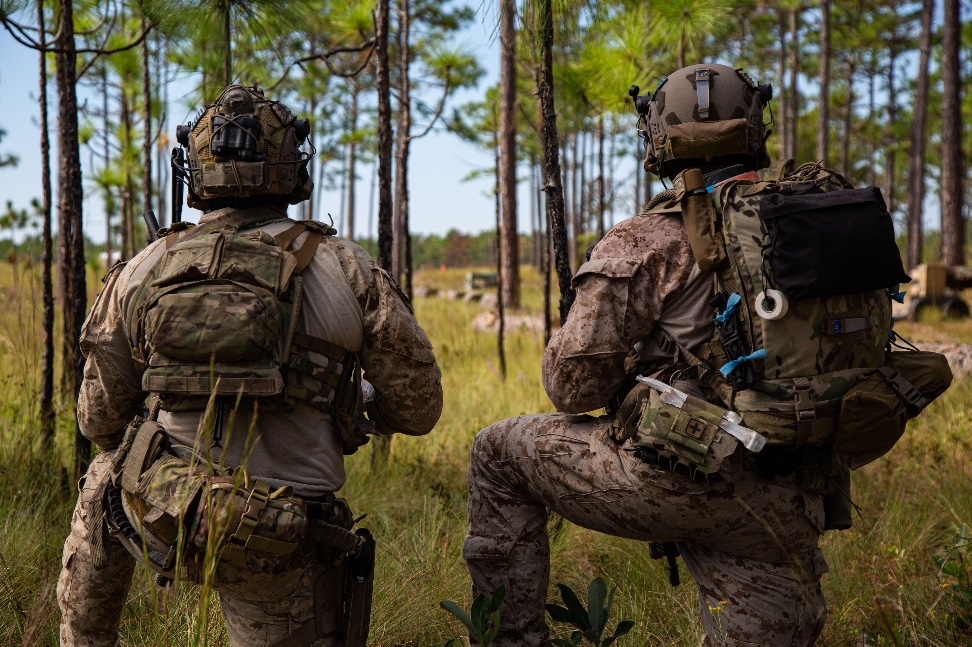
Marine Raiders conduct assaults as a Marine special operations company in Jacksonville, N.C.

SWANSBORO, N.C. – April 11, 2021 – On a daily basis the most important piece of gear an individual would need is an Individual First Aid Kit (IFAK). Hunters and other outdoor enthusiasts, extreme sport athletes, first responders and military personnel can all benefit from life-saving equipment being readily available at a moments notice. IFAK’s can accommodate a multitude of items to save a person’s life. Some of the main essential items that you can carry are:

• Adhesive tape
• Bandage kit
• Nasopharyngeal airway kit
• Trauma shears
• Gloves
• Tourniquet
• Chem lights
• Combat gauze
• Pressure dressing
• Vented chest seal
• Ibuprofen
• Burn dressing

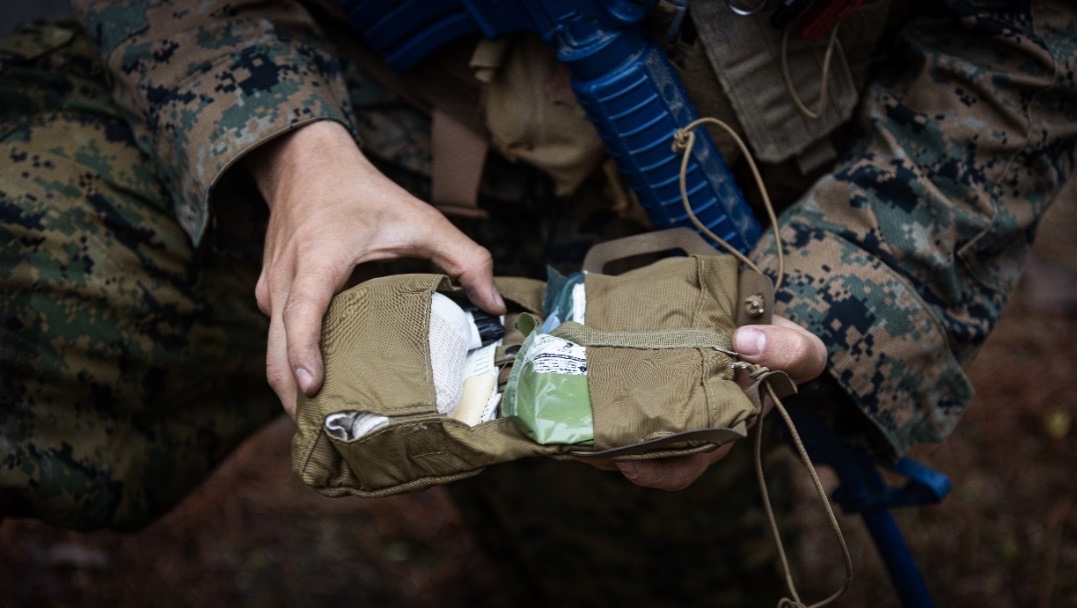
High Speed Gear® offers its ReFlex™ product line that was designed with direct input from active-duty medical personnel and constructed around the medical supplies included in the U.S. Army-issued IFAK. The two-piece system allows you to carry previous medical supplies or other essential items to optimize versatility depending on the field of work that you may be in. The High Abrasion-Resistant Neoprene Kevlar® handles were designed for users to be able to easily find, grab and access the contents of the ReFlex™ IFAK System as quickly as possible.


A U.S. Navy Corpsman assigned to Field Medical Training Battalion-East, deploys a ReFlex™ Med Roll on a simulated casualty during a field training exercise at Marine Corps Base Camp Lejeune, N.C.

“We know and understand the importance of preventive measures that users take by carrying organized medical gear.” said Allison Mitchum, HSGI® Director of Sales & Marketing. “It makes us proud to see all branches of the U.S. Armed Forces utilizing our ReFlex IFAK System in the field.”

Since the release of the ReFlex™, High Speed Gear® has also created alternatives for people to be able to use, such as the ReFlex™ Vehicle Mount and the ReFlex™ Leg Rig for users to be able to carry comfortably, no matter their preference.

For more information about the ReFlex™ IFAK System, visit: What do you carry in your ReFlex IFAK System? – YouTube

AWACS Demonstrates Historic Firsts, Receives and Processes In-Air EW updates in Minutes

Monday, April 11th, 2022

For the first time, the U.S. Air Force’s E-3G airborne warning and control system aircraft, or AWACS, demonstrated the ability to receive and process in-air electronic warfare software updates derived from EW data collected and transmitted while in flight.

An airborne E-3G operated by the AWACS Combined Test Force updated its electronic support measures, or ESM, database in flight over central Texas with a file transmitted from its reprogramming center at Eglin Air Force Base, Florida, using an existing beyond line-of-site satellite communications system.   
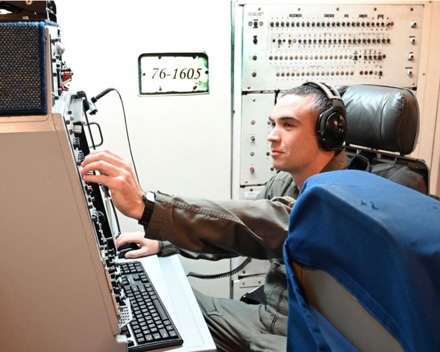
The E-3G collected EW information using its existing ESM system and transmitted the in-flight recorded data to the 36th Electronic Warfare Squadron at Eglin AFB, Florida, using its satellite communications system. This test was conducted by 605th Test and Evaluation Squadron, Detachment 1, at Tinker AFB, Oklahoma, aligning with their mission to field innovation and develop tactics for the AWACS community.

“While most airborne EW systems provide self-protection, the primary purpose of the E-3G’s ESM system is to provide situational awareness, combat identification, and threat warning for the rest of the assets in theater. Modern advanced radars are increasingly digital and can adapt faster than ever before, and the mission data update process needs to adapt along with it,” said Maj. Jesse Snook, 605th TES, Det1 air battle manager.

Snook continued, “The E-3G has demonstrated its ability to exchange near real-time electronic warfare information with the experts on the ground and feed that information back into the fight immediately.”  
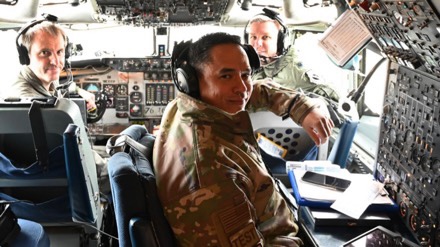
Within an hour, the 36th EWS processed and analyzed the E-3G’s data, corrected deficiencies observed in the data, and transmitted the updated file back to the E-3G for immediate loading during the mission. The in-air update and in-air flight data transmissions were firsts for the E-3G. In addition, the concept referred to as Airborne Cooperative EW Integrated Reprogrammable Exchange, or ACEWIRE, was devised as a first step to accelerating antiquated reprogramming processes for the E-3G and the assets under its control.

“These are significant events,” said Col. Adam Shelton, 505th Test and Training Group commander, Hurlburt Field, Florida. “Our capability to detect, discover and defend ourselves against hostile threat systems is tied to our ability to quickly update software, especially mission data files, and there is a tactical demand to do so.”

The test was made possible using the E-3G’s upgraded satellite communications system called Internet Protocol Enabled Communications, or IPEC, in conjunction with the more modern and flexible mission computing system on the E-3G. The proof-of-concept test demonstrated the E-3G’s ability to adapt to new threats and facilitate the compressed mission data reprogramming timeline required for success in the future fight. 
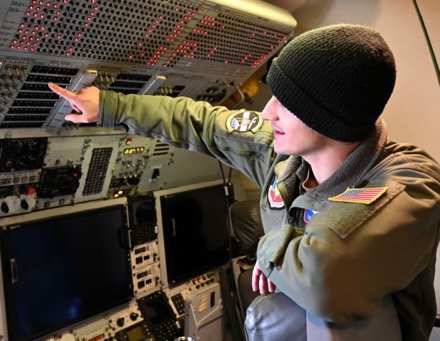
“The E-3G has to continuously evolve and find ways to adapt legacy technology for the future fight, and ACEWIRE is a great example,” said Lt. Col. Dameion Briggs, 605th TES, Det 1 commander, Tinker AFB, Oklahoma. “The next step is to build on this concept within the E-3G community and work with other airborne platforms to use IPEC and existing datalinks to provide in-air updates for other platforms.”

The test also served as a valuable exercise for the 36th EWS as part of the 350th Spectrum Warfare Wing, activated in 2021 on Eglin AFB, Florida. The 350th SWW is focused on its mission to deliver adaptive and cutting-edge electromagnetic spectrum capabilities that provide the warfighter a tactical and strategic competitive advantage and freedom to attack, maneuver and defend.

“The E-3G has completed a process that used to take days or months in a matter of minutes. This aligns perfectly with CSAF [Chief of Staff of the Air Force Gen. C.Q.] Brown’s imperative to Accelerate Change or Lose that applies to software update processes as much as it applies to hardware upgrades and new platforms,” said Lt. Col. Carly Sims, 605th TES commander, Hurlburt Field, Florida.

The AWACS CTF is comprised of the 96th Operations Group, Det 2, and 605th TES, Det 1, which are responsible for the developmental and operational testing of new hardware and software on the E-3G. The 96th OG, Det 2 at Tinker AFB, Oklahoma, is part of the 96th OG and 96th Test Wing at Eglin AFB, Florida. The 605th TES, Det 1 at Tinker AFB, Oklahoma, and the 605th TES are a part of the 505th TTG and 505th Command and Control Wing at Hurlburt Field, Florida.

Story by Deb Henley

505th Command and Control Wing

Public Affairs

Photo by Kimberly Woodruff

SCUBAPRO Sunday – Bambi Goes to Nam

Sunday, April 10th, 2022

Donnie Dunagan was born in August 1934 and was drafted in 1952 during the Korean War. Instead, he decided to join the Marine Corps where he would spend 21 years in and retire in 1977 at the rank of Major. While growing up in Tennessee, Dunagan’s family struggled to make ends meet. After Dunagan’s family relocated to Hollywood after winning $100 in a talent competition, he rose to the status of a child celebrity. His most recent role was as the voice of Bambi, the beloved baby fawn from the Disney film of the same name.

It was a stark contrast between his Hollywood past and his adolescent years. However, he adapted to the life of a Marine. During his 21-year career, he served three tours in Vietnam, earning a promotion to Major along with a Bronze Star and three Purple Hearts. which was a company record at the time. He was also the youngest drill instructor to don the campaign hat at twenty-seven years. He kept his movie carrier a secret from his fellow Marines throughout this time. He was never ashamed of his past, but like every good military person, you can never give people any ammo to make fun of you. Somethings never change.

He had a brief career as a child actor before being cast as the title character’s voice in Disney’s 1942 animated film Bambi, which has become a classic animated film about a young deer who learns about life in the forest.

Of course, it eventually made its way out. Several decades later, a Marine with whom Dunagan had previously worked on several occasions, including twice in combat, summoned him to his office about a month or so before the two of them were to retire.

Dunagan said, “When I walk into his office, he greets me with, ‘Dunagan! ‘I’d like you to audit the auditors,’ I say. “Dunagan recalls the incident. Being swamped with other work at the time, Dunagan respectfully inquired of him: “General, when do you think I’ll have time to do that?”

And, at long last, the secret he’d been living with for years came to out.

“He looked at me and drew his glasses down as if he were a university professor. There’s a large, red, top-secret folder with my name on it that he managed to get out of some hidden safe somewhere. “You will audit the auditors, Maj. Bambi,” he says as he patted the folder on the table and looked me in the eyes.

Dungan says, “But I enjoy it now when people realize that this old jerk is still alive and that he was Bambi. And I wouldn’t accept anything in exchange for it, not even a darn thing.”

Georgia National Guard Tests New Live-Fire Range System

Sunday, April 10th, 2022

FORT STEWART, Ga. – The Georgia Army National Guard’s 122nd Tactical Support Detachment traveled to Fort Stewart for the April 1-3 drill weekend to train and qualify Soldiers on the M4 carbine rifle and M17 pistol.

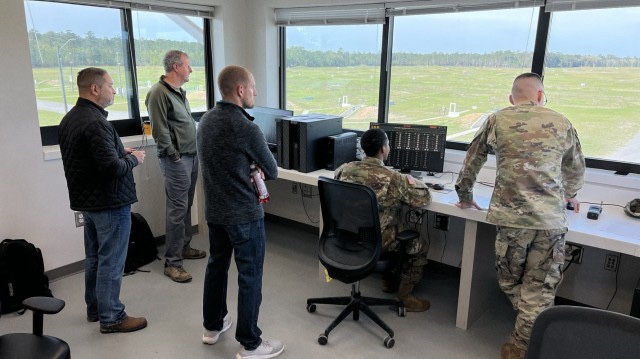
The training, conducted annually to ensure unit readiness, was unique due to the software that Soldiers from the 122nd TSD operated from the range tower to control targets, score shooters and provide statistical feedback. TRACR II had been an untested Army system; the 122nd TSD was the first unit to use the new technology.

Targetry Range Automated Control and Recording (TRACR II) provided these Georgia Guardsmen with firsthand experience on a fresh interface that addressed many of the after-action reviews and suggestions made by previous operators of the legacy system.

“No Soldier has ever operated TRACR II yet,” Alex Stinefast, Program Executive Office Simulation, Training and Instrumentation (PEO STRI) program manager for TRACR II, said before the 122nd used the system on the range. “The intent is to leave it in Fort Stewart for 120 days and gather Soldiers’ feedback so that we can make improvements prior to going into full-rate production and send it out to all of the Army.”

The legacy TRACR software has been in use since its development and implementation in 2005-08 and has been updated approximately six times, according to David Howard, TRACR II program engineer.

“We’ve gone from the old Java-based type of application to more of a web-based application, which you see now on your phones,” said Howard.

Soldiers of the 122nd TSD said the software had a familiar app-like feel and was easy to learn and use when supporting range operations.

“I think it’s very beginner-friendly,” said Sgt. Desmond Albright, from the 122nd TSD.

Within 30 minutes, he learned the program and navigated the controls. The new colorful display on the system allowed him and other users from the detachment to select multiple targets, create scenarios, and assign motions to the silhouettes on the range. The leaders overseeing the training and qualification could provide individual scorecards to all the shooters to let them know which targets they had engaged or missed.

“It was a great experience,” said Albright. “As far as being newly introduced to [TRACR II] for the first time, it was pretty easy to use.”

Supported by the new TRACR II software, all participating Soldiers successfully engaged the required amount of targets with their assigned weapons and recorded qualifying scores.

The TRACR II team hopes the new software provides a platform for better training in Fort Stewart and throughout the Army.

“We are expecting the new equipment training to be significantly shorter,” said Stinefast. “We are hoping that the range operators can come in and figure out how to operate it and then start running the range.”

By MAJ Charles Emmons, Georgia National Guard

Thinking Outside the Mailbox: Robins AFB First Base to Get Intelligent Lockers

Saturday, April 9th, 2022

ROBINS AIR FORCE BASE, Ga. (AFNS) —

What started out as an Airman’s innovative idea to help his wingmen is now a reality at Robins Air Force Base.

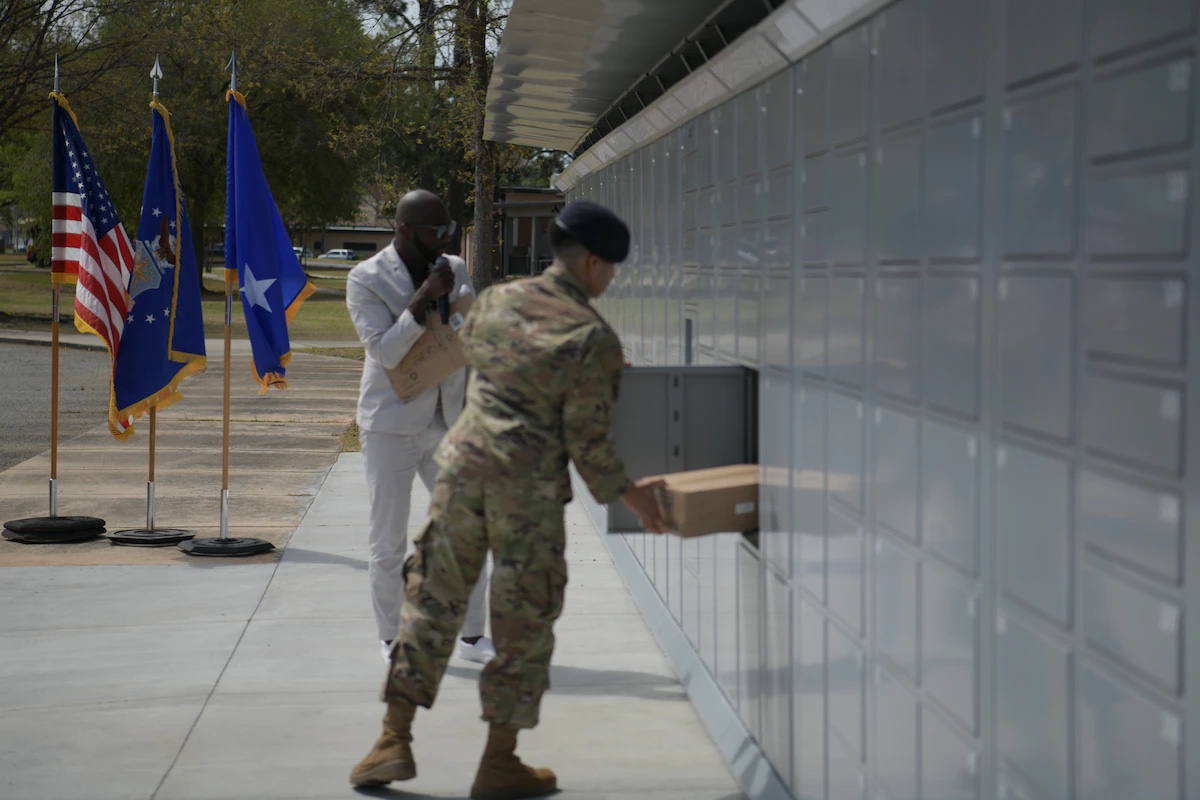
The installation held a ribbon cutting ceremony March 30 for its recently installed Intelligent Lockers, giving the Airmen at the dormitories a centralized location to receive their packages after hours.

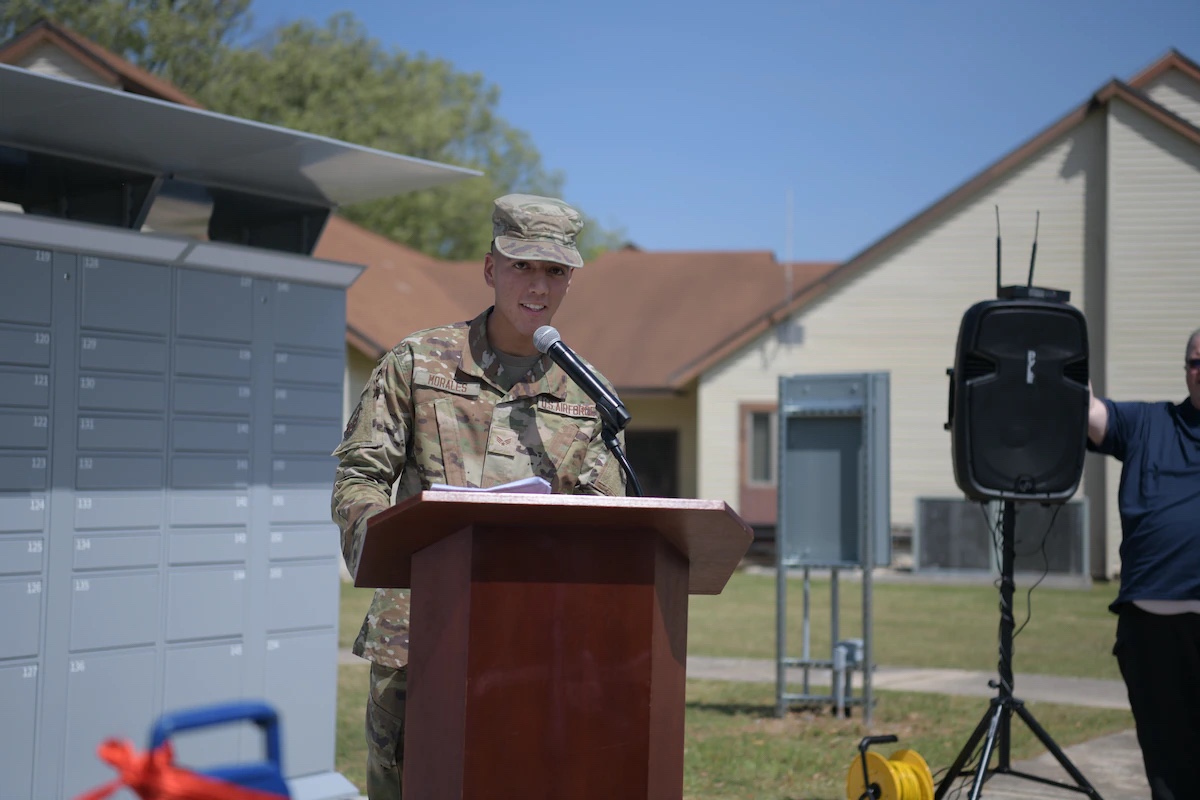
The lockers started as an idea presented by Senior Airman Ricardo Morales, 461st Aircraft Maintenance group crew chief, during the 2021 Air Force Installation Maintenance and Mission Support Center Innovation Rodeo. Morales was chosen as the winner, and subsequently, Robins AFB was awarded $235,000 and became the first base to install the Intelligent Lockers at its dorms.

“It makes me so happy to see the lockers are ready to be used by all the Airmen in the dorms,” Morales said. “I’d like to thank everyone who contributed to the implementation of the lockers.”

Morales said the locker idea came to him after noticing fellow Airmen experienced delays in getting their packages because their work schedules conflicted with the limited post office hours on base.

According to Morales, his idea not only saves space in the postal facility but allows Airmen to pick up their mail at a convenient time for them.

“I couldn’t have done it without the support of my local innovation hub and AFMISC,” Morales said during a ribbon-cutting ceremony for the new lockers. “This will improve life for Airmen because they can now retrieve their packages 24/7. Shift workers will now be able to get off their shift and retrieve their package at any time of the day without having to work around the base post office’s limited hours.”


Several members of installation leadership attended the ceremony, including Col. Rosalie Duarte, 78th Air Base Wing vice commander, who gave opening remarks.

“Innovation is a top priority of our Air Force leaders, starting with (Air Force Chief of Staff) Gen. Charles Q. Brown, Jr., when he demanded that we accelerate, change, or lose,” Duarte said. “Here at Robins, we’ve taken this direction on innovation very seriously by empowering our Airmen – both military and civilian. We truly believe empowered Airmen can solve any problem.”

Also in attendance was Maj. Gen. Michael Koscheski, Fifteenth Air Force commander.

“This is wonderful,” Koscheski said. “We need to grow that innovative spirit across our force. That is how we are going to accelerate change,” he said. “We have to think our way to a better Air Force, and today is a great example at how we will do that.”

Col. Michelle Carns, 461st Air Control Wing commander, commended Morales for his tenacity.

“This was almost a two-year process,” Carns said. “He never quit, never gave up, and hung in there no matter what he encountered. I love what he did because it was not just about him; it was about the team.

“He wasn’t the only one not getting his mail, and he wanted to do something community-minded,” she continued. “His innovation will improve the quality of life for all Airmen living in the dorms here at Robins.”

Carns said seven other bases have already scheduled Intelligent Lockers to be installed at their facilities and eventually this service will be available across the Air Force. 

Morales encourages everyone to put on their thinking caps to bring positive change to the Air Force.

“Innovation has no rank,” he said. “You can still make a difference. Get connected with your local innovation hub so they can help you navigate your idea and provide you with any needed resources. I did this as an Airman 1st Class; you can too.” 

By Kisha Foster Johnson, Robins Air Force Base Public Affairs

FirstSpear Friday Focus: Hooded Field Shirt

Friday, April 8th, 2022

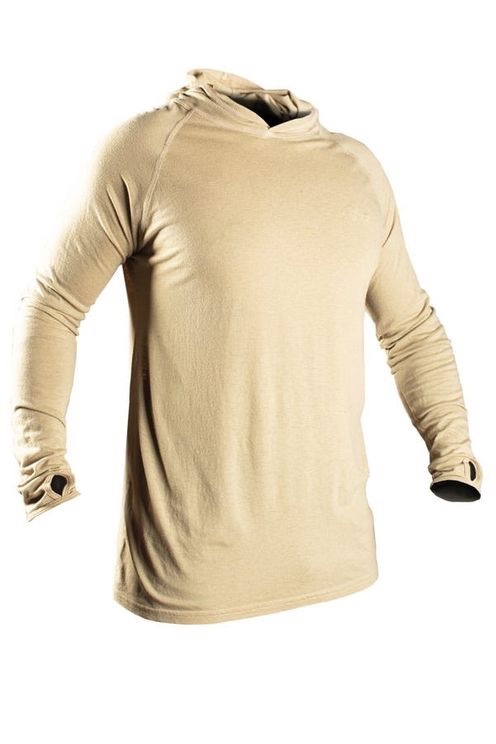
Spring is here and FirstSpear is giving us a look at an extremely popular garment from their all American merino wool apparel line up, the Hooded Field Shirt. This garment is generously cut with an oversized hood with absolutely no hardware making for an incredibly comfortable and highly functional base layer or perfect stand-alone top when temperatures are fluctuating. Perfect for layering under jackets when the temperatures are cool and moisture-wicking properties of wool will help keep you cool in the heat.

• American Merino Wool

• Generously cut for long-term comfort

• Oversized hood

• Low profile cuffs with thumb holes

• Made in the USA

In stock and now shipping in black, commando, sand and heather grey. These are 100% made in the USA with USA materials.

For more information, check out www.first-spear.com/technical-apparel/american-merino-wool/field-hoodie.