GORE-TEX Professional

Archive for the ‘Guest Post’ Category

AF Competency Modeling Handbook Provides Airmen with Roadmap to Become Future-Ready, Critically Thinking Warfighters

Wednesday, March 2nd, 2022

JOINT BASE SAN ANTONIO-RANDOLPH, Texas (AFNS) —  

In line with Air Force Chief of Staff Gen. CQ Brown, Jr.’s Action Order A (Airmen) effort to find and enhance universal skillsets that are important to all Airmen regardless of their specific Air Force Specialty Code.

The Air Force Competency Modeling Handbook is now available to Airmen after officially being published Feb. 8.

Developed by Headquarters, Air Education and Training Command A3J team, Air Force Handbook 36-2647 includes a validated competency-modeling framework that is scalable, reliable, and repeatable to assist career fields in developing their occupational competency models. It also outlines the service’s 24 foundational competencies, which are a combination of knowledge, skills, abilities, and other characteristics that manifest in an observable, measurable pattern of behaviors that improve an Airman’s performance.

“Our competencies are the bedrock to developing the Airmen we need, and they provide Airmen with a roadmap to become future-ready, critically-thinking warfighters,” said Brig. Gen. Brenda Cartier, AETC director of operations and communications. “The occupational competency model integrates technical capabilities with the foundational competencies, along with the leadership, combat, joint, social mastery, and all-domain skills needed to be successful in a career.”

In the attachments of AFH 36-2647, Airmen can find detailed definitions for the 24 foundational competencies, which are grouped under four sections: developing self, others, ideas and organizations.

“The foundational competencies are those competencies that are valued by the Air Force and are universally applicable to all Airmen,” said Vincent Villanueva, AETC’s Occupational Competencies branch chief. “These competencies are the core of Airmen development and enable them with tools, pathways, and capabilities to improve their performance in any job, specialty, or situation.”

Competency models support organizational vision, mission, and priorities by identifying the behaviors needed to maintain a competitive advantage and meet strategic objectives.

“The competency model framework enables Airman-centric, mission-focused, competency-based Air Force learning, and as we add career fields, we scale the enterprise-level benefits,” Villanueva said. “It also identifies the competencies needed for key positions and informs decisions for the right person and right job.”

Other features in the handbook include application of competency assessments based on real-world environments and expectations to help Airmen have the right tools and resources in terms of training, education, and experience, Villanueva said.

To access a copy of AFH 36-2647, click here.

By Dan Hawkins, Air Education and Training Command Public Affairs

TMS Tuesday – The M.A.R.C.H Algorithm

Tuesday, March 1st, 2022

Tactical Combat Casualty Care (TCCC) emerged in 1996 by special operations forces stemming from lessons learned during previous conflicts with large scale adoption by US and allied forces after the events of September 11, 2001. Tactical Combat Casualty Care guidelines are evidence-based and battlefield-proven to reduce deaths at the point of injury (POI). Department of Defense (DOD) and most NATO allies require TCCC training for deploying forces because it combines effective tactics and medicine to reduce preventable death. TCCC teaches first responders to treat casualties in the proper order, treating the most critical situations first. This is accomplished by using the MARCH algorithm for easy memorization for seasoned medical providers as well as immediate responders using self-aid and buddy aid. There are many variations of the MARCH algorithm that adds tasks both before and after, but the base to prevent most preventable death is MARCH.

The MARCH algorithm is laid out differently from Advanced Trauma Life Support (ATLS) which used Airway, Breathing, and Circulation (ABC’s) as the order of treatment. MARCH stands for Massive Hemorrhage, Airway, Respiration, Circulation, Hypothermia/Head injury. This order prioritizes bleeding control as the first step since morbidity and mortality linked to massive hemorrhage can happen in some cases twice as fast compared to airway and breathing complications.  

What is Massive Hemorrhage?

Massive hemorrhage is the number one potentially survivable cause of death at the POI. This includes life threatening bleeding from a compressible wound and/or extremity injuries. More than 90 percent of 4,596 combat deaths after September 11, 2001 were a result of hemorrhage-associated injuries. There are many opinions and definitions of what should be considered massive hemorrhage. They include color of the blood and rate of loss but most of these are hard to qualify and quantify under the stress of the scenario combined in some cases with the operational environment and tactical context. There is always a focus of bright red bleeding vs dark red and while one is more important that the other, they both should be addressed immediately. Additionally, penetrating trauma is not selective and commonly injures both arteries and veins which present externally as a mix of bright red and dark red blood.  The nature of serious bleeding leaves little time to consult the paint chart obtained from the local hardware store to compare colors and develop an appropriate treatment plan. Apply pressure! Pressure stops all bleeding.

Massive Hemorrhage in the Extremities

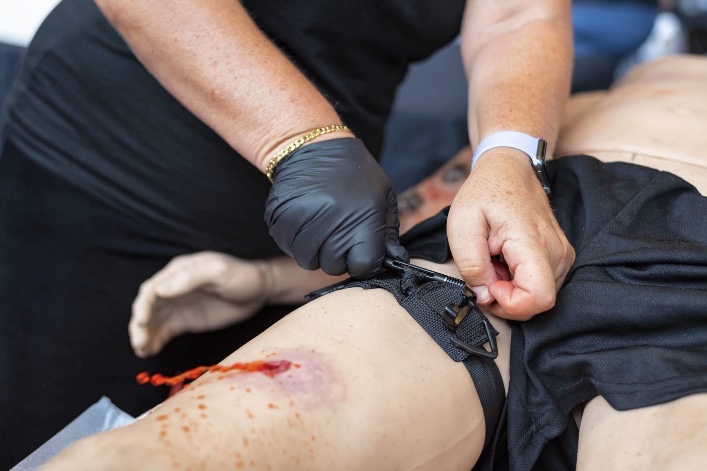
The hasty application of a tourniquet is the recommended management for all life-threatening extremity hemorrhage during the care under fire (CUF) phase. It should be placed immediately over clothing, if necessary, proximal to the wound and high and tight. During the tactical field care phase, the deliberate application of a tourniquet is addressed when the threat has been suppressed and/or aid is being rendered behind cover to ensure proper hemorrhage control. In this phase, the tourniquet is placed against the skin, 2 to 3 inches above the wound. In either scenario the application time is written on the tourniquet at some point before the patient is evacuated or handoff is performed. Additionally, if one tourniquet is not able to control the bleeding, a second tourniquet can be placed adjacent to the first to obtain occlusion. Splinting and immobilizing the extremity after a tourniquet and pressure dressing have been applied will assist with hemostasis but should only be done after all life threats have been addressed using the MARCH algorithm and other associated treatment protocols.

External Compressible Hemorrhage

Bleeding that is not amenable to limb tourniquet use should be treated first using direct pressure in the TFC Phase until a hemostatic dressing can be applied to pack the wound. Once the bleeding is controlled, pressure should be maintained according to the manufacturer’s recommendation using manual compression, pressure dressings, or other commercially available devices.

Tools to Stop Massive Bleeding

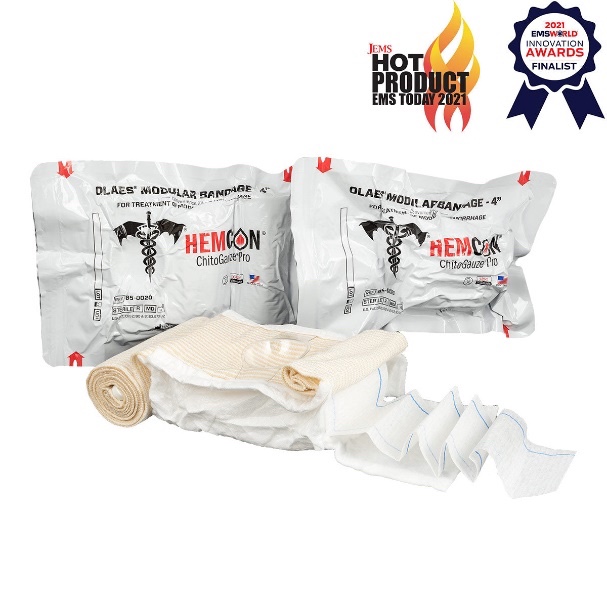
TacMed™ Solutions offers a variety of products built to help stop the bleed including the SOF® Tourniquet, OLAES® Hemostatic Bandage, OLAES® Modular Bandage, BLAST® Bandage, ChitoGauze®, Combat Gauze, and more. Two prominent products are the SOF® Tourniquet and the OLAES® Hemostatic Bandage. The SOF® Tourniquet sets the benchmark for prehospital tourniquets with purposeful upgrades to allow for smoother and faster one-handed and two-handed applications for the most effective bleeding control. The OLAES® Hemostatic Bandage is the world’s most versatile trauma bandage by combining the globally recognized OLAES® Modular Bandage with battle tested HemCon® ChitoGauze® PRO to create the most comprehensive trauma bandage for multiple injury profiles.

Stock Your Kit to Prepare for Uncontrolled Bleeding

To stock your kit with essential tools to stop massive hemorrhaging, check out TacMed™ Solutions at tacmedsolutions.com.

Brigantes Presents: Europe and Middle East Exclusivity of OR Pro

Tuesday, March 1st, 2022

Formerly OR Tactical, Outdoor Research, announced that the company will rebrand its existing and future tactical line and its expanding working professionals product line under the name OR Pro. The Seattle-based brand will be involving both their Seattle and El Monte manufacturing in making OR Pro product.

The OR pro Team is dedicated to developing product through the lens of the elite end user, focusing on solving problems and engineering mission-specific capability across all categories: handwear systems, apparel, and accessories.

The review of the Allies Line can be found here.

One way they have excelled in this area is with the their new Allies line. New pieces include the Mountain Jacket and pant which feature a three layer Gortex fabric. An essential, hardwearing component during mountain and arctic warfare operations. Another new product in the range is their Colossus Parka and Pant. Both featuring OR pros signature Ascent shell. This 3 layer waterproof, highly breathable membrane is necessary for the high tempo, hardwearing activities that occur during fast pace mountain operations.

With many more new key items in the range, OR Pro have surpassed expectation with their new Allies Range. A collection of robust, breathable and windproof apparel with many innovative features specifically designed to fit the needs of the user in the harsh Mountain, and extreme cold weather environments.

Would you like to know more?

For all UK enquiries contact tribe@brigantes.com

For Europe and the Middle East contact international@brigantes.com

US Army Strykers Upgraded with Modernized Weapons System

Tuesday, March 1st, 2022

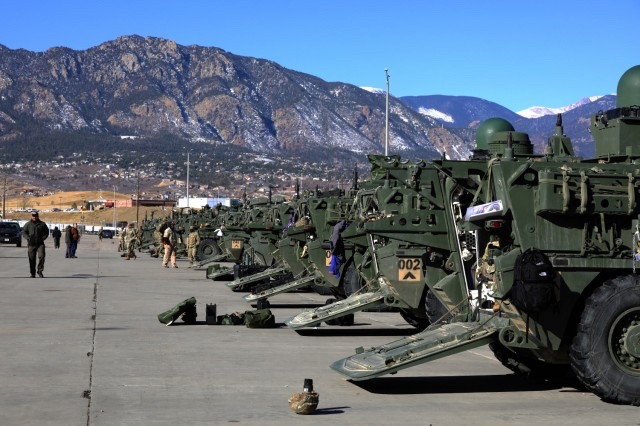
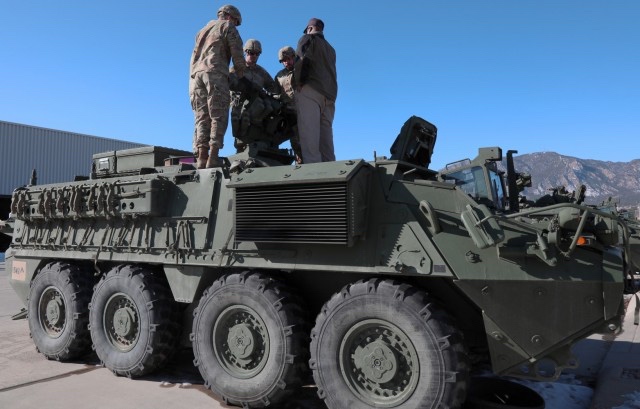
FORT CARSON, Colo. — The Warhorse Brigade at Fort Carson, Colorado began fielding and training on the Common Remotely Operated Weapon Station and the Common Remotely Operated Weapon Station-Javelin on Feb. 7, 2022.

The fielding of the new system, which replaces the Remote Weapon Station, is part of a larger effort to give Strykers more lethal capabilities.

“This modernization enhances our Soldiers’ ability to detect, identify and destroy targets and achieve overmatch against peer threats,” said Col. Andrew Kiser, commander of 2nd Stryker Brigade Combat Team, 4th Infantry Division.

The CROWS and CROWS-J system also allows for Soldiers to engage threats from inside the Stryker, providing a more lethal approach to eliminating threats from a distance.

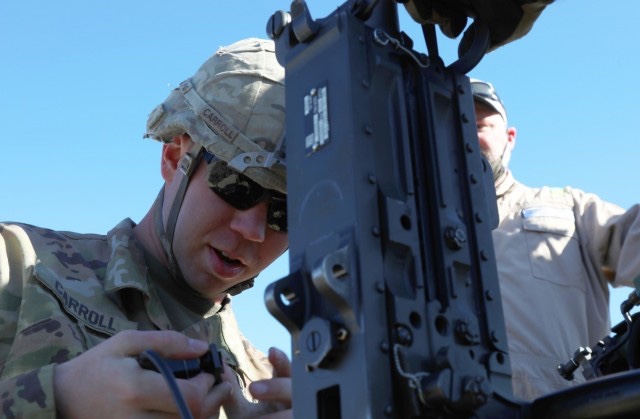
“It improves crew safety and survivability,” said Sgt. Joshua Carroll, infantryman with Headquarters and Headquarters Company, 2SBCT, 4th Inf. Div. “We can engage farther than a dismounted javelin.”

The systems include improved visual capabilities, increasing the Stryker’s lethality.

“Including both optics and control of the primary vehicular weapon system, they allow operators to engage targets from inside the vehicle at extreme distance with an increased resolution in the camera feed,” Kiser said.

The Warhorse Brigade began its transition from a light infantry brigade to a Stryker brigade in the summer of 2020 and became fully mission capable as a Stryker brigade in late 2021. These latest upgrades to the brigade’s fleet make it the most modernized in the U.S. Army.

“It makes us the most lethal Stryker brigade in the Army,” Carroll said.

By SGT Gabrielle Pena

Sitka Arrowhead to Exhibit at Experience FR 2022

Monday, February 28th, 2022

SITKA Arrowhead will be showcasing at Booth #811 at the 10th Annual Exposition and training conference for today’s warfighter and first responder. Attendees will have the opportunity to view the current product line – specifically developed for the SOF end-user – to notably include Berry Compliant best-in-class Wet Weather Protective (WWP) technical apparel solutions.

The event, organized by the Federal Resources, TSSi and Noble and takes place at the MGM National Harbor in Oxon Hill, Maryland on March 1-2 2022.


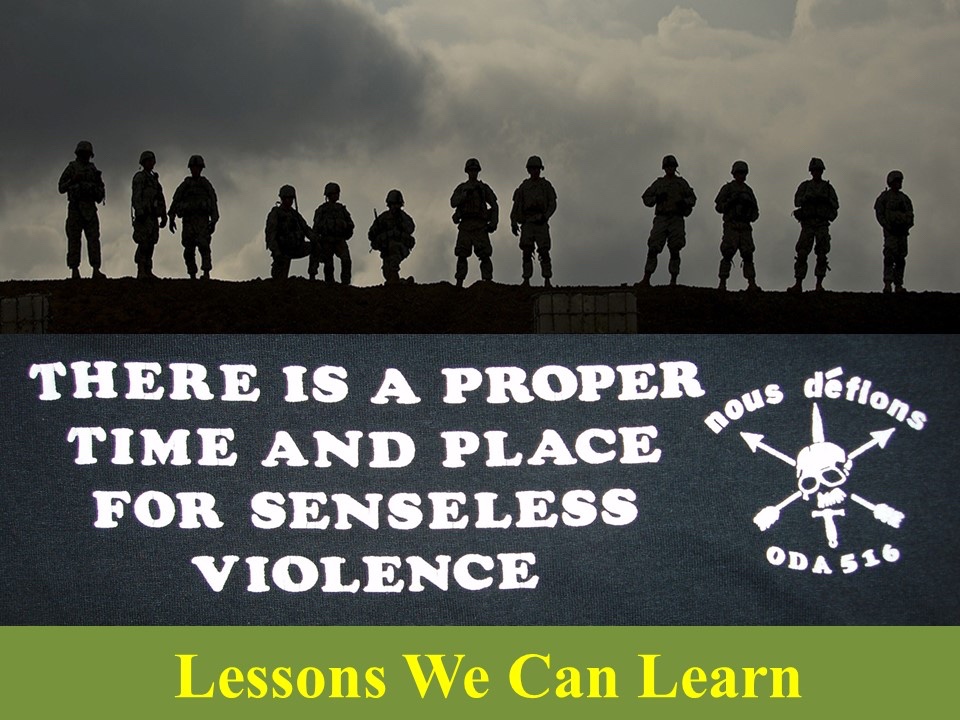
The Baldwin Files – Lessons We Can Learn

Monday, February 28th, 2022

“War is merely the continuation of politics by other means”

“No one starts a war–or rather, no one in his sense ought to do so–without first being clear in his mind what he intends to achieve by the war and how he intends to conduct it.”

“War is no pastime; it is no mere joy in daring and winning, no place for irresponsible enthusiasts. It is a serious means to a serious end.”

Carl Von Clausewitz

A few days ago, just after the invasion of Ukraine started, an SSD reader commented to the effect that Putin was giving the West a “masterclass” on hybrid warfare. I could not disagree more. Sure, Putin’s Russia is fairly capable of combining tank columns with SOF tactically and applying the tools of cyber and informational warfare to some effect. It sounds and looks fairly impressive when experienced in real-time and reported by non-experts – including the people of Ukraine – on the ground. But as a military professional who has studied war all my adult life, it looks more like amateur hour. Based on TV interviews in the last 24 hours, my personal opinion is shared at least by a few other professionals like LTG (R) Keith Kellogg, and GEN (R) Jack Keane. That is not to say that the Russian military might not prevail in the next hours, days, or weeks, to overcome their obviously weaker opponent and occupy portions of Ukraine including the major cities. However, I would be willing to bet that the likely bloody insurgency to follow will make that a very hollow victory.

But there are some obvious lessons to be learned, even as fighting goes on. Let us start with a little abbreviated history – not Putin’s version. Ukraine has had an enduring and distinct identity, separate from Russia, for many generations. Before WWII, the Ukrainians suffered mightily for their desired independence and perceived disloyalty under Stalin’s Soviet Union. By “suffered,” I mean that millions were killed. It is true that during WWII some Ukrainians initially sided with the German invaders, hoping to break away from Russian dominance. Since the Germans quickly demonstrated that they hated “Slavic people” almost as much as the Jews, the Ukrainian people realized their mistake, pivoted, and initiated a brutal insurgency against the Germans on behalf of the Soviets instead. To this day, when Russians want to disparage Ukrainians, they call them NAZIs. So, despite the fact that Russians and Ukrainians are ethnically and culturally “cousins,” some of the history is ugly, and the personal animosity is real and runs deep. Especially for old-timers who venerate the “good old days” of the Soviet Union as Putin does.

More recently, the Russian military has not displayed much excellence or even minimum signs of professional prowess in a series of campaigns. First, Afghanistan. There is no denying that we – the US and NATO – ultimately had no more success in Afghanistan in achieving our stated objectives than the Soviet Union. As with our experience, their initial invasion went well. However, the inherent weaknesses in the Soviet’s ability to sustain their forces hamstrung their options to conduct effective operations in a way that the US-led Coalition forces never had to face. Here is a fun fact. Soviet forces in Afghanistan suffered far more non-battle casualties than were ever killed by the Mujahedeen. Preventable diseases – often brought on by poor sanitation practices – decimated Soviet units in a way their opponents were never able to. Their non-battle casualty rates were the same that Soviet soldiers had suffered during WWII. Their medical and casevac capability had basically not improved in the intervening 40 years. Hell, they had not even been able to effectively educate their conscripts in basic field sanitation practices that, likely, would have had a major positive effect in reducing those casualties.

Of course, in the years after the Soviet Union dissolved, there were the Russian incursions into Georgia, Chechnya, and incremental steps into Crimea and Eastern Ukraine starting in 2014. None of these campaigns went as the Russians presumably hoped – except, arguably, for the “annexation” of Crimea. Still, the Russian military did not perform to anything approaching a high standard in any of those cases. I do want to emphasize the fact that there are some very professional and capable elements in the Russian force structure. The Russians can indeed be very formidable in some circumstances. No doubt! But, when Putin brings 190,000 of his soldiers to the game, only a very small percentage of those ground forces are “top of the line.” Indeed, the bulk of his forces are conscript-reliant formations that are still ill-trained and unmotivated and their gear is poorly maintained and unreliable. Case in point, Russian conscripts are not particularly interested in dying in Ukraine or in killing Ukrainians that they hold no animosity toward what-so-ever. On the other hand, the Ukrainians appear to be much more motivated since they are being attacked.

Putin may be a lot of things. One thing he is not is a military genius. At least for now, I am not seeing any such genius from his generals either. The incursion into Ukraine, to this point, has been entirely predictable and pedestrian. Absolutely nothing bold or innovative. No surprises. It appears Putin was expecting the threat of violence to achieve his objectives of neutering Ukraine and putting NATO and the US on our back heels. It reminds me of our plan in Iraq for OIF. Where we plotted out the invasion in great detail and did the big handwave for whatever was going to happen afterward. It actually appears to me that the Russian generals did not have an invasion plan ready. I suspect that is because they were not eager to own another difficult occupation. They remember those other quagmires from earlier in their careers.

I can speculate, based on my experience, that Putin expected Ukraine and/or NATO would cave to his demands if he just put on enough pressure. First, he ominously positioned forces. That did not get him anything except more weapons shipments to Ukraine. True, those were perhaps more symbolic than substantial, but they were the opposite of what he wanted to happen. The shipments and promises of more to come also helped stiffen the Ukrainian spines as well and they continued to rebuff his threats. He then moved some forces overtly into the already contested Donbas region. I thought he would play that “peacekeeper” card for at least several days while threatening to expand the Russian foothold beyond the separatist enclave into the rest of the region. He pulled the trigger on the next phase quicker than I expected, but that move still did not work in Putin’s favor.

Instead, Germany stopped validation of the Nord Stream 2 pipeline. More than other sanctions that might take some time to inflict pain on Russia, that was a significant economic counter punch to Putin. I do not think he expected or planned for that. Frankly, it appears that he thought Germany specifically – in large part because of the pipeline – would slow roll any NATO response to aggressive Russian moves short of an actual shooting war. Today (26 Feb), Germany joined other countries in sending weapons to Ukraine – something they had been hesitant to do earlier. Likewise, Sweden and Finland, traditional “neutral” countries are now considering even closer ties to NATO – albeit, both will probably continue to forego actual formal membership in the Alliance. Clearly, Putin counted on fracturing not strengthening NATO’s and the EU’s resolve. An unintended, unexpected, and unwelcome, consequence from Putin’s perspective, I am sure. Putin’s plan has now clearly moved into the “friction” portion of his war.

For those that are not familiar with the concept, Clausewitz explained friction’s role in war this way; “Everything in war is very simple, but the simplest thing is difficult. The difficulties accumulate and end up producing a kind of friction that is inconceivable unless one has experienced war.” “Friction is the only concept that more or less corresponds to the factors that distinguish real war from war on paper.” He goes on to describe how chance, danger, and exertion, all contribute to general friction “No other human activity is so continuously or universally bound up with chance. And through the element of chance, guesswork, and luck come to play a great part in war.” “The dangers inseparable from war and the physical exertions war demands can aggravate the problem to such an extent that they must be ranked among its principal causes.” “Action in war is like movement in a resistance element. Just as the simplest and most natural of movements, walking, cannot easily be performed in water, so in war it is difficult for normal efforts to achieve even moderate results.” Clausewitz then asks and answers this question; “Is there any lubricant that will reduce this abrasion? Only one, and a commander and his army will not always have it readily available: combat experience.”

Putin does not have a lot of combat veterans in his formations except some of the most senior officers I mentioned earlier. So, the learning curve is steep for the junior Russian officers, NCOs, and soldiers, at the pointy end facing this complex, ambiguous, and “hybrid” battlefield for the first time. Of course, the same is true of the Ukrainian military and people. But at least, they have the advantage of being on the defensive on their home turf. That levels the field at least a little and they appear to be making a credible fight of it. I do not think Putin’s plan anticipated that possibility either. Everyone judged – myself included – that Putin’s forces had a clear advantage within the cyber and informational domains. His people have been putting out a lot of mis- and dis- information for months and even years to “prep the battlefield.” A good deal of that effort has been targeted to the West in general and the US in particular. From my observations, his efforts were not as effective as they were first perceived to be, and now seem to be faltering – badly – at the very moment that he needs them to reinforce and enable his maneuvers on the ground.

My conclusion may be premature, but based on their lackluster performance so far, I do not think the Russian military is setting a high bar or providing a useful template for what “right” looks like in the cyber or informational domains. We just need to learn from their mistakes. All of their mistakes. It could be that Putin does not have a General Zhukov to give him sound military advice. Maybe he got it but did not accept it. What I see being showcased in and around Ukraine is mostly Russian operational shortcomings and vulnerabilities, not strengths. That does not mean that we can underestimate them. I worry a great deal about their capabilities in the Arctic region. The fact that they have many more icebreakers than we do in the West, for example. That means that we are overmatched in that critical capability. That, in turn, means that Russia can put pressure on the northern sea lanes and put themselves in a better position to control those sea lanes. That would be strategically unacceptable for the US and our Allies. We need not match them ship for ship, but we do have to figure out an effective counteraction.

What about multi-domain land warfare? We talk about it a lot; but, in practice, we are no better at it today than the Russians are proving themselves to be. The military that seems to be doing the most thinking about the multi-domain or hybrid model of war seems to be the Chinese. Unlike the US or Russia, the Chinese have not fought a war since their brief dust-up with Vietnam in 1979. That puts them at a disadvantage, but they do appear to be motivated to get it right when war does come. They bear watching, but that does not mean I think they have broken the code yet. Still, in the strategic context, I worry about them more than I do Russia. I have been looking for lessons from history that may help get us better situated to dominate multi-domain warfare in the future. The example that I think has the most promise is generally considered an experiment that failed for the US military during the early Cold War. That is the “Pentomic Division” of the late 50s. The concept never proved to be capable of doing what had been hoped, in large part because the command-and-control architecture of the time would not support dispersed operations as envisioned. The subordinate “Battle Group” – a task-organized Battalion Task Force to use modern terminology – sounds about the right size for a self-contained and independent maneuver element to me. Although they may not get it perfectly right, I think the USMC is moving in the right direction with their ongoing restructuring because it attempts to address some of the same challenges.

I do not have all the answers and I do not know all there is to know about war. I cannot see the future any clearer than anyone else. My educated opinions and prognostications on Ukraine may certainly prove to be wrong – in part or whole. With operations ongoing, we are in the thick of the fog of war. Still, I am willing to bet I have it more right than not. It is a sin to underestimate your enemies. It is just as egregious a sin to overestimate your enemies. When I was in Germany during the Cold War, the Russian soldiers were reportedly impervious to heat, and cold, and fear. They were berserkers, who would pour across the inter-German border in endless waves. The 8th Guards Army had three times the tanks of all the NATO forces combined and theirs were simpler and more reliable than ours. Bullshit!

The Soviet conscripts of that Army were only formidable on paper; they were actually barely trained, unmotivated, and more afraid of us than we were of them. Their vehicles were starved for parts beyond anything we could imagine and so poorly maintained that fully half would never have gotten out of their motor pools. And, unless they ran on water and could shoot pieces of scrap wood from their main guns, their logistics tail was just as anemic and would never have been capable of keeping up with the demands of fuel and ammo expenditures in a high-intensity conflict. We all like to “Armchair General” whatever war is going on at any given time. I am indulging in a little of that myself right now. But we all know; some armchair generals are more credible than others. Those are the ones to pay attention to – and not the ones who just talk the loudest.

De Oppresso Liber!

LTC Terry Baldwin, US Army (Ret) served on active duty from 1975-2011 in various Infantry and Special Forces assignments. SSD is blessed to have him as both reader and contributor.


Air Force Opens Voting for Spark Tank Ideas

Monday, February 28th, 2022

WRIGHT-PATTERSON AIR FORCE BASE, Ohio (AFNS) —  

Cast a vote for your favorite entry in the Department of the Air Force Spark Tank 2022 competition. Online polling is open through March 4. 
 
Co-produced by the Office of the Deputy Under Secretary of the Air Force, Management and Deputy Chief Management Officer Rich Lombardi and AFWERX, Spark Tank is an annual competition designed to unleash a total force innovation capacity reflecting leadership’s continued efforts to empower intrapreneurs, celebrate their problem-solving skills and give them a stage to share their ideas with fellow service members, Department of the Air Force senior leaders, and the world. Only the top 3% of ideas submitted to the Spark Tank campaign are selected to compete as finalists. 
 
Finalists will take the stage March 4 in Orlando, Florida, during the Air Force Association’s Air Warfare Symposium, to pitch their innovation ideas to Air Force and Space Force senior leadership and industry experts. The audience poll will select the Fan Favorite and be included in the panel’s votes to determine the Spark Tank winner. 

 
Visit the Spark Tank page to view finalist submissions and vote for the best idea. 

Air Force Research Laboratory Public Affairs

SCUBAPRO Sunday – Correct Mask Sizing

Sunday, February 27th, 2022

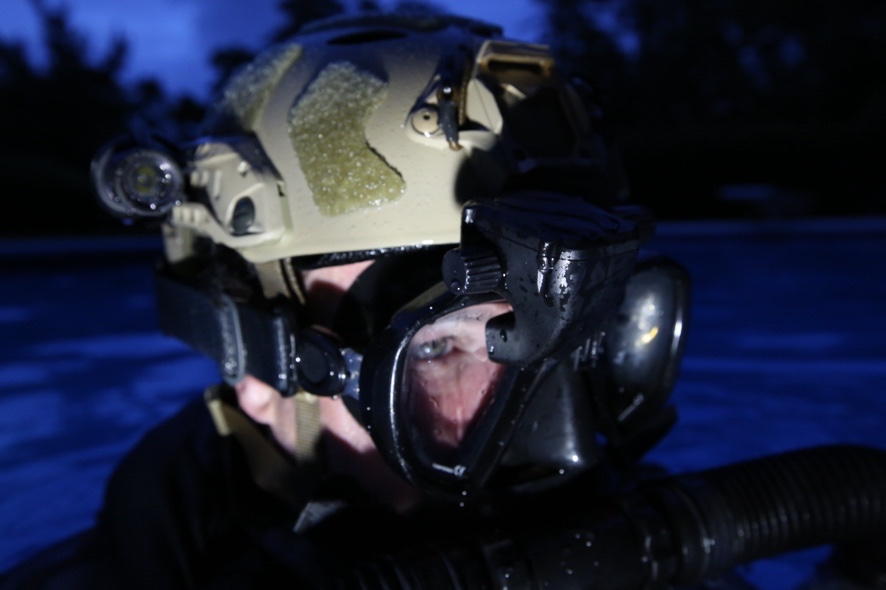
There are a lot of different masks out there. But most of the time, you just go with what is issued to you, which is your standard. Once you are out of training, you can get the mask that works the best for you. Here is the best way to choose a suitable mask for you.

Start by finding a mask that fits your face and your nose. Make sure when you put it on, it fits your face and nose comfortably, and you can pinch your nose if needed to help clear your ears.

When buying a mask, the first issue is determining how it will perform in the water when standing in the diving shop. The best way to answer that question is to go right in. However, there are some indicators you may look for to obtain a good notion.

To see if you can seal the mask on your face, press it against your face and breathe in through your nose. While we’ll get to it, be aware that this can be misleading. To see if the mask suits your face, you must first go through a few steps.

STEP 1: Sit down and look up; from here, lay the mask over your face without the straps and allow gravity to keep it in place.

STEP 2: Have someone inspect the masks outside the seal. The mask should fit the face without covering the hairline or top lip; it’s generally too big if it does. It should always follow the contour of the face and not pull away.

Forward-looking scuba mask red line on the scuba mask’s exterior seal

STEP 3: Have someone inspect the mask’s inner seal; it should sit back behind the eyes and contact the face constantly. It should ideally go around the brows.

STEP 4: Examine your eye location in relation to the lenses’ center. The eyes should be relatively centered in the lenses in the ideal situation. The mask is too tiny if the eyes are wider than the center; if the eyes are very narrow, a smaller or single pane mask may work well.


The first image below displays a somewhat narrowed eye positioning.

The eyes are a little more centered in the second picture with the black mask.

The front eye position on a scuba mask is wide. Black eye position centered on a scuba mask

STEP 5: Inhale deeply through your nose to test the seal. The seal should keep the mask on your face if you look forward.

Front inhalation scuba mask with no strap

STEP 6: Put the strap over your head and tighten it so that it is snug but not too tight. After that, double-check the exterior seal, inside seal, and eye position. Breathe in through your nose one more time to ensure an airtight closure.

STEP 7: Adjust the strap so that the mask frame does not press against any part of your face. Some masks frequently come into contact with the eyes or the bridge of the nose. Any pressure applied to those areas will become uncomfortable or painful over time and should be avoided.

A mask that passes all of these tests is a solid purchase prospect.

What Makes a Seal Bad? “They write a book” Sorry, wrong kind of seal.

Even if you follow all the above procedures, you still can have some issues that can cause leaks. In some cases, a mask will seal in one position but not in another. Ensure the mask stays in place; if the mask strap is too high or too low on the head, the mask may slip out of place, resulting in leaks.

Mask leaking is generally caused by facial hair.

The mask can leak if you grin or have significant smile lines. In addition, if you have a regulator or snorkel in your mouth, the mouth posture may produce a leak. Even with the mouthpiece in place, use a regulator or snorkel mouthpiece to confirm that you have a well-fitting mask while attempting a new mask out of the water.