XC3 Weaponlight

Archive for the ‘Guest Post’ Category

Multi Weapon Aiming Device from MATBOCK

Tuesday, May 31st, 2022

MATBOCK has finished the development of their Multi Weapon Aiming Device (MWAD), which was designed to shorten the kill chain for end users of indirect fire weapons, initially 40mm and 60mm platforms. Full system testing was completed on current operational weapon systems such as the M320, MK19, and M224 60mm mortar systems. MATBOCK is testing and evaluating recent updates to ballistics on 81mm and 120mm mortars in addition to other crew served weapons (CSW) which have been traditionally used solely as direct fire weapons systems.  Through end user input and testing MATBOCK has learned there is a significant use case for CSW platforms for “plunging fire” applications on systems such as the M2 .50 Caliber Machine Gun.

Here is a brief Targeting Overview video:

The MWAD is a multi-platform capable ballistic computer that digitally displays range and azimuth for indirect fire weapon systems. The MWAD provides real-time ballistic solutions that account for environmental conditions, round type, platform, and lot deviations.  This allows the user to put rounds on target with superior accuracy and faster than legacy aiming systems. Full integration into ATAK architecture allows direct input and receipt of call for fire missions, enhances situational awareness by broadcasting point of aim for entire teams, and enables accurate engagement and first round hits on moving targets. Software modifications can be made on request to include any direct fire weapons system.

Features:
• Simple manipulation with gloves and at night
• More rounds on target faster without the guesswork
• Integrates directly into ATAK
• Waterproof & shockproof
• ATAK device not included
• ATAK software provided via .apk file on delivery

How to use
• Mount the MWAD (In a garrison environment similar to zeroing a optic)
• Calibrate the system
• Select the weapon system on device; ie 320
• Select the ammunition being used; ie HEDP
• Raise the weapon system and engage targets.
• Target destroyed

For more information about the MWAD checkout:

www.matbock.com/products/multi-weapon-aiming-device

F-35C Brings Advanced Strike Capabilities to Jungle Warfare Exercise

Tuesday, May 31st, 2022

SAN DIEGO – As 3rd Marine Division recently commenced Jungle Warfare Exercise 22 (JWX 22), a large-scale, joint force exercise, Marine Wing Fighter Attack Squadron (VMFA) 314 integrated the capabilities of the F-35C Lightning II. VMFA-314 supported ground operations from their position deployed onboard the Nimitz-class aircraft carrier USS Abraham Lincoln (CVN-72), displaying their ability to deliver long-range strike capabilities and close air support from an aircraft carrier.

VMFA-314, the first Marine squadron to deploy the F-35C, continued to demonstrate its proficiencies during JWX 22 by conducting simulated offensive and defensive air support, as well as air-to-ground support training missions alongside the Marines of 1st Marine Air Wing, Japanese Air Self-Defense Forces and the Abraham Lincoln Carrier Strike Group in support of Expeditionary Advance Base Operations (EABO).

“The opportunity to work alongside Navy and Japanese Air Self-Defense Forces allows us to demonstrate our forward presence and to showcase our readiness to support real world operations,” said Lt. Col. Brendan M. Walsh, VMFA-314 Commanding Officer. “Leveraging the Marine Corps’ decade of experience with the F-35B, we have spent the last two years working with the Navy to ensure the successful integration of the F-35C into the Carrier Air Wing and are now able to provide improved battlespace awareness and unmatched lethality.”

The integration of VMFA-314 and the F-35C into the Carrier Air Wing enables U.S. naval forces the ability to launch and recover fifth-generation aircraft from nearly anywhere in the world and to relocate to new strategic locations. The employment of the F-35C provides Marine ground units stealth capabilities and combat power to create the conditions for follow-on operations within key maritime terrain.

Exercises such as JWX 22 allow squadrons operating the F-35C to integrate tactics in conjunction with ground forces to help advance expeditionary capabilities such as EABO. These rehearsals of engagements will serve to reduce response times of forward-deployed units and support the continued prosperity, security and promise of a free and open, rules-based order for the U.S. and its alliances and partnerships.

With continued deployments of fifth-generation fighters onto highly mobile aircraft carriers, the F-35C is able to provide precision long-range strike capabilities to allies while also garnering valuable intelligence from areas of operation, all while operating from at-sea or shore-based austere environments.

VMFA-314 was the first Marine Corps squadron to transition to the F-35C variant of the joint strike fighter after retiring its legacy F/A-18A/C aircraft and receiving its first F-35C on Jan. 21, 2020. Now as the Marine Corps continues to develop as a modernized naval force, deploying squadrons such as VMFA-314, to key strategic maritime locations demonstrates the Marine Corps’ capability to deter adversary aggression, and if required, decisively win in conflict.

Written by Capt Charles Allen, 3rd MAW Communication Strategy and Operations Office. 

DEVCOM, Army Special Forces Collaborate with International Partner to Test Additive Manufacturing Technology

Monday, May 30th, 2022

ABERDEEN PROVING GROUND, Md. — On a battlefield in the future, Soldiers deployed to remote areas around the world will use sophisticated additive manufacturing printers to ‘print’ virtually everything they need, from food to shelter to weapons. The Army has made additive manufacturing a priority and Combat Capabilities Development Command, or DEVCOM, is supporting the effort with Project Prime, a collaboration with U.S. Army Special Forces and an international industry partner.

The Project Prime team consists of the U.S. Army 7th Special Forces Group (Airborne), or 7th SFG (A); DEVCOM’s International Technology Center — United Kingdom, or ITC-UK; DEVCOM’s Command, Control, Communications, Computers, Combat systems, Intelligence, Surveillance and Reconnaissance Center, or C5ISR; and Defend3D, a company based in the United Kingdom that enables secure transmission of remote 3D printing.

Special Forces Soldiers tested the technology by repeatedly adding and printing additive manufacturing files using Defend3D’s Virtual Inventory Communication Interface, or VICI. VICI provides a server application that manages the virtual inventory, assigns rights to remote manufacturers and provides the product in a ‘one-click-print’ format with minimal training for the end-user to securely stream.

“Despite a network connection categorized commercially as having low to no connection, VICI facilitated speedy, secure and accurate printing. Based on expectations set at the beginning of the project, VICI did everything we needed it to do, and 7th SFG (A) was satisfied with the system performance and endorsed the capability for further development and implementation,” said Dr. Patrick Fowler, DEVCOM Global Technology advisor at ITC-UK.

Each DEVCOM ITC has a Global Technology advisor who scouts technology in their area of operation. Project Prime began when a DEVCOM global technology advisor was scouting additive manufacturing technology in the Atlantic region, which includes London, United Kingdom; Paris, France; Frankfurt, Germany; and Tel Aviv, Israel. The ITCs, which are part of DEVCOM’s global enterprise, serve as the forward-deployed ‘eyes and ears’ of the Army Science and Technology Enterprise. Other DEVCOM ITCs include: North America; South America; Northern Europe; Southern Europe; Northeast Asia; Southeast Asia and the Southern Hemisphere.

VICI ensures end-to-end encryption by enabling organizations to store their designs locally and use the virtual inventory to manufacture parts in remote locations. For example, a deployed Soldier communicates a need, such as a spare part or a modification to an existing part, to the computer-aided design, or CAD, element at 7th SFG (A). The CAD element either designs the part from scratch or selects from a database of commonly used parts. This is then streamed to the Soldier in the field, who prints the part. Because the file is never sent, VICI prevents adversaries from accessing the information and identifying vulnerabilities in equipment and capabilities.

“We made it a priority to pursue avenues that will allow us to operate in environments that are not conducive to regular resupply efforts. For detachments to stay in the fight in these environments, we explored systems that operate outside the conventional supply chains. Project Prime’s deployable 3D printer and VICI software enables secure transmission and an easy-to-use interface,” said Chief Warrant Officer 2 Jesse Peters, Innovation Cell, 7th SFG (A).

Other benefits of the technology include:

The 3D printer operator does not need to be an expert in 3D printing to print the required files.

The interface prevents overloading the network since forward-deployed Soldiers only see objects they have requested for their mission.

It securely stores files in a sharable repository, including files created by the Department of Defense and coalition networks.

“Imagine this scenario — a clever Green Beret on a remote base develops a novel attachment for an existing Unmanned Aircraft System, which is stored in VICI. Then, a clever Airman across the world at a remote airfield sees it and adds his/her twist. Next, a British Soldier prints it and starts using it in his/her own operations,” Fowler said.

During the training event, feedback was gathered in real-time as the deployed Soldiers communicated with the 7th SFG (A) Innovation Cell. Other information was collected after the training, including the pros and cons of the system, software interface, training requirements and long-term durability.

7th SFG (A) plans to train more of their Soldiers on the technology to support a U.S. Army Southern Command deployment. Once the deployment is completed, ITC-UK will document all of the activities and achievements of Project Prime and make it available to the broader Department of Defense community. The information will benefit other DEVCOM centers and research laboratory, particularly the C5ISR Center, which focuses on securing communications to the tactical edge. The technology may also fill gaps with other Army units.

“We’re looking for funding to further develop VICI to make it operable on a cell phone or a small device, including a Raspberry Pi, which is a very small computer that plugs into a computer monitor, TV, or similar small end-user devices. This will make the solution, which is currently used on a laptop, even more deployable,” Fowler said.

By Argie Sarantinos, DEVCOM HQ Public Affairs

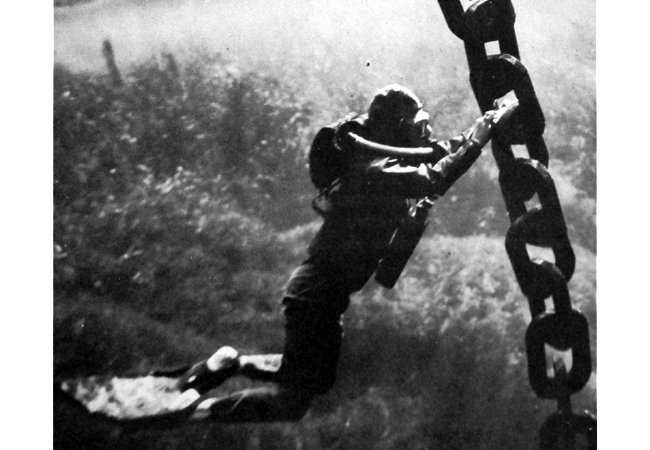
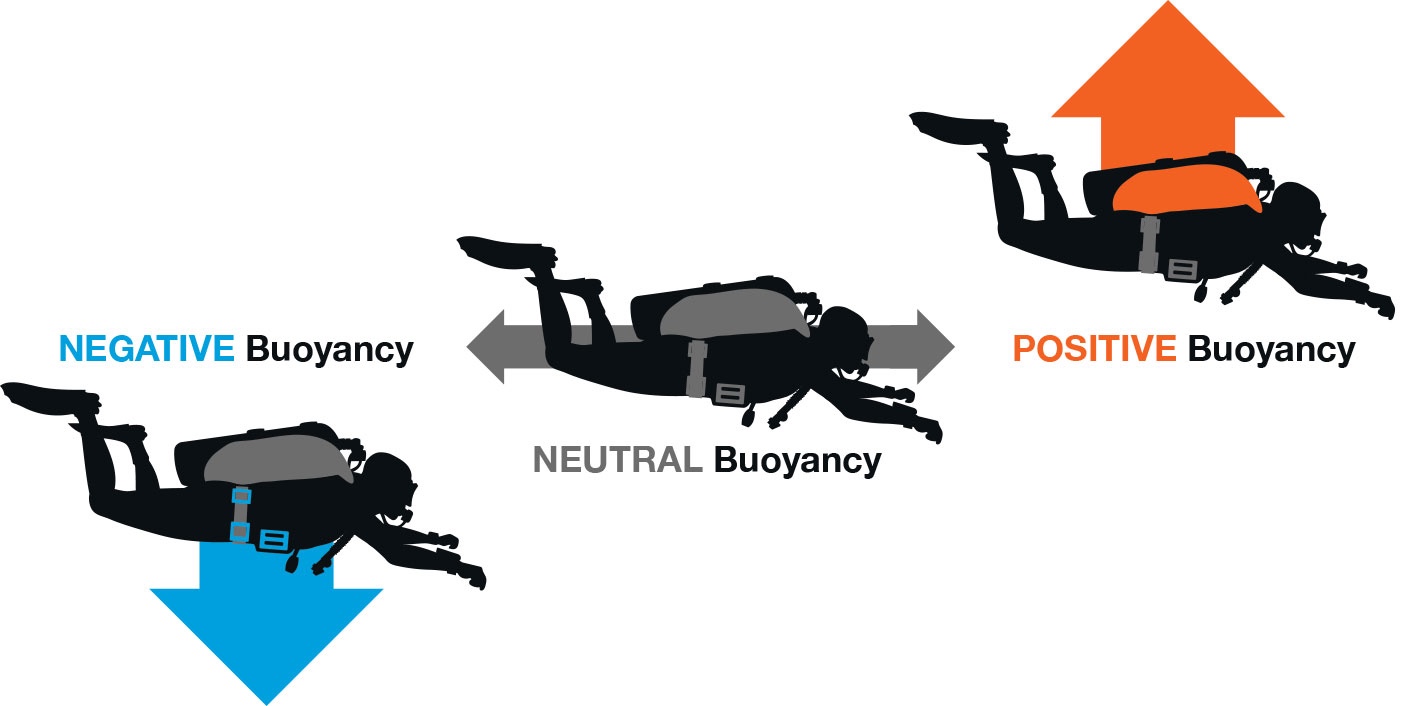
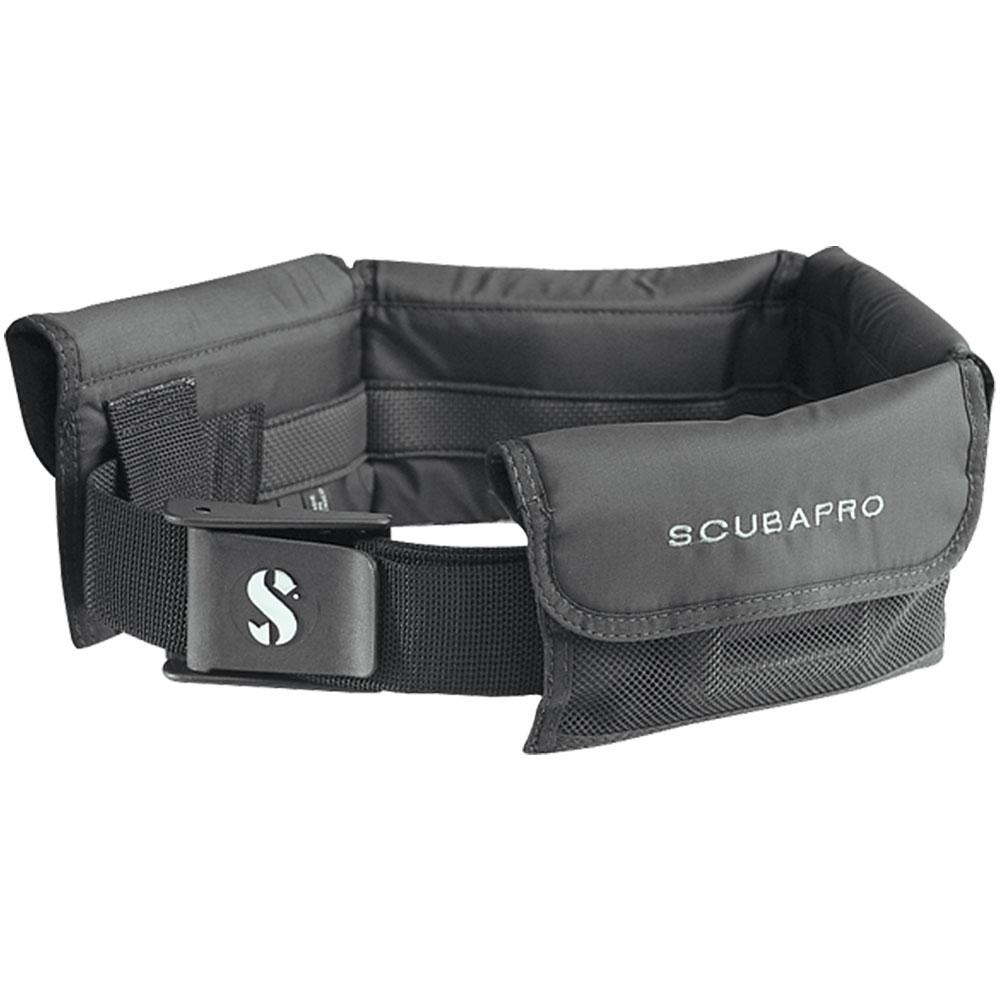
SCUBAPRO Sunday – SEALs Birthday

Sunday, May 29th, 2022

On 25 May 1961, President John F. Kennedy, addressing a joint session of Congress, delivered a speech that most people remember as his challenge to the country to put an American on the moon before the end of the decade. The most important part of that speech you seldom hear about. But, it mandated that the military broaden its numbers and the use of Special Operation in all branches of service: “I am directing the secretary of defense to expand rapidly and substantially … the orientation of existing forces for the conduct of … unconventional wars. … In addition, our special forces and unconventional warfare units will be increased and reoriented. …

The East Coast and West coast teams have always joked about what team is older, Team One, or Team Two. Team Two says they are because of the 3-hour time difference, and the west coast says they are because they supposal received their message to commission first.  But this isn’t really about that. The SEAL Teams use 01 Jan 1962, the day the teams were commissioned as their birthday. But if you look through old messages, you can find about different dates that you could say should or could be the birthday of SEAL Teams. Before Kennedy gave his speech, the Navy and all the other branches had already started to plan for a new kind of warfare and a new group to fight it. The U.S. has just ended significant involvement in Korea and sent advisers to Vietnam around 1955, so we had an idea of what the next generation of warfare might look like.  

To augment present naval capabilities in restricted waters and rivers with particular reference to the conduct and support of paramilitary operations, it is desirable to establish Special Operations teams as a separate component within Underwater Demolition Units One and Two. An appropriate cover name for such units is “SEAL” being a contraction of SEA, AIR, LAND.

– Vice Adm. Wallace M. Beakley,
Deputy Chief of Naval Operations, 05 Jun 1961

I love that the name “SEAL” started as a cover name, I am sure they never thought of what that name would come to mean. I say that in a good way and also a little wrong. I miss the days of being quiet professionals.

The Chief of Naval Operations, Adm. Arleigh Burke, in a memo dated 11 Jul 1960, tasked Vice Adm Beakley with studying how the Navy could contribute to unconventional warfare. Beakley responded to that tasking in a memo dated 12 Aug 1960, saying, “Navy Underwater Demolition Teams and Marine reconnaissance units were the logical organizations for an expanded naval capability in unconventional warfare.” Beakley further recommended that a working group be formed to study how the Navy could “assist or participate” in covert operations. Then, on 13 Sept 1960, an Unconventional Activities Working Group was formed. Like the military now, the progress was slow, and on 10 Mar 1961, when the Navy’s Unconventional Activities Committee presented a mission statement for the new special operations unit and officially used for the first time the acronym “SEAL.”

Beakley sent another memo saying, “If you agree in the foregoing proposals, I will take action to establish a Special Operations Team on each coast.” Burke wasted no time in giving the green light. On 05 Jun 1961, the CNO issued a letter notifying the commanders in chief U.S. Atlantic, U.S. Pacific, and U.S. Naval Forces Europe about the Navy’s intentions regarding SEAL units. So, if you look at all the about dates, you can choose 25 May, 05 Jun, 13 Sept, 10 Mar or 01 Jan.  I do not really care about what date that it happened on; I am just glad that it did, and I think it is good to look back at the process that went from idea to a finished product.

Oh, and Team Two is the Oldest Team.

Air Force Announces New Mustache Policy, Sister Service and Joint Unit Patch Update

Saturday, May 28th, 2022

ARLINGTON, Va. (AFNS) —  

The Air Force recently published a memorandum outlining updates to the Department of the Air Force Instruction 36-2903, Dress and Personal Appearance of United States Air Force and United States Space Force Personnel, which include mustache, sister service and joint unit patch wear guidance. The updates are effective immediately for Airmen.

“These changes will allow Airmen additional flexibilities as to how to wear mustaches” said Gwendolyn DeFilippi, acting Deputy Chief of Staff for manpower, personnel and services. “Additionally, allowing Airmen to wear sister-service patches in their current color configuration influences cohesiveness and pride while assigned to joint organizations.”

Mustaches: No portion of the mustache will extend below the lip line of the upper lip. Additionally, the mustache will not go beyond a horizontal line extending across the corners of the mouth and no more than 1/4 inch beyond a vertical line drawn from the corner of the mouth.

Patches: Airmen assigned, attached, detailed, or activated in support of sister-service units or joint organizations can now wear the unit’s patches in accordance with the sister service or joint organizations wear instructions.

The badges or patches can be worn in the sister service or joint organization’s color configuration and will not be converted to the spice brown color.

DAFI 36-2903 takes precedence if a sister service or joint organization wear instructions cause a conflict in Air Force patch configuration guidance, i.e. the wear instruction might switch a patch designated as a “left sleeve” patch to the right sleeve.

These updates were based off feedback provided to senior leaders and the updated DAFI will be published at a later date.

Secretary of the Air Force Public Affairs

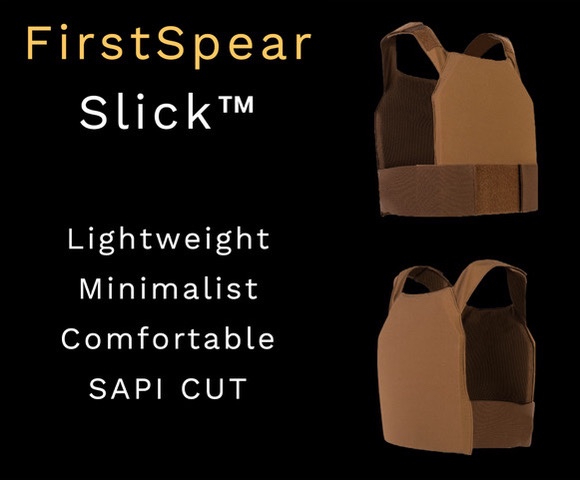
FirstSpear Friday Focus: Remembrance

Friday, May 27th, 2022

This Memorial Day, we at FS take time to reflect on the sacrifice’s on behalf of those who paid the ultimate sacrifice. The price of freedom isn’t free.

DEVCOM Soldier Center Designs Protective Jumpsuit for Elite Firefighters

Thursday, May 26th, 2022

NATICK, Mass. — Some heroes wear capes, and some wear jumpsuits designed by the U.S. Army Combat Capabilities Development Command Soldier Center, or DEVCOM SC.

America’s smokejumpers literally dive into danger. They are an elite group of firefighters who parachute into remote areas to put out wildfires. They need and deserve the very best equipment to do their jobs effectively and safely. DEVCOM SC’s Design, Pattern & Prototype Team in the Soldier Protection Directorate took on the task of updating the jumpsuits that smokejumpers wear when they take the leap to put out wildfires.

“The rough terrain jumpsuit is worn by smokejumpers working for the United States Department of Agriculture’s Forest Service and the Department of Interior’s Bureau of Land Management,” said Patti Bigrig, a clothing designer on the Design, Pattern & Prototype Team, or DPPT. “There are about 400 to 500 smokejumpers within the United States. Their mission is to parachute into remote areas, where vehicles have no access, to extinguish forest fires.”

Zach Glover, one of the smokejumpers who aided DEVCOM SC in a fit and integration check for the new and improved rough terrain jumpsuit, explained that the jumpsuit is used to protect smokejumpers from any kind of impalement from tree limbs and has a built-in letdown system if they get caught in a tree. The jumpsuit adds some fire protection as well.

Glover values the opportunity for smokejumpers to provide input into the new prototype. “The new suit will improve mobility, be lighter weight, and allow for better protection, range of motion, and freedom of movement,” said Glover.

The effort is a perfect fit for DEVCOM SC’s expertise. “DEVCOM SC’s long-term expertise in developing clothing to meet Warfighter needs benefits this project in all aspects,” said Annette LaFleur, DPPT’s team leader.

“We not only look at the musculoskeletal structure and movement of the human body within the framework of a clothing item but how the necessary equipment works cohesively with the garment to enhance performance and mission success,” said Bigrig. “We listen to the user to find out what isn’t working and devise a solution.”

DPPT is adept at designing for function and specific occupational specialties — whether it be a protective ensemble for a fuel handler or bomb suit for an explosive ordnance disposal operator or a new rough terrain jumpsuit for smokejumpers. On a daily basis, the team works to meet the needs of Warfighters and other users by translating user requirements into tangible prototypes. The prototypes incorporate materials and features to meet the specific needs of the user. For the rough terrain jumpsuit, the prototype includes padding with the proper impact protection, as well as flame-retardant base materials.

“The team starts by sketching design options, discussing ideas with the user before drafting patterns and sewing the first prototype,” said LaFleur. “We design, test and validate, ensuring the item is user tested and approved. We don’t want the user to have to think about or be burdened by their clothing or gear. If they are solely focused on their mission, then we know we have done our job well.”

The rough terrain jumpsuit prototype includes improvements to features and materials.

“Due to the natural rough terrain in which these parachutists are entering, the current jumpsuit has a short field life,” said Bigrig. “The current jumpsuit is made from Kevlar, which has great puncture resistance but very low abrasion resistance. It quite frequently requires repair or replacement. Kevlar is sensitive to, and weakened by, exposure to sunlight, and this factor also plays into a shorter use expectancy. The goal of this new jumpsuit is to increase the durability, protection and extend the life of its use.”

Melynda Perry, a textile chemist on DEVCOM SC’s Textile Material Evaluation Team, ran tests on the current jumpsuit material and suggested some materials to be integrated into the new suit. The new suit includes two layers — a base layer and a higher abrasion resistant layer. The goal is to identify lighter weight materials with improved abrasion resistance that have lower amounts of aramid fibers to offer higher protection against UV exposure, extending the life of the jumpsuit.

The new jumpsuit prototype also features an improved collar and integrated impact resistant foam. It also includes an adjustable side pocket at the bottom of the jumpsuit trousers. The pocket is used to hold rope and other gear.

Bigrig conceived the idea for the adjustable pocket, and Chong Whitfield, a DPPT production designer, refined the idea. Being able to adjust pockets helps improve safety.

“It’s the Goldilocks pocket,” said Bigrig. “You can adjust it so that it is just right.”

User input, which plays a key role in all of DEVCOM SC’s product development, is driving the design of the new jumpsuit.

“We had a lot of conversations with the smokejumpers and gleaned great information on how we could make this jumpsuit into something that would greatly improve on what they currently had,” said Bigrig. “It is a wonderful relationship because we adapted the design to the feedback we received.”

Prior to working with the DPPT, the smokejumpers already had a good working relationship with DEVCOM SC’s Air Drop Team, part of the Soldier Sustainment Directorate. This relationship led to the smokejumpers seeking out DPPT.

“We viewed videos of their donning and doffing process, deployment from the plane along with the five-point landing procedure,” said Bigrig. “We had a lot of conversations with the smokejumpers and gleaned great information on how we could make this jumpsuit into something that would greatly improve on what they currently had.”

Other DEVCOM SC teams were also involved in the effort. Bigrig explained that the DPPT has been leveraging the expertise of DEVCOM SC’s Ballistic and Blast Team’s Chuck Hewitt to test impact resistant materials to integrate into the suit. Perry has also been instrumental in testing and providing recommendations for best materials for the new jumpsuit.

“There are people here who are experts in their fields,” said Glover. “They are experts in design, textiles, blunt impact ballistics and parachutes. We are firefighters and smokejumpers first and working with these experts is really beneficial for us.”

Bigrig is proud to work with the smokejumpers on the new Rough Terrain Jumpsuit.

“The users are firefighters with a high degree of ingenuity, and we are honored to help them take the jumpsuit to the next level,” said Bigrig.

By Jane Benson, DEVCOM Soldier Center Public Affairs

Emerald Warrior 22.1 Concludes for AFSOC, Czech Special Forces

Tuesday, May 24th, 2022

HURLBURT FIELD, Fla. —  

Air Force Special Operations Command wrapped up its 15th Emerald Warrior exercise that provided realistic and relevant training to prepare special operations forces, conventional forces and international partners for conflict in an evolving, strategic environment. 

The EW 22.1 planning team applied lessons learned from real-world operations to train and ready forces to the joint force, while staying focused on security priorities laid out within the 2022 National Defense Strategy; specifically, pacing strategic competitors. Trained, credible forces and strong international partnerships are pivotal to this effort.  

“In this year’s iteration, we improved our approach to command and control through the employment of the Special Operations Task Group and Special Operations Task Unit,” said U.S. Air Force Col. Kevin Koenig, exercise director of Emerald Warrior. “This dispersion of leadership allowed for real-time, on-the-ground decision making and allowed commanders to perform operations quickly and more efficiently. We exercised our agile combat employment capabilities and focused additional training on non-kinetic skillsets to include public affairs and information operations. With our partner nations and sister services, our goal is to continue to deter adversaries, now and in the future, in all domains.” 

The objective for this year’s EW was to gain and maintain an advantage on the battlefield and in the information environment, and grow kinetic and non-kinetic effects above and below the threshold of armed conflict from strategic competitors. 

This annual exercise is an opportunity to further test and improve future approaches to AFSOC units like the mission sustainment teams. These MSTs established forward-operating bases by providing initial site security, receiving cargo and personnel, and setting up shelter. 

“It was very impressive how the 1st SOW and 27th SOW [from Cannon Air Force Base, New Mexico] capabilities came together in order to forward stage our contingency locations during this exercise,” said U.S. Air Force Lt. Col. Travis Deutman, commander of the Emerald Warrior SOTG. “As these capabilities continue to progress, it’ll definitely be something that’ll be useful within AFSOC.” 

In line with AFSOC’s Strategic Guidance, the exercise fuels on-going innovation and experimentation efforts within the command.   

“The most important idea to understand about Emerald Warrior is that as AFSOC implements force generation, we’re building new concepts; the two biggest concepts being the SOTG command team and our MSTs,” said U.S. Air Force Col. Michael Haack, deputy director of operations for AFSOC. “These concepts combine to enable the force to do agile combat employment in a contested environment. We increased our agility; we pushed our decision making forward to the lowest level. These teams are trained and enabled, and ready to fight the fight in the contested and uncontested environment.” 

In addition to introducing new command and control structure, the exercise continued as a forum of collaboration between the U.S. and its international partners and allies. This year, AFSOC hosted partners from the Czech Republic. 

“We look forward to working with our partner nations and coalition forces from across SOF,” said Haack. “Emerald Warrior allows us to problem solve in an exercise environment, establish communication and build enduring relationships. Those relationships with our Czech partners and fellow SOF coalition forces are critical so we’re not meeting them for the first time down range.” 

By 2nd Lt Cassandra Saphore, Air Force Special Operations Command Public Affairs