Tropo Performance

Archive for the ‘Guest Post’ Category

Soldiers Give Feedback on Emerging Defense Capabilities

Monday, May 23rd, 2022

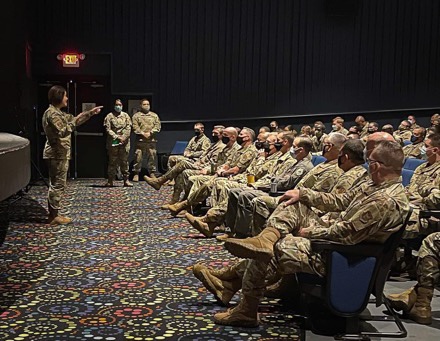
FORT LEONARD WOOD, Mo. — Leaders from U.S. Army Futures Command and the Maneuver Support Center of Excellence wrapped up the two-week Maneuver Support, Sustainment and Protection Integration Experiments — or MSSPIX — this week, giving Army leaders and capability developers a chance to gain insights into the viability of emerging technologies through credible and validated operational assessments.

According to Kyle Henry — the chief of the center’s maneuver support battle lab experimentation branch and one of the key organizers of the event — the annual MSSPIX is an important venue for conceptual and materiel development because of the feedback provided by the very Soldiers who may one day use the technology to assist in accomplishing missions.

“Without the Soldiers, this would be a glorified tech demo,” he added. “That’s not what we’re trying to do. We want a non-biased look at these technologies, these capabilities.”

Henry said the overarching focus of this year’s MSSPIX was to enable protection and sustainment solutions in support of what’s called multi-domain operations — the Army’s attempt to address competition and potential conflict between the United States and countries with relatively similar warfighting capabilities across air, land, sea, space and cyberspace. This includes the mitigation of hazards, the preservation of assets and the protection of Soldiers.

“The technologies being assessed are designed to minimize a Soldier’s presence on the battlefield, or otherwise aid in protecting lives, while also improving the ability to defeat enemy forces, disrupt enemy capabilities and physically control spaces,” Henry said.

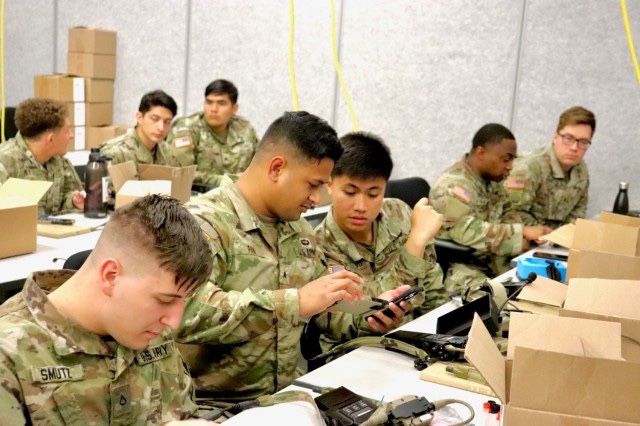
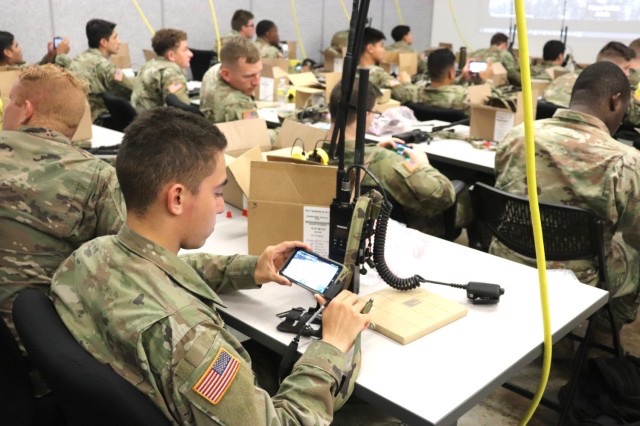
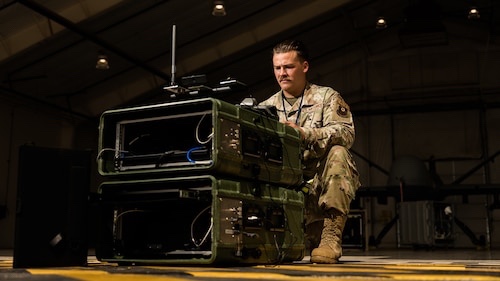
During a demonstration day event on May 17, Sgt. Daniel Alexander, with Fort Leonard Wood’s 595th Sapper Company, and Spc. Wyanet Nakai, from the 212th Military Police Company at Fort Bliss, Texas, operated what’s being called the Mobile-Acquisition, Cue and Effector, or M-ACE — one of 14 capabilities assessed this year by a group of more than 20 Soldiers from installations across the country.

Integrating radar technologies with a remote cue system, M-ACE can lock onto and disable a moving target, such as a drone.

Having a system like this in a combat environment is ideal for military police, Nakai said, as they are typically considered what’s called “mounted,” meaning they stay inside their tactical vehicles.

“What we’re doing is controlling the weapon from inside,” she said. “This set up is really nice, and it’s safer.”

For a combat engineer, like Alexander, whose missions require both mounted and unmounted capabilities, it’s nice to know the Army is trying to minimize Soldier risk on the battlefield.

“It’s nice to know we’re going another route for combat [military occupational specialties],” he said. “We go outside the wire, put our lives on the line, and with technology like this, it takes the Soldier out of many of those situations — it minimizes the dangers.”

This was the first time either Alexander or Nakai have participated in MSSPIX. Alexander, originally from Bolingbrook, Illinois, said he was happy for the opportunity to provide inputs that may one day help improve the Army’s ability to more effectively and safely meet its mission requirements.

“I hope other Soldiers in my unit get this opportunity,” he said.

Nakai, from the Navajo Nation in Utah, said it’s fascinating to be part of a project decades in the making.

“I didn’t know what MSSPIX was,” she said. “I’m amazed by how much time goes into these technologies — someone said 18 years for this one. It blows my mind how much thought and effort goes into building a system like this, and they want to keep improving it.”

By Fort Leonard Wood Public Affairs Office

SCUBAPRO Sunday – What to Wear Under Your Wetsuits?

Sunday, May 22nd, 2022

Most people wear something under their wetsuit to help with getting their wetsuit on and off easier. The other reason for wearing something under your wetsuits is that the extra layers can help keep your body warmer. Instead of wearing a thicker wetsuit that will restrict your movement, it allows you to wear a thinner suit that will give you more flexibility. You can wear a short sleeve top or bottom to help keep your core warmer. The other thing to think about is the air temperature/ wind on your way to the dive site. Suppose you are worried about the air temp/ wind when you are traveling to the dive site. In that case, you can wear heavyweight GoreTex or a linebacker jacket (the kind made for helo’s flights/ football players wear on the sidelines) is excellent to have as you can take it off before the dive and put it on when you are done.

SCUBAPRO 1.5mm Everflex SS top

For colder temperatures, adding layers underneath the suit is the way to go. You have several options to choose from. If you already have a thinner wetsuit that you usually use for warmer environments, a 1mm rash guard, or any other type of garment that’ll provide you with the added warmth around your chest will help. SCUBAPRO makes a great 1.5mm top and bottoms in short and long sleeves, shorts, and long pants. This 1.5mm is very warm, and to me, it feels like I am wearing a 2-3mm.

SCUBAPRO 1.5mm Everflex long pants

When you have to worry about the wind, most surf wetsuits or wetsuits glossy like surf suits are made to stop the wind. That all-suit surf suits are not great for diving as most are not made from a material (yes, surfing is different than diving) that is designed to be used underwater for long periods. Some people like to wear nothing between them and their wetsuits. This can be painful after wearing a wetsuit for a long time, especially on a long wet Zodiac ride. Due to the constant rubbing against their skin, it begins to chafe ( AKA Baboon a$$). Usually, the neck, armpits, behind the knees, and the crotch are the first to go. You can apply anti-chafing gel/ Vaseline to help with this on long dives and rides. There is also stuff like Butt Paste, Triple paste, or Anti monkey butt paste.

SCUBAPRO 1.5mm Everflex LS top

You can also wear dive skin or bike shorts; this will help with donning and doffing your suit on and off also. I have started to use compression shorts. (They make tops also) They are made with a material called Celliant; it is a mineral-infused fabric to take the energy you give off when you work and reflect it into your muscles, increasing blood flow and helping them work harder. As your body emits energy, the mineral-infused fabric absorbs & reflects it, improving endurance. (I know this sounds crazy, but I am a big believer in Celliant)

Whatever you decide to wear, keep in mind the water/ air temperature, duration of the dive, and what you will be doing. Also, one reason you should make sure to keep a logbook of all your dives. That way, you can look up what you have used in the past for this situation. That should put you at a good starting point. Now that you’re aware of your options, it’s time to get to specifics. What type of undergarment is right for your needs, or do you even need to wear anything under your wetsuit at all?

SCUBAPRO 1.5mm Everflex

Well, that depends on you. In warmer waters, you can get away with wearing undergarments with minimal coverage (swimsuits, trunks, and other similar items)—or even nothing at all. Many people prefer to go commando under their wetsuits, but it’s all a matter of preference. If you plan to rent the suit, however, you’re probably going to want to wear something underneath.

SCUBAPRO 1mm Topical wetsuit

For colder temperatures, adding layers underneath the suit is the way to go. You have several options to choose from. Suppose you already have a thinner wetsuit that you usually use for warmer environments. In that case, you can opt to add a jumpsuit, rash guard, or any other type of garment that’ll provide you with the added insulation you need. This way, you won’t have to purchase another suit.

SCUBAPRO Hybrid Hood Vest

Or, if you’d instead go naked warrior underneath, you can get a thicker wetsuit. Deciding what to wear ultimately depends on the environment (and temperature) you plan to dive in, how sensitive your body is too cold, and many other variables. Make sure to consider all factors before you buy anything, and always try it in training before you use it for the first time when it matters the most.

New Army Tech Successfully Demonstrated During Arctic Exercise

Sunday, May 22nd, 2022

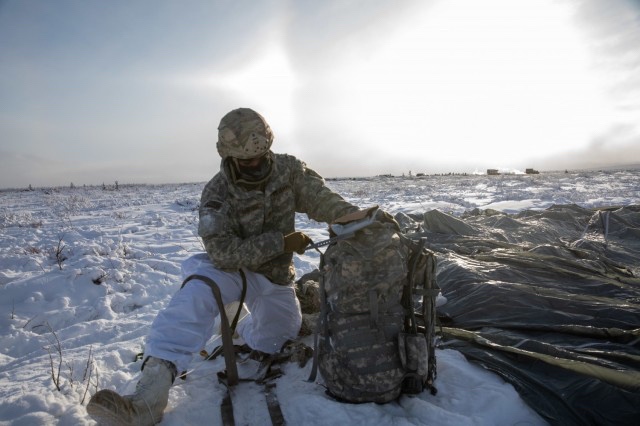
JOINT BASE ELEMENDORF-RICHARDSON, Alaska — During a multi-service exercise, the U.S. Army Engineer Research and Development Center Cold Regions Research and Engineering Laboratory, or ERDC CRREL, successfully demonstrated a groundbreaking technology to detect airborne targets.

The project, called TripLine, was developed by ERDC and uses emitted sounds to passively detect targets. The technology was showcased during Arctic Edge 22, a bi-annual event hosted by the Alaskan Command at Joint Base Elemendorf-Richardson, Alaska, committed to the defense of North America with roots going back more than five decades.

The TripLine project started in 2017 and utilizes technology to detect airborne targets through soundwaves that interact with the ground and transfer a portion of the acoustic energy into the ground. The transferred soundwave energy subsequently interacts with buried sensing fiberoptic cable and induces a small, but highly perceptible, change in the cable that can be measured, analyzed and recorded by the TripLine system. This atmosphere-to-terrain energy transfer enables the presence of aircraft near the TripLine system to be automatically detected.

Dr. Sergey Vecherin, a research physicist at CRREL who leads the team developing a suite of algorithms for Tripline, said the system aims to be low-maintenance and suitable for operations in arctic conditions.

“TripLine is a system for automatic detection of acoustic sources with some unique operation capabilities,” said Vecherin. “Other systems cannot do what Tripline can, either due to scientific or operational limitations.”

When the first TripLine experiments were conducted in 2017, the goal was to prove sensor success for the desired sources in principle. In 2019, TripLine was used in another field experiment for different sources and different locations.

“In August 2020, we had a very successful demonstration in New Mexico,” said Vecherin. “According to the Air Force after the test evaluation, our system was named one of only two, out of more than two dozen tested, that successfully passed the test. This is a huge success considering the caliber of our competitors.”

The TripLine system has been tested and proven to have a high detection probability and a low false alarm rate in several different environments that had a nearly ideal soil structure for the sensing system. These soils are relatively loose, sandy soils with low contrast in air-ground acoustic impedance, and under these conditions, the acoustic detection system has performed nearly flawlessly.

One remaining demonstration of the system needed to be performed, a test of the technology under highly challenging soil conditions. It was determined that the cold, austere environments of the Arctic would present one of the greatest challenges to the sensor system due to the high acoustic impedance from frozen soils, as well as the noise damping from snow and ice coverage.

In the Arctic Edge 2022 exercise, TripLine has been tested under extremely challenging environmental conditions. Vecherin said, “So far, TripLine has successfully passed all the tests, indicating the high value of the technology.”

The highly complex terrain conditions around JBER were found to be ideal for the demonstration project as the ground was completely frozen, most likely well below the buried sensing cable.

In March of 2021, the U.S. Army released its Arctic Strategy, “Regaining Arctic Dominance,” which outlines how the Army will generate, train, organize and equip our forces to partner with Arctic allies and secure national interests and maintain regional stability. Operating in the Arctic allows the Army to powerfully project forces to enhance their ability to respond in competition, crisis or conflict. TripLine will be able to assist in achieving that goal.

The goal of the demonstration effort was to show that the TripLine sensing system is capable of detecting airborne objects within proximity of JBER, despite the frozen soil and thick coverage of snow and ice. Between February 25 and March 16, 2022, numerous commercial and military aircraft had flight paths near Joint Base Elmendorf-Richardson, and the TripLine event utilized those flights to demonstrate that it could detect and monitor movement across the region in real time with a high degree of accuracy.

“As demonstrated, TripLine capability is proven to function in austere environments,” said Dr. Steven Peckham, a Research Scientist at CRREL and a program lead for the TripLine project. “That opens the opportunity to utilize the technology throughout the Arctic.”

This successful live demonstration proves that the acoustic sensing system reliably functions in such locales, despite being buried in frozen soil and under several feet of snow and ice. In addition, this successful demonstration opens the opportunity for the Department of Defense to deploy this new technology in locations around the globe where airborne threats have traditionally been a challenge to detect and monitor in real-time.

One of the next steps for the TripLine project will be to gain more funding for additional testing, research and development, until the system can be approved and released for use by the Department of Defense.

“Going forward we have a presentation to the North American Aerospace Defense Command and U.S. Army Northern Command, as well as our international partners,” said Peckham. “From here, the TripLine project has satisfied all of the requested demonstration testing and can advance, given supporting resources, to deploying the capability in the field for an extended period.”

By SGT David Marquis

FirstSpear Friday Focus: USMC GEN III Flotation Cummerbund

Friday, May 20th, 2022

Life-Saving Flotation System For American Warfighters.

Recently showcased at Modern Day Marine May 10-12, 2022 (Pictured above is the current USMC PC GEN III with existing issued cummerbund on the right side, as worn, and the FirstSpear USMC GEN III Flotation Cummerbund on the left.

The USMC GEN III Flotation Cummerbund is FirstSpear’s answer to the United States Marine Corps need for life-saving kit during maritime operations.

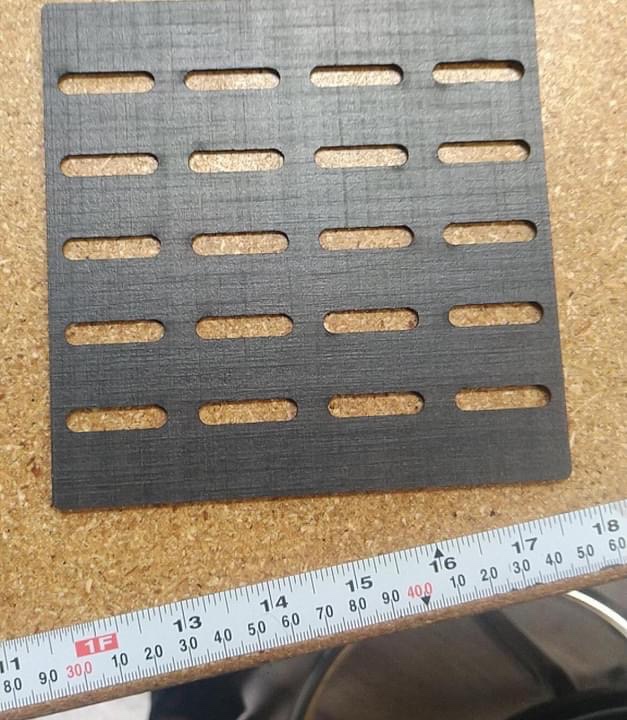
This cummerbund features a 6/12™ Laser Fused Platform for weight reduction and Tubes® Fasteners, which are already being used on the current USMC PC GEN III. Tubes® Fasteners allow for easy everyday donning and doffing as well as emergencies.

Featuring a top access panel, the cummerbund allows users easy access to the 38 gram CO2 cartridge for pre-mission checks and inspection. The CTAF (Cummerbund Tactical Aid to Flotation) is designed to be user friendly with repacking and maintenance at the unit level.

Authorized for Naval Use (ANU), this CTAF (Cummerbund Tactical Aid to Flotation) is on contract with DOD. Compatible with all sizes of the USMC GEN III plate carrier, the cummerbund fits 6” x 8” and 6” x 6” sides plates and requires no modifications to the current USMC PC GEN III.

Check out FirstSpear for more cutting-edge innovation.

Future of Nursing: Telehealth, More Innovation, Maybe Some Robots

Friday, May 20th, 2022

FALLS CHURCH, Va. (AFNS) —  

The ongoing COVID-19 pandemic has fast-tracked many changes to the Military Health System and forced all providers – especially nurses – to innovate at near-quantum speed with agility and flexibility.

Nurses are the backbone of daily healthcare operations. In the future, nurses will continue to play a vital role in the evolution of modern healthcare.

“Nursing will take on more leadership and strategic roles to transform the healthcare system, better advocate for nursing personnel, and integrate across care to enhance the multi-disciplinary team,” said Brig. Gen. Anita Fligge, Defense Health Agency chief nursing officer.

As the DHA observes 2022 Nurses Week, Fligge and other top DHA nursing officers talked about changes on the horizon for military nursing and the details of how the career field will evolve in the coming years.

They said the pandemic has underscored the connection between health and readiness. Virtual healthcare options will continue to expand, and robotics may play a prominent role in standardized care in the future while continued education for nurses will be essential to maintaining a ready medical force.

Working in a joint environment within the integrated DHA workforce will improve efficiencies for nurses, allowing them to spend more time on patient care by having standardized policies, procedures and tools across the services, Fligge said.

She pointed to the collaboration already underway in the local healthcare markets. For example, she said, Navy nurses in the Puget Sound market help backfill at the Madigan Army Medical Center and vice-versa. The same collaboration is ongoing in the Colorado market, she said. Air Force nurses are assisting at the Army’s Fort Carson Evans Army Community Hospital.

The pandemic “has opened the doors for nursing to see what could change as to how we care for patients in the future, using technology in a new way, and using data to assist in bed expansion or use of resources more effectively,” said Army Col. Jenifer Meno, DHA deputy chief nurse officer.

The pandemic has “required more precision and flexibility, including virtual healthcare, remote patient monitoring, and touchless medication refills to optimize care delivery,” Fligge said.

Virtual health

The future will mean more virtual healthcare and telehealth services for certain specialties such as dermatology, behavioral health, primary care, urgent care, and obstetrics while maintaining the focus on high-quality patient care and increased access to care, Fligge explained.

The expansion of virtual care will help save lives on the battlefield and improve care during humanitarian crises and future pandemics.

Additionally, at home, virtual health will continue to provide MHS beneficiaries with more access and flexibility to get assistance and appointments.

The COVID-19 pandemic has taxed nursing staffs beyond anything in recent memory as they cared for both COVID-19 patients and maintained routine healthcare operations.

The pandemic has “prompted the need for us to re-look at staffing models and ratios to optimize utilization of the workforce, while ensuring safe, high-quality care delivery and positive outcomes.” Fligge said.

The past two-plus years also have seen a “greater awareness and need to address burnout and retention,” Fligge continued.

Better health, better outcomes

Keeping nurses themselves healthy is a key priority for the entire health system, Meno said.

“The more healthy you are makes you more resilient in multiple ways, from being physically healthy, having mental well-being, and spiritual well-being,” she said.

These three are all part of Total Force Fitness, the Department of Defense’s framework for improving holistic health and performance aligned to one’s mission, culture and identity.

She pointed to the increasing use of mobile applications as one way to monitor health across the military community. These apps are available to help decrease stress, monitor exercise habits and support healthy diets.

“Nurses can use that data to assist in educating and teaching patients how to care for themselves as well as recognize triggers that may be a risk to their care,” Meno said.

“If we maintain a healthier mindset, it prepares the body to fight off disease and illness. If we use it to help our patients to be healthier and do preventive activities, that would change potential outcomes for the future.”

More robotics and AI

Nurses have been integrally involved in newer surgical techniques such as robotic surgery since the 2000s.

“Some things never change,” Meno explained. “Nurses in the operating room will continue to be the eyes and ears for the patient. They will continue to ensure that the patient is receiving the best care with high quality and safety.”

Nurses on robotic surgical teams must demonstrate “a very high level of professional knowledge and be experts in robotic technology. This is demonstrated by playing a key role in data collection, analyzing trends and outcomes, and identifying safety issues,” Fligge said.

The nursing team will need to continue to maintain sterile techniques and ensure the integrity of the surgical field, Meno said. The team will need to communicate more in the operating room as technologies evolve. And nurses will use evidence-based teamwork tools from Team Strategies and Tools to Enhance Performance and Patient Safety [TeamSTEPPS] to support a highly reliable organization, Meno added.

TeamSTEPPS is an evidence-based teamwork system designed to enhance patient outcomes by improving communication and other teamwork skills among healthcare professionals.

Artificial intelligence is already a technology nurses use in everyday care via mobile health and alerts in joint tele-critical care network units. These are an important force multiplier, leveraging virtual health resources to extend critical care expertise and treatment at a distance.

And without a doubt, there are more changes to come. AI and machine learning will assist nurses by using data to help improve the efficiencies of systems and processes, but those technologies are still in their infancy.

More nursing expertise

The pandemic has also meant an “increased capability and use of our nursing workforce by ensuring that personnel are equipped with the education and training to perform at the highest level and scope of practice and license,” Fligge explained.

Meno said she sees more nurses getting certifications to be the subject matter experts in their field.

The increased number of nurses obtaining their Doctorate of Nurse Practice will also grow now that the American Association of Colleges of Nursing has endorsed the movement of advanced nursing practice from a master’s degree to the doctorate level, Meno predicted.

“This doctorate develops nurses to look at process improvement and holistically at improving systems and processes that include other disciplines in patient care.”

Meno explained that hybrid nursing roles discussions have already taken place.

“We see nurses now that are doing hybrid nursing roles due to their versatility and agility. Nurses are not only at the bed side, but they are also clinical nurse specialists, research scientists, advance practice providers, educators and health system leaders.”

By Janet A. Aker, Military Health System Communications

Army’s Synthetic Training Environment Harnesses Evolving Mapping Technology

Thursday, May 19th, 2022

AUSTIN, Texas — Geospatial intelligence professionals gathered at the United States Geospatial Intelligence Foundation’s GEOINT 2022 Symposium in Aurora, Colorado, last month to discuss new efforts and achievements in the rapidly growing field.

Topics highlighted at the event included how technological advances have influenced the creation and use of maps, including within military and intelligence communities.

During an April 26 “What is a Map?” panel, guest speakers from the U.S. government and private industry explored how maps have evolved in recent years, what new types of information maps can communicate and why maps continue to be indispensable tools in everything from personal navigation to foreign policy development to warfighting.

“Maps and terrain and that data set is foundational to everything we do,” said Brig. Gen. William Glaser, director of the Army Futures Command Synthetic Training Environment, or STE, Cross-Functional Team.

Glaser and fellow panelists detailed how today’s dynamic, high-performance maps — which frequently utilize 3D imagery and are often informed by an amalgamation of artificial intelligence, fluid data inputs and precision sensors — can improve visibility and thereby increase a user’s understanding of a situation, along with options for action.

“Our relationship with a map now is not just passive,” said panelist Ed Parsons, geospatial technologist at Google. “We’re interacting with the map. The map is changing its contents depending upon what we’re doing, but we’re also sharing what we’re doing with the developers of that map.”

As a result, many of today’s maps are “elastic,” meaning that they can morph and adapt as conditions and user input fluctuate, Parsons explained.

It is this near real-time visibility that can provide Army map users with distinct tactical advantages.

“The ability to visualize the terrain in 3D is absolutely critical for commanders and Soldiers to understand the operational environment,” Glaser said.

He noted that one of the Army’s core STE efforts, One World Terrain, provides a singular synthetic format for use in multiple scenarios. Viewable in “everything from goggles to laptops to PCs,” the 3D terrain data set is helping to more closely link operational and training activities, thereby enhancing overall readiness.

The Army is also developing the STE Information System, a virtual training suite, and equipment such as the Squad Immersive Virtual Trainer, a mixed-reality tool that utilizes a heads-up display.

The ongoing development of a synthetic training platform enabled by advanced mapping technology is groundbreaking because it means the Army “can fight a thousand bloodless battles before we ever put a Soldier into harm’s way,” Glaser said.

The multi-faceted nature of digital maps extends across sectors, of course, and often translates to many users having access to — but also influence on — collective maps.

“Maps are probably more widely used now than at any point in our history,” Parsons said.

This expanded use of maps has also increased demand for functionality and format.

“Cartography is an art, not just a science,” said Dr. Lee Schwartz, director of the Office of the Geographer and Global Issues at the State Department’s Bureau of Intelligence and Research. “Maps need to be visually compelling as well as providing a lot of information.”

Ensuring map development is participatory, such as by involving the contributions of individuals who live in areas being mapped, is also an important consideration in modern map development.

“You have to include the human element always,” Schwartz said.

Moreover, the way maps are used to make decisions means the information they contain needs to be secure and valid. While this is an area for further growth, in many cases, accuracy is attained simply through critical mass.

“The maps are now sort of self-healing; by using the maps, you’re contributing to the content,” Parsons said.

Dr. Daniela Moody, vice president of artificial intelligence at Arturo, also highlighted the storytelling nature of maps, which are increasingly moving beyond instructing the user how to get somewhere to informing the user why to go somewhere.

“This is no longer a static environment,” Moody said. “Maps are becoming the way to tell a story, the way to make that quick decision.”

Glaser emphasized that while digital maps are ushering in transformational capabilities, traditional paper maps are still necessary, particularly for maneuvering in degraded environments. As such, the Army will continue to promote analog map reading skills and compass navigation fluency even as it implements more interactive mapping systems.

“Every Army officer who’s worth his weight in salt loves maps,” Glaser said.

“It’s that one thing that’s going to lead his Soldiers to victory safely.”

You can watch a video of the presentation here.

By Maureena Thompson, Army Futures Command

First Air Force Supports US Space Command as ‘Air Forces Space’

Wednesday, May 18th, 2022

TYNDALL AFB, Fla. (AFNS) —  

The Department of Defense designated First Air Force as ‘Air Forces Space’ (AFSPACE), and the fifth service component to U.S. Space Command May 3.

The change postures First Air Force to provide airpower expertise and advocacy in support of USSPACECOM’s mission to conduct operations in, from and to space while integrating space power into the support of First Air Force’s homeland defense mission.

“As USSPACECOM continues to achieve key milestones towards reaching Full Operational Capability, the designation of AFSPACE and the realignment of Human Space Flight Support activities under AFSPACE demonstrates the rapid pace at which the command and components are moving to provide a safe and secure space environment,” said U.S. Army Gen. James H. Dickinson, U.S. Space Command commander. “AFSPACE has achieved an Initial Operating Capability, and like USSPACECOM, is at a point where it can credibly claim to be organized and effective for employing our enduring, no-fail supporting functions to the joint force and civil partners.”

Air Force Chief of Staff Gen. CQ Brown, Jr. named First Air Force as the USSPACECOM air component in February 2021. Following that, Gen. Mark Kelly, commander of Air Combat Command, established an Operational Planning Team to determine the resources required to meet the short and long-term demands for this new mission.

ACC is the force provider for AFSPACE, and existing Continental U.S. NORAD Region and Air Forces Northern roles, responsibilities and authorities.

On July 15, 2021, First Air Force, now AFSPACE, assumed the operational command and control of the Human Space Flight Support, or HSFS, mission, which was previously executed by the Combined Force Space Component Command at Vandenberg Space Force Base, California. This First Air Force mission is executed through its assigned Detachment 3 based at Patrick Space Force Base, Florida.

Det. 3, formerly commanded by Space Launch Delta 45, realigned under First Air Force during a redesignation and change of command ceremony held at Cape Canaveral Space Force Station, Florida, also that day. Air Force Lt. Gen. Kirk Pierce, commander, First Air Force, Continental U.S. NORAD Region, AFNORTH, and now AFSPACE, affirmed his team’s commitment to USSPACECOM.

“Space-based capabilities enable virtually every element of our national power, including diplomatic, information, military and economic,” said Pierce. “It’s an honor to support that larger picture with our actions at a personal level. This includes our new responsibility to plan, train and execute worldwide rescue and recovery of NASA astronauts during contingency operations.”

Human Space Flight Support operations are conducted by the Department of Defense when requested by NASA, and validated by the DoD. These operations include the contingency search and rescue of NASA and NASA-sponsored astronauts.

For all crewed space flights, Det. 3 oversees the training and posturing of rescue forces on alert at Patrick Space Force Base, Joint Base Charleston, South Carolina, and Joint Base Pearl Harbor-Hickam, Hawaii. Additionally, Det. 3 is responsible for coordinating astronaut rescue and recovery, contingency landing site support, payload security, medical support, coordination of airlift/sealift for contingency operations, as well as other support services required in the event of a spacecraft emergency.

Det. 3 has a long and distinguished history working closely with NASA to plan and coordinate DoD rescue, recovery, and retrieval support for their crewed space missions.

“It’s immensely satisfying to take another step forward in the larger leap in our role as the Air Force component to U.S. Space Command,” Pierce said. “The First Air Force team appreciates being a valued joint partner in the defense of the Homeland in the air and space domains.”

CONR-1 AF (AFNORTH and AFSPACE) Public Affairs

Army Injury Assessment Tool Receives Stamp of Accreditation

Tuesday, May 17th, 2022

ABERDEEN PROVING GROUND, Md. — Underbody blasts from improvised explosive devices were the largest cause of injury for U.S. troops in Iraq and Afghanistan This signaled a vital need for an anthropomorphic test device, or ATD, to replicate the response of an underbody blast environment on Soldiers.

The Warrior Injury Assessment Manikin, coined WIAMan, filled that need. WIAMan is an ATD for military use in underbody blast testing of ground vehicles. Developed by the Instrumentation Management Office at the Program Executive Office Simulation, Training and Instrumentation, WIAMan represents the most human-like surrogate yet to provide insight on improving military ground vehicle systems and identify protection mechanisms that reduce the likelihood and severity of warfighter injuries.

Analytical experts from the U.S. Army Combat Capabilities Development Command, or DEVCOM, ensure that WIAMan output is processed to provide reliable injury assessment and analysis. The DEVCOM Analysis Center, known as DAC, processes this immense amount of data via a software analysis tool known as the Analysis of Manikin Data, or AMANDA. On Feb. 2, AMANDA was accredited by the U.S. Army Test and Evaluation Command for use in live fire test and evaluation — a final stamp of trust in quality and accuracy.

According to Kate Sandora, AMANDA model manager, AMANDA’s most recent release and accreditation is a culmination of a large effort by DAC and its partners, encompassing all WIAMan injury criteria developed over ten years of biomechanics research. The accreditation provides more confidence for the live fire testing community and current users, including DAC, DEVCOM Ground Vehicle Systems Center and the U.S. Army Aberdeen Test Center.

AMANDA is not a single injury model, but an analytic framework composed of multiple types of injury criteria and reference values integrated together. AMANDA processes accelerations, forces and moments recorded by WIAMan and other ATDs as input, comparing the ATD data with associated injury criteria to make predictions of injuries and determine the injury type, location and severity. AMANDA can also read in and process simulated data in lieu of physical testing.

While WIAMan is the hardware subjected to the blast event to record data, AMANDA is the software allowing the collected data to be processed for analysts’ use, pre-loaded with accredited criterion for injury. The resulting analysis has significant impact on Army vehicle design to improve survivability when Soldiers are subjected to an underbody blast environment. Simply put, insight from AMANDA saves lives.


“The WIAMan data acquisition system takes samples from an event at a rate of approximately 200,000 samples a second, and the typical event takes a couple seconds, so we’re talking around 400,000 data samples — an incredible amount of data,” said Jacob Ehlenberger, AMANDA software developer. “When you load that into AMANDA, all subject matter experts have to worry about is looking at the results. AMANDA automates the entire process, bringing complex analysis to the hands of experts so they can focus on their domain of excellence.”

AMANDA also integrates filtering methodology, developed by Aaron Alai, a DAC signal processing scientist, to ensure sensor data does not reflect extraneous noise that could lead to incorrect injury prediction.

“A common misconception is that sensors and data acquisition systems measure only what one intends for them to measure, but in reality, they respond to anything that can influence the measurement pipeline: a litany of sources from electromagnetic noise to mechanical linkage vibrations. So, data must be filtered to glean accurate information,” Alai said. Alai leveraged frequency analysis to come up with a new method of inferring appropriate filters, working with Ehlenberger and other DAC teammates to ensure they are implemented and contextualized properly.

DAC analysts can then more reliably provide injury assessments that inform vehicle evaluation, design and requirements to better protect Soldiers, bypassing time-consuming manual data manipulation.

Sandora and Ehlenberger, who have worked closely with both analysts and developers of the design and standards for WIAMan, commend the experts’ diverse perspectives to make appropriate injury assessment possible. “You have subject matter experts in the field of human vulnerability working in close contact with engineers of high caliber discussing the ATD experience and mechanical response,” Ehlenberger said. “It is such an impressive marriage of distinctly different and invaluable expertise.”

It is through extensive testing and problem-solving from these experts that WIAMan can produce data to feed AMANDA analysis, ultimately enabling the Army to better quantify risk to the warfighter and identify trade-offs during vehicle design. This analysis ensures growing Army knowledge in human vulnerability and automotive design — and soon, even more, as AMANDA will be integrating more WIAMan injury criterion this fiscal year.

By Kaylan Hutchison, DAC Strategic Communications