Phantom Lights

Archive for the ‘Guest Post’ Category

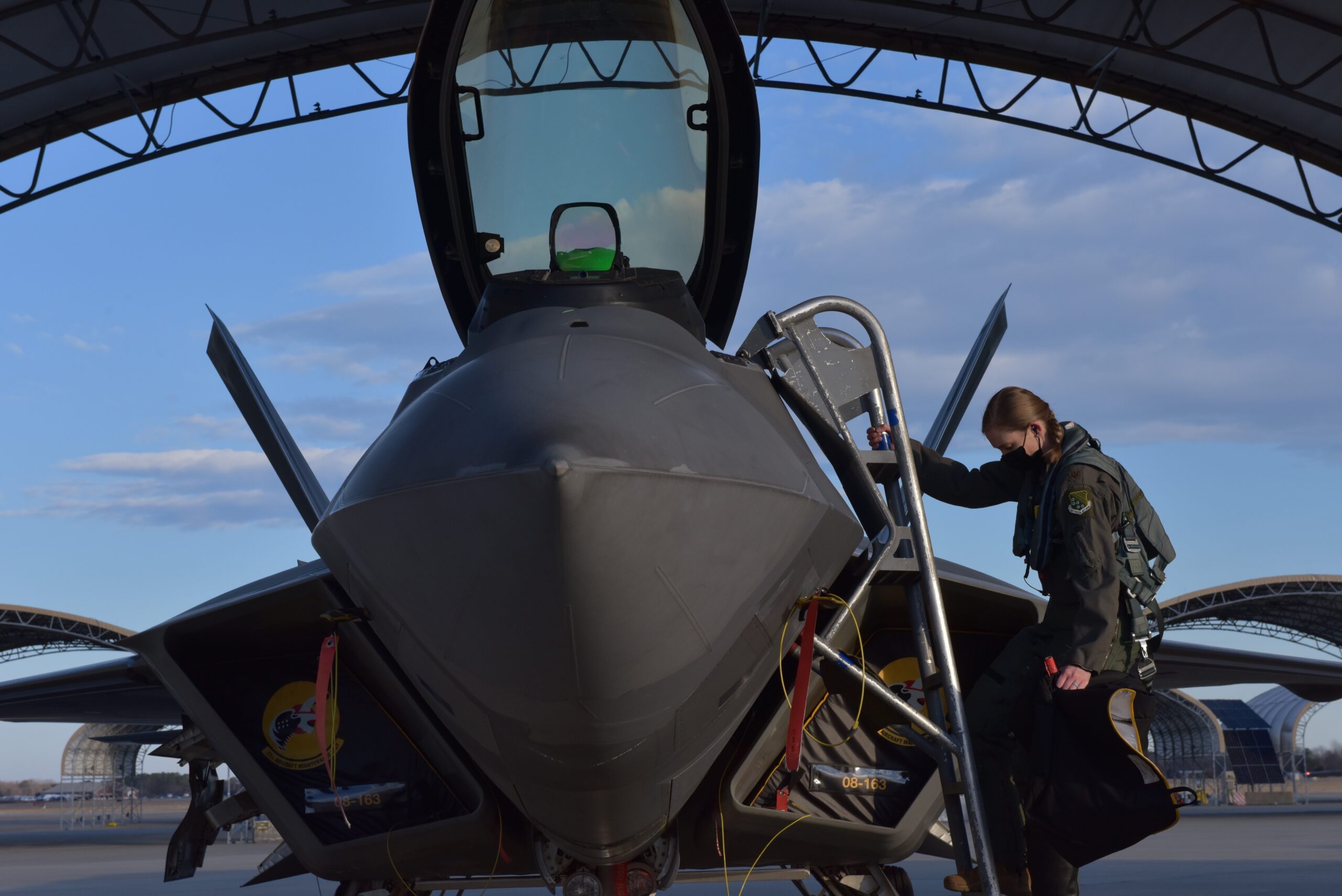
Air Force to Field New Bladder Relief Device, Works Toward ‘Suite of Options’

Saturday, December 11th, 2021

JOINT BASE LANGLEY-EUSTIS, Va. (AFNS) —  

The Air Force is scheduled to receive the first shipment of the Omni Gen. 3 Skydrate, an improved in-flight bladder relief device, in early December.

The Air Force recognized that current devices were not optimized for long-duration sorties, and as a result, aircrew were routinely dehydrating themselves to delay the need for bladder relief. Dehydration can lead to reduced endurance and G-force tolerance while in the aircraft, as well as other negative health issues.

Air Combat Command was the lead command in determining the new bladder relief device requirements for pilots across the Air Force.

“Gen. (Mark) Kelly is focused on reducing predictable barriers to readiness for Airmen,” said Scott Cota, aircrew flight equipment program analyst, ACC Plans, Programs and Requirements directorate, Joint Base Langley-Eustis. “This is just one of the programs we are working on here that will make it easier for Airmen to train and execute their missions.”

ACC worked closely with Air Force Materiel Command and other Air Force units to develop and test Skydrate within a year. Thirty female aircrew were on site at the Omni facility to conduct multi-hour wear tests; nine pilots, at three installations, participated in the flight testing.

“This is a good example of using a ‘fly, fix, fly’ model to prioritize female aircrew feedback and speed up the testing process to field the device quicker,” said Sharon Rogers, lead test engineer, 46th Test Squadron, Eglin Air Force Base, Florida.

Skydrate is available for men and women, but there was an emphasis on engineering solutions for female aircrew. Improvements include a larger collection bag, improved flow rate, multiple hose lengths, one-hand operation for on/off functionality, and more interface, or pad, sizes to account for anatomical differences in the wearer.

For Maj. Nikki Yogi, an F-35A Lightning II pilot who participated in the Omni device tests, readiness is at the heart of the issue. Yogi is assigned to the 356th Fighter Squadron at Eielson AFB, Alaska, under Pacific Air Forces Command. Pilots responding to threats in that region must be prepared for long sorties. A routine flight to Guam is approximately 10 hours.

“A pilot should be focused on taking the fight to the enemy, not on whether their bladder relief device is going to work or be comfortable to use,” she said.

Yogi had a poor experience with her device while deployed as an A-10C Thunderbolt II pilot in 2017. As a junior pilot, she did not immediately raise the issue – something she wants to spare future female pilots. She has volunteered for a variety of equipment tests since returning from that deployment.

“It’s important to provide feedback because it’s that feedback that drives change,” she said.

Aircrew will have access to Skydrate by Spring of 2022. The Human Systems Program Office, a subdivision of the Agile Combat Support Directorate, at Wright-Patterson AFB, Ohio, is currently reviewing proposals from multiple companies for alternative bladder relief devices with new pumps and innovative human interfaces, which are expected to field within the next year to users. A suite of bladder relief devices will give Airmen the opportunity to choose the most comfortable human interface option while allowing them to focus on executing the mission.

By Jennifer Kennemer, Air Combat Command Public Affairs

FirstSpear Friday Focus: The Sleeper Kicks Off FS 12 Days of Christmas

Friday, December 10th, 2021

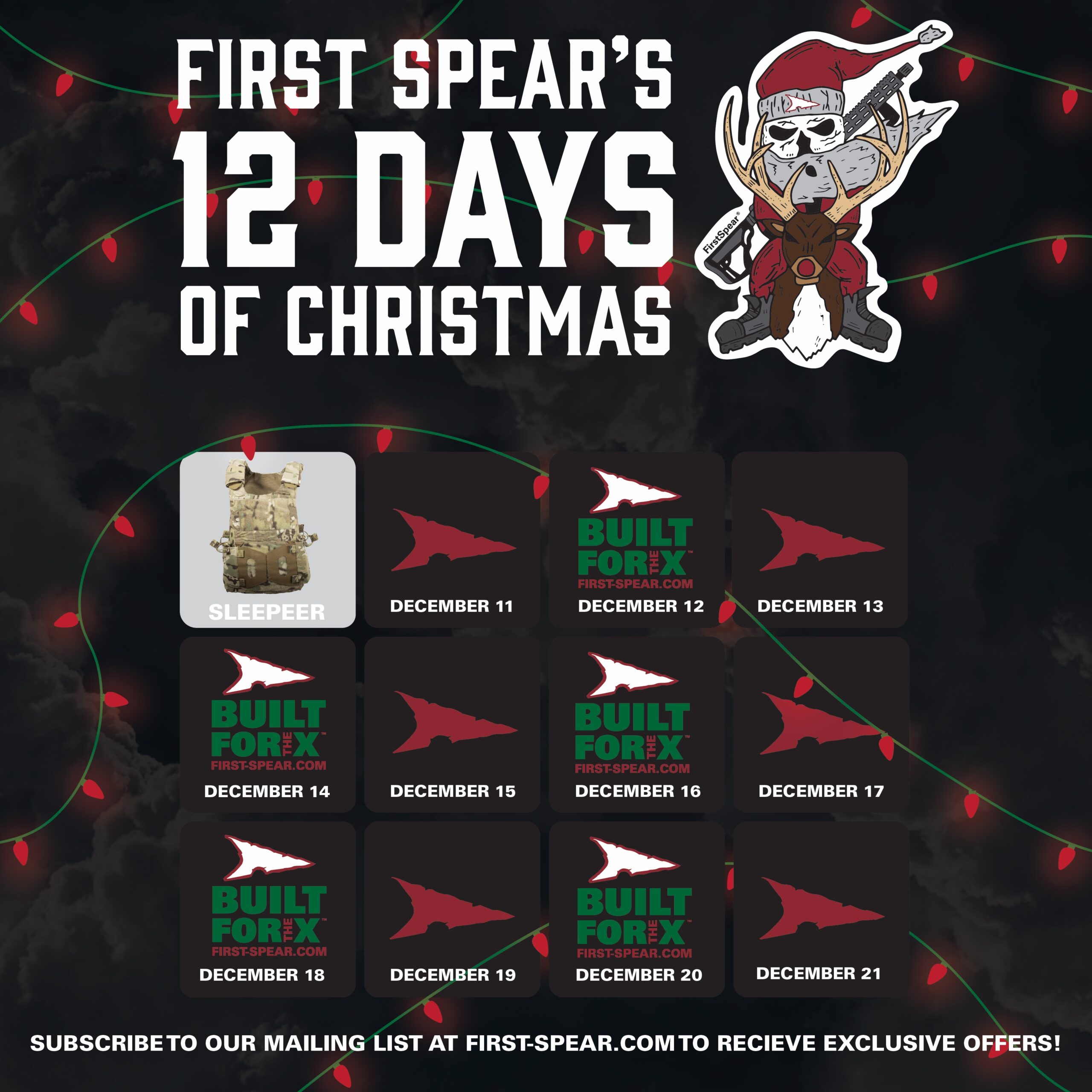
This week we are kicking off our 12 Days of Christmas. Make sure to sign up for our email newsletters to get a first look at the 12 days of Christmas.

The first day of Christmas features the Sleeper vest. It can be a stay behind asset or less visible alternative to more overt styles of tactical vests. The Sleeper is designed to wear over or under garments and can be worn alone or in conjunction with other FirstSpear vests. Fits Soft Armor cut to the shape requirements specified for US SOCOM SPEAR BALCS and Hard Armor plates cut to SAPI/ESAPI/SPEAR and Swimmer in the corresponding soft armor size. Medium Plate and Medium Soft Armor fit a medium Sleeper.

Get them before they’re gone— limited quantities, sizes and colors. There will be no backorders once they are gone. Check out the Sleeper at: www.first-spear.com/sleeper

Be the first to know. Sign up for email newsletter at first-spear.com/landing

Spirit of Innovation: EagleWerx Celebrates Opening with Dedication Ceremony at Fort Campbell

Friday, December 10th, 2021

The 101st Airborne Division (Air Assault) has been a leader in Army innovation for decades, and the Spec. 4 Peter M. Guenette EagleWerx Applied Tactical Innovation Center promises to play a major role in future warfighter transformation.
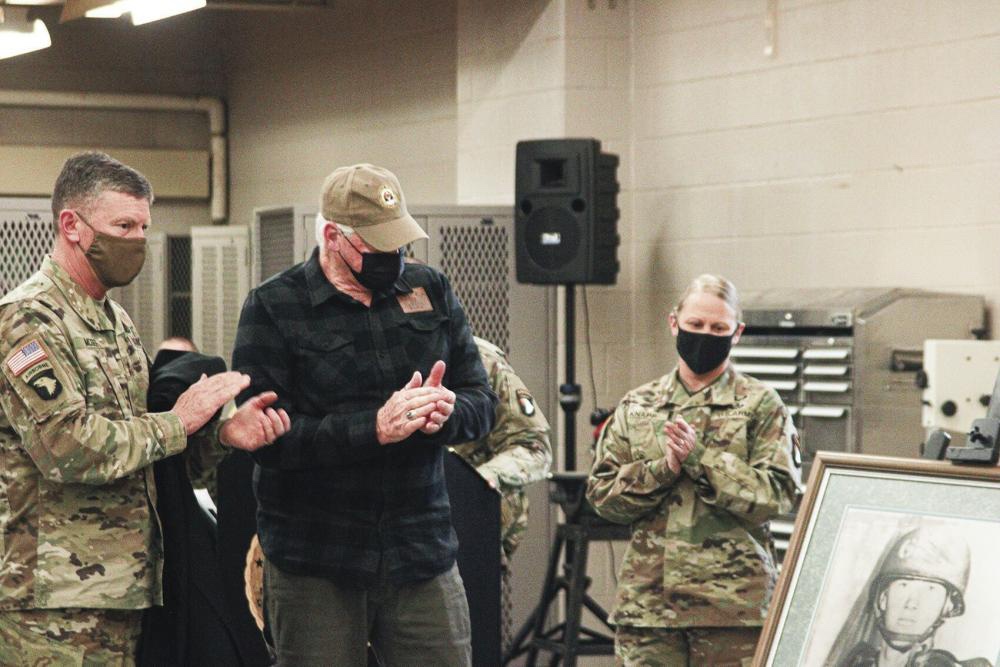
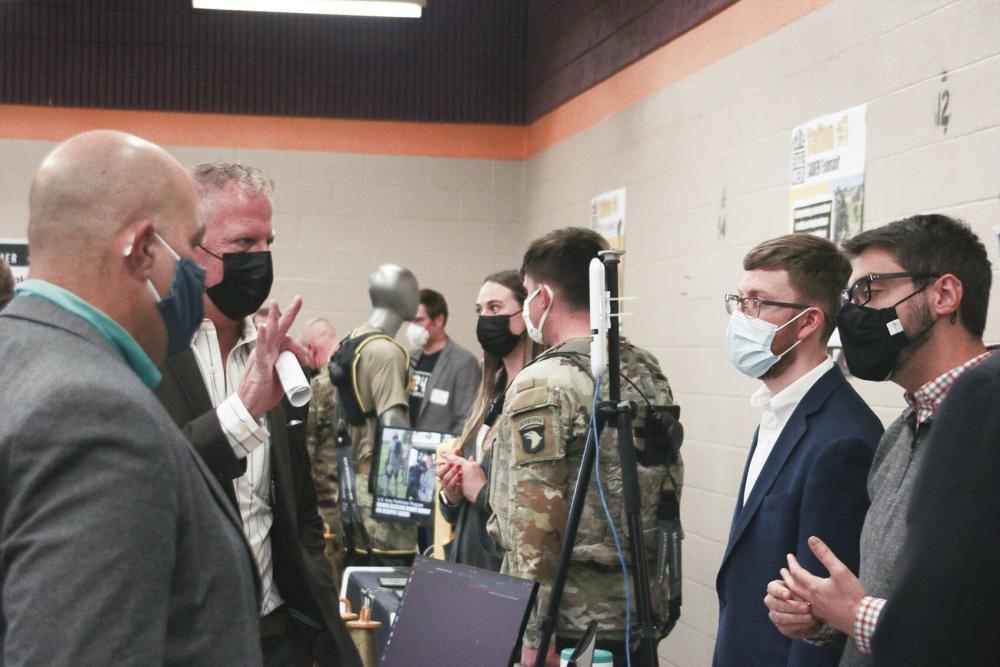
Soldiers, Families and community members toured the facility firsthand Dec. 7 during a ribbon cutting and dedication ceremony at 89 Screaming Eagle Blvd., where they learned about EagleWerx’s capabilities and bottom-up approach to innovation.

“We all know that transformation starts with the people who are executing, and the Soldiers are the ones closest to the problem,” said Capt. Lauren Hansen-Armendariz, deputy innovation officer, 101st Abn. Div. “They understand it the best, and that’s exactly why EagleWerx exists – to be able to give Soldiers what they need so they can make improvements.”

EagleWerx gives Soldiers direct access to a wide range of capabilities including entry-level artificial intelligence, robotics equipment, 3D printing, engineering support and educational workshops to solve problems. Its employees can also connect Soldiers with collaborative partners such as Vanderbilt University, Middle Tennessee State University and U.S. Army Combat Capabilities Development Command, or CCDC.

Major General JP McGee, commanding general, 101st Airborne Division (Air Assault) and Fort Campbell, said EagleWerx is an important step forward for the installation because it empowers Soldiers to adapt and excel in future conflicts.

“Innovation is not about a technology,” McGee said. “It is about a spirit within our Soldiers and leaders, and it needs to be established and fostered before a crisis, before we are at war. A site like this named after one of our heroes, Peter Guenette, represents our tangible investment into establishing innovation as an enduring part of the culture of the 101st.”
Guenette served with 506th Infantry Regiment, 101st Airborne Division (Airmobile), during the Vietnam War and received a posthumous Medal of Honor citation for his efforts on the battlefield. During a firefight in the Quan Tan Uyen Province May 18, 1968, he smothered the blast from a hand grenade with his body to protect his fellow Soldiers, saving at least three others at the cost of his own life.

The installation later dedicated the Guenette Arts and Crafts Center to his memory in 1975, and the building retained his name after it was re-established into EagleWerx.

“It evolved into something pretty awesome,” said Michael Guenette, Spec. 4 Guenette’s brother. “It was awesome before as an arts and crafts center, and as the war in the Middle East started it was good for helping Soldiers who had PTSD work on projects. And now this is a great evolution. My brother was a science guy, he really was, so I think it’s a great thing. Keeping his name on the building is important, and this base honors heroes like Peter.”

Guenette was among several guests at the facility’s ribbon cutting and dedication given a guided tour, where Soldiers from across the installation highlighted partnerships and projects being developed through EagleWerx.

Chief Warrant Officer 3 Ron Billingslea, 101st Division Sustainment Brigade, said EagleWerx will allow the unit to push its additive and subtractive manufacturing capabilities to the next level.

“Additive manufacturing, in layman’s terms, is the ability to create parts, one-off pieces or test molds so we can test or figure out a problem and create a solution without having to expend a lot of materiel,” Billingslea said. “Right now, we’re looking at problems that we’re tracking across the board, like long lead times on parts for vehicles that are down or one-off pieces that will get everyday use from Soldiers.”

The Lifeliners use 3D printing capabilities and computer aided design, or CAD, files to produce those parts that can be used to repair broken equipment on the battlefield quickly instead of waiting for third parties to deliver materiel. CAD files for specific parts can also be uploaded into a database and shared across the Army, Marine Corps, Navy and Air Force.

“We’re going to partner up with EagleWerx to be able to build products we can prototype here,” Billingslea said. “When we send a CAD file back to the forward line of troops, they can run that program to make sure it’s optimal to what we need in the field. In doing that, we build a network and create a partnership with EagleWerx as a hub for forces across the U.S. platform.”

In addition, Billingslea is planning to facilitate classes at EagleWerx to teach Soldiers and local students the basics of CAD, additive and subtractive manufacturing. Soldiers can use that instruction to gain a better understanding on how those capabilities can help them, while students can position themselves for success in the military or a trade.

Educational programming is a major component of EagleWerx, and the facility has already hosted a number of classes since its soft opening in August.

“I took part in a design thinking workshop on suicide prevention,” said Spc. Seth Johnson, 1st Battalion, 327th Infantry Regiment, 1st Brigade Combat Team, 101st Abn. Div. “The solution we came up with is currently in the process of being implemented in the division, and it’s sort of like an Eagle Day 2.0 where one day out of every month you do cohesion building exercises among your squad. We reiterated the importance of that, how it affects people and how they feel about it when it’s done regularly.”

Approximately 30 Soldiers from across the installation participated in the workshop and formed two teams to pursue different solutions. Johnson said he appreciates the chance to get involved and looks forward to seeing what future workshops can develop.

“It makes you feel like you have an impact on the Army and the ability to solve problems that affect people at your level,” he said. “I think EagleWerx is going to produce great things and given the opportunity I’d be happy to come back and work on more projects.”

Other classes hosted at EagleWerx are made possible through support from community and Army partners. Bull Holland, Advancing Concepts Office Operations, CCDC Army Research Laboratory, recently led three teams of Soldiers through the H4X Lean Acquisition Innovation Course, a five-week graduate-level course, using EagleWerx as a venue.

“What we’ve done for these Soldiers is put together a class that teaches the same lean innovation methods that we teach in American Psychological Association [APA] schools and other graduate programs around the country,” Holland said, adding he has taught the same course at North Carolina State University. “Instead of us trying to find the right place to engage Soldiers in each different brigade, EagleWerx centralizes Soldiers from across the division into one spot and gives people like myself a place to plug in.”

Soldiers who completed the course at EagleWerx used entrepreneurial skills to develop requirements for new “see through wall” capabilities, electromagnetic sensors and air assault planning based on problem statements provided to each group.

“Our problem statement was that as technology progresses, our electronic footprint keeps increasing through emissions of energy and it’s something potential adversaries could exploit and use against us,” said Staff Sgt. Patrick Frisbie, electronic warfare noncommissioned officer in charge, 1st BCT. “That’s something that we want to develop tactics, techniques and procedures to mitigate.”

As an electronic warfare NCOIC, Frisbie is familiar with that problem and has practical experience with looking for electromagnetic signals to trace enemies. He and his classmates used that experience to identify cost-effective technologies the division could eventually use to reduce energy emissions down to the company level.

“Soldiers all have their own particular insights and they know the problems they face the best,” he said. “This gives them a space to come down if they have an idea. Even if it’s a simple modification to a piece of equipment that already exists, they have professionals here that can put them in touch and make things happen.”

Ultimately, EagleWerx is intended to help Soldiers find the resources to solve problems at any scale and build a culture of innovation across the division.

“Innovation does not start with me,” McGee said. “It is not a top-down driven endeavor; it starts with our people closest to the challenge – our Soldiers who are at the tip of the spear. Our vision is that all Screaming Eagle Soldiers are empowered to inform, accelerate and integrate innovative solutions and models in order to prepare the 101st for the future fight.”

Story by Ethan Steinquest 

Fort Campbell Public Affairs Office

The MIK-02: Halfbreed Blades’ New Medium Infantry Knife

Thursday, December 9th, 2021

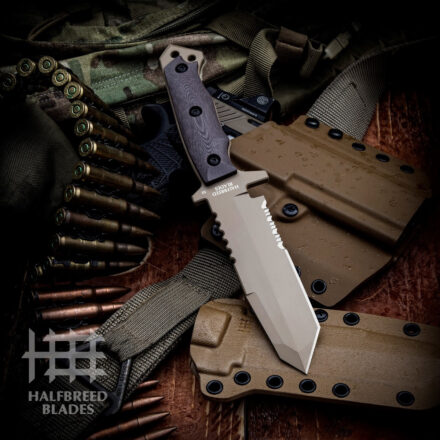
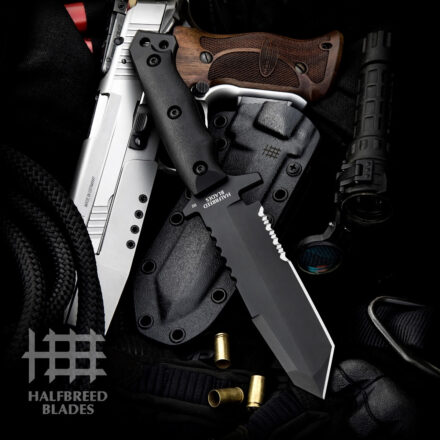
Introducing the MIK-02, influenced by the diverse daily requirements of active-duty personnel and the demands of the environments they serve in.

MIK-02 Colors

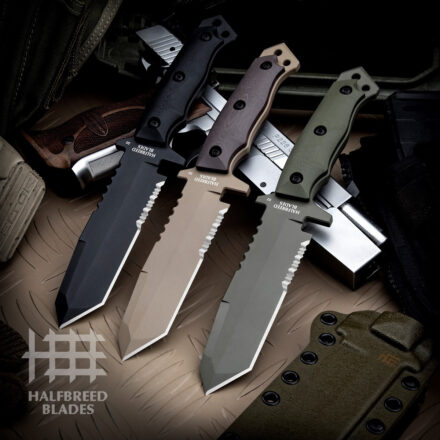
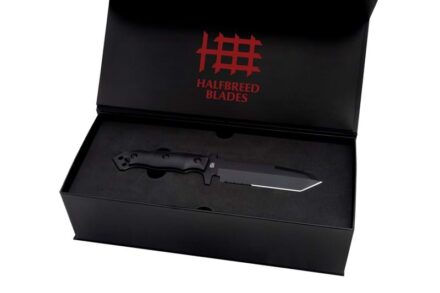
The MIK-02 (Medium Infantry Knife) from HALFBREED BLADES is a mid-size CQB fixed blade intended for use as a dedicated Infantry knife. The MIK-02 comes in three colors; Black, Dark Earth, and Ranger Green.

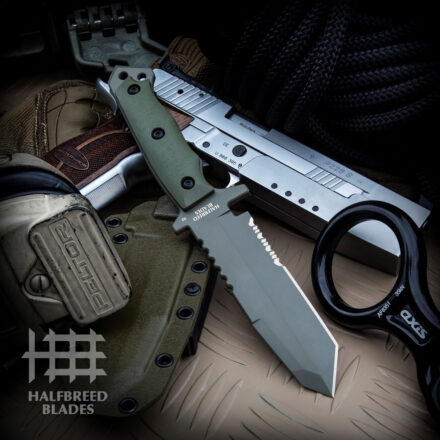
MIK 02 Ranger Green

The MIK-02’s highly utilitarian tanto point blade incorporates many performance-enhancing, essential features for a multirole fixed blade knife of this genre.

MIK-02 Dark Earth

Hewn from a solid slab of 6.5mm thick Austrian K110 (D2), this multirole fixed blade, is overbuilt in every detail. In addition, it incorporates a range of performance-enhancing features developed for hard use applications.

MIK 02 Black

The Features

  • One-piece full tang construction.
  • Easy to maintain a razor-sharp polished cutting edge with partial blade serrations.
  • Hard-wearing, low friction Teflon coating mitigates glare and protects against corrosion. Available in black, dark earth, and ranger green color options.
  • Modified tanto point and blade design are optimized for piercing, prying, and slicing tasks.
  • Extra-large handguard aids control and prevents injury to the user.
  • Jimping at key points along the tang enhances handling characteristics, including forward of the handle, aiding the application of downward pressure and precise control.
  • US made G10. Handle scales are ergonomically contoured for maximum grip/control with non-gloved hands.
  • Handle scales are secured by steel torx fittings.
  • Crusher pommel ideally suited for breaking glass and other hammering tasks.
  • Lanyard holes at key points allow for paracord attachment.
  • US made Kydex. We believe the carry system supplied with our tools is as important as the tool it protects. Each sheath is precision-molded for secure retention and easy maintenance. All MIK-02 sheaths are provided with a belt carry system as the primary attachment method, eyelet holes around the perimeter of the sheath serve as secondary attachment options.

MIK-02

The MIK-02 Specs

  • Action: Fixed Blade
  • Blade Steel: K110 D2 (59-60 HRC)
  • Blade Edge: Polished Partially Serrated
  • Blade Finish: Teflon Coated
  • Blade Style: Tanto Point
  • Blade Length: 5.31″ (135mm)
  • Blade Thickness: 0.25″ (6.5mm)
  • Handle Material: G10
  • Handle Thickness: 0.98″ (25mm)
  • Overall Length: 10.43″ (265mm)
  • Sheath Type: Molded Kydex
  • Sheath Weight: 4.40oz. (125g)
  • Knife Weight: 12.16oz. (345g)
  • Overall Weight: 16.56oz. (470g)


EOD Soldiers Clear More than 1,000 Items from US Air Force Training Range

Thursday, December 9th, 2021

FORT LEONARD WOOD, Mo. — U.S. Army Explosive Ordnance Disposal Soldiers cleared the way for U.S. Air Force ground attack training by removing more than 1,000 ordnance items from Cannon Range at Fort Leonard Wood, Missouri.

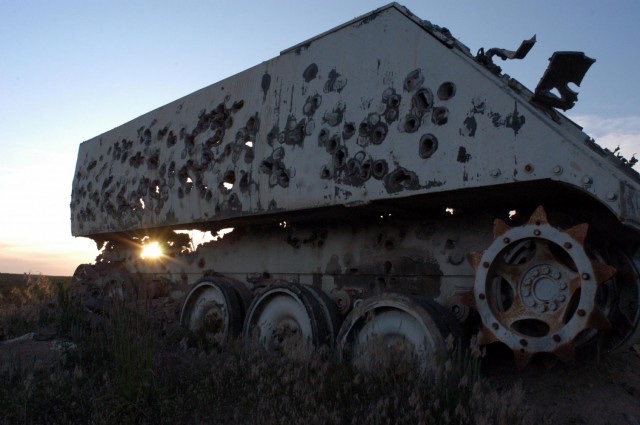
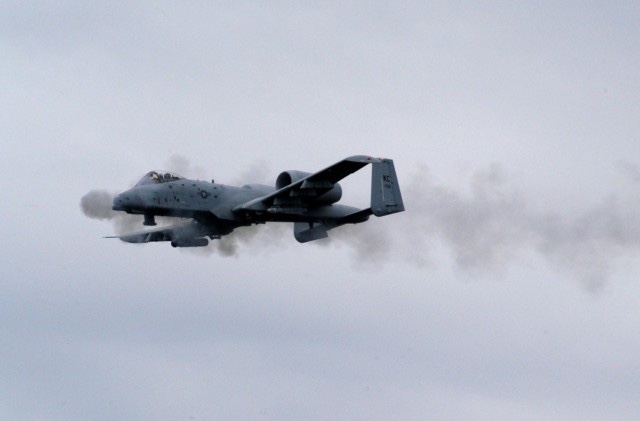
To support A-10 Thunderbolt attack aircraft bombing and strafing training, EOD Soldiers from the Fort Leonard Wood, Missouri-based 763rd Ordnance Company (EOD) managed an ordnance clearance project across more than 100 acres on the Air Force range.

It was the first range clearance operation the 763rd EOD Company has conducted since 2009.

Managed by the Missouri Air National Guard’s 131st Bomb Wing on Whiteman Air Force Base, Missouri, Cannon Range is the only aerial gunnery range in the state of Missouri and the range is used by all branches of the U.S. Armed Forces.

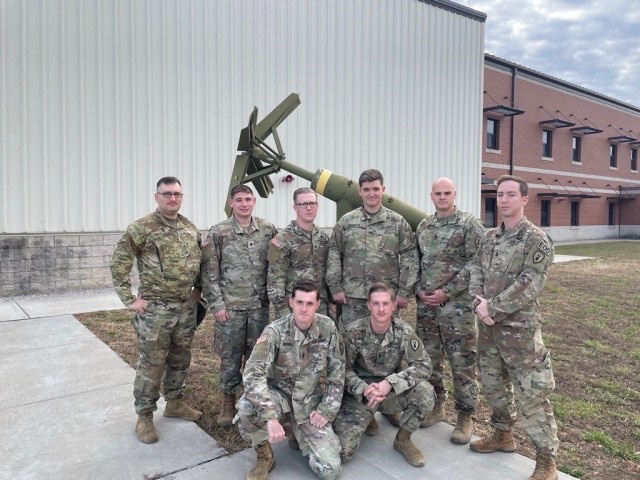
Sgt. 1st Class John S. Neely, a platoon sergeant with the 763rd EOD Company, planned and managed the mission with nine personnel, including seven U.S. Army EOD technicians.

The other 763rd EOD Company members involved in the Air Force range clearance mission were 1st Lt. Frank A. Russell from Orange Grove, Texas; 1st Lt. Raylen L. Dupuis from Polson, Montana; 1st Sgt. Kevin J. Pisani from Lyman, Maine; Sgt. Adam D. Carter from Stafford Springs, Connecticut; Sgt. Robert B. Singleton from Blue Springs, Missouri; Spc. Scott A. Sartin from Kettering, Ohio; and Spc. Logan J. Sterner from Springfield, Illinois.

The EOD Soldiers recovered and cleared more than 1,000 practice 50-pound bombs, said Neely, and they ensured an additional 33 practice 500-pound bombs and 11 practice 40mm projectiles were free of explosive hazards.



“The mission was done to enable target replacement of vehicles and buildings on Cannon Range for A-10 close air support training,” said Neely, a 15-year U.S. Army veteran from Whiteland, Indiana, who has deployed to Afghanistan and Africa.

The 763rd EOD Company is assigned to the 242nd EOD Battalion, 71st EOD Group and 20th Chemical, Biological, Radiological, Nuclear, Explosives (CBRNE) Command.

Part of the U.S. Department of Defense’s premier all hazards formation, Soldiers and civilians from 20th CBRNE Command deploy from 19 bases in 16 states to confront and defeat the world’s most dangerous hazards and threats in support of joint, interagency and allied partners.

Headquartered on Aberdeen Proving Ground, Maryland, the 20th CBRNE Command is home to 75 percent of the Active Army’s EOD technicians and Chemical, Biological, Radiological, Nuclear specialists, as well as the 1st Area Medical Laboratory, CBRNE Analytical and Remediation Activity, five Weapons of Mass Destruction Coordination Teams and three Nuclear Disablement Teams.

In addition to deploying for overseas missions, EOD technicians from the 763rd EOD Company also support explosive mitigation missions for any military munitions found in Missouri, Iowa and Minnesota.

Capt. Tarik B. Jensen, the commander of the 763rd EOD Company, said his EOD Soldiers highlighted their technical and tactical proficiency and expertise during the mission.

“The range clearance conducted by the Soldiers of the 763rd EOD Company enabled the lethality of the U.S. Air Force’s premier ground attack aircraft by keeping the range operational for the nearly daily training missions flown on the range,” said Jensen, a native of Liberty Lake, Washington. “Conducting the clearance imparted ordnance knowledge onto our EOD technicians who researched the various ordnance located on the range, showcasing the technical expertise of EOD technicians.”

By Walter Ham

Elite You Launches Virtual Training Site

Wednesday, December 8th, 2021
The Elite You is an online/virtual training platform for those who understand the need for self-reliance and the potentially life-saving value of being formidable.

“The sum of virtue is to be sociable with them that will be sociable and formidable to them that will not.” ~ Thomas Hobbes

Initially, Elite You was designed as a virtual platform for leading experts, trainers, and mentors to have the ability to record their knowledge, lessons learned, and expertise gained throughout their lifetime. A place for experts to create a database of knowledge for longevity of training, to be used for generations to come, long after they are gone. That idea has evolved to become much, much more.

Elite You is now a virtual platform for anyone and everyone to access the information from these experts, from the comfort of home, for less than it costs to buy a tank of gas. It has gathered multiple experts in very specialized disciplines, all in one place, creating an opportunity to access the skill, knowledge, and experience that would otherwise be unobtainable. These SMEs will help others reach their own true potential within those areas of study.

It’s the place for anyone and everyone to become the very best version of themselves – to work at becoming formidable.

Come join us.

ELITE YOU: Excellence starts here.

“I have a high art, I hurt with cruelty those who would damage me.” – Archilocus, 650 B.C.

Online at TheEliteYou.com; on Facebook at The Elite You.

Sword Athena Drives Change in Maternity Uniform Accessibility

Wednesday, December 8th, 2021

JOINT BASE LANGLEY-EUSTIS, Va. (AFNS) —  

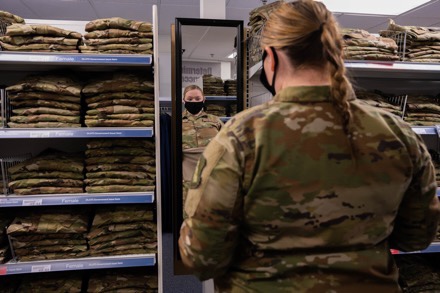
Sword Athena is making strides toward greater accessibility to maternity uniforms for expectant Airmen across Air Combat Command.

Sword Athena is designed to identify, tackle and present solutions to female and family-centric barriers to readiness using crowd-sourced topics and a Mission Area Working Group (MAWG) model. During the outbrief to Gen. Mark D. Kelly, ACC commander, in May, they identified several discrepancies on the availability of maternity uniforms at ACC bases and ways the online purchasing could be improved.

In response, Sword Athena partnered with Army and Air Force Exchange Services executives to increase availability of maternity uniforms in stores and sizing guides online. Before these updates, expectant Airmen found it difficult to purchase the appropriate sized uniforms to wear during their pregnancies, often having to resort to alternative methods of acquisition and incurring extra costs.

“A lot of big bases have large military clothing sales. It’s the smaller bases and those in remote locations where it’s particularly challenging to find these uniforms,” said Master Sgt. Aubrey Woodworth, 97th Intelligence Squadron assistant superintendent, Sword Athena member and mother of five. “Usually there is a network of ladies who find other ways to acquire these items, but it is hit or miss. If you’re the first Airmen in your unit who’s been pregnant in a while, it makes it even more challenging.”

Woodworth recounted a time, while stationed overseas, when a colleague had to ask a friend stateside to purchase four different sizes because there were none available to try on or purchase on base.

“Her friend sent her all four uniforms; she tried them on and mailed back the three that didn’t fit,” Woodworth said.

With the help of Col. John Thorne, then a senior officer on the Air Combat Commander’s staff who assisted in translating Sword Athena initiatives into actionable staff packages, the team reached out to Andrew Weaver, AAFES vice president for community outreach. Weaver welcomed the feedback.

Weaver and the AAFES military clothing sales team reviewed inventory of Operational Camouflage Pattern and Service Dress maternity uniforms at locations across the command. This review helped flag clothing sales locations without enough sizing options. “Some locations were joint bases where the exchanges were run by another branch, so their inventory was not populating on Air Force lists,” he said.


To expand the program, the AAFES team worked with the Air Force Materiel Command logistics directorate. AFMC is responsible for setting the limits on inventory available in military clothing stores because the Air Force covers the carrying cost of inventory.

“All ACC bases, except Creech (AFB), had one maternity OCP try-on uniform per size. The intention was for expectant Airmen to then order the uniform from the AAFES website. After our review and working with AFMC, AAFES secured approval to stock two sets of maternity OCP uniforms at Beale (AFB), Creech (AFB), Davis-Monthan (AFB), Moody (AFB), Offutt (AFB), and Seymour Johnson (AFB). All other ACC bases will have 10 sets per size,” he said.

The bases selected for the expanded inventory were locations that sold at least 50 maternity uniforms over the last year.

According to Weaver, the service dress maternity uniform program was also expanded to all ACC bases, which now have at least one size available for fitting. A size chart has also been added to their online listings making sizing easier from any location.

Woodworth is proud of the progress Sword Athena has made to reduce readiness barriers and is already thinking about the next steps.

She noted the importance of forming connections with other Airmen. “The support network is there. Too often we feel like our problems as women should not be discussed in the workplace. If you can overcome that fear and reach out to the master sergeant or the major you saw in maternity uniforms, you’ll find that network,” she said.

Sword Athena uses that network to drive change.

“Many of us were raised to only bring up a problem if we had a solution as well,” said Thorne, 363rd Intelligence, Surveillance, and Reconnaissance Wing vice commander. “Sword Athena has demonstrated that sharing problems across a large group provides the opportunity for Airmen of different backgrounds to share their experiences and construct an actionable solution. One of us doesn’t have all of the answers, but all of us together do.”

By Capt Laura Hayden, Air Combat Command Public Affairs

Northern Warfare Training Center Preparing Soldiers to Become Arctic Experts

Tuesday, December 7th, 2021

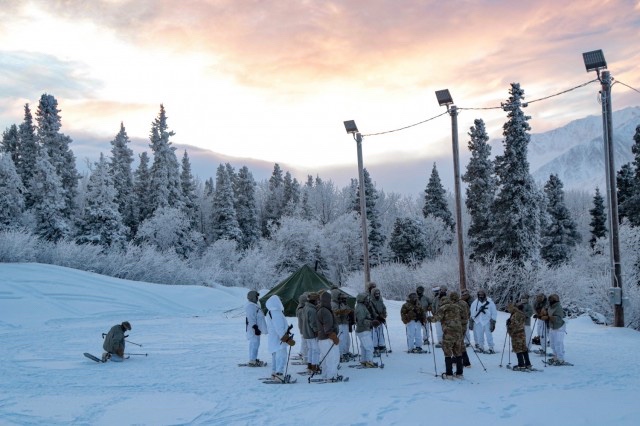
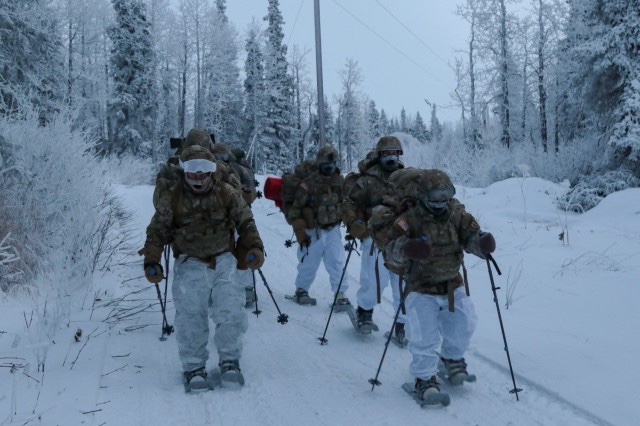
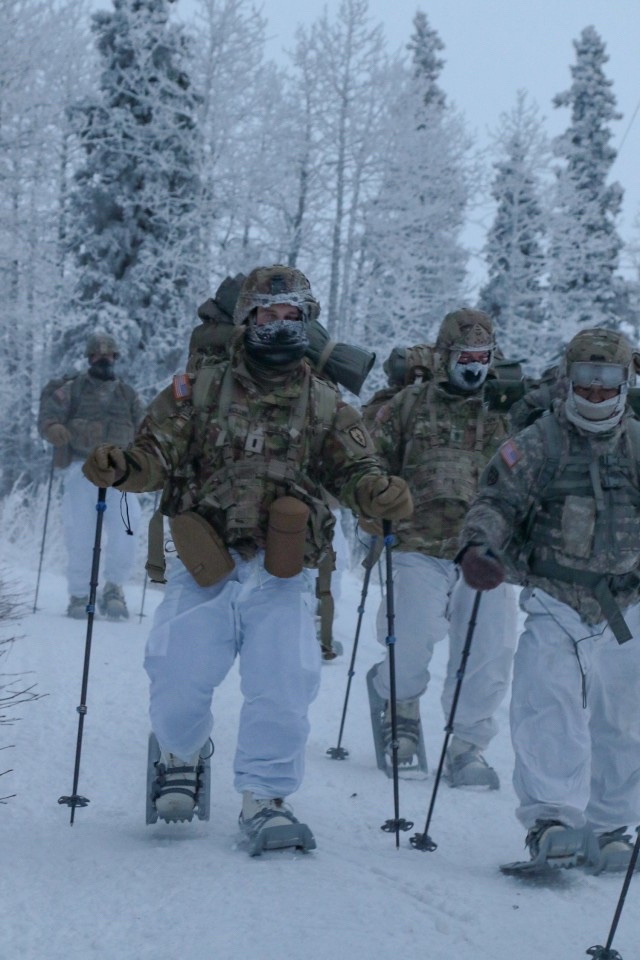
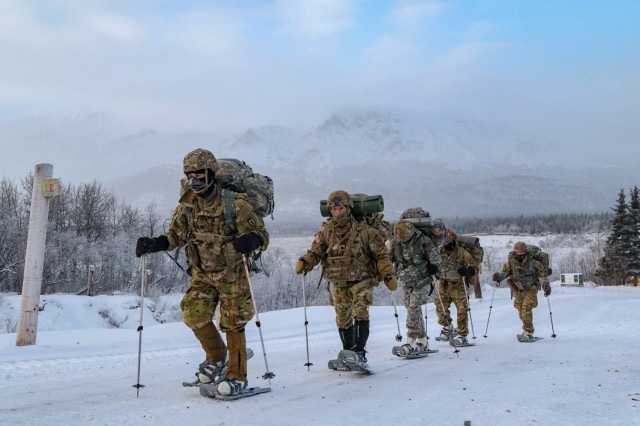
BLACK RAPIDS TRAINING AREA, Alaska — This past March the Army released its Arctic Strategy which plans to regain Arctic dominance by implementing improvements to increase readiness in the Arctic. One of the keys to that readiness is the Northern Warfare Training Center.

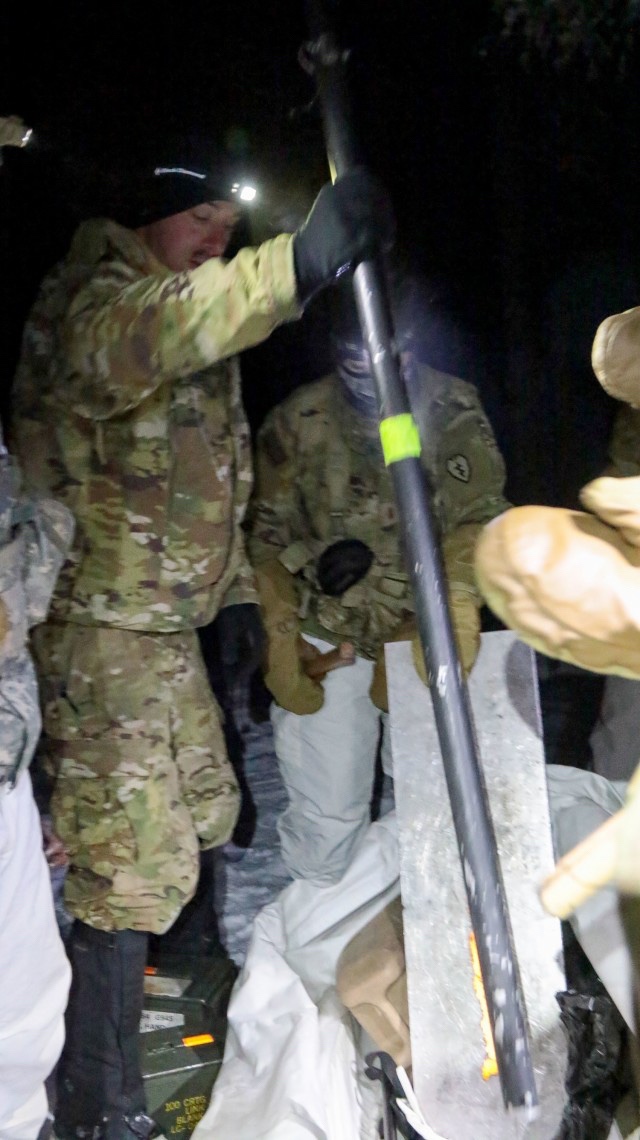
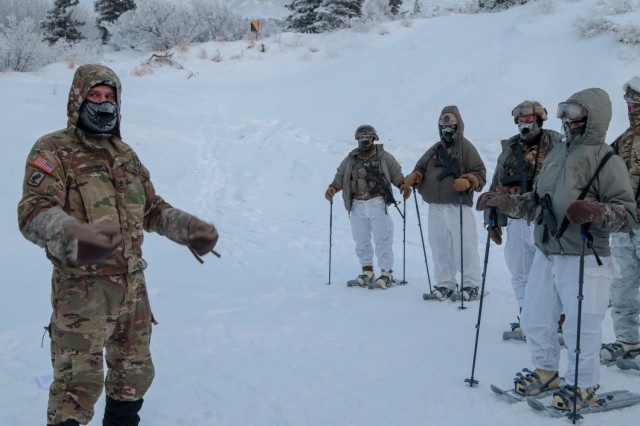
NWTC is where Soldiers go to learn what it takes to not only survive in up to 40 degrees below zero temperatures, operate in four to five feet of snow and endure winds up to 50 to 60 mph, but also how to succeed and thrive to become experts in the Arctic environment.

“An Arctic Expert would be someone, whoever that might be, infantry, armor or artillery in extreme cold weather and make their equipment function as expected and not letting the environment stopping them from finishing the mission,” said Steven Decker, longtime civilian instructor for the Northern Warfare Training Center, also known as “Father Winter” to others at NWTC.

Those trained at the school go back to their units and pass along the lessons learned to enable their Soldiers to survive in the cold environments of Alaska.

“We want noncommissioned officers that have just been stationed up here, we have them go through our train-the-trainer course. We also want squad lead leaders and fire team leaders because they’re the ones who actually train Soldiers,” one instructor said.

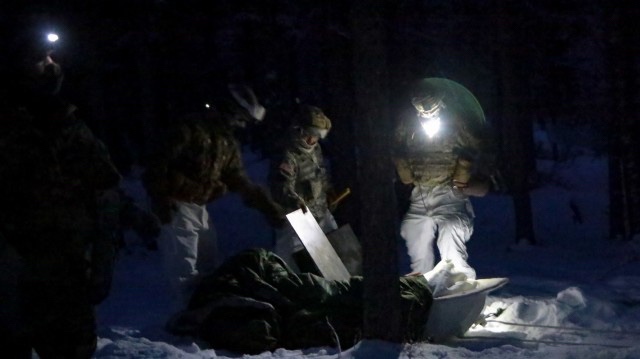
The Cold Weather Leaders Course is an 11-day course, with a field exercise that spans six days out in the cold, which pushes Soldiers to extremes they may have never gone through.

“Sometimes they think they’ll do better in the cold than they do. A lot of them learn hard lessons about themselves. Other people learn positive things, like they’re more resilient and tougher than they believed,” said Decker.

The school also makes it possible for Soldiers to become more resilient to the winter months and can improve the quality of life for them.

“Sometimes new people come here, and they’re intimidated or have preconceived notions about the cold, that Alaska doesn’t have the amenities that they are used to in the Lower 48, so this training can open their eyes to something that they may not have experienced before. To where they can take these skills and hike trails, go snow machining, skiing or ice fishing and be less intimidated, more inclined to get out and enjoy Alaska,” Decker said.

The Training Center also assist Army Futures Command in testing and equipping new Arctic Equipment for Soldiers to improve their ability to operate in the Arctic.

“[Army Futures Command] does count our opinion heavily because we are out there constantly, like the clothing we’re testing, there are technological and functional improvements to it, we also have influence on other things like the vehicle that will replace the Small Unit Support Vehicle,” according to Decker.

Teaching how to thrive in the Arctic, improving quality of life by exposing people to what they can do and preparing for the future are how the Northern Warfare Training Center is helping the Army increase our “deterrence capabilities” and regain the Army’s Arctic dominance.

By SGT Christopher Dennis, USARAK Public Affairs NCO