TYR Tactical

Archive for the ‘Guest Post’ Category

New Range Simulates Combat Stress, Tests Precision, Speed

Friday, December 3rd, 2021

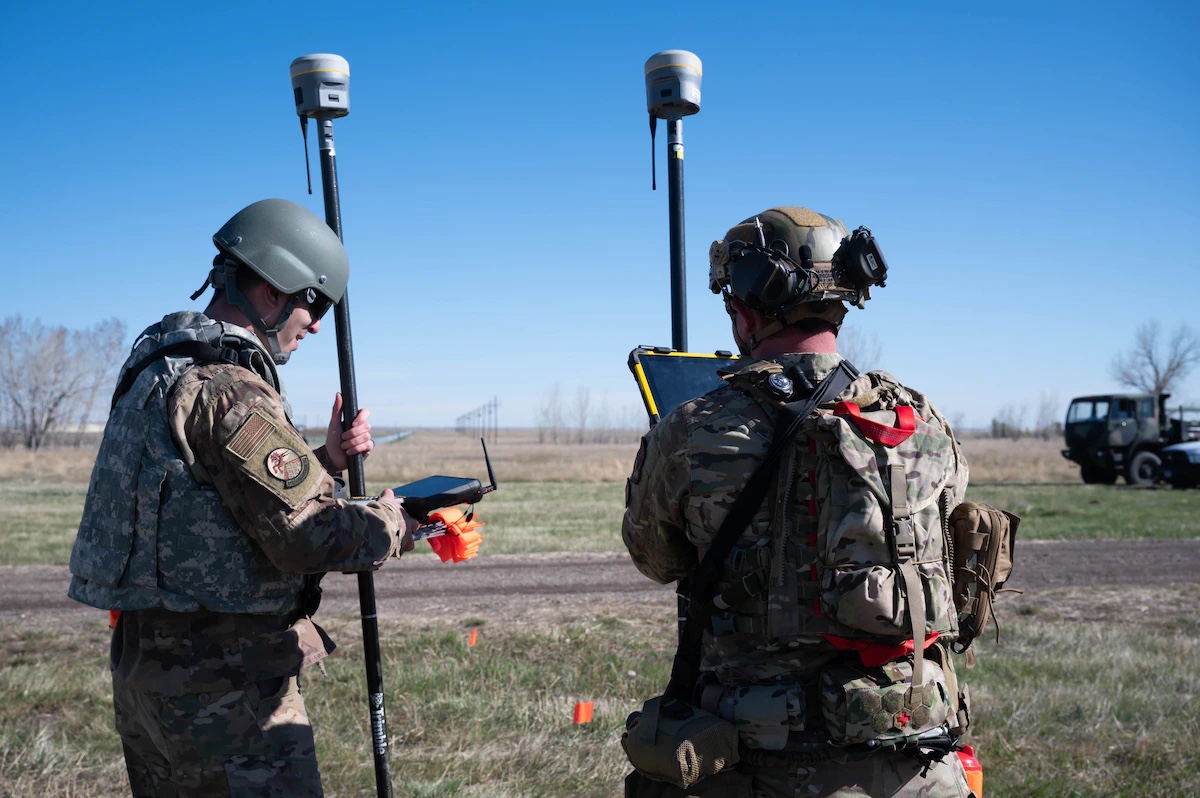
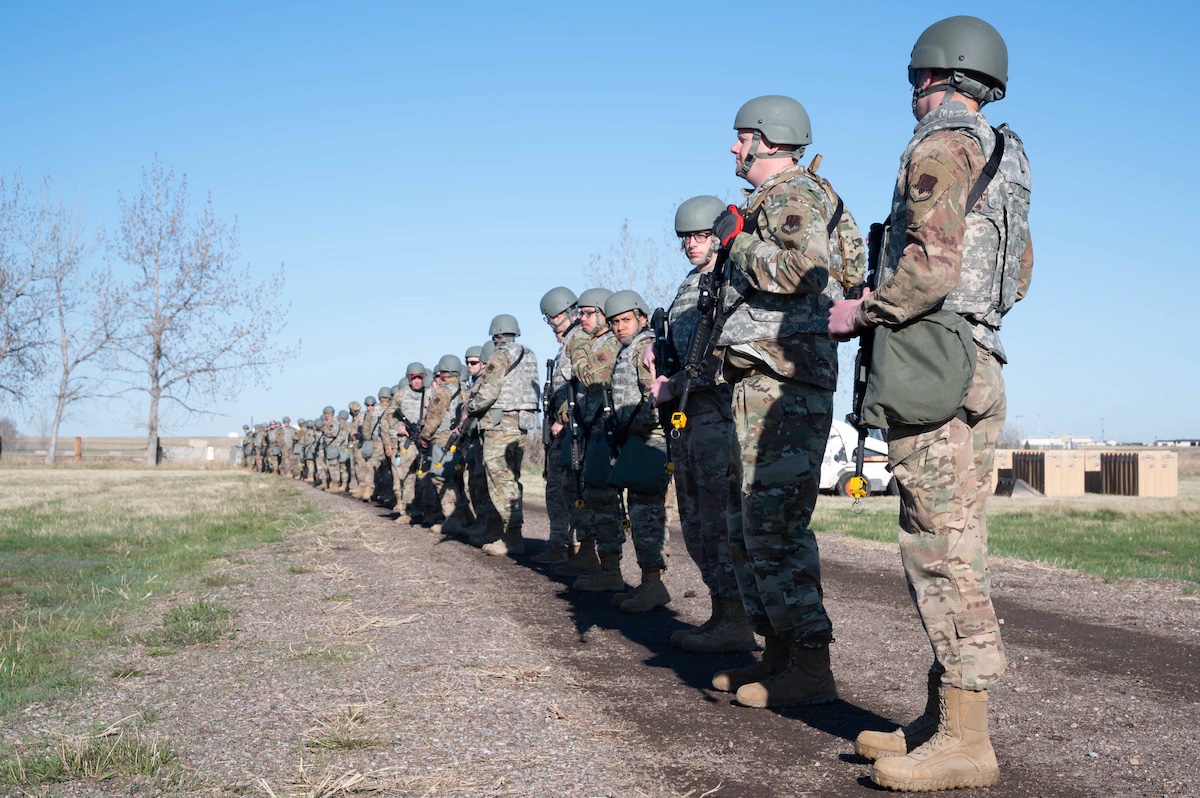
FORT CAMPBELL, Ky. — During Operation Lethal Eagle I, the 101st Airborne Division (Air Assault) assessed and validated a new stress shoot range by conducting the first iteration Nov. 18.

“I think this range is going to help dramatically,” said Sgt. David Lee, a team leader from Charlie Company, 1st Battalion, 187th Infantry, 3rd Brigade Combat Team. “There are strength and cardio elements with the stress of shooting and for me coming from the Army where we do static ranges all day to a move, shoot, move and communicate environment I think will really help the division out.”

There are eight engagements on the range to put 101st Soldiers to the test.

The tower engagement where each Soldier engages targets from three different heights ranging from 175 meters prone, 75 meters kneeling and 75 meters standing. At the base of the tower the Soldier picks up a battering ram and runs to the next station.

The breach engagement is where the Soldier breaches the door with the battering ram and engages three 50-meter targets with two rounds from a window in the building.

Next, the Soldier must drag a litter to a Humvee, taking cover behind the vehicle while engaging three 50-meter targets. After the targets have been engaged, the Soldier must pick up and carry two sandbags to the next location.

At the next location, the Soldier climbs the ladder to the rooftop and uses a barrier as cover to engage three more 50-meter targets. The Soldier then climbs down the ladder and secure two ammo cans to carry to the next position.

The Soldier must then drop the ammo can to maneuver over the top of the climbing wall to secure two water cans the he or she must carry to the bunkers from where he or she will engage the next three 50-meter targets.

For the eighth and final engagement, the Soldier moves to a location where he or she loads a magazine and engages with two rounds while walking toward the target.

“If you’re not in shape for one, get into shape and be the leader Soldiers want to follow,” Lee said. “Based on my interest in shooting I have participated in multiple three-gun competitions, so this is something that is familiar to me, but it helps set the example for the Soldiers as well.”

The stress shoot range is designed to make Soldiers and units in the 101st Abn. Div. more lethal and prepared for future combat.

“This is what we are going to expect our Soldiers to do in combat, varied terrain, heart rate up, stressed out,” said Maj. Gen. JP McGee, commanding general of the 101st Abn. Div. and Fort Campbell. “If you want to talk about increasing lethality and making it super easy for our Soldiers to get out there and work on it, this is it right here.”

This range is open to all units on Fort Campbell and its focus is to prepare the Soldiers in all units to react to enemy contact with precision and speed despite the stresses of combat.

– SFC Jacob Connor

Pushing to the Limit: Special Tactics Airmen Compete Together for Team USA Bobsled

Thursday, December 2nd, 2021

HURLBURT FIELD, Florida–For the first time ever, two Special Tactics Airmen assigned to the 24th Special Operations Wing competed together in a major competition for Team USA Bobsledding Nov. 28-29, 2021 at Park City, Utah.

                U.S. Air Force Special Tactics Officer Maj. Chris Walsh and Staff Sgt. Matt Beach, a combat controller, competed together at the International Bobsleigh and Skeleton Federation North American Cup for a chance to represent Team USA at the 2022 Winter Olympics.

                As a Special Tactics Officer, Walsh is trained to lead teams of special operations ground forces for global access, precision strike and personnel recovery missions, however since August of 2019 he’s been training and competing as a full-time athlete in the Air Force’s World Class Athlete program. WCAP provides active duty, National Guard and reserve service members the opportunity to train and compete at national and international sports competitions with the ultimate goal of selection to the U.S. Olympic team while maintaining a professional military career.

                “It’s great to be in the Olympic team picture at all,” said Walsh. “Competing with Team USA, USA Bobsled and the other athletes is a pretty big honor and to represent the Air Force on an international stage is awesome. You hope that you’ve done enough and things work out to where you end up making the olympic team, regardless of that outcome, to me the whole journey of learning a new sport and being able to compete and push myself to the highest level has been very rewarding.”

                Beach, currently assigned to the 22nd Special Tactics Squadron at Joint Base Lewis McChord, Washington, started his bobsledding journey in 2020 under the guidance of Walsh and fellow Air Force Special Operations Command teammate and bobsled athlete, Capt. Dakota Lynch, a U-28 pilot, who could not compete due to injury.

                “Being introduced to the sport by a fellow ST member is an example of just how good the leadership in the community is,” said Beach. “Having people like Maj. Walsh and Capt. Lynch to coach me through the process has been pivotal to getting me to where I am. Very rarely does anyone come in and instantly master the push and load. It’s a process, but it’s a process I look forward to.”

                Both ST operators are push athletes, who use their explosive strength and precision to accelerate a two or four-man bobsled. In order to excel in this role, the athletes have to conduct thousands of correct repetitions to make sure every hundredth of a second counts. Although the physical training for this process is different from the fitness training required for special operations missions, the mindset needed is similar.

                “The biggest thing from Special Tactics that translates to bobsledding is the mindset that you gain from going through all the ST training,” said Walsh. “It’s that no-quit, figure out how to find a solution, figure out a way to be successful-type of mindset. There are days where it’s really tough and you have to do a lot of late-night work on the sled and then get up early the next morning to compete, so having that gritty mindset is very valuable.”

                In addition to the “gritty” mindset, Special Tactics operators are accustomed to being in extreme pressure situations where high levels of precision are required in rescue missions, controlling aircraft or guiding bombs on targets, which in turn helps them as athletes compete at the highest levels.

                “To compete at this level requires the same focus and attention to detail as pre-mission prep and mission execution,” said Beach. “[Bobsledding], believe it or not, has a lot of parallels with the ST community.”

                Unlike Walsh, Beach is not currently part of the World Class Athlete Program and still works as a full-time combat controller continuing to train alongside his teammates at the 22nd STS.

                “Competing at this level while maintaining all the currencies expected of us as operators is not an easy feat,” said Beach. “Scuba diving all day and jumping out of planes in the middle of the night is not the best recovery when having to race some of the best athletes in the nation, but I have found a way to make it work.”

                In typical ST fashion, both athletes and operators are determined to continue to push themselves to the highest level in whatever they do. For example last year, Beach took on a popular internet fitness challenge back at his squadron in which he had to complete a sub-five-minute mile and squat 500 pounds in the same day. Not only did he complete the challenge, but made sure it was executed to the highest standard by using a certified professional running track and receiving official review from USA Powerlifting judges to verify the squat.

                Meanwhile, Walsh also had his eye on professional car racing and became the first active-duty service member to compete in the TC America Series, a touring car racing series in Virginia earlier this year. He ended up placing third overall among some of the top car racers in North America.

                Although the ST Airmen hope to represent their country on the Olympic stage, in 2022 for Walsh and 2026 for Beach, even more so, they love the thrill of a good challenge and encourage others to pursue their goals no matter what.

                “The best advice I can give anybody to accomplish anything they want to do is, to just start it,” said Walsh. “There’s never a perfect plan from the beginning. I can wait until the moment’s right or I can jump when I’m at an 80% solution and see where I land. And if I fail, figure out how to fail better the next time and eventually succeed. Just begin to build whatever it is that you hope to do. Once you start, you can figure things out as you go.”

                Walsh and Beach placed 6th overall in their most recent competition, despite some equipment issues. They will be competing once more before the 2022 Olympics in Lake Placid, New York Dec. 18-20, 2021.

                Special Tactics is Air Force Special Operations Command’s tactical air ground integration force and part of the Air Force Special Warfare enterprise, trained to execute global access, precision strike, personnel recovery and battlefield surgery operations across the spectrum of conflict and crisis. Air Force Special Tactics is one of the most highly decorated communities in the Air Force since the Vietnam War with one Medal of Honor, 13 Air Force Crosses and over 50 Silver Star medals. The 24th Special Operations Wing is headquartered in Hurlburt Field, Florida with geographically separated units across the country.

By Capt Alejandra Fontalvo, 24th Special Operations Wing Public Affairs
Air Force Hosts Coalition VIRTUAL FLAG, Premier Coalition Virtual Air Combat Exercise

Tuesday, November 30th, 2021

The 705th Combat Training Squadron, home of Air Combat Command’s Distributed Mission Operations Center, recently hosted one of the DoD’s largest coalition and joint virtual air combat exercises across eight time zones at Kirtland Air Force Base, New Mexico, Oct. 24 through Nov. 5.

Coalition VIRTUAL FLAG exercises led by the United States Air Force focus on major combat operations in a realistic theater against a near-peer threat in a dynamic training environment. CVFs are designed to build and maintain joint and coalition partnerships between the United States, United Kingdom, Australia, and Canada by focusing on planning, executing, and debriefing a multitude of mission sets in air, space, surface, and cyber domains.

All units operate within a simultaneously live, virtual, and constructive environment which allows warfighters to prepare to wage war, and then practice doing so in a synthetic environment so that they can learn how to be combat effective.

CVF 22-1 trained over 344 participants, 200 joint and 144 coalition warfighters, and accomplished over 6,461 joint training events for 67 units using seven networks and 23 different systems connected at 29 sites across the world.

For the first time ever, the DMOC integrated cyber effects and planning into CVF 22-1’s training scenarios requiring the defense against cyber maneuvers by opposing forces. Groups were broken into blue cyber teams, made up of a British cyber protection team, augmented by Canadian intelligence members, fusing cyber intelligence into the larger operational picture, and red cyber teams, composed of an opposing force of U.S., Canadian, and United Kingdom members executing as a team of enemy cyber operators attempting to disrupt operations.


While the cyber teams were physically located at Kirtland AFB, New Mexico, they were working in a virtual “range” of computers in the United Kingdom which took a lot of bandwidth to run all the cyber intrusion tools required. The team was able to sort through those problems over the first few days and accomplish valuable cyber training objectives.

The DMOC is building out a complete cyber cell at Kirtland and will continue to refine and include cyber desired learning objectives seamlessly into their simulation environment to integrate with all of the other domains.

“The 705th CTS has built its Distributed Mission Operations capabilities up over decades and integrating a domain like cyber is a challenge the squadron is excited to face,” said U.S. Space Force Capt. Oliver Peery, cyberspace operations flight commander, Kirtland AFB, New Mexico.

Cyber operator’s roles will continue to grow in future exercises and keep progressing towards true joint all-domain command and control, or JADC2.

“I believe the 705th Combat Training Squadron has something very unique to provide to the cyber warfighter, integrating cyber into a realistic war exercise and forcing not only traditional operators to be more aware of cyber effects on a battlefield environment, but for cyber to see how they can truly support and directly integrate their offensive and defensive capabilities into the operational environment,” said Peery.

The DMOC develops realistic and relevant training environments and scenarios for participants while allowing individual units to add elements so they may complete required training objectives or certifications during CVF.

The U.S. Army used CVF 22-1 to certify three air defense artillery fire control officers; ADAFCOs are the USA’s air defense representative at C2 nodes.

CVF 22-1 presented participants with a contemporary multi-domain threat where exercise participants had to think through complicated problem sets.

“22 Wing provided personnel with the opportunity to exercise within a state-of-the-art command and control training centre, working alongside other members of the Royal Canadian Air Force, the Canadian Army, the United States Air Force, and the United States Marine Corps who made up the Control and Reporting Centre,” said Royal Canadian Air Force Maj. Shaun Hyland, exercise and event management coordinator, Royal Canadian Air Force Aerospace Warfare Centre.

The DMOC’s exercise scenarios allow participating warfighters to discover the friction points in their plans and allow the crews to work through them, whether that is in mission planning or real-time during the vulnerability period.

“Exercise Coalition VIRTUAL FLAG is the world’s premier distributed synthetic training environment where colleagues from many nations are able to practise large-scale operational warfare,” said Royal Air Force Squadron Leader Graham Orme. “Joint planning and execution allow the participants to learn through shared expertise across multiple domains from combat air to space and cyber.”

Orme continued, “The dedicated simulator staff enable bespoke tailored scenarios that push the operators, test their skills, and allow for the development of new techniques and procedures.  As such, the exercise is a prized element of any force’s annual training programme.”

DMOC-Space, Schriever Space Force Base, Colorado, sent exercise data in real-time to Kirtland during CVF. The transfer of data allowed the DMOC to forego issuing a notional event which further strengthened the C2 of joint and coalition forces during the virtual, large-force exercise.

In addition to missile-warning data, the 392nd CTS, Schriever SFB, Colorado, also provided global positional system data to the DMOC to use their GPS environment generator for the first time in CVF. This allowed pilots using DMOC flight simulators to deploy precision weapons in a simulated GPS-degraded environment.

“CVF provides a unique opportunity to integrate the space domain into the tactical environment using the virtual construct of the DMOC to determine best practices, and ultimately learn how to maximize combat effectiveness,” said USSF Tina Bragdon, 705th CTS space subject matter expert and planner.

Space capabilities bring more to the fight than ever, but we have to ensure we leverage them to our nation’s full advantage.  Relevancy on the battlefield is not derived by independence, but by interdependence and the successful fusion of capabilities.

“This exercise is the culmination of 18 months of training for our QSIC [Qualified Space Instructors Course] students,” said Royal Air Force Squadron Leaders Laura Ridley-Siddall, Air and Space Warfare School officer commanding space training.  “This year, for the first time, we have used the wholly simulated environment as the final evaluation for our students on the QSI Course in the position of Space Duty Officer.”

When planning VIRTUAL FLAG exercises, the DMOC’s objective is to incorporate new capabilities continually providing an environment in which the warfighter may train with the forces they could expect to coordinate with during major combat operations.

“It is particularly poignant when executing our coalition events because there are many assets with which U.S. operators have never had the opportunity to work with until CVF,” said USAF Lt. Col. Michael Butler, 705th CTS director of operations.  “While the DMOC has traditionally included space and cyber domains in our exercises, in CVF 22-1 we focused on integrating coalition space and cyber capabilities to great success.”

Butler continued, “We built a strong foundation in CVF 22-1 and learned many lessons that will allow us to make our scenarios more robust and realistic for future exercises.”

CVF 22-1 provided the unique opportunity for joint forces from the USAF, USSF, USA, U.S. Marine Corps, U.S. Navy, and four partner nations’ forces to train in a complex and integrated live-virtual-constructive training exercise.

“Modern warfare is far more complex and dynamic than ever, and victory demands the highest proficiency in planning and executing operational objectives smarter, faster, and more precisely than your adversary,” said U.S. Space Force Walt Marvin, 392nd CTS exercise planner.  “We must fight together effectively in a joint environment, and most likely as a coalition of nations.”

The 705th CTS reports to the 505th Combat Training Group, Nellis AFB, Nevada, and the 505th Command and Control Wing, headquartered at Hurlburt Field, Florida. 

 “Coalition and joint partners interested in participating in future VF or CVF exercises should contact dmoc.css@us.af.mil to connect with the DMOC,” said USAF Lt. Col. Lindsay Post, 705th CTS commander, Kirtland AFB, New Mexico.

By by Deb Henley, 505th CCW, Air Combat Command

HLC Industries – Your Source for Cordura Fabrics

Monday, November 29th, 2021

When we say CORDURA® is durable, we mean it. That’s why militaries around the world trust CORDURA® Advanced Fabrics to perform on every mission. For additional information, contact:  sales@hlcindustries.com – for samples + marketing materials

For Warfighter & Crimefighter: Lightfighter & Warriors Heart

Monday, November 29th, 2021

It’s no secret what troubles are faced by members of the military & first responder professions, both in the field while on duty, and off duty after the fact, when the job is done. Stress from these professions follows us home in many forms, and it’s in those moments that our brothers and sisters need help the most. Unfortunately, they don’t always know where or how to get it.

Founded in March 2016, “the Warriors Heart Foundation is a 501(c)(3) non-profit organization established to provide the men and women who protect us with a unique peer-to-peer healing program for “Warriors Only” just outside San Antonio, Texas. No warrior, whether military, law enforcement, fire fighter, or first responder should ever have to walk through the struggles of addiction and mental health alone. The Warriors Heart Foundation was created out of necessity (separately from the Warriors Heart Treatment Facility) to assist in the funding of warriors who don’t have insurance or need assistance in the costs of treatment (all levels of care).”

Lightfighter is proud to announce its adoption of The Warriors Heart Foundation as its native charity. Going forward, and in conjunction with a preliminary donation, the Warriors Heart Foundation will be featured prominently on the Lightfighter Forum. This, to ensure that our brothers and sisters among us know there’s a place to go for the help they need, and a way to get there.

The Lightfighter community strongly supports Warriors Heart. Some members have received treatment at the facility themselves, which inspired Lightfighter’s adoption of the organization and commendation for all they do for those that stepped forward to serve. 

In their own words:

“There is strong medicine in processing grief or moral injuries. Verbalizing those feelings and emotions with a small group of people of similar backgrounds and experiences, is a critical component of addressing the core underlying issues causing self-medication with drugs or alcohol. Where else can a soldier, cop, or firefighter talk about the horrific things they’ve seen on the job and not be judged?”

— Chuck (SGM, US Army, Ret.)

“Warriors Heart gave me the tools to not only take back control my life, but to start thriving again.”

— William (Staff Sgt, US Army, Ret.)

Lightfighter is honored to enable the Warfighter & Crimefighter by supporting those dedicated to their health and wellness, the cornerstone of capability. We sincerely thank Warriors Heart for this privilege.

For more information on The Warriors Heart Foundation and how you can donate, please visit: 

www.warriorsheartfoundation.org/lightfighter 

SCUBAPRO Sunday – Hand Bearing Compass

Sunday, November 28th, 2021

A Hand Bearing Compass or Sighting Compass is mainly used when on a boat or when you are trying to take a bearing while moving; they can be used side by side. It is a compact magnetic compass capable of one-hand use and fitted with a sighting device to record a precise bearing or azimuth to a given target or determine a location. It is used to sign a bearing, and that bearing will be the one you would have to take if you wanted to head toward that object.

A hand bearing compass is used to measure the magnetic direction of sighted objects relative to the user. A steering compass tells you where you are going, but the hand bearing compass tells you where to go. Unlike a GPS receiver that does the same–perhaps quicker, more conveniently, and more precisely–the hand-bearing compass does not rely on electrical power or satellite reception. It is a good backup, and you should always have at least one in every boat. They are mainly used for racing sailors to see who is sailing faster on the same tack or if you are trying to overtake a ship or boat so you can intercept it.

How they work

A hand bearing compass allows you to take bearings of distant objects, which you can then transfer to a paper chart to create plot lines. Taking bearings of at least two 45 or more degrees apart results in intersecting lines on the chart, giving a position fix. To get the most accurate position, just like on land, you should try and take bearings of three different objects.

Different styles

We offer several different hand bearing compasses, either in “hockey puck style” or with pistol grips. High-end binoculars also come with bearing compasses, and many boaters prefer a good set of binoculars over a hand bearing compass because they’re easy to use.

How to take a bearing

To use an arm’s-length compass (usually with a pistol grip), put the lanyard around your neck to stabilize the unit. Hold the compass at eye level, then line up the V-notches in the sighting vanes on the top of the compass with the desired object; now check the bearing on the compass card. If this sounds like juggling while walking across the street, you feel the same way we do. It can be tough to keep compass and sights lined up and checking some small numbers all at the same time. Add to that the motion of a boat in a seaway and poor visibility, and you face long odds of taking an accurate bearing.

A better choice is a hockey puck style compass with an infinity prism held up to your cheek and lets you see across the top of a small prism. When you focus on the object in the distance, the prism projects the bearing into your field of vision, so you don’t have to shift your eyes. Object and bearing are in focus at the same time, which is a tremendous asset for taking accurate bearings in rough conditions.

Operating a digital compass is very much like taking a snapshot. You use the unit’s aiming system to take the sight, then press a button. The compass stores the bearing in electronic memory for future recall.

Avoiding a Collision

Take a bearing upon first sighting another approaching vessel, like a ship. Take a second bearing a few minutes later and repeat at regular intervals. If the approaching ship’s bearing remains the same, you are at risk of a collision. If their bearing has changed, rotate, so you are sighting along the original bearing. If you’re now looking at the water in front of the ship, you’ll pass ahead of it. Sighting behind the vessel means it will pass ahead of you.

What to look for

Compactness: Models that are comfortable to wear around your neck on a lanyard and fit easily in a pocket so that you can keep them nearby.

Night Lighting: Like other navigation instruments, bearing compasses should have night-lights. Some use small battery-powered lamps. Others have glow-in-the-dark lighting, which uses small quantities of photosensitive or radioactive gas. We like this type best because it is ready at a moment’s notice, and never needs charging or new batteries.

Accuracy: A precisely graduated card and excellent damping are critical for obtaining accurate sights. Most people can get a bearing accurate to 2-3 degrees on a moving boat using a well-damped, infinity prism compass that is held near the cheek. In a seaway, pistol grip compasses that are held at arm’s-length are probably accurate to about 10 degrees. Sources of error that affect your bearing’s quality include inaccurate aiming, violent motion, steel-rimmed glasses, and bad visibility.

SCUBAPRO Sunday is a weekly feature focusing on maritime equipment, operations and history.

Engineer Became Highest Ranking Native American in Union Army

Sunday, November 28th, 2021

It’s a time to reflect on the contributions and sacrifices Native Americans have made to the United States, not just in the military, but in all walks of life.

Ely S. Parker overcame adversity to attain the highest rank of any Native American in the Union Army during the Civil War.

Parker, whose tribal name was Hasanoanda, was born on the Tonawanda Reservation in Indian Falls, New York, in 1828. He was a member of the Tonawanda Seneca tribe.

His father, William Parker, was a chief in that tribe and had fought in the War of 1812 for the United States.

In addition to English, Eli Parker spoke Seneca, which is an Iroquoian language. The Seneca Tribe is one of six in the Iroquois Confederacy. The others are Cayuga, Onondaga, Oneida, Tuscarora and Mohawk.

As a young man, Parker worked in a law firm in Ellicottville, New York, before applying to take the bar examination. However, he was not permitted to take it because, as a Native American, he was not then considered a U.S. citizen.

American Indians were not considered U.S. citizens until passage of the Indian Citizenship Act of 1924.

As fate would have it, Parker had a chance encounter with Lewis Henry Morgan, a non-Native American lawyer, who was also a famous anthropologist interested in Iroquois ethnography.

The two became close friends and had a number of meetings in which Parker shared his knowledge of Iroquois culture and traditions.

Their relationship was mutually beneficial because Morgan helped Parker gain admission to study engineering at Rensselaer Polytechnic Institute in Troy, New York.

As an engineer, Parker contributed to maintenance work on the Erie Canal and other projects.

Later, as a supervisor of government projects in Galena, Illinois, he befriended Ulysses S. Grant, forming a relationship that would prove useful later.

In 1861, near the start of the Civil War, Parker tried to raise a regiment of Iroquois volunteers to fight for the Union, but he was turned down by New York Gov. Edwin D. Morgan.

He tried to enlist in the Union Army as an engineer, but he was told by Secretary of War Simon Cameron that, as an Indian, he could not join.

Later, Parker contacted Grant, who was by that time a brigadier general in the Union Army. The Union Army suffered from a shortage of engineers, and Grant ensured that Parker was accepted into the Army.

Parker was commissioned in the Army in early 1863. He became chief engineer of the 7th Division during the siege of Vicksburg, Mississippi, which occurred from May 18 to July 4, 1863. Grant, who had become a major general, was in overall command, and the Union Army prevailed at that siege.

Grant was pleased with the work done by Parker during that siege and made him his adjutant during the Chattanooga Campaign in Tennessee, Sept. 21 to Nov. 25, 1863.

Parker subsequently transferred with Grant and served with him through the Overland Campaign and the Siege of Petersburg, Virginia, from May 4 to June 24, 1864. At Petersburg, Parker was appointed as the military secretary to Grant, with the rank of lieutenant colonel. He subsequently wrote much of Grant’s correspondence.

Parker was present when Confederate Gen. Robert E. Lee surrendered at Appomattox Court House, Virginia, April 9, 1865. He helped draft the surrender documents.

At the time of surrender, Parker said that Lee “stared at me for a moment. He extended his hand and said, ‘I am glad to see one real American here.’ I shook his hand and said, ‘We are all Americans.'”

Parker was brevetted a brigadier general on that day. Brevet is a former type of military commission conferred especially for outstanding service, by which an officer was promoted to a higher rank without the corresponding pay.

After the Civil War, Parker remained the military secretary to Grant. He also was a member of the Southern Treaty Commission, which renegotiated treaties with Indian tribes, mostly in the southeast, that had sided with the Confederacy.

Parker resigned from the Army on April 26, 1869.

After Grant was elected president of the United States, he appointed Parker to serve as commissioner of Indian affairs, the first Native American to hold that post. He held the position from 1869 to 1871.

Parker became the chief architect of Grant’s peace policy involving Native Americans in the West. Under his leadership, the number of military actions against Indians were reduced, and there was an effort to support tribes in their transition to living on reservations.

Parker died in poverty in Fairfield, Connecticut, on Aug. 31, 1895.

He was portrayed in the 2012 film “Lincoln.” He’s also featured in the novels “Grant Comes East” and “Never Call Retreat.”

By David Vergun, DoD News

Primary Focus – Can 6.5 Grendel Get You Where You Want to Be in an AR Drop in Receiver?

Saturday, November 27th, 2021

What’s all the hype about with the 6.5 Grendel?

The 6.5 Grendel doesn’t fit next to the 6.5 Creedmoor in a side-by-side comparison, despite similar concepts and similar naming structure. Sure, they shoot the same diameter bullet – and very accurately at that, but that’s about where the similarities end. So, what’s all the hype?

Simply put, you can do more with your AR-15 rifle than you could before with a much easier conversion, that doesn’t get you outside of the realm of the effectiveness for the AR platform, and you can do it while driving tacks out to 750 yards and maybe then some.

You aren’t going to win any benchrest competitions with the 6.5 Grendel, but then, you weren’t going to be competitive at those ranges and with those specifications in a semi-auto sporting rifle either. The Grendel is very interesting for those who want significantly better accuracy; good recoil profile that compares favorably with the .223 as well as range that nearly triples the on-target range of the native offering.

Yes, the ammunition is going to cost you more, and the components aren’t as “mainstream” as the native cartridge/caliber choices, but you get near drop-in ease of implementation, with “almost unbelievable” improvements in accuracy and range.

What’s the hype about the 6.5 Grendel you ask? It’s a better offering than standard AR folks have had for shooting accurately to 750 yards than ever before, without one off-builds. And it is affordable. You’re taking a gun that is capable of MOA under some pretty exacting specifications which require significant tweaking at minimum to get there and making it a native ½ minute semi-auto for about the price of a decent bolt action rifle in additional costs. 

You can’t do that with a 6.5 Creedmoor affordably, and you cannot expect too much more from a platform that routinely catches flack when it shows up to longer range competitions. You may be able to find full factory builds on sale for half that of the Creedmoor – and that means you can be shooting a lot of intermediate range 6.5’s well before you match that price tag – and you can usually get an upper or a whole rifle faster than the larger 6.5.

Is it genuinely competing with the 6.5 Creedmoor and other strategically long range cartridges in the “6mm class”

No, the 6.5 Grendel isn’t competitive with the “6mm’s” generally speaking, but it’s not designed to be competitive with those rounds either. It was built to deliver exceptional accuracy and it does that, but it was designed to do that in a shorter, lighter, semi-automatic rifle, like the AR-15. It has a special purpose, but that special purpose isn’t 850+ yards, per se. It’s also a lot more approachable for AR-15 purists, because it drops into the normal platform, instead of the larger .308 AR style variant.

Just looking at a 6.5 Creedmoor cartridge vs. a 6.5 Grendel almost tells the tale of what to expect from the different offerings, but it’s a nuanced story with a lot of very cool features on both sides. You kind of just have to align with one or the other, or both, in separate configurations – especially if you are dropping either cartridge onto the backbone of the AR platform. They are very different beasts, and both are definitely beasts in their own right.

To say that a 6.5 Grendel is going to compete with benchrest cartridge offerings that have been punching 5-shot one-hole targets for decades is sort of ridiculous – it’s designed and built to fire reliably out of a basic AR-15 setup, with a bolt/carrier/barrel change. You’ll need a magazine too, but they aren’t typically hard to find. And that’s kind of the beauty of the Grendel in 6.5 – it’s approachable, can actually be found occasionally on the market instead of being a myth, and it doesn’t try to be something it isn’t.

If you want to shoot $3-4 a round ammo there are plenty of benchrest cartridges that will put you there. If you want to shoot a 6.5 Creedmoor on benchrest, you aren’t really opting for an AR anyways. So yeah – they do different things.

Bolt guns are the real domain for one hole targets that need to be in that one hole configuration all the time.

The cool thing about the 6.5 Grendel is that out to regular distances for range work, it’s going to get you really close to that desirable one-hole target, and you are probably less than 1k out of pocket on a decent upper receiver build, or less than $1500 on a dedicated factory rifle on the intermediate to high end. Sometimes you can find the kits or rifles at half those respective prices too – so yeah – it’s approachable for high end accuracy out of an AR.

If you’re talking about paper targets, the 6.5 Grendel is good to go to 750 yards and the 6.5 Creedmoor is good to twice that, but the Creedmoor won’t achieve those numbers out of a 20” or 22” barrel on an AR. In the field you can expect out of a typical AR configuration for the respective builds, about 650+ yards on the 6.5 Grendel and about 850+ yards on the Creedmoor, with both requiring a well dialed optic and some adjustment at those extreme distances to take a deer-sized animal at that range.

Ideally, you’re shooting a 6.5 Grendel out of a 20 or a 24 inch barrel from the AR, and you’re getting the most out of a 6.5 Creedmoor at a 24”+ barrel, with a 26” or 28” barrel being optimal for the 6.5 Creedmoor. Note: 24” Grendel barrels are basically a myth for the AR – super hard to find unless bespoke.

In the field hunting for deer, it almost makes more sense to be using the 6.5 Grendel unless you like the 6.5 Creedmoor so much you don’t mind carrying an AR that is 12+ pounds and has worse accuracy than the cheaper, lighter bolt action in the same caliber (Creedmoor). If you’re hunting for deer at greater than 650 yards with an AR, you may not be taking appropriate shots, even with a tack driver like the 6.5 class.

What’s a realistic expectation of all things equal with off the shelf components and an off the shelf or simple maker’s build?

You can get to ½ MOA all day long. But that may not even be the goal. What’s probably even more interesting, is that the 6.5 Grendel makes a compelling case as the gateway drug to the precision long range shooting world to allow casuals the opportunity to test the waters and see if they like it before they commit 15 weeks of pay to dip their toes in the long range precision game.

You get to test if you like tromping out 750 yards to get a target after only a handful of shots.

You get to test if you like adjusting windage for slight shifts in crosswind activity on the regular, so you don’t ruin that pretty target out there at 750 yards.

You get to find out if you mind only shooting $40 worth of ammunition on a range trip because you take 2-3 minutes or more playing around with the notepad and the settings and your bench configuration at the range between each shot.

You get to see what it’s like to not ALWAYS have a flyer on your AR target.

Here are the numbers for a basic comparison:

6.5 Grendel approximate average performance based on typical grain weights:

90 grain bullet; ~2875 fps velocity; ~1650 ft. lbs. of energy

120 grain bullet; ~2700 fps velocity; ~1950 ft. lbs. of energy

123 grain bullet; ~2675 fps velocity; ~1910 ft. lbs. of energy

130 grain bullet; ~2500 fps velocity; ~1810 ft. lbs. of energy

Note: shorter barrels than 24” are going to see some reduction in velocity and may see larger standard deviations.

6.5 Creedmoor approximate average performance based on typical grain weights:

120 grain bullet; ~3075 fps velocity; ~2450 ft. lbs. of energy

143 grain bullet; ~2750 fps velocity; ~2250 ft. lbs. of energy

Note: these are out of a 28 inch barrel, with a 26 or 28” barrel being optimal for the Cartridge; the average length of Creedmoor barrels for the AR308 platform is probably in the 20-22 inch range, so you can expect these velocities and the ultimate range of the projectile to take big hits.

The 6mm PPC that the original case for the Grendel was designed from, is a powerhouse in history, and the 6mm’s and 6.5mm classes are brilliant when it comes to delivering on target for accuracy. Ultimately, they are a great way to send a projectile on a man sized target or a deer sized target. That’s why the AR market has adapted to them so well. The terminal ballistics on both of the 6.5’s are excellent for hunting, and suitable for some military use cases. And the extended range on both the Grendel and the Creedmoor, while totally serving different goals, are incredible.

What can you expect? A very capable cartridge with a very nice range of activities with off-the-shelf ammunition that doesn’t cost more than $2 a round usually. The price probably has a bit of a kicker during times of low ammunition volumes, but it isn’t detrimental to the type of shooting that 6.5 shooters and hunters are doing. It’s a safe place to be for someone who wants more than a decent accuracy upgrade to their favorite rifle platform (the AR, obviously) and doesn’t want to be too far into the weeds for the privilege of it.

What was the original intent of the 6.5 Grendel

The original intent is touched upon up further in this article, but here’s a more in-depth exploration to help clarify how the 6.5 Grendel, despite being a bit less popular with the precision shooter crowd in the AR world, has outperformed its original intent in many observer’s minds.

Basically, the designer (Bill Alexander) wanted to outperform the .223 Remington and 5.56×45, with a longer effective range and that could be used in the normal OAL/magazine constraints of the AR. Pairing with Lapua Ballistics expert Janne Pohjoispaa and Arne Brennan, a competitive shooter, Alexander, who owns Alexander Arms, launched the product at a blackwater facility where it was more accurate than the .308 at intermediate distances and still had supersonic velocity at 1200 yards.

So, if anything you might gather from those statements – it should be that it was meant to be used in a military rifle, for use in battle. And meant to be better than the .223/5.56 and the fact that recoil is half that of the .308 and intermediate distance accuracy is better, it seems like it delivered on design parameters.

Has the 6.5 Grendel lived up to the hype?

It seems obvious by the sold out products in the space, and the demand for ammunition that it has gained more than a few fans or followers. But the basic performance promises of the cartridge make it very interesting for those who want to deer hunt with their AR out further; or want a flatter shooting, better terminal performance round for warfighting or defensive purposes.

It’s not the 1200 yard gun the Creedmoor can be with a long barrel and a bolt action. But is it the better option for those who value the numbers and want the familiarity and approachability of the AR?

It hasn’t won a contract yet for U.S. military adoption. The 6.8SPC hasn’t either, thanks to the cost prohibitive nature of swapping out a decades old relationship with the 5.56×45. Interestingly the 6.5 Grendel is being developed in a Zastava rifle that looks to be adopted eventually by the Serbian military forces.

The 6.8SPC is an interesting cartridge to compare beside the 6.5 Grendel:

6.8SPC approximate average performance based on typical grain weights:

115 grain bullet; ~2575 fps velocity; ~1675 ft. lbs. of energy

120 grain bullet; ~2450 fps velocity; ~1600 ft. lbs. of energy

Note: this is out of a 16 inch barrel which aligns well with military use cases, generally.

Given the nature of the things you can do with the Grendel out of a standard AR, it’s pretty safe to assume that the cartridge and subsequent builds on that platform have lived up to the hype. 

Where is the sweet spot for the 6.5 Grendel?

Shooting out of a 20” barrel on the AR would be nearly ideal thanks to the increased stiffness of the barrel, and the fact that the only real gain is tighter standard deviation ranges and some velocity past 600 yards if using a larger barrel length. The original manufacturer itself (Alexander Arms) points to a preference of 20” and 24” barrel lengths.

If you are hunting or target shooting past 450 yards and out to about 700, you can be well served by the 20” barrel and some basic understandings of your optic and the characteristics and bullet drops for the cartridge you are shooting.

On an AR, this makes it even more approachable than it already was, relative to the 6.5 Creedmoor, which is great on the AR, but much better on a long barreled bolt action in both target use and field use going after bigger game.

Some final notes about the 6.5 Grendel in an AR build

It’s a winner. It’s affordable. It’s realistic. It’s not pushing the absolute limits of the AR platform for no reason, and it can really get you where you want to be on an upper receiver platform, which may not be the case for many other alternatives. 

The 6.5 Grendel, despite not being chosen for a military contract, is well within the appropriate performance ranges to be considered a better alternative for nearly everything compared to the 5.56/.223, except when you factor in the access to cheaper ammunition that comes from being the darling of the US Armed Forces since the late 60’s. If you are not shooting 30 rounds at a time, but instead, 1 every 30-40 seconds, the Grendel is a compelling offering out of the AR, especially when you like tight groups and want to squeeze something different out of the muzzle of your AR. 

If you need a dual purpose rig for target work and deer harvesting, the 6.5 Grendel does not disappoint.

Primary Focus is a weekly feature from Primary Arms that covers various firearms related subjects.