Phantom Lights

Archive for the ‘Guest Post’ Category

Elite You Launches Virtual Training Site

Wednesday, December 8th, 2021
The Elite You is an online/virtual training platform for those who understand the need for self-reliance and the potentially life-saving value of being formidable.

“The sum of virtue is to be sociable with them that will be sociable and formidable to them that will not.” ~ Thomas Hobbes

Initially, Elite You was designed as a virtual platform for leading experts, trainers, and mentors to have the ability to record their knowledge, lessons learned, and expertise gained throughout their lifetime. A place for experts to create a database of knowledge for longevity of training, to be used for generations to come, long after they are gone. That idea has evolved to become much, much more.

Elite You is now a virtual platform for anyone and everyone to access the information from these experts, from the comfort of home, for less than it costs to buy a tank of gas. It has gathered multiple experts in very specialized disciplines, all in one place, creating an opportunity to access the skill, knowledge, and experience that would otherwise be unobtainable. These SMEs will help others reach their own true potential within those areas of study.

It’s the place for anyone and everyone to become the very best version of themselves – to work at becoming formidable.

Come join us.

ELITE YOU: Excellence starts here.

“I have a high art, I hurt with cruelty those who would damage me.” – Archilocus, 650 B.C.

Online at TheEliteYou.com; on Facebook at The Elite You.

Sword Athena Drives Change in Maternity Uniform Accessibility

Wednesday, December 8th, 2021

JOINT BASE LANGLEY-EUSTIS, Va. (AFNS) —  

Sword Athena is making strides toward greater accessibility to maternity uniforms for expectant Airmen across Air Combat Command.

Sword Athena is designed to identify, tackle and present solutions to female and family-centric barriers to readiness using crowd-sourced topics and a Mission Area Working Group (MAWG) model. During the outbrief to Gen. Mark D. Kelly, ACC commander, in May, they identified several discrepancies on the availability of maternity uniforms at ACC bases and ways the online purchasing could be improved.

In response, Sword Athena partnered with Army and Air Force Exchange Services executives to increase availability of maternity uniforms in stores and sizing guides online. Before these updates, expectant Airmen found it difficult to purchase the appropriate sized uniforms to wear during their pregnancies, often having to resort to alternative methods of acquisition and incurring extra costs.

“A lot of big bases have large military clothing sales. It’s the smaller bases and those in remote locations where it’s particularly challenging to find these uniforms,” said Master Sgt. Aubrey Woodworth, 97th Intelligence Squadron assistant superintendent, Sword Athena member and mother of five. “Usually there is a network of ladies who find other ways to acquire these items, but it is hit or miss. If you’re the first Airmen in your unit who’s been pregnant in a while, it makes it even more challenging.”

Woodworth recounted a time, while stationed overseas, when a colleague had to ask a friend stateside to purchase four different sizes because there were none available to try on or purchase on base.

“Her friend sent her all four uniforms; she tried them on and mailed back the three that didn’t fit,” Woodworth said.

With the help of Col. John Thorne, then a senior officer on the Air Combat Commander’s staff who assisted in translating Sword Athena initiatives into actionable staff packages, the team reached out to Andrew Weaver, AAFES vice president for community outreach. Weaver welcomed the feedback.

Weaver and the AAFES military clothing sales team reviewed inventory of Operational Camouflage Pattern and Service Dress maternity uniforms at locations across the command. This review helped flag clothing sales locations without enough sizing options. “Some locations were joint bases where the exchanges were run by another branch, so their inventory was not populating on Air Force lists,” he said.

To expand the program, the AAFES team worked with the Air Force Materiel Command logistics directorate. AFMC is responsible for setting the limits on inventory available in military clothing stores because the Air Force covers the carrying cost of inventory.

“All ACC bases, except Creech (AFB), had one maternity OCP try-on uniform per size. The intention was for expectant Airmen to then order the uniform from the AAFES website. After our review and working with AFMC, AAFES secured approval to stock two sets of maternity OCP uniforms at Beale (AFB), Creech (AFB), Davis-Monthan (AFB), Moody (AFB), Offutt (AFB), and Seymour Johnson (AFB). All other ACC bases will have 10 sets per size,” he said.

The bases selected for the expanded inventory were locations that sold at least 50 maternity uniforms over the last year.

According to Weaver, the service dress maternity uniform program was also expanded to all ACC bases, which now have at least one size available for fitting. A size chart has also been added to their online listings making sizing easier from any location.

Woodworth is proud of the progress Sword Athena has made to reduce readiness barriers and is already thinking about the next steps.

She noted the importance of forming connections with other Airmen. “The support network is there. Too often we feel like our problems as women should not be discussed in the workplace. If you can overcome that fear and reach out to the master sergeant or the major you saw in maternity uniforms, you’ll find that network,” she said.

Sword Athena uses that network to drive change.

“Many of us were raised to only bring up a problem if we had a solution as well,” said Thorne, 363rd Intelligence, Surveillance, and Reconnaissance Wing vice commander. “Sword Athena has demonstrated that sharing problems across a large group provides the opportunity for Airmen of different backgrounds to share their experiences and construct an actionable solution. One of us doesn’t have all of the answers, but all of us together do.”

By Capt Laura Hayden, Air Combat Command Public Affairs

Northern Warfare Training Center Preparing Soldiers to Become Arctic Experts

Tuesday, December 7th, 2021

BLACK RAPIDS TRAINING AREA, Alaska — This past March the Army released its Arctic Strategy which plans to regain Arctic dominance by implementing improvements to increase readiness in the Arctic. One of the keys to that readiness is the Northern Warfare Training Center.

NWTC is where Soldiers go to learn what it takes to not only survive in up to 40 degrees below zero temperatures, operate in four to five feet of snow and endure winds up to 50 to 60 mph, but also how to succeed and thrive to become experts in the Arctic environment.

“An Arctic Expert would be someone, whoever that might be, infantry, armor or artillery in extreme cold weather and make their equipment function as expected and not letting the environment stopping them from finishing the mission,” said Steven Decker, longtime civilian instructor for the Northern Warfare Training Center, also known as “Father Winter” to others at NWTC.

Those trained at the school go back to their units and pass along the lessons learned to enable their Soldiers to survive in the cold environments of Alaska.

“We want noncommissioned officers that have just been stationed up here, we have them go through our train-the-trainer course. We also want squad lead leaders and fire team leaders because they’re the ones who actually train Soldiers,” one instructor said.

The Cold Weather Leaders Course is an 11-day course, with a field exercise that spans six days out in the cold, which pushes Soldiers to extremes they may have never gone through.

“Sometimes they think they’ll do better in the cold than they do. A lot of them learn hard lessons about themselves. Other people learn positive things, like they’re more resilient and tougher than they believed,” said Decker.

The school also makes it possible for Soldiers to become more resilient to the winter months and can improve the quality of life for them.

“Sometimes new people come here, and they’re intimidated or have preconceived notions about the cold, that Alaska doesn’t have the amenities that they are used to in the Lower 48, so this training can open their eyes to something that they may not have experienced before. To where they can take these skills and hike trails, go snow machining, skiing or ice fishing and be less intimidated, more inclined to get out and enjoy Alaska,” Decker said.

The Training Center also assist Army Futures Command in testing and equipping new Arctic Equipment for Soldiers to improve their ability to operate in the Arctic.

“[Army Futures Command] does count our opinion heavily because we are out there constantly, like the clothing we’re testing, there are technological and functional improvements to it, we also have influence on other things like the vehicle that will replace the Small Unit Support Vehicle,” according to Decker.

Teaching how to thrive in the Arctic, improving quality of life by exposing people to what they can do and preparing for the future are how the Northern Warfare Training Center is helping the Army increase our “deterrence capabilities” and regain the Army’s Arctic dominance.

By SGT Christopher Dennis, USARAK Public Affairs NCO

‘Talk to me, Airman’: Minnesota Reservists Learn to Shoot, Move, Communicate

Monday, December 6th, 2021

MINNEAPOLIS-ST. PAUL INTERNATIONAL AIRPORT AIR RESERVE STATION, Minn. —  

Two rounds to the chest and one round to the head.

934th Aeromedical Staging Squadron Airmen engaged their targets using this shooting method while working in two-person teams with M4 carbines at the new Shoot, Move and Communicate course at Minneapolis-St. Paul International Airport Air Reserve Station, Minnesota, in October.

This close-quarter shooting method is called the Failure Drill. This technique isn’t a critique of a shooter’s performance or a countermeasure to succumb from a weapons malfunction. Instead, it is more of a failure on the engaging target’s ability to return fire after receiving two rounds to the chest and one round to the head. Furthermore, adversaries are now wearing body armor. Therefore, the final round is needed to permanently neutralize the danger.    

Tech. Sgt. Charles Foster, 934th ASTS section chief of medical records, was invited to run through the new course with other ASTS Airmen. The lane structure and design were a complete mystery to him. “From word of mouth, what they had set-up here, I knew that it was out in the woods and they had a bunch of different targets with contact areas.” After going through the course five times, Foster said, “I didn’t know they had this amazing of a set-up.”

The 934th Security Forces Squadron spent most of the year building this course and making needed improvements to provide a viable training opportunity for Airmen. Before the SMC course was built, the area was a dense tree wood line with a lot of deadfalls. 934th SFS members used the base overlay to determine where the property started and ended before committing to this project. 

Preceding the new course, Defenders used to maneuver between multiple 4 x 8 sheets of plywood to engage one target on a service road. The overall intensity of this course was limited due to its scale, aesthetics and allure. The SFS Defenders worked with what they had to conduct training; however, they wanted an attractive, resilient and motivating course. What they needed was an extreme course makeover, and they needed it right away. 

“This whole plan fell on that cliché: design on a dime. Everything here was either from the forest naturally or donated wood from the Marines, Navy or actually from a stockpile here from pallets and things,” said Master Sgt. Kory Soderquist, 934th SFS chief of training.

Soderquist and a group of SFS Airmen and civilians volunteered to be the project managers and architects of the new course. The first thing that had to go was the flat single straight-lined lane. The new course would curve and have an upper and lower path for more Airmen to go through. Instead of engaging one single target, Airmen now have 56. Some targets were placed in plain view and others were camouflaged in a dense thicket. This forced Airmen to quickly scan their lane and rapidly react. To provide a sense of realism in an austere environment, the SMC was placed in a densely forested area. As a result, teams can’t see the course before they begin.  

“My Defenders basically took a hopscotch board and added a roller coaster to it,” said Lt. Col. Charles Trovarello, 934th SFS commander. “I was incredibly impressed with how they utilized the space because when you first looked at it, you think you can’t possible do anything more from what we already had set up.” 

“It is definitely one of those places we want to showcase because it’s so new,” said Soderquist. “It’s also really functional, easy to go through and easy to clean up. Basically, it’s zero maintenance when you have it up and running. You can run about 170 Airmen through it. It seems flawless and we have all the safety hazards out of the way. We haven’t had a single hang-up. It’s been good.” #ReserveReady



By Chris Farley

(Farley is assigned to the 934th Airlift Wing public affairs office.)

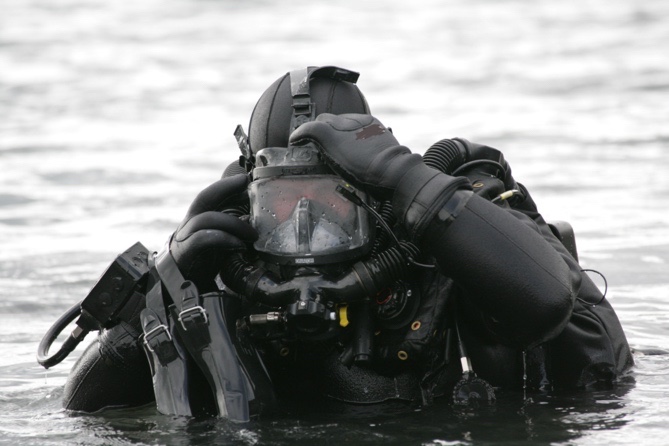
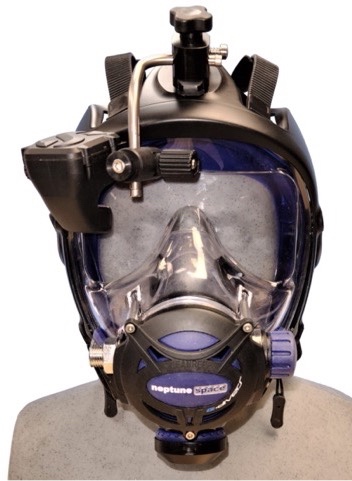
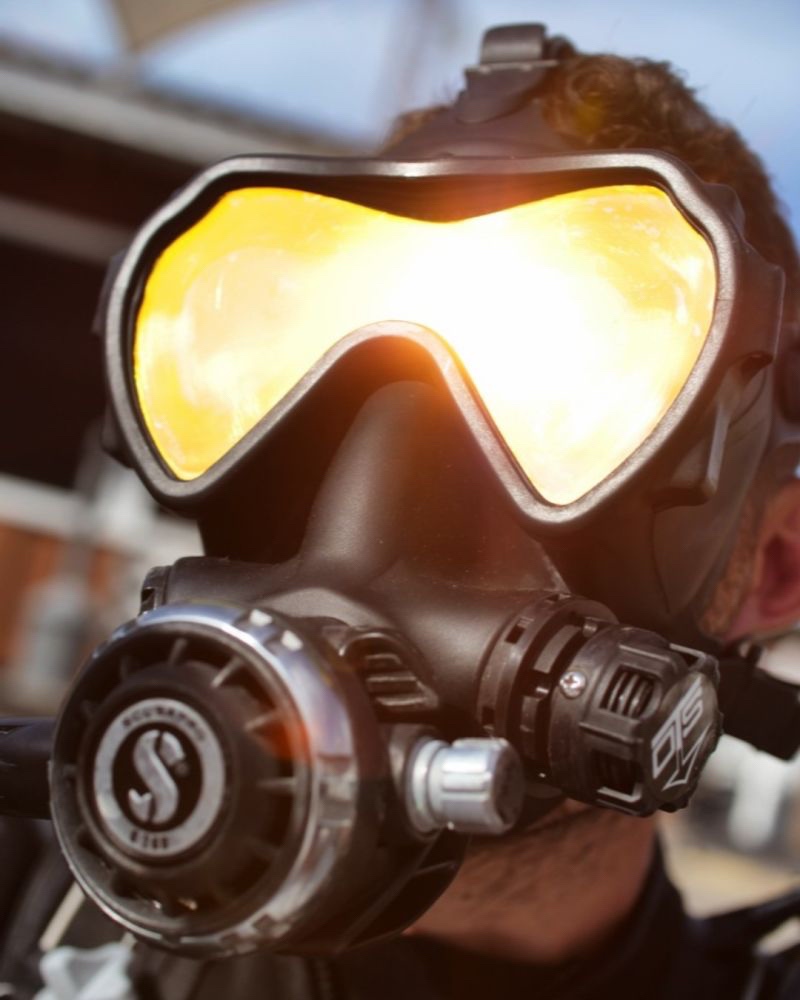
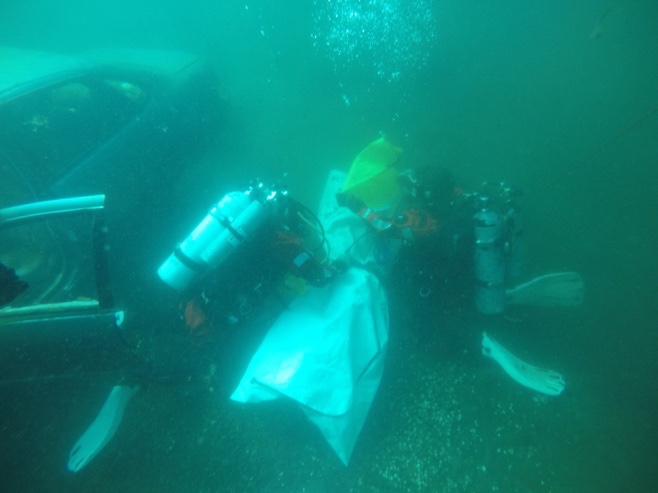
SCUBAPRO Sunday – Pirates

Sunday, December 5th, 2021

“Been to Disney World one too many times? Have we, Captain Ron?”
During the American Revolution, George Washington, while serving as head of the Continental army during the siege of Boston in 1775, started using pirates to help attack the British where they were most vulnerable on the sea. “Finding that we were not likely to do much in the land way, I fitted out several privateers, or rather armed vessels, on behalf of the Continent. With an offer of a percentage of spoils as an inducement, the call for citizen sailors to hijack inbound supply ships tapped the same vein of self-interest and comradeship that had led the colonies to seek independence in the first place.” Although private piracy proved detrimental to the Royal Navy, it ultimately helped turn the British public against the war.

“He said gorilla. Not guerrilla. Guer, go. HUGE difference kids,” Martin Harvey

A pirate is a seaman who threatens, seizes, or destroys any ship at high seas and often even harbors at the shore. Besides, they have been involved in many other criminal activities, such as piracy and the slave trade. Without any legal rights, the pirates are doing it for personal reasons. And they were regarded as criminals in all countries because those attacks were illegal acts. Piracy was punishable by death almost everywhere during the times when it was at its height. The critical difference between them and the privateers or buccaneers, about whom we can also claim that they were some sort of pirates, but not treated like criminals, is also the legality of their acts.

The U.S. allowed about 1,700 private warships to cruise the ocean, searching for British prizes during the Revolution, when a cash-strapped Congress could not launch an efficient navy of its own at the time. These revolutionary privateers carried congressional commissions, effectively legalized pirates, which outlawed attacks on neutral ships and prisoners’ mistreatment but otherwise allowed them free rein to rob and plunder. Most privateers were motivated by greed as much as by patriotism.

However, Washington was also outfitting a fleet of lightly armed schooners, and the debate over the navy took place in Congress. Although most members thought the idea of a navy insane, the Marine Committee was formed to oversee the production of 13 frigates.

Meanwhile, with its deep-rooted culture of fishing, shipbuilding, and ocean trade, Massachusetts considered whether to unleash its citizens by allowing state-sponsored privateering. Throughout history, governments at war have used the authority under international law to authorize independent operators to transport enemy merchant cargoes. There had already been incidents off the Massachusetts coast of scavenging looting crews abandoning ship down one side as local marauders clambered up the other side wielding clubs and cutlasses; the loot from these raids had to give them visions of bigger gains to come. To legalize privateering, the government would provide the colony with an instant navy for little to no cost.


In March of 1776, Congress followed suit and ordered that all British ships be considered “fair game for civilian warships.” After months of bitter debate on the general theme of business and patriotism, Philadelphia leaders embraced trade, going so far as to provide signed preprinted applications for commissions complete with blank spaces where names of ships, captains and owners could be inserted with minimal fuss. An early proponent of privateering, John Adams, appreciated, “I was always extremely interested in it.” Privateers had to pay monetary obligations to ensure their proper conduct under regulations. Although it is only fragmentary, incomplete information, more than 1,700 Letters of Marque were granted during the American Revolution. Approximately 800 privateers were commissioned and are frequently attributed with burning, looting, and capturing around 600 British ships.

Following congressional recognition of privateering, privateers flocked from Massachusetts, New Hampshire, and Rhode Island. Most had reputations for contraband, quirkiness, and eccentricity until this point. Most privateers just smuggled items throughout the Royal Navy’s blockade.

Weapons shortages resulted in delays in securing gunpowder, but some, like the Brown brothers, managed to solve the problem by converting their iron foundry to cannon-making. The Brown brothers were accused of charging ‘extortioners’ prices for guns for Congress’ frigates, giving preference to their vessels and advertising for crews with promises of quick fortunes, congenial captains, ample alcohol, and a thrilling opportunity to smite “the tyrant’s pilferers.”

Privateering was a natural fit for the brothers, and they immediately began cutting gun ports through the trade ships’ bulwarks and clearing holds to make room for more crewmen needed to sail the captured prizes home for auction. They were also named a member of the congressional committee that oversaw Congress’ frigates’ construction.

In 1777, the Ranger, an 18-gun sloop captained by a young John Paul Jones, sailed across the Atlantic with a vow “to draw off the enemy’s attention by attacking their defenseless structures,” a plan fulfilled the following spring in his daring hit-and-run raid on the British port of Whitehaven. However, Richard Grenville’s prediction that he would do infinite damage to their shipping was realized by the pirates he so loathed. While still skeptical of America’s ability to defeat them on the battlefield, the British were forced to concede one point about the rebel privateers that diplomats on the European Continent had noted in July 1776: “What is certain on the side of the Americans is their activity at sea and the ships of the Crown they are capturing.”.

In the Caribbean alone, whose position as the hub of Britain’s New World trade made it the primary hunting ground for at least a hundred New England privateers by May 1776, maritime losses reached over $2 million within a year. Royal Navy captains in the West Indies learned that a storm was approaching, but their superiors had no clue. “Time is running out,” they urged their companion, “for our journey to the English Channel.”

Before then, most American vessels carried goods such as tobacco and paper to trade for European munitions. The privateers among them were adventurous predators who might provision in French and Spanish ports but rarely sold prizes there (doing so violated those nations’ neutrality agreements with Britain), instead dispatching them back to America for appraisal and auction.

The first ship that sailed into Europe was the 16-gun Continental brig named Reprisal. Under its captain, Lambert Wickes, and carrying Benjamin Franklin to France to serve as an ambassador, the Reprisal sailed to Europe in December 1776 to join the endeavor to create an international alliance. Reprisal then set out to plunder the seas, capturing 13 merchant vessels before being chased into a French harbor by an enemy frigate.

Small privateers like Retaliation and most other ships were forced to flee before a frigate’s firepower, which could hurl a barrage of hurtling metal from up to two dozen 12-pound cannons mounted along each side. The frigate HMS Brune, for instance, destroyed a 12-gun schooner with a single broadside and significantly damaged a 9-gun schooner. In trying to treat the wounded among Volunteer’s crewmen, the boarding party found the vessel “so much damaged that we hardly had time to get them all on board before she sank.” Similarly, a Boston privateer, Speedwell, carrying 14 guns and 90 men, took a frigate’s broadside “between wind and water” (the portion of the hull usually below the waterline but exposed to the air the vessel is heeled over in the wind). The study revealed that “she was lost at sea immediately, and all her crew perished during the voyage.”

On May 17, 1777, another American captain, Gustavus Conyngham, sailed aboard Surprise with 25 men from the French port of Dunkirk and intercepted Prince of Orange, a mail steamer plying between Holland and the British port of Harwich.

In the late 1700s, British political and military leaders denounced the Revenge’s hit-and-run combat style and the many other warships now swarming European waters. For the people in Parliament, the pirates were an immoral group of terrorists to be exterminated. One report of the capture of a supply ship alleged that “rebels stripped the killed and wounded, robbed every article of clothes, bedding, and provisions belonging to the sick, burned the cutter and added every insult to the distress.” And any foe that would, “against the laws of God and Man,” fire on a vessel under a flag of truce deserved, it was declared in Parliament after one such incident, “all the horrors of rebellion,” by which was meant no mercy.

Privateers comprised two distinct ventures. A Letter of Marque permitted merchants to attack any hostile vessel they encountered along their commercial voyage. A privateer commission was issued to those who were commissioned to attack enemy merchant shipping. The primary objective was to engage a lightly armed commercial ship.

Privateers of every type of vessel were pressed into service. The largest 18th-century ship was the 600-ton, 26-gun ship Caesar out of Boston. Simultaneously, crew sizes were as little as a few men in a whaleboat and as high as 200 aboard a fully equipped privateer. Vessels designated for Privateering and Letters of Marque were launched from places up and down the east coast.

Privateers didn’t usually fly the black pirate flags; they flew a flag that looked very similar to the “Don’t tread on me flag.” Privateers that could effectively convince their opponent that the opposition was futile did the best. When that plan failed, it often resulted in extremely violent fighting with unpredictable results. Many of the pirates were captured or sank when the situation wasn’t going their way. Most did not raise the pirate flags that we know of today, but there were two basic types, Black and Red, if they did. The black was raised when you planned to raid the ship but didn’t plan on killing everyone and the Red Flag or “no quarter giving” or “the blood flag” meant they planned to kill everyone, and no mercy was to be given. It also didn’t always have to have a skull and bones. It was up to the captains what it would look like, and most pirates didn’t fly them. Those flags were used truly by pirates not necessarily by privateers.

Despite all the hardships, the crippling of British commercial shipping was highly effective, and fortunes destined to aid the founding of the new Republic were made. It is estimated that American privateers’ total economic damage was about $18 million, or about $302 million in today’s dollars during the war.

George Washington recognized early in the war that his best strategy was to “sink Britain under the disgrace and expense of war.” To survive against the formidable British military, countless small- and large-scale offensive operations needed to be conducted and maintained to keep the enemy off balance, under strain, and demoralized.

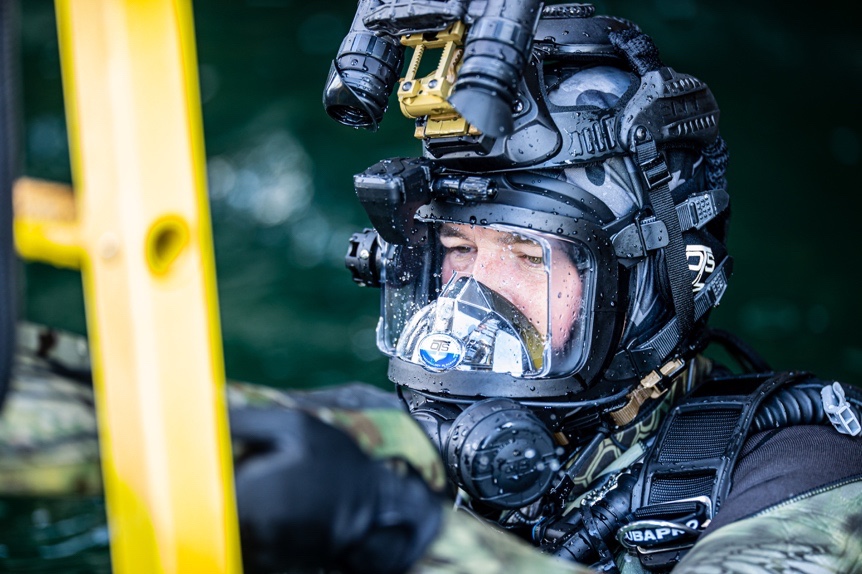
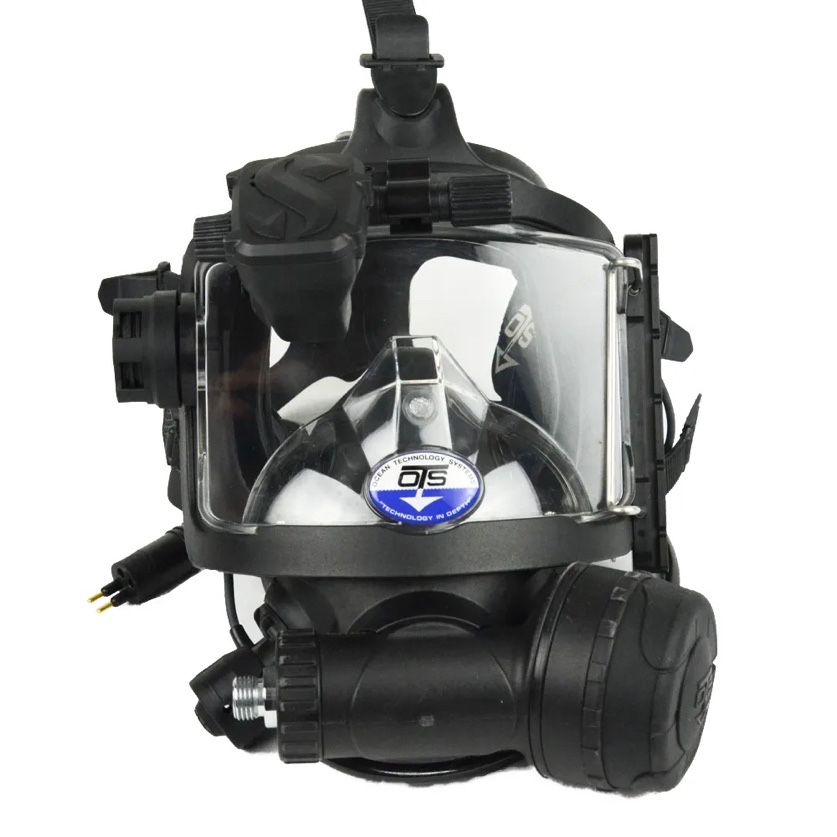
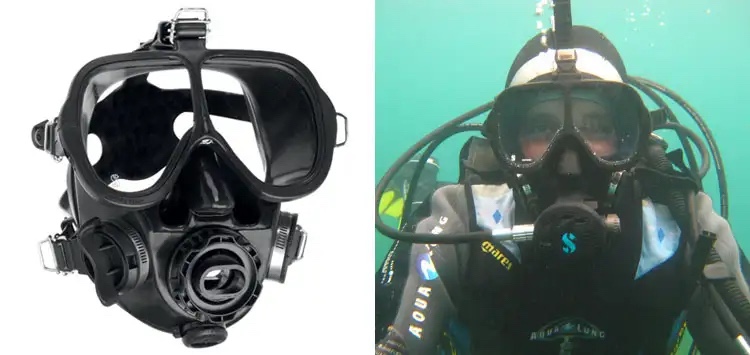
SCUBAPRO Sunday is a weekly feature focusing on maritime equipment, operations and history.

How an Air Force Recruiting Commercial Became a Popular VR Game

Sunday, December 5th, 2021

JOINT BASE SAN ANTONIO-RANDOLPH, Texas (AFNS) —

When Air Force Recruiting Service deployed its “Activate: Special Warfare” mobile tour in April 2021, the four-dimensional virtual reality, experience-on-wheels became the latest entry in an elite category of games.

Over the years, dozens of movies have made their way to becoming games in arcades and on portable devices. This genre includes commercial hits like Dune, a 1992-released game that is based on its namesake film.

Activate’s own story began in 2019 with the production of a commercial targeting special warfare recruitment.

“We were coming up with ideas to promote Special Warfare,” said Travis Waid, a writer and creative director for GSD&M. Waid’s employer is the Austin, Texas-based advertising agency for the U.S. Air Force. “We were also assigned with creating a new experiential tour to promote Special Warfare and it hit us. Instead of creating two separate things, what if they supported each other?”

Passersby examine a display case outside of Charlotte Motor Speedway in Conway, N.C., which featured tactical equipment similar to what Special Warfare Airmen might use. The display is part of the Air Force Recruiting Service’s Activate: Special Warfare mobile exhibit and gives guests a four-dimensional Air Force Special Warfare experience as depicted in an online Air Force commercial. (U.S. Air Force photo by Randy Martin)

A guest with virtual reality goggles and a replicated gun gets a four-dimensional Air Force Special Warfare experience at the Fanzone outside of Charlotte Motor Speedway in Conway, N.C., Oct. 9, 2021. Activate’s scenario is taken from an online Air Force commercial. (U.S. Air Force photo by Randy Martin)

An Air Force Recruiting brand ambassador at the Fanzone on Oct. 9, 2021, outside of Charlotte Motor Speedway in Conway, N.C., assists a visitor to the Air Force Recruiting Service’s Activate mobile exhibit. Virtual reality goggles are one of the tools that give Activate’s guests a four dimensional Air Force Special Warfare experience as depicted in an online Air Force commercial. (U.S. Air Force photo by Randy Martin)

So in late September of that year, a film production team of 53 and more than a dozen people from AFRS, GSD&M and other Air Force members representing several career fields, converged on a bombing range near Cannon Air Force Base, New Mexico. Filming required three days and involved Security Forces and Special Warfare Airmen, pilots, tactical wheeled vehicles, helicopters and airplanes from bases throughout the U.S.

For the commercial to look more realistic, the production company turned to Hollywood for delivery of movie-ready weapons.

“We couldn’t use the SF and SW Airmen’s weapons because they had red tips,” Waid said. “So, we relied on a prop house that we found in Los Angeles.”

In the final commercial, action-packed sequences show Airmen in a gunfight with an enemy force outside a walled compound. Viewers see a medevac while pyrotechnics create blast clouds with smoke enveloping a line of sand-colored vehicles on a desert road. An A-10C Thunderbolt II flies by as the video reaches its climax.

Two commercials from this production debuted in several variations on YouTube, Jan. 5, 2020. They were later posted to other Air Force Recruiting social media platforms. One, titled “Calm and the Storm,” has exceeded 18 million views. The other, titled “Join the Fight,” has been seen more than 17 million times.

For AFRS, attention turned to developing Activate: Special Warfare, the game.

Work started on the VR mobile tour with an intended launch date sometime in 2020, Waid said. However, COVID-19 struck in March and forced AFRS to wait until April 2021, for Activate’s inaugural tour.

Since its launch, people have flocked to Activate at venues such as NASCAR’s Fanzone outside Charlotte Motor Speedway, in Conway, North Carolina, Oct. 9-10.

There, among tents and trailers reminiscent of a traveling carnival, Activate was positioned on high ground where throngs of fans ambled about on a quest for souvenirs, free merchandise, food and pre-NASCAR race entertainment. Activate’s shining, black paneled trailer featured graphics to attract visitors from great distances.

Contracted attendants called “brand ambassadors” beckoned passersby to try their skills at no cost. The only condition being a minimum age requirement of 13 or older and registration on a tablet computer. Next came the anxious wait to enter the gaming booth along with other guests.

“The VR game is a real-life version of the commercial video and what connects them really is the story of how SW operators are able to remain calm under extreme pressure while engaging the enemy, calling in air strikes and rescuing others,” Waid said.

Once inside each player dons a vest and VR goggles, takes hold of a device that replicates a gun, and enters the scenario as one of the Airmen in the beleaguered convoy from the commercial.

Because participants wear special VR headsets and vests they hear everything in surround sound and they sense impacts on their over garments. Designers also engineered booths to generate hot air bursts and wind effects synched with explosions and landing of a helicopter for a full four-dimensional experience.

“Best game ever,” one woman said as she exited Activate.

Air Force recruiters were standing close by and greeted people. They talked to potential applicants about experiences and opportunities. Some visitors examined an all-terrain vehicle that was parked out front alongside a display case featuring gear like that used by Airmen in the film. The equipment leant a tactile experience to the VR one.

“The case and ATV are pretty effective in terms of generating interest and questions for recruiters who can step in and have a conversation with a lead or influencer,” said Tech. Sgt. Amos Parker, a recruiter for the 337th Recruiting Squadron at Shaw AFB in Sumter, South Carolina. “With most of the population under the impression that the Air Force only flies jets, it’s really eye opening to influencers and potential applicants.”

In 2021 the experiential tour went to 23 events in 15 states and had more than 12,000 people sign up to go through.

“Of those who signed up, 5,282 opted in to learn more and 1,453 turned into actual leads, which are all great percentages. Considering that the pandemic kept a lot of people home in 2021, those numbers are expected to increase as life begins to return to normal and more people come out,” said Maj. Jason Wyche, AFRS chief of national events branch, strategic marketing division.

Activate: Special Warfare is set to be part of AFRS’s mobile tours for at least five years.

By Randy Martin, Air Force Recruiting Service

Advancing Cyber Warfare Training with Escape Room

Saturday, December 4th, 2021

KEESLER AIR FORCE BASE, Miss. —

Accelerating and changing the possibilities of learning, the 333rd Training Squadron implemented a new cyber escape room to test knowledge and sharpen the skillsets of cyber warfare students.

The students are put into a simulated hostile scenario, requiring them to think critically and apply their skills under pressure to “escape” the exercise.

“Our students approached this challenge with no plan,” said 2nd Lt. Kendra Perkins, 333rd TRS cyber warfare officer and escape room project manager. “This forces them to adjust to the environment, preparing our students for any complex or uncertain situations they might face.”

From decoding cyphers and packet tracing to programming and networking, the room provides students with a hands-on training experience. Throughout this cyber warfare class iteration, only one team was able to complete the challenge, which included 2nd Lt. Ethan Isaacson, 333rd TRS cyber warfare officer.

“Most of our tests have been in a controlled environment, focusing on the most recent concepts we learned,” said Isaacson. “The escape room required us to apply all of our curriculum we’ve learned. We had to put trust in ourselves and each other and we came out of this room more confident in our skillset.”

Capt. Luke Thornton, 333rd TRS cyber warfare instructor, provided his perspective as the class instructor, overseeing how the teams took on the challenge.

“We are able to test the team dynamics, communication and camaraderie of our students,” said Thornton. “Our students were put into a new situation with a lot of pressure and they had to really think outside the box. We were able to test our students to the best of their capabilities.”

Perkins said the inspiration for the escape room was derived from Air Force Chief of Staff Gen. Charles Q. Brown, Jr. and his action orders to accelerate change across the Air Force through the direction of transforming the way we learn across all facets of Air Force education and training curricula including but not limited to professional military education to reflect renewed emphasis on competition and warfighting.

“Our goal was to create an environment that highlighted gamification to stray away from the initial Q&A or multiple choice and have something hands-on that was able to apply critical thinking, teamwork and communication as well as creating scenarios built on high standards for competition,” said Perkins.

By SrA Seth Haddix, 81st Training Wing Public Affairs

FirstSpear Friday Focus: Buy Socks, Give Socks & Exclusive Yippee Ki-Yay Stickers

Friday, December 3rd, 2021

In the immortal words of a damn fine soldier, Lt. Dan Taylor, “There is one item of G.I. gear that can be the difference between a live grunt and a dead grunt. Socks, cushion, sole, O.D. green. Try and keep your feet dry when we’re out humpin’. I want you boys to remember to change your socks wherever we stop.” – Forrest Gump (1994)

Like any good leader we’ll get you the items you need to succeed. Here at First Spear, we remember what Lt. Dan said, and we have the tools for you to do this. Exclusive during the season of giving, we are offering a buy a pair, give a pair on our grunt-proof Merino Wool socks. We have both our Everyday Sock and Boot Sock. These socks will not only stave off that foot eating bacteria, but they’ll keep your feet dry, thanks to Merino Wools natural antimicrobial and high breathability. The reinforced and added cushion to the heal and toe will absorb those long days on your feet and shrug off those long hours of wearing boots.

In addition to our month of giving, every web order for the month of December will receive a limited edition FS Festive Yippee Ki-Yay Sticker.

Beginning of December 10th, we’ll be launching our 12 Days of Christmas, be sure to sign up for our email newsletters to be the first to know, first-spear.com/landing.

To check out our merino wool socks, go to: www.first-spear.com/technical-apparel/american-merino-wool.