XC3 Weaponlight

Archive for the ‘Guest Post’ Category

Air Force Releases Updated Fitness Test Score Breakdown

Friday, May 28th, 2021

WASHINGTON (AFNS) —

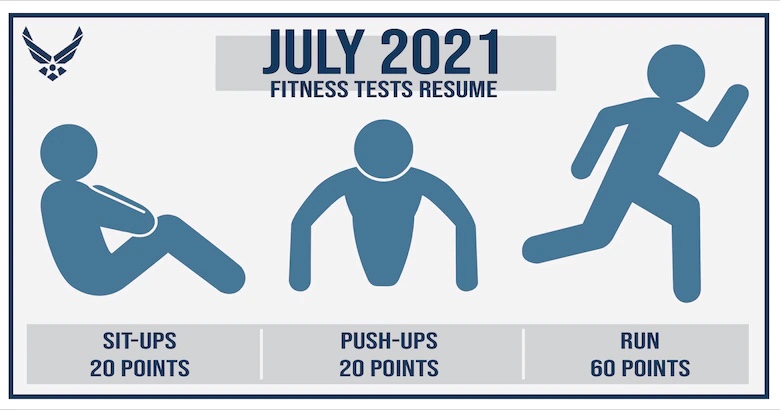
The Air Force will resume physical fitness testing July 1 with only three components: push-ups, sit-ups and the 1.5-mile run.

Without the waist measurement as a scored component, push-ups and sit-ups will increase from 10 to 20 points each, while the 1.5-mile run will remain at 60 points. Scoring will fall into five-year age groups, as opposed to the previous 10. Updated charts can be found here.

The waist measurement will no longer be required as part of the physical fitness test but a separate assessment of body composition, as required by DoD Instruction 1308.3, will continue starting in October. Testing for body composition may continue to use some form of waist measurement and may be administered during PT testing to reduce scheduling and administrative burdens, but body composition will not be a component of the PT test itself. Further details on the body composition program will be released at a later date.

The Air Force has also worked on alternative strength and cardiovascular testing exercise options with plans to announce them in the coming weeks. Once announced, members and fitness monitors will have approximately six months to familiarize themselves with use and execution of the alternative testing options prior to having them available in January 2022. Members will have a choice of which testing options they choose for their physical fitness assessment components. The six-month timeline will help ensure fitness assessment cells are prepared to train physical training leaders to administer tests using the new options.

“We are moving away from a one-size-fits-all model,” said Air Force Chief of Staff Gen. CQ Brown, Jr. “More testing options will put flexibility in the hands of our Airmen – where it belongs. We know not all Airmen maintain their fitness the same way and may excel in different areas. Alternate components provide choices while still providing a mechanism to determine overall fitness.”

These changes align under the Air Force’s Action Order Airmen, people-first approach.

“Physical fitness is an important part of our everyday lives, it’s more than just a test – it’s a way of life, our readiness and ultimately our future success,” said Chief Master Sgt. of the Air Force JoAnne S. Bass. “July 1st is a chance to refocus on building a lifestyle of fitness and health, and I know our Airmen will be ready.”

For additional information, Airmen can visit myPers or the Air Force’s Personnel Center’s fitness program page.

The Space Force will follow these policies until service-specific fitness policies are developed and fielded.

Secretary of the Air Force Public Affairs

Lightning Edge 21: 25th Infantry Division Exercises Multi-Domain Task Force Capabilities

Thursday, May 27th, 2021

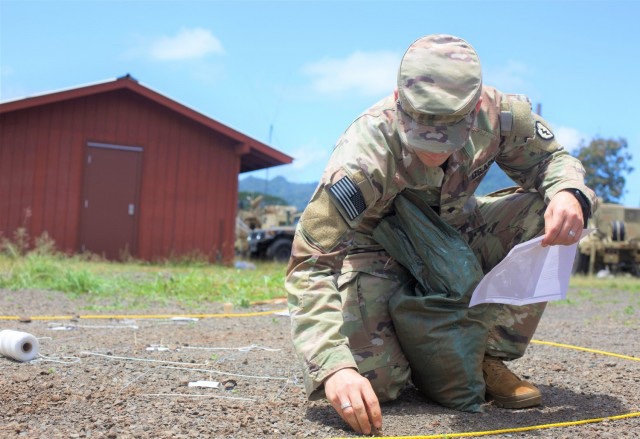
SCHOFIELD BARRACKS, Hawaii – Soldiers with the 25th Infantry Division conducted Exercise Lightning Forge 21 here from May 10 to 14 as part of a larger ongoing Army effort to modernize, test, and evaluate its Multi-Domain Task Force (MDTF).

These efforts focus entirely on defeating a competitor’s Anti-Access and Area Denial capabilities.

As part of these efforts, the 25th Inf. Div. conducted Multi-Domain Operations (MDO) targeting exercises, which allowed Soldiers to test systems and further develop concepts and methods for training and integrating Electronic Warfare and Signals Intelligence equipment as part of tactical operation.

Lightning Edge 21, in simultaneous conjunction with Exercise Northern Edge 21 in Alaska, validated over-the-horizon targeting integration between the 25th Inf. Div. and its higher headquarters, as well as the MDTF’s All Domain Operations Center (ADOC).

“The 25th Inf. Div. continues to play a significant role in the integration of these capabilities that support the MDTF,” said Maj. Peter Hwang, an officer assigned to the 25th Inf. Div. Intelligence section. “We understand that this integration of capabilities provides deterrence options for combatant commanders, which is why we train to achieve target refinement, handover, prosecution, and integration of MDO capabilities.”

Beyond the initial set-up and training that took place, the 25th Inf. Div. remotely connected to the MDTF through the ADOC at Joint Base Lewis-McChord (JBLM), Washington in order to enable a shared Common Operating Picture (COP), exchange over-the-horizon data, and to take action against simulated targets on Oahu.

“As America’s Pacific Division, we must train and be prepared to fight in a joint environment,” said Lt. Col. Michael Kotich, the 25th Inf. Div. chief intelligence officer.  “This requires synchronization, being embedded with other services, and, most importantly, integrating our own systems to allow us to see the COP in order to explore ways to deter competitors.”

“These are the sort of processes that we can only become experts at through multiple iterations of training exercises like Lightning Edge,” Kotich added.

The first MDTF originally had a field artillery brigade at its core that merged with an Intelligence, Information, Cyber, Electronic Warfare and Space, or I2CEWS, at JBLM.

A second MDTF is being planned for activation in Europe later this year.

These total force capabilities take into consideration the requirements that future battlefields may have.

“It is critical that we train accordingly and to do our best to integrate multi-disciplinary capabilities to achieve dominance across all domains,” said Hwang.

By MAJ Tania Donovan

Travis AFB Partnership Springs Air Force Forward with New Aerial Porter Exoskeleton

Wednesday, May 26th, 2021

TRAVIS AIR FORCE BASE, Calif. (AFNS) —

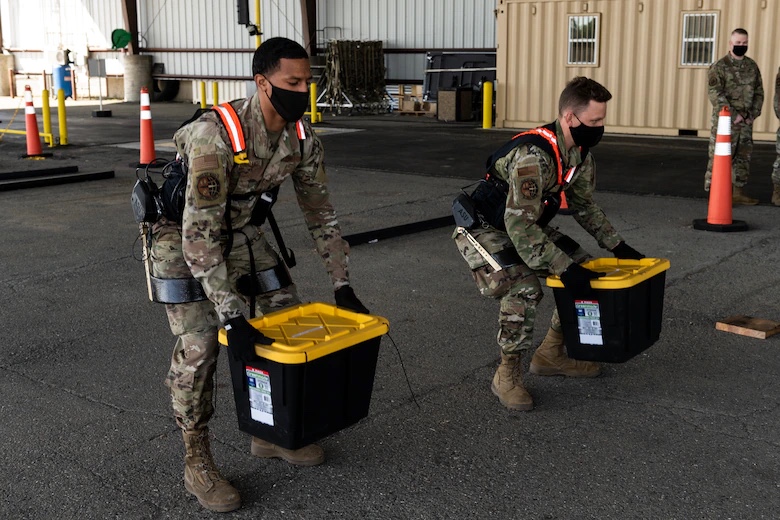
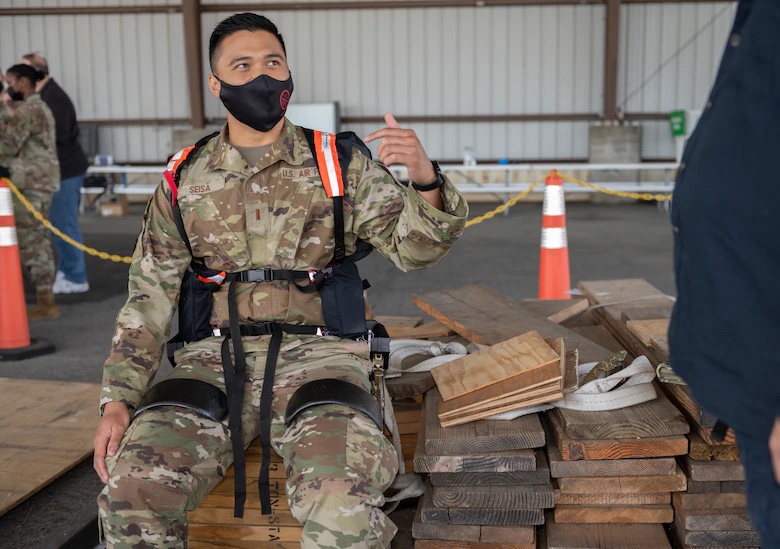
The Air Force Life Cycle Management Center and Air Mobility Command partnered with Arizona State University to develop the Aerial Port Exoskeleton, a new piece of equipment set to be used in an official capacity at Travis Air Force Base, May 17.

The Aerial Port Exoskeleton helps aerial porters perform their duties with less strain.

“Aerial ports have a high injury rate in the Air Force,” said Tech. Sgt. Landon Jensen, Air Mobility Command innovations, systems and future command manager. “That’s why we are looking into this kind of solution to help porters perform their duties more safely while also helping reduce the risk of injuries, so they are not suffering later in life.”

Travis AFB is currently serving as the test base for the new exoskeleton equipment. If the equipment proves to be beneficial, it will be utilized throughout the Air Force.

“We began looking into this equipment because of the outcome of the 2019 Volpe study,” Jensen said. “The Volpe study was a Department of Transportation study that focused on why retired aerial porters alone were costing upwards of $31 million a year on disability benefits.”

Following the results of the 2019 study, the 60th Aerial Port Squadron leadership looked into working with external parties to develop a solution reducing the number of Airmen leaving service in such a rough state.

“This project would have been impossible without the help of Arizona State University,” said 2nd Lt. Aaron Cox, Air Force Life Cycle Management Center program manager. “They focused on the development and manufacturing of the exoskeleton, and without their partnership we wouldn’t have been able to develop this technology.”

After a month-long testing period, the Airmen expressed the suits are a good investment and significantly reduces load bearing.

“This suit’s core function is to help us lift, but can also be used in other ways,” said Airman 1st Class Kyle Sunderman, 60th APS ramp serviceman. “During a load, fatigue can be a real issue and these exoskeletons really take a lot of the strain away.”

However, as with any new piece of equipment, it is not without fault, but the Airmen say they still feel safe.

“There are small things here and there where the suits can be improved to make them more user friendly,” said Airman 1st Class Xaviar Archangel, 60th APS aerial porter. “But there is no danger and these suits don’t have the strength to overpower the user, so I feel completely safe in it.

“These suits are pretty light,” Archangel said. “You hardly notice you are wearing them aside from the bulk around the waist. “But other than that, I could honestly wear these for an extended period with no problems if necessary.”

The Aerial Porter Exoskeleton is still in its prototype stage and will continue to be updated as data is recorded.

By SrA Cameron Otte, 60th Air Mobility Wing Public Affairs

MCSC Program Standardizes Rescue Equipment, Fields to Marine Firefighters

Monday, May 24th, 2021

MARINE CORPS BASE QUANTICO, Va. —

A new Marine Corps Systems Command program is standardizing and fielding modern, life-saving equipment for Marine Corps firefighters at installations worldwide.

In 2019, MCSC established the Expeditionary Fire and Rescue team. The group is tasked with modernizing and standardizing hydraulic extrication systems to support Marine firefighters at military air stations and installations.
The EFR team falls under MCSC’s Joint Project Manager for Chemical, Biological, Radiological and Nuclear Protection.

“The purpose of Marine Corps Systems Command’s EFR team is to provide equipment to support fire and rescue emergencies, such as crash and fire rescue situations,” said CWO4 Eric Auburg, MCSC’s CBRN deputy. “The team equips Marines with important, life-saving capabilities.”

In April, the group conducted its first-ever fielding of new rescue equipment aboard Marine Corps Base Cherry Point, North Carolina. The tools support Marine firefighters in extricating personnel from air or ground vehicles in emergency situations.

The fielding occurred less than 24 months after the program started—despite the group comprising just two individuals.

“What this two-man team has accomplished in the last two years has been nothing short of incredible,” said Auburg.

Similar to ‘Jaws of Life’

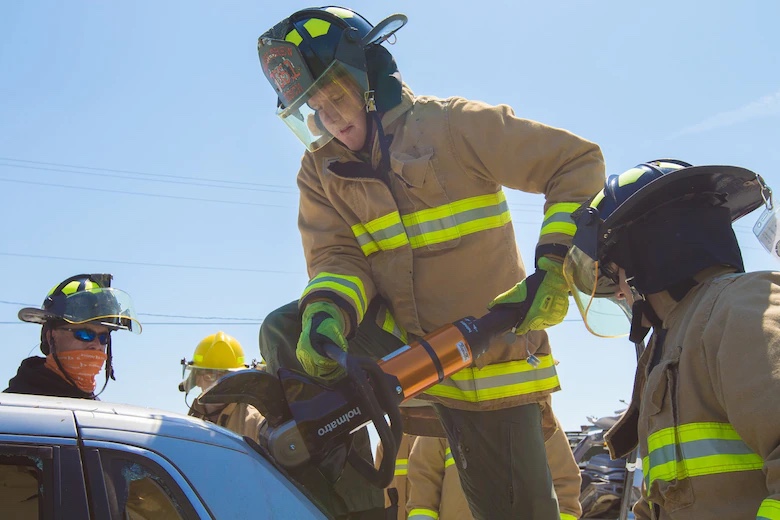
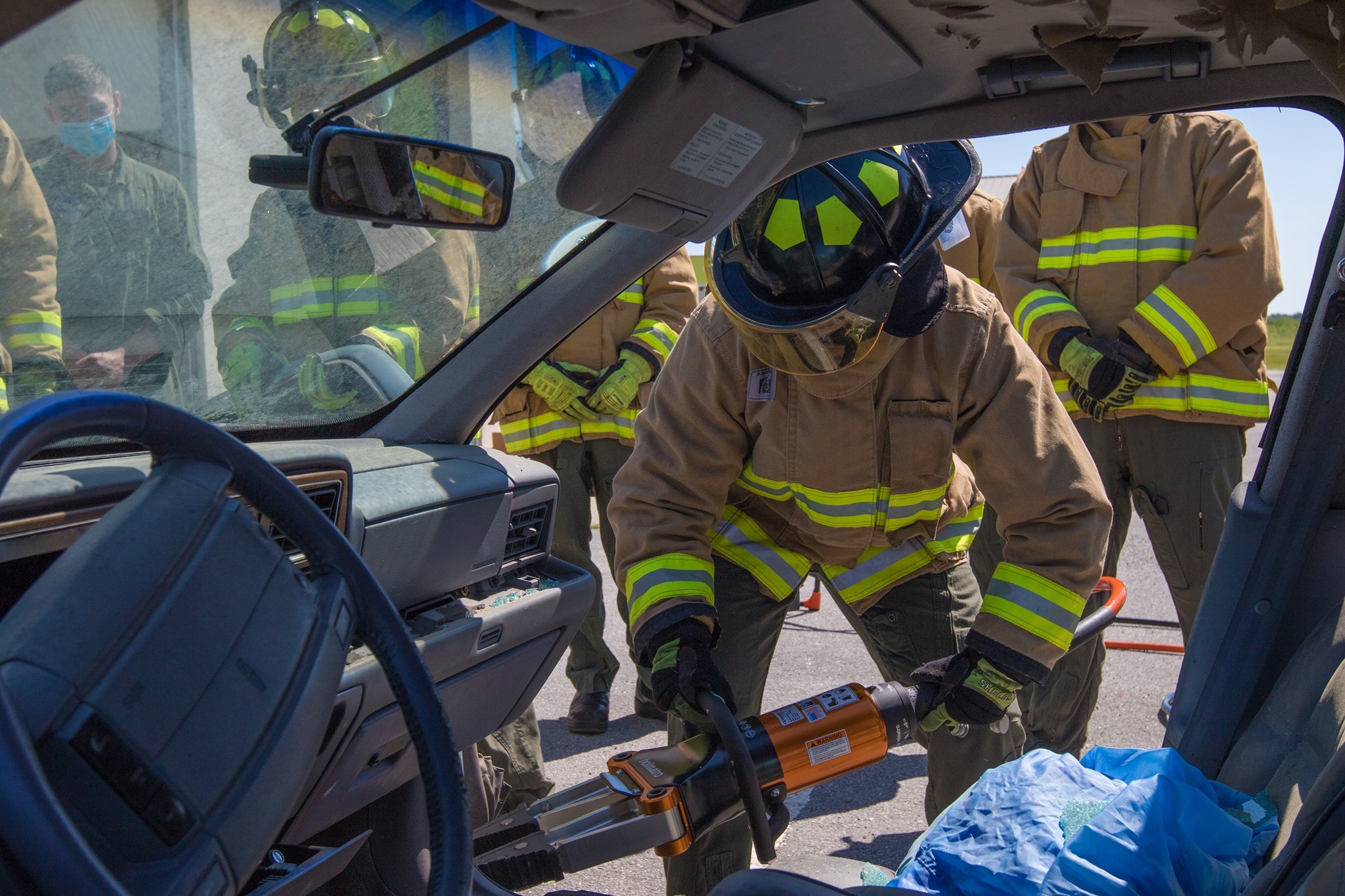
The EFR Hydraulic Extrication Family of Systems are tools that spread, pull and cut into ground vehicles or aircrafts to safely remove individuals from life-threatening situations. The gear includes sheers and extractors as well as a lightweight hydraulic pump used to activate the tools.
The removal devices operate similarly to “Jaws of Life,” used by civilian firefighters.

“These tools are similar to what you might see used by emergency personnel when passing by an automobile accident,” said Auburg. “Our tools can be used during aviation and vehicle mishaps to cut away at a cockpit or ground vehicle in order to remove personnel.”

For example, Marines can wedge a tool called “the spreader” into a pressure point along the vehicle, such as the area between a door and door frame. The Marine can then activate the hydraulic pump, which spreads the steel pieces apart and forces an area to open up.

Ted Salas, a life cycle logistician with EFR team, said the extrication tools are lightweight and man-portable, enabling Marines to carry them while hiking into the forest or up a mountain to reach the emergency site.

The hydraulic pump allows firefighters to simultaneously operate two items. It weighs significantly less than many older pumps used by Marines and can fit into a backpack, said Auburg. The lighter load allows for faster transport during emergency situations.

“These tools are maneuverable and lightweight, helping Marines haul them in confined spaces that trucks cannot pass through,” said Salas. “They incorporate modern technology that eases the workload and weight on Marines.”

This year, the EFR team plans to field the equipment to Marines at military bases in North Carolina, New Jersey, Virginia, South Carolina, California and Arizona. The group will begin fielding overseas by the third quarter of fiscal year 2022.

Salas said the equipment is expected to be fully fielded by fiscal year 2026.

The importance of standardization

The EFR team leveraged commercial off-the shelf equipment designed to be scalable, smaller and lighter while providing a greater capability than the unstandardized, unit-purchased and sustained, legacy extrication equipment of the past.

“Previously, Marines used equipment based on what the unit had purchased,” said Auburg. “Some of that equipment could be anywhere from five years to 20 years old. Some tools could have been brand-new, but it wasn’t standardized across all units.”

The standardization of the EFR equipment not only equips Marines with modern, relevant, life-saving tools, but it also will save the Marine Corps training time and effort. For years, individual units would purchase their own tools for extraction missions and train their Marines to use them.

However, Marines often handle new equipment when moving to a new location, which requires additional training. A set of modern, standardized EFR equipment prevents Marines from having to continuously relearn gear employment.

“Having standardized equipment across the Marine Corps will create a smoother transition for Marines,” said Sgt. Benjamin Alexander, an Expeditionary Firefighting and Rescue Specialist at Marine Corps Air Facility Quantico, Virginia. “Instead of having different types of equipment to teach Marines, you cut that all out and go straight into the same operations.”

Alexander contributes to a team that provides emergency support aboard MCB Quantico. He expressed his excitement and appreciation for the new, modernized EFR equipment, which he believes will be easier to operate than similar tools of the past.

“The newer equipment is more advanced, lighter and easier to carry,” said Alexander. “It’s going to make our jobs much easier.”

A ‘truly remarkable’ effort

The conversation to launch the EFR team started in 2018. The Marine Corps intended to create a program office that could standardize and modernize ERF equipment for Marine firefighters to use locally and abroad, per Auburg.

In FY19, the EFR program began with two core members. Salas is the team’s logistician. Robert Allen, a contractor who spent more than 20 years as a Marine firefighter, serves as EFR’s subject matter expert and program analyst. The team plans to bring in a project officer in the future, said Salas.

Salas said the greatest obstacle the EFR team has encountered was simply starting the program. Much work goes into maintaining an established program, but a new program requires even more work. This meant longer hours in the office.

The truncated nature of their program meant the two team members shouldered all responsibilities, from researching effective solutions, to drafting required documentation, to planning New Equipment Training.

“We started from scratch, creating the paperwork and the presentations to get funding before we even began fielding,” said Salas.

Salas and Allen both have experience as project officers for MCSC, with a sound understanding of the need to continuously coordinate and communicate with each other to create documentation and other tasks to provide effective equipment to Marines.

“It wasn’t an easy task with just two people, but we got it done,” added Salas.

The two spent many hours drafting documentation, soliciting industry proposals, researching effective systems and acquiring the EFR technologies. The culmination of these efforts occurred during the EFR fielding aboard Cherry Point, where the duo attended to verify the tools met expectations.

Allen said Marines so far have responded positively to the equipment.

“The Marines praised the new, modern gear throughout new equipment training,” said Allen. “Their feedback is important to us.”

Auburg commended Salas and Allen for their hard work and dedication despite the disadvantages that come with having a small team.

“A team of two, starting from scratch, went through the bureaucracy of the acquisition process and all the documentation required, which has ultimately resulted in equipment in the hands of Marines less than two years later,” said Auburg. “That is truly remarkable.”

Photo by LCpl Symira Bostic

SCUBAPRO Sunday – Charles Lightoller

Sunday, May 23rd, 2021

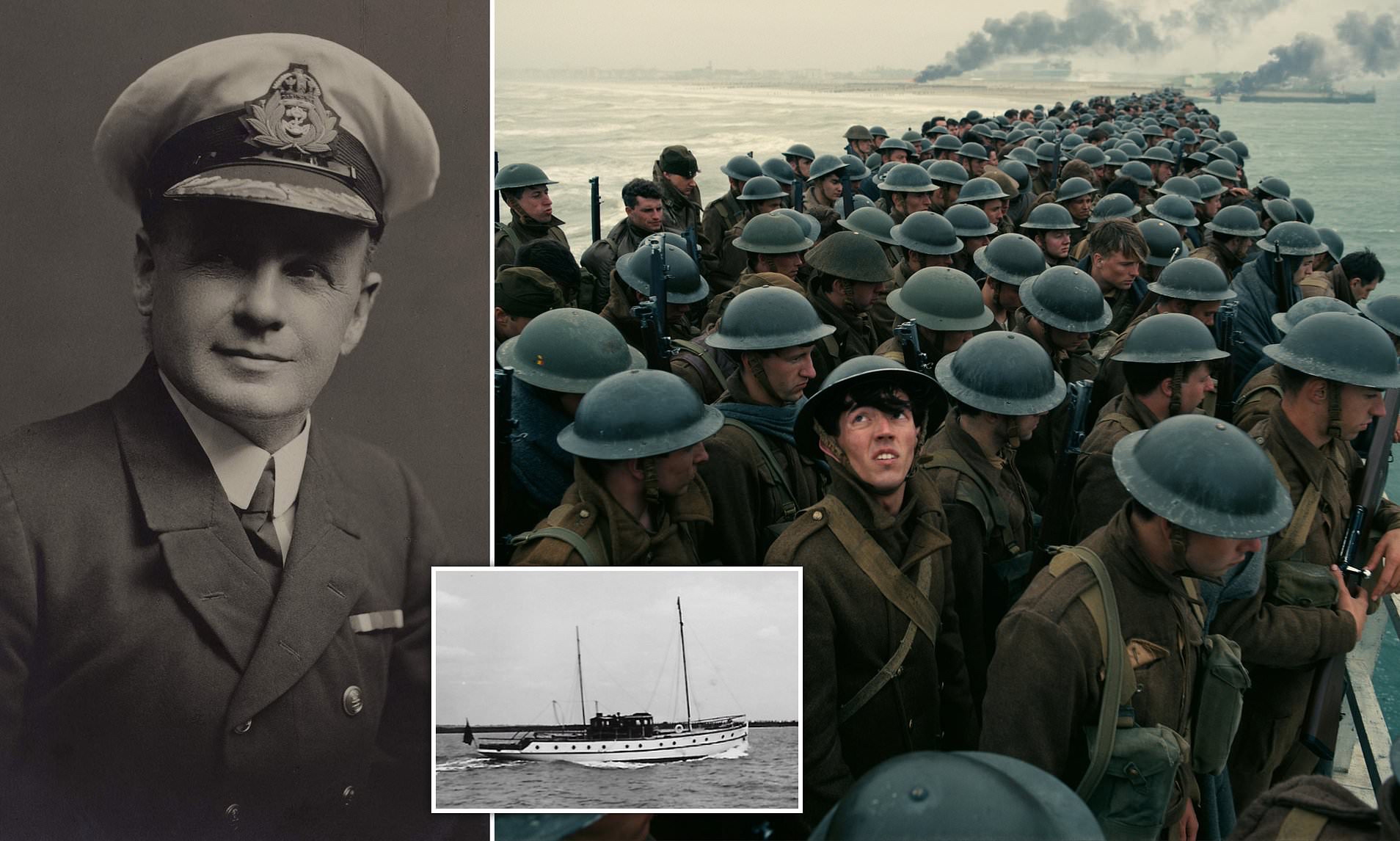
The life story of Charles Herbert Lightoller is something that there is no way you could make up. He took part in three of the century’s most memorable maritime activities, and one that is straight out of a James Bond film — that is, if Bond was 65 and with his wife on their private boat.

Charles Lightoller was born in Chorley, Lancashire, in 1874, and sailed for the first time at the age of thirteen. The Holt Hill, on which he was serving, ran aground in 1889, which was his first shipwreck at the age of 15. Before joining the White Star Line in 1900, Lightoller had a series of high-seas adventures during his childhood — overcoming cyclones, fires on board, and tropical diseases.

The White Star Line operated a fleet of ships between the United Kingdom, Australia, and the United States. On one of his visits from Australia, Lightoller would meet his wife, but it was on a trip to America that he would cement his place in history.

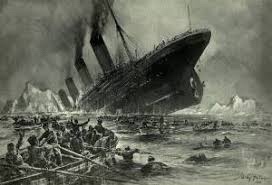
The RMS Titanic, the White Star Line’s supposedly unsinkable ocean liner, set sail from Southampton in 1912, with Charles Lightoller serving as the ship’s second officer. On the night of April 14th, Lightoller was already in bed after finishing his last rounds when he felt “a sudden vibrating jar pass through the ship”. After hearing that the water had already entered the mail room shortly after midnight, another officer reported to him that “we’ve struck an iceberg”, so Lightoller dressed and made his way to the deck. The ship was, as everyone now knows, completely unprepared for a tragedy of that magnitude. Even though Lightoller acknowledged that he was “fairly sure” that the Titanic would not sink, he knew that it was safer to be careful and prepared than risk the lives of the passengers who were now huddled on deck. To avoid a mass panic, he started forcing all the women and children into lifeboats and ensuring that his men-maintained order.

He cheerfully tried to convince the passengers that getting into the boats was merely “a precaution” and that “they were perfectly safe, as a ship was just a few miles away”.  According to his account of that evening, he was most troubled by the band’s choice of music as they performed on deck in an effort to restore order, adding, “I don’t like jazz music in general, but I think it helped us all”.

“Women and children first” was translated as “women and children only” by Charles Lightoller, who refused to let John Jacob Astor follow his wife onto a lifeboat, telling the millionaire that “no men are allowed in these boats before the women are loaded first”.

Lightoller and his fellow officers “all shook hands and said ‘Good-bye’” before seeing off the last lifeboat when it became apparent that the Titanic was doomed.

From the deck, Lightoller plunged into the freezing water, miraculously avoiding being sucked down with the huge boat. Until the survivors were rescued, he clung to an overturned lifeboat. Lightoller was the last person to be rescued from the Carpathia, and he was the highest-ranking officer to survive the disaster.

One would think that surviving the twentieth century’s worst maritime tragedy would bring Charles Lightoller back to shore for good, but his sea adventures were far from over.

During WWI, Charles served in the Royal Navy and was given command of his own torpedo boat. He was decorated twice for his fighting efforts (including sinking the German submarine UB-110) and rose to the rank of full naval commander by the end of the Great War.

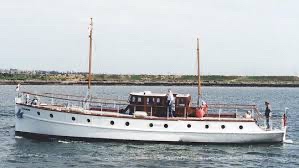
After the war, Lightoller retired, but he couldn’t fully abandon the sea. When the Germans started planning for war again, he and his wife purchased their own yacht, the Sundower, and spent the next decade cruising around northern Europe and carrying out the occasional covert surveillance mission for the Admiralty. The Royal Navy recruited the once retired veteran and his wife to carry out a series of secret missions, in an effort to obtain intelligence about the movements of the German army. The couple seemed to just be an elderly couple on vacation; it was the perfect cover.  The Lightollers communicated any information they could gather and kept a watchful eye on the German coastline. She would sit on the deck of the boat and would pretend to be reading and drinking while keeping watch and he would be down below secretly taking notes and sketching the coastline.

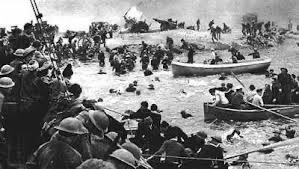
When the war finally broke out in 1939, the Nazi war machine ripped through continental Europe, rebuffing the Allies at every turn. As France prepared to surrender, the British army, joined by French and Belgian forces, was caught between the sea and the Germans. Germany attacked in a last-ditch effort that could have ended the Western European theater of war in a single blow.

Winston Churchill and the British government devised a bold scheme to save the troops, which, if successful, would guarantee that their army would live to fight another day. On May 27th, 1940, civilian boat owners along the English coast started receiving phone calls from the government telling them that their boats were being requisitioned by the government to assist in the evacuation of Allied soldiers across the channel. When retired Commander Charles Lightoller got his phone call, he only had one condition: he decided to take the Sundower himself.

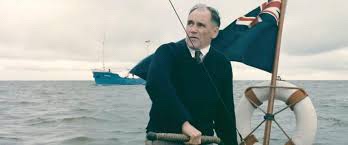
Charles Lightoller, now 66 years old, set out with his son Roger and Gerald Ashcroft, a teen Sea Scout. The Sundower paused en route to the beaches to rescue the crew of a motor cruiser that had caught fire before going on to pull 260 men aboard, all while dodging “quite a lot of attention from enemy aircraft”. “My God, mate!” exclaimed one astonished officer as the Sundower docked in England, watching the nearly endless stream of soldiers emerge from Lightoller boats. “Where did you bring them all?” says the narrator.

The adventures of Charles Lightoller during WWII would later serve as the basis for Mark Rylance’s role in Christopher Nolan’s critically acclaimed film Dunkirk.

The Joint Fight: Arctic Paratroopers and HIMARS Build Combat Power During Northern Edge 21

Saturday, May 22nd, 2021

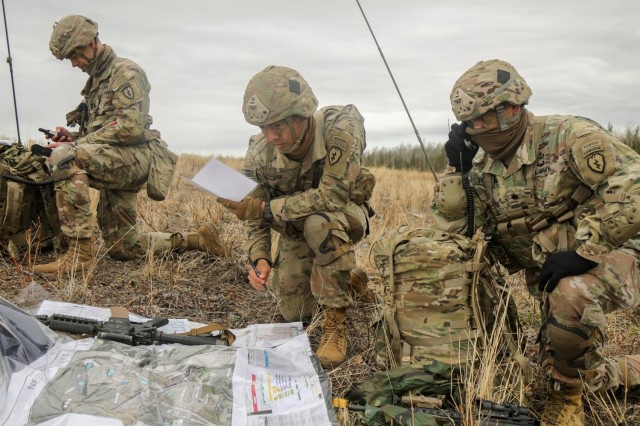
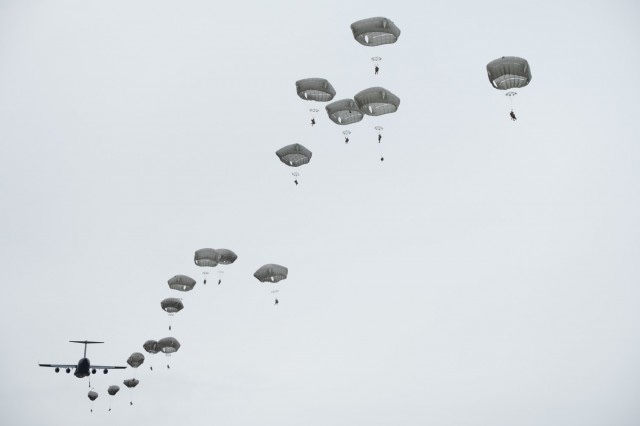
FORT GREELY, Alaska — Paratroopers with 4th Infantry Brigade Combat Team (Airborne), 25th Infantry Division, conducted an airborne operation May 11, 2021, onto Allen Army Airfield, Fort Greely, Alaska, as part of Northern Edge 2021.

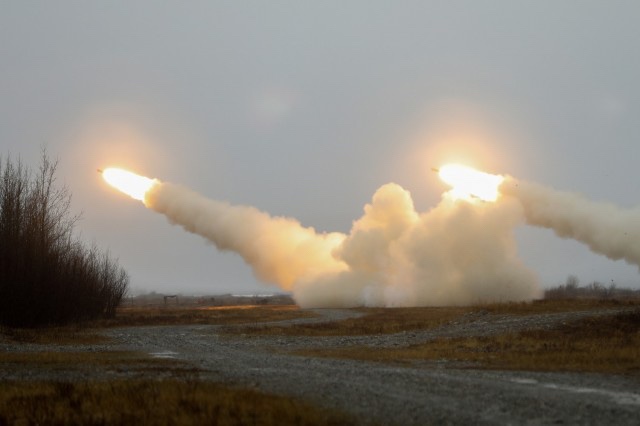
Following the seizure of the airfield, an M142 High Mobility Artillery Rocket System (HIMARS) battery from the 17th Field Artillery Brigade out of Joint Base Lewis-McChord arrived and conducted a live fire exercise at nearby Donnelly Training Area.

Approximately 300 paratroopers from the 1st Battalion, 501st Parachute Infantry Regiment, out of Joint Base Elmendorf-Richardson, Alaska, exited from U.S. Air Force C-17 Globemaster III and C-130 Hercules aircraft while A-10 Thunderbolt IIs orbited, providing close air support. Once on the ground, paratroopers moved to their assembly areas to consolidate and secure the airfield as additional C-130s and C-17s landed with more paratroopers, equipment and the HIMARS battery.

The HIMARS battery with 5th Battalion, 3rd Field Artillery Regiment, was air transported from Cold Bay, Alaska, and fired a full volley of rockets that demonstrated the ability of the joint force to quickly build and implement combat power.

Conducting a JFEO as part of a joint operation is nothing new to the Spartan paratroopers who train for operations like this all year long.

“We’ve been doing this for a long time, and each paratrooper knows their role,” said Maj. Michael Conforti, the operations officer for 1-501st PIR. “You never know if an aircraft will have a mechanical issue, or someone will get injured, so the key to success is that each paratrooper also knows the jobs and duties of everyone else around them.”

Understanding the role of adjacent units and enhancing the ability to work together are key components of exercise NE21.

NE21 is a U.S. Indo-Pacific Command sponsored, Headquarters Pacific Air Forces led U.S. joint field training exercise scheduled for May 3-14, 2021, in locations in and around Alaska that uses realistic scenarios to improve joint combat readiness.

The Spartan Brigade is the only airborne infantry brigade combat team in the Indo-Pacific Command and provides the combatant commander with the unique capability to project an expeditionary force by air across Pacific and Arctic regions.

By MAJ Jason Welch

FirstSpear Friday Focus: FS Attends SHOP Show South

Friday, May 21st, 2021

FirstSpear will attend SHOP Show South on May 26th at Berry Aviation Field in San Marcos, Texas.

Qualified attendees include active duty military, federal, state and local government agencies, law enforcement, and first responders. Military and government attendees must present official government-issued identification.

For more information about FirstSpear, check out www.first-spear.com.

For more information on FirstSpear Technology, check out www.first-spear.tech.

US Army Scientists Developing Solutions to Improve Thermal Toughness in the Arctic

Tuesday, May 18th, 2021

NATICK, Mass. – For the Arctic Soldier, thermal toughness is essential for operating and training in the coldest conditions. Scientists from the U.S. Army Research Institute of Environmental Medicine are developing solutions to make this ability a reality.

These innovations could not come sooner. The increasing accessibility of the Arctic has led to the U.S. Army focusing on rebuilding its ability to operate in extreme cold-weather conditions. This spring, the Army released its Arctic Strategy, which lays out how the service can better position itself to operate in the region.


The strategy includes plans about establishing an operational two-star headquarters with specially trained and equipped units. The Army also has ongoing efforts to improve the quality of life for its Soldiers, civilians and families who live and work in the Arctic-region installations.

USARIEM’s cold research team has spent decades studying the effects of cold weather on warfighter health and performance. Dr. Karl Friedl and Dr. John Castellani have been key players in the field.

Friedl, USARIEM’s senior research scientist for Army physiology, has studied the limits of human performance in extreme environments, including the cold. He has even joined Arctic training exercises to learn first-hand what Arctic warfighters need to fight and win. Castellani, a research physiologist, has led USARIEM’s efforts in studying the causes, management and treatment of major cold injuries, including trench foot, frostbite and hypothermia.

Both scientists know better than anyone that “A man in the cold is not necessarily a cold man.” Yet, to get to that level, Soldiers need a high level of preparation and training, as well as every advantage the Army can provide.

Modern Guidance for Modern Warfighters

“A very critical part of the training is to learn the early signs of cold on the body and to understand how to be comfortably cold,” Friedl said. “The Soldier has to know when they can readily recover and when they are entering a physiological danger zone of cold exposure where they must take action immediately.”

Training in the Arctic is a formidable task. In cold conditions, a single mistake may be only minutes from disaster. A lost glove, an ignored cold foot, heavy sweating during exertion, or a snowmobile accident can result in a rapidly progressing injury without hope for a quick evacuation to warmer surroundings or even shelter from the freezing temperatures.

Castellani explained that freezing and non-freezing cold injuries are treatable when they’re caught early. When left untreated for too long, they can result in lifelong nerve damage, or worse, loss of appendages.

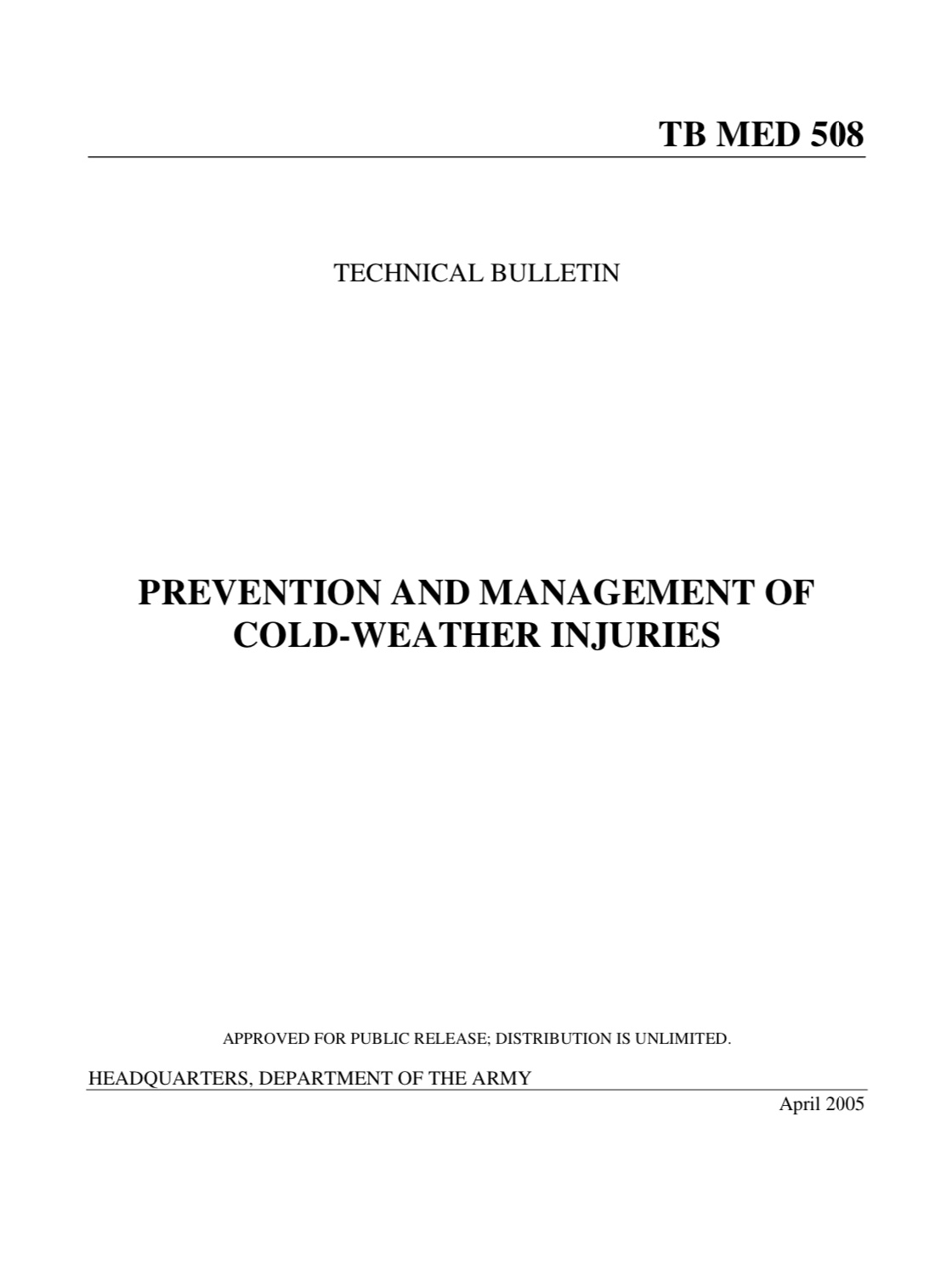
“We certainly know what causes these injuries,” Castellani said. “The next thing we need to do is to develop solutions and guidance to prevent them in the first place. Modernizing the Army’s medical guidance on cold injury prevention, Technical Bulletin Medical 508, is one of our most significant efforts.”

TB Med 508 gives military and civilian healthcare providers medical guidance for cold-weather conditions. This medical guidance is based on decades of USARIEM’s research on health and performance in cold weather. Some of the topics in TB Med 508 include information on how the body responds to the cold, how Soldiers should prepare when deploying to the Arctic and how to mitigate and treat different cold-weather injuries.

USARIEM published the most recent copy of TB Med 508 in 2005. Castellani’s team is now leading an effort to update this guidance in partnership with the Office of the Surgeon General, specially trained Army Arctic installations, and several military hospitals and training centers.

“This is going to be a significant update to the Army’s medical guidance on cold weather,” Castellani said. “We are particularly focused on the treatment sections. We are also adding new guidance derived from significant data findings on performance in cold, wet environments, like swamps and bogs.”

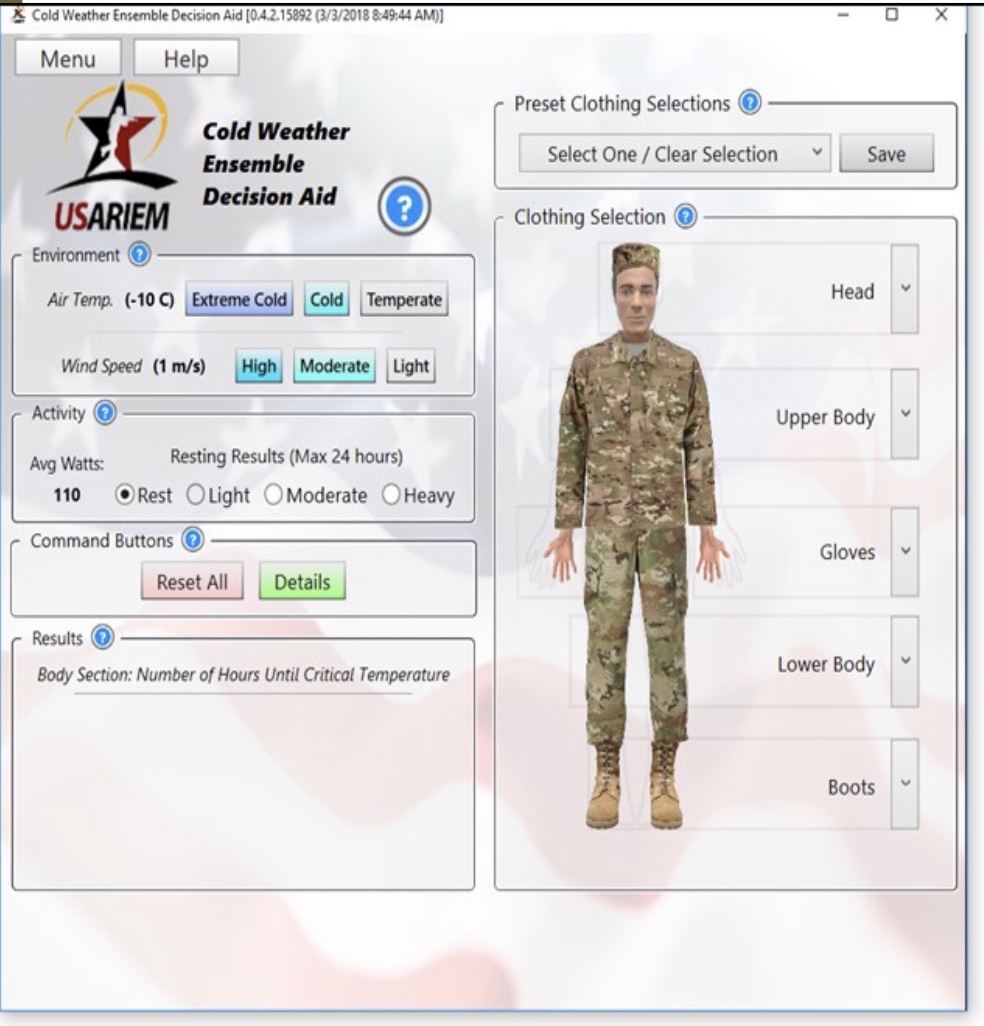
Friedl added that USARIEM also develops predictive models that will help the AI-enabled warfighter plan missions and mitigate injuries in cold or wet environments. These include solutions like the Cold Weather Ensemble Decision Aid, or CoWEDA, which prevents hypothermia and frostbite by predicting how long warfighters can endure the cold based upon their clothing, activity and environmental conditions. The CoWEDA was recently used by Soldiers in the 2021 Arctic Warrior Training Exercise.

Another mission planning tool is the Probability of Survival Decision Aid, or PSDA, a computer program that predicts an individual’s survival time during water immersion by taking to account hypothermia and dehydration. The PSDA has been transitioned to the U.S. Coast Guard since 2010 and is implemented as a mandatory element to their Search and Rescue Operations. It has also been transitioned internationally to collaborative partners.

A Hands-On Approach

Improving cold-weather guidance is only part of the solution. According to Castellani, even the best equipment and guidance do not benefit Soldiers if they cannot use their hands and fingers in the field.

“The loss of hand dexterity can occur because the body’s natural reaction to more frigid temperatures is to decrease blood flow to the hands and feet,” Castellani said. “The body sends that blood to protect and warm the core, where major organs are located. The problem is that warfighters need hand dexterity for many military-relevant tasks, including shooting, handling equipment and treating injured Soldiers.”

Castellani is leading several USARIEM efforts in developing physiological and technological solutions to improve hand blood flow. These solutions could lead to Soldiers having warmer hands and fingers and improved dexterity in cold conditions. These innovations could especially come in handy as the Army veers toward using gear that requires more dexterity and hand function.

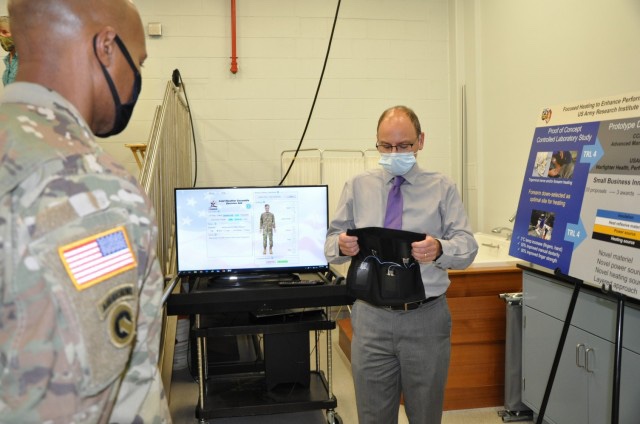
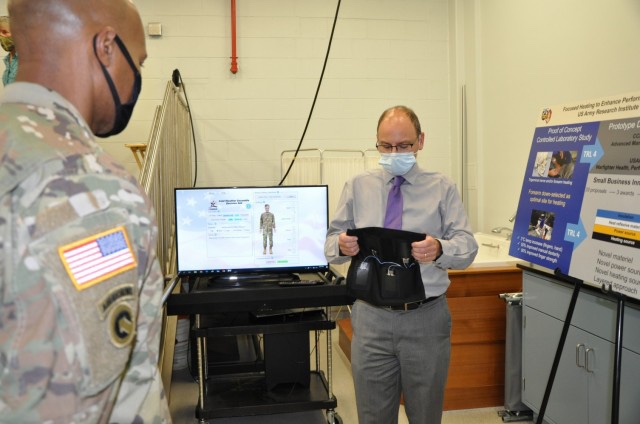
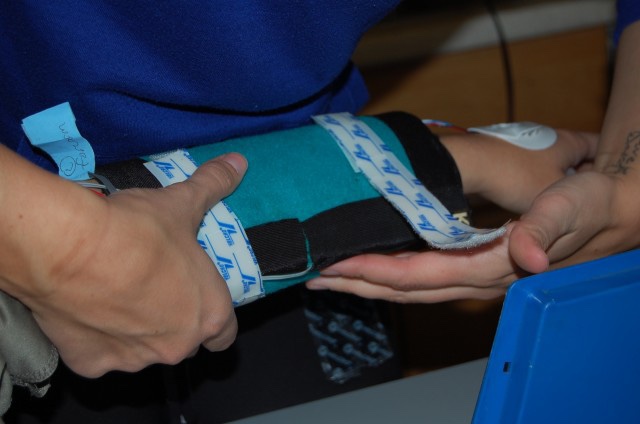
One of these solutions includes USARIEM’s forearm heating device, called the Personal Heating Dexterity Device, or PHD2. Castellani’s team has developed a prototype of the PHD2 for field testing using two parallel efforts, both in-house and through the Small Business Innovation Research program. His team is preparing to test the product in the field next winter with Alaska National Guard troops during Arctic Eagle 2022.

“Our previous research has shown that warming the forearm increases hand and finger temperatures significantly,” Castellani said. “The result is that Soldiers can have improved hand dexterity.”

His team is also conducting a Defense Health Program-funded effort this year to examine the effect of a cocoa-based flavanol supplement in cold conditions. Studies have shown that flavanol, a nutrient often found in cocoa beans and tea leaves, can help improve blood flow. The researchers are now testing if taking this supplement could increase blood flow to the hands and fingers, improving hand dexterity in the cold.

The researchers will be testing other methods of hand-warming in future studies, including one on occlusion training and another on cold-weather habituation. Occlusion training is typically used in bodybuilding. It involves intermittently restricting blood flow in the arm and allowing it to flow again every five minutes. According to Castellani, recent studies have shown that this method may increase normal blood flow. His team will be investigating whether this method can be used to improve hand function in the cold. The research study is being proposed for the fiscal year 2022.

He added that USARIEM’s cold habituation study will be learning how people’s bodies get used to the cold over time. It is unknown how this change occurs in our bodies.

“We’re trying to understand what changes happen in your skin and underlying tissue that help you adapt to a cold environment after you have been exposed to it for a while,” Castellani said. “This will help us develop novel countermeasures that will improve thermal toughness.”

Approximately 11,600 Soldiers serve at Fort Wainwright and Joint Base Elmendorf-Richardson under the command of U.S. Army Alaska. While there are no current plans to station more Soldiers in Alaska, a decision on that could occur within a year.

As an increasing number of Soldiers pour into the Arctic, it’s important that Army scientists ensure that Soldiers will have the biomedical solutions needed to fight and win in the frigid temperatures. According to Friedl, USARIEM is up for the task.

“It has been said that Soldiers who successfully perform in the Arctic can function in any other environment in the world,” Friedl said. “USARIEM has been the U.S. Department of Defense leader in cold physiology research for over 50 years. This research improves our understanding of what Soldiers need to be resilient in these environmental extremes.”

By Mallory Roussel