Ivan made a video on how to make your own reactive targets.


Ivan made a video on how to make your own reactive targets.
Happy Holidays and Merry Christmas from the FirstSpear team. We’re proud to bring you 100% American made products and to continue to support those at the tip of the spear.

Free domestic shipping on orders over $99; check out our non-standard, non-stocking page for discounted items.
For more information about FirstSpear, check out First-spear.com.
Check out our latest technology on first-spear.tech.
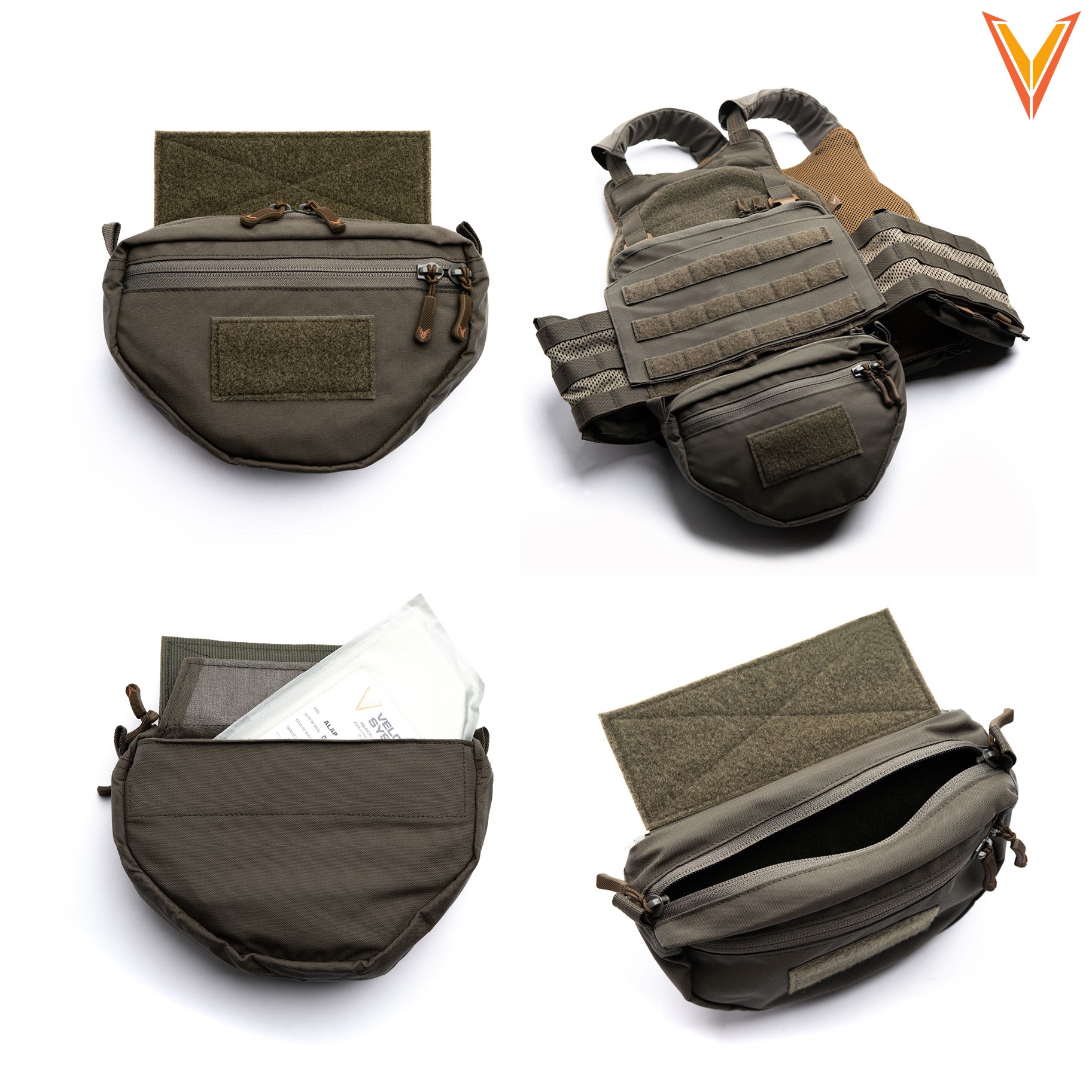
The Velocity Systems Lower Abdomen Pouch was designed for additional load carriage in the abdominal area below the front plate bag with optional soft armor protection (please email info@velsyst.com for information pertaining to lower abdomen soft armor). It attaches by inserting the integrated Velcro® panel into the plate carrier’s inner plate pocket. The pouch features an optional soft armor pocket, internal Velcro® panel for organization (flashbangs, 40mm grenades etc.), an exterior horizontal zippered pouch for smaller items, and a Velcro® loop panel on the front to attach markers, chemlights, and med indicators. The shape of the Lower Abdomen Pouch was developed to allow for unhindered movement. The integrated Velcro® attachment panel gives the operator the flexibility to deploy abdomen protection only when it is needed and gives the user the ability to adjust the pouches position for proper placement. The Lower Abdominal Pouch comes in one standard size. All hook and loop material used is color matching Velcro® Brand Fasteners. All materials and workmanship are 100% made in the USA.
The 505th CCW held a wing-wide workgroup to provide updates on upcoming major changes to 505th exercises and syllabi. The workgroup was advised by several U.S. Air Force senior mentors, including Lt. Gen. (ret) Russell Handy and Lt. Gen. (ret) Jeffrey Lofgren, who provided critical insights into how the wing can accelerate change.
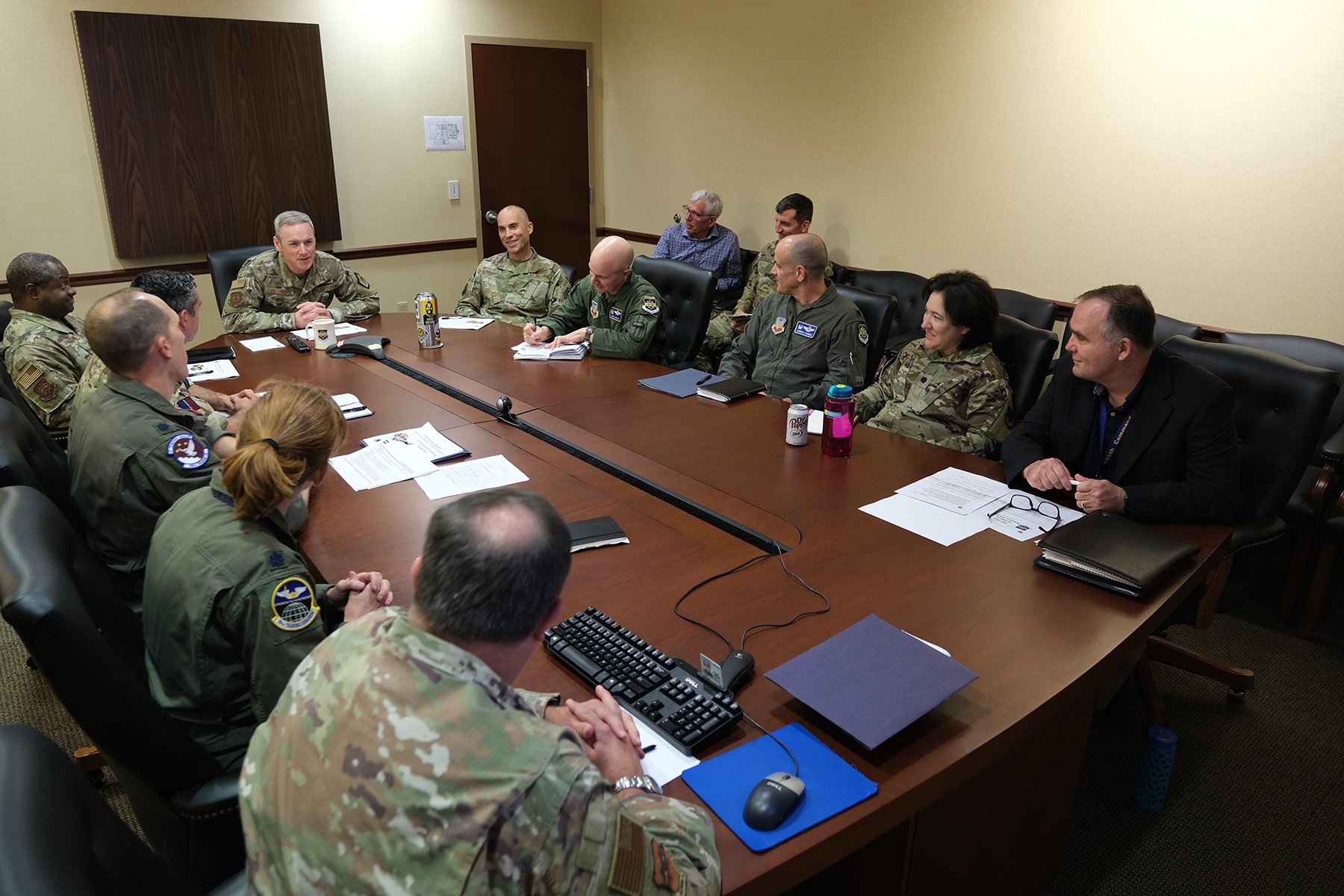
Col. Frederick Coleman, 505th CCW commander, told his squadron and group commanders, “There are a lot of things in the operational C2 enterprise that we don’t control. But we own training, and if we want to enable the air component commanders to fight and win our nations wars, we have to get training right.”
Col. Coleman directed changes to the Air Operations Center initial qualification syllabus to ensure training includes academics on new and emerging systems; he directed the consolidation of AOC and Air Force Forces courses into a single air component course; and he gave guidance on changes to the 505th’s BLUE FLAG and VIRTUAL FLAG exercises to ensure they were more customer-focused and geared towards Agile Combat, or ACE, and resiliency requirements.
Coleman continued, “The 505th CCW has the Air Force’s largest pool of operational C2 subject matter experts. We have to leverage the knowledge and expertise in this wing to enable our warfighters.”
By Deb Henley
505th Command and Control Wing
Public Affairs
FORT BENNING, Ga. — Soldiers from the 1st Battalion, 507th Parachute Infantry Regiment, Airborne and Ranger Training Brigade, joined their counterparts from Canada and Australia in collecting toys for Fort Benning Santa’s Castle Dec. 7.
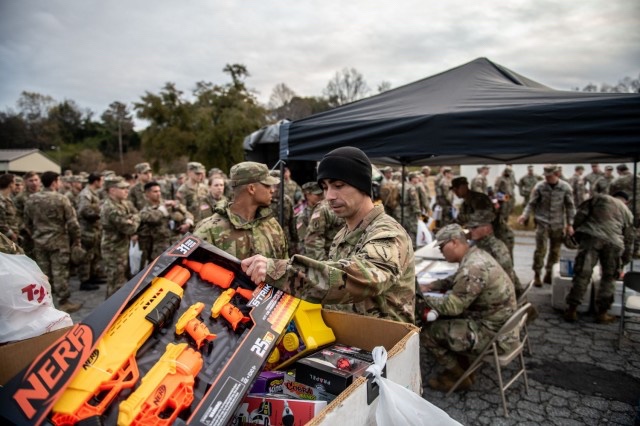
According to Lt. Col. Isaac Lee Henderson, Battalion Commander, 1-507th, from Chiefland, Fl., this was a great opportunity for the Fort Benning community to help families in need over the holidays.
“This is an awesome mission. I’m one of those kids that grew up with a single mom that worked two or three jobs to allow us to have a decent Christmas,” said Henderson.
Carrie Kennedy, a volunteer at Fort Benning Santa’s Castle, expressed gratitude for the toys collected for the kids in the military community.
“We appreciate all the generosity and support from Fort Benning and the local community,” said Kennedy.
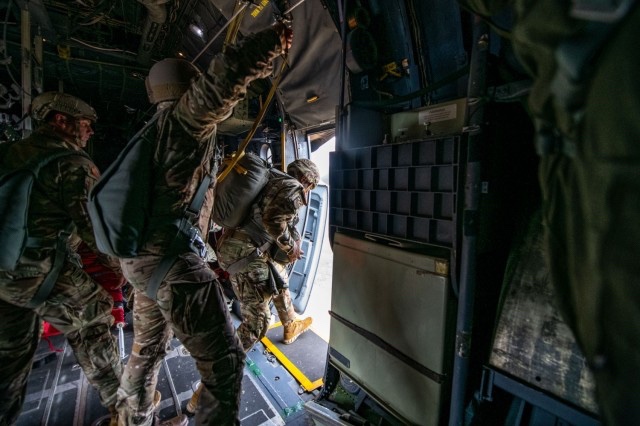
The 304 participating parachutists each brought a toy before participating in the international jump, led by jumpmasters from Fort Benning, Canada and Australia. Participants were awarded their foreign jump wings after completing the mission.
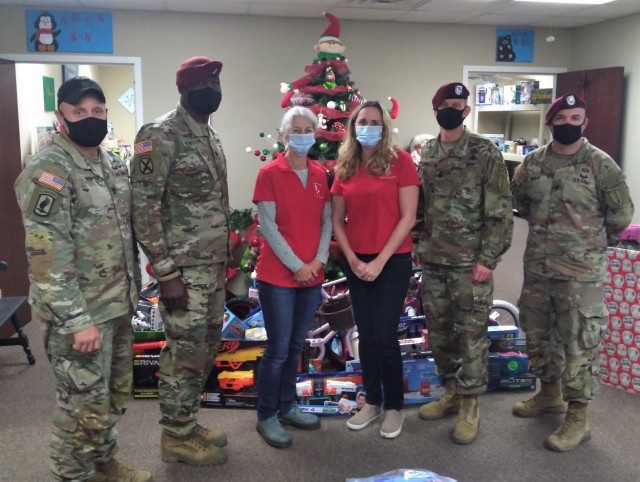
“The mission of the toy drop that we did a couple of days ago was to give a kid an awesome Christmas,” said Henderson as they delivered the toys to Santa’s Castle Dec. 11. “I love doing this!”
Established in 1986, Santa’s Castle provides toys to children of Fort Benning soldiers who are experiencing financial hardship during the holiday season.
Story by Alexander Gago
U.S. Army photos by Patrick A. Albright, Fort Benning Maneuver Center of Excellence Public Affairs
A key part of TacMed Solutions™ mission is providing customers with a complete solution to equip, train and protect. This means that they try to consider all aspects of potential injuries or events and work to create a complete solution. The team strives to solve problems for both military and civilian missions.
The innovative problem-solving process often stems from a real-life injury or situation and begins by asking if the solutions available, or ones not available, were effective. From this initial insight, the team begins looking for ways to either create a solution or improve an existing one.
Historically, TacMed™ takes on problems that are both industry-wide and problems that are specifically brought to them.
For example, the Tramedic® public access line was a solution created out of industry need. At the time of inception, there was nothing else like it on the market. In a variety of situations, it has been extremely effective in creating a complete solution. In schools, Tramedic® is not just a solution for point of injury care for school shootings. It also prepares the customer prior so that they have an increased chance of success with Tramedic® Training and maintain the equipment through expiration tracking. In addition, there are aspects of the kits that ensure that they integrate with first responders and benefit them. Conversely, the Foxtrot® Litter was designed stemming from a problem brought to them by an end-user.
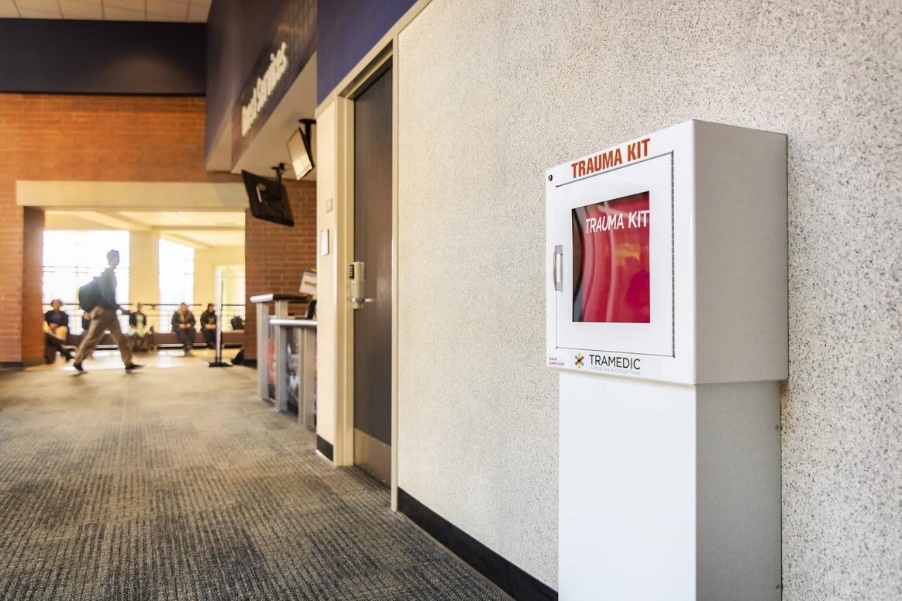
The solutions provided by TacMed™ all come from vast industry knowledge, understanding the customers’ situations, and even from their own experience.
If you are interested in learning more about TacMed Solutions™, check them out at: tacmedsolutions.com

FORT CARSON, Colo. — 4th Infantry Division Soldiers just completed testing a new command post structure as part of the Army’s effort to modernize the division headquarters.
“Command Post Infrastructure Integration (CPI2) is the new command post for the division and it replaces the legacy tentage and all of the vehicles and large footprint that a division had before for their main command post,” said Maj. Jordan Funderburk, Plans Officer at the Ironhorse Division.
During the test, CPI2 systems are being evaluated on the time it takes for a division headquarters to emplace, displace, operate and move its command post to support unit missions.
The design of CPI2 enables a division headquarters to be scalable, modular, and agile while reducing the physical area required of tactical operations.
“The CPI2 system does drastically reduce the teardown of the equipment — the former being the large tent where everyone would congregate to one location,” said Maj. Christopher Sullivan, another 4th ID Plans Officer.
CPI2 equipment for a division headquarters come with two variants of workspace shelters, the Mission Command Platform (MCP) and the Command Post Support Vehicle (CPSV), mounted on the Light Medium Tactical Vehicle (LMTV).
The Ironhorse division headquarters conducted a series of tactical movements with the CPI2 equipment, requiring them to take the system out of operation, move to a new location, and re-establish operations.
“Getting these reps in [repetitions of setting up, tearing down, and moving] has helped us develop our tactics, techniques and procedures to make this setup faster and safer,” said Sgt. Maj. Michael Bass, Division Engineer Sergeant Major for the Ivy Division.
Besides tactical movements, the division used components of CPI2 such as the Secure Wireless Mesh Remote Endpoint (SWMRE) and millimeter waveform (mmW).
“From a communications standpoint, keeping the servers and the Command Post Support Vehicle (CPSV) in a warm start means that we can have the network up as soon as we drop the trailer,” said Cpl. Jonathan Knowles, a 4th ID communications and information technology Soldier.
“These new shelters definitely help enhance my job,” added Knowles. “(CPI2) gives me the power to focus on and isolate an issue to a single thing, which in turn helps the user, get back to work in the fight. It enables me to get in and out really quickly.”
By CPT Demetrius L. Spencer, Test Officer, Mission Command Test Directorate, U.S. Army Operational Test Command

Mary Reardon and Will Cromer are joining the MMI team as Vice President of Textile Innovation and National Account Manager respectively. They are both excited to get started and help MMI continue to grow and innovate!
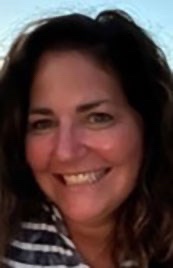
A little bit about Mary:
Mary Reardon is a senior-level professional with extensive knowledge and experience in the textile industry. She has been an employee of Gehring Tricot Corp/Tweave for the last 22 years as General Manager Dying & Finishing and more recently, Vice President of Sales roles. Before Tweave, she worked at Duro Industries as a Dyehouse Manager. Her skills and certifications include fabric development, sales (including commercial and government contract work), manufacturing management, quality control, and color matching.
Reardon’s involvement in the industry includes being a USIFI board member and regional AATCC committee member.
Mary is a graduate of Southeastern MA University where she earned her bachelor’s in Textile Chemistry.
Outside of work, Reardon is a proud mother of her son Logan and pup Nestle. She is a die-hard New England sports fan. For fun, Mary enjoys Broadway shows and music. Also, a good competitive game night with family and friends.

A little bit about Will:
Will Cromer has been an employee of Highland Industries for the last 10 years in purchasing, manufacturing, and product manager roles. His skills and certifications include global procurement, international sales, sales/development management, manufacturing management, and more.
Cromer is a graduate of Western Carolina University where he earned his bachelor’s in Management.
Outside of work, Will is a proud father of two little girls – Brynn and Everly. He is also a dog dad to Mocha. Will is a die-hard UGA football fan. For fun, he enjoys exercising and cooking projects on his Traeger grill. He is also known to kick back with a good cigar and scotch.
Our team is thrilled to have Mary & Will onboard – their experience and knowledge of the industry will be an amazing addition.