Phantom Lights

Archive for the ‘Guest Post’ Category

Capt Mbaye Diagne Medal Awarded Posthumously to Peacekeeper’s Widow

Sunday, August 25th, 2019

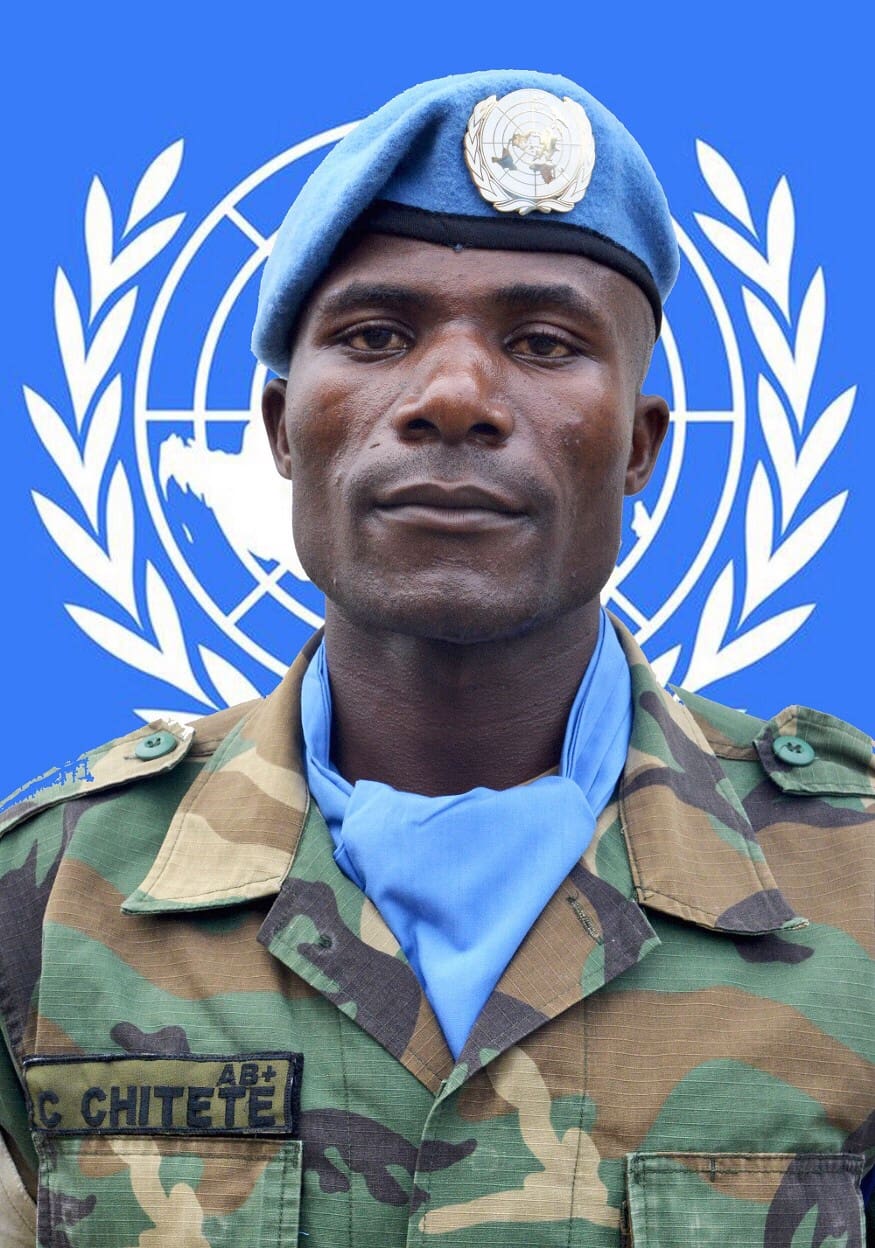
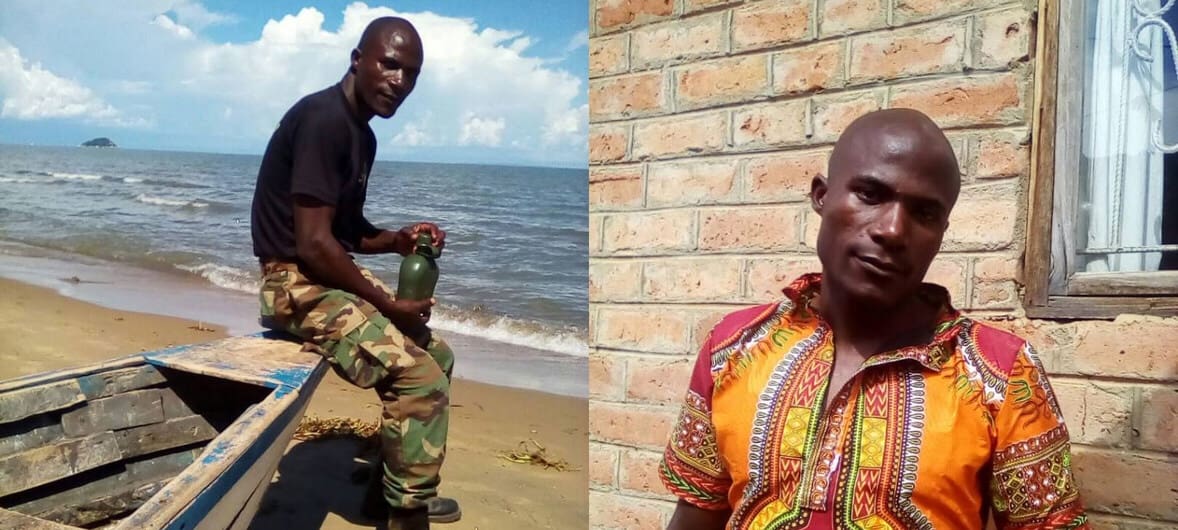
Pvt. Chancy Chitete, a Malawian peacekeeper assigned to MONUSCO, was killed in action near Kididiwe during contact with the ADF (Allied Democratic Forces) last November. He has now been awarded the Captain Mbaye Diagne Medal for Exceptional Courage, the UN’s highest award for valor. MONUSCO is the United Nations Stabilization Mission in the Democratic Republic of the Congo.


Pvt. Chancy Chitete of Malawi

Pvt. Chitete’s unit, a joint formation including Tanzanian and Malawian soldiers, came under heavy fire during an operation conducted to prevent disruption to local Ebola response efforts. While providing cover for evacuees, a Tanzanian NCO, Cpl. Ali Khamis Omary, was hit and unable to move to cover or escape approaching militia forces. Pvt. Chitete dragged Cpl. Omary clear and began administering aid but was himself struck by enemy fire. Both soldiers were evacuated, but Pvt. Chitete did not survive.


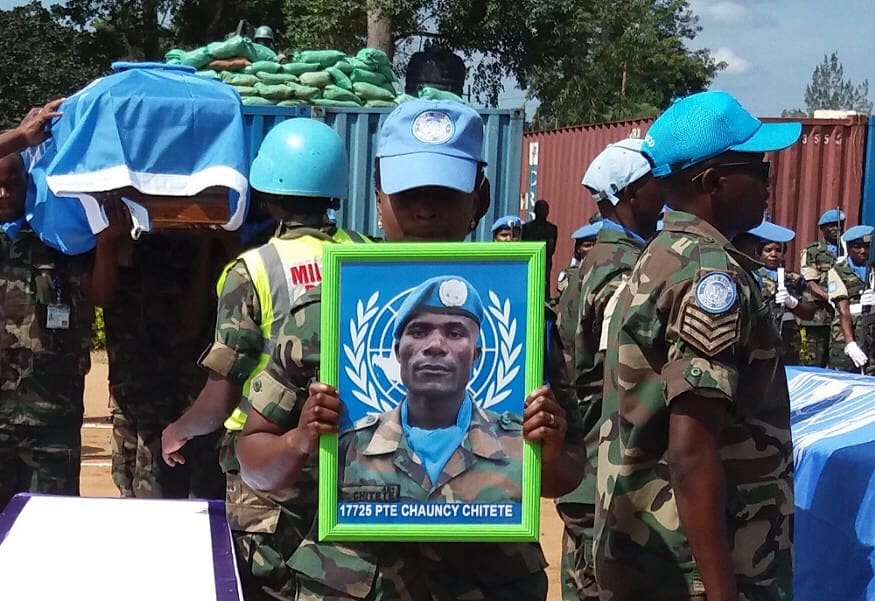
A memorial conducted for Pvt. Chitete at a UN outpost in Beni, DRC.


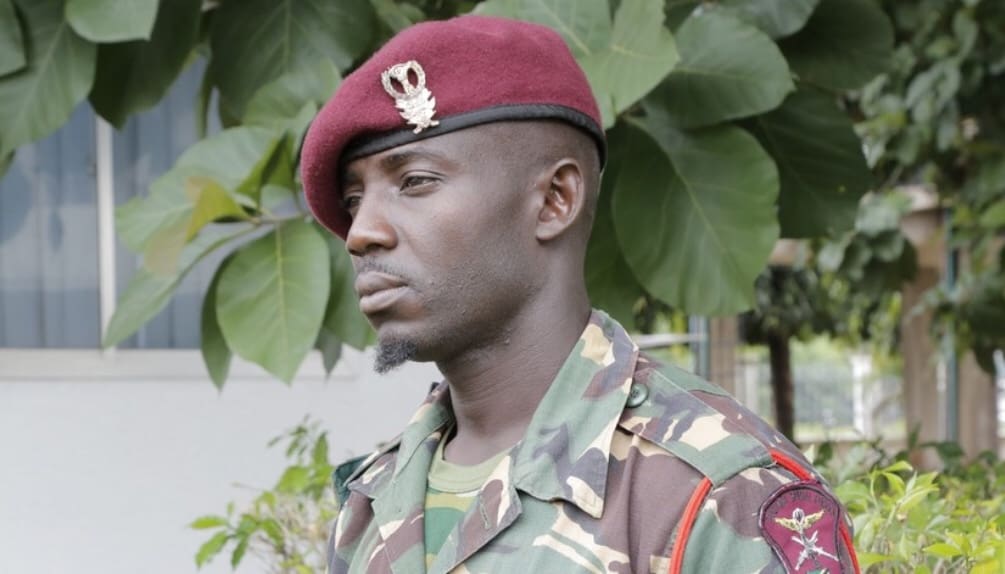
Cpl. Ali Khamis Omary of Tanzania.

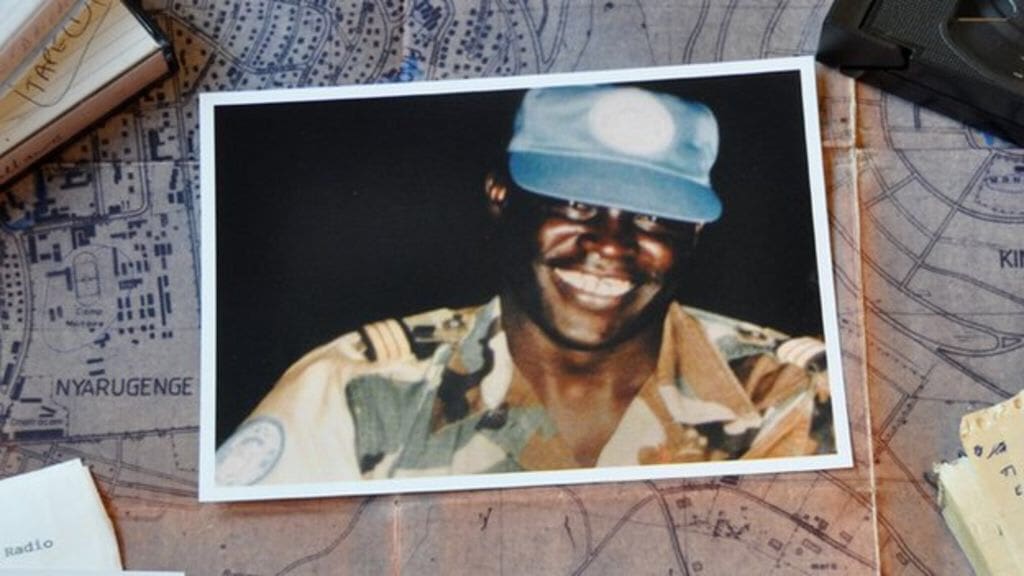
The eponymous Diagne Medal was created by the UN Security Council in 2014 in honor of Capt. Mbaye Diagne of Senegal. Capt. Diagne was a UN military observer credited with saving hundreds of lives in Rwanda during the 1994 genocide before being killed in action.


Capt. Mbaye Diagne of Senegal.

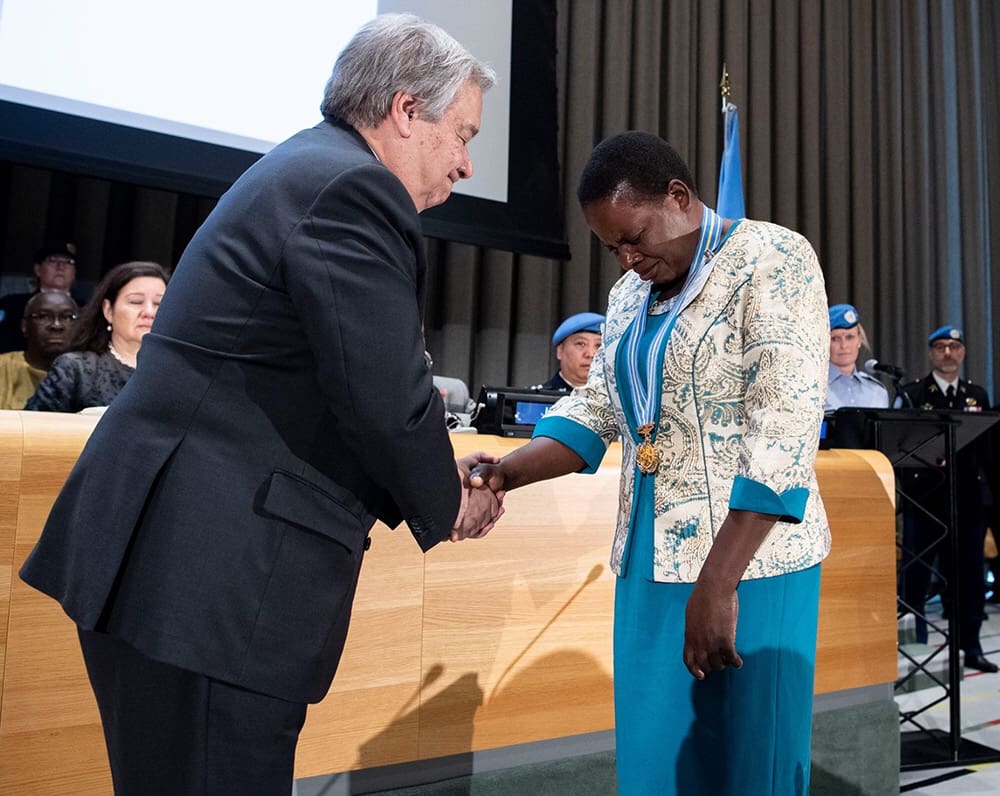
UN Secretary-General António Guterres’ presented the award posthumously to Pvt. Chitete’s widow, Mrs. Lachel Chitete Mwenechanya, at a ceremony in late May. It is the first time the Diagne Medal has been awarded since it was presented to the widow of Capt. Diagne in 2016. You can read the Secretary-General’s remarks online here.


Mrs. Lachel Chitete Mwenechanya at the UN Building, New York.

More on Pvt. Chitete’s actions during the mission can be found on the UN website.

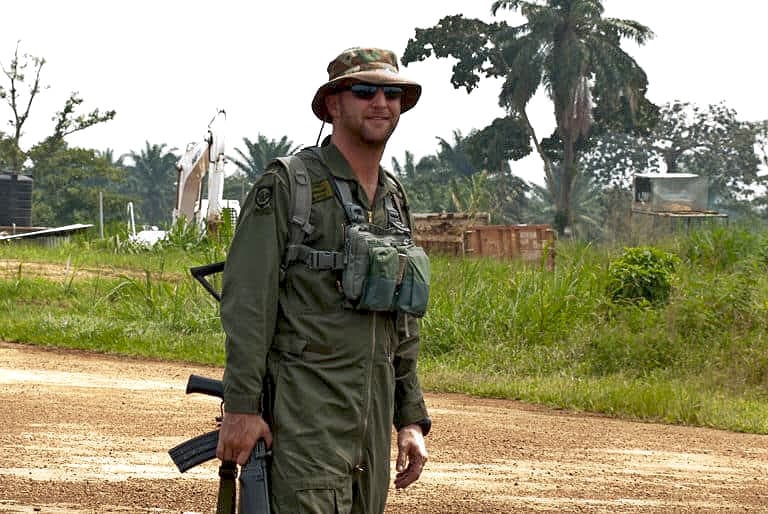
Eight other peacekeepers serving in the DRC and Mali were also nominated by their respective missions, including SAAF helicopter pilot Lt. Col Stefan King, below. No armed CAS aircraft being available, Col. King and crew responded to a request for assistance for Guatemalan peacekeepers under attack nearby. Flying their unarmed Atlas Oryx helicopter by NVGs, King and crew sortied to assist. Upon arrival they began using flares to distract militia fighters pressing the Guatemalan soldiers.

Col. King later advised, “We did numerous runs and each time set off flares to deter enemy fire. Each run saw the helicopter come under fire and at least two RPGs (rocket-propelled grenades) passed close enough to make our NVGs useless for a while. After just over an hour of orbiting and flare runs our fuel situation reached the stage where we had to abort.”


Col. Stefan King in Africa. (He is wearing Hill People Gear.)

The Guatemalan unit was able to break contact and return to friendly lines.

At another ceremony, another award was presented. There the Dag Hammarskjold Medal was presented posthumously to the 119 United Nations military and police personnel, national staff, and other U.N. Volunteers killed last year. Those 119 people, from 38 countries, had served in 12 separate UN peace operations around the world. (AP News)

MONUSCO Mission Specs at Peacekeeping.org.

Imagery from the UN Mission to the DRC on Instagram with hashtag #monusco.


Pvt. Chancy Chitete, in pace requiescat.

By David Reeder

Connect with the author on IG, @ReederWrites.

The Baldwin Files – Talent Management – Part 3 of 3

Saturday, August 24th, 2019

At the end of Part 2, I had taken command of F Company of the Training Group’s 1st Battalion at Camp Mackall, NC. For those that do not know, Mackall is a small installation, occupied by elements of the Special Warfare Center and School (SWCS) about 30 miles west of Fort Bragg. It is home to several components of the Special Forces Qualification Course (SFQC). At the time, F Company ran 2 Phases of the SFQC. One (Phase II), focused on land navigation and small unit tactics and the other (Phase IV), conducted Unconventional Warfare training and the culminating Robin Sage Exercise. I was living the dream and enjoyed every day of that assignment. Of course, the Army’s personnel management system has the mission to make sure that nothing good ever lasts long.

It started indirectly. Although I had not known him before, I got along very well with the Battalion Commander (BC) who had hired me. As luck would have it, he came out on a Special Mission Unit (SMU) Command List shortly after I took command – and he was gone. It was a great opportunity for him – but turned out not so good for me. Another Lieutenant Colonel was activated off the Alternate Command List to take the Battalion. As it happens, he and I had been Majors together in 3rd Group (96-98), although I did not know him well. The mission at Mackall was clear for my cadre and me; however, as I wrote in an earlier article, there were many ill-conceived initiatives for the SFQC being considered at SWCS during this period. I quickly found out that my new BC and I were philosophically on opposite sides of these plans. That naturally led to friction between us. Moreover, as often happens in these situations, that friction eventually evolved into one of those annoying ethical dilemmas I have written about ad nauseam.

Long story short, in May of 2001, I was Relieved of Command by that BC, a.k.a. fired, sacked, dismissed. However, since that episode is convoluted and not germane to the subject at hand, I will save that part of the story for another time. Suffice to say, getting fired is considered a sub-optimum outcome to any assignment. That is also how I became personas non grata at the Training Group and, indeed, all of SWCS for the second time. I spent the next few months fighting the accusations made against me to justify my firing. I will mention just one here because it is the only accusation that was based on a kernel of truth. Allegedly, I had been “insubordinate” to the BC. For what it is worth, I have found that it is all but impossible to tell your boss something he really, really does not want to hear without him perceiving it as insubordination.

As a practical matter, there is an administrative process to appeal those sorts of negative personnel actions and I took immediate advantage of that mechanism. Bottom line, I made my case to the Army and achieved a partial vindication in a matter of 9 months or so. I received my promotion orders to Lieutenant Colonel in March 2002, backdated with an effective date of 1 January of that year. I purposely held my promotion ceremony in front of the Bull Simon statue across from the SWCS HQ. Then Brigadier General Stanley McChrystal did the honors. He was one of those SF qualified infantrymen I mentioned in Part 1. As he put the rank on my collar, he asked me, “Terry, is it true that you commanded three SF Companies?” I replied, “Yes Sir, twice successfully!” We all got a chuckle out of that.

That was not the end of the story; I also had to spend a considerable amount of money to hire lawyers who spent years getting the associated “bad paper” removed from my records. Oddly enough, that was not my biggest career management problem going forward. With my promotion orders came a letter from Department of the Army (DA). The letter stated that since I had more than 24 years of combined service I was ineligible to be considered for War College attendance. In effect, I was non-select for the school before I even pinned on that silver oak leaf. In turn, that meant that I was instantly non-competitive for Battalion Command or promotion to Colonel. Unfortunately, there was no waiver or appeal process for that verdict – and, yes, I looked.

However, in the interim, 9/11 happened and I had little time to dwell on it myself. I wanted to get into the fight ASAP. For that first few months, I was in assignment limbo at Fort Bragg. SF Branch wanted nothing to do with me and DA was indifferent. I came to realize that essentially I had been ejected from the system. I had not jumped ship, I had been pushed off. That was fine with me. I still knew a lot of people and started doing my own independent talent management. The pattern for the next 9 years went like this. I would call commanders I knew directly, or have a mutual friend introduce us and ask for work. I was not often rejected. I did a number of jobs: J3 (Operations), J5 (Plans), Chief of Staff, and Deputy Commander for example. Additionally, I did Liaison work between HQs on occasion and even commanded a couple of ad hoc organizations in theater.

I do not want to exaggerate my contributions to the mission. I am not pretending to be a hero. I took my share of risks, but I have no medals for valor or purple hearts. Nevertheless, I carried my share of the burden and then some. I am proud of that. The reasons I was able to do that for an extended period are directly related to the idiosyncrasies built into the current personnel management system. First, because I was a “free agent,” I could go where I pleased and no one at DA or SF Branch cared – or interfered. Second, the system was consistently failing commanders in the field. Almost everyone else was “locked” into his or her current assignment and even the system itself had no pre-existing mechanism to meet fluctuating personnel demands from the field commanders. Never mind “talent management,” there is something fundamentally wrong with a system that has to ignore its own rules to even try to support the warfighter. The result was that commanders – by necessity – had to make off the books “handshake deals” with their peers who were not deploying for critical manpower fills.

It was a heck of a way to run a railroad. Still, it worked for me for a long time. Of course, the system could not abide that sort of autonomous freedom of action indefinitely. Toward the end, I was involved in planning for the drawdown of all SOF in Iraq. In February 2011, I had briefed the plan for approval to all the senior leadership in the theater and beyond. Afterwards, I decided to take some down time back at Bragg with my wife. That is when SF Branch sprung their ambush. About 10 days after I got home they hit me with a “Request for Orders” (RFO) sending me to a Branch Immaterial (BI) assignment with the 8th Army HQ in Korea. BI simply means that the job required only a warm body to move papers. As usual with the system, my training, expertise, experience, and / or “talent” was entirely irrelevant to the job parameters.

To be certain, I could have dodged this RFO. Technically, I was “on leave” and could have got on the first thing smoking back to Iraq. The 1-Star Commander of the HQ I had been working for had asked me to come back as soon as felt like it anyway. I doubt that Branch would have even tried to “extradite” me out of theater. That is why they did not drop the RFO earlier. I also could have gone to a number of 3 or 4-Stars I had worked for and asked for a favor. I did not do either. My last boss in Iraq in 2011 was a Colonel (O-6) who had worked for me as a Major in 2004. One of my peers had already pinned on his first star and another was about to. I did not envy their success, but all were glaring reminders that professionally I was just treading water. Objectively, I had done all that I could do and then some from outside the system. And, just as obviously, the system saw no further value in me. I did not leave because I was tired, disillusioned, or discouraged but I also had no interest in just killing time. Therefore, I came to the conclusion that while I was still having fun and did not want it to end, just as clearly, it was the right time to go.

So I told SF Branch to find someone else and I dropped my retirement packet. Frankly, I do not think they cared. I believe that they offered that crap job as my one and only assignment option because they wanted to force me out. I may not be anyone special, but I am not Joe Shit the Ragman either. I thought that it was insulting and told them so. They certainly made no effort to dissuade me from leaving. They were convinced that I was “excess to the Regiment’s requirements” and needed to go. The sooner the better as far as the system was concerned. The funny thing is that when someone takes retirement “in lieu of PCS,” DA does not let you quit honorably; rather, they make it abundantly clear that that you are being fired as punishment for your transgression.  In other words, after 36 years of mostly exemplary service, DA itself declared me persona non grata! Somehow, that seems entirely appropriate.

In terms of military careers, in typical American style, today we have made promotions (and the resulting pay raises) the single measure of professional success. You either get promoted on a strict timetable or you are forced out. No matter how good you are in your current job, you must always keep moving with the herd. Therefore, the system persists in pounding ill-fitting human pegs into holes they are not suited for to temporarily fill spaces. And, I do mean temporarily. In a year or so we pull out all of the pegs and start pounding every one of them into new holes! In the process we disillusion far too many and they vote with their feet and leave. How exactly does a personnel system that facilitates and perpetuates high turnover help sustain unit combat readiness? It does not. That does not make much sense today. I would argue that it never did, and it is past time to overhaul our system.

I submit that the current system is actually optimized not to retain talent, but rather to deprive the Army of soldiers and officers – just as they are seasoned enough to be of real value to a unit. In effect, the system is fratricidal and designed to encourage the majority of our junior officer and NCO leaders to self-select out at the end of their initial contracts. In turn, we spend enormous time, money, and effort, bringing newer people into the front end of the pipeline to replace our loses. There is no real logic or military necessity that drives this dysfunctional methodology. We allow that nonsense to continue simple because that is the way we have always done it – at least since WWII. If an enemy had such a devastating casualty producing capability, we would be working tirelessly on an effective countermeasure. We certainly must stop doing it to ourselves – and soon.

Managing talent effectively takes more effort than what we are doing now. To make the best blades, you have to hammer the steel. The harder the metal, the more you have to hammer. It takes extra work, but those harder heads – if hammered properly by a good leader – often make great soldiers. I was lucky that some good leaders took the time and effort to hammer me. Here are some of the old-fashioned mallets used successfully on me over the course of my career. Rehabilitative transfers, “acting” rank (call it a test run), and Article 15s – used old school style to punish, educate and shape, not to terminate. Leaders must be provided these kinds of tools if talent management is ever going to be a reality. True talent cannot and will not be centrally managed and mass-produced by DA. Rather, it must be handcrafted by the individual soldiers themselves and their leaders at the lowest levels. The Army must push down the right tools and authorities to them and would be better served by removing the bulk of those “personnel management” responsibilities and decisions from PERSCOM.

Epilog: one of the foreseeable consequences of having been rogue for almost a decade is that I did not really belong to anyone at Fort Bragg. SF Command and later USASOC had carried me as “excess” on the books for that entire time. The HQ G1s had kept accountability of me, but none of the Staff Directorates owned or owed me. Therefore, there was no one obliged to even consider putting me in for an end of service award or to sponsor a retirement ceremony of some kind. Therefore, it is no surprise that I got neither. When I signed out on my last duty day in the Army, one of the Specialists at HHC USASOC gave me a folded American flag in a triangular display case and thanked me for my service. I thanked her back and left. I must say, it was an anticlimactic conclusion to a professional career I consider very well spent. Moreover, I will not deny, I thought the occasion was fully deserving of a wee bit more pomp and circumstance.

I did have one last “official” duty to perform. Two days after my retirement date, I returned to Camp Mackall one last time to take a student team’s Robin Sage Briefback. After interacting with the students, I sat down with a couple of the Cadre Team Sergeants and reminisced about the Q-Course for an hour or so. Although I did not remember him, one of the NCOs had gone through the course when I had been out there. It was a pleasant afternoon. Of course, I had to eventually let them get back to work; so, I said my goodbyes and headed home. Although I was driving east and it was mid-afternoon, I had no doubt that I was riding into the sunset. That is, after all, exactly the way a story like this is supposed to end. De Oppresso Liber!

LTC Terry Baldwin, US Army (Ret) served on active duty from 1975-2011 in various Infantry and Special Forces assignments. SSD is blessed to have him as both reader and contributor.


Soldiers “at the heart of” Modernizing Warfighter Gear

Friday, August 23rd, 2019

This is the Army News Service’s take on the Adaptive Squad Architecture industry day I attended earlier this week. I’m always interested to see what others take away from these meetings.

SPRINGFIELD, Va. — Army leaders met with industry partners Tuesday to focus on new ways to outfit Soldiers with lighter weight, wireless, and tech-compatible systems, looking at revamping the Adaptive Squad Architecture.

“For years, dismounted Soldiers have been overburdened by equipment which, while highly effective, often isn’t integrated with other equipment,” said Brig. Gen. Anthony Potts, PEO Soldier.

The restructure pinpoints Soldiers, at the individual and squad level, as the linchpin for ASA’s future modernizations. It’s one of the largest reconstructions conducted by PEO Soldier, Potts said

A Soldier’s lethality, mobility, and overall safety is “at the heart of the matter,” he said.

Potts, who took over PEO Soldier last year, unveiled his organization’s new vision to more than 100 industry leaders Tuesday in Springfield, Virginia. The goal is harmonizing Soldiers and squads as an integrated combat platform, similar to a Black Hawk helicopter or Abrams tank.

“(The Army) wouldn’t buy a tank piece by piece,” said Col. Travis Thompson, Soldier Lethality Cross-Functional Team chief of staff, to stakeholders. “So why would you buy a Soldier’s kit that way?”

The Adaptive Squad Architecture targets tomorrow’s battlefield, and creates ways to modernize, train, and structure ground forces within the architectural framework laid out by the Army, Potts said, adding, “The goal is to collaborate with private companies to provide next-generation capabilities and increase the lethality, mobility, and survivability, while countering emerging threats.”

“This is a collective venture (with the Army and industry partners) to change the paradigm of bringing capabilities to Soldiers,” Potts said, adding, “I’ll own the architecture. I just want the ability to plug in and plug out.”

Although the broad view doesn’t initially affect Soldiers, in the future their daily lives will change as modernized equipment becomes standard in their kits. The framework provided will “deliver capabilities to the field, faster, more effective, and cheaper” than before, according to Thompson.

In a grassroots effort to ensure effective modernization of new capabilities, Potts has welcomed input from ground-level Soldiers who are impacted by their decisions the most.

Tapping into how Soldiers feel about their equipment helps leaders develop an architectural path forward.

“Soldiers designing systems for Soldiers is dependent on [Adaptive Squad Architecture,]” Potts said, adding, the “from the bottom up” path to an integrated combat platform depends on the thoughts and ideas of every Soldier.

Potts, along with other senior leaders, has traveled the nation listening to Soldier’s needs, giving them a voice of change regarding their equipment.

Dismounted Soldiers may carry from 50 to 70% of their body weight in gear. In the past, with each piece of new technology a Soldier received, came the burden of more weight to carry around, along with the challenge to find more space to secure it.

Lighter gear will be found by eliminating excessive power sources and heavy cords currently lugged around, and streamlining multiple tech capabilities through a single hardware device.

“Our lethality comes from improving Soldiers’ kits,” said Potts.

This is a “new approach formed by old failures,” said Col. Troy Denomy, Soldier Warrior project manager. “Ultimately, this will get us very quickly to a point of sustained overmatch against our adversaries.”

Story by Thomas Brading, Army News Service

Photo by SSG Carmen Fleischmann

FirstSpear Friday Focus – Product Reviews

Friday, August 23rd, 2019

Leave a review on one of your favorite FirstSpear items and you will automatically entered to win a FS gift card for a future purchase! You must have an account to leave a review.

First-spear.com

Army Futures Teaming with Industry on Advanced Robotics, Sensors

Tuesday, August 20th, 2019

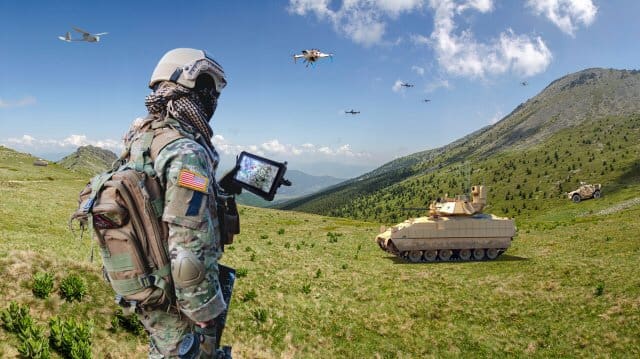
ABERDEEN PROVING GROUND, Md. — Army Futures Command is soliciting industry for information on emerging technologies in robotics and sensors to enhance the targeting capabilities of Army small tactical units.

Researchers are in the initial stages of the Smart Targeting Environment for Lower Level Assets, or STELLA, program that will enable Soldiers to operationalize robotics to rapidly employ, build and share target data in multi-domain operations. The goal is to shorten the amount of time it takes for Soldiers to detect, acquire and identify a target before they engage the enemy.

AFC’s major subordinate command, the Combat Capabilities Development Command, or CCDC, is leading the effort and will issue a request for information, or RFI, in August 2019. The RFI will help the Army to gauge current capabilities, ongoing research and development, and emerging trends.

“We’re developing an efficient system so there is a Soldier in the loop making a decision much more quickly on what needs to be engaged. The future battlefield will include a large number of sensors detecting targets and high-value assets. With higher volumes on information, we need to ensure the Soldier isn’t overwhelmed,” said Osie David, a chief engineer within CCDC’s center for Command, Control, Communications, Computers, Cyber, Intelligence, Surveillance and Reconnaissance — or C5ISR.

Several areas of science and technology expertise will converge for the STELLA program, Osie said. C5ISR Center will use the findings from the RFI to inform future efforts in support of the Army’s manned-unmanned teaming concept.

C5ISR Center anticipates releasing a request for proposal, or RFP, in early 2020. The STELLA program is scheduled to begin in fall 2020.

Story by Dan Lafontaine, CCDC C5ISR Center Public Affairs

Graphic illustration by Jamie Lear, CCDC C5ISR Center

Max Talk 34: HEAT 1 Combat Tactics 8 – 11 Aug 2019: Compilation

Monday, August 19th, 2019

This is the thirty fourth installment of ‘Max Talk Monday’ which shares select episodes from a series of instructional videos. Max Velocity Tactical (MVT) has established a reputation on the leading edge of tactical live fire and force on force training. MVT is dedicated to developing and training tactical excellence at the individual and team level.

A compilation of footage taken during the August 8 – 11 HEAT 1 Combat Tactics Class, originally for upload to Instagram. This is by no means all of the drills that are run at these classes, simply what I was able to capture on my phone during the training. HEAT 1 Combat Tactics is a 4 day class, 2 days on the flat range doing work-up training and drills to ready the students for the 2 days on the tactical ranges. The classes are held at the Velocity Training Center (VTC), Romney WV. The facility is purpose built to offer the best in Live Fire and Force on Fire Tactical Training.

Shown in the video are portions of tactical Ranges 1 & 2, the main movement ranges used for HEAT 1. Mobile classes are also available. Day 3 of the tactical range portion sees students working up from pairs to team assault and then break contact drills, repeated in more complexity on Day 4, starting with a pairs jungle walk, break contact drills, and a final team assault.

This is the fourth installment of ‘Max Talk Monday’ which shares select episodes from a series of instructional videos. Max Velocity Tactical (MVT) has established a reputation on the leading edge of tactical live fire and force on force training. MVT is dedicated to developing and training tactical excellence at the individual and team level.

Max is a tactical trainer and author, a professional soldier with extensive experience in British elite forces and as a paramilitary contractor. Max was enlisted and later commissioned, via the Royal Military Academy Sandhurst, into the Parachute Regiment. The Parachute Regiment is an elite airborne infantry unit, comparable to the U.S. 75th Ranger Regiment, accessible only via the renowned ‘Pegasus Company’ Selection course. Max served in 1 and 2 PARA. Of the three PARA battalions, 2 and 3 PARA serve in 16 Air Assault Brigade as the UK’s elite Rapid Response Force, with one battalion at permanent high readiness for worldwide intervention operations. Max served in Para Reg when it was utilized to provide elite airborne infantry support to UKSF, as the forefathers of the SFSG. With training and operations validating the concept, including Op Barras (Sierra Leone), 1 PARA was placed permanently in role as part of the SFSG.

Additionally, Max served on a number of deployments, to include multiple tours in Northern Ireland, the Balkans and Afghanistan. Additional overseas assignments saw the opportunity to train, or train with, allied nations, including the U.S. Military. Roles which Max filled included rifle platoon commander, patrol leader, recruit instructor (platoon commander) at the PARA Training Depot, anti-armor platoon commander (fire support company), operations officer and command on deployments. Reaching a career point facing staff college and moving away from command of paratroopers, Max made the decision to resign from the service. After leaving the British Army, Max spent a further five years working operationally as a paramilitary contractor in both Iraq and Afghanistan; the latter two years based in Helmand Province working alongside the UK Military.

Since 2013, Max has run Max Velocity Tactical (MVT), a training company conceived to offer professional combat training for responsible citizens. As the Velocity Training Center (VTC) has grown into a state of the art training venue, MVT also took on pre-deployment training for U.S. SOF. This runs the spectrum from facility rental to tailored training packages specializing in Small Unit Tactics.

Website: Max Velocity Tactical

YouTube: Max Velocity Tactical

SCUBAPRO Sunday – Mask Cleaning, Defogging, and Storage

Sunday, August 18th, 2019

Dive mask preparation

When a SCUBA mask is made, it leaves a lot of film and residue on it. If not cleaned off properly, you will never get your mask to stop fogging. You can search the Internet for lots of different ways to clean your mask. I am going to walk thru one of the easiest and safest methods to do it. With some of the other methods, if not done correctly, you can break your mask glass or damage your frame.

Toothpaste or Soft Scrub (without bleach)

Your first step will be to take some toothpaste (not gel) and with your finger dab some on both sides of the inside of the lenses and the inside of the mask.  Rub the toothpaste thoroughly and then let it sit to dry. Try to wait an hour or two before you rinse it out; however, if you don’t have the time, just go ahead and rinse it right away; there’s a good chance it will still work. You should do this every couple of months to make sure your mask is clean. Make sure you clean the interior inside of the mask, skirt and all.  There are also commercial cleaners you can use that clean and defog. A mask is like the inside of your car window. It gets a film on it because all the plastic and rubber are off-gassing.

Put your dive mask under running water to rinse out the toothpaste.  You can use your fingernail or a toothbrush to get around the skirt that touches the lens. In some cases, some of the toothpaste can seep under there. Make sure you get it all out. 

Different ways to defog your mask before every dive

Commercial Defogger

This is the type of defogging you can buy at any dive shop.  There are a ton of different types, but they are basically all the same.  If you would like to go this route, making sure it is safe for the reef and environmentally friendly. This is a good practice as your face will be in there. If you are diving O2 make sure it will not interact with the O2 and cause a burn or reaction. Usually, divers will put this inside their mask, swish it around with their finger and then rinse and go.

SCUBACLEAR, 30CC

Baby Shampoo and dishwashing soap

This is a very economical choice in the world of defogging your mask.  Many dive boats will carry an empty plastic water bottle container with a hole in the top and fill it about a quarter full of baby shampoo and the rest water.  Even just a little bit of soapy water will be enough to defog your mask.  Always remember to rinse your mask thoroughly; otherwise, the residue soap will sting your eyes underwater, even the baby shampoo will cause some tears if you use too much. 


You can also spit into your mask. If you use spit, the mask should be completely dry.  If you take off your mask in the water and then spit into it, it is very likely to become foggy during the dive.  Remember – dry mask, spit, rub, rinse with water, and put on your mask.

Preventing a foggy mask even if you have defogged it

If your face is sweaty and hot, it is a good idea to splash some cold water on it to give it a quick rinse before you put your mask on. 

Before putting your choice of defogging on your mask, ensure that the lens is dry. You can apply to defog to your mask anytime before jumping in the water; however, you should rinse the defog out only moments before jumping in.  If you have rinsed it out, but then are delayed jumping in, and you are not ready to put your mask on your face, leave a layer of water in your mask until you are prepared. Once you have defogged and rinsed your mask, put your mask on your face, and don’t take it off.  Moving your mask to your forehead, neck, or into the water basically eliminate any defogging you had just put onto your mask. Keep in mind if you are jumping into a dive or have to wait before you get to where you will leave on your dive. For long transits to insertion points, try and keep your inner mask dry, you can store it in a zip-lock bag as it is easily collapsed and store. Lastly, you can always leave a little water in your mask during the dive and swish it around to help keep the fog at bay.

Summary

You should clean your mask every couple of months depending on its use. It should be kept in a clean, dry place. Most masks come in boxes that are designed for you to store it in. Make sure it is dry before you store it away. Clean your mask after every use; make sure to clean around the outside edge of the mask, especially the part close to your mouth. Because it is close to your mouth, it can smell like food, and that can attack bugs. If this happens, they will eat your mask, and it will look like it is dry rotted. Most masks are made of high-quality rubber and can resist dry rot. A good dive mask can last for years if taking care of properly.  

Lastly, I am going to say this, and if you have never done this before, ask someone who has… The best way I have found to get a new mask ready to dive is and again DO NOT TRY THIS IF YOU HAVE NEVER DONE IT BEFORE. Do not do this on a tempered mask. I know all masks are tempered. I am putting this out as a warning that mask companies tell you, ”Do not burn the mask” If you do it wrong, it will destroy your mask. So, what I do is, I burn my mask, (I know I said don’t do it) then clean it with soft scrub (without bleach) with a green scrubby pad, not too hard, so you don’t scratch the glass. Clean the total inside of the mask, let it dry, burn it again then soft scrub again. Then I use Jaw spit anti-fog. I use the gel, not the spray, (I have never tried the spray).

I know everyone has a way to do this and just want to share what has been working for me. If you read this and say. “I can burn my mask” never stop moving the flame and only let the very top of the flame touch the glass, lastly never ever touch the rubber sides. AGAIN, DON’T DO THIS IF YOU DON’T KNOW HOW. I know the bold writing will hold up in court if you burn your mask and it breaks, and you can decide to sue me.


Strike Hold! Presents: Operation Dragoon 75 – Dispatch from the Front

Friday, August 16th, 2019

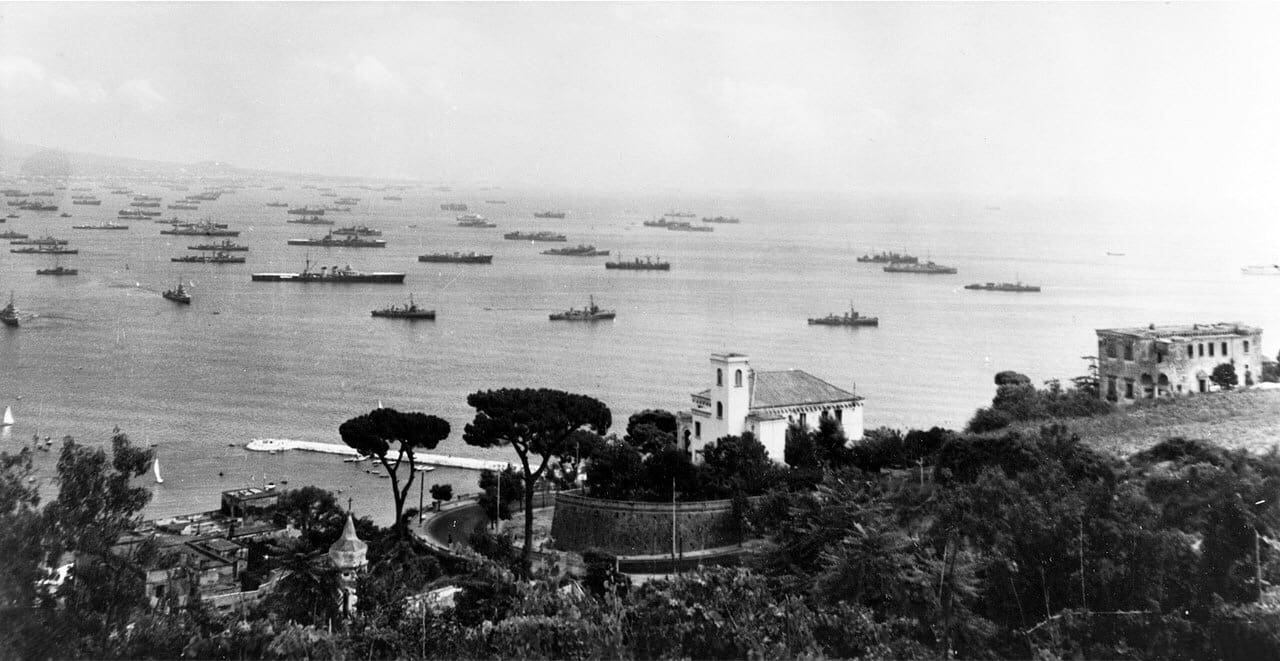
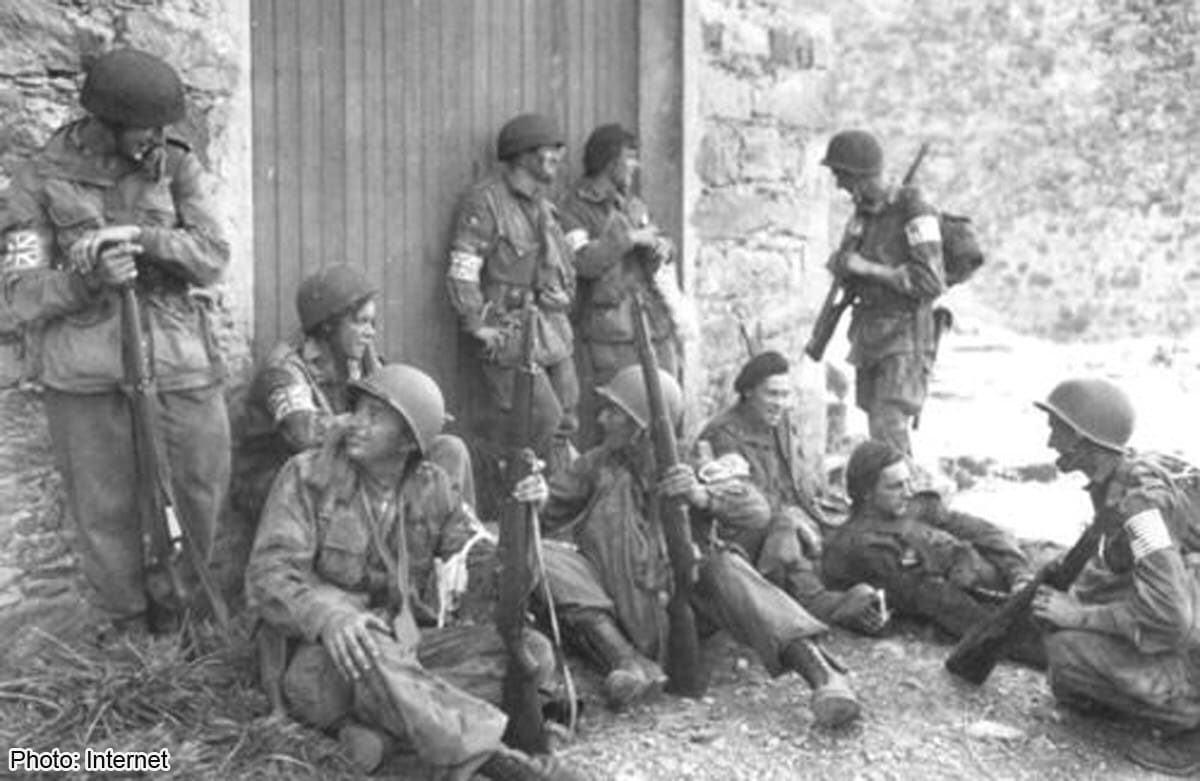
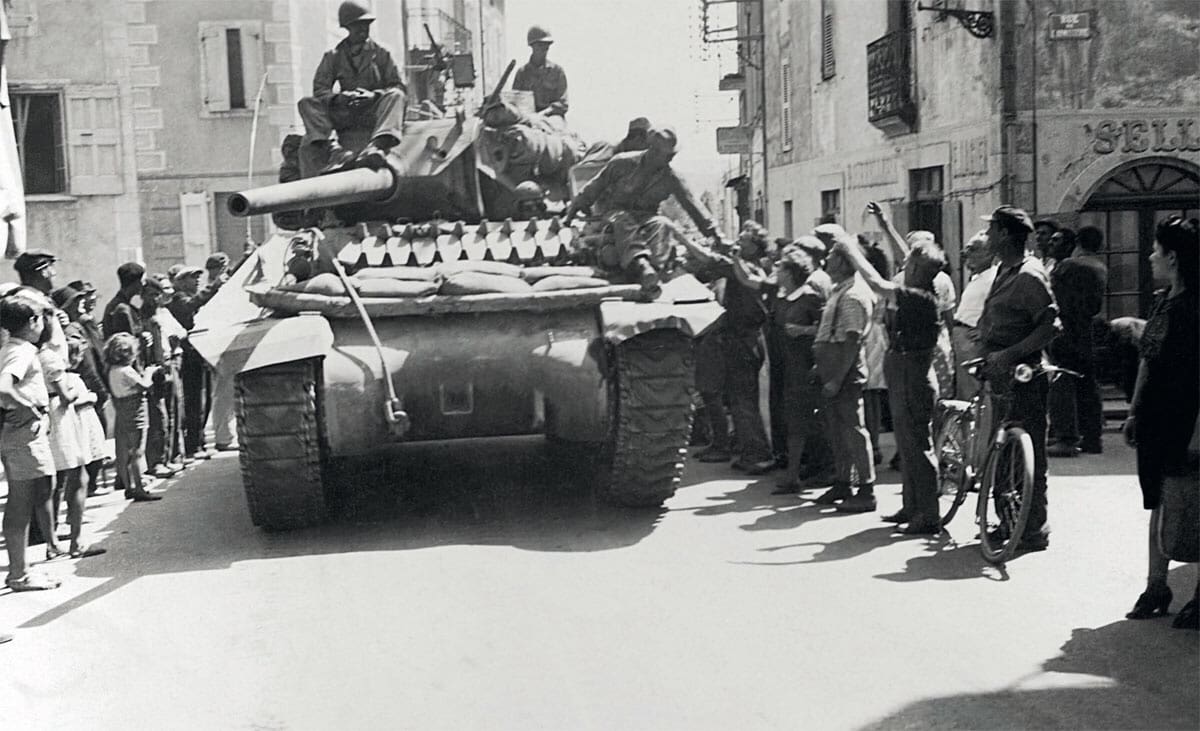
Operation Dragoon, the Allied invasion of southern France, was originally supposed to be launched simultaneous to the invasion of Normandy – thus catching the Nazi forces in France and Western Europe between the horns of a two-pronged assault. However, due to there not being enough ships, aircraft, crews, and materiel to allow both invasions to happen simultaneously, the southern invasion was postponed.

Sometimes known as “The Forgotten D-Day”, Operation Dragoon (earlier known as “Operation Anvil”, whilst the Normandy invasion was known as “Sledgehammer”) was re-scheduled for mid-August 1944. By that time it was also clear to the Allied High Command that another way into, and through, France was necessary because the Normandy ports could not cope with the volume of supplies needed to keep the armies fed, armed, fueled, and moving.

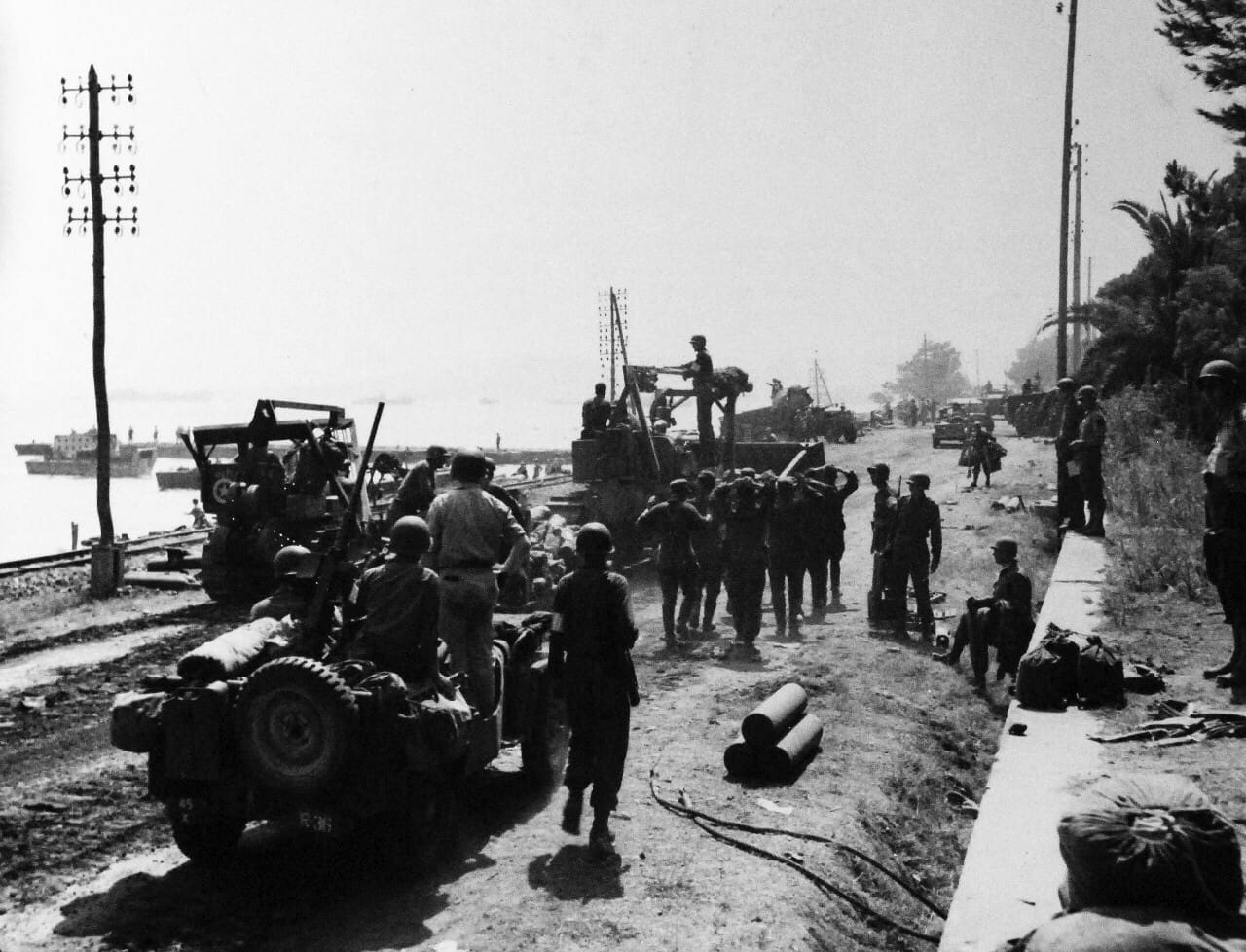
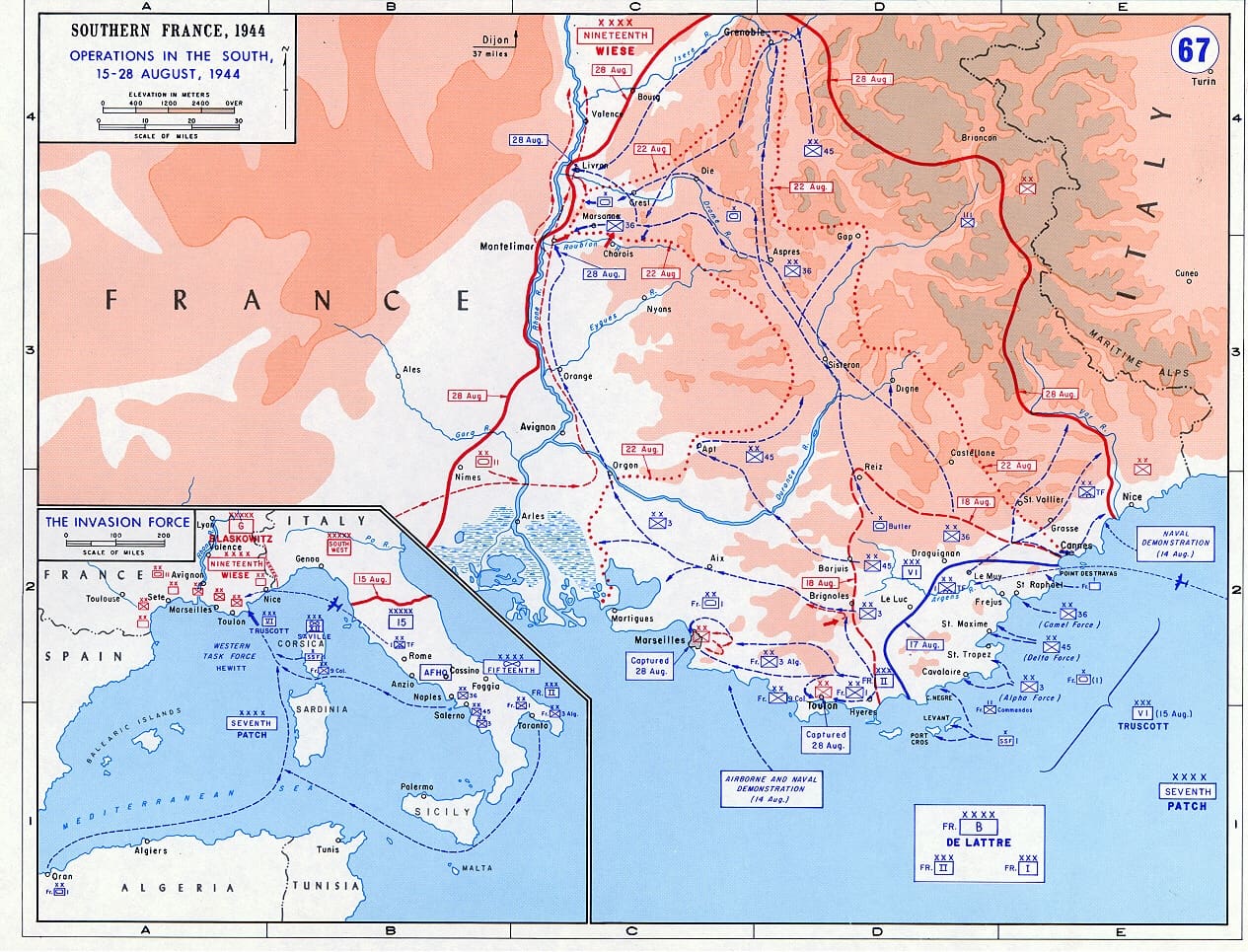
The goals of Operation Dragoon were to secure the vital ports on the French Mediterranean coast and increase pressure on the German forces by opening another front. After some preliminary commando operations, the US VI Corps landed on the beaches of the Côte d’Azur under the shield of a large naval task force, followed by several divisions of the French Army B.

Allied forces were opposed by the scattered forces of the German Army Group G, which had been weakened by the relocation of its divisions to other fronts and the replacement of its soldiers with third-rate Ostlegione outfitted with obsolete equipment. Hindered by total Allied air superiority and a large-scale uprising by the French Resistance, the weak German forces were swiftly defeated.

The remaining German forces withdrew to the north through the Rhône valley, to establish a stable defense line at Dijon. Allied mobile units were able to overtake the Germans and partially block their route at the town of Montélimar. The ensuing battle led to a stalemate, with neither side able to achieve a decisive breakthrough, until the Germans were finally able to complete their withdrawal and retreat from the town. While the Germans were retreating, the French managed to capture the important ports of Marseille and Toulon, putting them into operation soon after.


The Germans were not able to hold Dijon and ordered a complete withdrawal from Southern France. Army Group G retreated further north, pursued by Allied forces. The fighting ultimately came to a stop at the Vosges mountains, where Army Group G was finally able to establish a stable defense line. After meeting with the Allied units from Operation Overlord, the Allied forces were in need of reorganizing and, facing stiffened German resistance, the offensive was halted on 14 September – one month to the day after the invasion.

Three days after the end of Operation Dragoon, on the 17th of September 1944, “Operation Market-Garden” was launched. With Operation Market-Garden the Allied Command sought to leapfrog over the German forces in The Netherlands – using airborne forces to capture key bridges over the Rhine – and then punch through into the industrial heartland of Germany.

Operation Dragoon was considered a success by the Allies. It enabled them to liberate most of Southern France in a time span of only four weeks, while inflicting heavy casualties on the German forces. Although a substantial part of the best German units were able to escape, the captured French ports were put into operation, allowing the Allies to solve their supply problems.

Article features some text and photos from Wikipedia.

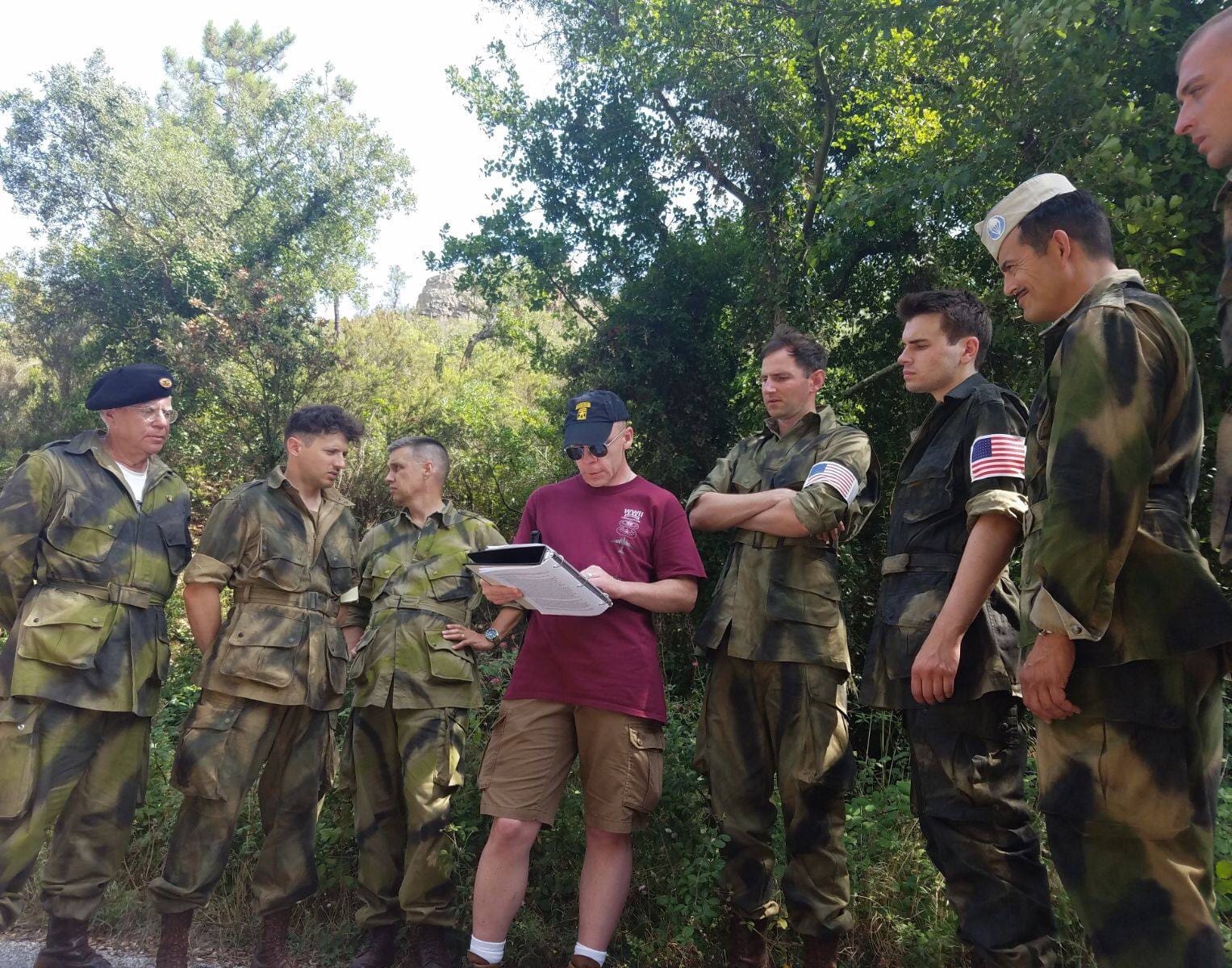
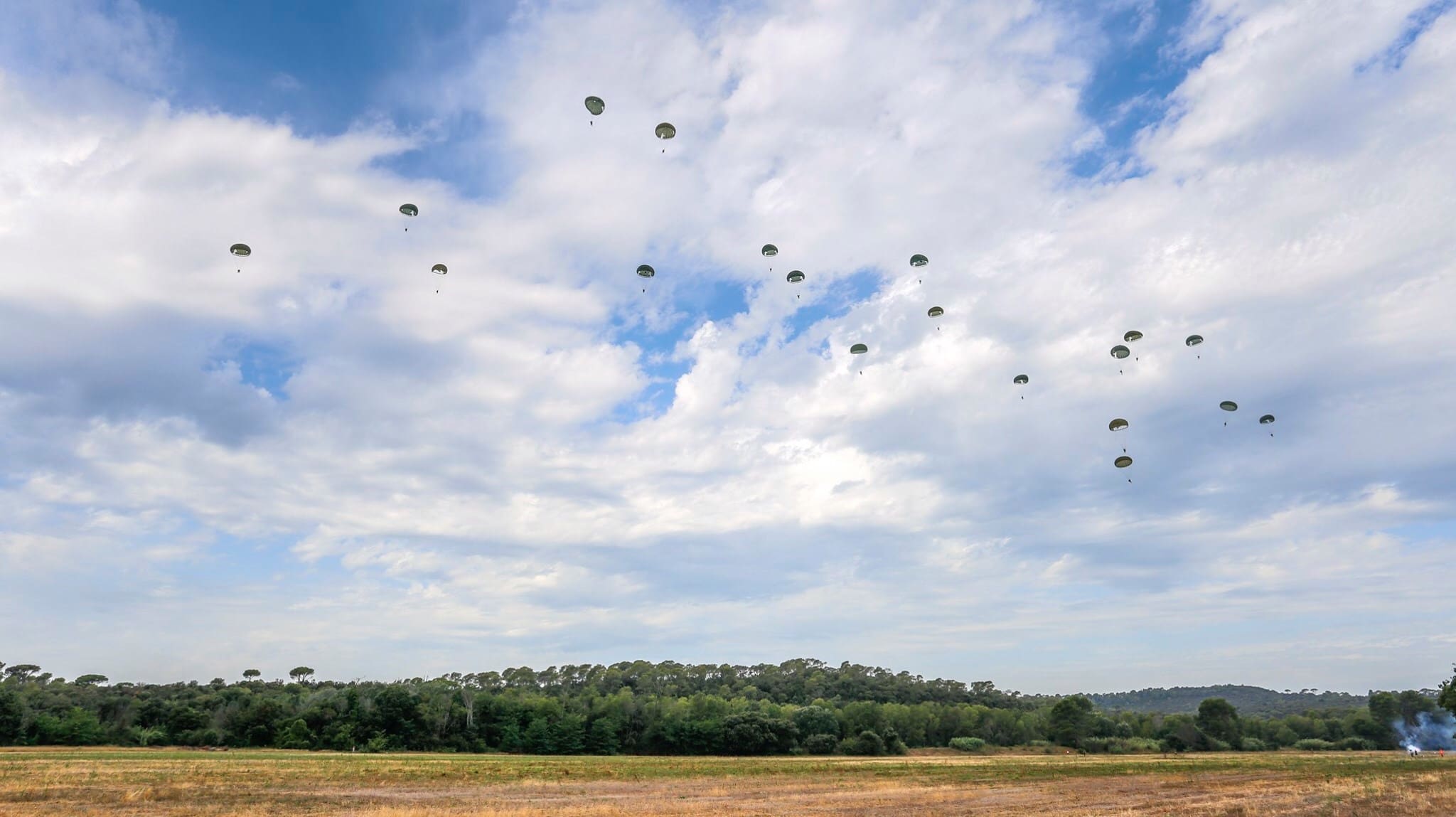
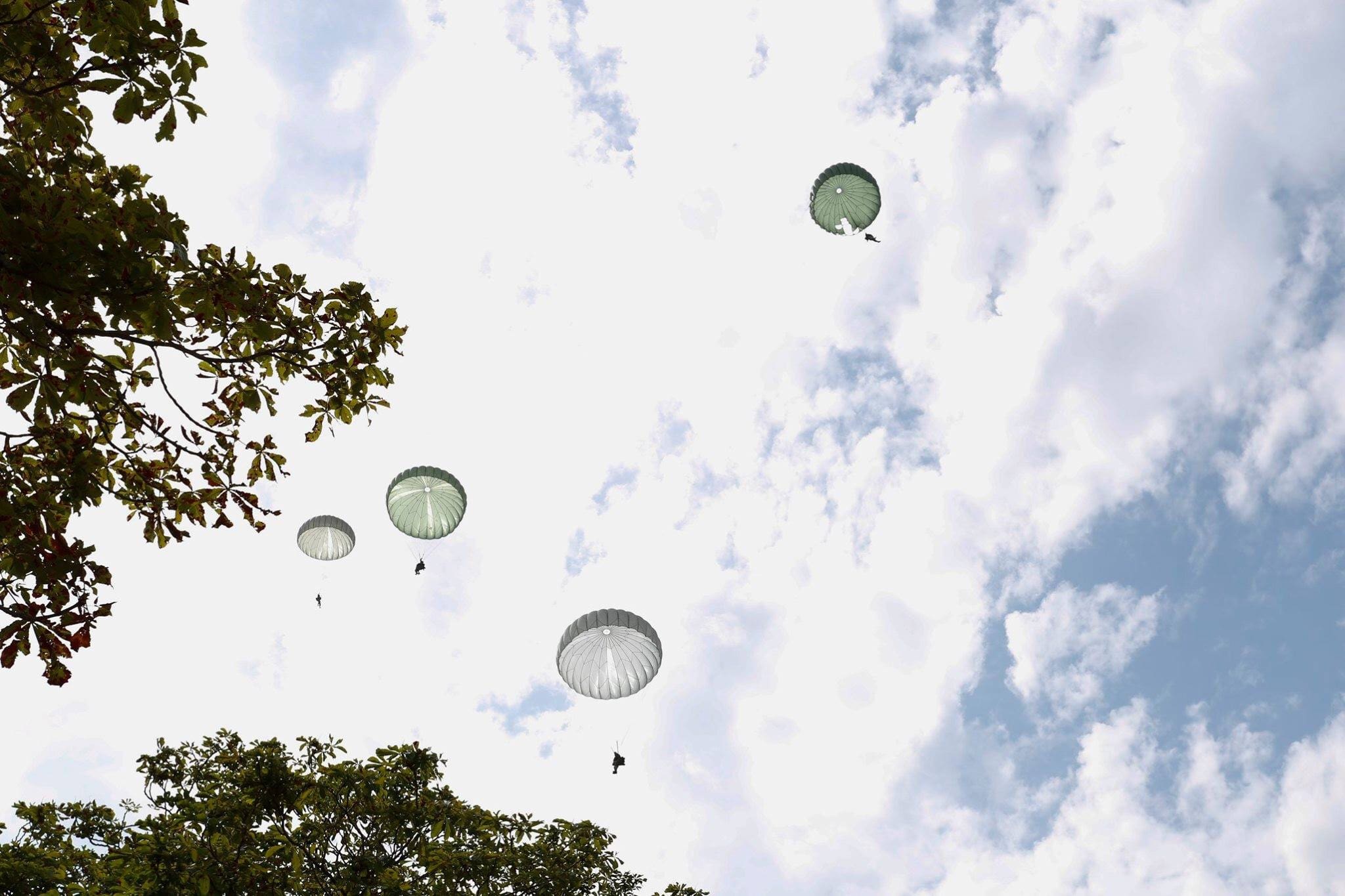
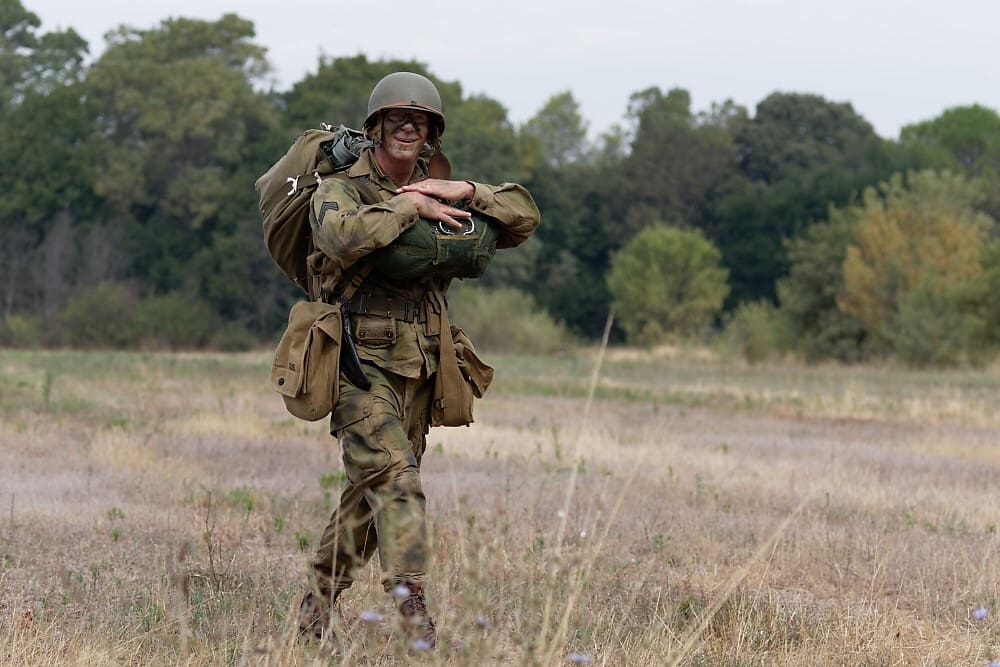
This week marks the 75th Anniversary of Operation Dragoon, and once again our friends from the WWII Airborne Demonstration Team are on the ground and in the air doing what they do best – commemorating the brave troops of the Airborne Forces who were critical to the Allied victory. They recently posted a “Dispatch from the front lines” on their Facebook page, and we’d like to share that with you:

Dragoon Update—Photos from the front!

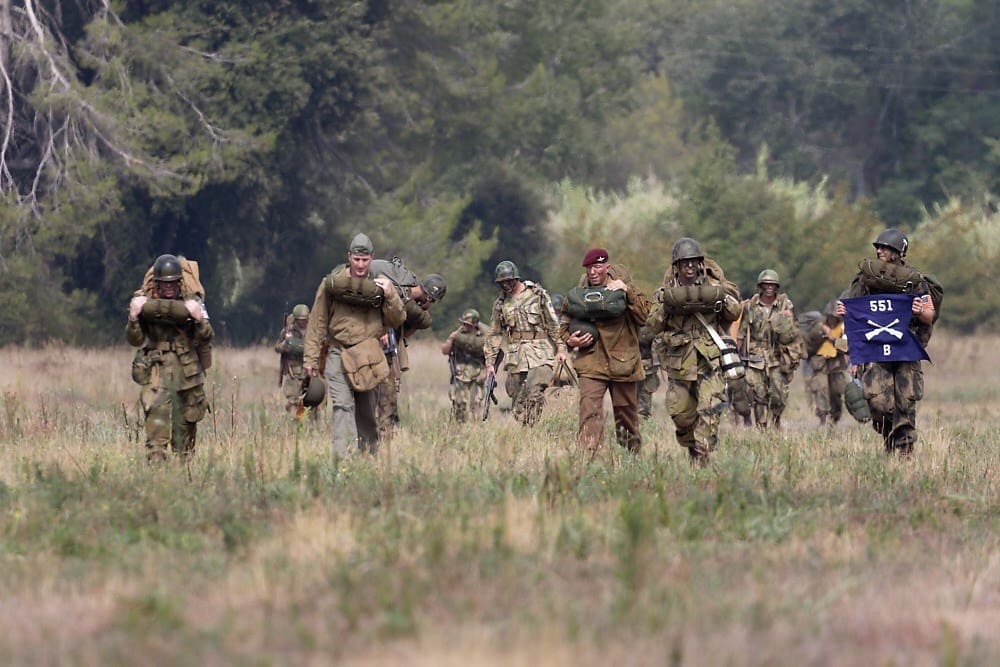
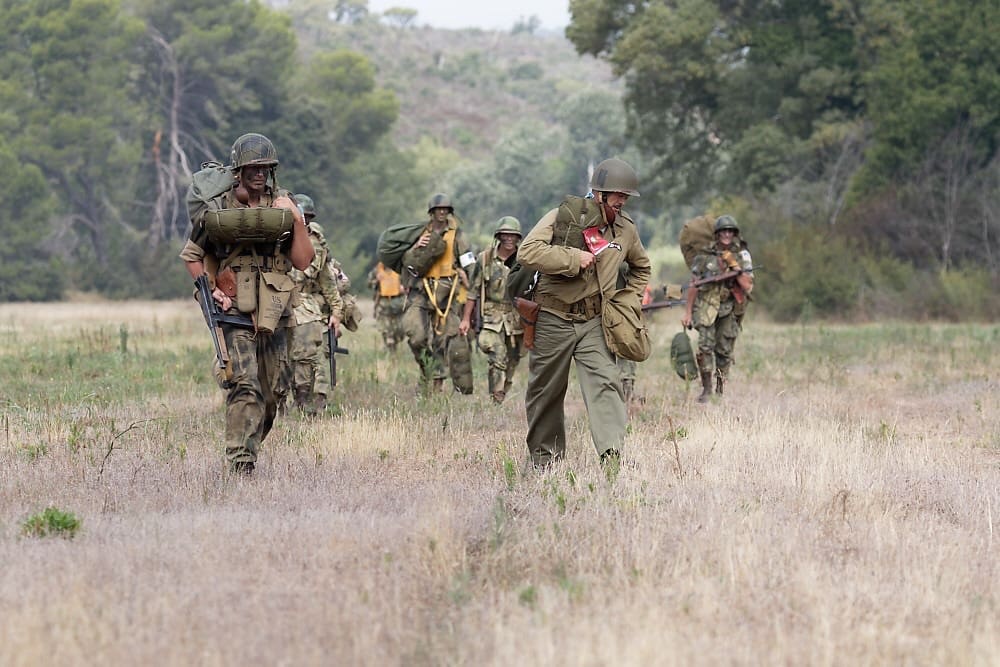
U.S. Army Airborne, British Airborne, and U.S. Marine Corps Airborne attached to the Office of Strategic Services—we’re privileged to be honoring them all! These units were part of the Allied 1st Airborne Task Force represented by our team members here.

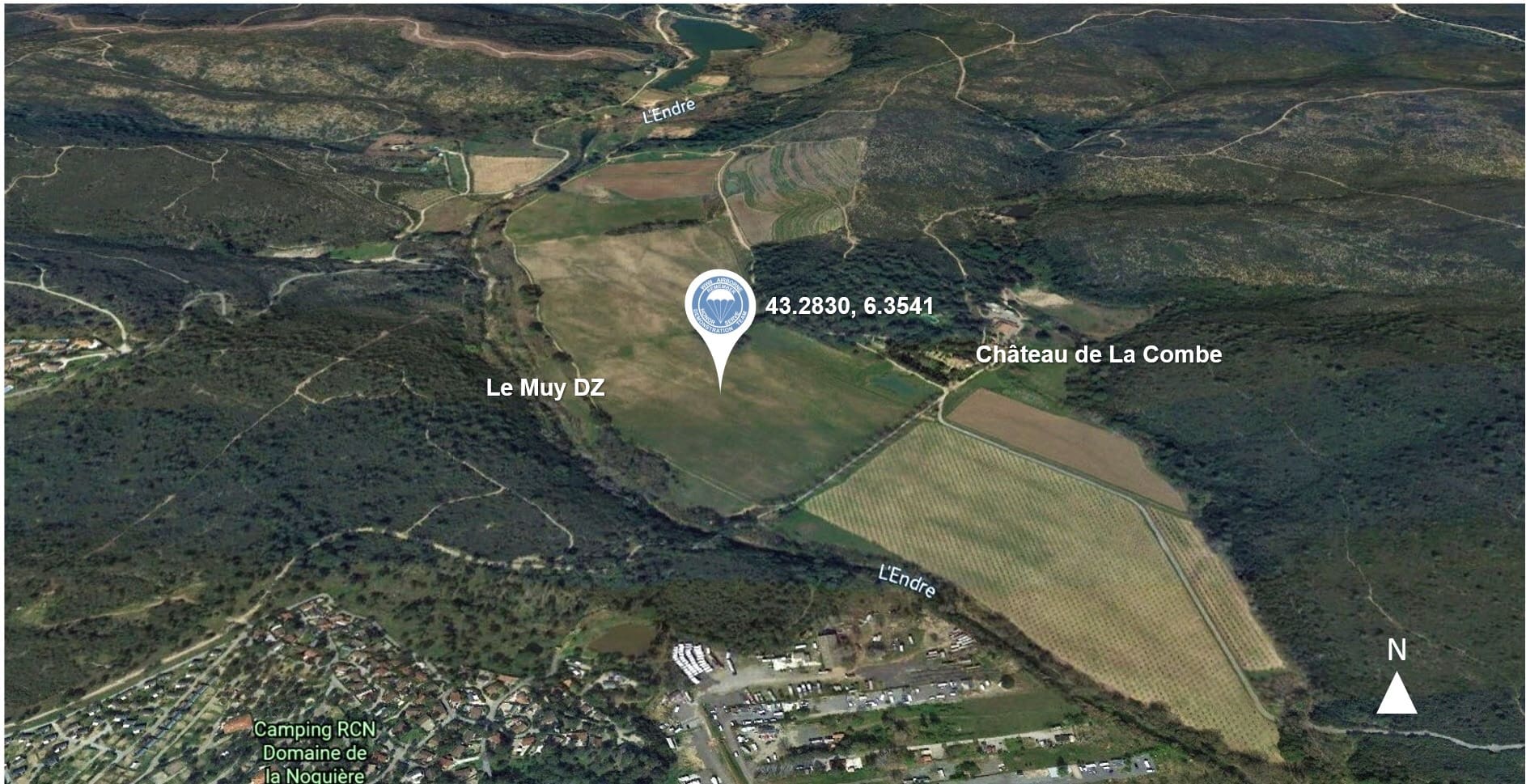
The 1st Airborne Task Force was a short-lived airborne unit created specifically for Operation Dragoon–the invasion of Southern France. The combined unit strength was 9,000 men. It consisted of a near-random grouping of parachute infantry regiments, many of which had served in Italy and which were accustomed to the mountainous terrain of Southern France. During Dragoon, most landed in drop zones like the one seen here. Forests and mountains made the area dangerous, but also forced units to be split apart, testing their true abilities as Airborne infantry.

Among the units we honored during our jump on Monday was the 551st Parachute Infantry Regiment. Virtually nothing of the 551st’s history was known to the American public until a renewed interest in the unit in the 1990’s prompted veterans to seek recognition for it. The 551st was originally commissioned to capture the French Island of Martinique which was being used as a supply station for Nazi U-Boats. The 551st trained in secret in Panama far away from the more famous Airborne regiments. The invasion of Martinique was called off, but Operation Dragoon put the 551st on French soil, nevertheless.

On the fog-blanketed morning of August 15th, the 551st parachuted into a drop zone not far where we are shown here. Immediately the 551st liberated the town of Draguignan and a week later, Nice.

During the Battle of the Bulge this outlier within the Airborne community was summoned to take the fight to the enemy in the north. Assigned to move through the American lines and infiltrate four miles into Nazi occupied territory, the 551st achieved every objective assigned—but at a terrible cost. It entered the battle on January 3, 1945. By January 6, it had lost 85% of its troops. Of its 643 men only 14 Officers and 96 men lived to see the 551st’s victory.

The unit was famous for an acronym that many on our team take pride in sharing: GOYA. We’ll let you look that up. But it sums up a simple formula for life success. Of all the motivational messages and themes out there, we think the 551st had it right—one of the many reasons we admire them and want to make sure that their story stays alive to inspire others.

Special thanks to our friends and brothers at French Airborne Command for inviting us to join them and for making this jump possible. To the memory of all who served in 1st Airborne Task Force and to the 551st, we salute you! Airborne All The Way!

Photos by WWII ADT, Ville du Muy and by Jean-michel Maurel via Airborne Command

Originally published by strikehold.net.