Phantom Lights

Archive for the ‘Guest Post’ Category

Max Talk 21: Team Patrol Formations

Monday, May 13th, 2019

This is the twenty first installment of ‘Max Talk Monday’ which shares select episodes from a series of instructional videos. Max Velocity Tactical (MVT) has established a reputation on the leading edge of tactical live fire and force on force training. MVT is dedicated to developing and training tactical excellence at the individual and team level.

This video focuses on Team Patrol Formations, and the advantages and disadvantages of various formations for patrol movement and advance to contact.

Detailed explanations can be found in the MVT Tactical Manual: Small Unit Tactics.

Max is a tactical trainer and author, a lifelong professional soldier with extensive military experience. He served with British Special Operations Forces, both enlisted and as a commissioned officer; a graduate of the Royal Military Academy Sandhurst. Max served on numerous operational deployments, and also served as a recruit instructor. Max spent five years serving as a paramilitary contractor in both Iraq and Afghanistan; the latter two years working for the British Government in Helmand Province, Afghanistan.

Website: Max Velocity Tactical

YouTube: Max Velocity Tactical

Excellence in Tactical Training.

SCUBAPRO Sunday – Dive Logs

Sunday, May 12th, 2019

When you first started diving, your instructors taught you to log all your dives. A typical entry consists of the dive location, date, time, duration of the dive, depth, water temperature, wetsuit with thickness, equipment, and other facts relevant to the dive. Like if that suit was suitable for that water temp if your foot cramped up with the fins you used and other items like that.  

As we went away from diving, there are a lot of old skills and habits that have been lost. Also, as we start to use more advanced items in the water from sonar to Heads Up Dive Computers some of the necessary skills have been lost. Lastly, as we go longer durations in-between dives, it is a great idea to write stuff down, so you will remember how you had your gear set up the last time you did it. This can go for all the training that you do.  

Document your number of dives. With technology today you can use your dive watch, and it does all the work for you. I think every dive company has an app that you can download your dive and add the other information you might want to remember. You will also be required to have a certain number of dives or a certain amount of a specific type of dives if you’re going to achieve different levels in the civilian dive world. Also, in most organizations, a minimum number of dives are required for you to keep your pay. If you ever have to prove you have dove, this can help.

By recording the equipment, your log can quickly become a reference to see how much weight you’ll need to descend in a given wetsuit. If you dive in various locations around the world, and in various climates, a dive log takes the guessing out of the equation. Remember to take into account what you are doing and wearing. If the last time you dove you had a 3lb sludge on your back and this time you don’t this will remind you. It never hurts to keep a paper logbook, so you can write in it and store it with your dive gear this way it is always there if needed. Lastly, write down if you had a problem with a piece of equipment. It’s easy to use something once a year and forget that you had a problem with it. Let’s say you had Nav Board that labeled as #3 and it needs to be replaced. So, when you are on deployment, and you go to dive, and you get Nav Board #3 you know to make sure it works, and it doesn’t have the same issues that it had before. Some people get very detailed in their log books others just write the necessary info down. That is up to you as long as you can look back and remember what info will help you out later. Lastly, you don’t have to use a particular book you can use anything as long as you are saving the same info.

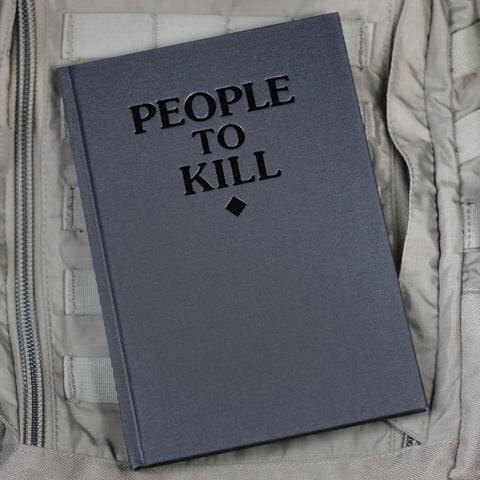
Here is a great one, available from www.violentlittle.com/products/people-to-kill-notebook.

FirstSpear Friday Focus – Ragnar Pocket Series

Friday, May 10th, 2019

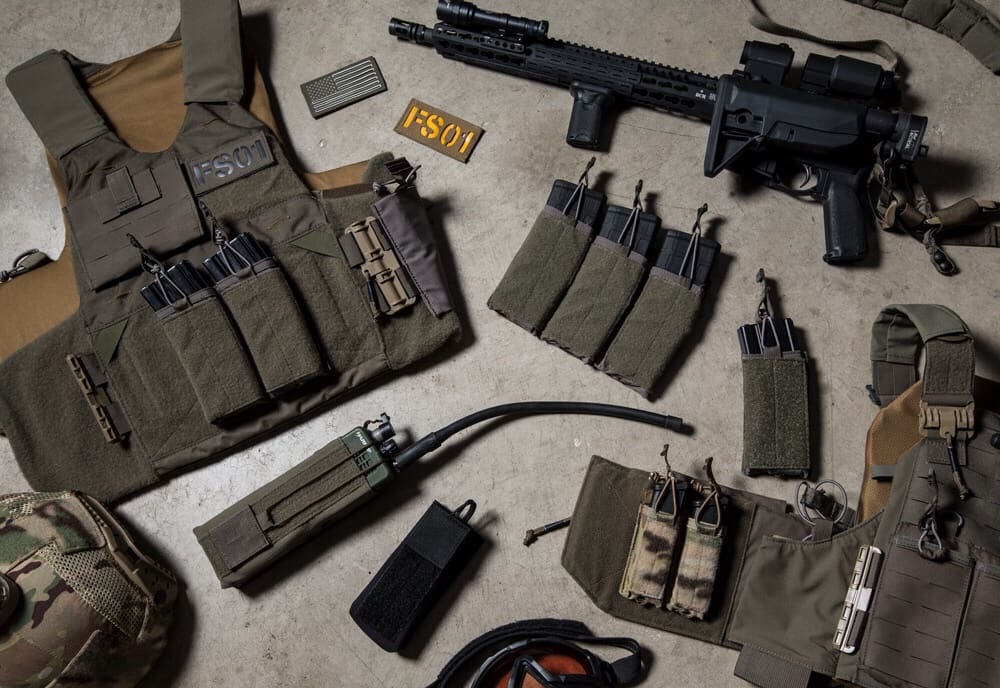
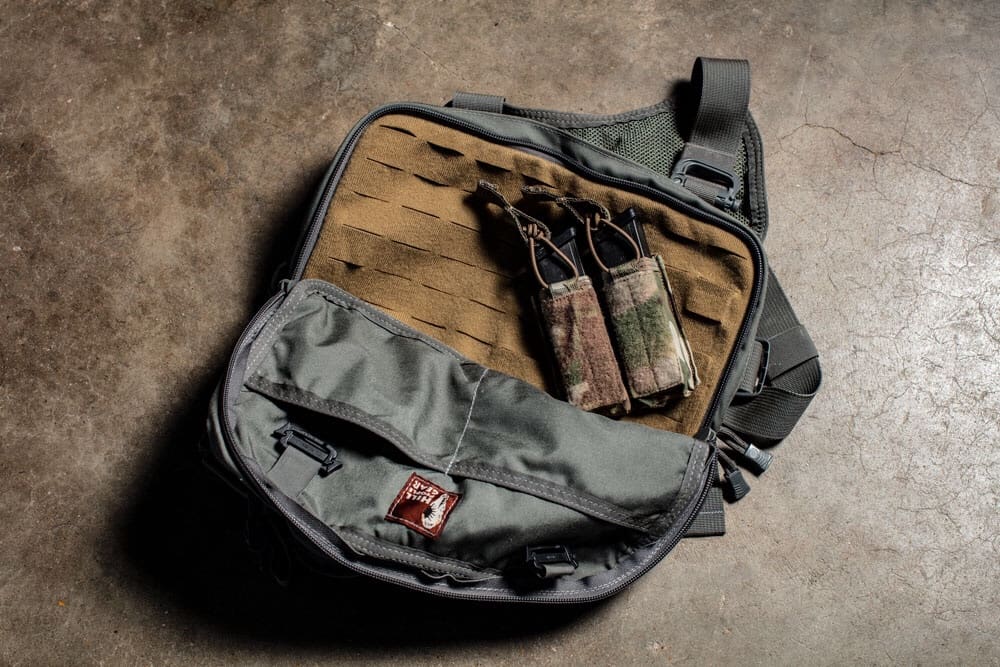
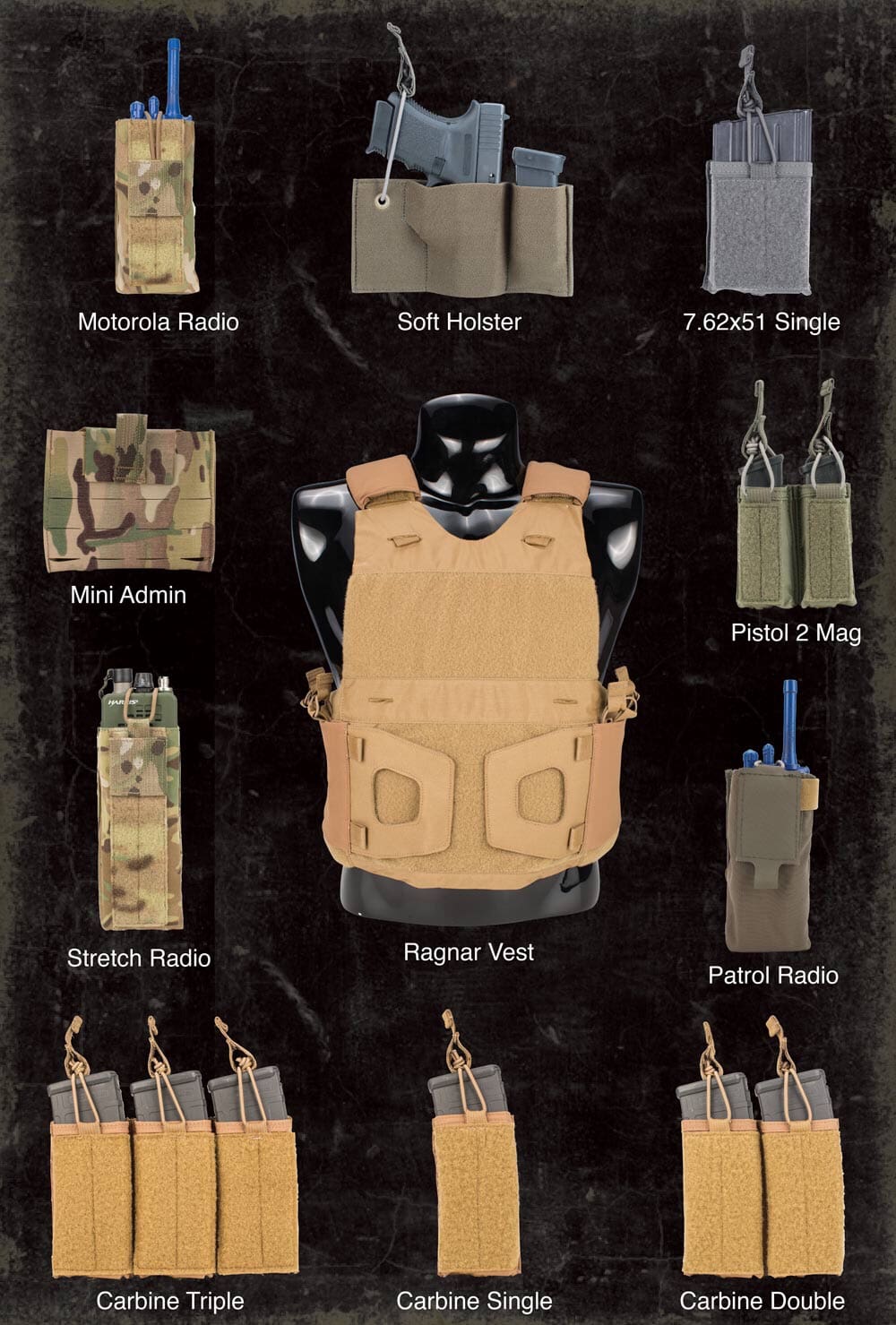
Today we are taking a closer look at FirstSpear’s versatile Ragnar pocket suite. Constructed with a full hook backing for fast attachment or removal from any vest using a loop field including the Ragnar Vest, Deceptor, DOV, as well as the Overlap and Adaptive Cummerbund. Ragnar Pockets also work great with absolutely any other bag or pack that features a loop panel.

Today FirstSpear offers a wide range of options from single, double, triple M4, double pistol, admin, radio options, and even a new soft holster. The Ragnar pocket suite is a simple yet effective sustainment solution with the sort of flexibility that allows you to use one system across a variety of profiles. 100% Made in the USA with USA Materials.

www.first-spear.com/pockets

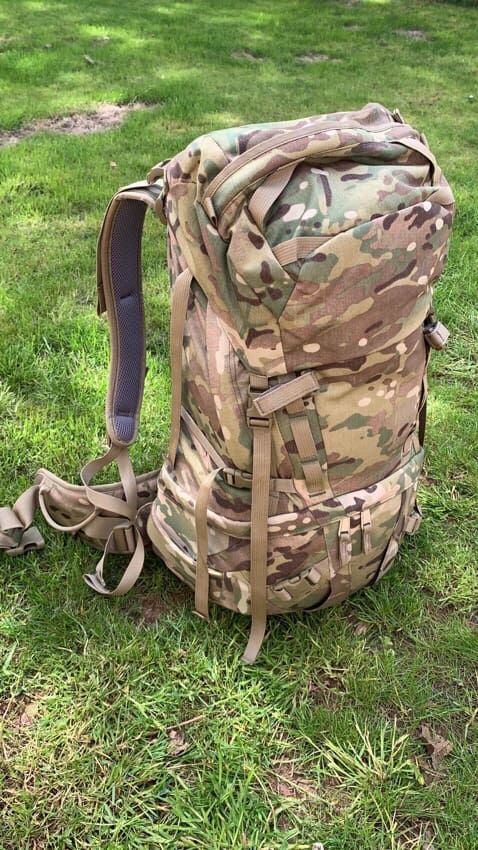
Brigantes Presents – High Angled Solutions – Deuter Guide 45+

Wednesday, May 8th, 2019

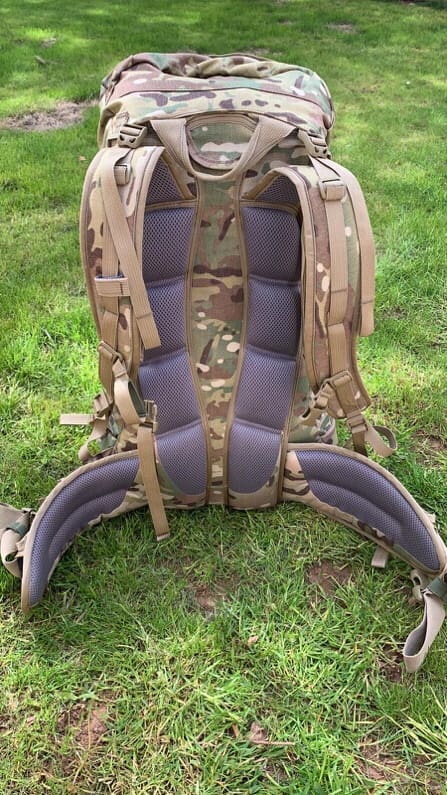
Off the success of the Deuter Guide 35+ in Multicam, Deuter and Brigantes are collaborating again in developing a slim and lightweight 45+ version.

The well-designed alpine backpack guarantees absolute robustness, a snug fit and maximum control on demanding tours. The development pack is the perfect companion for particularly tall mountaineers and it features Deuter’s Alpine System and X frame construction. The systems has two flexible softstripe back pads that are perfectly adaptable to the anatomy and follow the wearer’s movements. In combination with the pack’s sleek shape, this keeps the load always close to the centre of gravity, this guaranteeing full pack control.  

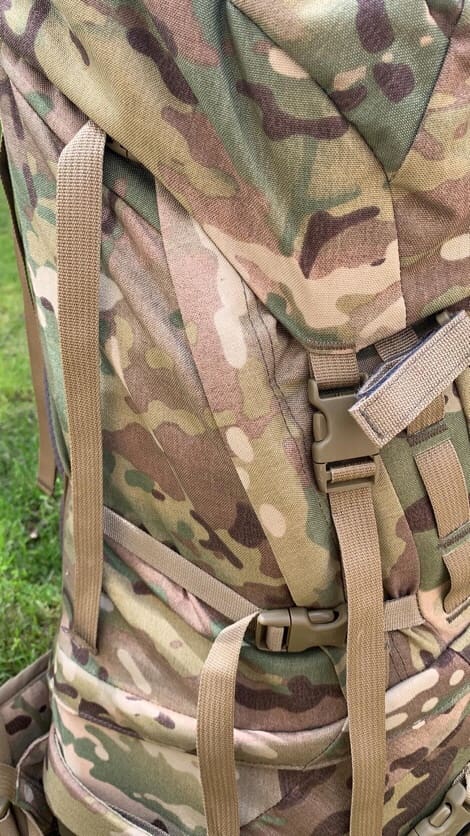
The adjustable lid provides additional space and the bottom compartment includes a removable separator for ideal gear access and load placement. The bag is side opening to provide easy access to items and with a stretch compartment on the inside, allows the stowe of sweaty/wet clothing away from other clothing.

The Deuter Guide 45+ removable padded hip belt with Vari Flex System leaves the generous hip fins fully mobile to ensure they follow even the most complex movements, allowing tricky sections to be negotiated without losing balance, especially important when carrying a hefty load.

Added to these features, the attachment loops for helmet holder, ski fixation attachments, attachment loops for ice axe or poles and sternum straps, make this pack the perfect solution for military mountaineering.

For more information contact international@brigantes.com

For UK sales contact warrior@brigantes.com


SureFire Field Notes Ep 43 – Zack Harrison of Northern Red, Training VS Practice

Tuesday, May 7th, 2019

Prior to enlisting in the military, Zack was a history teacher and coach in his hometown of Richmond, Va. For the last ten years, Zack has served in the United States Army. His career has been spent in the Special Operations community at Ft. Bragg, NC. He has been a member on Special Operation detachments and an instructor of US Army Green Berets.

Northern Red LLC is a U.S based, Service-Disable Veteran Owned Small Business founded in 2011 by former US Army Special Operations Veterans and private-sector entrepreneurs. Northern Red is an international risk management firm specializing in high-risk security, training, intelligence operations and information security for public and private sector clients.

Max Talk Monday 20: GEAR: Fight Lite! Setting up your Mission Ready Operational Kit

Monday, May 6th, 2019

This is the twentieth installment of ‘Max Talk Monday’ which shares select episodes from a series of instructional videos. Max Velocity Tactical (MVT) has established a reputation on the leading edge of tactical live fire and force on force training. MVT is dedicated to developing and training tactical excellence at the individual and team level.

This video focuses on setting up your Fight Lite Mission Ready Operational Kit / Load Out in line with the Max Velocity Tactical gear philosophy.

Detailed explanations can be found in the MVT Tactical Manual: Small Unit Tactics.

Max is a tactical trainer and author, a lifelong professional soldier with extensive military experience. He served with British Special Operations Forces, both enlisted and as a commissioned officer; a graduate of the Royal Military Academy Sandhurst. Max served on numerous operational deployments, and also served as a recruit instructor. Max spent five years serving as a paramilitary contractor in both Iraq and Afghanistan; the latter two years working for the British Government in Helmand Province, Afghanistan.

Website: Max Velocity Tactical

YouTube: Max Velocity Tactical

Excellence in Tactical Training.

SCUBAPRO Sunday – How to Choose a Dive Knife

Sunday, May 5th, 2019

A dive knife is an indispensable tool. Offered in a variety of styles and sizes, corrosion-resistant metals and featuring a choice of cutting edges to handle different cutting tasks, a diving knife is a must-have item. A good dive knife is a must-have when you go thru underwater knife fighting school.   

Dive Knife Sizes

Dive knives range from the traditional full-sized knife’s that you generally strap to your lower leg, to compact ones that can be mounted on a BCD pocket or secured to an HP hose.  

The K6 is an excellent example of a traditional-style full-sized all-purpose diver’s knife.  Its large six-inch blade and ergonomic grip handle comes with an injected molded sheath and two quick-adjusting buckle straps that mount easily on the lower leg.
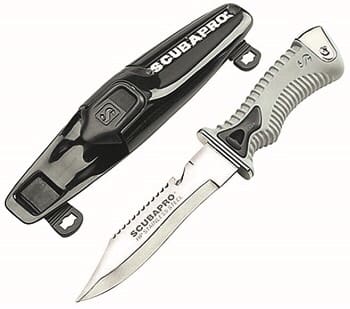


At the other end of the spectrum is a diver knife like the White Tip.  With a blade length of about 2.5 inches and an overall length of just under six inches, this type of knife is compact enough to attach to a hose or a BCD as a primary knife or to stow in an easy-to-reach pocket as a back-up cutting tool.


Diving Knife Materials

Stainless Steel Diving Knives

Stainless steel is the most common alloy used in the manufacturing of dive knife blades.  The majority of dive knives are made of either Grade 304 stainless steel or Marine Grade 316 stainless steel. 

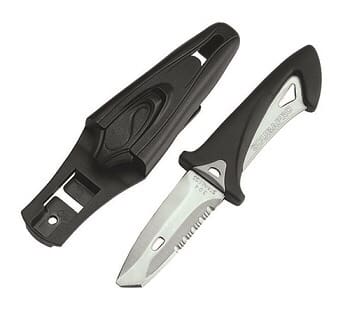
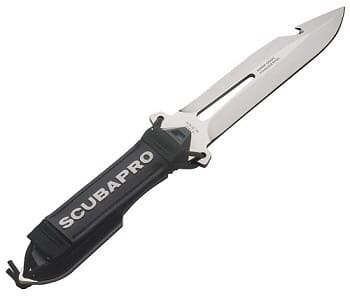
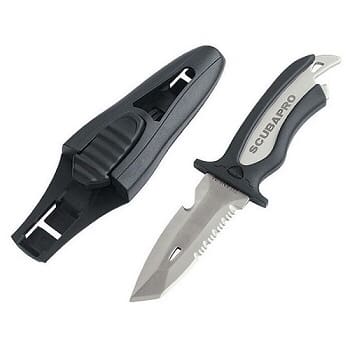
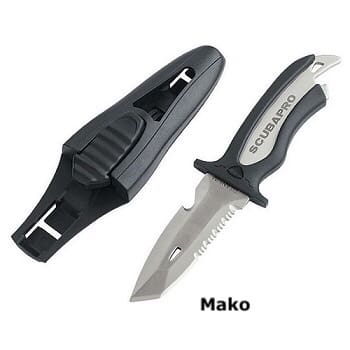
Grade 304 hard-tempered stainless steel is a very versatile metal that is used in a variety of outdoor applications.  It offers resistance to surface oxidation and provides an excellent cutting edge.  Because it is a little softer than Marine-Grade 316 stainless steel, a Grade 304 blade needs to be sharpened more frequently to maintain its right cutting edge.  The stainless steel version of the Mako is an excellent example of a diving knife made with Grade 304 stainless steel. Marine Grade 316 stainless steel is similar to Grade 304, but it has one crucial extra ingredient: molybdenum. This is a hard, silver-white metallic element used to toughen the steel. This enables Marine Grade 316 dive knives to maintain their super-sharp edges for longer periods, plus it increases corrosion-resistance. SCUBAPRO’s premier dive knife, the TK 15, offers a six-inch Marine Grade 316 stainless steel blade.  The blade surface is polished explicitly so that water can drain quickly to prevent oxidation further.  Also, the thickness of the knife’s stainless steel is consistent from one end to the other, creating a high level of stiffness and strength.
 

Titanium Diving Knives

Another popular material for dive knife blades is hardened titanium.  A titanium dive knife blade is entirely corrosion-resistant, it is lightweight yet extremely strong, and it can hold a sharp edge for a long, long time, all of which make titanium dive knives excellent cutting tools for use in saltwater environments.  The lightweight, multi-function X-Cut titanium dive knife is an excellent example of a titanium cutting tool.  Measuring just over five inches in overall length, its 2.5-inch blade is specially designed to maintain a highly-durable cutting edge for a long life of corrosion-free performance.


Diver’s Knife Cutting Edges, Tips and More

Dive knife blades come with either a plain edge, a serrated edge or a combination of both to handle a variety of cutting jobs.

A plain edge is good for making clean slicing cuts, or when using more of a pushing motion when control and accuracy are required – like filleting a fish.  This type of cutting motion is especially useful if the cutting edge is curved.  Plain edges are also easy to maintain.  Anyone with a basic sharpening tool can keep a plain edge razor sharp with little effort.

A serrated edge has a series of mini-edges or teeth similar to a hand saw.  A serrated edge is excellent for sawing-type cuts through heavy materials like wood or rope or stubborn kelp fronds.  For example, using a plain edge it would take forever to cut through a three-quarter inch anchor line, but a serrated edge would make quick work of it as the teeth bite deep into the material with every sawing motion.  A serrated edge also stays sharp for much longer than a plain edge, but it is a bit more difficult to sharpen.

Because these different blade edges excel in cutting different types of materials, most dive knives offer both, often on the same cutting plane.  Normally, the plain edge can be found closer to the tip of the blade, beneath the curve or “belly” of the blade, whereas the serrated portion can be found closer to the handle for better leverage when leaning into the tougher cuts.

Since a scuba diver’s knife blade’s cutting efficiency increases in relation to its length, dive knives that sport long blades, like the TK15 and K6, separate their cutting edges, devoting the entire top length of the blade to serration, and the entire bottom length to the plain edge.  This maximizes the length of each cutting edge and the overall efficiency of the knife.

When it comes to blade tips, dive knives normally come with either a blunt tip, a tanto tip, or some variation of a pointed tip.

On one end of the spectrum is the blunt tip.  As its name implies, the blunt tip is flat and dulled.  It is designed to be more of a prying tip than a piercing tip.  It is considered safer than other tips because you can’t accidentally stab your leg or puncture your BCD when returning it to its sheath.

On the other end of the spectrum is the pointed tip.  These tips come in a variety of shapes.  For example, the TK15 comes with a drop-point tip.  This is where the blade’s upper edge, or spine, gradually “drops” as it reaches the tip of the blade to form the tip.  This is considered a strong tip that is easy to control when cutting or piercing. 

The K6 and X-Cut have clip-point tips, so-named because the spine of the blade is “clipped” as it approaches the tip.  This creates a narrow tip that can be very useful for piercing a line wrapped tightly around a boat propeller in preparation for a slicing or sawing cut.  While not quite as strong as the drop-point, the clip-point is considered a very sharp and controllable point.

Falling in between the blunt tip and pointed tip is the tanto tip.  Combining elements of blunt and pointed, the typical tanto tip offers more of an angled tip which is sharpened for cutting, like on the Mako.  However, sometimes the tanto tip provides a small blunt spot as well as you’ll find on the White Tip.  Both versions produce a very strong and durable tip, enabling you to do a little prying with less chance of snapping the tip, with the added ability do some cutting when working in tight spaces.

Most dive knife blades also include a notch for cutting fishing line and, depending on design, and you can sometimes find additional tools like a bottle opener (Mako), a stainless steel handle-end for hammering (K6) or a shackle key (TK15).
 

Unique Cutting Tools You Won’t Want to Overlook

Not all scuba cutting tools look like a dive knife.  Take, for example, the innovative stainless steel Mesh Cutter.  While traditional dive knives are most effective when used with a pushing motion, the Mesh Cutter is designed to be used with a pulling motion.  This is a safer motion, plus it provides great leverage and lots of cutting power with minimal effort.  The ultra-sharp hooked blade is ideally shaped for slicing through line and netting.
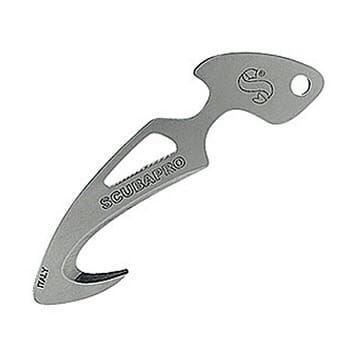
 

What’s the Best Dive Knive?

Like with most types of dive equipment, the ideal knife depends on your individual diving style, and how you like to carry your gear. The choices are many. The good news is that with the variety of dive knives available in different sizes, shapes, materials and mounting options, finding the best dive knife to suit your unique diving needs shouldn’t be too difficult. 

 

Army Selects Senior Research Scientist for Terminal Ballistics

Sunday, May 5th, 2019

ABERDEEN PROVING GROUND, Md. — The U.S. Army recently announced the selection of a new senior research scientist for terminal ballistics.

Dr. Scott E. Schoenfeld assumed the position March 17. He previously served as the senior scientist for the Lethality and Protection Sciences Campaign, chief of Armor Mechanics and chief of Impact Physics research with the Weapons and Materials Research Directorate of the U.S. Army Combat Capabilities Development Command’s Army Research Laboratory.

Terminal ballistics is a sub-field of ballistics and examines of the behavior and effects of a projectile as it transfers its energy to a target.

Across the Army there are less than 50 senior research scientists, known as STs, who serve as general-officer equivalents, advising leadership on science matters.

Schoenfeld will serve as the “as the Army’s leading expert in the field,” according to the announcement.

Schoenfeld’s experiences include oversight, guidance and execution of “broad theoretical and experimental initiatives to understand the mechanics and physics of weapon-target interactions,” as well as execution and oversight of applied research and development of programs associated with ballistics, terminal effects, mechanics, directed energy and computational science and engineering.

His responsibilities also included leadership of national and international partnerships conducting investigative programs in the areas of mechanics, physics and electro- magnetic response of materials and structures under conditions of blast, impact and penetration and the development of ceramic, energetic, smart, electromagnetic and hybrid protection technologies appropriate for battlefield deployment.

Schoenfeld earned a doctorate in applied mechanics in 1995 from the University of California, San Diego.

“My personal research experiences focus on the mechanics of materials with emphasis on multi-scale theories for single and polycrystalline materials and development of theories into computational algorithms suitable for simulation of impact conditions, penetrator-target interactions, structural failure and high strain-rate deformation of materials,” he said.

Schoenfeld has published several dozen peer-reviewed publications, ARL Technical Reports and Conference proceedings and has been active in American Ceramic Society, The Metals Minerals and Materials Society, American Society of Mechanical Engineers, The Materials Research Society, United States Association for Computational Mechanics, and the Hypervelocity Impact Society.

He has received numerous honorary awards including the Department of the Army Meritorious Civilian Service Award for cumulative contributions to the development of armor technology, a Department of Army Research and Development Award for Leadership Excellence and two Army Greatest invention awards.

“Dr. Schoenfeld’s expertise and leadership will accelerate the availability of superior, light weight, and agile protection for Army soldiers and vehicles. He will create, grow and capitalize on talent and ideas from across the DOD, industry, academia and other government agencies to accelerate availability of disruptive discoveries that will enable the United States and our partners to compete and win in multi-domain operations,” said Dr. Jeff Zabinski, WMRD director. “Internal to ARL, he will focus on our core competencies in Terminal Ballistics and Sciences for Lethality and Protection.”

“Please join me in congratulating Dr. Schoenfeld on this significant professional accomplishment as he becomes a member of the prestigious senior professional community,” wrote CCDC Commanding General Maj. Gen. Cedric T. Wins in an email to the workforce.

By CCDC Army Research Laboratory Public Affairs

CCDC Army Research Laboratory (ARL) is an element of the U.S. Army Combat Capabilities Development Command. As the Army’s corporate research laboratory, ARL discovers, innovates and transitions science and technology to ensure dominant strategic land power. Through collaboration across the command’s core technical competencies, CCDC leads in the discovery, development and delivery of the technology-based capabilities required to make Soldiers more lethal to win our Nation’s wars and come home safely. CCDC is a major subordinate command of the U.S. Army Futures Command.