XC3 Weaponlight

Archive for the ‘Guest Post’ Category

Army Project Brings Quantum Internet Closer To Reality

Saturday, September 28th, 2019

RESEARCH TRIANGLE PARK, N.C. — A U.S. Army research result brings the quantum internet a step closer. Such an internet could offer the military security, sensing and timekeeping capabilities not possible with traditional networking approaches.

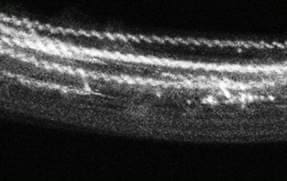
The U.S. Army’s Combat Capability Development’s Army Research Laboratory’s Center for Distributed Quantum Information, funded and managed by the lab’s Army Research Office, saw researchers at the University of Innsbruck achieve a record for the transfer of quantum entanglement between matter and light — a distance of 50 kilometers using fiber optic cables.

Entanglement is a correlation that can be created between quantum entities such as qubits. When two qubits are entangled and a measurement is made on one, it will affect the outcome of a measurement made on the other, even if that second qubit is physically far away.

“This [50 kilometers] is two orders of magnitude further than was previously possible and is a practical distance to start building inter-city quantum networks,” said Dr. Ben Lanyon, experimental physicist at University of Innsbruck and the principal investigator for the project, whose findings are published in the Nature journal Quantum Information.

Intercity quantum networks would be composed of distant network nodes of physical qubits, which are, despite the large physical separation, nevertheless entangled. This distribution of entanglement is essential for establishing a quantum internet, researchers said.

“The demonstration is a major step forward for achieving large scale distributed entanglement,” said Dr. Sara Gamble, co-manager of the Army program supporting the research. “The quality of the entanglement after traveling through fiber is also high enough at the other end to meet some of the requirements for some of the most difficult quantum networking applications.”

The research team started the experiment with a calcium atom trapped in an ion trap. Using laser beams, the researchers wrote a quantum state onto the ion and simultaneously excited it to emit a photon in which quantum information is stored. As a result, the quantum states of the atom and the light particle were entangled.

The challenge is to transmit the photon over fiber optic cables.

“The photon emitted by the calcium ion has a wavelength of 854 nanometers and is quickly absorbed by the optical fiber,” Lanyon said.

His team therefore initially sent the light particle through a nonlinear crystal illuminated by a strong laser. The photon wavelength was converted to the optimal value for long-distance travel — the current telecommunications standard wavelength of 1,550 nanometers.

The researchers then sent this photon through the 50-kilometer-long optical fiber line. Their measurements show that atom and light particles were still entangled even after the wavelength conversion and the distance traveled.

“The choice to use calcium means these results also provide a direct path to realizing an entangled network of atomic clocks over a large physical distance, since calcium can be co-trapped with a high quality “clock” qubit. Large scale entangled clock networks are of great interest to the Army for precision position, navigation, and timing applications,” said Dr. Fredrik Fatemi, an Army researcher who also co-manages the program.

Story by U.S. Army CCDC Army Research Laboratory Public Affairs

Photo courtesy IQOQI InnsbruckHarald Ritsch

Kit Badger – Squad Goals

Friday, September 27th, 2019

FirstSpear Friday Focus – ACM Field Shirt

Friday, September 27th, 2019

This Friday we are taking a look at the all American wool Field Shirts from FirstSpear. Available in short and long sleeve variations the Field Shirt is built from FS proprietary ACM BASE 100, the lightest weight merino wool package which happens to be 100% berry Compliant. This shirt works as an exceptional base layer to keep you cool when its hot or help trap warmth when your cold and even maintain insulation while wet. Blending comfort, performance, and fit to give you the very best functionality with the styles and colors to suit your next extreme adventure, train up and/or deployment.

Now available in sand, commando, charcoal, and black in sizes small – 2X. Now in stock and shipping.

https://www.first-spear.com/field-shirt-long-sleeve-acm-base-100

www.first-spear.com/field-shirt-short-sleeve-acm-base-100

Army Researchers Look for New Signs of TBIs in Soldiers

Thursday, September 26th, 2019

FORT LEONARD WOOD, Mo. — Researchers from the Phelps Health Medical Center in Rolla, Missouri, performed clinical testing on 35 Soldiers in the Urban Mobility Breacher Course at Fort Leonard Wood last week to determine if there are repeatedly present biological signs after traumatic brain injury, or TBI.

Officials said Soldiers in the UMBC were chosen as subjects due to their training, which requires them to endure concussive blasts, using light and heavy explosives to force entrance into otherwise inaccessible structures.

Medical personnel are searching for these signs, named biomarkers, through blood samples, urinalysis, and a new portable, cell-phone sized form of electroencephalogram, or EEG, called “BrainScope.”

Rosanne Naunheim, a Neurologist at Washington University in St. Louis ran BrainScope on Soldiers before and after their participation in the course this week.

“[The device] can diagnose if there’s most likely been previous concussive brain injury,” said Donald James, senior vice president of research and government affairs at Phelps Health.

“Before [Soldiers] have blast exposure with larger blasts, we’re doing EEGs and drawing blood work,” he said. He confirmed the researchers would return after the training to test for biomarker indication of TBI.

According to Naunheim, BrainScope determines likelihood of previous TBI by measuring the speed at which an electrical signal travels from the brain to the electrodes in the device and back to the brain, and then comparing subjects’ results against normal scores for their age range.

“We’re noticing a lot of people start with fairly low scores here (at the fort), because they may have had blast injuries in the past,” Naunheim said.

On a scale of 0 to 100, with 50 being normal, “We’re seeing quite a few people that have scores 0 to 10 even, which is quite low.”

Matthew Doellman, who spent 13 years in the Army, saw combat as a trauma nurse in the Middle East, and worked at General Leonard Wood Army Community Hospital, now serves as director of the Phelps Health program leading the research being done on base.

He said based on his experiences, the new EEG device is “without a doubt” critical to preserving the fighting capability of the force.

“When I was deployed to Afghanistan in 2011, we didn’t have a CAT scan machine,” which, he said, can be too large, expensive and slow to provide results in a forward operating environment.

Phelps Health officials agreed on the field application of the new device.

“This can be done in the field,” James said. “This technology could be right there in the medic station at the Forward Operating Base in any battle center.”

“The reason why that’s important is because a lot of times when you’re in Iraq, Afghanistan and other theatres of operation, as a unit commander you’re trying to make these determinations; ‘Do I need to send my medevac pilots out in this bad weather because this Soldier, we think he needs help,'” Doellman added.

2204A287-4767-4FAE-BB61-E0D798352165

Testing for TBI indicators through urinalysis began five years ago, after doctors discovered that multiple types of cancer could be diagnosed through biomarkers present in urine, according to James.

“I think we’re in the infancy of major breakthrough in, one, diagnosis of traumatic brain injury; and two, then coming up with innovative treatments that mitigate permanent (brain) damage,” he said, referring to this research as unprecedented.

Researchers said that if they found repeated presence of TBI biomarkers in the blood and urine, combined with results from the portable EEG, Soldiers and their commanders could see mitigation of permanent brain damage.

“[With] the research we’re doing today, hopefully the Soldier of the future will have less problems with TBI, and then they’ll live longer lives without any kind of detriment because of a blast or some kind of concussive event,” Doellman said.

The research conducted at Fort Leonard Wood is part of an Army Surgeon General-signed cooperative effort among researchers from Phelps Health Medical Center and four universities: Missouri University of Science and Technology, Washington University in St. Louis, University of Missouri at Columbia and University of Missouri at Kansas City.

By Sam Campbell, Leonard Wood

Selecting a SureFire 5.56 Suppressor with Barry Dueck

Thursday, September 26th, 2019

www.surefire.com

SureFire Field Notes Ep 47: The Fundamentals of Gunfighting with Buck Doyle

Wednesday, September 25th, 2019

SureFire Field Notes is a multi-segment informational video series with tips and techniques from subject matter experts of all backgrounds. In this episode, Buck Doyle of Follow Through Consulting discusses his core tenants of gunfighting.

Buck Doyle served over 21 years in the US Marine Corps, including 17 years and multiple combat tours with Special Operations units. As a Reconnaissance Marine attached to 1st Force Recon, 1st Recon BN, and MARSOC units, Doyle served as Team Leader, Platoon Sergeant, and Chief Instructor at Special Missions Training Branch. He has current, extensive experience in hostile fire/combat zones in the Middle East, Africa, and Asia. Doyle retired from the Marine Corps a Master Sergeant with multiple awards, including the Bronze Star (with Valor).

In 2010, Buck founded Follow Through Consulting, LLC, and spent four years contracting with the Department of Defense as a member of the Joint Expeditionary Team (JET), advising and assisting combat units in Afghanistan. Follow Through expanded its training capabilities in 2014 to include law enforcement and qualified civilians in addition to military units and began consulting with corporate clients in the areas of leadership, team building, and product design/development & testing. More recently, Follow Through has added technical advising and training to cinema/television clients to its capabilities, with Buck providing intensive weapons training to lead cast members of USA Network’s “Shooter,” as well as serving as a technical advisor on the set of Dwayne “The Rock” Johnson’s summer blockbuster, Skyscraper.

www.followthroughconsulting.com

www.surefire.com

SPARTANAT: First Time in Action for the TILO-6MA at the Outer-Limits Experience Week in Austria

Tuesday, September 24th, 2019

The TILO is still the smallest thermal imaging goggle in the world with a 640 pixel sensor. It has been used since one year in various special units worldwide. Also with the US authorities it enjoys increasing popularity and was procured. The new metal version of the TILO-6M is now equipped with an aluminium housing and is waterproof up to 20m and therefore also suitable for divers. During the Experience Week at the Grundlsee in Austria, enthusiastic interested parties were able to convince themselves of the possibilities of these smallest thermal imaging goggles to date. A German SEK (SWAT team) took the opportunity and tested the TILO.

The TILO can be fastened as shown with a very light helmet holder. For use with a diving mask a special spacer is used, so that the distance is sufficiently large. Alternatively an attachment to the Opscore Shroud is possible for this there is also an adapter available.

The Aluverion of the TILO-6M is also much more suitable than the plastic version for use as an thermal clip on. With its bayonet connection it can be mounted in front of a rifle scope within seconds.

In combination with the afocal attachment lens it can reach a detection range (standing man) of 2,5km.

Here, you can find the SPARTANAT report from outer-limits Experience Week 2019.

ANDRES INDUSTRIES on the Internet: www.andres-industries-shop.de

SPARTANAT: www.spartanat.com

Activision/Infinity Ward Appropriates BCM/BPRE Promotional Imagery for Latest Call of Duty Release

Monday, September 23rd, 2019

Back in 2013, prior to the release of Call of Duty: Ghosts, a beta for the game featured a slightly-altered version of the Mil-Spec Monkey logo as an in-game player customization icon.

Needless to say, this was not an authorized use of that copyrighted material. And, it looks like Activision and Infinity Ward are at it again:

thumbnail

This is a loading screen for the upcoming Call of Duty: Modern Warfare.

.300 Blk

And this is promotional imagery for BCM and BPRE. Strikingly similar, aren’t they?

For the curious, this image was featured in promotional materials for BCM’s line of .300 Blackout carbines, among other uses.

Not to excuse the use of this imagery, but it’s worth mentioning that the new Modern Warfare is currently in a pre-release state, and it’s possible that this is being used as placeholder art until the game launches later this year. Still, you’d figure that a big corporation like Activision would be a bit more cautious when it comes to potential intellectual property violations for their multi-billion dollar franchise.

Post by TacticalFanboy.com